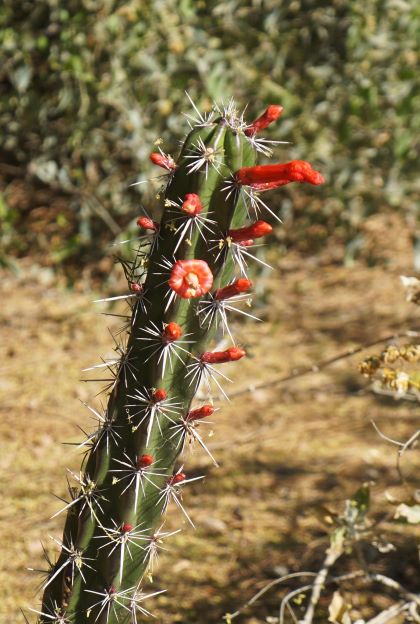
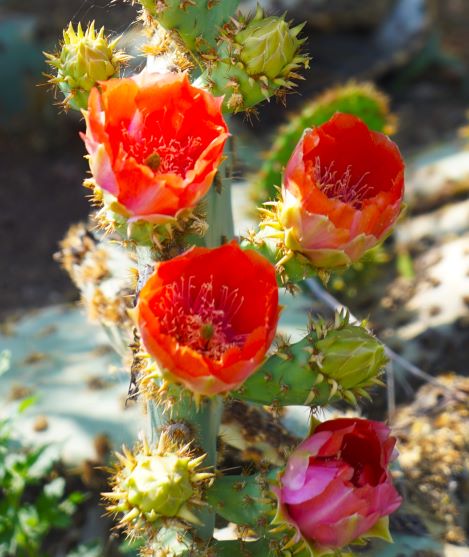
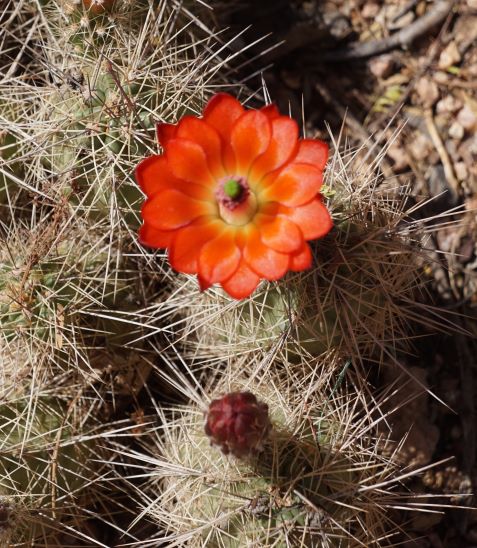
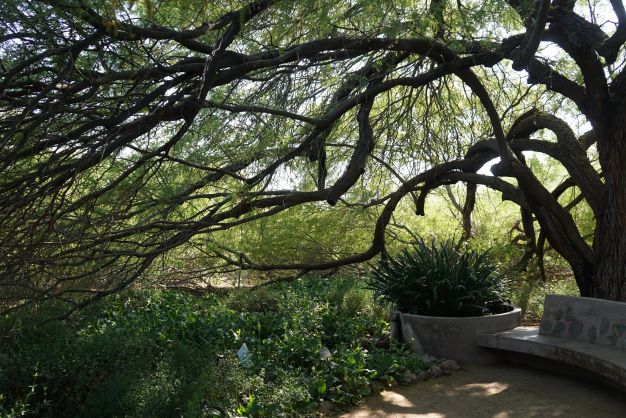
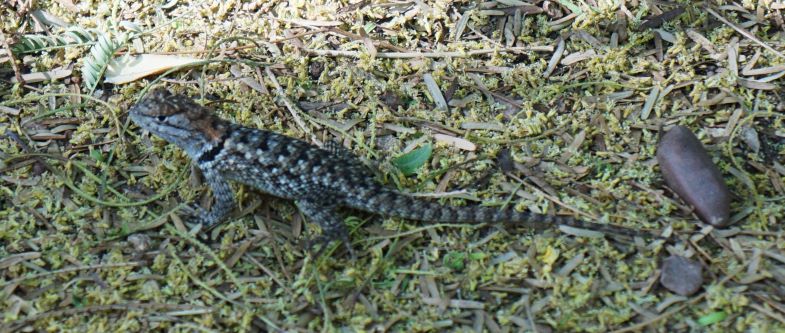
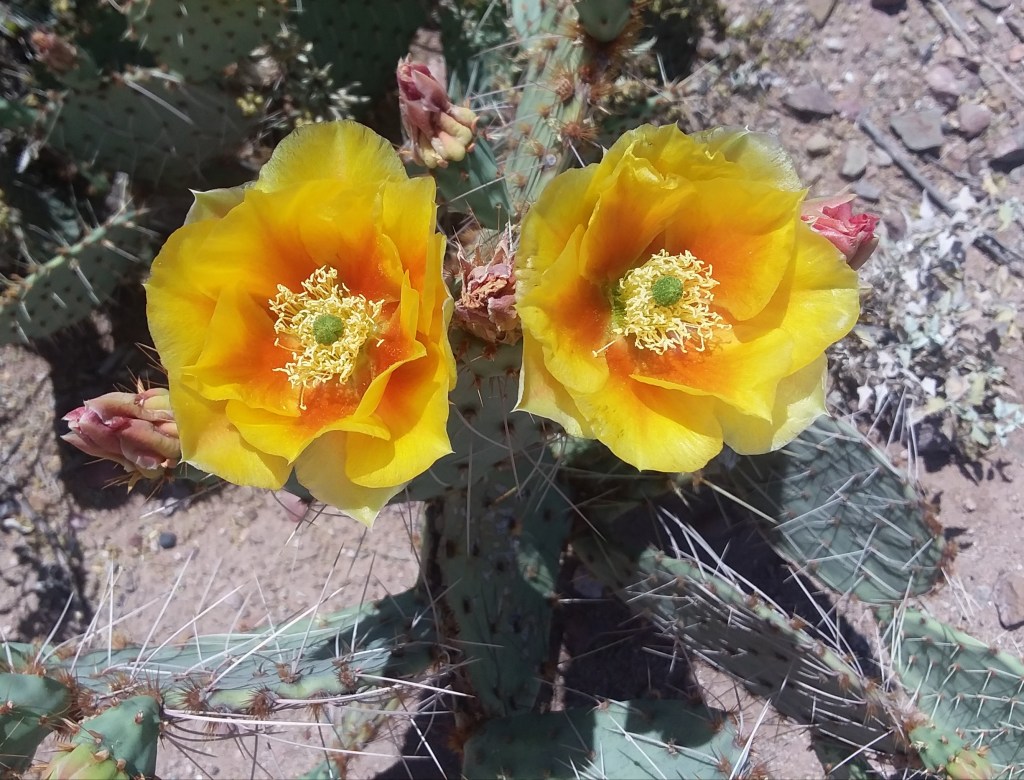
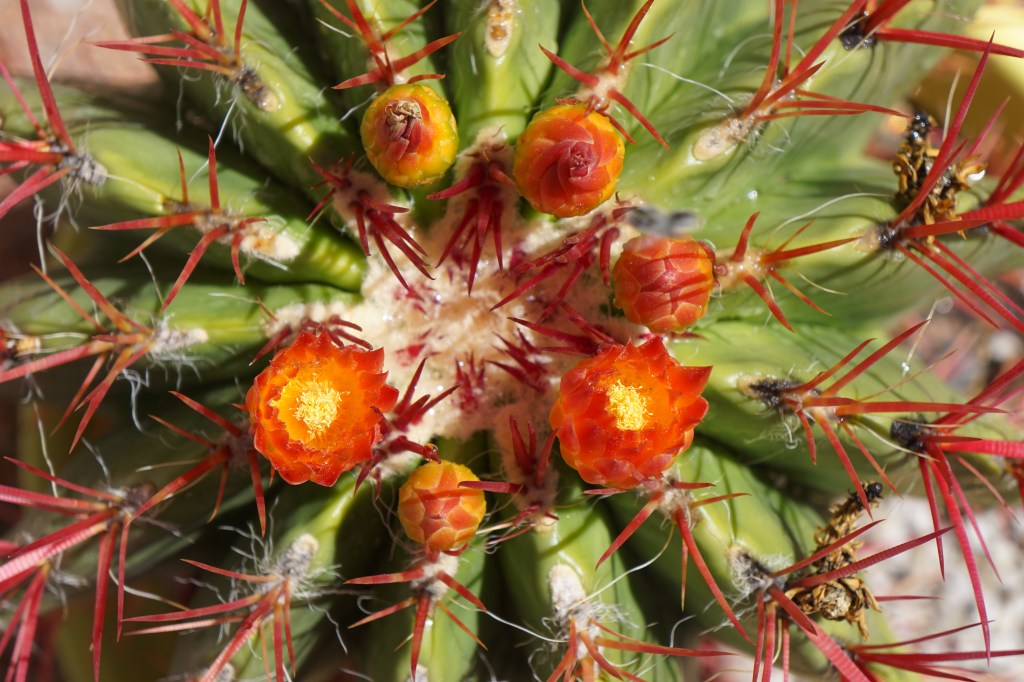
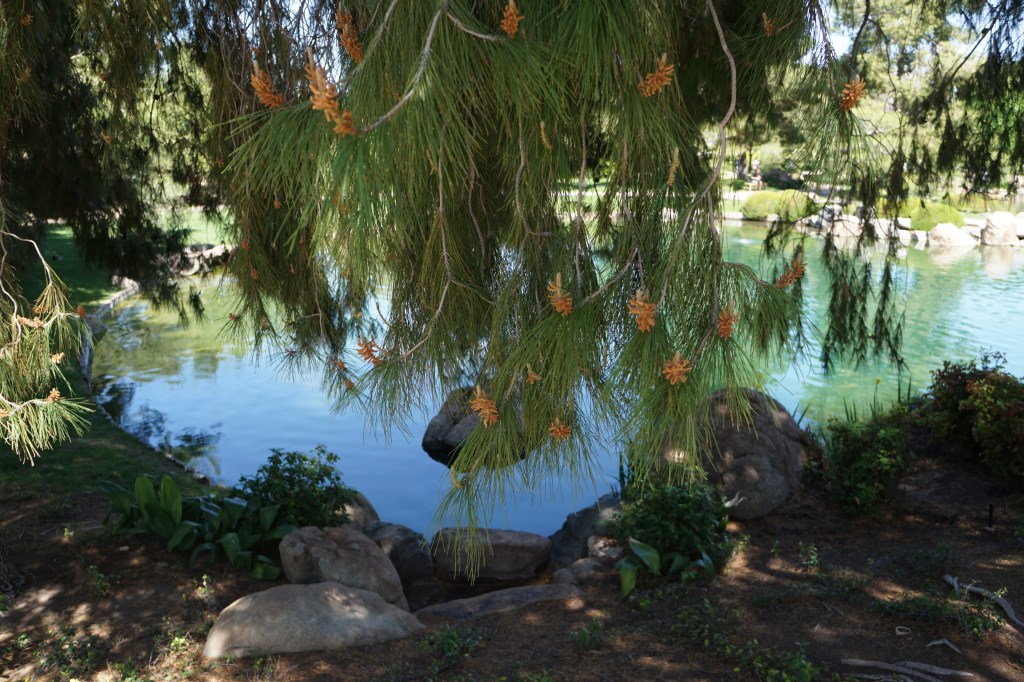
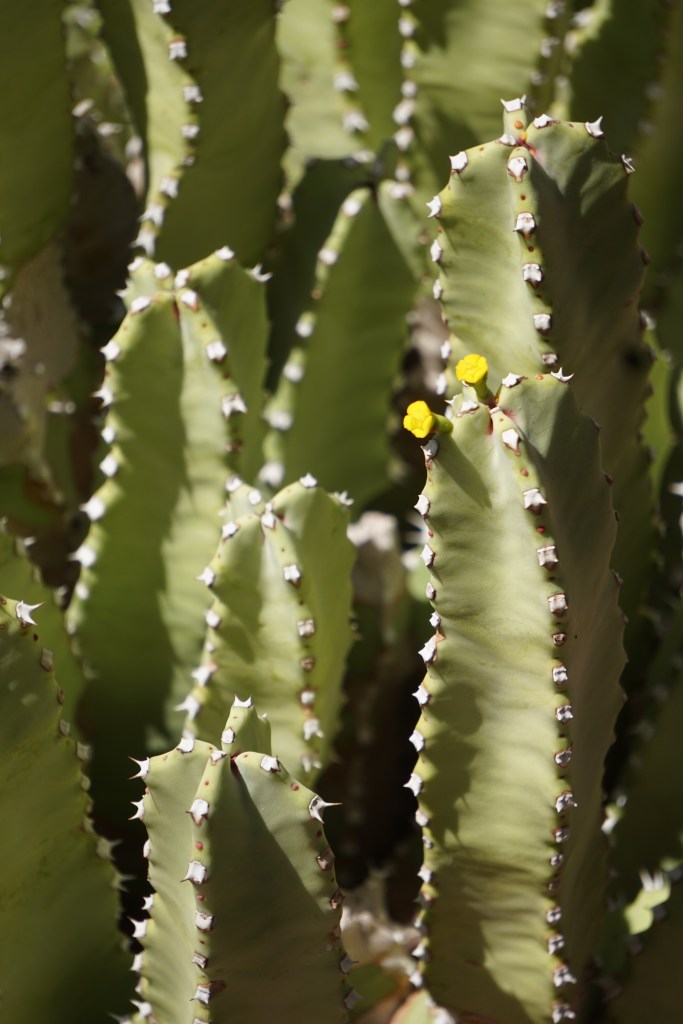
Blooming on Earth’s exquisite day,
toying with Time’s prickly odds,
standing by Friday’s sandy path,
thriving in April’s blazing sun.

Blooming on Earth’s exquisite day,
toying with Time’s prickly odds,
standing by Friday’s sandy path,
thriving in April’s blazing sun.
This morning it was seventy-nine degrees at nine o’clock. Perfect for a swim. Forty lengths of the pool kept me whole. David trudged along beside me for most of it.
My neighbor–about ten years my senior–strides through the fluid to stay strong. He has difficulty walking but can do it more easily in the water.
The buoyancy provides the resistance and support he needs to keep going. Whenever I see him there, we smile, and exchange “good mornings” and I admire his tenacity.
Age and vulnerability have been swirling through my mind lately. Part of it is simply the frightening world we live in. The other component is the knowledge that I will turn sixty-five in July.
Tom and I have already enrolled in Medicare. Our cards came in the mail last week. We will meet with a broker in the next few weeks. She’ll help us select a Medicare supplement plan.
I feel a weird combination of relief–for having made it this far–and anxiety knowing what tomorrow will bring. I imagine some of you who read this will understand that both feelings can coexist on a daily basis.
The crapshoot of advancing age affords us a degree of wisdom to spread around if we choose to … and the accelerating sensation that we are riding on a runaway wagon traveling downhill. We had better make the most of the wild highs and bumpy lows on the journey.
I’ve always considered myself a relatively patient and understanding person. An active listener too. Sometimes I lean too far out over the tips of my skis (no, I’m not a skier, but humor me with this metaphor) and push too far outside my comfort zone. Soon after, I realize I’ve extended beyond my emotional limits. That’s when I become brittle and abrupt.
I am more this way now than I was as a younger man. I don’t know why, but as I write this sentence, I remember seeing this quality more prominently in my mother as she aged.
I had a boss thirty years ago who liked me more whenever I revealed this cut-to-the-chase attribute. She came to me whenever she needed a “reality check.”
Melba enjoyed knowing that I was willing to bend to make things work. But she could count on me to tell her when all of us on her team were about to break or that the latest corporate flavor-of-the-month boondoggle sucked.
However, others who experience this trait are surprised by my forthrightness. Think of it as kindness turned callousness if you push me too far, especially if it involves someone I love.
Something sudden like that happened on Saturday. Tom and I were at the gym, doing our regular hour-long routines of ellipticals, weights, and treadmills. An acquaintance there, someone we see frequently, approached my husband. Tom was in the middle of his workout.
This individual (I’ll call him Gabe) has an odd-and-unsettling habit of telling Tom that he doesn’t like him. It started out as sort of a running joke between them. But over time the joke Gabe recycles has worn thin. Tom wasn’t in the mood for it Saturday. He told Gabe so.
A short while later, Gabe approached me. He knows Tom and I are a couple. Sheepishly, he leaned in to admit he thought he’d pissed off Tom. As my discomfort intensified, I continued to plod along on the elliptical. I tried to switch the subject with Gabe. I asked how he was.
I need to digress. Probably every time I’ve talked with Gabe (in the four years I’ve known him) he has bent my ear and told me his life is a shambles. He’s dealing with lots of significant issues I won’t go into here.
I feel compassion for him, so I’ve listened figuring things would one day get better. But they haven’t. In all of that time, I can’t remember him asking me about my life.
Anyway, Gabe left, but circled back later to tell me–again–how miserable his life is. In a flash, my patience vanished. I felt used. Disrespected. I took a breath. I knew I was way out over my skis. I needed to find a way to rescue myself. I was not the therapist he needs.
It was time for a verbal reality check between Gabe and me. Especially after what I had seen transpire between Gabe and Tom out of the corner of my eye fifteen minutes before.
The words that flew out of my mouth were something like “You’re not the only one with problems. Look around. Every person in this gym (I pointed around me) is dealing with shit.”
Gabe was dumbfounded. He told me to stay away from him. That won’t be a problem.
***
It’s been difficult for me to let go of this experience. I know that I was angry with Gabe for his behavior with Tom. On some level, I was defending my husband. But I also feel guilty for being so brusque with him. Clearly, he needs professional help.
At any rate, I need to own my part in it. I was tired of being a doormat for his bipolar banter. I felt I had to save myself.
If you’ve read any of my books, you know why. My father was a loose cannon. More aptly, he had intense mood swings and unresolved traumas from his WWII experience.
Around 1970, Dad was diagnosed as bipolar. This came after years of trial-and-error treatments, shock therapy, and prescription medications. Our family lived with his emotional illness for decades without answers or relief. At times, it was devastating. It was our dark reality.
As a child, I felt trapped in the same house with Dad whenever his outbursts would appear. He was intensely unhappy, and it spread to my mother, sister and me.
Frequently, Dad resorted to verbal abuse. Less often, physical violence. Throwing shoes at me. Punching his fist through a bedroom door. I was scared, but–at the same time–I loved my father.
Sometimes, even as an adult, these old issues reappear. Writing about it helps (and remembering the counsel of my own therapist) but maybe I will never entirely get over the feelings of anxiety from my earliest years. Maybe I will always live in fear of crash landing in a snow drift with my skis tangled and limbs broken.
Bottom line: it is my worst nightmare to be near someone volatile. Someone who has no boundaries. As uncomfortable as I feel about my exchange with Gabe, I had reached my limits with him.
In a world of sadness and pain, I couldn’t remain silent any longer. I had to speak my truth and restore my power. I think that’s what survivors do.
***
Here’s my reality check.
It’s 3 p.m. on April 19, 2022. The heat is on in Scottsdale, Arizona; it’s now ninety-seven degrees.
I’ll never snow ski; I’m too afraid of speed and broken bones.
Dad’s been gone nearly thirty years.
Gabe’s problems are his to untangle or not.
I have my own life to maintain and manage.
I am living in the Sonoran Desert with my kind husband.
We are the new recipients of Medicare cards.
Together we’ll see what the future brings.
In this season of rebirth, I am reminded of my transformative journey that began five Aprils ago.
***
I should have known better. Life had taught me there was nothing certain about any journey.
I had already navigated the ups and downs of my St. Louis childhood, struggled along as a single dad, shed illusions of a straight existence in favor of an authentic life, and retraced the path of my mother’s life from fertile ground.
Yet, I didn’t expect the journey I was about to embark upon with my husband–waving goodbye to one home and resurfacing in another–would prove to be as circuitous.
By the fourth month of 2017, Tom and I had drawn up the details of our dream. We would sell our home in northern Illinois; escape the cold; move to Scottsdale, Arizona; and live in the desert permanently. We wouldn’t be denied.
It all began in April with the physical trappings of certainty. We were locked into a familiar pattern of cool and damp Lake Michigan air with only a ray or two of sun filtering through the clouds. But as we prepared to leave behind the permutations of our past, we also knew there was heavy lifting to be done.
Before we could leave the Midwest and say goodbye to our Illinois family and friends, we needed to sell our home in Chicago’s northwest suburbs.
***
What you just read is a portion of the prologue from An Unobstructed View. If you find yourself intrigued and pondering your own personal transformation, my third book will have special meaning for you. Download a free copy on Amazon through Monday, April 18.
One simple request: once you are through, please take a few moments to post your review.

Imagine what woodpeckers see when they drill in palms above, or mockingbirds as they whistle their tunes through news that clouds fair skies.
What unfolds is merely a sharp, silent slice–brave blooms by thorns–to inspire this story, to dazzle and penetrate those who dare to partake.
Warmer, brighter, and dryer than my midwestern memories, the arrival of April in the Sonoran Desert means we are a step closer to the oven.
I’ve come to welcome the regularity of the sun and heat. They define who we are: slimmer survivors, comfortable in shorts and sandals minus the cloud cover and weighty coats of our past lives.
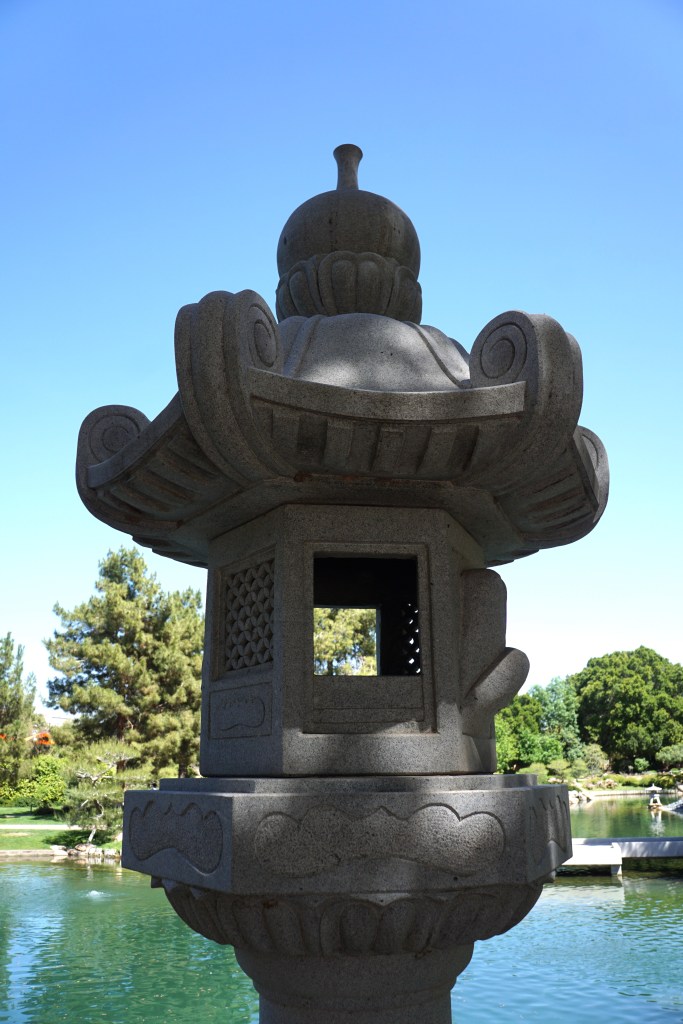
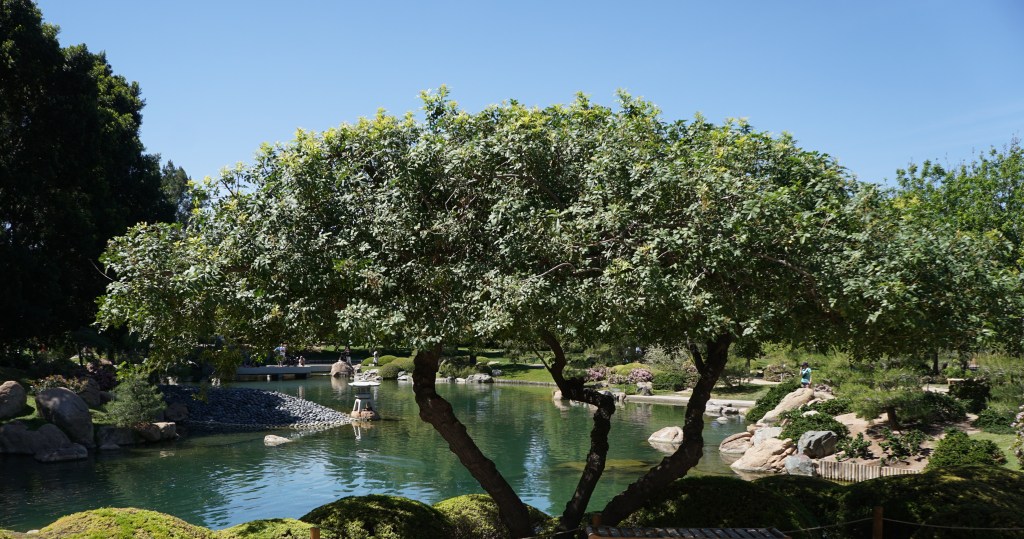
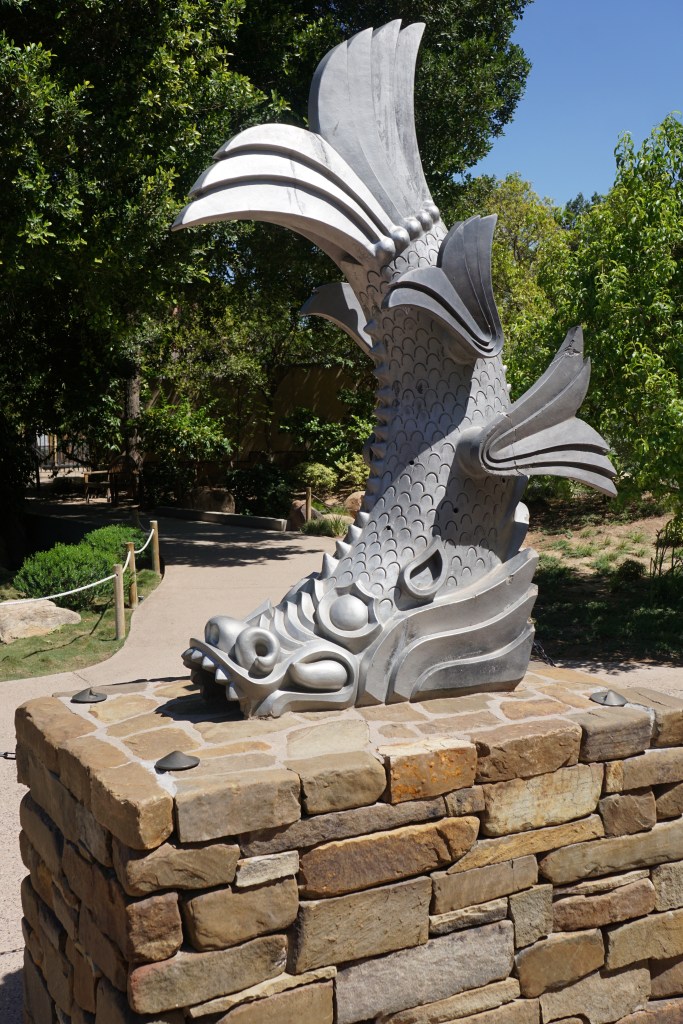
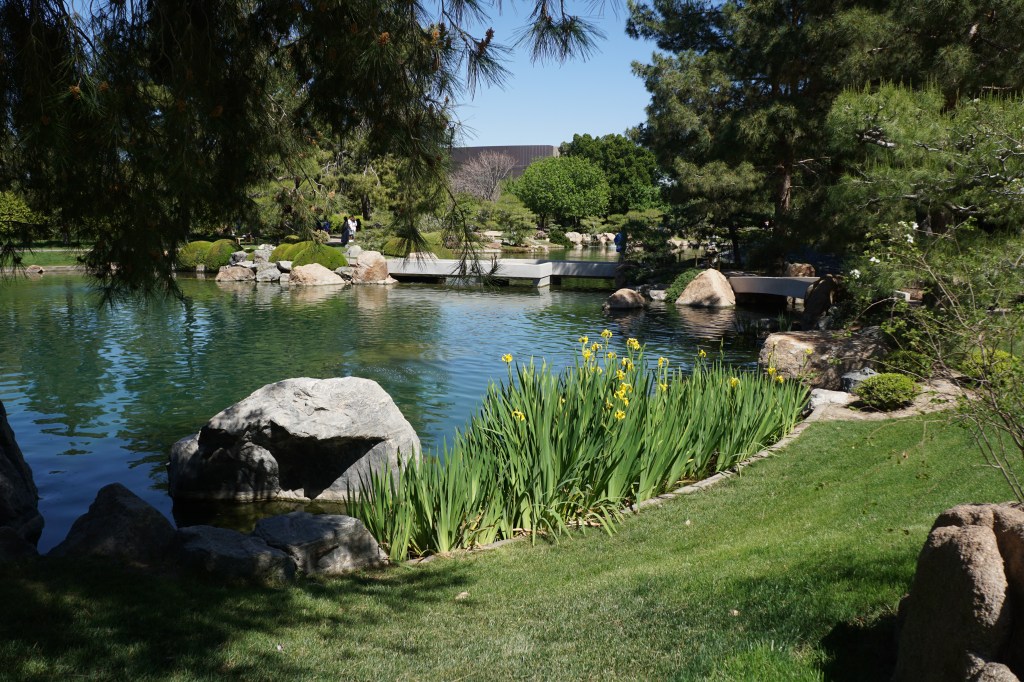
No matter the month, if you’re willing to dig beneath the palms that frame the burgeoning Phoenix skyline, you’ll find the Japanese Friendship Garden (named RoHoEn) coexisting with concrete in an urban setting.
Planted at 1125 N. 3rd Avenue (just west of Central Avenue and south of I-10 on the way to L.A.), this hidden Phoenix gem is an unexpected eastern oasis deposited amidst the flurry of western civilization.
Protected by the shade of a high-rise apartment building, colorful koi dance beneath the surface of a shallow lake, a canopy of pines, sculpted shrubs, gentle waterfalls, and peaceful pagodas.
Of course, many come to the Valley of the Sun to relax by the pool. But if you prefer a different kind of escape, the garden is an ideal place to stroll in the shade, pause on a weekday, feed the fish, and nourish your soul.


As I’ve gotten older, I’ve discovered I need more private time. This feels like an odd thing for me to admit, because–at one time–I would have considered myself a strong extrovert.
Now that I’ve been away from my consulting career for more than eight years, I realize I was more of an introvert all along. One who was good at solving problems, facilitating outcomes, and wearing a multitude of hats. I was required to be “on” far more than I wanted.
Finding the magic as a writer has been the result of tunneling in versus extending out. It’s been an exercise in spelunking … getting lost in caves of consciousness … then exploring that space.
This creative cocooning is an activity I love, and one I have become protective of. (Translated, that means I get grumpy when there are too many social demands on my time. I can imagine my husband nodding knowingly as I write this.)
Even so, there have been times over the past two years, when I’ve missed the human connections that many of us took for granted in a pre-pandemic world. For instance, reaching out to engage with readers in person or simply being in the same room with others to experience the impromptu moments of life.
On Friday night, I got a dose of the creative community I craved during the depths of the pandemic. Tom and I attended a Storyline SLAM event at Changing Hands bookstore in Phoenix. The theme of the evening was Magic, so each story needed to include that component in one form or another.
The process was pretty loose. Organic might be a better word. Eight people–four before intermission, four after–took turns telling stories on stage in six-minute segments.
When each storyteller finished, five judges (sprinkled in the audience of one hundred) held up mini tote boards with a score. Thirty points were the most possible, because the highest and lowest scores, raised high by the judges, were tossed out.
Driving there, Tom and I knew there was an outside possibility that members of the audience could volunteer to tell their stories in the moment. So, I brought one of my books, An Unobstructed View, in the car–just in case I summoned the courage to get up on stage. The idea intrigued and petrified me.
I’ll cut to the chase. I wrote my name on a slip of paper when we got to the event. I dropped it into a box, where it might be drawn. And it was. As I chugged a glass of pinot noir and squirmed in my seat, I learned I would be number three on stage to tell a story.
When my turn arrived, the anxiety I felt was palpable. Still, I walked to the stage and stood before the mic. I opened my book to page 41 and began reading from a chapter titled The Best Ears of Our Lives. Here’s an excerpt of what I shared that night.
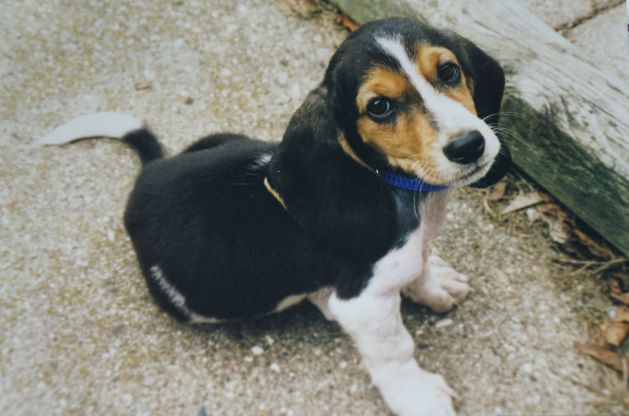
… in October 1998, I became a dog owner again. We found our family dog in an Arlington Heights pet store. A high-pitched bell at the top of the door jingled, signaling our arrival as we pushed through the entrance. Tom and I walked past a wall of cages containing an assortment of critters with doleful eyes tracking our every move. The noisiest of the bunch was a tri-colored basset hound puppy with a white-tipped tail, brown-and-white face, and voluminous black velvet ears. She barked, yelped, and wiggled near the latch of her cage as if to shout, “Look over here. Take me home. You will never find a better dog than me!”… I knew we had turned the page and a dog-eared corner. This tenacious pup had cast a spell on us.
For most of the next decade, Nick, Kirk, Tom, and I would write a chapter together, featuring our shared love for Maggie as the glue that would help us all bond. As Maggie’s body grew, her limbs spread, and her breathing deepened at night, our basset hound further infiltrated our lives. We would never be prepared for the day we’d have to let her go.
The crowd applauded. I smiled, exhaled, walked back to my chair, and sat next to Tom. He kissed me on the cheek. Moments later, my score appeared … 27 out of a possible 30. But the numbers really didn’t matter. It was simply the act of sharing my story and getting an immediate response that fueled happiness and relief.
When the evening ended, an exuberant lady (she told a fun and charismatic story about the magic of motherhood) won the Storyline SLAM event with a perfect score of 30. I finished third out of eight. Not bad for a last-minute decision by an introvert to take the stage.
Most of all, the experience reminded me to live for today in this uncertain world, but also to find the time and space to embrace and remember the magic. It can appear in any form–long velveteen ears on an autumn day or an improbable six minutes on stage in the spring–when we least expect it.

Today, I’m lost in thought about screen-and-stage legend Judy Garland, a film she starred in that sparked my early imagination, a recent experience that renewed my love for live theater, and a song, Get Happy, she made famous.
Forget your troubles, come on get happy, you better chase all your cares away.
Shout hallelujah, come on get happy, get ready for the judgement day.
***
Beginning in 1959, and throughout the 60s, it happened only once a year: CBS aired a special TV broadcast of The Wizard of Oz, the magical MGM film released in 1939.
Like thousands of Baby Boomers across the U.S., my sister Diane and I waited impatiently for the annual ritual. We sat cross-legged, mesmerized in front of our RCA console. We squealed with delight and fear when a ferocious cyclone swept Dorothy into the Kansas sky. In short order, she, Toto (her loyal dog) and their house landed with a thud somewhere over the rainbow.
For those precious hours, Diane and I absorbed and memorized every fanciful song, image and character–the Scarecrow, the Tin Man, the Cowardly Lion, the Munchkins, the Flying Monkeys–Dorothy encountered along the yellow brick road. Though our TV projected black-and-white images only, our imaginations manufactured the scenes in vivid color.
As the years passed, we recited every iconic line of dialogue–“I’ll get you, my pretty … and your little dog, too”–uttered by the Wicked Witch of the West. Whenever she appeared in a puff of smoke, it shook us to the core. But we always knew she would melt in the end, thanks to a handy bucket of water on a ledge and Dorothy’s resourceful decision to grab it in a crucial moment.
Knowing that delicious outcome, and that Dorothy and Toto would ultimately make it back home to Kansas safely, made watching the film one of the happiest and most enduring memories of my childhood.
Looking back, I think it was Judy Garland, playing Dorothy, who captivated me most. Her sense of wonder, innocence, tenacity, good citizenship, pizzazz, and beautiful voice filled the frame. I don’t think there is a more stirring, iconic moment in film than Judy singing Somewhere Over the Rainbow.
Of course, children and adults can watch The Wizard of Oz whenever they want now. But, in the 1960s, the film’s relative inaccessibility, imagination, and message … that it was possible to find happiness and peace “right in my own backyard” … was a shared experience and sense of idealism that no longer exists.
Isn’t it ironic that, in an age when virtually any film or music is available anytime, we are barraged with a mountain of images and problematic news–pandemics, politics, and Putin–that shock our sensibilities and clog our ability to bolster our happiness?
***
2022 marks the centennial celebration of Judy Garland’s life. (She was born June 10, 1922; died June 22, 1969, at age 47.)
To remember and relive her remarkable film, stage and song legacy–amassed in less than five decades–crooner Michael Feinstein has produced a masterful ninety-minute show, called Get Happy!
On Sunday, March 20, Tom and I were in the audience for Feinstein’s dazzling evening performance and multi-media program at the Scottsdale Center for the Performing Arts. It included renditions of many of Judy’s favorite tunes, along with seldom-seen-or-heard images and stories from her life.
About midway through Feinstein’s stellar performance, he paused to tell a story about Judy Garland in 1941. That year, at age nineteen, she bought her parents (who came from modest means in Grand Rapids, Minnesota) a home.
Judy recorded tapes of herself singing to her family in their home, but for years after her death mysteriously those recordings couldn’t be found. Remarkably, Feinstein had the opportunity to visit the home and discovered them in a hollow wall. He played one of those for us as a black-and-white image of a teenage Judy Garland, posing in a tailored suit, filled the screen above the stage.
The song Judy was singing, I’ll Be Seeing You, brought me to tears as I held Tom’s hand. We were seated on the aisle in row Q. Judy never recorded it professionally, but the tune was one of my mother’s favorites. So much so, that Diane and I chose a version of it to play at Mom’s memorial service in 2013.
As Judy Garland’s bright and soaring voice filled the auditorium Sunday night, I was transported back to the early 1960s and the happiness I felt watching The Wizard of Oz.
Mom was curled up on the couch. Diane and I were glued to the floor in front of our RCA. Together we followed Judy’s voice and steps stride for stride.
We were on our annual adventure somewhere over the rainbow.

We sat–quietly and obediently–in rows facing the front of the room. Most of the girls wore frilly dresses, bangs, and patent-leather shoes; the boys sported bold-striped shirts, crew cuts, and bright-white Keds.
Our mornings and early afternoons were occupied with simple math, spelling, reading, recess, and cartons of cold milk on lunch trays. The American flag draped over the alphabet border above the blackboard.
Images of George, Abraham, and John–Washington, Lincoln, and Kennedy–stood guard. I suspect they were there to ease our minds and protect our American innocence.
If only it were that simple.
***
I don’t remember feeling fear, when our teacher told us it was time for another drill. We knew the routine and followed instructions.
A voice on the public address system told us when to practice hiding under our desks, when to duck and cover, when to escape to fallout shelters in hallways if a bomb were dropped.
It lasted but a few minutes. We covered our heads and faces until the all-clear signal came from our teacher. We absorbed the fear–the height of the Cold War–without knowing what it was.
This was what we knew in the early 1960s in middle America. We were fortunate these were merely practice drills, false alarms.
I imagine the scenes weren’t much different in schools on the outskirts of Chicago, Cincinnati or Cleveland. At Mesnier School in Affton–ten miles from downtown St. Louis–we aspired to a gleaming symbol. We lived in the shadow of an emerging national monument.
By its completion in 1965, the Gateway Arch would soar, though across the nation the fog of pollution and social issues intensified.
As history would have it, all of the names of St. Louis school children would be stored in a time capsule in the base of the Arch. Mine is among them.
Back in the classroom, between random drills and parent-teacher conferences, we learned to add, subtract, multiply, and divide. We tied our shoes and kept on skipping in a world where rules were prescribed narrowly for girls and boys.
This was the credo for boys: Get good grades in school. Be prepared. Keep your eye on the ball. Run faster. Jump higher. Find a decent job. Don’t be a sissy. Meet and marry a woman. Buy a house. Have kids. Keep your nose to the grindstone. Pass the baton to the next generation.
But what about those of us who are different? Where do we fit into the story? We had to figure that out for ourselves.
***
The sixties weren’t pretty. Assassinations reigned. The Vietnam War raged. Poverty and racism amplified. People felt trapped, ready to shed the remnants of restrictive gender roles and sexuality, sealed in the repressive 1950s.
But the world is exponentially more complicated now. The latest madman is hellbent on ravaging innocent people in Ukraine. Though love appears in abundance in many circles across all continents, ignorance and hate manifest themselves next door and around the world.
Once again, sixty years later, we find ourselves living in fear of the fallout. We must find ways to duck and cover, to speak the truth while standing as tall and mighty as the Gateway Arch.
We owe it to our children and grandchildren to put politics aside, to protect our planet, to uphold individual rights and civil liberties, to teach them about black and white, but also the color and grayness of the world and all its permutations. Pandemic or not, they are watching.
Even if they don’t know it, the youngest members of our society are counting on us to speak the truth, denounce racism and hate, celebrate gay and straight lives, and to teach them that every generation has a responsibility to remember and honor the seminal moments in history, and–hopefully–carry the best of humanity forward.
Kirk and I talked this morning. Every few weeks–usually on Sunday mornings–we connect via phone.
My thirty-three-year-old son is a kind counselor, who lives in Chicago. He lives a full, demanding life. He has navigated the Covid years on his own. I continue to do my best to bolster him from afar.
I always look forward to our conversations. Kirk tells me what’s happening in his world. I tell him what’s happening in mine. He’s planning a trip to Portugal at the end of March with a friend. The trip has been postponed twice due to the global pandemic. We both hope the third time is the charm.
Kirk is the adventurer in our family. He volunteered with the Peace Corps–taught English to children in Vanuatu on the island of Tanna in the South Pacific–in 2014 and 2015. He hasn’t traveled abroad since then due to Covid and career demands.
I admire Kirk’s sense of wonder. He told me he’s missed the opportunity to explore new worlds; to get lost in unfamiliar cultures. I could hear the loss in his voice.
While news of the war in Ukraine rages on, and we global citizens are catapulted into the uncertainty of another international drama, I think it’s likely that many will deny or try to forget the pain of the past two years. But we can’t and we shouldn’t.
At the very least, each of us must have a personal reckoning to account for the pain, anxiety, disruption, and multitude of losses. This is something I’ve contemplated for a while. This weekend it has surfaced more clearly.
During my conversation with Kirk, I recounted my Saturday with Tom. I told him I sang with my Phoenix Gay Men’s Chorus pals at the Melrose Street Fair. It’s a lively community event in Phoenix that has gone missing for two years–for obvious reasons.
As I stood on the stage yesterday on a partly sunny and breezy morning–with Tom and a group of our close friends watching and listening–the last two years came flooding back.
Why? Because our chorus performed at the same event two years ago. It was right before the world stopped spinning and we all retreated. I will always remember the pain of that. None of us knew the magnitude and length of the tidal wave of fear and uncertainty that was coming. Somehow, we endured.
Yesterday’s moment was one to embrace and celebrate. Like a long, lost friend missing in action, the world felt suddenly alive as we sang. I wasn’t sure when or if I would feel that free again. But I did.
As I retold this story to Kirk on the phone, my tears appeared out of nowhere. The full emotion of Saturday’s reawakening arrived on Sunday morning with my younger son listening attentively seventeen hundred miles away.
Though it wasn’t in person, I am thankful that Kirk and I had a few moments of reckoning together. Like all of us who have lived through the darkness, we have earned the time and space to reflect and process all of the madness.
I hope my son is able to re-ignite his passion for travel in Portugal and find a little solace … maybe even realize a dream in an unfamiliar place in late March.
Ironic or not, one of the songs our chorus sang yesterday was Come Alive from The Greatest Showman. Let the lyrics wash over you and rekindle your best instincts. We have all earned the reckoning.
***
And the world becomes a fantasy, and you’re more than you could ever be,
’cause you’re dreamin’ with your eyes wide open.
And you know you can’t go back again to the world that you were livin’ in,
’cause you’re dreamin’ with your eyes wide open.
So come alive!

You are an emerging gentle giant, a loyal Sonoran duchess ready to frolic among the thorns in a land far from your kingdom.
Your soulful eyes tell a simple truth: that the blazing sun rises and sets on every life, every civilization. But we must soldier on.
While the madness in the front yard of life drains us, it is these tender backyard moments that fill our hearts and restore our spirits.
Through it all, nature reigns. You are supreme.