Category: Arizona

What Is Remembered Lives

Long after the most cherished and meaningful moments pass, our memories–good, bad, vivid, and foggy–endure like saguaro cacti dotting the terrain of our vast consciousness.

***

Over the weekend, the lone survivor of my mother’s prized African violet plants died. Tom and I discovered it withered on the window sill of our Scottsdale condo. I supposed it succumbed to the heat of the desert’s afternoon sun.

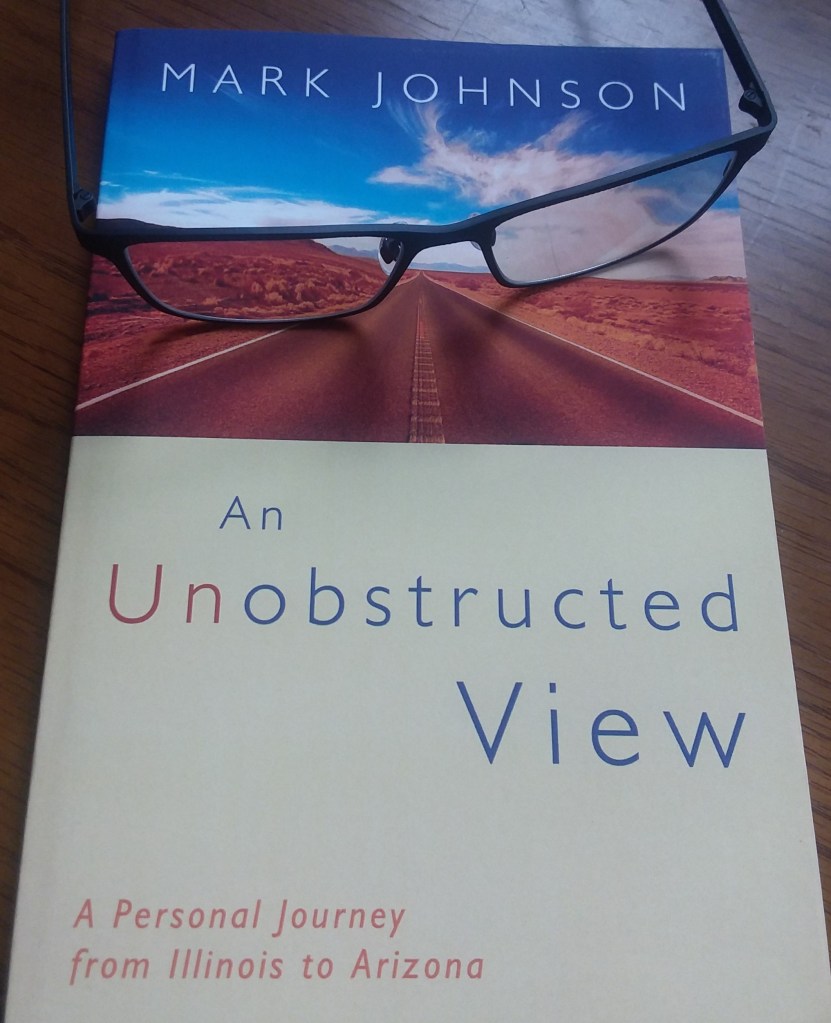
I’ve chronicled the journey and symbolism of Mom’s African violets before–here and in two of my books: From Fertile Ground and An Unobstructed View.

The plants originated in St. Louis in the 1980s or 1990s. They traveled to the Chicago area with Mom when she moved north to be closer to my sister Diane and me in 2004.

When Mom died in January 2013, Diane divided up the remaining African violets–one a shade of pink, the other a purplish blue–for the two of us to carry forward and display in our respective homes.

For the next four years, my cuttings flourished in our Mount Prospect, Illinois home. In early July 2017, Tom and I wedged them in a laundry basket in the back seat of our Hyundai Sonata. We brought them west from Illinois to our new home in Arizona.

On the road, after I suffered a mild heart attack in St. Louis and couldn’t lift anything for a few weeks, I remember my husband carrying the African violets between our car and hotel rooms in Missouri, Oklahoma and New Mexico to protect them from fluctuating temperatures overnight. It’s a memory I will always treasure.

When we arrived in Scottsdale on July 12, 2017, Tom and I deposited the plants on our southern-facing window sill. The pink African violet lived two more years before petering out in 2019. Now the purple one is gone too. It last bloomed ten months ago in January 2021 … eight years after Helen Johnson’s passing.

Of course, I feel a twinge or two of sadness. This marks the end of a long, circuitous chapter, connecting my present life to the past memories of my nature-loving mother.

But, at this point (four-plus years in my Arizona home), Tom and I feel rooted in the desert. We have chosen and nurtured plants that embellish our life in this warm, dry place: bougainvillea, desert roses, succulents, even a bird of paradise.

To be sure, though their physical evidence is gone, the stories of the traveling African violets and the memories of their captivating blooms will be with me as I hike the rises and falls of the Sonoran Desert with Tom.

What is remembered lives.

Late October in the Valley of the Sun

Late October days are warm here; nights and early mornings cool and invigorating.

Fall is far more subtle in the Valley of the Sun than most of the rest of the Northern Hemisphere. October doesn’t flash across the horizon and announce its presence in burnt orange, blood red and sunflower yellow.

You need to be a non-traditionalist to observe and appreciate autumn in the Sonoran Desert. To watch the tangelo, grapefruit and lemon fruits transition slowly from green to yellow. They will be ripe for the picking by late December or early January, and we will have juicy citrus and fresh lemonade once again.

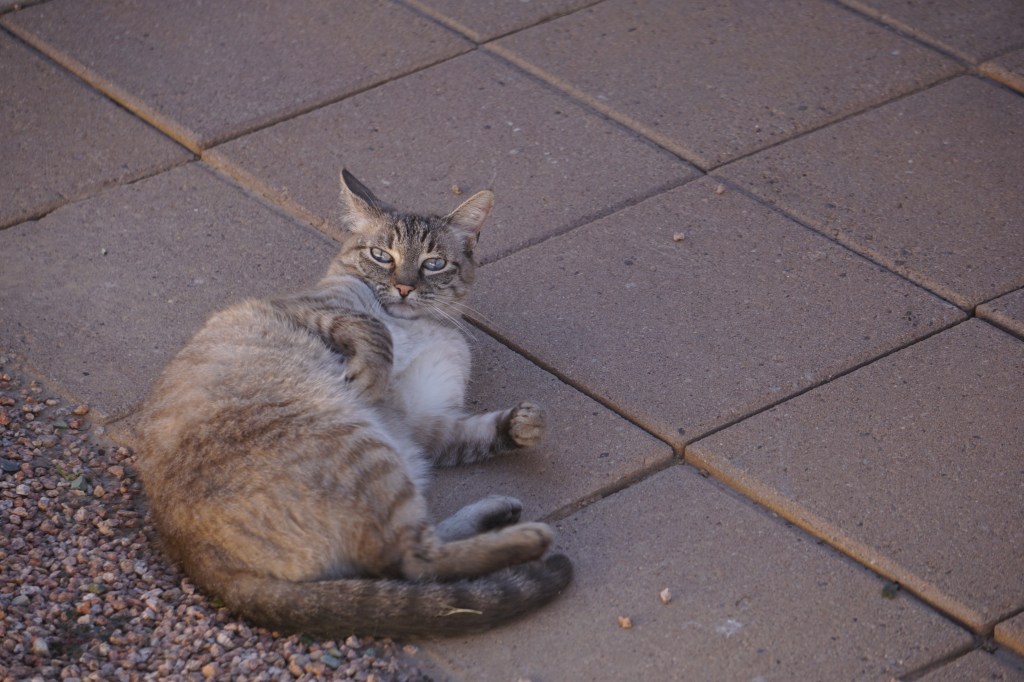
As a crew of two arrived to put the finishing touches on our bathroom remodeling project inside, outside Blanca played troubadour, curling and rolling on the sidewalk.

With her frolicking assistance–and the more obvious aid of my telephoto lens–I captured these golden images on a quiet late Wednesday morning in our Polynesian Paradise community.

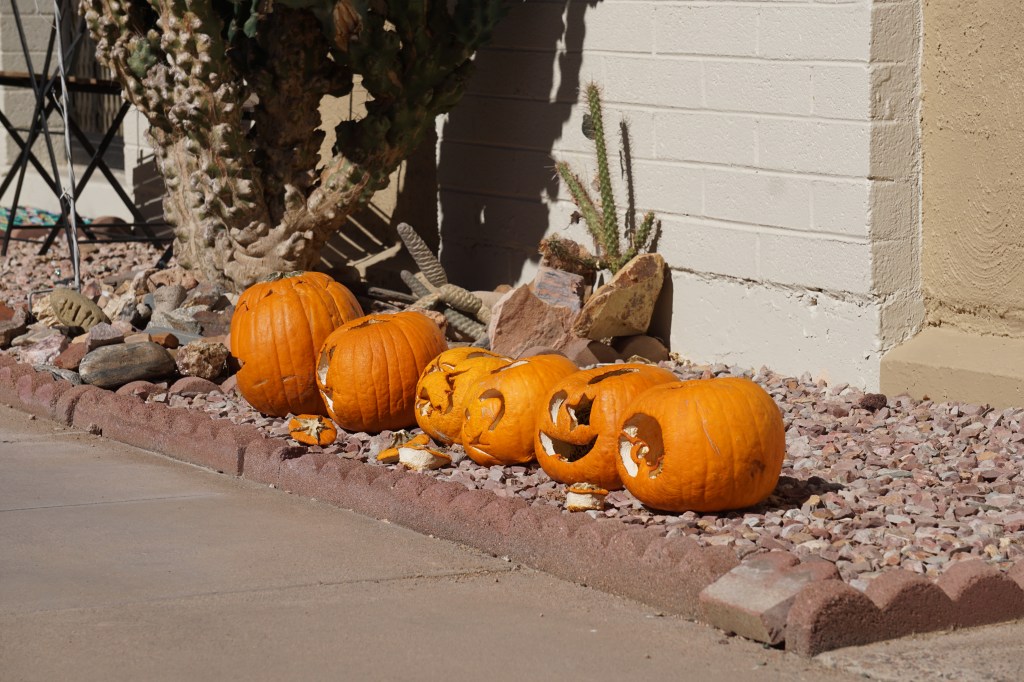
To be sure, Arizona’s desert is alive with distinction in late October. Where else might feline shenanigans, the promise of citrus, blooming hibiscus, and Halloween coexist?

Rich-People Problems

October is renovation month in our household. We’re remodeling our Sonoran bathroom: installing a walk-in shower to replace our clunky-and-outdated shower/tub combo; raising our ridiculously low ceiling; putting in a new toilet; upgrading the sink, vanity and mirror; laying mosaic tile to accent existing porcelain squares; wiring and connecting contemporary lighting; the works. It will be beautiful when everything is done next week.

The guy Tom and I hired to install and update everything is skilled and thorough, it’s just that the project is taking longer than expected–longer than it should in our book for a variety of reasons I won’t belabor here.

Suffice it to say, that each morning when our remodeling guy arrives we discuss the work ahead with him and what we expect to be completed that day.

This morning, I escaped the mayhem of our modest and ordinarily quiet condo for a few hours. I needed a swim away from our immediate community. (Tom and I are taking turns doing this to keep our sanity.)

Enter Frank. He’s a friend I see at Eldorado Pool (two miles from our home) on occasion. Whenever I see Frank, we have topical and lively conversations … about the state of the world, our past lives in the Midwest, the plight of our favorite sports teams, his job as a nurse in the behavioral health wing of a nearby hospital, my life as a writer. Frank has read at least one of my books.

As I changed into my swim trunks in the locker room this morning, Frank asked “What’s new with you guys?”

“We’re trying to survive our bathroom remodeling project,” I sighed.

“Rich-people problems.” He responded matter-of-factly as he fumbled with the contents of his locker.

What happened next surprised me. I laughed so hard, more loudly than I have in a long time. Why? I suppose it was some sort of release. Also, I realized in a flash that Frank gave me the reality check and perspective I needed.

People are dying of Covid. Others are struggling financially and/or dealing with the untenable and unreasonable demands of work, child-rearing, and elder care in a crazy and politically polarized society.

Through that lens, my life at sixty-four is relatively steady, simple, and manageable … notwithstanding an annoying remodeling project that would fluster you too if you were standing next to me gazing into the disarray of our condo.

Back to Frank. Let me be clear. His “rich-people problems” comment wasn’t referring to my financial status (we live comfortably, but aren’t wealthy), trivializing my concerns about the bathroom inconveniences that Tom and I are living through, forgetting the past challenges we have faced as a same-sex couple who survived a heart attack on the way west, or discounting the numerous other losses and heartaches we have endured.

The nut of this story is this: today Frank crossed my path to remind me I am a “rich” person with a “rich” life … a loving husband, two adult sons who enjoy spending time with their dad, and a “golden” (Frank’s word, not mine) life living in Scottsdale, Arizona in our retirement years.

Yep … “rich-people problems” sums it up nicely. Thank you, my friend, for being so authentic. For being so Frank.

Alive Again

The arrival of October 2021 has signaled a significant and welcome change … a downtick in temperatures and an uptick in tourist activity in Old Town Scottsdale, Arizona, to bolster the hungry tourism sector.

Scottsdale, Arizona is alive again. September’s scorching heat has been replaced with cooler October mornings, ideal-and-swimmable-eighty-degree afternoons, shorter days, and dazzling sunsets framed by palm trees gazing west.

Tourists are back too–in relative abundance, in posh pools, in surviving restaurants, in newly-minted hotels, on mountain bikes, on sidewalk scooters, on rolling streams of Segways.

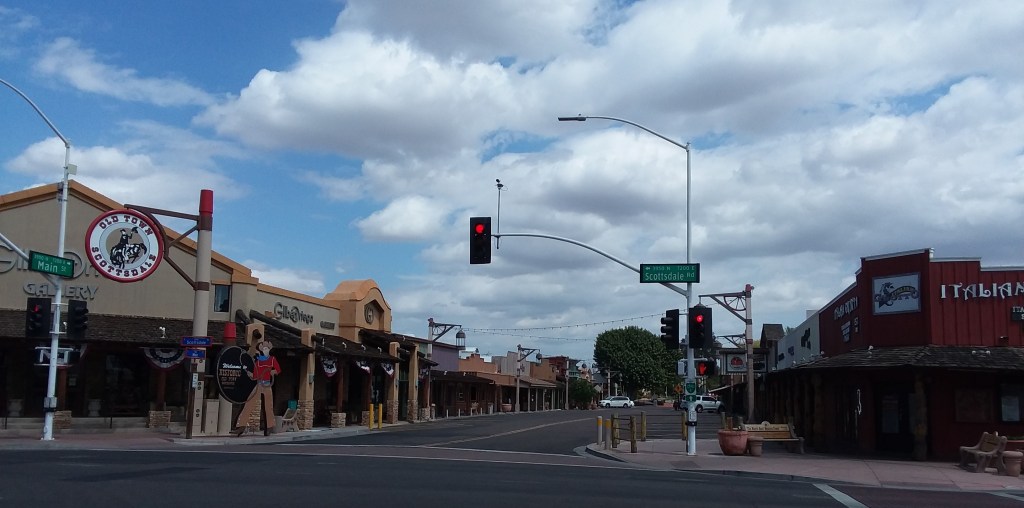
It’s a far cry from the desolation of April 2020 when Old Town Scottsdale was first shuttered by a raging pandemic that persists eighteen months later, though many imagine it has vanished.

A view of an empty, ghost-town-like Old Town Scottsdale, Arizona … looking east down Main Street … near the start of the global pandemic in April 2020.

Blue-eyed Blanca

There’s a new girl in town. She twists and tumbles between the gravel and spiky cacti on the otherwise ordinary sidewalk outside our Sonoran door.

Blanca purrs, arches her back, and flashes penetrating blue eyes. Of course, scraps of sliced turkey, ramakins of milk, and endless strokes of her fur follow.

We might have scooped her up, but discovered Blanca belongs to a neighbor. That misfortune won’t prevent our pampering or shared shenanigans.

In Autumn

After living through four summers, autumns, winters, and springs in Scottsdale, Arizona, I’ve decided autumn is my favorite time of year here.

Most 100-degree temperatures are vanishing from our ten-day forecast. The monsoons have packed their bags and left town with the dusty drama and wet havoc that only unexpected and unwelcome guests incite. And large flocks of snow birds have yet to fly in.

Mornings are a notch or two cooler–in the 70s–than they were in late summer. Perfect for sipping coffee outside under the eaves.

Did you know we’re frost-free? You won’t find icy substances on our pumpkins or windshields. Ever.

You won’t witness a foliage kaleidoscope here either. Or crunch through piles of leaves. Or rake. Stay away if that’s your thing.

I didn’t intend for this to be a Scottsdale Chamber of Commerce ad (though it sounds like a back-handed, bizarre one). But if you like plenty of pool days, pleasant dry mornings for hikes, warm-to-hot September and October highs, shorts, flipflops, spiky saguaros, and startling sunsets long after Labor Day is a distant memory, come to the Valley of the Sun.

Do it in autumn.

I captured this autumn sunset on September 25, 2020 at Papago Park in Phoenix, Arizona, a mile from my Scottsdale home.

On a September Sunday Morning in St. Louis

All of us are required to play roles in society, especially to earn a living. We project a persona that may or may not align with who we are or what we value. We wear masks.

Of course, in a pandemic some us wear them more than others in public situations. But in my post-corporate sixties–even if I’m donning a face covering for physical protection–I prefer to spend time with people who are genuine. I don’t have the patience for games or innuendoes.

My need for authenticity has roots that wind back to my formative years. In the 1970s, as a budding-but-denying gay adolescent who had unnamed feelings for other boys and wasn’t allowed to express them, my personal development was frozen in time.

Imagine closing off one portion of your identity entirely with no light, voice or path encouraging you to explore it. None of the relationship rites of passage for straight kids–flirting, dating, parties, dances–were available to gay and lesbian kids in the 70s.

In my middle school years, I became close with Daniel. There was a lot I liked about him: his intelligence, his quirkiness, his dimples, his love of language and the arts.

On occasion, Daniel came over to my house after school. We played board games or simply talked about school and the teachers we liked. We never acted physically on the bond and attraction we shared.

I remember that Mom and Dad liked Daniel … and Daniel admired some of my parents’ most endearing qualities: my father’s exuberance and sensitivity; my mother’s kindness and sensibility.

In seventh grade, I was the spelling bee champion for Mackenzie Junior High School. I represented our school at the St. Louis-area finals. Each student was allowed to bring one friend in addition to his or her family. My choice was Daniel. I remember him sitting in the audience that day in April 1970. It felt like he belonged there, like he was a part of my family.

Not long after I lost the spelling bee, a few boys at school must have recognized something about the care and closeness Daniel and I demonstrated for each other in the halls and in the classroom. They spewed venom. They bullied us physically and verbally. It hurt me deeply and pushed me further into the darkness.

Daniel and I remained friends in eighth grade and beyond, but we spent less time with each other as a result of that trauma and feelings of vulnerability that surfaced. Our paths crossed only rarely in high school even though we both performed in plays and musicals.

Looking back, it was a survival strategy for me to pull away from Daniel, but I always regretted that we never had a chance to be authentic with one another or to talk about the elephant in the room … the experience of being chastised for being different.

That would change on a September Sunday morning in St. Louis.

***

In August 2021, I contacted Daniel online to tell him that I wanted to reconnect with him while I was in St. Louis for the Six Flags reunion. (We hadn’t seen each other since 1995, and then it was just a brief hello at our twentieth high school reunion.)

Daniel loved the idea. So, on Sunday, September 5, 2021–before Tom and I left Missouri to drive to the Chicago area to see our sisters and my son Kirk–we met him for coffee at a place he recommended. The three of us spent an hour together talking on the patio of a lovely cafe in the Soulard neighborhood of St. Louis.

For the first time, I was able to tell Daniel how awful I felt about the way our friendship was derailed. That led to a deeper discussion about other boys who were tormented to worse outcomes. But that wasn’t the entirety of our conversation. It was just one moment in a warm exchange with each of us … Daniel, Tom and me … sharing stories of our careers, families, and adventures. The bonus for me was watching and listening as my husband and my first boyfriend discussed their favorite films.

Before Tom and I departed, we invited Daniel to come visit us in the Phoenix area. As we left the cafe, I hugged Daniel and said goodbye. I truly believe there will be another chapter to our friendship. Maybe it will happen in Phoenix. Maybe it will happen in St. Louis.

Either way, on my Midwest journey in 2021, I was able to tie together a few more of the disparate ends of my past rollercoaster life to my more fully actualized Arizona existence, and for that I am grateful.

The Catbird Seat

In the dog days, our community cat gets top billing. From the crook of our gnarled fig tree, Poly waits to swat an unsuspecting finch ready to extract seeds.

Staring me down through our den window, Poly assumes this enviable position at seven o’clock a few mornings each week. I tap on the glass to dissuade her. I can’t bear to see a finch fall or for Poly to end up behind bars.

On other days, Poly plays it safe. After the sprinklers stop hissing, she rests on the ground in the shade under the eaves or cavorts with her taffy-colored feline friend.

Poly is that hard-to-corral library book I don’t own, filling each page with texture and character. As summer winds down, she plots in the catbird seat. I don’t want our chapters to end, but someday soon I suspect they will.