Category: Community

Pivot Point

That day has come. It is the eve of a frightful pivot point in American history. Will we salvage our democracy at the polls or hand over the last keys of liberty with a whimper? I hold my breath and hope for the former.

Like much of America, my husband and I cast our votes early. Now, amidst raging flood waters that swamped much of Arizona over our unusually soggy weekend, I pray for an early November blue wave. To stop the madness. To flip the script. To calm this exhausting social and economic quagmire. To welcome common sense and human decency back in the front door.

Meanwhile, I give thanks for the successful completion of my sixth memoir writing workshop at the Scottsdale Public Library. For three consecutive Fridays in October, I bonded with eleven diverse and talented writers–seven women; four men–around a rectangular table at Mustang Library.

They trusted me to help jumpstart or embellish their literary journeys. To open their hearts. To share their stories and give them voice. Along the way, we shared a few laughs and several cascades of cathartic tears as they collected constructive feedback and encouragement like hungry trick-or-treaters trolling for their favorite candies.

In a nutshell, together we fostered and nurtured an organic community of storytelling. One I imagine they will carry forward with passion and persistence.

As we parted last Friday, one member shepherded the creation of a email contact list, so that they can discuss ways to continue on this literary journey together.

Though I feel I need time to refill my creative tank, I know in my heart I have contributed to the well-being of eleven other lives … eleven who strive to share their pain, their light, their wisdom, their voices with a world desperate for truth and greater goodness.

Sixes and Settings

Sixes are wild. I have written and published six books–most of them in my sixties. Meanwhile, last Friday, I welcomed another group of writers to my sixth memoir-writing workshop at the Scottsdale Public Library.

Each writer arrives in the room with their own suitcase of metaphorical stories to tell. In my role as leader and facilitator, I encourage them to unpack the most meaningful, vivid ones.

There are eleven participants in the current class. We’ll have two more three-hour sessions together. One is tomorrow. The last one is October 30. Though we meet just three times in person, I try to cram as much writing into our time as possible.

My goal is for them to find and develop creative momentum in this temporary writing community, then move ahead independently to write a personal story. I focus on helping them tell ONE story from their lives, rather than THE story of their lives. I think that makes the process less intimidating.

This week’s writing? To describe a setting that is memorable from their lives. It might be a city, town, or something more specific. Perhaps a room in a house where something important occurred. In a worksheet I gave them, I say, “What does this place look, sound, smell, feel, taste like?” Then, I ask them to include these sensory observations in the narrative of their story.

I work with the group to build trust right from the start of the workshop. So, I will keep their story submissions confidential. But suffice it to say, their “settings” stories they submitted run the gamut. The organic and raw nature of memoir writing is what I find my fascinating about the genre.

Last year when I first introduced this “settings” exercise in another of my workshops, I completed my own version of this exercise to see how it felt.

What I’ve written below is a description of one of my favorite cities in my home state … Flagstaff, Arizona. I’d love to know what you think. Send me a comment.

***

Like much of America, downtown Flagstaff lives in transition.

Wooden porches of once-proud homes sag and creak. They speak of generations of heavy snow, extreme temperatures, and familiar faces gone but not forgotten.

Scattered wildflowers bloom through deep cracks in sidewalks and curbs. Occasional murals–born and etched by Arizona artists–adorn avenues. They tell hardscrabble stories of past lives.

North and south of historic Route 66–on both sides of parallel train tracks that dissect and rumble through the town–entrepreneurs have stripped and transformed buildings. Trendy pizza joints, aspiring restaurants, cozy coffee houses, touristy bars, ski shops, reimagined inns, dental offices, healthcare clinics, law practices, and investment firms anchor street corners.

Some have since closed, casualties of the pandemic. The lucky ones endure, connecting bohemian neighborhoods within view of the breathtaking San Francisco Peaks.

The overall effect produces a block-by-block checkerboard of western resiliency, community pride, mountainside retreat, and twenty-first-century regrets.

Last Light

We spend precious seconds, minutes, hours, days,

And nights of our lives angling for the next fish.

We rush from place to place, moment to moment,

Often derailed and distracted by constant noise,

Often unfulfilled as the day’s last light descends.

Maybe, to catch the one we dream of catching,

It’s best to pause in silence at the water’s edge,

To give thanks for what passes before us,

To be still beside the simple silhouette cast.

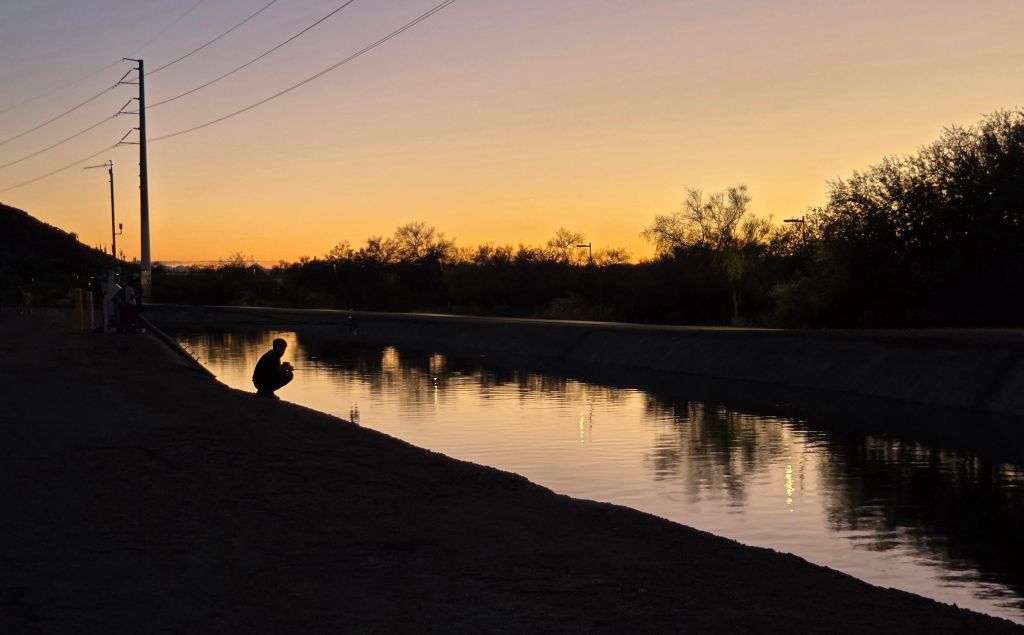
At dusk, on Sunday, October 4, 2026, I captured this silhouette of a boy waiting patiently for his next fish along the Crosscut Canal in Scottsdale, Arizona.

If you enjoyed reading my poem, check out my book of poetry, A Path I Might Have Missed. It (and all six of my books) are available on Amazon.

Septembering

Two days of much-needed rain, remnants of hurricane Polo, have scrubbed our Sonoran skies and revealed–on the last day of September–sunny-and-mild, early autumn.

This is our desert version of fall, which would be characterized as summer anywhere else. Comfortable mornings. Perfect for hiking and plenty warm to swim outside. I did both before noon.

With every stroke back and forth at Eldorado Pool in south Scottsdale, between 10:00 and 11:00 a.m. I found myself Septembering … a word I’ve crafted to represent six sweet September 2026 moments I choose to remember here.

***

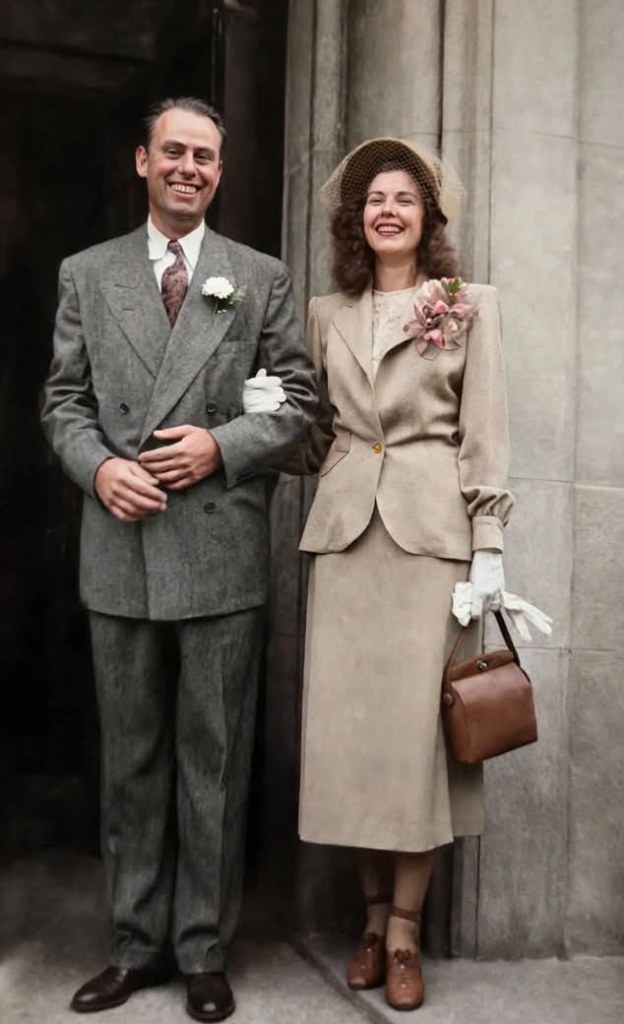
On September 4, my parents would have celebrated their seventy-eighth anniversary. A friend and ex-colleague touched me by colorizing and retouching their wedding photo. Such a pleasant surprise!

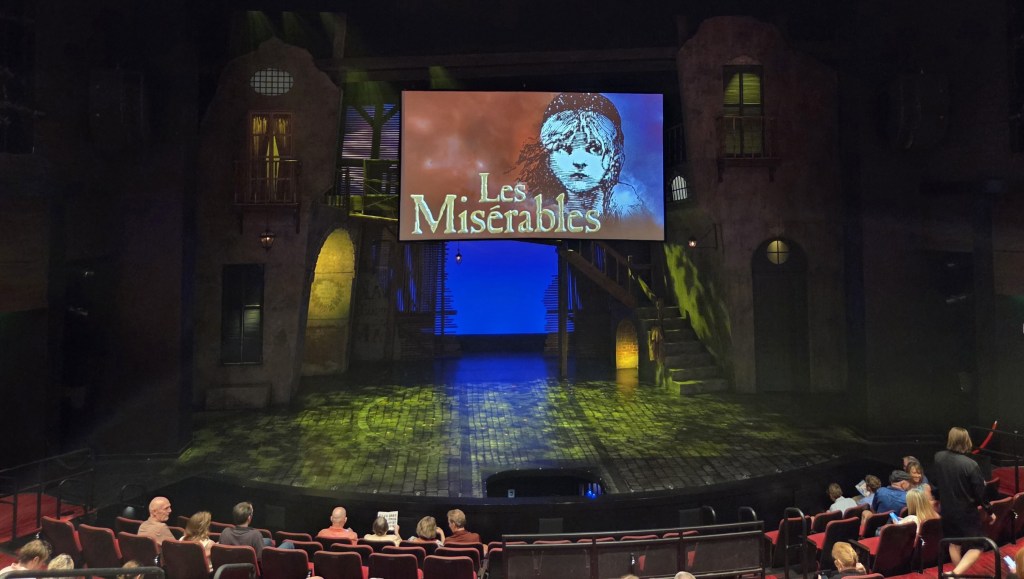
On September 6, Tom and I celebrated our twelfth anniversary by treating ourselves to a fabulous matinee performance of Les Miserables at the Phoenix Theatre.

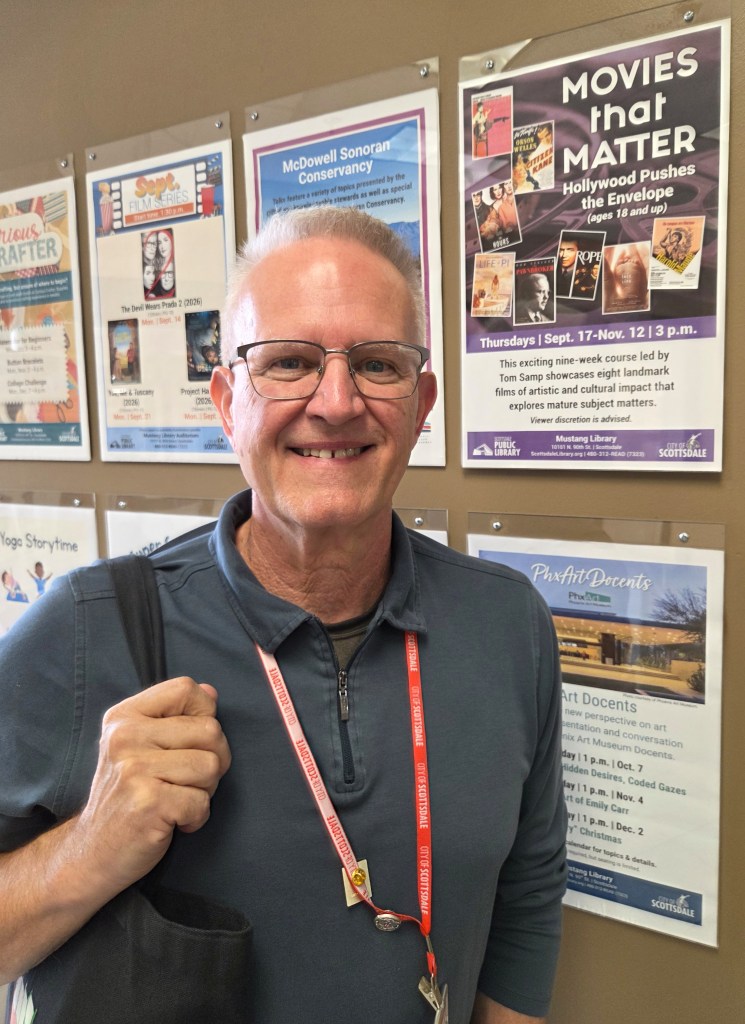
On September 17, my husband kicked off his eighth Movies That Matter film series at the Scottsdale Public Library. Since launching it in January 2023, his popular program has attracted cinephiles who crave absorbing the meaning of fabulous films and Tom’s fascinating insights in a fun-and-engaging community setting.

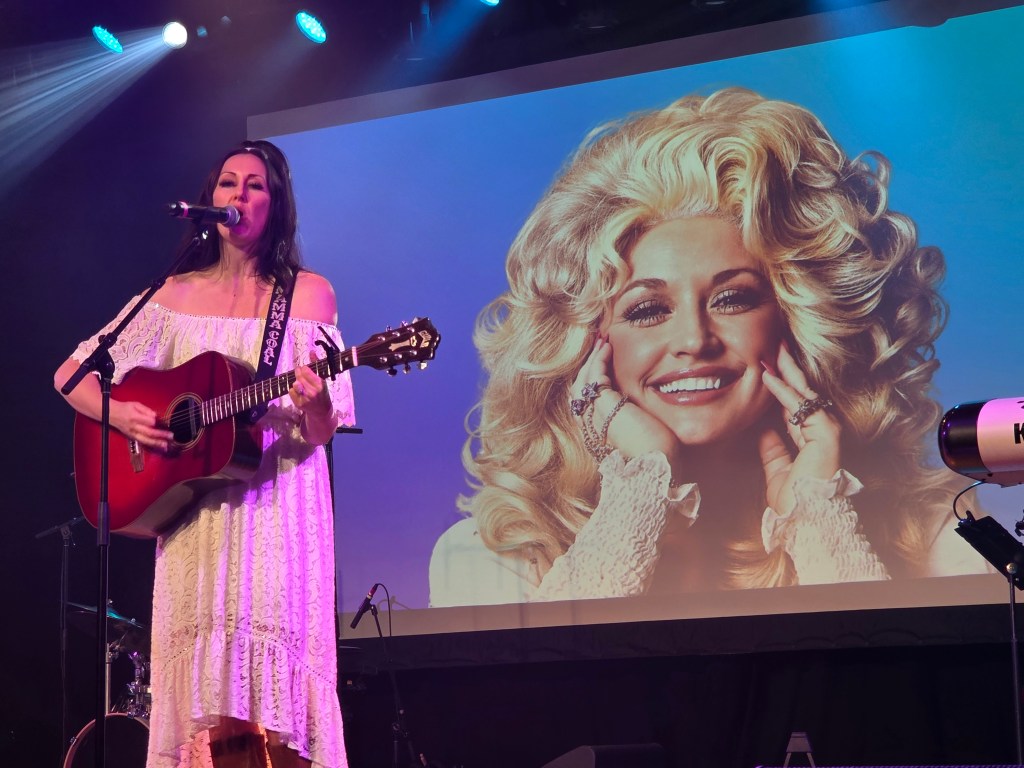
On September 25 (9/25 day for Dolly Parton lovers who grieve), I was one of ten members of the Phoenix Gay Men’s Chorus who sang back-up to Mamma Coal (host performer shown below) for a rendition of “I Will Always Love You” at a Celebration of Dolly at the Van Buren concert venue in Phoenix. A portion of the proceeds benefitted Dolly’s Imagination Library.

On September 26, my sister Diane celebrated her seventy-second birthday in the Chicago area. I remember how we teamed up beautifully during the last four years of our mother’s life (2009-2013) to care for her. For Diane’s special day, Tom and I bought her a gorgeous blue-green scarf, which she loves, in Vancouver’s Stanley Park during our Canada visit in late July.

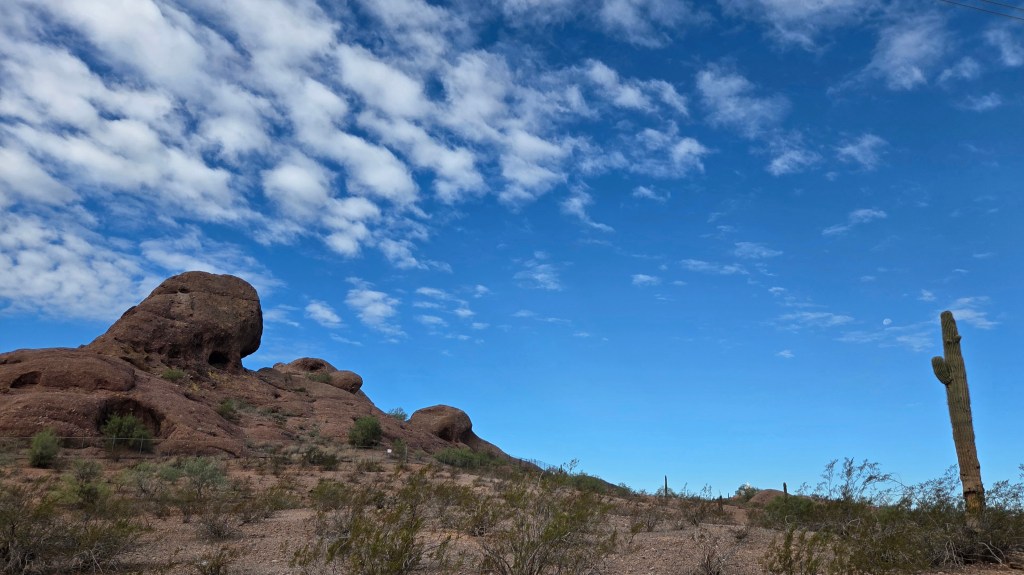
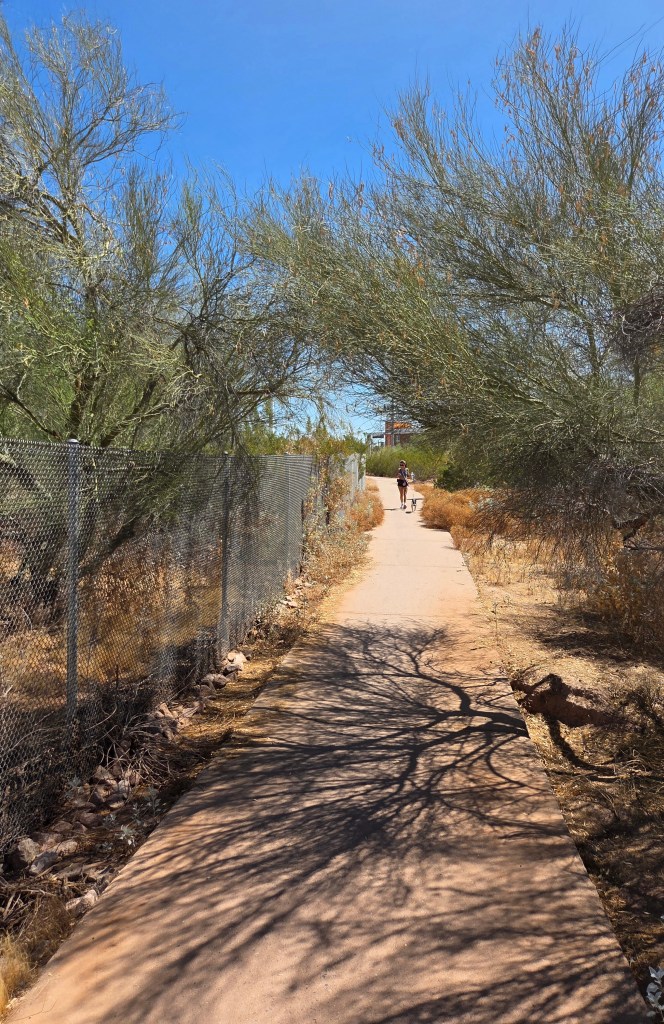
On September 30, Tom and I enjoyed cooler temperatures and hiked along the Crosscut Canal near Papago Park in south Scottsdale. Though we’ve lived in the Sonoran Desert of Arizona for more than nine years, at times I still feel I am walking on the moon whenever I witness the stark beauty of the buttes and saguaros.

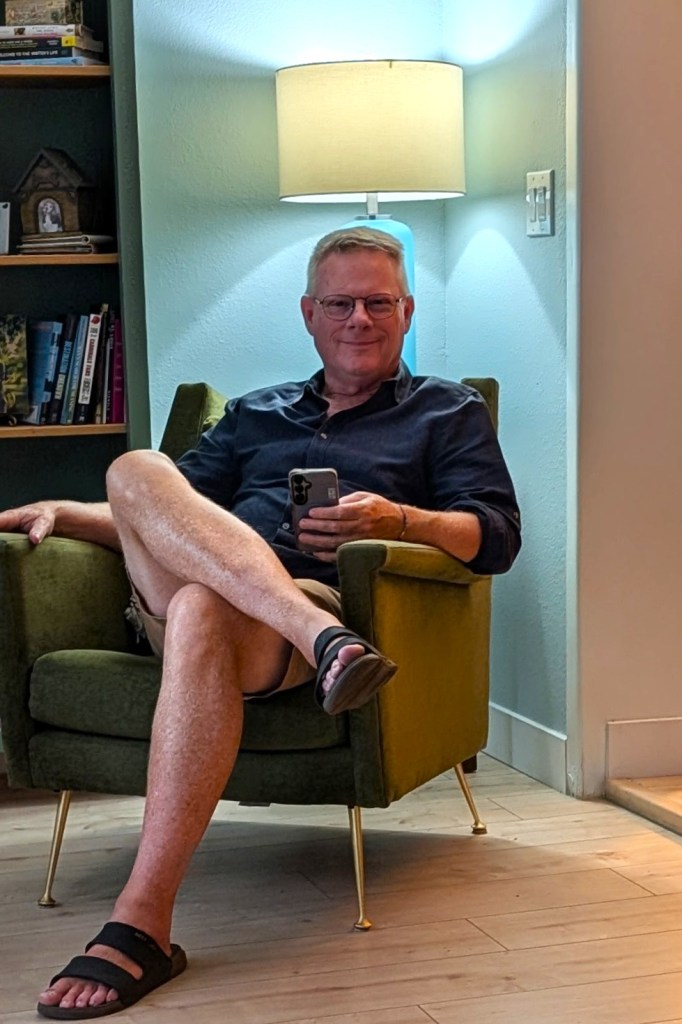
PS: Supporting photos below appear in no particular order. For good measure, I’ve also included a September 2026 photo Tom took of me (not one of my sister; she prefers her privacy).

Kudzu Vine

As Dad, Mom, Diane and I approached my grandparents’ rambling farm in Huntersville, North Carolina, in 1968 in our four-door Chevy Biscayne, waves of kudzu vine blanketed the trees.

At some point during our July vacation there, I remember my stoic maternal grandfather telling me this invasive plant, this weed, was blocking the sunlight.

Bit by bit, the kudzu was smothering the native plants and large trees in the southeastern United States.

In a metaphorical sense, I feel like one of those older trees–perhaps an oak or pine–that has grown through the seasons and spread its branches only to discover that the censorship and hate of our nation’s government (said kudzu vine) has insidiously wrapped itself around my trunk.

This is not a new development. I have been feeling this way for years. Trying to remain positive in the face of ICE raids, misogynistic slurs, shuttered healthcare programs, disregard for our most vulnerable citizens, the environment, and our right to a free press. The list of losses is endless.

Recently, my husband and I have lived firsthand through the threat of censorship in our community. It is causing us both great pain. It is also prompting me to realize how far we have fallen as a nation and what I am willing to tolerate or accept.

At some point, I will have more to say about this. I don’t know when or how. Suffice it to say, this kudzu vine–the 2026 version of the McCarthy era in the United States–is out of control.

I do believe that, ultimately, historians will shine light on whatever it is we are living through. I hope I live long enough to see the return of truth and reason and the eradication of these smothering vines.

Elder Gay

I met a new friend for lunch yesterday. It’s a rather unusual, sweet story. For that reason, I need to write about it.

About three months ago, a young reporter sent me a message via my contact page. He saw a nostalgic piece I wrote about my college years at the University of Missouri.

It included a reference to Hinkson Creek and an abandoned quarry there, which I and many other college freshmen and freshwomen frequented on Friday nights to swim and party.

Apparently, the creek is now polluted–has been for more than thirty years–with an array of contaminants, but there is a push by various environmental groups to salvage it.

In his note, this earnest reporter–a journalism student at the same university I graduated from in 1979–wanted to talk with me to include a few comments about my recollections of Hinkson Creek. He wanted to give the story some texture and a touch of humanity.

As background, I don’t always respond to these sorts of messages. Too many of them are generated by bots or feel exploitive. But this one felt different. So, I responded.

A few days later, we had a pleasant phone conversation. I shared information about the fun I had with friends at Hinkson Creek in the mid 1970s and how sad it was for me to learn that Hinkson Creek is now unsafe due to the presence of E. coli in the water (according to data on the EPA website).

Before I said goodbye to the reporter, he told me how ironic it was that I lived in the Phoenix area, because he would be moving to the Valley of the Sun in July to be with his partner. I suggested he contact me again once he got situated here.

Last week, I received a text from this young man, this recent Mizzou journalism graduate who is forty-eight years younger than me.

He now lives in Phoenix and is looking for a writing job here. He included a link to the story he wrote which appeared in the Columbia Missourian with a few quotes from me.

It’s a thorough, well-researched story, but that’s not the point of my story.

Anyway, I thanked him for sending the link to me. He asked if I was still interested in meeting for lunch. I responded with a definite YES.

Yesterday afternoon–one day before the rain finally arrived to ease our parched earth here–we met in person.

This smart, enterprising, young gay man and I talked about his job search, my writing and my husband’s passion for films, how he and his partner met, his love of writing and music, his early impressions of Phoenix, and my recommendation that he find his place in the LGBTQA community here.

I told him that at this point in my life it is especially meaningful for me to help a younger man–a young gay man–by offering a little guidance in a harsh world.

He smiled when I told him I would pick up the check and–before we parted ways, but after I invited him and his partner to come to the next Phoenix Gay Men’s Chorus concert in December–he said jokingly that meeting me is kind of like having an “elder gay” to talk with.

Ordinarily, I wouldn’t want to be referred to as an “elder” anything. But in this case, it was a term of endearment. So, I laughed and accepted it that way.

***

My wise, sassy, and “elderly” Aunt Thelma once told me when she was in her late sixties, and I was about this young reporter’s age, that “we are all like ships passing in the night.”

I have always taken that to mean that life is fleeting, and that we should try to help each other around every turn. That we should try to do the right thing, because we never know what tomorrow may bring.

I think Thelma would have been proud of me yesterday.

Who could have imagined that a story about a polluted creek would lead to a pleasant lunch?

More important, that I might reach forward to help a young gay man, while looking back to remember that unrealized twenty-one-year-old-gay version of me who most certainly would have loved a little advice from an “elder gay” friend.
A Dad’s Dream

Though nothing is predictable in 2026, the arc of every life includes mostly ordinary activities: going to work; shopping for groceries; filling up the gas tank; navigating small and large challenges that enter unannounced.

But it is the less frequent, extraordinary moments–the rites of passage–that outweigh the mundane tasks of life. Graduations. Weddings. Births. Deaths. They supersede in our psyches. They flicker forever in our memories.

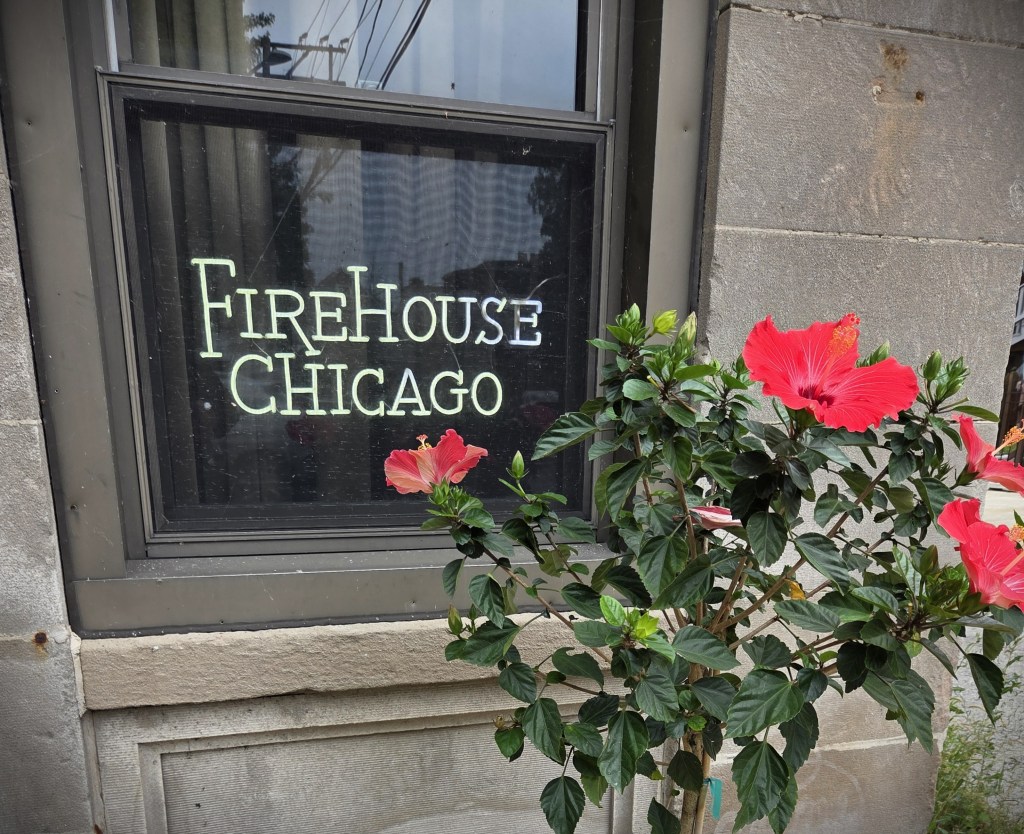
On Saturday, August 29, one hundred and twenty of us gathered at the Firehouse Chicago (a decommissioned firehouse transformed into a wedding venue) in the Edgewater neighborhood of the Second City. We came to witness the marriage of Kirk and Jennifer, my younger son and daughter-in-law.

It is a dream come true for any parent to see their adult child find their own path. To be more specific, this dad survived a heart attack on his sixtieth birthday. So, living to see Kirk marry the one he loves–the one who loves him–is the proverbial cherry on top of a hot fudge sundae.

Jennifer’s and Kirk’s early-evening, outdoor wedding ceremony was a cultural tapestry. It melded elements from their collective Jewish and Catholic upbringing.

For instance, they were married under a chuppah, a rectangular wooden structure laden with flowers. In the Jewish faith, it symbolizes the home they will build together.

After they shared their vows, a proud gay couple (my husband Tom and I) read the couple’s loving intentions for their marriage, for their families, for those who have gone before them, for their community, for the world at large in need of a hefty infusion of love, hope, humanity, equality. In every instance, the response from the congregation came in return: “Hear Our Prayer.”

A brief, unexpected shower in the middle of the ceremony–ushered in by rolling gusts of wind and the steady thrum of chirping cicadas–never dampened our spirits. It only added to the texture of the day.

As I write this, Tom and I are back home in Scottsdale, Arizona. I am fighting off the remnants of a cold. We have unpacked our bags from Chicago but haven’t yet unpacked every indelible moment from this whirlwind family wedding.

I do know in my heart that this was more than a joyous wedding. It was a healing experience to mend fences with my ex. To conjure the spirits of family members gone but still loved. To stand tall beside my husband for all the world to see. To feel true love, palpable and present, beaming between my son and his bride.

All of it gave me hope.

The Language of the Desert

I live in the Sonoran Desert and the Sonoran Desert lives in me. That’s been the case for nine years. My most prolific ones as a writer.

The language of the desert–like grains of sand that blow in through the door–is now part of my creative being.

Shimmering sunsets. Slithering lizards. Skittish quail. Stray cats. Spiky cacti and succulents. Scattering snowbirds. And those are just a sample from the letter “s”.

When I served as a “Writer in Residence” at the Scottsdale Public Library last spring, I prompted the writers in my workshop to explore the role setting plays in the stories of their lives.

I asked them to consider a place in their lives that is or was prominent and how that place might be considered a character in what they have to say. In the stories they want to show and tell.

The places I have lived or frequented have certainly provided texture to my existence and informed my perspective. The orange earth of the Carolinas. The rolling hills of Missouri. The flatlands of Illinois. The rugged buttes of the Arizona desert.

They represent distinct periods in my life, and–in hindsight–I now understand better why they each deserve their proximity across my body of literary work, six books … a lifetime of stories.

The heat here in July is intense. But it is bearable because the Sonoran Desert–even in its most torrid state–is otherworldly.

At times it feels as if I am living on the moon. The astonishing natural beauty and stately saguaros–sentinels that stand tall in valleys and on hillsides here–have led me to a creative destination outside the orbit of my midwestern sensibilities.

One where I “write on” … as I just celebrated my sixty-ninth birthday and begin this final lap in my sixties. Learning and growing. Teaching and influencing.

Standing tall as a gay man, a husband, a father, a writer. Proud as a saguaro despite my visits to the cardiologist and dermatologist to manage my personal frailties. Rooted to this vivid place, the Valley of the Sun, that is my home.

***

Note to those of you who live in the Phoenix metropolitan area: On Thursday, July 16, from 5 to 7 p.m., I will be signing and selling copies of my latest book, Sixty-Something Days, at Grounds on 2nd in Old Town Scottsdale, located at 3703 N. 69th St.

This charming neighborhood place (coffee and wine bar) is one of my favorite spots in our Scottsdale, Arizona, community. It truly is an inclusive, creative space my husband Tom and I frequent to write, read, and chill with friends. In fact, I wrote and edited a considerable portion of my latest book there.

If you are in the area, stop by to sell hello, grab a book and a glass of wine. I also will have a few copies of my other five books–memoirs, poetry, and short fiction–on hand in case you are looking for options to add to your summer reading list.

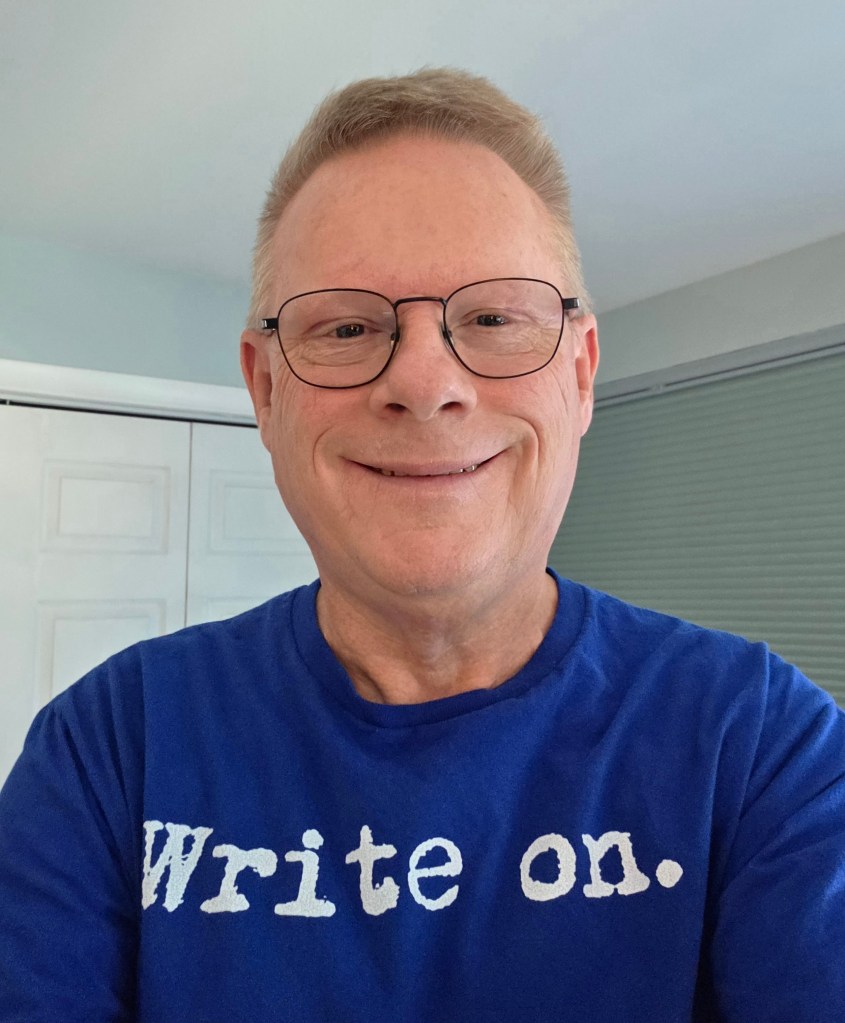
In April 2026, friends at the Scottsdale Public Library gave me this shirt after I completed my “Writer in Residence” stint there.

Too Darn Hot

“But when the thermometer goes way up and the weather is sizzlin’ hot, mister man with a plan is not. ‘Cause it’s too, too, too darn hot.”

***

As the heat rolls into the Valley of the Sun this week–100-plus high temperatures through Saturday–this snappy tune, which Cole Porter wrote in 1948 for his Broadway show Kiss Me Kate, repeats through my brain.

It’s certainly “Too Darn Hot” to hike outside in June here, unless you do it early in the day. That’s what I–and a young woman walking her Boston terrier–did Monday around 9 a.m. Nobody else was on the Papago Park trail near my home.

This morning I opted for swimming thirty lengths in the relative cool of Chapparal Pool. How I’ve missed submerging myself underwater (thanks to a couple of dermatological procedures that kept me at bay).

In the afternoons, you’re better off holding up in the Scottsdale Public Library to escape the heat. That’s where Tom and I have sequestered ourselves today, along with a few dozen others, strategically stationed at square wooden tables, hovering over their books and laptops.

Other than the heat references, why would I be channeling an old Broadway tune? Because my next choral concert with the Phoenix Gay Men’s Chorus–“Broadway Lights”– is fast approaching: June 27 (2 p.m. and 7 p.m.) and June 28 (2 p.m.) at Tempe Center for the Arts.

As described in our promotional materials, “It will be a spectacular celebration of some of Broadway’s most beloved musicals. From the soaring melodies of Wicked and The Sound of Music, to the show-stopping energy of Hamilton, Moulin Rouge!, Hairspray, Into the Woods, The Book of Mormon, The Wiz, and The Greatest Showman, this season finale is packed with music that has captivated audiences around the world.”

Coincidentally, “Too Darn Hot”–timed beautifully with the inevitable onset of our desert heat–is the closing number for Act One.

If you live in the Phoenix metropolitan area, step into one of the coolest concert venues around: the Tempe Center for the Arts. Get your tickets at http://www.phxgmc.org.

You may be wondering “Since it is Pride month, is there a LGBTQ Pride element to this concert?” The answer is a resounding “YES!”

My chorus mate August and I have teamed up to write the libretto for the concert. It features nine storytellers, who will describe how Broadway music has served as a beacon for the LGBTQ+ community in happy and sad times.

Together–the music, the stories, and a slate of hot dance numbers–will combine to create a full theatrical production, which our loyal audience has come to expect.

This will mark the completion of my ninth season (singing and writing for) with the Phoenix Gay Men’s Chorus.

I still recall auditioning for the chorus in August 2017. Tom and I had just moved to Arizona from the Chicago area.

I was depressed and anxious, desperately trying to regain my health, to uncover an unobstructed view after surviving a heart attack on the way west in July 2017 on our sixtieth birthday.

Finding the chorus, nurturing new friendships, and reigniting my passion for singing has been a key element in my recovery. It helped me lighten my mood and smile again.

When I step onto the stage again on June 27, I know I will feel grateful for the music and the nine years of creative discovery. But also, for this safe haven. This supportive community of people.

They have helped me to realize I still have a lot to give. I still have a lot to say. I still have the ability to stand on a stage and raise my voice, especially now as we cling to the hope that–maybe someday–our democracy can be salvaged.