Category: Essays

Thank You, Science

Like this image, life has been more than a little blurry for the past fifteen months. I have tried to keep smiling, but the outrageous number of deaths due to COVID-19 (more than 580,000 in the United States at this point), endless Zoom interactions, mind-numbing-worry-filled hours, and angst-ridden social and political moments have made it difficult at times.

Add in the daily masked encounters in contact-free zones to protect ourselves. There have been too many of those to enumerate, but through 2020 and the first four months of 2021 I never questioned the need to wear a face covering, though it certainly created an emotional barrier to contend with.

What would you have said if I told you this on January 20, 2021, (the day Joe Biden took the presidential oath of office)?

“By the middle of May more than 47 percent of Americans will have received at least one dose of a COVID-19 vaccine and 37 percent of all Americans (more than 120 million including my husband and me) will be fully vaccinated. Oh, and CDC masking guidelines will be substantially relaxed as a result of the greater numbers of protected citizens. For instance, if you live in Scottsdale, Arizona, where I do, you will be free to exercise in a community gym without wearing a mask on May 15.”

You probably would have responded like this:

“You’re crazy, Johnson!! Stop building my hopes and spreading unrealistic half-glass-full-but-dreamy conspiracy theories.”

But I’m not crazy. Think about what we have accomplished in less than four months as a nation. Where would we be without the vaccines, a compassionate and hard-working president, and science? Nowhere.

I realize there is a sizable chunk of Americans who will never get vaccinated, and as a result we will likely not reach herd immunity. If you are an anti-vaxer, it is your choice not to get the shots, just as it was mine to consent to receive the inoculations.

However, I see the “no vaccines for me” choice as a short-sighted and selfish one. I view the approved, no-charge COVID-19 vaccines as a “get-out-of-jail-free” card. (If you’ve played Monopoly, you get my drift.)

Without the vaccines (two doses of the Pfizer vaccine for me) I would have felt forever afraid and vulnerable. I would have continued to be worried about my well-being, not to mention paranoid about spreading the virus to others. All of us would be going nowhere … figuratively and literally.

Now, with the vaccine coursing through my veins, I am happier, freer, and less afraid than I’ve been in fifteen months. I can plan a trip with my husband to visit friends in Montana this summer, sing again unmasked in the same space with my friends in the Phoenix Gay Men’s Chorus, and work out at Club SAR, the community gym I frequent, without wearing a covering over my face. None of that would have happened without the amazing science of epidemiology and vaccines.

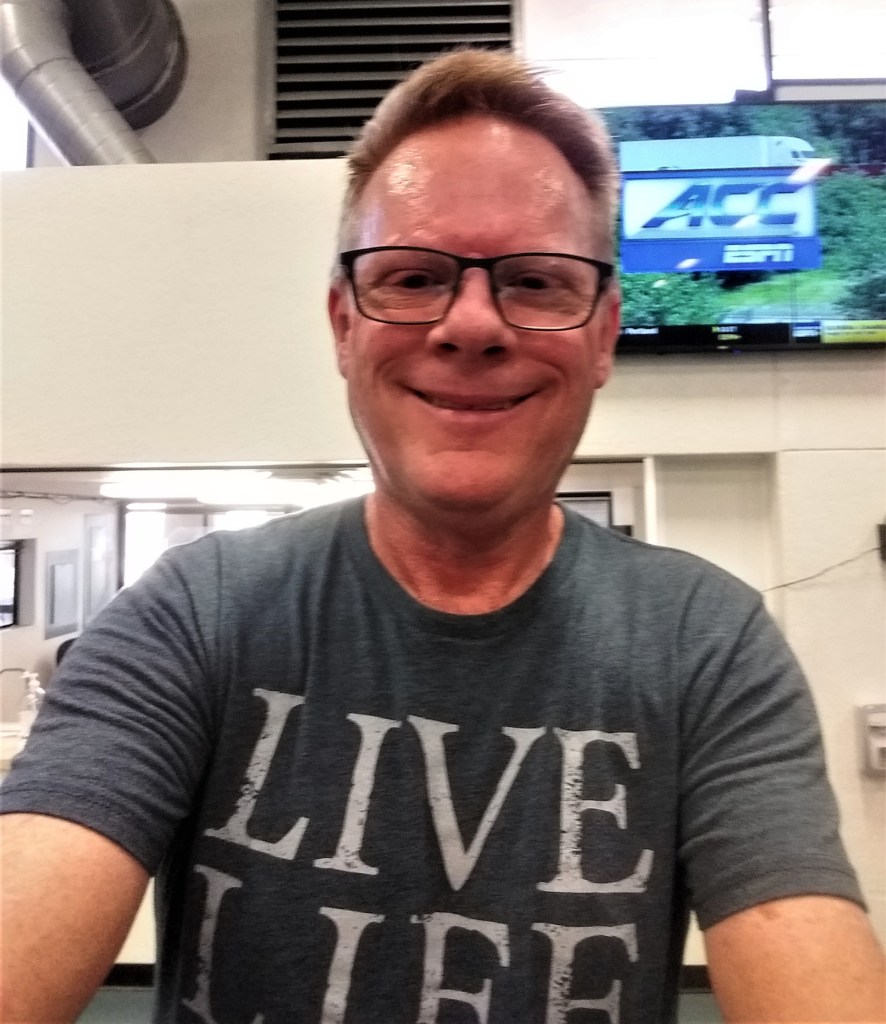
Best of all, blurry or not, with the boosting benefit of two shots in my right arm and some mild discomfort for a few days, I get to see the smiling faces of friends and acquaintances, and mingle with them again. That’s something I have missed dearly.

Thank you, Science.

The Ultimate Curveball

Though the road of life is paved with good intentions, it is often treacherous.

Four years ago this week, Tom and I accepted an offer on our Mount Prospect, Illinois, home. As we approached another milestone–our shared sixtieth birthday–we crossed the threshold into a new chapter and stepped closer to the warmer life in Scottsdale, Arizona, we dreamed of.

Though we planned extensively, nothing could have prepared us for the tumultuous turns we would navigate together on the way west in July 2017.

Published in 2018, An Unobstructed View, chronicles our journey. Here’s what one reader had to say in April 2020:

“This wonderful and uplifting book reads like a compilation of short stories, but it is beautifully woven together to demonstrate all interconnections that make up a community and a family. The book also pays tribute to people who may only be in our lives for a short time and emphasizes that a brief encounter does not diminish significance.

Mark’s story is one of courage. Courage to start a new chapter in life, and courage to move forward with optimism even when life throws the ultimate curveball. His journey will take you through his love of baseball, the joys of owning a dog, and the challenges of being a gay man. Although these are only a few of the anecdotes he explores, you’ll quickly notice that the book is well poised to connect with a large readership.”

After the past year we have endured, all of us are weary survivors. If you need a dose of inspiration and gratitude, download a Kindle version of my book on Amazon. It’s just ninety-nine cents through May 8.

Cat on a Hot (Not Tin) Roof

More than a shameless ripoff of the Tennessee Williams play and the ensuing 1958 movie starring Elizabeth Taylor and Paul Newman, this is a story about our community cat and the Sonoran Desert heat. Both are staring down at us on May 1.

Early this morning, Tom and I spotted Poly on our neighbor’s roof. (Poly is the name I’ve given the bright-eyed feline that has made our enclave her home; we aren’t sure who she belongs to, but she is everywhere in our retro Polynesian Paradise condo complex).

In pursuit of Saturday’s breakfast, persistent Poly was stalking a mourning dove and her baby nesting safely (they thought) under the eaves. Tom’s response was to worry about the well-being of the birds. Mine was to grab my digital camera and to stumble outside in my robe to document the moment.

Eventually, Poly slinked away without a catch. She pattered across the roof to find mischief elsewhere, perhaps on a back patio somewhere down the row. We likely won’t see her for a few days. That’s her pattern, at least. Appear. Disappear. Resurface. At dusk later this week, I expect she will reemerge and patrol the sidewalk in search of an evening snack.

The dry heat is more constant, less whimsical than Poly. Once it appears in early May (we expect a high of ninety-eight degrees in Scottsdale today), we know triple digits aren’t far away. But Tom and I have learned to adapt to the “oven” that is the Sonoran Desert from May through September. In a strange way, it’s become a familiar, returning friend.

In the Phoenix area, early morning and late evening walks or swims are the solution in the summer months … along with a few strategically planned escapes into the cooling pines of northern Arizona. This June we expect to venture even farther north to spend a few days with friends in Bozeman, Montana.

After a year of relative hibernation, I expect driving on the open roads and discovering new vistas in Arizona, Utah, Idaho and Montana will feel like a real adventure. It will certainly be welcome relief after the fright and disorientation of a pandemic year.

But even if we were forced to stay put another year and tough it out indoors away from the midday sun, the summer months are relatively peaceful in Scottsdale, because visitors leave to avoid the heat. For that reason, I give them high marks. I look forward to the quiet, to more time to reflect and write, and to hearing the potential pitter-patter of Poly’s cat paws pacing down our scorching sidewalk or across our hot (not tin) roof.

They Pitch Horseshoes, Don’t They?

Late yesterday afternoon–a mid-April throwback Monday squeezed in before the Sonoran heat arrives in full force–I met John and Len, my full-time, sixty-something friends and part-time Polynesian Paradise neighbors, at the north edge of our community. We played horseshoes.

Two sandy, part-sun-part-shade horseshoe pits (spaced about fifty feet apart) have existed in our condo complex since the early 1960s. In 2021, residents and guests seldom use them. It’s more common for folks to walk by and not think twice about the horseshoe pits and their history on the way to their mailboxes.

That didn’t stop John, Len, and me from reclaiming the space and recapturing a practice that our fathers and grandfathers enjoyed more frequently in the twentieth century. The primitive, low-stress gaming experience was just my speed: slow, nostalgic and gentlemanly. It was a light-hearted, jovial hour of tossing, joking, clinking, clanking, and male bonding. (By the way, John won on Monday. He came from behind with a well-tossed ringer. Len and I will survive. We will live to throw horseshoes another day.)

Anyway, the activity rekindled a memory I wrote about and published in 2017 in a story titled They Pitch Horseshoes, Don’t They? from Tales of a Rollercoaster Operator, my book of Missouri recollections from the 1960s and 70s. It’s available on Amazon in paperback and Kindle.

What follows are excerpts. The setting? Babler State Park and the rolling rural countryside thirty miles west of St. Louis in October 1961. While the men were throwing horseshoes that day, I discovered a primitive-and-glassy nirvana: marbles.

***

Clink clank clink. Clink clank clink. It was the sound of metal on metal. The men in our family–Dad, Uncle Ralph and Uncle Harry–were hammering stakes into two sand pits about fifty feet apart. They sure do like to fling horseshoes, don’t they, I thought. Within minutes, they were tossing the U-shaped irons from one end to the other, hoping to catch the right angle and rack up a ringer …

On this particular occasion, while the women in our family unfurled the tablecloth and unpacked the meat for grilling, and the men settled into their game and passed cold bottles of Falstaff between throws, I wandered down a path to investigate the picnic area. That’s when I found a vacant campsite nearby and an abandoned plastic bag of multi-colored glass marbles wedged into a gap between the flat rocks of a stone bench.

In my visual memory, this was a To Kill a Mockingbird moment. You know, like when Jem and Scout found Boo Radley’s toys and trinkets buried in the trunk of a big ole tree. In hindsight, I suppose Boo had nothing to do with my glassy discovery. Another child had simply and accidentally lost his or her marbles. For some period of minutes, hours, days or weeks, these multi-faceted marbles were no one’s. They were lost in an unassigned gaming galaxy. But in the universe of fair play, it was Finders Keepers. This treasure was mine …

When I pulled Dad away from his pitching and showed him what I had found, his smiled doubled instantly. It felt like we had discovered a whole new language mined from an archeological dig … In a flash, Dad and my uncles suspended their horseshoe tossing, reverted to their childhoods, and surrounded me with explanations and names for the different marbles–many of them laced with swirls of colorful strands …

Marbles became my forever home of circular undisrupted creative possibilities. After our 1961 picnic was over and the sun began to set, we snuffed out the campfire, folded up the red gingham tablecloth, and packed away our picnic basket. I stepped up into the back seat of our Plymouth with my new marbles in tow.

Over the coming weeks and months, Dad pitched more horseshoes at the farm of Ed and Ollie Puetz near Gray Summit, Missouri, where we picnicked with family and friends and I watched the men drink another round of brews and play the game they loved.

Meanwhile, I added marbles to my glassy collection: aggies (made of agate) swirling with various ribbon patterns inside, tigers (clear with orange-yellow stripes), opaques (milky green, blue, and gray marbles) and cat’s eyes (they look like what they sound like).

All of my marbles became a creative extension of me. I played my instant-game-in-a-bag any time and any place–mostly at home on our basement floor on ordinary rainy days after kindergarten. All I had to do was obey one rule: “Mark, don’t leave your marbles in the middle of the floor.”

Metamorphosis

This week marks five years since I completed and published my first book, From Fertile Ground. In celebration of the anniversary of my entry into this literary life, you can download a free Kindle copy of my book on Amazon from March 24 through 28. What follows is the story of what brought me to this moment. If you are an aspiring writer, I hope reading this will provide a little added encouragement.

***

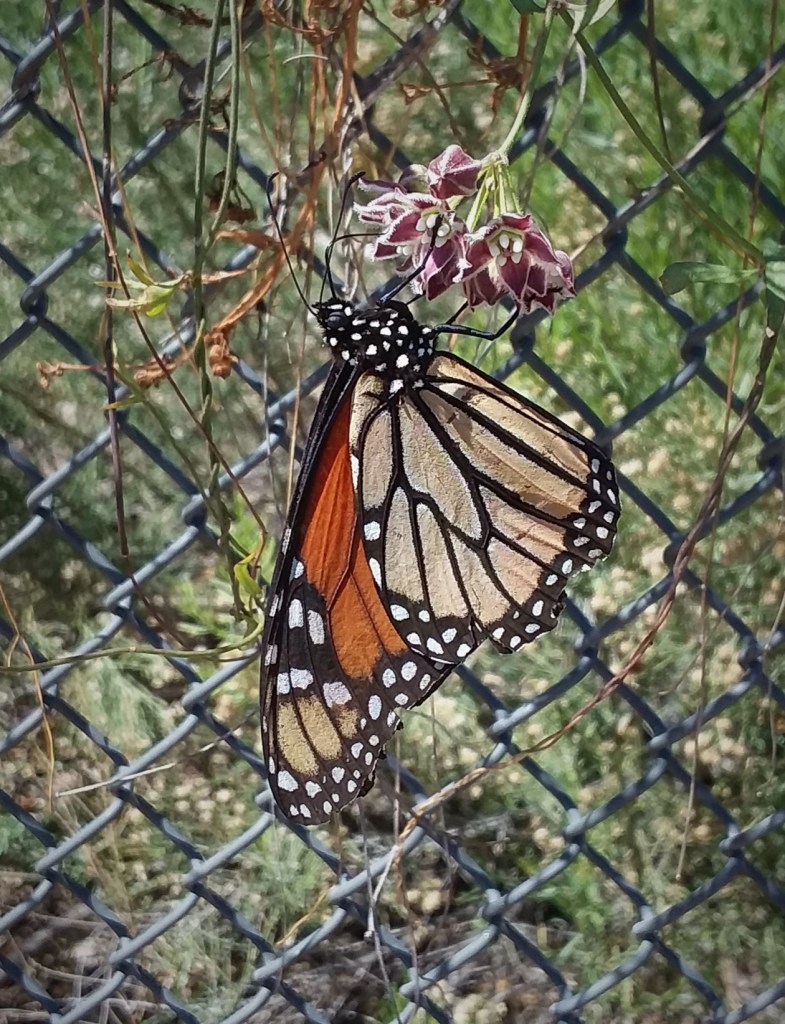
If you look and listen closely—and breathe deeply—you will find spring stirring in the Sonoran Desert. Sweet and fragrant orange blossoms dance through the air. Lizards and ground squirrels reemerge to scamper and soak up the sun. A hummingbird darts and twitters in a Palo Verde tree. I imagine a lone loon, descending from a blue sky, is practicing for his pilot license. He receives clearance from nearby Sky Harbor Airport traffic control and lands with a graceful whoosh that ripples in the Crosscut Canal. A monarch butterfly flits and rests on a bud near the fence of the Desert Botanical Garden, pausing long enough for me to creep in for a closeup of nature’s transformation. 

This central Arizona winter-to-spring progression is a warmer, dryer, more gradual shift—a far cry from the flurry, upheaval, and calm of a midwestern lion-to-lamb experience I had been accustomed to for my first sixty years. Nonetheless, it is a March metamorphosis.

Five years ago, like a clumsy butterfly, I emerged from my own cocoon. At age fifty-eight, I launched my first book From Fertile Ground. I remember the anticipation and anxiety of March 24, 2016—the day my book emerged—as I moved from wannabe writer to published author.

I felt exhilaration. It was as if I were boarding a rollercoaster, gripping the bar tightly, grinning ear to ear, throwing my arms in the air, and shouting “Look over here” as my book entered the literary universe. Maybe I sound immodest, but it was and is such a thrill to have discovered this better-late-than-never renaissance.

Previously, as a busy single dad and on-the-go communication professional, the idea of writing on my own terms seemed like a faraway neverland of creative euphoria. But slowly, as I drifted from the gravitational force of my previous orbit, I felt the magnetic pull of an artistic life.

This literary life sprung from a personal void, molded from the fog of my grief after my mother died in January 2013. At that point, I was lost with plenty of tears, but without the language of emotion that normally came easily for me.

Fortunately, I was not alone on my journey. Thanks to the encouragement and support of my husband and a skilled therapist, I forged ahead, jotted notes in my diary, took a few nature photography classes, and slowly stepped away from a thirty-four-year advertising, PR, and consulting career. It had sustained my bank account and carried me through leans years of single fatherhood, but ultimately drained my energy and creativity.

Early on, after my corporate “retirement” there were moments of doubt and uncertainty to contend with. Even so, the more I wrote in my journal, the more I felt my voice begin to emerge. Within a few months, my writing and reading led me out of the darkness into the light.

A litany of wisdom-filled letters my mother sent me—along with a boxful of more than fifty years of diaries my grandfather left behind—spurred my creative impulses. I sequestered myself and perused them all. They spoke to me and my love of family, heritage, and history.

One day in 2014, as I turned the yellowing pages of my grandfather’s rural life—his spartan existence—an idea surfaced in my brain. It told me to weave a tale of three writers telling their stories across the generations, leaving behind a trail of their own words. In that moment, I found a new passion. From Fertile Ground was born. So was my life as an author. I prepared to emerge from my cocoon.

A year of daily soul-searching, writing and editing passed. In late 2015, I finished my manuscript. With the help of a friend, I found an editor and graphic designer—Anna and Sam—who came highly recommended. They both lived and worked in Nashville, Tennessee.

Instinctively, I liked hiring professionals with connections to the South, because much of my story shared a border with Tennessee to the east—in the rolling red earth of rural North Carolina. That is where my mother was born, where my grandparents owned a farm, and where my sister and I frolicked and spent parts of our summers in the 1960s.

Anna provided me with her recommended edits in January 2016. Following that, I collaborated with Sam. With my input, he created the cover for my book, designed the interior pages, formatted the text, and loaded it into the Amazon self-publishing software.

By late March 2016, I held the first copy of my book in hand. Friends and acquaintances began to send notes telling me they enjoyed reading my book and were moved by it. It was a joyous period in my life, far from the tears and fog that had preceded it just a few years before.

***

Five years have passed. I keep nurturing and practicing my passion for writing. It remains a priority in my life. I write a blog and have published three more books–Tales of a Rollercoaster Operator, An Unobstructed View, and I Think I’ll Prune the Lemon Tree–about the people and places that have influenced me.

I take long walks in the desert and collect photos to stir my imagination. I marvel at the beauty and continuity of nature that surrounds me. I give thanks for the gift of life in a warm and rugged place.

This metamorphosis continues.

The Texture of Our Lives

What have I missed most over the past year? The spontaneous moments that spring from nowhere. And, let’s face it, going nowhere pretty much describes what we have all experienced from last March to this one.

But, like the daffodils of March which I imagine are aching to bloom again in Illinois, the feeling of going nowhere is turning into the possibility of going somewhere as flickers of normalcy return.

My cousin Phyllis, who lives in Missouri, texted me a fun Happy St. Patrick’s Day message yesterday afternoon. It always brightens my day to hear from Phyllis. Her mother and my father were twins. We share lots of fond, long-ago, St. Louis memories.

Over the past nearly-four years, Phyllis and I have stayed in touch (via text mostly) since Tom and I last saw her and her family in person in St. Louis. Strangely, I suffered a heart attack in St. Louis the day after we dined with my cousin and her family. Tom and I were on our way west to our new home in Scottsdale when our entire world turned upside down.

Anyway, the texts back and forth between Phyllis and me are bursts of positive energy: wellness check-ins; holiday greetings; news and photos of her adorable granddaughters; snippets of stories about our beloved St. Louis Cardinals; exchanges about the weather in the St. Louis area and Scottsdale; and anecdotes about the latest developments in my writing universe. But, over the past four years, we have rarely spoken on the phone.

Yesterday, after our latest text exchange began, I decided to change things up a bit. I needed more. I needed to hear Phyllis’ voice. So I called her. We shared stories of our recent vaccinations and our grown sons. We laughed a little. We also complained about the state of the world that worries us. Our conversation felt deeper and more complete than the text exchanges. I realized after the fact how much I’ve been missing these kinds of conversations.

As all of us have retreated during twelve months of a global pandemic for our own protection, perhaps we have retreated too much. Perhaps, though we live in a world where we have the ability to text each other, we have created too much social distance between us and those we love. After all, we are human beings. We are social creatures. Even if we can’t touch each other, we need to feel as if we can. Our voices are instruments for making that happen.

A second example of me trying to recapture some spontaneity in my life happened this morning. I drove to Eldorado Pool for my morning swim. The pool was rather busy, but I spotted my friend Frank. He offered to share his lane. I thanked him and jumped in.

Before March 2020, Frank is someone I saw two or three times a week at the pool. We always traded random stories. This usually consisted of our favorite Scottsdale restaurants or our past lives on different trajectories in the Chicago area. Frank and I frequently connected on the fly in the stream of life. It was never planned. If it were, I think it would have felt less human, less important.

Of course, when our world shrank in 2020, there were no Frank-and-Mark encounters. When the pool was closed and the winter weather lingered longer than expected, that passing-friendship aspect of my life evaporated. Now that the weather is warming up, I expect to see Frank more regularly. We will share more of our foodie stories, pounds we need to relinquish from our pandemic doldrums, and the burgeoning construction activity in south Scottsdale that is growing up around us.

Yes, the thousands of lives lost due to COVID-19 are the worst of all. But the little moments, which comprise the mosaic of our lives, have been missing for far too long.

While we continue to wear our masks and shout with joy at the realization that the pace of vaccinations is increasing rapidly, it’s time we paused, breathed deeply, and began to recapture the texture of our lives.

After Our Stories Set Sail

I feel the pain and glory of every writer. We build the frames of our books, chapter by chapter. The process takes years. It is the culmination of time, art, and commitment.

We begin in the darkness in front of an empty page or a blank screen. We write a sentence or two that makes sense. We add and subtract in words. We rinse and repeat. We submerge ourselves to find the deepest meaning in the mundane and the spectacular.

One day, after months of determination and doubt, our rough draft is done. But we pause only briefly. We don’t want to lose our momentum. We dive back in for round after round of edits, because we want our stories to adhere to each other and to every reader who spends time with them.

Finally, the rewriting and polishing reveal the stories we intended. We invite a few trusted professionals, an editor and graphic designer, to join us in the literary chase. They stand by us on shore as we rewrite and polish passages, as we search for and discover the perfect cover, as we tweak phrases one final time, as we launch our true and false stories into the world.

As I watch my latest book, I Think I’ll Prune the Lemon Tree, begin to bob on the waves of the reading world in the middle of a global pandemic, I wonder. What will happen next? Who will read my book? What will it mean to them? What will readers have to say about it?

These are just a few of the questions we independent writers ask after our stories set sail. We are brimming with ideas, but also uncertainties. We have little control over where our stories land. All we can do is breathe life into them, guide them from afar, send a little money their way, push trade winds in their direction, and wait to hear about our creations once they have landed.

Only then is a writer’s journey complete.

My Lemon Tree Book is Live!

The trail of my literary life has led here. The Kindle version of my fourth book, I Think I’ll Prune the Lemon Tree, is now available on Amazon. (Paperbacks are in production and will be available for purchase at this same location on Amazon in the next few days).

The rush of adrenaline I feel today is at least as satisfying as books one, two and three, because I’ve devoted more than three years to this creative endeavor–imagining, developing, polishing, and agonizing over it.

In that sense, today is a combination of the exhilaration of unwrapping Christmas presents, skipping out the door on the last day of school, feeling weak in the knees the first time I approached the edge of the Grand Canyon, and hoping for a clean bill of health from my cardiologist. It’s all of that rolled into a freshly-baked batch of chocolate chip cookies.

In this anthology of Arizona stories, I dig deeper into themes that are important to me: the lasting love and comfort of family and friends; the humor, irony, and poetry in everyday situations; the profound beauty of nature and how it shapes us; the joy of realizing a literary life; and the conviction required to be an authentic gay man–a real gay couple–in a world often rife with ignorance.

As you might expect, the upheaval we have all faced in Coronaville (my name for our shared global address of uncertainty) is present here too. How could it not be? The pandemic has dominated our lives and–at its core–this is a non-sequential personal and societal 2017-to-2020 slice of life.

All of these themes–and flights of fancy (backward and forward in time) to visit familiar and new people and places–run through my book. They are the threads in this tapestry that has become my writing style. They are the elements of the sometimes-whimsical-sometimes-serious voice I have unearthed in my life with Tom in the warmth of the Sonoran Desert.

As we wait for our vaccinations and continue to hope we will recapture the most important strands of our disrupted lives, I think you will find comfort, honesty and humor in I Think I’ll Prune the Lemon Tree. I also think it is a testimonial to the importance of our families, communities, and human connections as we strive to sustain ourselves no matter where we live, no matter where this journey leads us.

From Crab Apples to Lemon Trees

In June 1962, a month before my fifth birthday, I stood alone outside the west wall of my brick childhood home. I wore my high-top Keds and cargo shorts with crazy pockets. The wind raced past my crew cut.

Our three-bedroom ranch in south suburban St. Louis appeared identical to two dozen others in the neighborhood, except ours featured a flowering pink crab apple tree with stair-step limbs I loved to climb.

In the shade of the branches, a clear thought jumped to the forefront of my brain. “I am different. I have important things to say.” The idea lingered and swirled through my consciousness.

As I look back at that vivid memory—one of my earliest—I must have recognized I was unlike most of the other boys. At that young age, I must have known I was gay. I must have begun to identify a need to share my thoughts and tell my stories one day.

Since that moment, I have lived at least four lives—shaped by local geography—and written four books. I have played in the red earth of North Carolina, navigated the rolling hills of Missouri, survived the flatlands of Illinois, and discovered the peaks and valleys of Arizona.

I never imagined I would live and write in my sixties in the rugged landscape of the Sonoran Desert, but the trail of life has led me here to the threshold of publishing my fourth book, I Think I’ll Prune the Lemon Tree. It will appear on Amazon (in paperback and Kindle versions) in late January or early February. Of course, once it is available for purchase, I will let you know.

In the first three years of my Arizona residency—2017 through 2020—the Grand Canyon State has enriched and shaped my life with natural beauty, profound uncertainty, and joyful humor. My goal was to reflect all three in this book, and develop a larger narrative about a gay man and his husband fulfilling their dreams, reflecting on their experiences, hoping to survive a global pandemic, and aging in a bold landscape.

If you are drawn to the themes I explore here on my blog and in my books—nature, family, community, heritage, human rights, humor, love, loss, health, truth, diversity, and creativity—I think you will enjoy reading my latest book.

Of course, nearly six decades have passed since I stood by that flowering pink crab apple tree I loved as a child. It has been replaced by the citrus trees that surround Tom and me in our sixties in our Scottsdale condo community. But the value of memory and storytelling is that I can remember the most important trees, past and present. I can choose to honor each of them.

Little did I know that one day a luscious lemon tree, thirty feet outside my front door, would inspire me to write and share the broader stories of my Arizona life.

The Pledge of Allegiance

Because I am a writer, you might imagine it would be easy for me to put my anger and pain into words.

You might think it would be simple enough for me to describe the brutality our current president has brought to our country for the past four years or the shame and frustration I felt as I watched a mob of misguided lemmings follow his lead, storm the U.S. Capitol, and pillage it on January 6, 2021.

But it is not.

It appears (to at least half of us and the rest of the world) that we have lost our bearings, sense of righteousness, and humility. The rest (some of whom smashed windows, dishonored our House and Senate chambers, and scaled walls for a selfie) are content to wallow in lies, deception and misinformation.

Most of this destruction was perpetrated by a man who has no moral compass, no interest in the well-being of our nation’s citizens as we wander for another day through the darkness of this pandemic, as we watch the death toll grow, as we wait for a vaccine that is slow to arrive.

It’s time for a history lesson. It’s time to examine The Pledge of Allegiance–something I learned and recited in first or second grade as I stood by my desk with my hand over my heart back in the suburbs of St. Louis, Missouri.

It’s time to ask: Do these words mean anything anymore? Do we still believe and adhere to these words that open our congressional sessions and have served as guideposts for our children, adults and–most important–government officials to follow?

I pledge allegiance to the flag of the United States of America, and to the republic for which it stands, one nation under God, indivisible, with liberty and justice for all.

If they do, we need to hold all of those involved–including the current president and his enablers– accountable for their treasonous and criminal behavior. We need to remove them from their offices, fire them from their jobs, convict them of their crimes.

We need to uphold our civil rights and liberties for the masses. We need to ensure there is justice for all.