Category: Grief

Thirteen

It is inevitable that we will lose some of those we love along life’s journey. But all is not lost.

When seminal I’ll-Be-Seeing-You moments, birthdays, anniversaries, songs reappear, we can’t help but acknowledge them.

Over the years, I have chosen to pay tribute to those I love in my memoirs in significant ways. None more than my mother.

These three sentences appear in my first book, From Fertile Ground, which I wrote and published in 2016.

“She died in the wees hours of January 26, 2013, at age eighty-nine and a half. The air was arctic cold and the moon was full. Every time I see a full moon now or experience the change in seasons, I’m reminded of my mother’s undaunted spirit.”

On this — the thirteenth anniversary of her passing — I pause.

I give thanks for Helen Matilda Ferrell Johnson.

I remember her unconditional love, her letters, her wisdom, her level-headedness, her resiliency, her love of nature.

And I do my best to carry on.

I keep writing.

Rolling Out the Dough

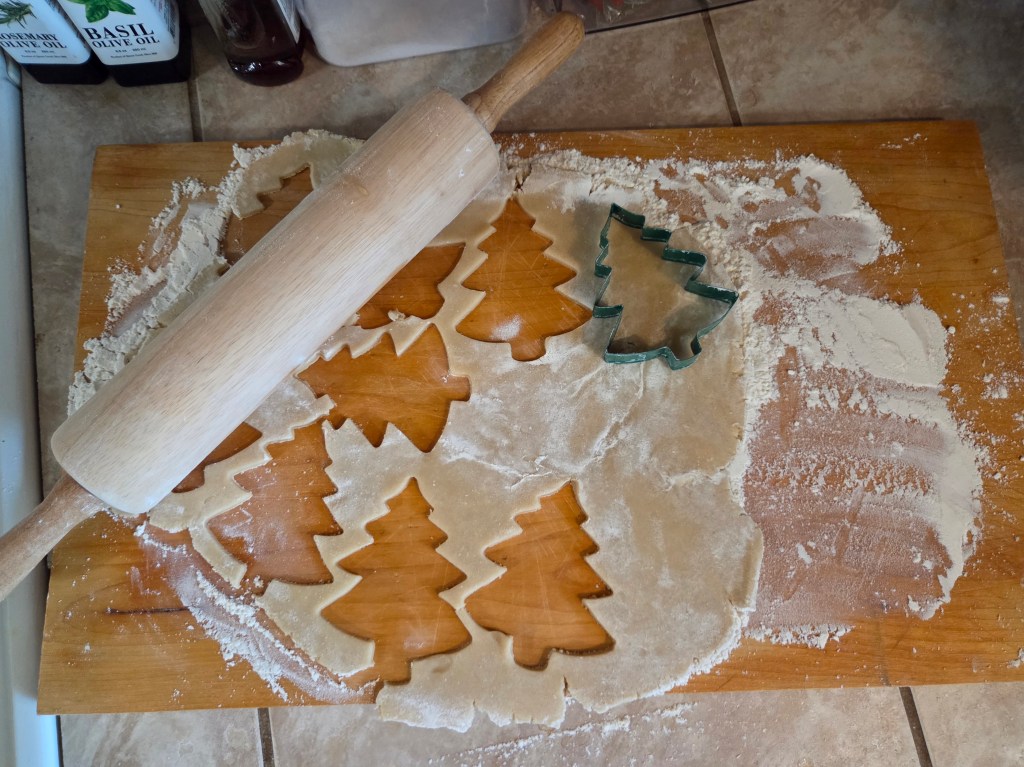
Back in the early 1960s, Mom plucked two mounds of dough out of our Philco refrigerator.

She plopped them on the kitchen counter to let them soften and warm to room temperature, then pulled her rolling pin out of the cupboard.

Diane and I took our places on either side of her, holding our primitive cookie cutters. Grey. Flimsy. Metal.

One was a simple star. The second, a classic Christmas tree. The third, a basic bell. The fourth, a reindeer in flight. The last one, a profile of Santa Claus carrying a pack of toys.

Further down the counter, two slightly bent cookie sheets waited, along with green and red sugar sprinkles we would soon shake above our freshly formed Christmas cookies.

But, in this gauzy 60s slice of life featuring baking, rolling out the dough had to come first.

Mom reached into her container of flour and tossed a handful on the counter. Then, dusted the wooden roller with the remains.

She leaned in with the rolling pin and pressed the dough. Back and forth with equal measures of love. The surface expanded with our hearts and imagination.

We took turns dipping the cutters into the flour, creating our shapes in the dough.

Then, we lifted them carefully with a spatula onto the cookie sheets, added the sprinkles, and slid them into the oven for eight to ten minutes.

While the first batch of cookies baked, Mom gathered the bits of dough that remained. She created a smaller ball and flattened it out with the roller. Together, we repeated the process.

It was 1961. I was four years old. Diane was seven. We felt loved, safe in the presence of our mother.

***

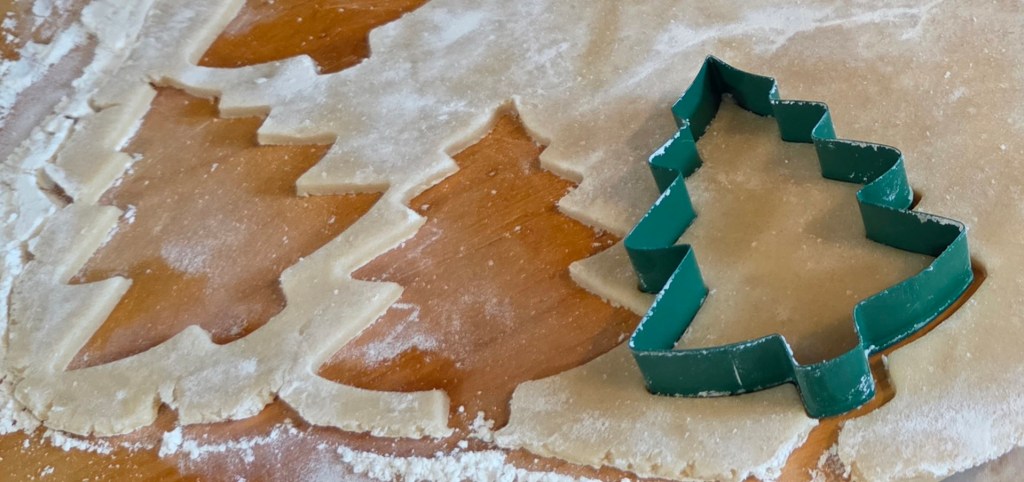
Earlier this week, I found one green Christmas cookie cutter in our kitchen drawer here in Arizona. It was a gift from our friend Jillian a few years ago, but I hadn’t made sugar cookies from scratch since those early days in suburban St. Louis with my long-gone mother.

Tom and I bought a wooden rolling pin, and I found an easy sugar cookie recipe online. I assembled the ingredients to make the dough: butter, sugar, flour, one egg, a teaspoon of vanilla extract, and a dash of salt.

I mixed it all together and let the dough settle in two large discs in the fridge overnight.

On Monday, I rolled out the dough, cut the cookies, and topped my Christmas trees with green and rainbow-colored sprinkles. Then, I slid several trays of cookies into the oven to bake.

Why this year? I don’t really know, except to say it’s been an awful period in our country even though I’m a survivor and somehow have reached new creative heights in my personal life in 2025: several memoir-writing workshops, two joyful holiday concerts, and another book.

And, of course, I still miss my mother. She’s been gone since January 2013, but the grief reappears with the holidays. I suppose I needed to feel her presence again.

I needed to rescue my past Christmas-cookie-cutting memory with Mom. To keep that sweet, simple goodness alive in the stillness of my kitchen. To shepherd it into my present Arizona life with Tom and breathe new life into that tradition.

Merry Christmas, everyone.

The Arc and The Arch: Part One

The arc of life in my sixties–its highs and lows–has proved mostly to be an unexpected artistic one. Yet it is an uneven tapestry of co-existing emotions: fear for our eroding democracy; love for new and old friends; and boundless gratitude currently after returning to St. Louis for my Affton High School Class of ’75 reunion and reconciling my midwestern roots with my southwestern reality.

***

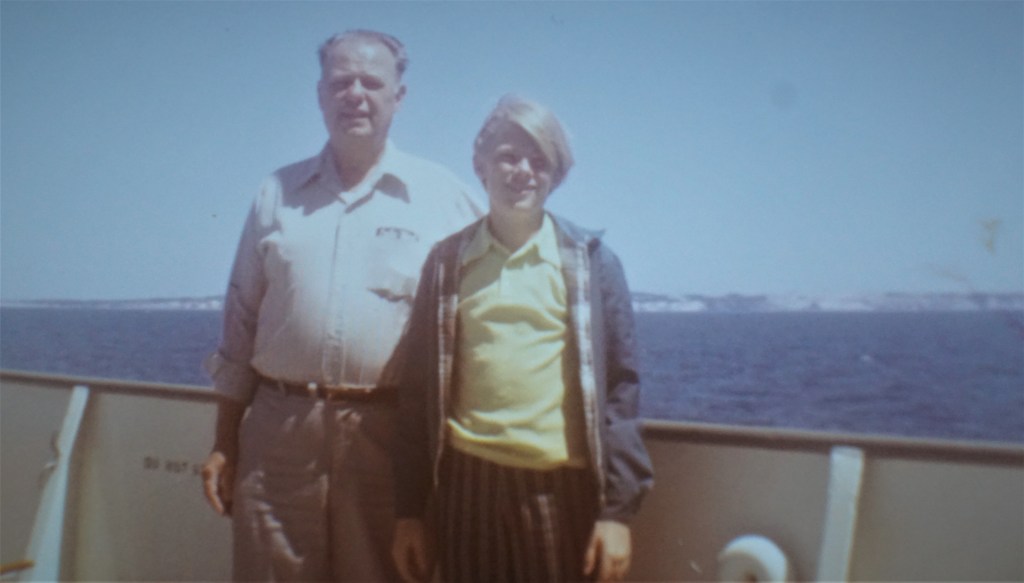
A trip to St. Louis would not be complete without a visit to my parents’ graves at Jefferson Barracks National Cemetery. So, we began there.

On Friday, September 19, Tom and I stopped at Dierberg’s in Creve Coeur near our hotel to buy a handful of burnt orange carnations.

Twenty minutes later, we arrived in the sea of marble stones on rolling hills ten miles south of downtown St. Louis.

We parked our rented Mazda SUV and tiptoed past a veteran’s funeral in progress under a makeshift canopy. A female vocalist sang Amazing Grace. Instantly, my tears began to flow.

Each time I go to Jefferson Barracks, it is a touchstone experience. Tapping one side of the stone and then the other. Remembering the love and best intentions of Helen and Walter Johnson–both long gone but not forgotten.

Minutes later, sitting on a nearby bench with Tom under the sturdy branches of an oak tree that has lost its earliest leaves due to an especially dry Missouri summer.

Friday afternoon was also somber and reflective. We met our friend Mark, a docent at St. Louis Kaplan Feldman Holocaust Museum, for a visit there.

He guided us through horrific-then-hopeful survivor stories, images, and vintage artifacts, curated from proud Jewish St. Louis residents who lived through the awful experience. Only a few remain, but their legacies live on.

All in all, it was a chilling, relevant, immersive few hours. Cautionary evidence of hate and authoritarian evil that inundated the world in the 1930s and 40s, and now–in the US in 2025–threatens the existence of those who are not straight, Christian white men.

After deep breaths and a refreshing Friday nap in our hotel, Tom and I drove to University City for an evening with Mark and his husband David at their home. It was a celebration of our unfolding friendship.

At sunset, they lit candles and recited Shabbat blessings before we shared wine and bread. At their table, I felt our bond of friendship, which began just a few years ago, grow.

We met Mark and David when–as snowbirds living part-time in Arizona–they first attended one of Tom’s free film screenings at the Scottsdale Public Library.

Now, they have become the newest, welcoming community component of our St. Louis connection.

In September’s Stillness

It was a bright September Tuesday morning. Clear skies, mild temperatures, and low humidity. A perfect day in the Chicago suburbs.

At around 7:30 on September 11, 2001, I pulled up to the curb at Lincoln Junior High to drop off Kirk, my twelve-year-old son. He scampered ahead and waved goodbye.

Forty-four-year-old me drove to the nearby RecPlex for a quick swim at the indoor pool. On the way to the locker room to change, I saw a small cluster of folks gathered silently around a TV.

A plane had just struck the north tower of the World Trade Center in New York. Dire images of smoke and debris filled the sky.

Minutes later, a second plane pierced the south tower. It was just the beginning of the madness.

Terror spread quickly through the skies to crash scenes at two other sites: the Pentagon in Washington, D.C., and a field in Shanksville, Pennsylvania.

Captivated and numb in disbelief near the vending machines in the lobby hundreds of miles away, we stood dumbfounded and helpless–gaping in September’s stillness–as ripples of the horrific news and images unfolded.

Ultimately, 2,977 victims died that day, casualties of the September 11 attacks at the hands of eighteen foreign hijackers and many more strategists who infiltrated American skies.

Thousands more were injured and sustained life-long trauma, including citizens and rescue workers exposed to toxins at Ground Zero in Lower Manhattan in New York.

***

It’s been twenty-four years. We are still trying to make sense of how much we lost, how much our lives changed, that day.

I don’t mean the inconveniences of air travel. Yes, that’s a pain.

Much worse, gun violence, school shootings, assassinations, and homegrown terrorism are the norm in the United States. Through it all, we have become as divided as ever.

Just yesterday, the latest two unrelated horrors–one a school shooting near Denver, the other the assassination of a vocal, right-wing protagonist–dominated the news cycle.

The solution is obvious. We need to remember our traumas and learn from them. Institute tighter gun laws in this country, not more thoughts and prayers.

I do believe our leaders have failed us. We have voted the wrong ones into positions of authority. Instead of quieting the storm and pulling us together, they are threatening those who don’t agree with them.

If we don’t make changes soon, our legacy will be continued bloodshed, not the freedom, opportunities, and equality we have espoused as a nation for generations.

***

My twelve-year-old son is now thirty-six and living in Chicago. He is a therapist. Kirk specializes in helping individuals who have experienced some sort of trauma.

I couldn’t be prouder of Kirk and the work he is doing. At a young age, I witnessed his kindness, his empathy toward classmates, neighbors, and family members.

Now he is honing his skills, while providing relief to those who need it most in American society.

I try to do the same through my writing. Telling the stories as I see them but leaving you with a glimmer of insight, relief and hope.

If there was one positive thing that sprang from the 9/11 attacks, it was the way our nation coalesced–at least in the short term–around the victims, their families, their stories in 2001.

As a nation, we were forced to take a breath as we dug through the rubble. We forged ahead to provide a salve to treat the psychological trauma we all felt.

Somehow, in 2025, we have lost our wits. We have forgotten how to love the less fortunate, protect our children, and teach them to be critical thinkers rather than conspiracy theorists.

We had better wake up fast, pass gun laws, rediscover our compassion, and find our better selves soon.

Adrift

I wrote most of my first book ten years ago. I was consumed by the project … in a purely positive way. Connecting the dots of grief and my family’s writing DNA spurred my energy and creativity.

As late summer 2015 approached, my daily creative output accelerated. Chapter after chapter emerged From Fertile Ground.

We didn’t have a printer at home but lived near a FedEx store. Whenever I completed a new, sizeable chunk of my manuscript, Tom and I walked there to print the updated version. Holding my evolving story in hand gave me a sense of pride and tangible proof of progress.

Now, in late summer 2025, I find myself at a vastly different place in the arc of my literary life. As I look back over the past decade, I feel a tremendous sense of creative accomplishment. … knowing I have produced four memoirs, a book of poetry, three librettos, a litany of essays, and a memoir writing workshop.

Yet I feel adrift.

Part of it is an energy thing … or, more accurately, a focus thing … or, even more pointedly, “maybe-this-is-what-it-means-to-be-68-and-a-compassionate-human-being-and-living-in-the-United-States” thing.

Okay, I’m not being totally transparent. I’m trying to avoid the trauma in our country. I’ve turned off the news. My husband and I are helping each other stay sane. In addition, I have been developing occasional pieces of flash fiction and nonfiction essays for literary contests.

I also have written several chapters for a “how to write a compelling memoir” manuscript. And there is another writing opportunity that is percolating … but it’s premature for me to spill those beans.

Anyway, I don’t feel all that jazzed about any of it … at least not on the scale of my first-born book in 2015. The one I felt like I was meant to write.

Is it weird that I’m getting more energy from writing this blogpost than the projects I mentioned a few paragraphs above? Probably not, because I’ve always enjoyed the raw, immediate-but-winding personal connection that comes with this territory … with this writing forum.

So that’s where I am right now … treading late summer metaphorical waters in the desert … bobbing along in a sea of episodic literary possibilities … exercising four or five times a week to keep my heart strong … taking more naps than I used to … longing for the next big wave of creative energy … gazing back to the distant shoreline of past successes and bittersweet memories … squinting ahead (like many of you) into nasty flames of deception, betrayal, and planned confusion that threaten my country’s future.

No wonder I feel adrift.

Keep On Swimming

This hollow ache persists

with every desperate breath,

every tear-stained cheek,

every filthy promise,

every shattered dream,

every shady severance.

As sorry, shallow sands

erode under our bare feet

and wash away at sea

with this tidal wave

of falsities and regrets,

we must link arms,

preserve those struggling

to tread treacherous waters,

and resolve together

to fight these shark attacks,

to keep on swimming.

Photo by Emiliano Arano on Pexels.com

You Wouldn’t Believe

Since you’ve been gone, you

wouldn’t believe how the world

and our lives have changed.

You never knew that I married

a man I love, or that we live

in the desert where I can swim

outside in the winter, or that

I survived a heart attack on

my sixtieth birthday, in the

city where both of us

were born, or that

the grandsons you loved as

children are thriving, though

they have nearly reached

middle age, or that some people

now ride in cars with no

actual drivers, or that it’s kind

of a metaphor for our

country, which has lost

its moral compass, or that

the flag you defended and

saluted is no longer yours, or

that I am thankful to write and

sing in my late sixties, because

I was meant to do those all

along. All of this is true, and

it prompts me to worry and

hope–mostly worry–that

even though I am thankful

for good health, my kind and

compassionate husband, my

own boundless empathy, and

the relationships I’ve nurtured

with my sons, and many diverse

friends, I feel heavy uncertainty

in our country, and anticipate

more losses ahead only

to protect myself, and

of course, it reminds me of

other losses I’ve endured,

especially on the anniversary

of your passing the day after

a big Thanksgiving meal

with your sisters. By now,

you can see that the world

you knew is most definitely

gone, but you live in

my memories, and

I still love you, I grieve for you,

I grieve for me, I grieve for us.

Most of all, I still remember the

many monumental moments

–the good and bad–we shared

so long ago, Dad.

Desert Moon

As we count our losses,

we brace for shadows

and ripples lurking

in the darkness.

The comfort of an

undeterred desert moon

shines stillness.

It conjures hope

and the ebb and flow

of constancy living

on their own cycles.

It rises with flickers

of unfulfilled promises

and etched memories

of loved ones gone

but never far away.

Down, But Still Out

When I saw you

from across the room

high-five your conspirators,

the simmer of my sadness

escalated into a boiling frenzy.

What audacity … to celebrate

at the funeral of my beloved,

to dance on graves and marble stones

that ripple and repeat on rolling hills.

While I grieve for her and them,

I grieve more for all of us

and what will come next.

Yes, I am down … gutted really.

But I am still out and

I am determined to rise up.

I still have my past and present,

even if I don’t know my future.

I still have my passion.

I still have my chosen family.

I still have my truth.

I still have my identity.

I still have my voice.

Higher Ground

In January 2014, the fog of grief occupied my brain and body. My mother had been gone one year, but I hadn’t yet found a constructive way to heal and process my grief.

Along the way, my husband Tom and therapist Valerie encouraged me to embark on a new path that would help me recapture my creative spirit.

I decided to leave my communication consulting career. Soon after, I began to write personal stories that mattered to me. Vivid recollections inspired and spawned by grief. Observations about love and loss in my family that helped me chart a new course and publish my first book, From Fertile Ground.

With time and reflection, I wrote four more books about the tender and whimsical ups and downs of childhood, the poignancy of leaving one home and surviving to find another, the adventures of creating a new life in the Arizona desert, and the poetry that has stirred inside me for thirty years and finally escaped to land on a page.

In small and large ways, my mother is in every one of those books and numerous essays. Yet she didn’t live long enough to read any of it, except one poem I gave her on Christmas Eve 2009.

I know now that writing about her in new and different ways has kept her wisdom and generosity alive and accessible for me.

July 26, 2024, would have been Helen F. Johnson’s 101st birthday. I knew I wanted to write about that, but until my fingers hit the keyboard, I wasn’t sure what I would say … because I thought I’d said it all before.

Maybe I haven’t.

How I loved and admired–and still remember–her tenacity. Her legacy of letters. Her devotion to family, friends, and the power of nature.

She would have loved the artistic life Tom and I have created in Arizona among the buttes and cacti. Writing stories, screening movies, singing songs, feeding stray cats.

Making new friends, while remembering old ones. Doing our best to guide and encourage my sons–her beloved grandsons–as they make their way toward the middle of their lives.

Cherishing each moment of our retirement years, without ever knowing where it will lead. Never wanting to know how or when it will end.

On July 26, 2012, we celebrated my mother’s eighty-ninth birthday together. It was her last.

Twelve years have passed. I’m much older, more appreciative and impatient. But also, wiser. Healthier. Gayer. Grayer. More contented with my own life and legacy. More worried about the world’s plight.

Grief is no longer my catalyst, my nemesis, my companion. Of course, I see it in the rearview mirror. But, with the passage of time, I discovered higher ground without the ghost of grief.

I no longer think of my mother every day. But when I do, I am grateful for the moments she and I shared–the gifts of memories and photographs I treasure–and the propensity to write about it.

All of this runs through our DNA.

My mother and me, celebrating her eighty-ninth birthday in Wheaton, Illinois, on July 26, 2012.