Category: LGBTQA

Will You Still Need Me? Will You Still Read Me?

The title of this post is a shameless ripoff of the old Beatles song, When I’m Sixty-Four. But my bastardization of the lyrics is appropriate. Today I turn sixty-four and I’m a writer who wants you to read my books. When you do, you will feed my desire to stay relevant.

Ask Tom. He’ll tell you. At this stage of life, I’m generally contented and thankful for good health, a comfortable home, and a loving husband. It is remarkable that we share the same birthday … same year too.

In 1957, our mothers never imagined their newborn sons–delivered three hundred miles and thirteen hours apart–would meet one day and marry. It certainly feels like a miracle to me.

Back to my writing. Whenever I wear my literary hat–which is frequently–I find myself questioning why my book sales have dried up like a sun-drenched Arizona river bed.

Of course, I promote my books online and do a little advertising here and there. I also market my stories on a personal basis, but when you’re an independent writer it’s easy for your books to get lost in the stacks of Amazon’s metaphorical bookshelf.

This concern I have is not quite an obsession, though it borders on it. I put a lot of thought and creativity into my writing. I want to share it with a wider circle of readers.

Perhaps my advancing age and occasional forgetfulness–did I tell you I turned sixty-four on July 6?–is what drives me to keep writing, to keep sharing my impressions and reflections of the world, to keep checking progress (or lack there of) on book sales, to keep wondering if readers will still read me.

The good news is I feel spry most days. (Of course, I wouldn’t consider using the word spry unless I were at least six decades old.) Anyway, I still have a lot to say and plenty of energy. So, on my sixty-fourth birthday, I’m going to tell you why you should buy and read my latest book, I Think I’ll Prune the Lemon Tree.

As a kid in the 1960s and early 1970s, I observed how hard my mother worked to provide for our family and to prepare meals that we all liked … even after working long days in an office.

Frequently, Mom bought Sealtest Neopolitan ice cream and wedged it into the freezer portion of our avocado-colored refrigerator next to the Swanson’s TV dinners.

Why Neapolitan? Because she and Dad liked strawberry ice cream, while my sister and I preferred chocolate and vanilla. If you aren’t familiar with Neapolitan (I rarely see it in the supermarket these days), it included all three flavors in a carton stacked side-by-side. So, theoretically, Neopolitan offered something for everyone in our family in one container.

This ice cream recollection captures precisely the creative thrust I wanted to achieve as I wrote my Arizona-based essays. I must have been channeling my mother’s shopping sensibilities.

I wanted my book to include something for everyone … humor and sincerity, social relevance and frivolity, truth and fantasy … and to comment on the relevance of every personal and geographical chapter in my life: Missouri, North Carolina, Illinois, and Arizona.

Now that summer is upon us and the heat has arrived, I strongly encourage you to consume your favorite flavor of ice cream to cool off and to buy a paperback or Kindle version of my Neopolitan book.

In the thirty-nine essays that appear in the book, you will enjoy lapping up several flavors. For instance, there are stories about: citrus and lizards; a hummingbird and a boxer; time travel; an eavesdropping barrel cactus; a return to Tucson through the looking glass of an authentic gay life; reflections on an extended visit to that dreaded place we all lived–Coronaville; the musings of an incredible shrinking man; a wayward Viennese waiter/writer struggling to tell his heart-wrenching story; a mid-century St. Louis custodian who bonded with a famous scrub woman; alliterative observations of flickers and fedoras; the golden hours of living in the Sonoran Desert; and much more.

When you read my book (and I hope you’ll review it too), you’ll be feeding your own creativity and doing this sixty-four-year-old writer a big favor. Yes, even after writing this long-winded essay, I still need to feel needed.

Now, back to the musical portion of my post and the final verse of a pop song that feels especially personal today.

***

Send me a postcard, drop me a line
Stating point of view
Indicate precisely what you mean to say
Yours sincerely, wasting away

Give me your answer, fill in a form
Mine for evermore
Will you still need me, will you still feed me
When I’m sixty-four
*

*The Beatles released When I’m Sixty-Four (lyrics by John Lennon and Paul McCartney) on their 1967 album Sgt. Pepper’s Lonely Hearts Club Band.

Yours for Ninety-Nine Cents

It’s time to dig out the loose change that’s fallen between your couch cushions and put it to good use! From April 23 to 30, you can download a Kindle copy of my latest book, I Think I’ll Prune the Lemon Tree, for just ninety-nine cents on Amazon.

Set against the rugged landscape of Arizona’s Sonoran Desert, my anthology of thirty-nine essays (some whimsical, some serious) explores the themes of family, community, authenticity, creativity, and uncertainty before and during COVID-19.

Here’s what one reader had to say: “Focusing on stories from his recent relocation as a full-time Arizona resident, Mark mines his past for insights into his new life, reflects deeper into the after-effects of surviving a health crisis, and even includes poems and works of short fiction. A great new collection from a distinctive contemporary voice.”

Happy reading!

Metamorphosis

This week marks five years since I completed and published my first book, From Fertile Ground. In celebration of the anniversary of my entry into this literary life, you can download a free Kindle copy of my book on Amazon from March 24 through 28. What follows is the story of what brought me to this moment. If you are an aspiring writer, I hope reading this will provide a little added encouragement.

***

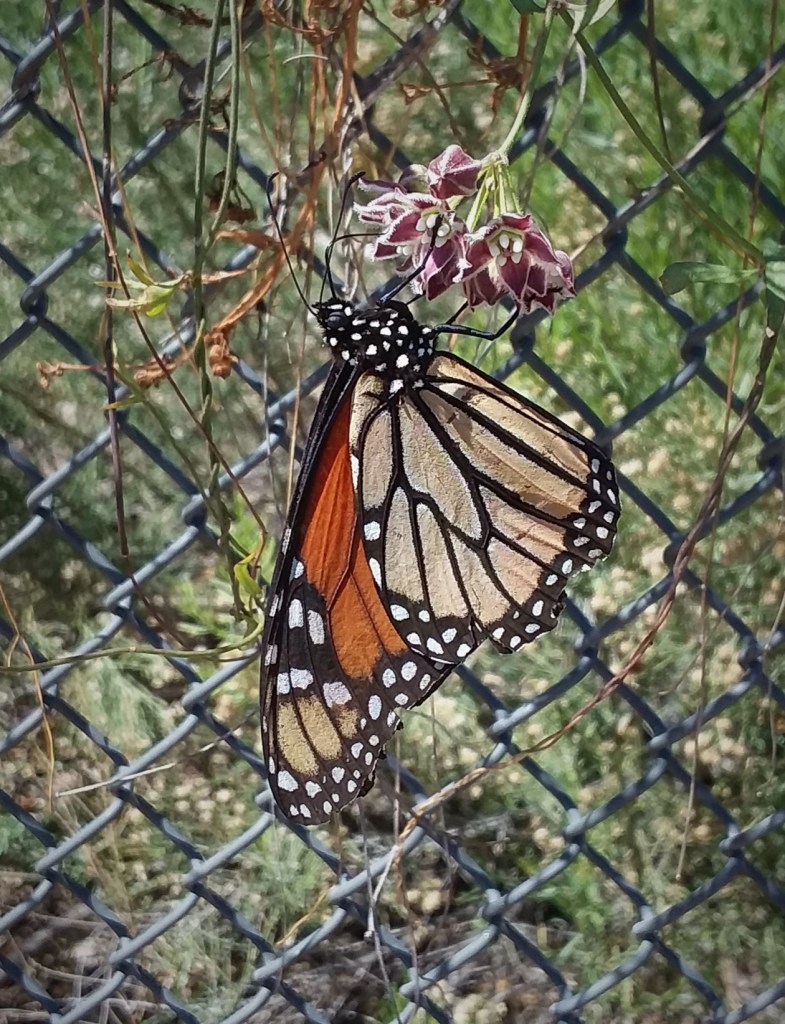
If you look and listen closely—and breathe deeply—you will find spring stirring in the Sonoran Desert. Sweet and fragrant orange blossoms dance through the air. Lizards and ground squirrels reemerge to scamper and soak up the sun. A hummingbird darts and twitters in a Palo Verde tree. I imagine a lone loon, descending from a blue sky, is practicing for his pilot license. He receives clearance from nearby Sky Harbor Airport traffic control and lands with a graceful whoosh that ripples in the Crosscut Canal. A monarch butterfly flits and rests on a bud near the fence of the Desert Botanical Garden, pausing long enough for me to creep in for a closeup of nature’s transformation. 

This central Arizona winter-to-spring progression is a warmer, dryer, more gradual shift—a far cry from the flurry, upheaval, and calm of a midwestern lion-to-lamb experience I had been accustomed to for my first sixty years. Nonetheless, it is a March metamorphosis.

Five years ago, like a clumsy butterfly, I emerged from my own cocoon. At age fifty-eight, I launched my first book From Fertile Ground. I remember the anticipation and anxiety of March 24, 2016—the day my book emerged—as I moved from wannabe writer to published author.

I felt exhilaration. It was as if I were boarding a rollercoaster, gripping the bar tightly, grinning ear to ear, throwing my arms in the air, and shouting “Look over here” as my book entered the literary universe. Maybe I sound immodest, but it was and is such a thrill to have discovered this better-late-than-never renaissance.

Previously, as a busy single dad and on-the-go communication professional, the idea of writing on my own terms seemed like a faraway neverland of creative euphoria. But slowly, as I drifted from the gravitational force of my previous orbit, I felt the magnetic pull of an artistic life.

This literary life sprung from a personal void, molded from the fog of my grief after my mother died in January 2013. At that point, I was lost with plenty of tears, but without the language of emotion that normally came easily for me.

Fortunately, I was not alone on my journey. Thanks to the encouragement and support of my husband and a skilled therapist, I forged ahead, jotted notes in my diary, took a few nature photography classes, and slowly stepped away from a thirty-four-year advertising, PR, and consulting career. It had sustained my bank account and carried me through leans years of single fatherhood, but ultimately drained my energy and creativity.

Early on, after my corporate “retirement” there were moments of doubt and uncertainty to contend with. Even so, the more I wrote in my journal, the more I felt my voice begin to emerge. Within a few months, my writing and reading led me out of the darkness into the light.

A litany of wisdom-filled letters my mother sent me—along with a boxful of more than fifty years of diaries my grandfather left behind—spurred my creative impulses. I sequestered myself and perused them all. They spoke to me and my love of family, heritage, and history.

One day in 2014, as I turned the yellowing pages of my grandfather’s rural life—his spartan existence—an idea surfaced in my brain. It told me to weave a tale of three writers telling their stories across the generations, leaving behind a trail of their own words. In that moment, I found a new passion. From Fertile Ground was born. So was my life as an author. I prepared to emerge from my cocoon.

A year of daily soul-searching, writing and editing passed. In late 2015, I finished my manuscript. With the help of a friend, I found an editor and graphic designer—Anna and Sam—who came highly recommended. They both lived and worked in Nashville, Tennessee.

Instinctively, I liked hiring professionals with connections to the South, because much of my story shared a border with Tennessee to the east—in the rolling red earth of rural North Carolina. That is where my mother was born, where my grandparents owned a farm, and where my sister and I frolicked and spent parts of our summers in the 1960s.

Anna provided me with her recommended edits in January 2016. Following that, I collaborated with Sam. With my input, he created the cover for my book, designed the interior pages, formatted the text, and loaded it into the Amazon self-publishing software.

By late March 2016, I held the first copy of my book in hand. Friends and acquaintances began to send notes telling me they enjoyed reading my book and were moved by it. It was a joyous period in my life, far from the tears and fog that had preceded it just a few years before.

***

Five years have passed. I keep nurturing and practicing my passion for writing. It remains a priority in my life. I write a blog and have published three more books–Tales of a Rollercoaster Operator, An Unobstructed View, and I Think I’ll Prune the Lemon Tree–about the people and places that have influenced me.

I take long walks in the desert and collect photos to stir my imagination. I marvel at the beauty and continuity of nature that surrounds me. I give thanks for the gift of life in a warm and rugged place.

This metamorphosis continues.

My Lemon Tree Book is Live!

The trail of my literary life has led here. The Kindle version of my fourth book, I Think I’ll Prune the Lemon Tree, is now available on Amazon. (Paperbacks are in production and will be available for purchase at this same location on Amazon in the next few days).

The rush of adrenaline I feel today is at least as satisfying as books one, two and three, because I’ve devoted more than three years to this creative endeavor–imagining, developing, polishing, and agonizing over it.

In that sense, today is a combination of the exhilaration of unwrapping Christmas presents, skipping out the door on the last day of school, feeling weak in the knees the first time I approached the edge of the Grand Canyon, and hoping for a clean bill of health from my cardiologist. It’s all of that rolled into a freshly-baked batch of chocolate chip cookies.

In this anthology of Arizona stories, I dig deeper into themes that are important to me: the lasting love and comfort of family and friends; the humor, irony, and poetry in everyday situations; the profound beauty of nature and how it shapes us; the joy of realizing a literary life; and the conviction required to be an authentic gay man–a real gay couple–in a world often rife with ignorance.

As you might expect, the upheaval we have all faced in Coronaville (my name for our shared global address of uncertainty) is present here too. How could it not be? The pandemic has dominated our lives and–at its core–this is a non-sequential personal and societal 2017-to-2020 slice of life.

All of these themes–and flights of fancy (backward and forward in time) to visit familiar and new people and places–run through my book. They are the threads in this tapestry that has become my writing style. They are the elements of the sometimes-whimsical-sometimes-serious voice I have unearthed in my life with Tom in the warmth of the Sonoran Desert.

As we wait for our vaccinations and continue to hope we will recapture the most important strands of our disrupted lives, I think you will find comfort, honesty and humor in I Think I’ll Prune the Lemon Tree. I also think it is a testimonial to the importance of our families, communities, and human connections as we strive to sustain ourselves no matter where we live, no matter where this journey leads us.

From Crab Apples to Lemon Trees

In June 1962, a month before my fifth birthday, I stood alone outside the west wall of my brick childhood home. I wore my high-top Keds and cargo shorts with crazy pockets. The wind raced past my crew cut.

Our three-bedroom ranch in south suburban St. Louis appeared identical to two dozen others in the neighborhood, except ours featured a flowering pink crab apple tree with stair-step limbs I loved to climb.

In the shade of the branches, a clear thought jumped to the forefront of my brain. “I am different. I have important things to say.” The idea lingered and swirled through my consciousness.

As I look back at that vivid memory—one of my earliest—I must have recognized I was unlike most of the other boys. At that young age, I must have known I was gay. I must have begun to identify a need to share my thoughts and tell my stories one day.

Since that moment, I have lived at least four lives—shaped by local geography—and written four books. I have played in the red earth of North Carolina, navigated the rolling hills of Missouri, survived the flatlands of Illinois, and discovered the peaks and valleys of Arizona.

I never imagined I would live and write in my sixties in the rugged landscape of the Sonoran Desert, but the trail of life has led me here to the threshold of publishing my fourth book, I Think I’ll Prune the Lemon Tree. It will appear on Amazon (in paperback and Kindle versions) in late January or early February. Of course, once it is available for purchase, I will let you know.

In the first three years of my Arizona residency—2017 through 2020—the Grand Canyon State has enriched and shaped my life with natural beauty, profound uncertainty, and joyful humor. My goal was to reflect all three in this book, and develop a larger narrative about a gay man and his husband fulfilling their dreams, reflecting on their experiences, hoping to survive a global pandemic, and aging in a bold landscape.

If you are drawn to the themes I explore here on my blog and in my books—nature, family, community, heritage, human rights, humor, love, loss, health, truth, diversity, and creativity—I think you will enjoy reading my latest book.

Of course, nearly six decades have passed since I stood by that flowering pink crab apple tree I loved as a child. It has been replaced by the citrus trees that surround Tom and me in our sixties in our Scottsdale condo community. But the value of memory and storytelling is that I can remember the most important trees, past and present. I can choose to honor each of them.

Little did I know that one day a luscious lemon tree, thirty feet outside my front door, would inspire me to write and share the broader stories of my Arizona life.

All Spaced Out

We were all spaced out in Phoenix last weekend. Recording tracks for our Phoenix Gay Men’s Chorus holiday concert that will appear on YouTube on December 20.

For safety sake, Marc, our artistic director, divided us into groups of ten or so. Group A had the morning slot Saturday. Group C the evening. I was one of two tenor twos singing in the afternoon in Group B in the “big box” room at the Parsons Center.

There I was. Standing in my blue hoodie in front of a mike, my binder of music, and a music stand. Wearing a safety shield and headphones with ear condoms. Gathering (loosely) with my gay comrades in the space where forty or fifty of us ordinarily rehearse collectively on Tuesday nights in a non-pandemic year.

Certainly, I felt strange, sanitized, and scattered. Like a sketchy character in a Ray Bradbury novel. Wandering and wondering where I would fit in the sci-fi story line. But as we began to run through our set–We Need a Little Christmas, The Nutcracker in About Three Minutes, Let It Snow, Feliz Navidad, and so on–an ounce of sweetness surfaced in the moment.

As we sang, I felt a twinge of the giddiness, excitement, and adrenalin of performance day appear. If you are an actor, singer or instrumentalist, you know that feeling of exuberance on stage. Of course, there was no one in the audience to applaud or validate what we had to offer musically. But that will come with time.

Magically, the sounds we produced on Saturday–and individual images we manufactured and projected in front of a green screen the previous week–will meld in the editing room in the next two weeks. Soon after, the end product will be unveiled. People will watch (or not), smile (or not), applaud (or not).

Some of us will even shed a tear or two. Because we know what losses we have endured in 2020. Now, more than ever, we need a little music. We need a little Christmas.

A Gift to Ease Your Grief

As COVID-19 cases climb and shadows of worry and anxiety cast doubts, we stew in our numbness. We attempt to process the depth of our grief. It has no bounds.

Here in the United States, we prepare for a thankless Thanksgiving Day 2020 minus more than a quarter of a million Americans–gone, but not forgotten–who sat at tables beside us a year ago. Our hearts ache for them and their families.

Seven years ago grief consumed me as the first Thanksgiving after my mother’s death approached. Tom and I decided we needed a holiday getaway from our then suburban Chicago home. We needed to shake things up. To begin a new tradition in a place that wouldn’t spark the rawness of Midwestern memories.

Both of my sons loved the idea. They decided to join us for an extended Thanksgiving weekend in the Arizona desert. It felt as if the odds were against us when Tom developed pneumonia after raking leaves on a frosty early-November Illinois morning. But, remarkably, he rebounded quickly. We kept our plans to fly west.

On Thanksgiving Day, Kirk, Nick, his friend Stephanie, Tom and I dined outside at the Tempe Mission Palms Hotel. We enjoyed turkey and stuffing, seated around a courtyard patio table shaded by an orange tree.

Three months after that November 2013 trip, I retired from corporate life and began to feel a calling to write about my grief. I soon discovered that by honoring and answering my creative impulses, I could ride through the waves of tears and numbness and emerge whole on the other side.

As strange as it sounds, grief became the fertile ground for my writing journey. In 2016, I published my first book, From Fertile Ground. It tells the story of three writers–my grandfather, mother and me–and our desires to leave behind a legacy of our own distinctive observations of our family, our loves, our losses, our worlds.

In honor of Thanksgiving and those we’ve loved and lost, you can download a free Kindle copy of my book on Amazon from November 21 through November 25.

I hope reading it will inspire you (or a friend who is grieving) to find your fertile ground. To discover your voice. To channel your creativity. To emerge from the numbness. To tell your unvarnished story. Perhaps even to leave behind a brief review of my book online.

Important Things to Say

It is one of my earliest vivid memories. I was standing alone in June 1962. Outside the west side of my childhood home in Affton. Looking north toward the street. Wearing my high-top Keds and cargo shorts with crazy pockets. One month shy of my fifth birthday. The wind raced past my crew cut.

Our three-bedroom brick ranch in south suburban St. Louis, Missouri appeared nearly identical to two dozen others on South Yorkshire Drive. With one exception. Ours featured a flowering pink crab apple tree with stair-step limbs I loved to climb and droppings that stained our driveway.

At that moment, a clear and welcome thought jumped unannounced to the forefront of my brain and lingered for a few minutes. It swirled through my consciousness.

“I am also different. I have important things to say.”

As I look back at that memory, I realize that on some level I must have known I was gay. Not the same as most of the rest of the boys. Maybe even special. It was an intuition. A gut hunch without empirical data.

I was a shy child. I stayed out of trouble mostly. I didn’t rock the boat. I obeyed my parents. Later, I listened to my teachers and dodged bullies in middle school halls. I had lots of fears and creative ideas. Unfortunately, I never voiced many of them.

Now–nearly sixty years later–the voice that was never fully realized in my developing years has found a forum of its own. This is my two hundredth blog entry since launching my site in May 2018. For you who follow me frequently–especially the handful who comment regularly–thank you for taking the time out of your busy life to read what I write.

Recently, the pace of my postings has slowed so I can devote my attentions to another creative endeavor. I am currently finalizing a collection of essays and fantasies about my life in Arizona. My goal is to send these to my editor in November and publish my fourth book early in 2021. Rest assured, I will keep you posted on the delivery date of my newest arrival.

I suppose my writing commitment (in blog and book form) is my way of making up for lost time. When I sit before my laptop, spin my stories, enter my words, and press the “publish” button, I feel as if on some level I am speaking for that “different” little child who stood on his St. Louis driveway and pondered the world’s possibilities and problems.

I keep writing because he and I have important things to say.

The Pursuit of Happiness

In late October 1997, I traveled from Chicago to Cleveland to co-facilitate a diversity training course for managers of a large financial institution.

Charles was the lead consultant on the project. We had teamed up before. He was black and straight. I was white and gay.

I felt inspired, watching him begin the session, explain the merits of an inclusive workforce, and preach the business rationale for embracing diversity.

The idea was to challenge the bank’s managers to respectfully acknowledge and maximize the differences of employees: skin color, gender, sexual orientation, disabilities, religious and cultural beliefs.

By maximizing the mosaic of its differences, the company would be better equipped to create a more collaborative, welcoming culture that would produce happier employees who could more effectively understand and reflect the needs of diverse customers. I believed every bit of it. I still do.

Charles’ dark skin color was obvious, but perhaps my sexual orientation wasn’t. I typically didn’t divulge my gayness, unless the training warranted it.

At one point, a male manager stood up. He said he believed gay people were immoral. He thought they didn’t deserve respect or equal treatment.

The room of forty managers and two facilitators froze. Somewhere inside, despite my anger, I mustered the words and focus to break the silence and challenge his thinking. Essentially, I said something like the following:

“I’m gay and I don’t believe I’m immoral. I can assure you there are lots of gay employees you work with you, who feel the same way. If they don’t feel respected here, they’ll take their talents elsewhere.”

The manager sat down and mumbled a few comments under his breath. The training continued. Charles smiled. He took the training reigns and proceeded without missing a beat.

It was a watershed moment for me in my personal development and professional life to have the opportunity to defend myself–all LGBTQ people, really–and feel the support of a trusted colleague.

In 1997, I never imagined that one day I would live in a country where it would be legal for two men or two women to marry each other. I never imagined I would have the opportunity to marry the man I love. But, remarkably, it happened.

On September 6, 2014, Tom and I were married before about sixty of our family and close friends. It was a shiny, crisp afternoon in Illinois.

Our sisters walked us down the aisle. Though she was ailing, Tom’s mother made it. She wore the paisley silk scarf we bought for her in Florence, Italy.

Tom and I were surrounded by sunflowers, smiles and a few tears that day. Six years have passed. Though all four of our parents have been gone for five years, with every passing season–with every highlight, loss or moment of vulnerability–our love has grown deeper. I’m thankful for that.

Despite marriage equality in the United States, we now live in a country with a president who believes it’s “un-American” to be different. A few days ago he directed the White House Office of Management and Budget to prevent federal agencies from spending money on diversity training.

I don’t know where this chapter in American history will lead us, but I have faith this dark period will end soon. We are a country founded on the notion of life, liberty and the pursuit of happiness for all of its people.

Even with all of the hateful comments of the past four years, I think the majority of Americans still believe in freedom and equality. We’ll find out in November.

Almost as If

ValleyHo2_081720

Personal experience tells me that the pressure and immediacy of a frightful, life-changing moment–for instance, a mild heart attack accompanied by breathlessness and radiating left shoulder pain while traveling cross country–can make it virtually impossible to imagine a longer view, a brighter sky, an optimistic outcome.

But with the passage of three years and one month (living inside a 2017-to-2020 cradle of colluding Russian-nesting-doll years, arguably the most tumultuous and troublesome period in American history since the Civil War), I find myself crossing a metaphorical threshold into a more promising personal dimension without an obstruction in the foreground.

This realization flooded my sixty-three-year old brain and body on August 18, 2020 as I scribbled sentences on the lined pages of my emerald-colored spiral notebook. The inspiration for my ramblings was prompted by a visit with Dr. B, my cardiologist, the day before.

***

August 17 began swimmingly. Forty laps alongside Tom in our condo pool, followed closely by a thirty-minute session (yoga for writers with Adriene on YouTube) in front of our flat-screen TV. The motion and stretching were successful in quieting my mind before an 11:10 a.m. appointment with Dr. B.

At 10:30, I stepped out on my own in my flip flops into one-hundred-degree heat. Opened the driver’s side to our indigo Sonata, started the engine, and tapped the windshield wipers to remove a thin layer of grit from a dust storm the night before.

It was a short and simple journey into Old Town Scottsdale, but one I’d stewed over since a August 5 echocardiogram orchestrated by Laney on the other side of the Valley of the Sun. It was her job to test the condition and pumping capability of my heart. Glub glub … glub glub … glub glub.

Some of the sting surrounding this follow-up appointment had already subsided on August 10 or 11, because a nurse in my doctor’s office emailed saying they had uncovered “no emergent concerns” from the procedure. Dr. B would discuss my course of care moving forward at a August 17 consultation.

Still, like any once-burned patient with a history of heart disease or inquisitive journalist digging for the full scoop, I wondered if there were more variables they weren’t ready to share with me. More I needed to fret over. The phrase “course of care” left too much room–too many what ifs–for my unbridled imagination and anxiety.

Like many other moments in life, the hardest part was waiting.

***

Once I arrived at the three-story office building, I parked facing east, slid our silver sunshade across the windshield, climbed three flights of stairs in an outdoor atrium rather than trusting a slow elevator, checked in at the front desk of Cardiovascular Consultants, Ltd,, and waited to be summoned.

“120/80 … couldn’t be more normal,” Dr. B’s nurse checked and confided my blood pressure, once I was situated in a straight-backed chair. As she left me alone in the room, I thought of Tom and all we had endured and accomplished in the previous thirty-seven months together.

Selling our home in Illinois. Saying goodbye to family, friends and neighbors. Moving ourselves and our essential possessions seventeen hundred miles west. Scurrying into the emergency room of Barnes-Jewish Hospital in St. Louis on our sixtieth birthday. Resuming our journey four days later with the help of a capable medical team in the city where I was born.

Buying new furniture for the living room of our Arizona condo. Traveling to Ireland and feeling the air rush through my hair on an open-air Dublin bus. Helping Nick recover from a serious knee injury on a basketball court. Cultivating new friendships in Arizona.

Finding new creative outlets and avenues to sing, write and screen our favorite movies. Climbing to the top of a church in Munich, Germany to behold Bavaria without a worry. Gazing out the window of a Vienna cafe and soaking up the baroque splendor inside The Ring.

Bonding with cardiologists, dermatologists and gastroenterologists. Standing between my thirty-something sons at the Local Author Book Sale at the Scottsdale Public Library right before COVID-19 shuttered the world. Surviving the chaos and fear of a global pandemic and a misguided presidency. Doing our best to stay connected to family and friends. Escaping to the mountains of Flagstaff to breathe the pine-scented air.

All of it, and the memory of my mother and father (both long gone, but never far away) flashed through my mind’s eye in a five-minute window as I stared at the blue and green tiles in an innocuous space waiting for Dr. B.

After he knocked and entered, he delivered the news I had waited for. More than I  hoped for actually. Certainly, more than I imagined. He glanced at the July 2017 images from St. Louis and compared them with those of August 2020 in Scottsdale. He told me the Arizona echocardiogram showed my heart is functioning normally.

Though both of us wore masks, I’m sure he could see the amazement and joy in my eyes when he said, “It’s almost as if you never had a heart attack … I don’t need to see you until another year passes, unless something comes up.”

***

As I left Dr. B’s office, relief flooded my body. I texted the news to Tom and told him I was on my way home. We would celebrate with a mini-staycation at the Hotel Valley Ho in Scottsdale, a vintage mid-century, sun-drenched resort flecked in tangerine and aqua. As good fortune would have it, August 17 was the day we met in 1996.

For two days and nights, we were desert rats living the high life. It was almost as if none of the trauma of three years before had happened. But we knew it had. Now we could put it further behind us in the distance of the palms in the Grand Canyon State.

All of us hope for a longer view, a lengthier life with greater possibilities. But it’s out of our control. The best we can do is love more. Hate less. Eat right. Exercise regularly. Listen to the advice of our doctors. Be grateful for today. Endure the heat of a desert day. Embrace the twilight of our fading hours. Deliberate over dazzling sunsets.

Enjoy the luscious fruits of our lives as they appear without ever really knowing what tomorrow will bring.