I began this blogging odyssey three years ago today by publishing my list of memoir writing tips. I had no grand plans or notions of what this would become, who I might meet in the blogosphere, or how frequently I would post. (This is #242. That’s more than eighty posts a year since May 4, 2018.) I simply wanted to exercise my voice, promote my books, and share observations about my new life in the Sonoran Desert of Arizona.
But this experience has turned into much more than a lengthy chronicle of disparate topics. It has become a public place for me to examine the beauty of nature, the geographic grandeur and social diversity of the Grand Canyon State, the importance of family and community, the realities of aging and grief, the fright and implications of a global pandemic, the humor and irony of everyday occurrences, and the creative possibilities of a literary life.
Some of you have followed this space for multiple years, left frequent and encouraging comments, and even read a few of my books. Others have joined this journey recently. Wherever you fall on that spectrum, I am grateful for the time you have devoted to my writing and connections we’ve made. Thank you. This rose is for you.
There have been days since February–especially after completing my latest book–when I have realized my brain needed a rest. Given the energy and time commitment required, I wondered if this blog had run its course. However, today as I write this, I can’t imagine living without this forum. It is a strand of my life that keeps my vital and relevant.
Composing and sharing stories from my laptop–and peppering them with images and poetry from time to time too–is an important part of my identity. It is my passion. I need this authentic (though remote) social connection. I want to continue to be a part of the dialogue. Most important, I want to call attention to the simple joys of living and the healing aspects of nature, which often are overlooked.
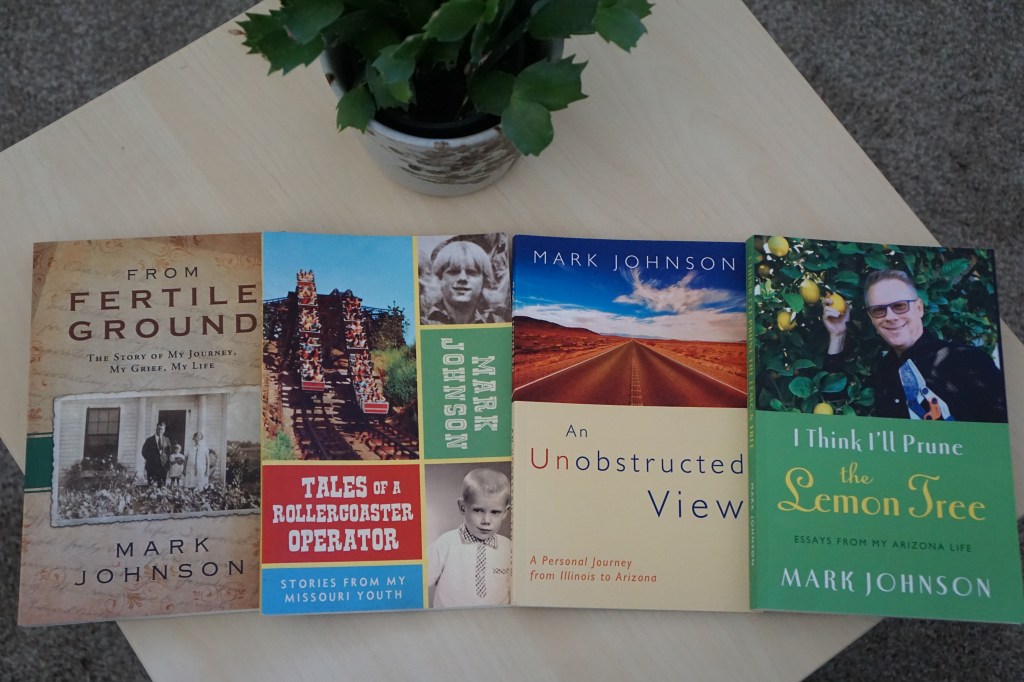
Going forward, I don’t know how often I will post. But, as in the past, I will speak my mind, test story ideas, pay tribute to a rare person or defining moment, dabble in short fiction (which I began to do in I Think I’ll Prune the Lemon Tree), and explore the implications of everything from a personal joy to a national sorrow.
I hope you’ll continue with me on this journey and comment when the mood strikes … no matter who you are, what you believe, or where you live.
More than a shameless ripoff of the Tennessee Williams play and the ensuing 1958 movie starring Elizabeth Taylor and Paul Newman, this is a story about our community cat and the Sonoran Desert heat. Both are staring down at us on May 1.
Early this morning, Tom and I spotted Poly on our neighbor’s roof. (Poly is the name I’ve given the bright-eyed feline that has made our enclave her home; we aren’t sure who she belongs to, but she is everywhere in our retro Polynesian Paradise condo complex).
In pursuit of Saturday’s breakfast, persistent Poly was stalking a mourning dove and her baby nesting safely (they thought) under the eaves. Tom’s response was to worry about the well-being of the birds. Mine was to grab my digital camera and to stumble outside in my robe to document the moment.
Eventually, Poly slinked away without a catch. She pattered across the roof to find mischief elsewhere, perhaps on a back patio somewhere down the row. We likely won’t see her for a few days. That’s her pattern, at least. Appear. Disappear. Resurface. At dusk later this week, I expect she will reemerge and patrol the sidewalk in search of an evening snack.
The dry heat is more constant, less whimsical than Poly. Once it appears in early May (we expect a high of ninety-eight degrees in Scottsdale today), we know triple digits aren’t far away. But Tom and I have learned to adapt to the “oven” that is the Sonoran Desert from May through September. In a strange way, it’s become a familiar, returning friend.
In the Phoenix area, early morning and late evening walks or swims are the solution in the summer months … along with a few strategically planned escapes into the cooling pines of northern Arizona. This June we expect to venture even farther north to spend a few days with friends in Bozeman, Montana.
After a year of relative hibernation, I expect driving on the open roads and discovering new vistas in Arizona, Utah, Idaho and Montana will feel like a real adventure. It will certainly be welcome relief after the fright and disorientation of a pandemic year.
But even if we were forced to stay put another year and tough it out indoors away from the midday sun, the summer months are relatively peaceful in Scottsdale, because visitors leave to avoid the heat. For that reason, I give them high marks. I look forward to the quiet, to more time to reflect and write, and to hearing the potential pitter-patter of Poly’s cat paws pacing down our scorching sidewalk or across our hot (not tin) roof.
It’s time to dig out the loose change that’s fallen between your couch cushions and put it to good use! From April 23 to 30, you can download a Kindle copy of my latest book, I Think I’ll Prune the Lemon Tree, for just ninety-nine cents on Amazon.
Set against the rugged landscape of Arizona’s Sonoran Desert, my anthology of thirty-nine essays (some whimsical, some serious) explores the themes of family, community, authenticity, creativity, and uncertainty before and during COVID-19.
Here’s what one reader had to say: “Focusing on stories from his recent relocation as a full-time Arizona resident, Mark mines his past for insights into his new life, reflects deeper into the after-effects of surviving a health crisis, and even includes poems and works of short fiction. A great new collection from a distinctive contemporary voice.”
This week marks five years since I completed and published my first book, From Fertile Ground. In celebration of the anniversary of my entry into this literary life, you can download a free Kindle copy of my book on Amazon from March 24 through 28. What follows is the story of what brought me to this moment. If you are an aspiring writer, I hope reading this will provide a little added encouragement.
***
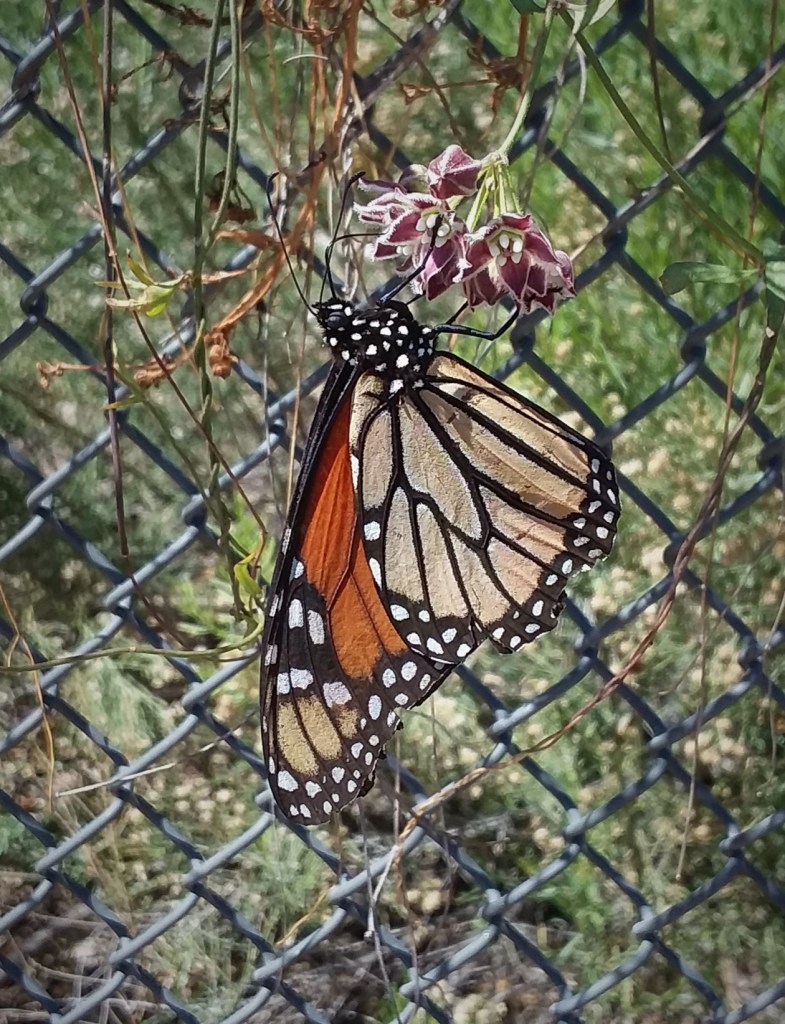
If you look and listen closely—and breathe deeply—you will find spring stirring in the Sonoran Desert. Sweet and fragrant orange blossoms dance through the air. Lizards and ground squirrels reemerge to scamper and soak up the sun. A hummingbird darts and twitters in a Palo Verde tree. I imagine a lone loon, descending from a blue sky, is practicing for his pilot license. He receives clearance from nearby Sky Harbor Airport traffic control and lands with a graceful whoosh that ripples in the Crosscut Canal. A monarch butterfly flits and rests on a bud near the fence of the Desert Botanical Garden, pausing long enough for me to creep in for a closeup of nature’s transformation.
This central Arizona winter-to-spring progression is a warmer, dryer, more gradual shift—a far cry from the flurry, upheaval, and calm of a midwestern lion-to-lamb experience I had been accustomed to for my first sixty years. Nonetheless, it is a March metamorphosis.
Five years ago, like a clumsy butterfly, I emerged from my own cocoon. At age fifty-eight, I launched my first book From Fertile Ground. I remember the anticipation and anxiety of March 24, 2016—the day my book emerged—as I moved from wannabe writer to published author.
I felt exhilaration. It was as if I were boarding a rollercoaster, gripping the bar tightly, grinning ear to ear, throwing my arms in the air, and shouting “Look over here” as my book entered the literary universe. Maybe I sound immodest, but it was and is such a thrill to have discovered this better-late-than-never renaissance.
Previously, as a busy single dad and on-the-go communication professional, the idea of writing on my own terms seemed like a faraway neverland of creative euphoria. But slowly, as I drifted from the gravitational force of my previous orbit, I felt the magnetic pull of an artistic life.
This literary life sprung from a personal void, molded from the fog of my grief after my mother died in January 2013. At that point, I was lost with plenty of tears, but without the language of emotion that normally came easily for me.
Fortunately, I was not alone on my journey. Thanks to the encouragement and support of my husband and a skilled therapist, I forged ahead, jotted notes in my diary, took a few nature photography classes, and slowly stepped away from a thirty-four-year advertising, PR, and consulting career. It had sustained my bank account and carried me through leans years of single fatherhood, but ultimately drained my energy and creativity.
Early on, after my corporate “retirement” there were moments of doubt and uncertainty to contend with. Even so, the more I wrote in my journal, the more I felt my voice begin to emerge. Within a few months, my writing and reading led me out of the darkness into the light.
A litany of wisdom-filled letters my mother sent me—along with a boxful of more than fifty years of diaries my grandfather left behind—spurred my creative impulses. I sequestered myself and perused them all. They spoke to me and my love of family, heritage, and history.
One day in 2014, as I turned the yellowing pages of my grandfather’s rural life—his spartan existence—an idea surfaced in my brain. It told me to weave a tale of three writers telling their stories across the generations, leaving behind a trail of their own words. In that moment, I found a new passion. From Fertile Ground was born. So was my life as an author. I prepared to emerge from my cocoon.
A year of daily soul-searching, writing and editing passed. In late 2015, I finished my manuscript. With the help of a friend, I found an editor and graphic designer—Anna and Sam—who came highly recommended. They both lived and worked in Nashville, Tennessee.
Instinctively, I liked hiring professionals with connections to the South, because much of my story shared a border with Tennessee to the east—in the rolling red earth of rural North Carolina. That is where my mother was born, where my grandparents owned a farm, and where my sister and I frolicked and spent parts of our summers in the 1960s.
Anna provided me with her recommended edits in January 2016. Following that, I collaborated with Sam. With my input, he created the cover for my book, designed the interior pages, formatted the text, and loaded it into the Amazon self-publishing software.
By late March 2016, I held the first copy of my book in hand. Friends and acquaintances began to send notes telling me they enjoyed reading my book and were moved by it. It was a joyous period in my life, far from the tears and fog that had preceded it just a few years before.
I take long walks in the desert and collect photos to stir my imagination. I marvel at the beauty and continuity of nature that surrounds me. I give thanks for the gift of life in a warm and rugged place.
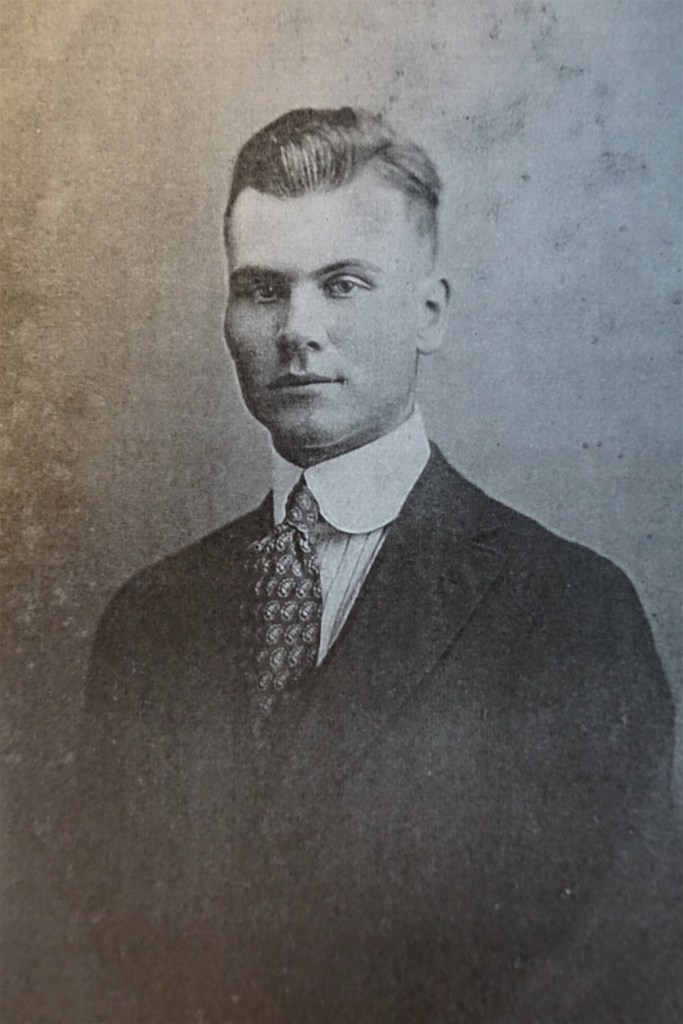
Sherrell Richardson Ferrell, my maternal grandfather, posing at age fifteen or sixteen in 1916 or 1917.
In my previous life, working as a consultant in the human resources world, I often helped companies communicate with employees about changes to their benefit plans.
Inevitably, this included grandfathering certain groups of long-service employees–insulating them from the benefits changes that would affect newer employees only.
This story is not about benefits. But in a sense it is, because I think my grandfather–Sherrell Richardson (S.R.) Ferrell–benefitted the world like all bloggers do when we leave behind our words, impressions, and observations.
S.R. penned his spartan, daily diary entries for more than fifty-two years–1933 to 1985. I featured a few dozen of his diary entries in my first book, From Fertile Ground, a three-generation writer’s mosaic about love and loss, which I wrote and published after my mother died.
Though S.R. scribbled all of his thoughts in long hand in tiny diaries and worked without a laptop or access to the internet, he lived like an early blogger extraordinaire–going about his rural North Carolina routine as a hosiery mill worker and later a farmer. At the end of each day, he recorded the minutia and magnificence of his days.
Evidence of S.R. Ferrell’s “blogging” life in the twentieth century and a sampling of more than fifty-two years of diaries he left behind.
Born on March 9, 1901, today would have been S.R.’s 120th birthday. In honor of my him (and the writing impulse that motivates and haunts all of us bloggers), my grandfather is my guest blogger today.
This is what S.R. Ferrell wrote fifty-nine years ago on a momentous Tuesday. It also appears as the opening to chapter two, Off Into Space, in From Fertile Ground.
Thank you for leaving behind a trail of your life, S.R., and Happy Birthday.
***
Tuesday, February 20, 1962
Watched Glenn’s capsule take off into space at 9:47 a.m. It made 3 trips around the earth at altitudes from 100 to 160 miles and the time for the three circuits was 4 hours 56 minutes and 26 seconds.
I went to Huntersville to send money order for insurance premium. Went to see Frances and boys.Fair. Cool. Ethel came by in afternoon. Martha Auten came to get turnip salad.
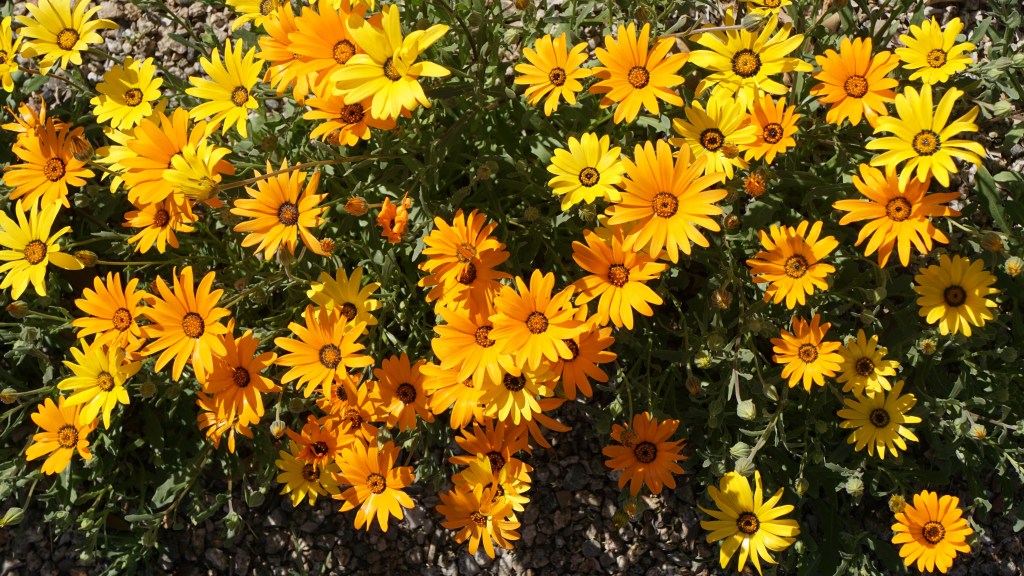
Like clockwork, the wildflowers are blooming again in Arizona. Daisies and poppies are beginning to soak up the sun in fields, on yards, and along roadways. Pandemic or not, this burst of color and continuity occurs every February and March in the Sonoran Desert.
I think Mother Nature is trying to show us something astounding and reassuring about the power of her regularity. She’s at her best when she delivers beauty on her own terms and schedule, unimpeded by the twenty-four-hour news cycle. It is simply our job to notice her actions, absorb her displays, and allow them to calm our spirits as we wait for pieces of our pre-pandemic lives to appear.
On Tuesday, I wrote about returning to swim at Eldorado Pool after a year-long, COVID-19-induced hiatus. I swam again on Thursday. In the past week, there have been other hopeful signs. Blooming like Arizona wildflowers, a series of separate occasions outdoors with friends–all uplifting–have renewed my spirits.
Last Saturday night, Tom and I drove to Glendale to watch a movie under the stars with Danny, Shea, and Michael. It was a cool, windy night for Arizona. We bundled up to watch an action flick under individual blankets.
On Monday, Tom and I dined on a restaurant patio with Pavel and Rick. On Wednesday, we consumed a potluck meal under a gazebo with Adele, Len, Carolyn, and John. All four comrades in our condo community continue to support my writing addiction.
On Thursday evening, Tom and I ventured back to a nearly empty indoor movie theatre for the first time in a year. Behind masks, we watched Nomadland, a stirring story of loss and hope set against the grand landscape of the American west. On Friday, we reconnected with Paul, another friend from a different strand of life. Like the wildflowers, he has just reappeared.
This morning we laughed and joked with Garry, a chorus friend, and his partner James. Together we polished off four doughnuts under our recently pruned fig tree. I’ve missed Garry’s raucous sense of humor and positive energy. He bought three of my books.
More safe social steps are coming in the next week to carry us further down the path of healing: a movie with John and Carolyn tonight; a stroll with Brian and Bernadette at the Desert Botanical Garden tomorrow; a visit with George on Monday evening. Tom and I have grown close to him. He’s bringing steaks for the three of us to grill. Then, later in the week, another dinner outside with Len and Adele at one of our favorite Scottsdale restaurants.
Suffice it to say, Tom and I are lucky to have all of these friends in our lives. I didn’t intend for this to sound like a reemerging social calendar. More than that, it’s my latest batch of evidence concerning how important in-person human connections are, how much we need each other to survive and be happy. Zoom interactions and text messages aren’t enough to sustain us.
Yes, it’s been a week of many happy returns, a flurry of book sales, and several steps and strokes in the right direction. I’m thankful for them all and the opportunities ahead.
As Tom and I wait to be fully vaccinated (Garry and James already are), I feel an inoculation of hope. We’re finally beginning to rediscover the friendship strands of our lives. We’re poised to bloom again in the Arizona sun.
I feel the pain and glory of every writer. We build the frames of our books, chapter by chapter. The process takes years. It is the culmination of time, art, and commitment.
We begin in the darkness in front of an empty page or a blank screen. We write a sentence or two that makes sense. We add and subtract in words. We rinse and repeat. We submerge ourselves to find the deepest meaning in the mundane and the spectacular.
One day, after months of determination and doubt, our rough draft is done. But we pause only briefly. We don’t want to lose our momentum. We dive back in for round after round of edits, because we want our stories to adhere to each other and to every reader who spends time with them.
Finally, the rewriting and polishing reveal the stories we intended. We invite a few trusted professionals, an editor and graphic designer, to join us in the literary chase. They stand by us on shore as we rewrite and polish passages, as we search for and discover the perfect cover, as we tweak phrases one final time, as we launch our true and false stories into the world.
As I watch my latest book, I Think I’ll Prune the Lemon Tree, begin to bob on the waves of the reading world in the middle of a global pandemic, I wonder. What will happen next? Who will read my book? What will it mean to them? What will readers have to say about it?
These are just a few of the questions we independent writers ask after our stories set sail. We are brimming with ideas, but also uncertainties. We have little control over where our stories land. All we can do is breathe life into them, guide them from afar, send a little money their way, push trade winds in their direction, and wait to hear about our creations once they have landed.
Now that I have published I Think I’ll Prune the Lemon Tree, I feel like an empty-nester. All of the nurturing and sculpting is over. My purpose and attention has shifted from writer to salesman.
There is nothing too surprising about that. The frustrating part is that we are living in the middle of a global pandemic. There are limited opportunities–none, really–for the face-to-face interactions I crave with readers. I don’t have a chance to talk about my books with people. Because I am mostly an extrovert–though much less so as I’ve gotten older–I miss that terribly. The only legitimate opportunities for authors to promote and sell their books are online.
Even so, on Wednesday afternoon, I manufactured a little of my own author interaction. I drove to the Scottsdale Public Library. I donated a copy of my latest book for its Local Author bookshelf. This is something I’ve done three times before.
Previously, this act was followed by a physical Local Author Book Sale, where readers and authors meet. (To replace the in-person fair, there is an online local authors talk series conducted through our library. I missed the deadline for submitting a video to participate. I was focused on finishing and publishing my fourth book.)
While at the library I spoke with Wen-Ling, a pleasant woman who coordinates some of the local author activities for the library. From one side of a glass partition I described my latest book to Wen-Ling and my passion for writing memoirs. She told me the staff hopes to reinstitute the Local Author Book Sale in 2022.
After our interaction, I found my energy. I raced back to the parking lot to my car to find a bookmark for Wen-Ling and postcard with information about my books. I returned to the library information desk, placed my printed materials on the counter, and waved to her. Wen-Ling was helping another patron, but from behind her mask she thanked me for donating my book. I smiled back and said goodbye.
It was a simple exchange, and the kind of thing I used to take for granted in our pre-COVID-19 world. But all of that has changed now. As Tom and I–and most of us in the world–wait to be vaccinated, I will continue to look for small ways to stay engaged. Whether I’m there for a mini book chat or just trying to stay healthy on the treadmill of life, I will always need to find ways to connect with those around me.
The trail of my literary life has led here. The Kindle version of my fourth book, I Think I’ll Prune the Lemon Tree, is now available on Amazon. (Paperbacks are in production and will be available for purchase at this same location on Amazon in the next few days).
The rush of adrenaline I feel today is at least as satisfying as books one, two and three, because I’ve devoted more than three years to this creative endeavor–imagining, developing, polishing, and agonizing over it.
In that sense, today is a combination of the exhilaration of unwrapping Christmas presents, skipping out the door on the last day of school, feeling weak in the knees the first time I approached the edge of the Grand Canyon, and hoping for a clean bill of health from my cardiologist. It’s all of that rolled into a freshly-baked batch of chocolate chip cookies.
In this anthology of Arizona stories, I dig deeper into themes that are important to me: the lasting love and comfort of family and friends; the humor, irony, and poetry in everyday situations; the profound beauty of nature and how it shapes us; the joy of realizing a literary life; and the conviction required to be an authentic gay man–a real gay couple–in a world often rife with ignorance.
As you might expect, the upheaval we have all faced in Coronaville (my name for our shared global address of uncertainty) is present here too. How could it not be? The pandemic has dominated our lives and–at its core–this is a non-sequential personal and societal 2017-to-2020 slice of life.
All of these themes–and flights of fancy (backward and forward in time) to visit familiar and new people and places–run through my book. They are the threads in this tapestry that has become my writing style. They are the elements of the sometimes-whimsical-sometimes-serious voice I have unearthed in my life with Tom in the warmth of the Sonoran Desert.
As we wait for our vaccinations and continue to hope we will recapture the most important strands of our disrupted lives, I think you will find comfort, honesty and humor in I Think I’ll Prune the Lemon Tree. I also think it is a testimonial to the importance of our families, communities, and human connections as we strive to sustain ourselves no matter where we live, no matter where this journey leads us.
Like many of you, I know grief. It is that clumsy, unwelcome house guest we imagine will never leave.
When it arrives, grief dominates our lives. It keeps us awake at night, saturates our sensibilities, zaps our strength, and slows the progression of time.
At its onset, grief feels like a heavy stone we must carry in our pocket. A character in the 2010 dramatic film Rabbit Hole describes it that way. With time, we grow accustom to the stone. We become grateful for the stone, because we realize it is all that remains of the person we loved and lost.
One day, without expecting it, grief is less heavy, less present. The achiness has packed its bags and moved on. We aren’t sure why or where it has gone–maybe down the hall, across the street, or into the next zip code. But grief is never far away. It returns to comfort us on milestone days: birthdays, holidays, and anniversaries.
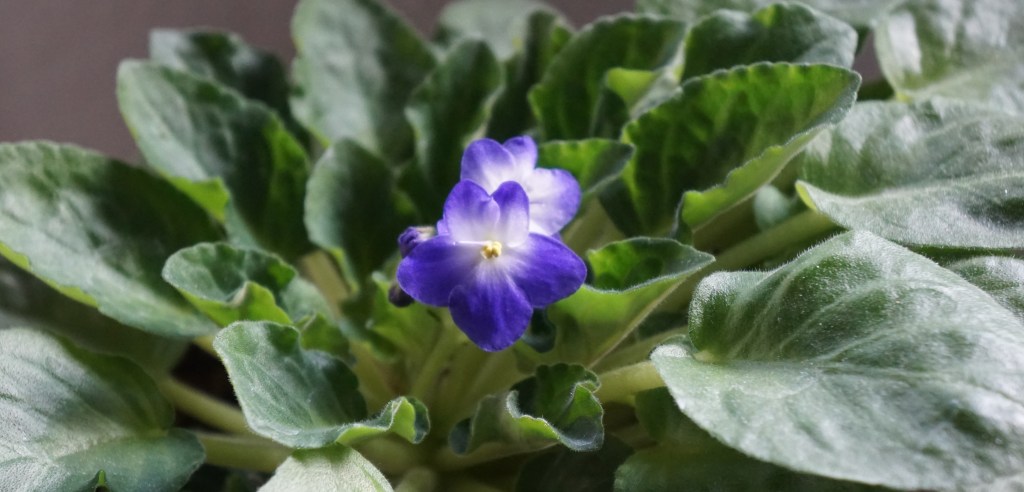
Grief appears on regular days too. It leaves little reminders to certify our humanity and frailty. It lingers in the cool air and warm sunshine of a spring day. It hangs in the lyrics of an old nostalgic tune, I’ll Be Seeing You, sung by Peggy Lee. It grows on the window sill in the perennial bloom of an African violet.
It’s been eight years since my mother died at age eighty-nine. January 26, 2013 was a bitter morning in the Chicago suburbs, meteorologically and personally. About 2 a.m., my sister Diane called with the news.
Immediately, Tom and I bundled up and drove twenty miles south (from our home in Mount Prospect to Mom’s third-floor apartment at Brighton Gardens in Wheaton, Illinois).
That morning I kissed my mother’s forehead and patted her hand one final time. As my husband and I left the building, a full moon dominated the frozen sky.
Grief moved in with us that day. At the time, I didn’t know it would repurpose itself and transform from a stone to a familiar fog to a blanket of possibilities.
But grief is cagy. It can be an enemy or an ally. It became my muse, the catalyst for my creativity. With grief by my side, between 2014 and 2016, I wrote and published From Fertile Ground.
Over the past five years, friends, acquaintances, and readers I will never meet in person have posted heartfelt reviews. They have told me how the story of my grief–and my grandfather’s and mother’s written legacies–helped them examine their lives, process their sadness, and restore some semblance of hope.
Writing the book was my catharsis too. Like the final line from the Peggy Lee tune which describes my feelings of loss perfectly–“I’ll be looking at the moon, but I’ll be seeing you”–the pages of my book are permanent evidence of the grief I felt, which diffused with the passing of eight years. On days when I need confirmation of what 2013 to 2016 felt like, I can pick up my book and remember.
After our wise, nature-loving mother died, Diane did a kind thing. She divided up Mom’s African violets–one a shade of pink, the other a purplish blue–for the two of us to carry forward and display in our respective homes.
The plants originated in St. Louis in the 1980s or 1990s. They traveled to the Chicago area with Mom in 2004 when she moved north to be closer to us in her final years.
In July 2017, when Tom and I left Illinois and moved to Arizona, we wedged them in a laundry basket in the back seat of our Hyundai Sonata. Ultimately, we deposited them on our southern-facing window sill in Scottsdale.
In 2019, the pink African violet died, but the lone one is a survivor. It captures the warm rays of the Sonoran Desert sun. It blooms every winter and has chosen this week–eight years after Helen Johnson left the world–to dazzle us once again.
When I examine the vibrant blues and greens the plant offers, it eases my mind. It reminds me that memories of the mother I loved and her lasting impact are never far away. That the mind-numbing initial waves of tears and grief led me to a softer reality, which is bearable, tender, and life affirming.
Even as we wander in the dark through the depths of this global pandemic, there is strange comfort knowing grief will always be there in some form or another to acknowledge our past, present and future losses. Because if grief never appeared, we would discover a harsher reality … that we never loved at all.
Thank you, grief, for filling the void. I’ll be seeing you.