I have Georgia on my mind today. Not the Peach Tree state, but my peach-ice-cream-loving grandmother. April 7 would have been my maternal grandma’s 119th birthday.
Warm-hearted and hard-working, Georgia lived most of her seventy-one years in North Carolina.
In 1914, Georgia Evabell Miller met Sherrell Richardson (S.R.) Ferrell. Both attended a one-room school in Mecklenburg County. Six years later, they married at Georgia’s home in the same community. She was sixteen; he was nineteen.
A generation before I appeared, Georgia’s ordinary rural existence–tending to family, home, meals, and livestock–took an extraordinary toll on her body and emotional wellbeing. She bore four children: Helen (my mother) and Richard in the mid 1920s; James and Frances in the early 1930s.
In between, Georgia suffered a double whammy of grief and pain. Richard died of meningitis in 1926 one month before his first birthday. Not long after, cervical cancer compounded Georgia’s trauma. She was bedridden for an extended period. Helen grew up quickly and helped care for her mother.
Even with Georgia’s burden and her heavy body that contributed to arthritic knees and misshapen feet, my grandma maintained a girlish southern giggle into her late fifties and beyond.
In the summer of ’62, during one of our family visits to the farm, I absorbed the scene like a ready sponge as she prepared ham, grits, and biscuits for breakfast.
I loved Georgia and her jolly nature. As she toiled and told rambling stories over the sink, rolls of laughter shook her stout body. If she were here, she would describe it as the “gift of gab” handed down through her Irish descent.
Intermittently, she tossed table scraps and leftovers into a slop bucket for a trio of hungry hogs that waited impatiently in their pen.
On occasion, I accompanied her whenever the contents came close to sloshing over the sides of the dented metal pail. Together we squealed as the pigs poked their large snouts through wooden slats to explore what concoction was on the menu.
Like a southern-stitched patchwork quilt handed down through the generations to keep them warm, this moment remains cordoned off in my 1960s Carolina consciousness. It lives next door to Georgia’s humid hugs.
When I was a toddler, I begged for her to scoop me into the lap of her tattered periwinkle dress … churn butter or crank ice cream on the sagging back porch … venture into the earthen cellar where she stored pickled fruits and vegetables … or gather eggs from the chicken coup and cradle them in her apron on the return trip.
A victim of heart disease and decades of early mornings and long days working the farm, Georgia died nearly forty-eight years ago on July 4, 1974.
Two days later (after we drove through the night from St. Louis to attend her funeral), sprays of gladiolas surrounded her casket.
I can still envision the tacky floral arrangement–sent by a neighbor–with a plastic telephone teetering on top. Three words were written in ribbon: “God has called.” Ironically, my grieving grandpa loved it most.
Through our tears, Frances and I laughed about it. Georgia would have liked that and the image of my aunt and me consoling each other on my seventeenth birthday. We stood over her fresh grave in Huntersville, North Carolina, at a little cemetery outside Asbury United Methodist Church.
It was the center of the universe in “Ferrelltown”–where my southern family worshipped, married, gathered as a community, celebrated birthdays, consumed countless cakes and delectable pies, buried the beloved, and grieved for those who left early and stayed late.
***
Years later, it is the thought of Georgia’s gentility and kindness that endures. It is the love and laughter she planted in my heart that will never die.
As I began to write From Fertile Ground after my mother died–and later when I returned from North Carolina after another round of consoling with Frances and visit to my grandparents’ graves in the church yard–Annie Lennox’ soaring voice from her CD Nostalgia inspired me.
It was her stirring, melancholy rendition of the Ray Charles’ classic Georgia on My Mind that captivated me most. Listening to it, I channeled my grief and reconstructed my southern memories before they landed on the pages of my book.
Every child should be so lucky to spend a few weeks every other summer with a grandparent who simply smothers them with goodness and genuine love. That and the bucolic snippets of a farm populated with kittens, puppies, cows, chickens, pigs, and peacocks are forever stitched in my psyche.
When you add them all up, what do all these vivid memories mean? That in the course of any life, it is the collective music of a simple-but-extraordinary grandma’s unconditional love that keeps us hoping, that keeps us dreaming, that keeps us living, that keeps us singing.
Long after she is gone.
***
I said Georgia Georgia A song of you Comes as sweet and clear As moonlight through the pines.
Other arms reach out to me Other eyes smile tenderly Still in peaceful dreams I see The road leads back to you.
I said Georgia Oh Georgia, no peace I find Just an old sweet song Keeps Georgia on my mind.
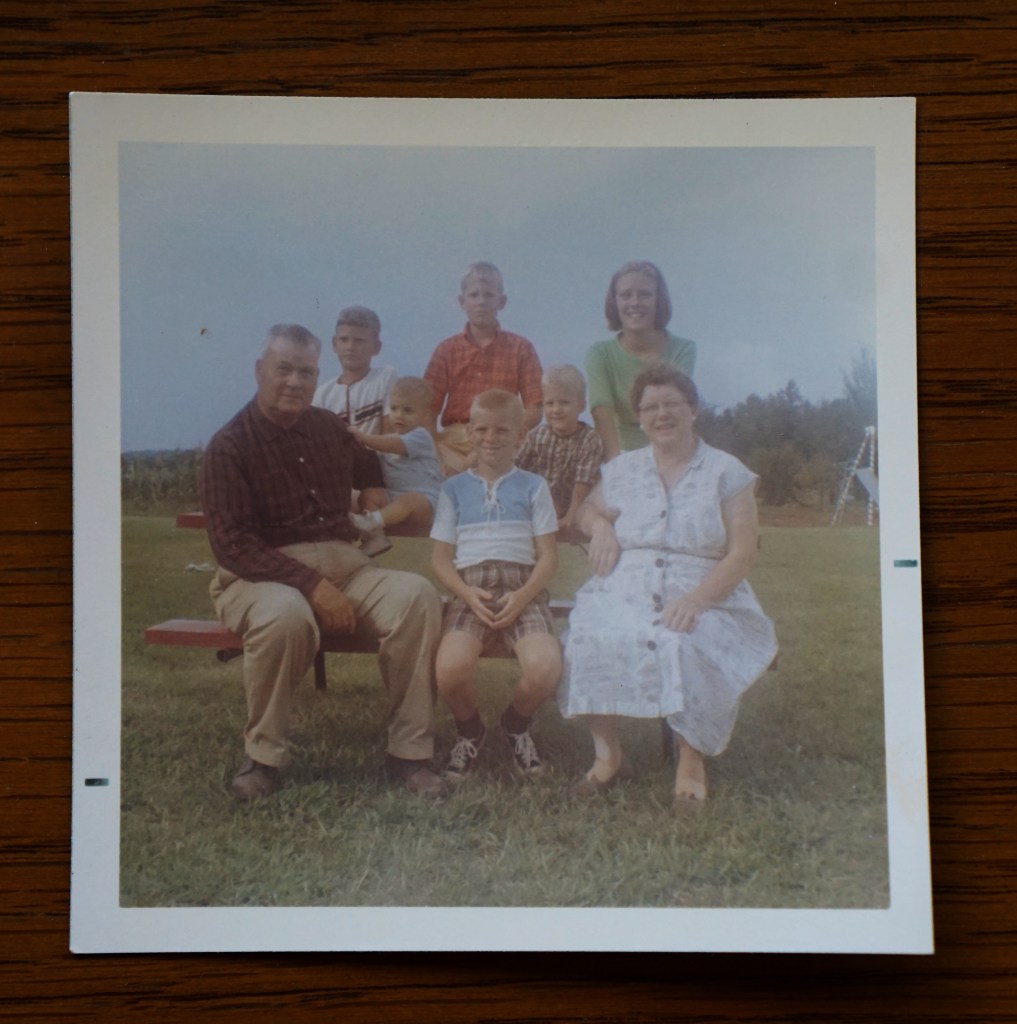
Georgia at age fifty-three on the steps of my parents’ apartment during a rare visit to St. Louis in 1956. About a decade later, she and S.R. enjoyed the company of six of their seven grandchildren in rural NC.
Warmer, brighter, and dryer than my midwestern memories, the arrival of April in the Sonoran Desert means we are a step closer to the oven.
I’ve come to welcome the regularity of the sun and heat. They define who we are: slimmer survivors, comfortable in shorts and sandals minus the cloud cover and weighty coats of our past lives.
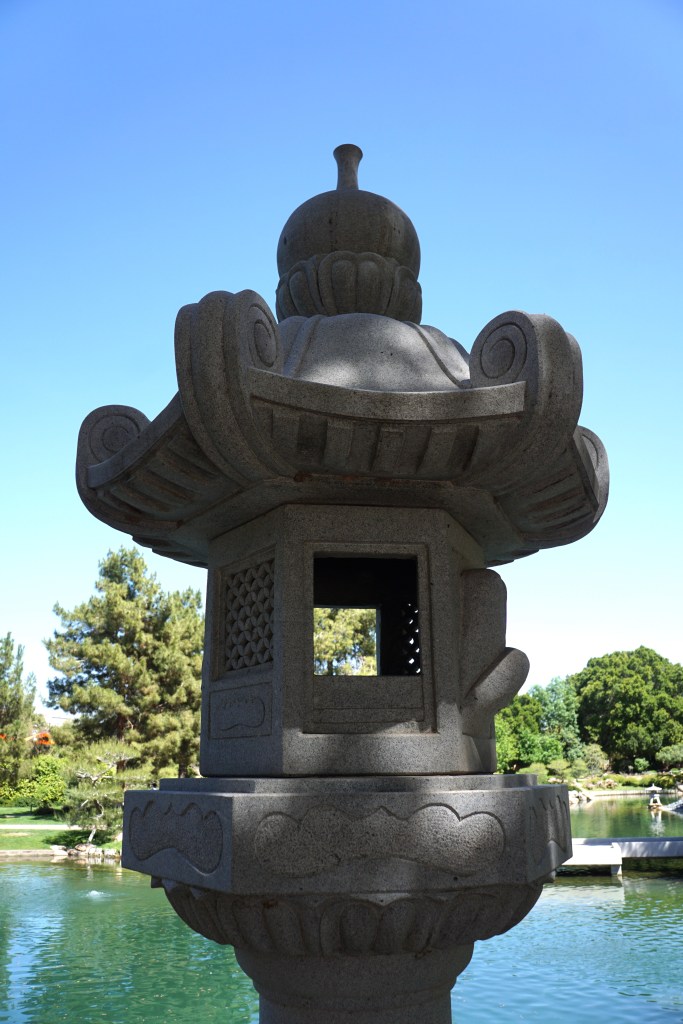
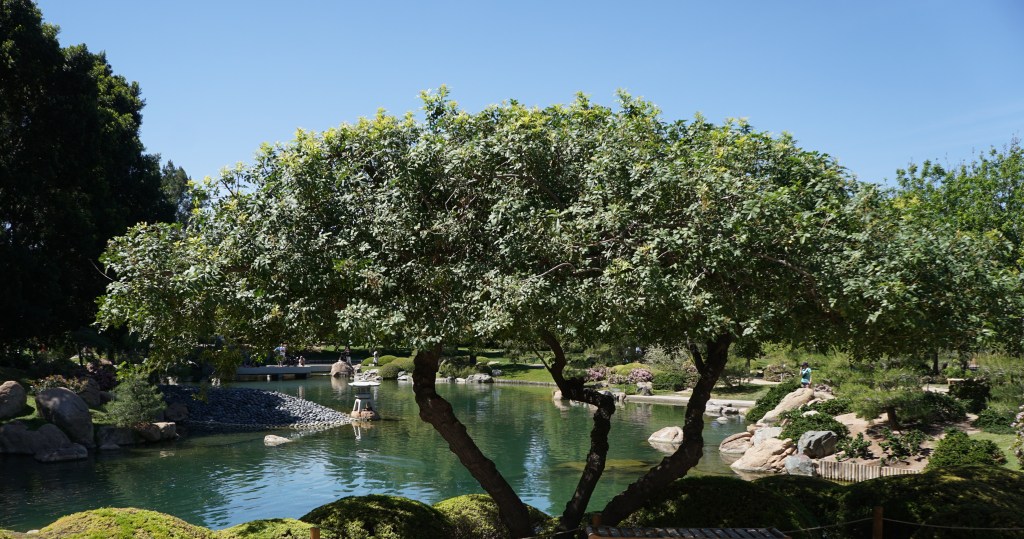
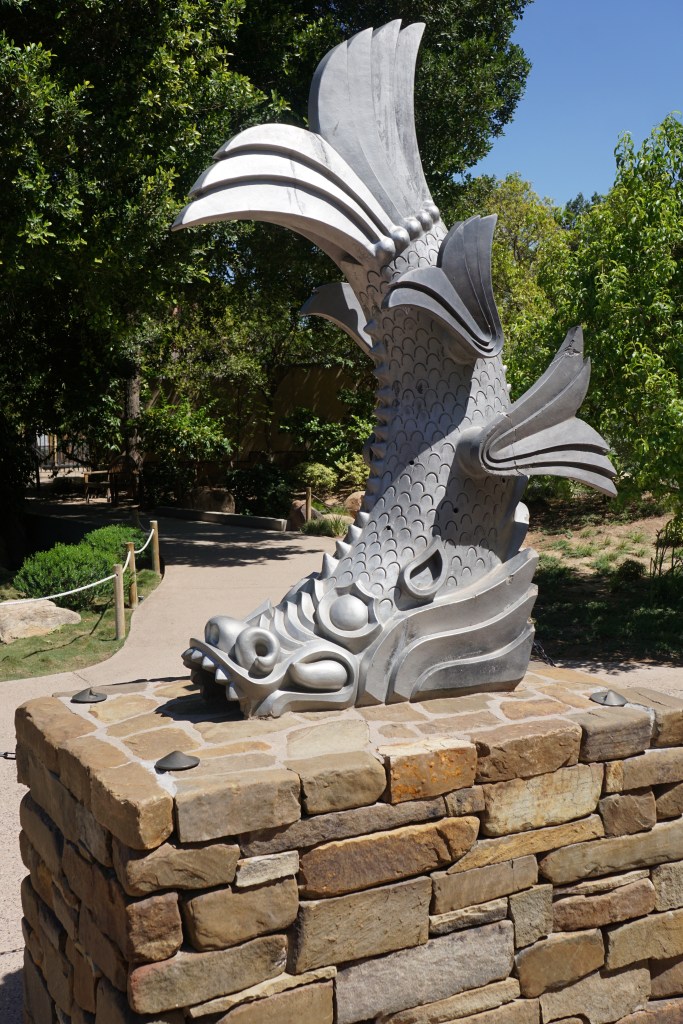
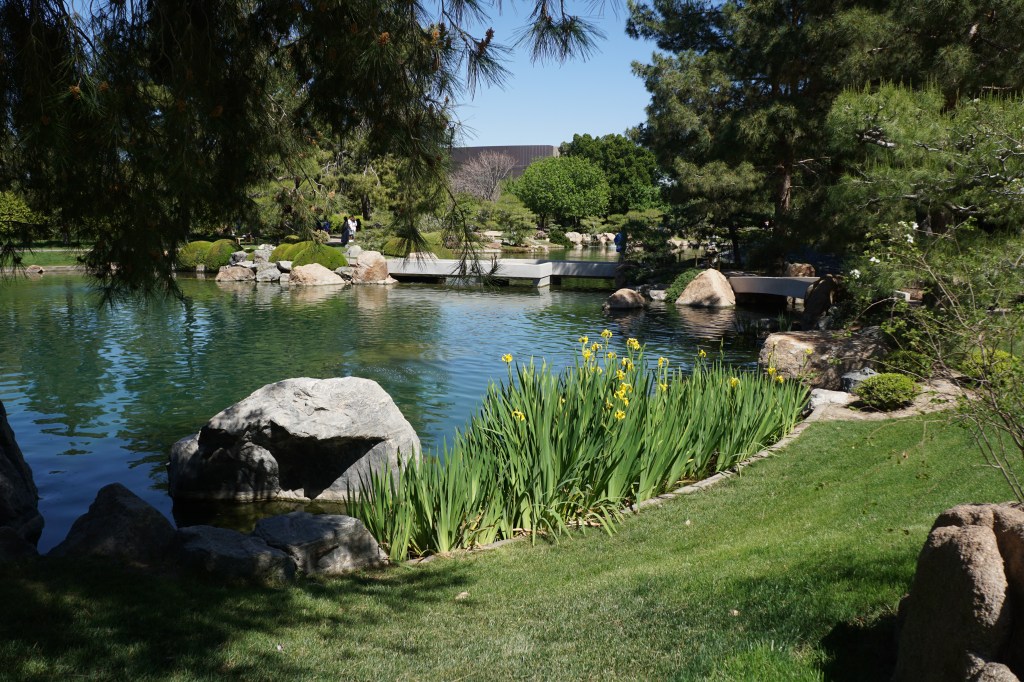
No matter the month, if you’re willing to dig beneath the palms that frame the burgeoning Phoenix skyline, you’ll find the Japanese Friendship Garden (named RoHoEn) coexisting with concrete in an urban setting.
Planted at 1125 N. 3rd Avenue (just west of Central Avenue and south of I-10 on the way to L.A.), this hidden Phoenix gem is an unexpected eastern oasis deposited amidst the flurry of western civilization.
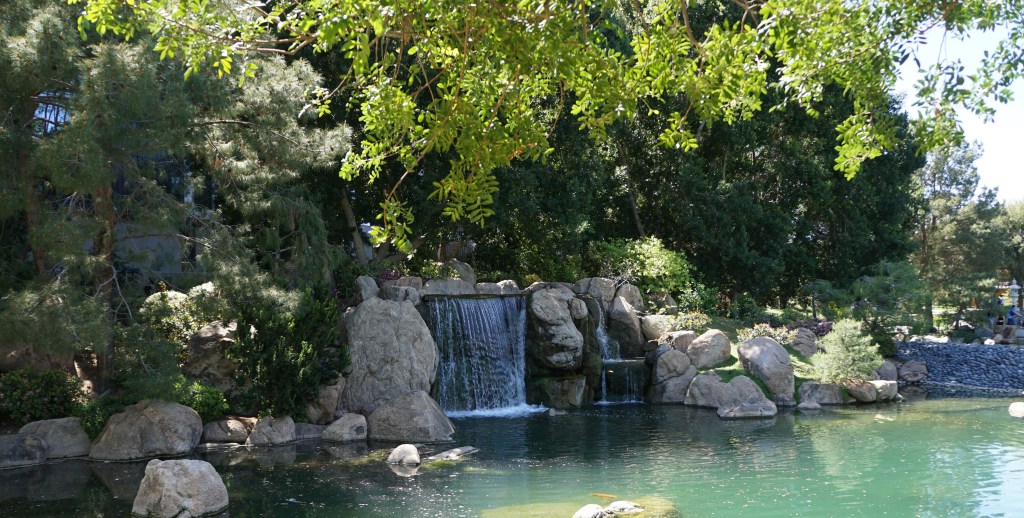
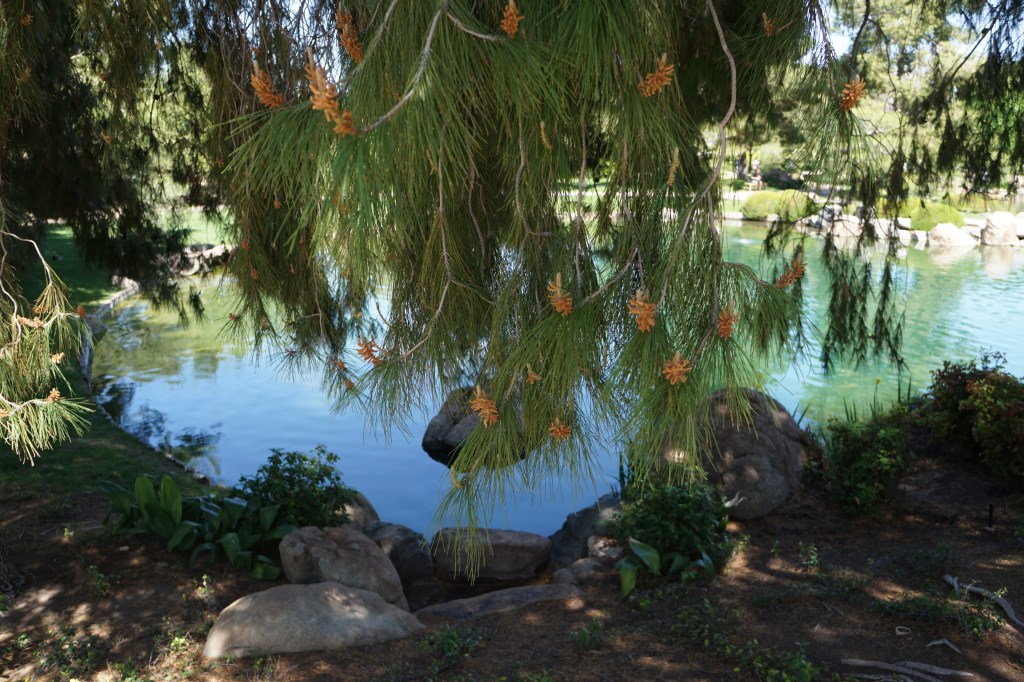
Protected by the shade of a high-rise apartment building, colorful koi dance beneath the surface of a shallow lake, a canopy of pines, sculpted shrubs, gentle waterfalls, and peaceful pagodas.
Of course, many come to the Valley of the Sun to relax by the pool. But if you prefer a different kind of escape, the garden is an ideal place to stroll in the shade, pause on a weekday, feed the fish, and nourish your soul.
Note: Located in the heart of Phoenix, the 3.5-acre Japanese Friendship Garden is a joint project of the City of Phoenix and its Sister City, Himeji, Japan. I captured these photos during an afternoon visit with Tom on Wednesday, March 30, 2022.
Today, I’m lost in thought about screen-and-stage legend Judy Garland, a film she starred in that sparked my early imagination, a recent experience that renewed my love for live theater, and a song, Get Happy, she made famous.
Forget your troubles, come on get happy, you better chase all your cares away. Shout hallelujah, come on get happy, get ready for the judgement day.
***
Beginning in 1959, and throughout the 60s, it happened only once a year: CBS aired a special TV broadcast of The Wizard of Oz, the magical MGM film released in 1939.
Like thousands of Baby Boomers across the U.S., my sister Diane and I waited impatiently for the annual ritual. We sat cross-legged, mesmerized in front of our RCA console. We squealed with delight and fear when a ferocious cyclone swept Dorothy into the Kansas sky. In short order, she, Toto (her loyal dog) and their house landed with a thud somewhere over the rainbow.
For those precious hours, Diane and I absorbed and memorized every fanciful song, image and character–the Scarecrow, the Tin Man, the Cowardly Lion, the Munchkins, the Flying Monkeys–Dorothy encountered along the yellow brick road. Though our TV projected black-and-white images only, our imaginations manufactured the scenes in vivid color.
As the years passed, we recited every iconic line of dialogue–“I’ll get you, my pretty … and your little dog, too”–uttered by the Wicked Witch of the West. Whenever she appeared in a puff of smoke, it shook us to the core. But we always knew she would melt in the end, thanks to a handy bucket of water on a ledge and Dorothy’s resourceful decision to grab it in a crucial moment.
Knowing that delicious outcome, and that Dorothy and Toto would ultimately make it back home to Kansas safely, made watching the film one of the happiest and most enduring memories of my childhood.
Looking back, I think it was Judy Garland, playing Dorothy, who captivated me most. Her sense of wonder, innocence, tenacity, good citizenship, pizzazz, and beautiful voice filled the frame. I don’t think there is a more stirring, iconic moment in film than Judy singing Somewhere Over the Rainbow.
Of course, children and adults can watch The Wizard of Oz whenever they want now. But, in the 1960s, the film’s relative inaccessibility, imagination, and message … that it was possible to find happiness and peace “right in my own backyard” … was a shared experience and sense of idealism that no longer exists.
Isn’t it ironic that, in an age when virtually any film or music is available anytime, we are barraged with a mountain of images and problematic news–pandemics, politics, and Putin–that shock our sensibilities and clog our ability to bolster our happiness?
***
2022 marks the centennial celebration of Judy Garland’s life. (She was born June 10, 1922; died June 22, 1969, at age 47.)
To remember and relive her remarkable film, stage and song legacy–amassed in less than five decades–crooner Michael Feinstein has produced a masterful ninety-minute show, called Get Happy!
On Sunday, March 20, Tom and I were in the audience for Feinstein’s dazzling evening performance and multi-media program at the Scottsdale Center for the Performing Arts. It included renditions of many of Judy’s favorite tunes, along with seldom-seen-or-heard images and stories from her life.
About midway through Feinstein’s stellar performance, he paused to tell a story about Judy Garland in 1941. That year, at age nineteen, she bought her parents (who came from modest means in Grand Rapids, Minnesota) a home.
Judy recorded tapes of herself singing to her family in their home, but for years after her death mysteriously those recordings couldn’t be found. Remarkably, Feinstein had the opportunity to visit the home and discovered them in a hollow wall. He played one of those for us as a black-and-white image of a teenage Judy Garland, posing in a tailored suit, filled the screen above the stage.
The song Judy was singing, I’ll Be Seeing You, brought me to tears as I held Tom’s hand. We were seated on the aisle in row Q. Judy never recorded it professionally, but the tune was one of my mother’s favorites. So much so, that Diane and I chose a version of it to play at Mom’s memorial service in 2013.
As Judy Garland’s bright and soaring voice filled the auditorium Sunday night, I was transported back to the early 1960s and the happiness I felt watching The Wizard of Oz.
Mom was curled up on the couch. Diane and I were glued to the floor in front of our RCA. Together we followed Judy’s voice and steps stride for stride.
We were on our annual adventure somewhere over the rainbow.
There is no better time than St. Patrick’s Day to pay tribute to the Emerald Island.
In late August 2017–just six weeks after I suffered a mild heart attack–Tom and I boarded a flight for Dublin, Ireland.
It was an excursion we had planned months before. But on July 6th (our shared sixtieth birthday) the trip and our future felt very much in doubt as I lie on a gurney in a St. Louis hospital.
Remarkably, my health improved considerably in a month. Doctors in Scottsdale, Arizona–my new hometown–encouraged us to proceed with our plans. The journey to Ireland would help us heal.
Looking back five years, both of us were anxious about traveling abroad, but we also needed to reclaim our joy. As I wrote in An Unobstructed View, Tom and I spent eight days with forty other travelers from around the world. Brian, our capable guide with CIE Tours, led us clockwise around the island.
It’s a bit of a blur now. But in one week’s time we moved from Dublin to Waterford, Killarney, the Ring of Kerry, the Cliffs of Moher, Galway, the sheepdogs in Sligo, the Giant’s Causeway in North Ireland, and the Titanic Museum in Belfast … before returning to Dublin and riding atop a double-decker bus with the wind racing through my hair.
Along the way, on our farewell dinner with the tour, we enjoyed an evening of Irish songs and music at the Glyde Inn just south of Dundalk.
In the spontaneity of the experience, I was pulled onto the floor to join in a broom dance. For a few fleeting moments, I rediscovered my spark away from the worries of the previous month.
I also spotted a little old Irish lady, singing her heart out across the room. She resembled my Scotch-Irish mother, who never had the opportunity to return to her ancestral home country. Seeing her there was an important step in my healing process.
In 2019, I wrote The Irish Mist. My poem is a tribute to the comfort I felt looking out over the Atlantic Ocean across the vast Cliffs of Moher on the west coast of Ireland as the clouds rolled in on August 27, 2017.
***
I’ll always remember you, rolling in over the gaelic green.
I felt cool comfort knowing the veiled intentions you whispered in my ear wouldn’t be denied.
No matter how much I wanted to gaze beyond the moss and ferns you shrouded, you held me there.
You knew I needed to stand strong above the craggy cliffs of my past.
You knew I needed to feel rooted to the emerald island, thankful for the mystery of my mending heart.
We sat–quietly and obediently–in rows facing the front of the room. Most of the girls wore frilly dresses, bangs, and patent-leather shoes; the boys sported bold-striped shirts, crew cuts, and bright-white Keds.
Our mornings and early afternoons were occupied with simple math, spelling, reading, recess, and cartons of cold milk on lunch trays. The American flag draped over the alphabet border above the blackboard.
Images of George, Abraham, and John–Washington, Lincoln, and Kennedy–stood guard. I suspect they were there to ease our minds and protect our American innocence.
If only it were that simple.
***
I don’t remember feeling fear, when our teacher told us it was time for another drill. We knew the routine and followed instructions.
A voice on the public address system told us when to practice hiding under our desks, when to duck and cover, when to escape to fallout shelters in hallways if a bomb were dropped.
It lasted but a few minutes. We covered our heads and faces until the all-clear signal came from our teacher. We absorbed the fear–the height of the Cold War–without knowing what it was.
This was what we knew in the early 1960s in middle America. We were fortunate these were merely practice drills, false alarms.
I imagine the scenes weren’t much different in schools on the outskirts of Chicago, Cincinnati or Cleveland. At Mesnier School in Affton–ten miles from downtown St. Louis–we aspired to a gleaming symbol. We lived in the shadow of an emerging national monument.
By its completion in 1965, the Gateway Arch would soar, though across the nation the fog of pollution and social issues intensified.
As history would have it, all of the names of St. Louis school children would be stored in a time capsule in the base of the Arch. Mine is among them.
Back in the classroom, between random drills and parent-teacher conferences, we learned to add, subtract, multiply, and divide. We tied our shoes and kept on skipping in a world where rules were prescribed narrowly for girls and boys.
This was the credo for boys: Get good grades in school. Be prepared. Keep your eye on the ball. Run faster. Jump higher. Find a decent job. Don’t be a sissy. Meet and marry a woman. Buy a house. Have kids. Keep your nose to the grindstone. Pass the baton to the next generation.
But what about those of us who are different? Where do we fit into the story? We had to figure that out for ourselves.
***
The sixties weren’t pretty. Assassinations reigned. The Vietnam War raged. Poverty and racism amplified. People felt trapped, ready to shed the remnants of restrictive gender roles and sexuality, sealed in the repressive 1950s.
But the world is exponentially more complicated now. The latest madman is hellbent on ravaging innocent people in Ukraine. Though love appears in abundance in many circles across all continents, ignorance and hate manifest themselves next door and around the world.
Once again, sixty years later, we find ourselves living in fear of the fallout. We must find ways to duck and cover, to speak the truth while standing as tall and mighty as the Gateway Arch.
We owe it to our children and grandchildren to put politics aside, to protect our planet, to uphold individual rights and civil liberties, to teach them about black and white, but also the color and grayness of the world and all its permutations. Pandemic or not, they are watching.
Even if they don’t know it, the youngest members of our society are counting on us to speak the truth, denounce racism and hate, celebrate gay and straight lives, and to teach them that every generation has a responsibility to remember and honor the seminal moments in history, and–hopefully–carry the best of humanity forward.
Sherrell Richardson Ferrell, my farming and writing grandfather, posing in the 1930s.
As a writer and gardener, I’ve learned there is constancy and comfort embedded in the rituals of life.
Each time I sit before my laptop to tell another story I feel a sense of grounding. My hard-working grandfather, the North Carolina farmer, must have understood that. He kept a journal every day for fifty-two consecutive years–from 1933 until the day he died in 1985.
Less about his personal reflections, much of what S.R. Ferrell wrote was about the day-in-day-in responsibilities of farm life. For instance, forty-nine years ago on his seventy-second birthday, this is what he had to say:
I did my farm chores in cloudy foggy wet morning. The mud is getting deeper by the day. I mopped the kitchen after I got my outside work done. I changed my clothes and went to Huntersville to get prescriptions filled. My 72nd birthday. Jimmy, Frankie and Frances came and ate lunch with us today. Mamma and Zelma called and talked to me. Cloudy, wet, muddy, mild all day. More rain expected tonight. 54 degree low; 60 degree high.
There is nothing spectacular in these words until you consider that he wrote down his thoughts for more than five decades. Little did he know that–long after he was gone–I would read every page of his journals and (after my mother and his daughter died) write a book about the writing DNA that runs through my blood.
Now that I’m a desert rat, I keep a speckled rock from S.R.’s farm in our Arizona garden. At this moment, it’s wedged in the ground under our fig tree. Every time I water the tree, I see the stone. It reminds me of my southern roots and connection to the earth.
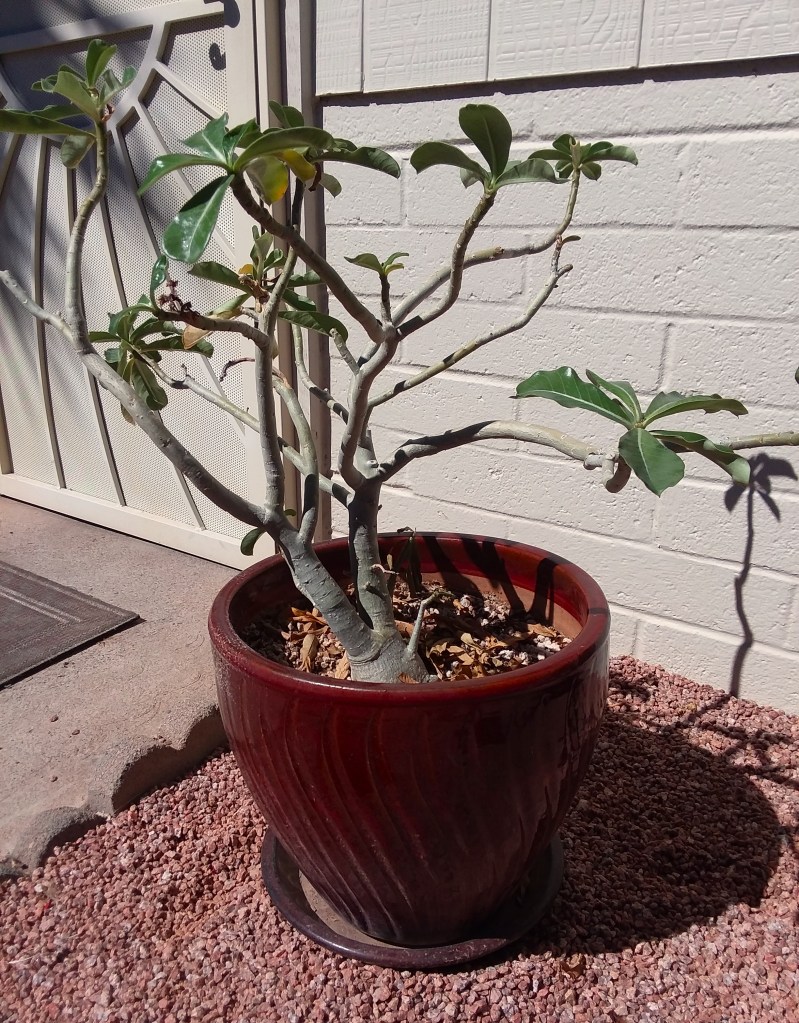
In keeping with the ebb and flow of nature and lineage, I do this ceremonial gardening dance twice a year. In early December, I lug my beloved desert roses (aka, adeniums) inside away from winter’s chill. They hide dormant in the darkest corners of our condo until March, when I haul them back outside to face the world again.
Yesterday morning, one day before S.R.’s 121st birthday, I renewed part two of this desert rose ritual. This year, it also happened to be the day Tom hired Chem Dry to clean our carpet.
Before Drew from Chem Dry arrived, my husband and I hoisted our slumbering desert rose and situated it outside our backdoor. We didn’t want to spill any soil on our freshly manicured carpet.
All of that went without a hitch. Neither of us strained our backs and Drew finished his job in less than an hour. The carpet even dried more quickly than expected.
By early afternoon, we were able to walk on the surface without wearing blue booties. By 3 p.m., we had moved all of our furniture back to where it belonged.
The blooming cycle for our prized adenium will take quite a bit longer. Rest assured, new leaves will appear this spring, prompted by warmer, longer days. Though S.R. never traveled to Arizona, I can imagine him sitting with his sleeves rolled up between farm tasks, nodding in his rocking chair as I write these words.
By June (maybe sooner) when the temperatures have reached 100-plus again here in the Valley of the Sun, this remarkable plant will produce several gorgeous double-red blooms. With it all, once again, I will have physical proof that natural beauty is constant.
Even though it feels like the rest of the world has gone mad, I draw strength from fertile ground and the knowledge that these rituals help me feel hope is always on the horizon.
Kirk and I talked this morning. Every few weeks–usually on Sunday mornings–we connect via phone.
My thirty-three-year-old son is a kind counselor, who lives in Chicago. He lives a full, demanding life. He has navigated the Covid years on his own. I continue to do my best to bolster him from afar.
I always look forward to our conversations. Kirk tells me what’s happening in his world. I tell him what’s happening in mine. He’s planning a trip to Portugal at the end of March with a friend. The trip has been postponed twice due to the global pandemic. We both hope the third time is the charm.
Kirk is the adventurer in our family. He volunteered with the Peace Corps–taught English to children in Vanuatu on the island of Tanna in the South Pacific–in 2014 and 2015. He hasn’t traveled abroad since then due to Covid and career demands.
I admire Kirk’s sense of wonder. He told me he’s missed the opportunity to explore new worlds; to get lost in unfamiliar cultures. I could hear the loss in his voice.
While news of the war in Ukraine rages on, and we global citizens are catapulted into the uncertainty of another international drama, I think it’s likely that many will deny or try to forget the pain of the past two years. But we can’t and we shouldn’t.
At the very least, each of us must have a personal reckoning to account for the pain, anxiety, disruption, and multitude of losses. This is something I’ve contemplated for a while. This weekend it has surfaced more clearly.
During my conversation with Kirk, I recounted my Saturday with Tom. I told him I sang with my Phoenix Gay Men’s Chorus pals at the Melrose Street Fair. It’s a lively community event in Phoenix that has gone missing for two years–for obvious reasons.
As I stood on the stage yesterday on a partly sunny and breezy morning–with Tom and a group of our close friends watching and listening–the last two years came flooding back.
Why? Because our chorus performed at the same event two years ago. It was right before the world stopped spinning and we all retreated. I will always remember the pain of that. None of us knew the magnitude and length of the tidal wave of fear and uncertainty that was coming. Somehow, we endured.
Yesterday’s moment was one to embrace and celebrate. Like a long, lost friend missing in action, the world felt suddenly alive as we sang. I wasn’t sure when or if I would feel that free again. But I did.
As I retold this story to Kirk on the phone, my tears appeared out of nowhere. The full emotion of Saturday’s reawakening arrived on Sunday morning with my younger son listening attentively seventeen hundred miles away.
Though it wasn’t in person, I am thankful that Kirk and I had a few moments of reckoning together. Like all of us who have lived through the darkness, we have earned the time and space to reflect and process all of the madness.
I hope my son is able to re-ignite his passion for travel in Portugal and find a little solace … maybe even realize a dream in an unfamiliar place in late March.
Ironic or not, one of the songs our chorus sang yesterday was Come Alive from The Greatest Showman. Let the lyrics wash over you and rekindle your best instincts. We have all earned the reckoning.
***
And the world becomes a fantasy, and you’re more than you could ever be,
’cause you’re dreamin’ with your eyes wide open.
And you know you can’t go back again to the world that you were livin’ in,
’cause you’re dreamin’ with your eyes wide open.
So come alive!
Tom captured this moment as the Phoenix Gay Men’s Chorus prepared to perform at the Melrose Street Fair on March 5, 2022.
You are an emerging gentle giant, a loyal Sonoran duchess ready to frolic among the thorns in a land far from your kingdom.
Your soulful eyes tell a simple truth: that the blazing sun rises and sets on every life, every civilization. But we must soldier on.
While the madness in the front yard of life drains us, it is these tender backyard moments that fill our hearts and restore our spirits.
Through it all, nature reigns. You are supreme.
Katie is the inspiration for my poem. She is Glenn’s and Peggy’s lovable Newfoundland puppy. On March 1, 2022, Tom and I stopped by for an hour or so to keep her company while our friends were away.
In addition to writing four memoirs, I’ve been blogging for nearly four years. A few of you have joined me for every twist and turn. I feel humbled by your interest and loyalty.
In my first post (May 4, 2018), I shared ten tips for writing a meaningful memoir. I believed then (as I do today), that each of us has at least one story to tell. If you are an aspiring writer, who is searching for a little inspiration, you may find these tips helpful.
#4 on the list is especially important if you are looking to engage readers, because feelings–fear, disappointment, grief, joy, excitement, anticipation, etc.–are universal:
Write what you feel.Go beyond reporting what you know. The details are important, but not as much as how you were affected by the occurrences that appear in your story. Tell your reader how you feel. Describe your experience—how the positive, negative and unusual happenings in your story touched your life.
Often when I sit down to write a new blogpost–and my fingertips touch the keyboard of my laptop–I’m uncertain what I want to write. But from the beginning of this odyssey, I’ve vowed to follow my own advice to tell and show you what Ifeelabout personal and global issues.
That has included the emotions connected to creating an authentic life as a gay man and father of two sons; recovering from a heart attack; building a new life in the Sonoran Desert with my husband; aging in a predominately youth-focused society; surviving a global pandemic; and simply observing the healing properties of animals and nature.
Even in our uncertain American society–still hamstrung politically and dealing with the ravaging effects of COVID-19–I feel fortunate to have a safe home, good health, enough food to eat, and a community of family and friends nearby.
However, I also feel a strange mix of anger, anxiety, and sadness. I attribute that to the frightening stories and images of what’s happening in Ukraine.
I won’t pretend to understand the politics of it but can imagine the tremendous pain that is occurring as Russian troops invade and thousands of innocent Ukrainian civilians are threatened.
The deceptions and power-hungry antics of certain world leaders–rooted in lies and insatiable egos–are unacceptable to me. So is the growing level of American ignorance and intolerance for the truth of what history and provocative literature can teach us.
Yet we have too many “adults” in communities clamoring for the removal of books, which might help teach our children to become critical thinkers. On that note, what I feel today is the excruciating pain of what our world has become.
Rest assured, I will continue to write and voice my concerns, but I feel it’s best if I set aside my laptop for the moment. Here in the Valley of the Sun, I’m going to lace up my sneakers on a gorgeous Friday afternoon and take a hike to Papago Park.
I’m certain the sun is shining there, and the saguaro cacti are standing tall.





 Mark Johnson Stories