In the dog days, our community cat gets top billing. From the crook of our gnarled fig tree, Poly waits to swat an unsuspecting finch ready to extract seeds.
Staring me down through our den window, Poly assumes this enviable position at seven o’clock a few mornings each week. I tap on the glass to dissuade her. I can’t bear to see a finch fall or for Poly to end up behind bars.
On other days, Poly plays it safe. After the sprinklers stop hissing, she rests on the ground in the shade under the eaves or cavorts with her taffy-colored feline friend.
Poly is that hard-to-corral library book I don’t own, filling each page with texture and character. As summer winds down, she plots in the catbird seat. I don’t want our chapters to end, but someday soon I suspect they will.
“I’m as mad as hell, and I’m not going to take this anymore.”
It’s a classic line of conviction and desperation delivered by Peter Finch (portraying Howard Beale, a longtime evening newscaster who is losing his patience and bearings on live TV) in Network, the prophetic 1976 satirical/dramatic film.
If you’ve never seen this iconic movie, written by Paddy Chayefsky and directed by Sidney Lumet, it’s a must-see, spot-on harbinger of the reality-show madness and world of TV lies and sideshow illusions that flood our world and saturate our sensibilities today.
Even better, if you’re a cinephile, you must buy a copy of Tom Samp’s book, CoronaCinema: A Diary of the Pandemic Year in Movie Reviews. In it, he reviews Network and 50 other films through the lens of this never-ending global health crisis. The book is filled with interesting film observations and social insights. (Full disclosure. Tom Samp is my husband.) https://www.amazon.com/CoronaCinema-Diary-Pandemic-Movie-Reviews-ebook/dp/B09DLC8KY2
Now, back to the Howard Beale show. Though I’m not losing my bearings, I am “mad as hell” about the politicized state of American society in the storm of a god-forsaken health crisis. (I’m sure many of you are too.)
This occurred to me–once again–over the weekend as I stewed and reclined in the living room, watching news coverage of another few thousand COVID-19 cases in Arizona and the rising tide of the Delta variant due to the fact that only 48% percent of our residents are fully vaccinated. Apparently, the other 52% are too busy drinking the political Kool-Aid to have the gumption to protect themselves and their loved ones.
Need more context for my anger? On Saturday, a few days after returning from a lovely 25th anniversary Flagstaff getaway with Tom and visit to the south rim of the Grand Canyon (the view never gets old), I found myself fighting some sort of upper respiratory thing–sinus congestion, headache, mild fever.
As far as vaccinations go, I am an early adopter. I have been fully vaccinated against COVID-19 since April Fools’ Day and that’s no joke. Yet my anxiety raced and my temper began to simmer. I wondered if I was one of those breakthrough cases the media keeps talking about.
In these instances, the virus infects people who took the proper precautions. People who got vaccinated as soon as they could to protect themselves and those around them. People who are true patriots because–day-in-day-out–they have empathy for those around them, know the difference between freedoms and responsibilities, obey traffic lights, buckle their seat belts, pay their taxes, and abide by the tenets of a civilized society.
Cruelly and tragically, in breakthrough cases the virus vaults over and through the protective coating of the vaccine. This is happening in a small percentage of occasions and is likely due to the fact that too many Americans are simply too ignorant, obstinate, or uninformed to follow the science, to get vaccinated, to wear masks indoors and in large/close gatherings, to stop the spread of the virus by reducing the number of hosts it can jump to and transform on, to put aside their political differences and save lives.
By Sunday, I had had it. After resting most of the morning, I drove to an urgent care facility in Scottsdale to get tested for COVID-19. I needed answers and peace of mind. Whatever the outcome, I needed to regain some sense of control.
The process at the Next Care center went smoothly. An efficient technician took my vital signs and swabbed my left nostril. A pleasant and professional physician’s assistant examined me. She told me I did the right thing by getting tested. She confirmed that, though it is rare, breakthrough cases are occurring.
She listened to my lungs and reported they were clear, but my sinuses were definitely enflamed. She told me to keep drinking lots of fluids and to get plenty of Vitamin C. She would call with the test results in a few days. Though I didn’t have all the answers at that point, I was beginning to feel better physically and emotionally.
I won’t keep you in suspense any longer. By Monday, my mild fever was gone. The fluids–lots of hot herbal tea and water–were helping. My contact at Next Care called Tuesday morning to say my COVID-19 test was negative. Instantly, relief raced from my smartphone into my ear drum. Through my thankful brain. Through my congested head. Through my sound heart that survived a mild attack four years ago. Through my clear lungs.
It’s now Tuesday evening. Though I’m still “mad as hell” at the state of our country’s social discourse, the good news is I am healthy. I’m on the mend. I’m free of this round of traumatic COVID-19 possibilities. My energy is back. I will overcome this chapter of sinus congestion.
***
If there is a breakthrough to be derived from my story, it is this. If you aren’t yet vaccinated, get it done. Do the right thing. Protect yourself and those around you. Limit the chances that this horrible virus will end your life and upend the lives of those you love. Of those who love you.
By getting fully vaccinated, I stacked the cards in my favor. Sure, I am one of the lucky ones, but–good or bad–each of us has the ability to shape our fortunes.
Think of getting vaccinated as the best and most meaningful gift you can give those who love you. They’ll be “mad as hell” if you don’t.
Writing is my thing. Not arithmetic. It has never been my forte. Going way back to 8th grade, I was lost in algebra class. That precipitated a math do-over in 9th grade.
Nonetheless, I realize we live in a number-centric society. Keeping track of and understanding numbers allows us to measure progress or lack there of.
Of course, the most obvious and disheartening example these days is the accelerating number of COVID cases and deaths, thanks to the Delta variant and a disturbing number of Americans who are still unwilling to get vaccinated for their sake and those around them.
But that’s not what this post is about. I want to talk about the personal side of math–when you find yourself counting life’s numbers and celebrating the love, commitment, and longevity they represent.
Today marks 25 years since Tom and I met. In this ever-changing society, I’m proud of that significant number, though it pales when compared with the total our neighbors Mary and Earl have accumulated. They will celebrate their 55th wedding anniversary in October.
At any rate, Tom and I are thankful to be together for a quarter of a century. We’re escaping the summer heat of Scottsdale to spend a few cooler nights in a cozy B&B in Flagstaff, a mountain community we love.
We’re like a lot of gay couples in the sense that we remember and celebrate 2 anniversaries: the day (August 17, 1996) we met and the day (September 6, 2014) almost 7 years ago when we were married in an outdoor courtyard on a gorgeous late summer afternoon in Illinois, surrounded by 60 friends and family members.
In 1996, we didn’t imagine it would ever be legal in the United States for same-sex couples to marry and receive equal rights to those of straight ones. The idea of marriage equality was barely a whisper. Less than 2 decades later it became a reality thanks to a movement we fully endorsed … proof of an astonishing, positive shift supported by a majority of American people.
In the time since Tom and I met at a northwest suburban Chicago gay bar, we have emerged from a hidden life to an open one. Along the way, we have counted life’s numbers.
Collectively, in the past 25 years we have: raised and counseled my 2 boys into adulthood; loved and lost 1 adorable basset hound and 1 crafty cockatiel; cared for and buried 3 of our parents; endured 36 years in the workforce; vacationed in 4 European countries (Italy, Ireland, Germany, and Austria) and 10 or 12 American states; watched our favorite baseball teams win 3 World Series (2 for my St. Louis Cardinals in 2006 and 2011; 1 for Tom’s Chicago Cubs in 2016); written and published 5 books; and survived 1 mild heart attack during 1 cross-country move. As I write this, we continue to navigate our way through 1 global pandemic that won’t end.
Of course, the glue that keeps our relationship going isn’t really about the numbers. It’s in the love and laughter we share, the relationships we’ve formed with friends and neighbors, the hundreds of movies we’ve watched together, the countless Scrabble games we’ve played over coffee, the unexpected hospital visits we’ve negotiated, the quieter moments reading and writing we protect; and the sense of day-in-day-out respect, comfort, and security we provide one another.
When it comes to the most important relationship in my life, it makes perfect sense why I’m not a math guy. I simply can’t put a number or value on the love Tom and I share, the hurdles we’ve cleared, and the successes we’ve realized.
Together, we are greater than the sum of our parts.
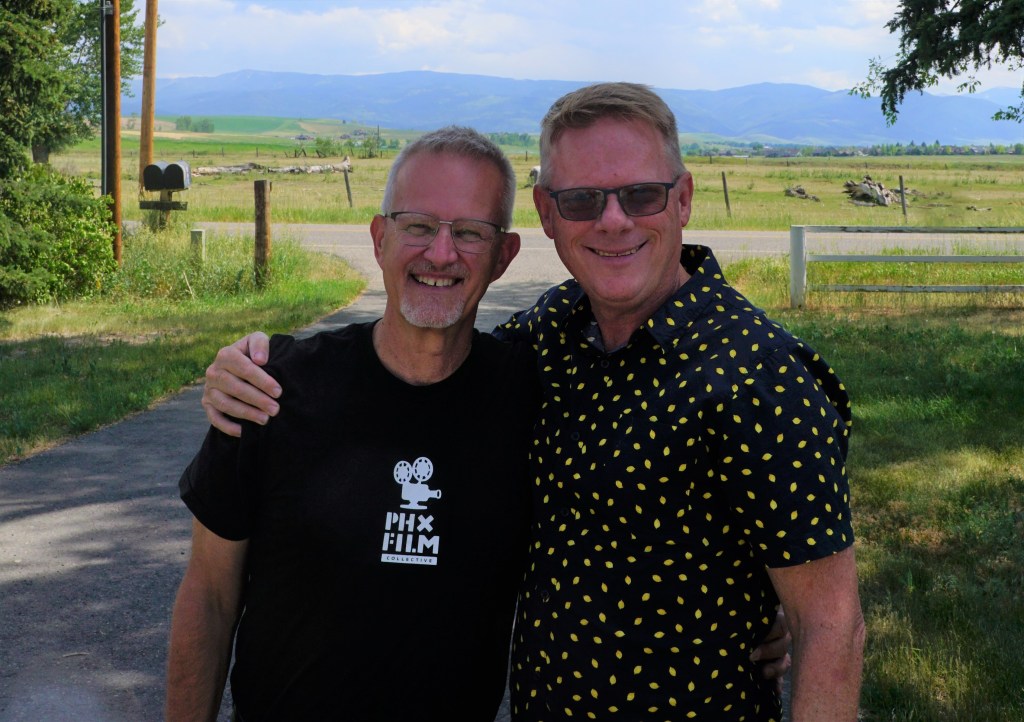
Tom and me in October 1996 enjoying a Wisconsin weekend.Tom and me in June 2021 during our Montana vacation.
Well, not really. But it feels that way for two independent writers living under one roof, who spent most of 2020 writing just to stay sane in the swirl of a global pandemic.
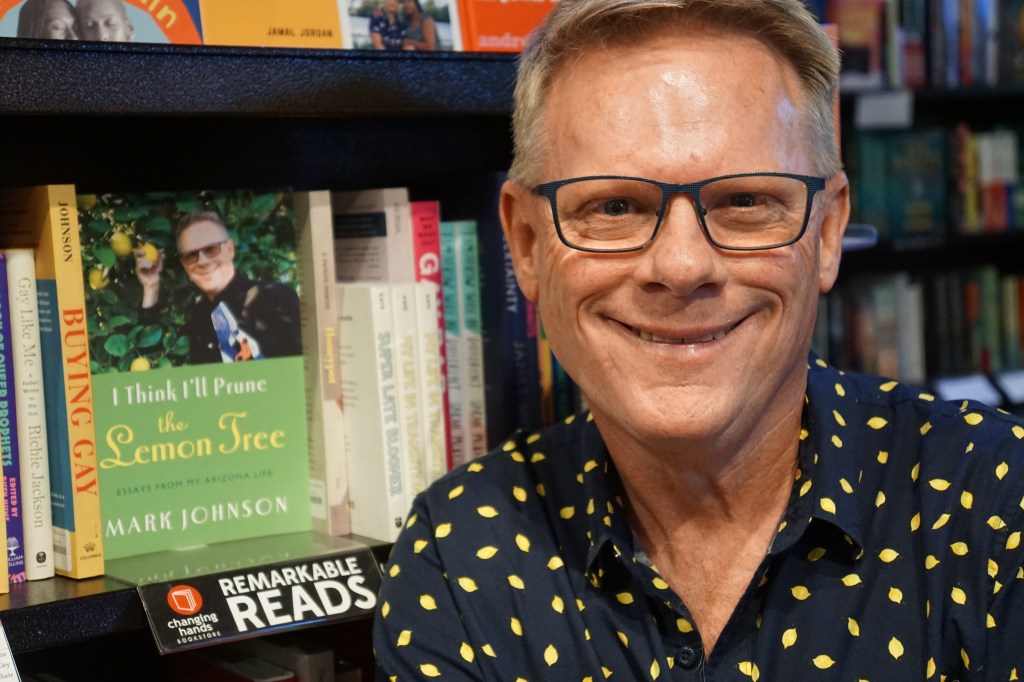
Yesterday Changing Hands Bookstore in Phoenix (an independent, artistic haven in the Valley of the Sun) contacted Tom (my film aficionado husband) and me individually with news that each of our books, published in 2021, has been accepted for consignment and placed on their shelves.
Today we drove there to capture the moment on camera. Tom’s book, CoronaCinema: A Diary of the Pandemic Year in Movie Reviews, is displayed in the film section. You can find mine, I Think I’ll Prune the Lemon Tree, on the LGBTQ shelf.
Of course, I know that most of you who follow me here don’t live in Arizona. But this is a psychological victory and important creative validation when it happens in your home community. Now there is a local book-buying option in the Valley of the Sun, if the size and scope of a global online retailer isn’t your thing.
This season of triple digits in Arizona–followed by a few days of overdue, soaking monsoon rains–is the perfect time to rummage indoors through personal, vintage photos.
The best of them, like peering into the Grand Canyon, leave me with a mix of joy and insignificance. They tell stories about humanity before I entered the picture.
I’m fortunate to have accumulated photographic treasures from both sides of my family. Some of them, tattered and faded, date back to the early 1900s.
I don’t recall seeing this image from July 1955 before. I imagine one of my maternal grandparents captured it on their Huntersville, North Carolina farm. Sixty-six years later, I stumbled across it in a forgotten album. Today, on July 26, 2021, it is speaking loudly through the sepia tone.
If she were alive, the woman on the left (my mother, Helen Ferrell Johnson) would be celebrating her ninety-eighth birthday today. In 1955, she held my sister Diane on her lap and celebrated her thirty-second birthday with her sister Frances (cradling her first born, Michael) and brother Jim by her side in her original home state.
Mom has been gone since 2013. Grief has taught me there will be days like today when I miss her smile, wisdom, perspective and resolve. Fortunately, thanks to the passage of time, the abyss of grief–the Grand Canyon of loss–subsided in 2015 as I wrote.
When you love someone, grief is the price you pay. It is everlasting, sometimes surprising, but often predictable. Photos, birthdays, anniversaries, and specific songs (I’ll Be Seeing You sung by Peggy Lee) provide the cues.
What makes this photo a rare find is that I have just a few images of my mother and her adult siblings together. Helen left North Carolina right after World War II to begin a new life in a bigger city … St. Louis, Missouri … where she and Dad met, married, settled, raised Diane and me, and discovered their share of happy, challenging, and unbearable moments together.
Jim and Frances stayed to build their lives in the Tar Heel State. They were teenagers on the farm in the late 40s. In the 50s, Jim and Frances (born in 1930 and 1932 respectively) left the nest, but returned frequently to this front porch that faced west. They met and married partners, traveled a few miles down the road to raise their families, and remained near their parents.
What I love most about this photo is the sense of possibilities and optimism in the eyes of Helen, Frances, and Jim. The wear and worry of life hadn’t yet entered the picture. By the mid 60s, Helen had two children. Frances had three. Jim had two. My grandparents loved all seven of us grandchildren. We now lead disparate lives.
Mom loved her brother. He was a friendly, handsome man, who loved to fish, hunt, drink beer, and smoke cigarettes. Unfortunately, the harsh realities and complexities of life had a way of catching up with Jim. In 1987, he died of lung cancer at age fifty-six. When she learned of Jim’s passing, it frightened her. Mom saw his demise as a harbinger of her own mortality. She retired immediately after returning from his funeral.
Frances still lives in North Carolina. She is the most significant personal connection I have to my southern roots. I spoke with her a few months ago. She isn’t the spitfire she once was, but is content with her husband in their Davidson, North Carolina home.
Like all of us who remain, Frances is thankful to have survived the pandemic. She is looking forward to her ninetieth birthday, which she will celebrate January 1, 2022. In 2015, two years after Mom died, I traveled south to see Frances. At that time, we needed to see and hug each other to escape the throes of grief.
My quest to rediscover my southern family and find comfort with Frances ultimately became fodder for From Fertile Ground, my first book. It’s the story of my journey and grief told in part through the writings my grandfather and mother left behind. If you’ve lost someone close recently and are living with the fog of grief, I hope you’ll pick up a copy of my book. Reading it may soothe you.
With each passing year, I continue to find more fertile ground from the photos and writings my mother and father left behind. Reexamining them and rediscovering their importance reactivates the love I feel for imperfect–yet beloved–family members. They shaped my past and the memories of them still inform my present.
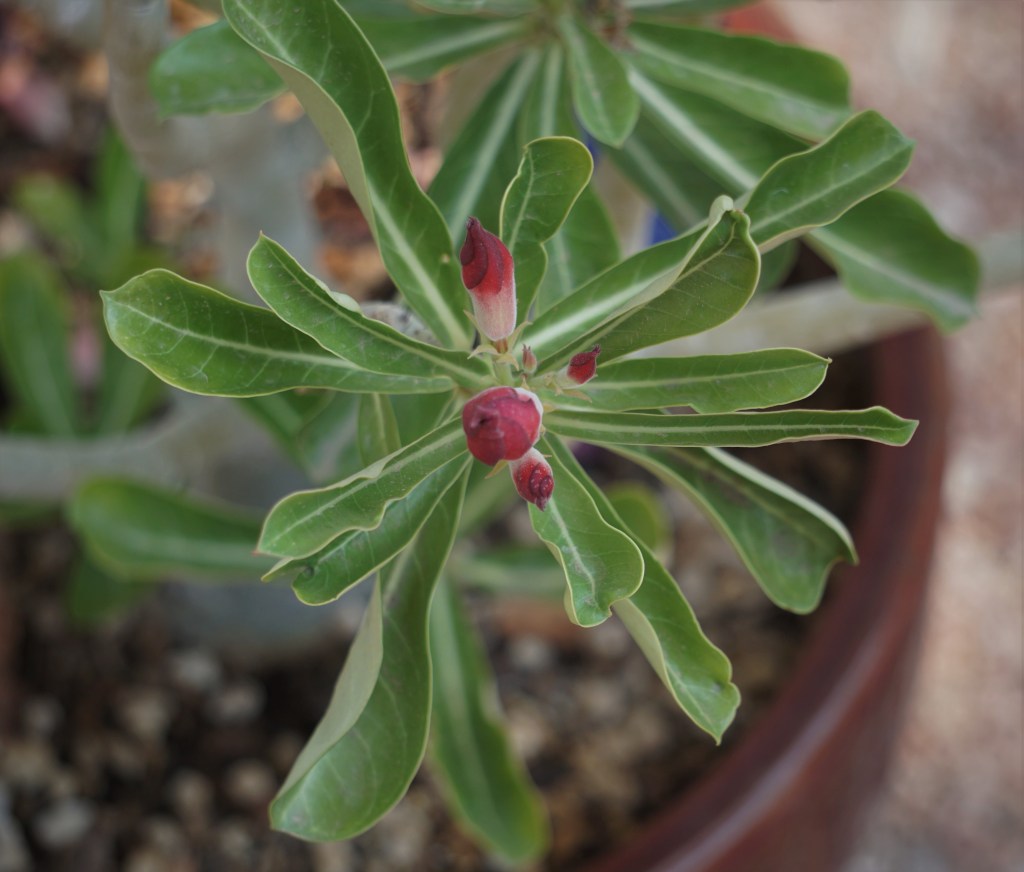
If you are a betting man or woman, fours are wild today. Four double-red desert rose buds are primed to burst on our back patio; this sixty-four-year-old writer (who has written four books) swam twenty-four laps at Chaparral Pool this morning; and July 12 is the fourth anniversary of Tom and me arriving (finally) at our Arizona home after a hospital stay in St. Louis.
Dad would have loved the synchronicity–the magical, random alignment–of these fours. He was a numerology freak. Like me, he also was a dreamer, poet, sentimentalist, Cardinal-baseball lover, and heart-attack survivor.
My father never met Tom. A week shy of his eightieth birthday, he died before my husband and I began dating nearly twenty-five years ago. I don’t think Dad would have understood our relationship, but he would have continued to love me anyway.
I also believe he would have loved Tom’s smile, enthusiasm, and youthful spirit … and marveled at my resolve to create an authentic life with a soulmate, while raising Nick and Kirk and living long enough to see my two young sons evolve into intelligent, critical-thinking, thirty-something men.
Most of all, Dad would have admired–possibly envied–the free-flowing, simple, yet meaningful life Tom and I have built in our sixties in the warmth (okay, intense heat) of the Sonoran Desert. After surviving my heart attack blip four years ago, we have our health and plenty of time to exercise, write, read, reflect, and nurture friendships.
Tom and I no longer have to worry about the demands of holding down regular/traditional jobs or living up to narrow standards prescribed by somebody else. I realize what a privilege that is, even though there was a time in my previously closeted and discriminated life when I felt I would never find a path through the labyrinth.
Yesterday, four of us gay friends who met in Arizona in 2017 and formed an impromptu book discussion group in 2018 … Brian, Mike, Tom and me (plus Andy, a longer-term friend living in Chicago who joined the conversation via Facetime) … gathered, talked and laughed in the friendly, freshly painted confines of our Scottsdale den/guest room. We were there to exchange ideas and mixed reviews of The Days of Anna Madrigal, first published by Armistead Maupin in 2014. It was our first book group discussion since sometime in 2019, months before the pandemic began to ravage the world.
As I reflect on the three hours we spent together Sunday … critiquing various aspects of Maupin’s novel that I think missed the mark, recounting our original fascination with Maupin’s Tales of the City characters on Barbary Lane and the resulting PBS phenomenon in the 1990s, catching up on our own personal lives, telling summer stories of travel, and sharing brunch after surviving the dread of 2020 … I am especially thankful for friends such as Brian and Mike, who entered our lives in Arizona. Our Grand Canyon State friends have enriched our world after the St. Louis storm.
No matter how hot it gets in the Phoenix area this summer (110, 111, 112 degrees, and so on) … or whether the monsoons finally materialize and spill promised moisture into the Valley of the Sun this week as forecasters say they will … the lead of this personal story is the beauty of our desert roses, our mutual investment with new neighbors and friends between 2017 and 2021. During that time, we have come to love a whole new batch of people (and they have loved us) in our first four years in Arizona. It is a dream come true beyond the friends and family we continue to love in Illinois and Missouri.
From various avenues–literary, yoga, choral, gymnastic, canine, and cinematic–new Arizona friends and acquaintances have helped us heal, renewed our spirits, made us laugh, and stretched our creative sensibilities to new heights. I certainly didn’t see the breadth of this late-in-life resurgence coming from my precarious station in a hospital bed in St. Louis on July 6, 2017.
Dad would have loved these literary bonus years after the rises and falls of our midwestern life … these days of desert friendships and roses for Tom and me. Like the rousing song from Bye Bye Birdie, which played on the transistor radio next to Dad’s hospital bed as he recovered from his own St. Louis heart attack in September 1962, I’ve still got A Lot of Livin’ to Do.
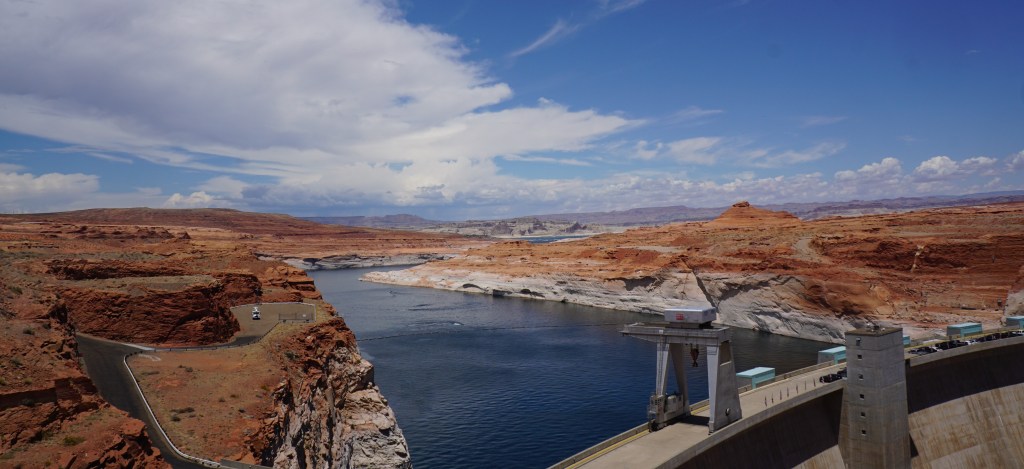
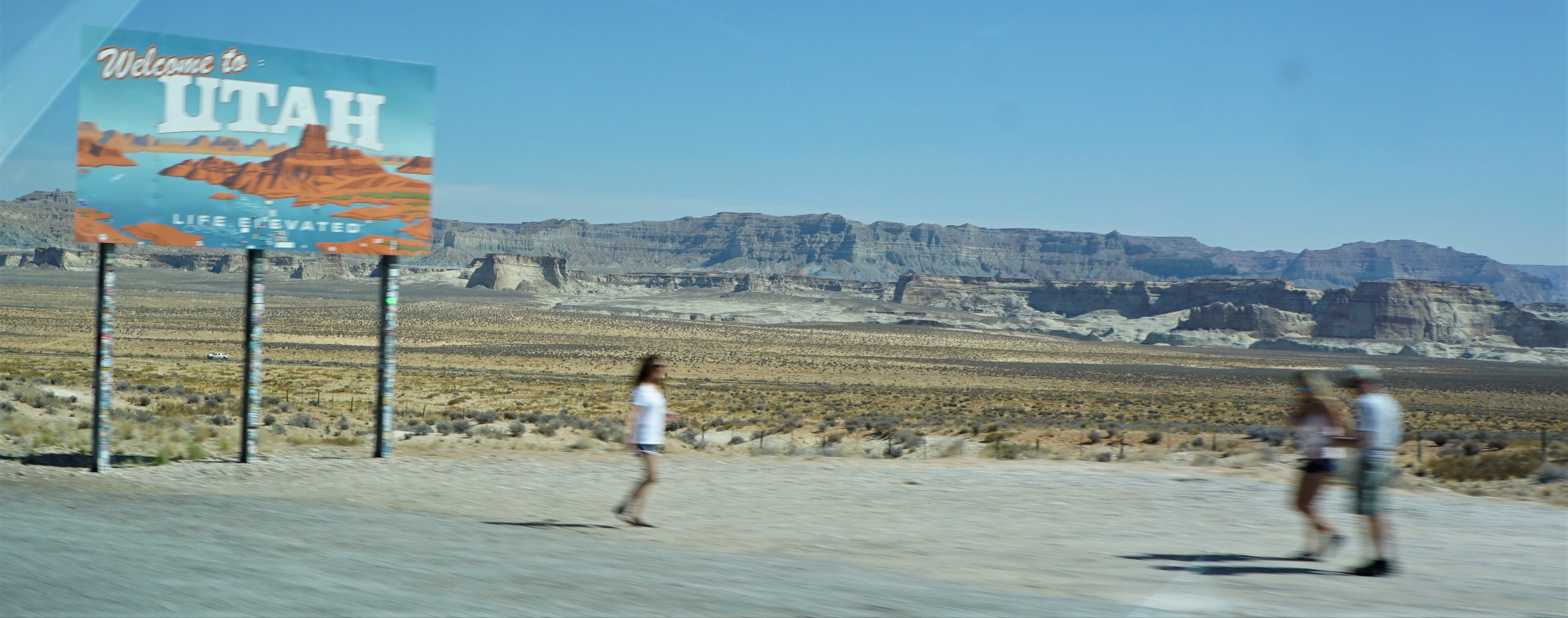
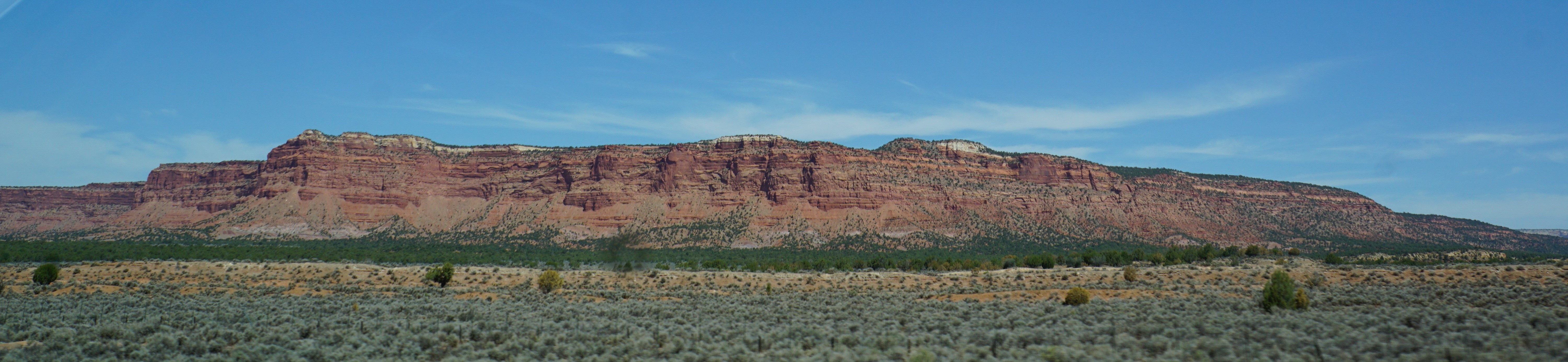
The midpoint of 2021 finds Tom and I spending the final night of our ten-day road trip in Page, Arizona. Tucked just inside the northern border of the Grand Canyon State, Page is home to Glen Canyon Dam, Lake Powell, red rocks, and painted vistas that roll and repeat across distant horizons.
By the time we step through the door of our Scottsdale condo tomorrow afternoon, we will have driven nearly 2,500 miles … Arizona to Utah to Idaho to Montana and back again.
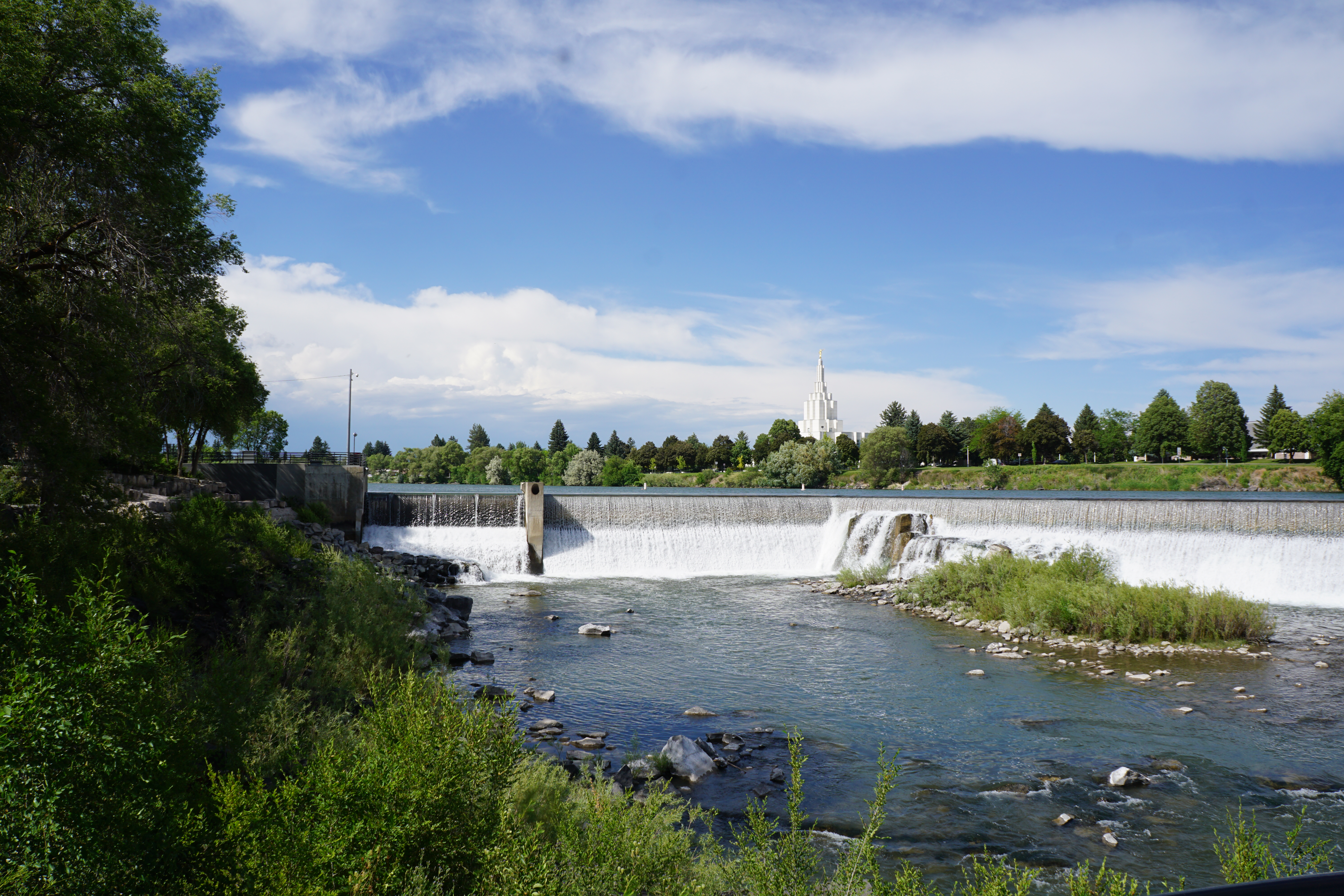
Along the way, we will have captured hundreds of photos; discovered a delectable German bakery (Forschers) in Orderville, Utah, where we consumed apple and cherry pockets; walked along the greenbelt and roaring rapids of the Snake River in Idaho Falls; marveled at our first live theatrical performance since the pandemic (Shakespeare’s A Midsummer Nights Dream) in Bozeman where we huddled with old and new friends on a blanket; and hiked around hairpin curves at magnificent Bryce Canyon National Park as a storm rumbled in the western sky.
Even with all of that (and much more I won’t detail here), the sweetest realization is conquering the twists and turns of life on a long road trip again. It is the first time Tom and I have ventured out to the highways and byways since I suffered a mild heart attack in 2017 in St. Louis on our shared sixtieth birthday on the way to our new home in Scottsdale.
Thankfully, this 2021 swing through the western states puts greater distance between the trauma of the past and the poignancy of the present. That brings me to the midpoint of 2021, where–tonight–the possibilities of post-pandemic, vaccinated life feel as endless as the Arizona horizon.
Traveling through the West, it is the beauty, desolation, and vastness that inspire me most. The sky and geography of Utah and Idaho collude to create soaring, lasting impressions. They seduce me, whispering ancient tales and promising a blur of stories of high plains, dusty buttes, painted plateaus, river rapids, and arid summer days.
The COVID-19 traumas that spun endlessly in 2020 and early 2021 have spawned a mountain of stories bursting with pain and uncertainty. But rays of clarity and creativity have begun to emerge as we try to make sense of the pandemic that will forever shape those of us who survived it.
I devoted part of my latest book to Coronaville–that crazy town we still live in–because I think it’s important to remember the fear and examine it, rather than sweeping it under the rug. What a shame it would be if we didn’t learn from the madness this plague has perpetrated. Here is a sampling of what I wrote one year ago this week:
***
Monday, June 15, 2020 began with congestion in my chest, mild nausea, and an occasional headache. I did not have a temperature, sore throat, or experience a loss of sense of smell or taste that may accompany the dreaded virus.
Nonetheless, I was worried enough to call my doctor, who prescribed a chest x-ray at a nearby diagnostic center that afternoon and a COVID-19 test the next morning at an HonorHealth urgent care facility.
Fortunately, my chest x-ray came back normal. There was no sign of pneumonia or any abnormalities. More than likely, I was dealing with a sinus condition or allergy to an air-borne culprit than the dreaded COVID-19. But still I waited. I was afraid the other shoe might drop.
On Tuesday, I imagined the desert dust from an adjacent construction site–fumes from our recent bedroom painting project or particles I had ingested from the smoke of a wildfire that raged in the hills sixty miles northeast of us–could be the problem. But I worried about the worst as Tom and I drove to Mesa for the swab test at 11 a.m.
***
To read the rest of the story (and all thirty-nine essays set against the warm and rugged landscape of Arizona’s Sonoran Desert) click on the link below and purchase a copy of my book in paperback or Kindle.
I’ve been feeling murky lately–grumpy too. It’s been one of those uncertain periods in life. We all have them.
Two weeks ago, the engine in our nine-year-old Sonata seized. It went kaput as Tom was returning from the gym, initiating a domino effect of frustrating phone calls and texts, AAA tows, car rentals, dealer discussions, loaner agreements, missed connections, and moving deadlines.
Fortunately, Tom is okay and our car is still under warranty … barely. (Ten years or 100,000 miles.) Our odometer read 98,500 when everything shut down. The engine was replaced and paid for by Hyundai. We picked up our rejuvenated car yesterday. It’s now running smoothly.
Despite the relatively fortunate personal and financial outcome, my patience has worn thin. My creativity is scattered. It’s as if a Sonoran wind blew in, swept my disparate ideas (literal and figurative scraps of paper on my desk) into the sky, and scorched them into a cloud of embers, precipitated by a drought-induced Arizona fire. (Yes, it’s fire season here again.)
As a result, my writing schedule is off. My temper is short. The temperature outside is rising fast in the Phoenix area (110 degrees here we come).
Oh, book sales have fallen off the map. Do people read anymore? This is one of those moments when I need to remind myself of the joy I felt in March when I was basking in the publishing afterglow (not the flames of a hillside fire) of reading passages from I Think I’ll Prune the Lemon Tree before a group of thirty-five friends and neighbors.
Through it all, I’m aware I am living in the undefined space between writing projects. If you are also a writer, you know what that feels like. It feels like crap. Why? Because writing (for us, at least) serves as a personal compass, a guiding light, an organizing principle that keeps us feeling passionate, centered, connected, relevant, and whole.
Now that I’ve had a chance to whine a little, I should also tell you that a new possible creative project has begun to surface. It may materialize this fall. At this point, I don’t want to jinx it by describing it any further.
Instead, I’m better served by resting my brain a little, praying for monsoon rains in Arizona, and focusing on a much-needed, ten-day vacation/road trip to and from Montana, which Tom and I will embark on in a few weeks.
Of course, we couldn’t go anywhere a year ago. But, because we are fully vaccinated, we’ll be able to explore and absorb the majestic scenery of Arizona, Utah, and Idaho with a clear conscience and visit friends in Bozeman, Montana.






 Mark Johnson Stories