I was about to embark on a journey. But not remotely ready. Nonetheless, I was expected to begin Day One of a new job, in uniform as a United Airlines flight attendant.
A crowd of other newbies gathered around me. We lined up to have our security photos taken by a young, rather handsome cameraman with a large head. He teetered on a tiny chair with his knees protruding beyond his elbows.
When it came to be my turn, the blond figure told me to stand on an X marked on the floor. Then, he stood to reveal his true height.
His elongated body stretched for nearly eight feet before he snapped my photograph and disappeared behind a funhouse mirror.
A primitive machine spit out my image, but I don’t remember receiving my security credentials.
About this time, my husband appeared on the other side of a window that contained a metal tray below. He told me he wanted to slide cash to me under the glass. He thought I might need it on my journey. He said he would meet me on the other side. I felt disoriented and dismayed.
Moments later, I found myself standing in front of a harried female administrative assistant. She sat behind an old desk with stacks of papers and files surrounding her. She worked for United. She told me I needed to board my first flight in about thirty minutes, but that my hair was unkempt.
As she handed me a boarding pass, she spieled off a list of complicated directions that would lead me to a trusted stylist in the terminal. She insisted there was time to accomplish this necessary task, though I would need to run to catch my flight.
I felt anxious. Unprepared for my journey. Unsure of the safety protocols. Disturbed that the length of my hair was causing me trouble. Lost in a once-familiar Chicago terminal that was now foreign to me.
Sunday through Monday–when desert winds blow freely or not at all–I prefer nature’s ever-present sweet, sunny and determined backyard faces to yesterday’s and today’s front-page disgraces.
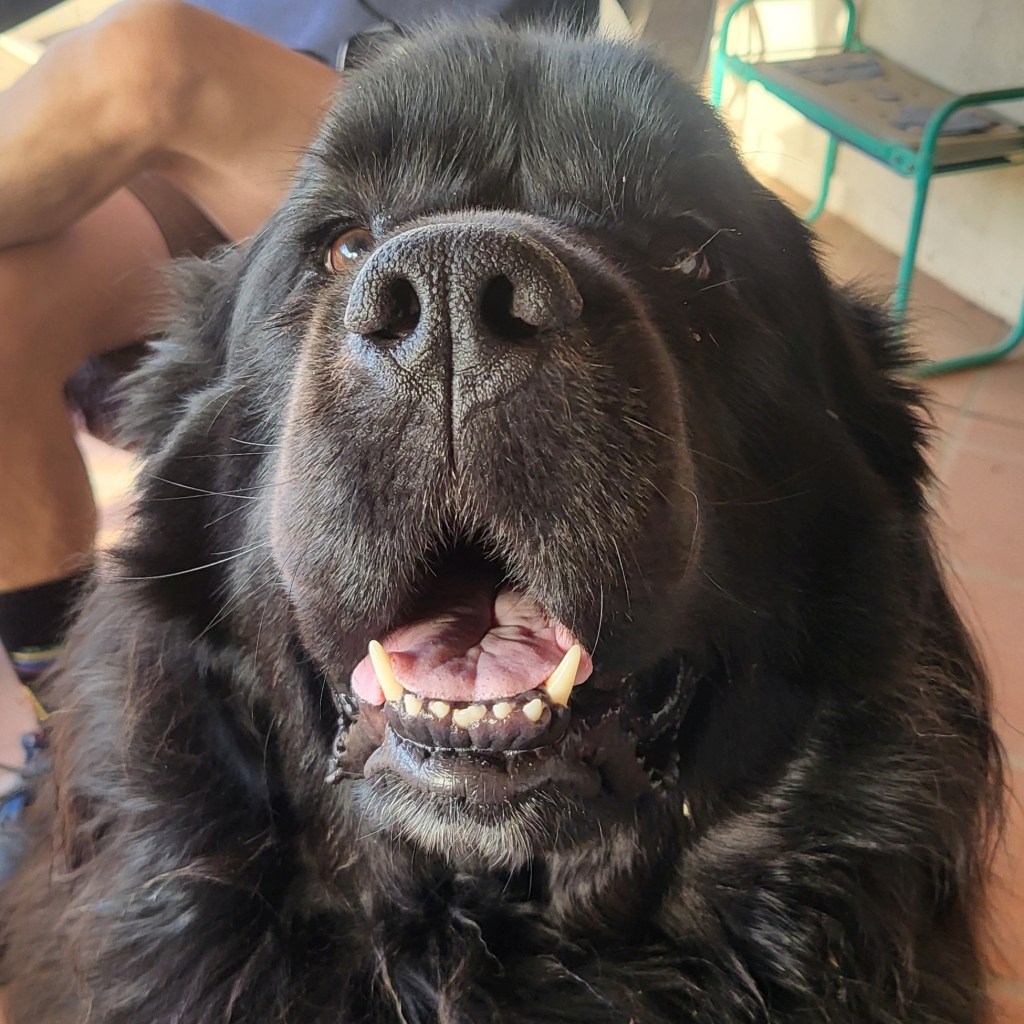
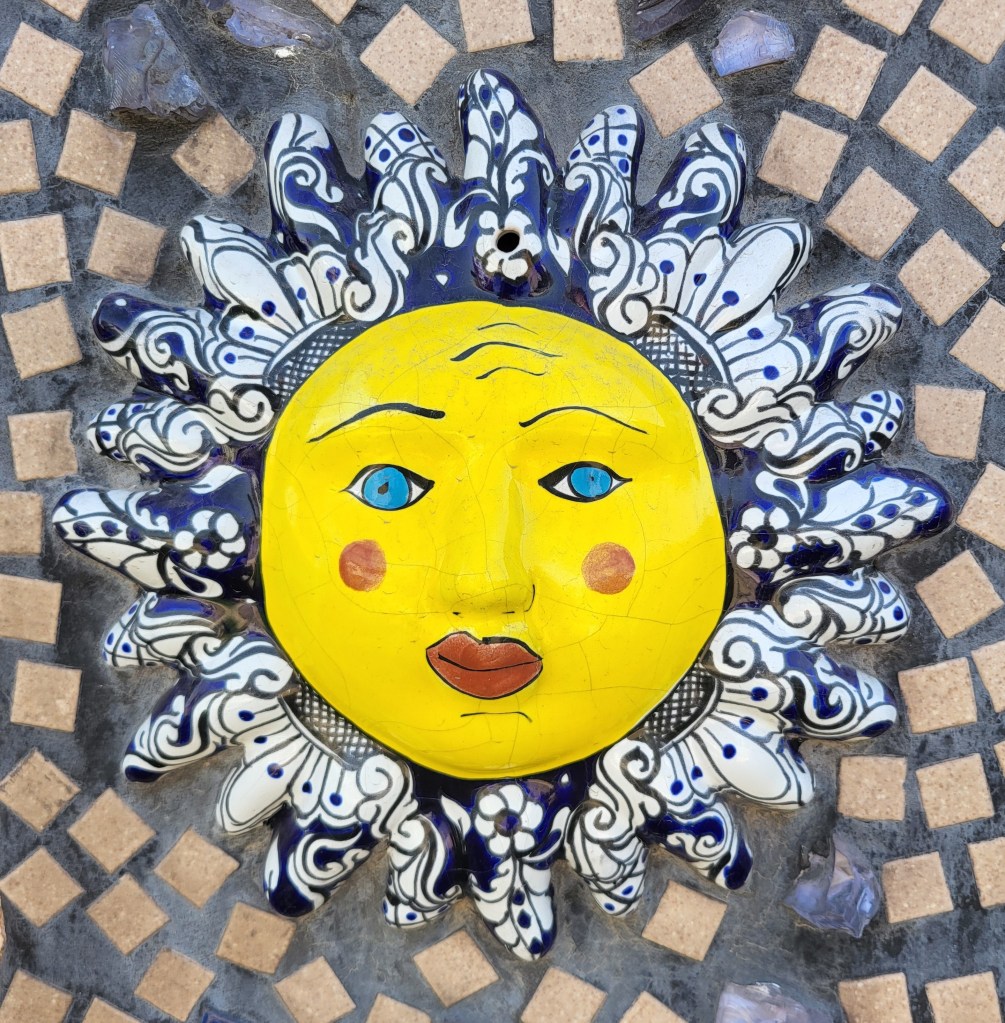
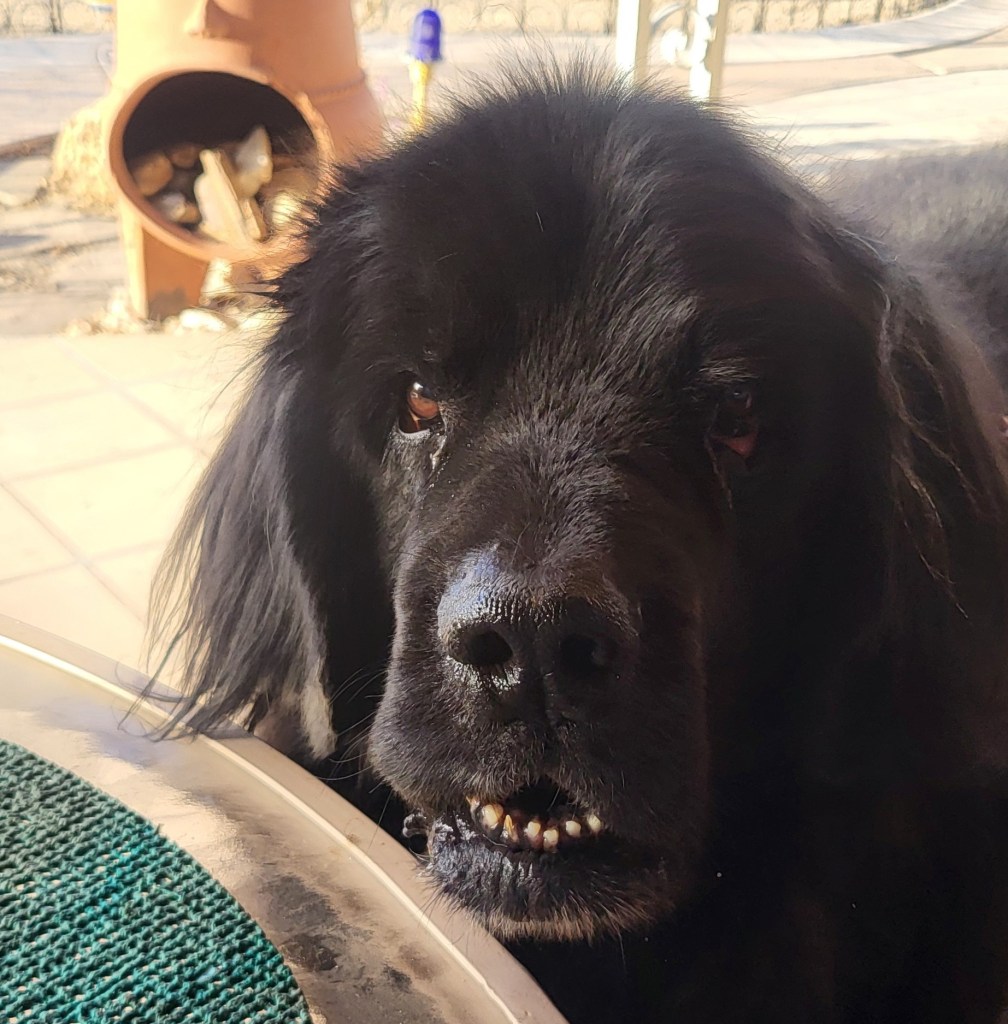
Katie’s sweet faceArizona’s sunny faceMason’s determined faceSt. Francis watches over nature in Glenn’s backyard
In early March, while Glenn was away, Tom and I (along with an assist from St. Francis) cared for our friend’s lovable Newfoundland dogs–Katie and Mason–in their peaceful backyard.
When you’re living through a full-blown constitutional crisis–and feeling vulnerable–you need to find ways of coping and caring for the ones you love.
So, I bought two of these beaded rainbow wristbands from the Human Rights Campaign for Tom and me to wear.
We are wrist-banding together.
This is a symbolic gesture. I want the world to know that this gay couple isn’t going anywhere, though it is a period in the United States where some would prefer that those of us who are different would go away.
But I–we–remain visible.
As I write this blogpost, I realize it is number 500 … a true milestone for any writer.
When I began blogging in May 2018, I had no illusions of where it might lead.
I simply wanted to give my books and literary voice more room to grow, more visibility.
For that reason, I suppose it is fitting that today I choose to write about my gay identity and continue to exercise personal aspects of my voice … visibly.
In many respects, the life my husband and I lead is not all that different from any couple.
We shop for groceries together. Go to the gym together. Enjoy quiet moments and meals together. Love and nurture each other.
We do our best to support each other and our family members during highs and lows.
We spend time with our friends. They are young and old, straight and gay, black and white.
We love and respect them, and they love and respect us.
I think it’s accurate to say this about our friends: we enrich each other’s lives, no matter our skin color, religious beliefs, cultural perspectives, gender identities, or sexual orientations.
It is a personal jolt to realize–and read on trusted news sources each day–that our differences are under attack and being eroded in my home country … the country I still love.
I don’t think I’m depressed. But I am definitely sad and angry. Definitely grieving. Me and a boatload of others of all backgrounds and persuasions.
There are times when I want to scream from the top of a mountain. “This is my country, too. How dare you try to take that away from me!” But then I wonder, “Is anybody listening?”
So, I bring this here, instead and I type these words in blogpost number 500.
At any rate, thank you for joining me–possibly even enduring me at times–on this blogging journey since May 2018.
As long as I continue to feel I have something important and relevant to say (to shed light on the topics of the day … to celebrate a literary success or the latest Phoenix Gay Men’s Chorus performance … to pay tribute to those I love … to tell a funny story about our stray cat Poly … to observe and honor the beauty of nature … to share a vivid, meaningful memory about my childhood … or to pen a poem that is in need of artistic space and oxygen) you will find me here.
I hope you have been informed or entertained and will continue to tag along with me on this organic literary odyssey, wherever it may lead.
As I walked the treadmill at the gym this morning–on Abraham Lincoln’s two-hundred-sixteenth birthday–a weird, dark, and discomforting question swirled through my brain.
What if we–all the diverse people in this country, all the people of color, all the LGBTQ folks–were gone?
According to the Arizona Forestry and Fire Management Agency, “Mr. Big” is the largest red gum eucalyptus in the U.S. Located in the picturesque desert confines of Boyce Thompson Arboretum in Superior, Arizona, he stands 117 feet tall with a circumference of 22 feet. He was planted here as a three-year-old sapling in 1926.A wooden fence and security camera surrounding the base of the tree are designed to discourage thoughtless people from carving their initials in the trunk. On February 6, 2025, I captured this photo of Mr. Big with my husband Tom during our Boyce Thompson visit. Mr. Big’s presence, threats to nature from global warming, and the upheaval in our country have inspired me to write this poem.
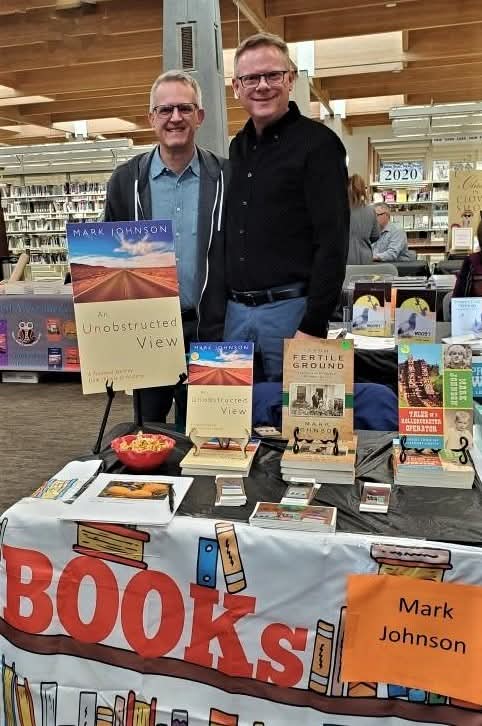
In the old days (the pre-Covid days)–just five years ago this week–I hawked my books with my husband by my side at a local author book fair at the Scottsdale Public Library.
We didn’t know about the dark days ahead. Holed up in our cozy condo. Wondering if we and our closest family and friends would survive. Wondering if the race to create a viable vaccine might save us.
Fortunately, science did produce a vaccine that saved lives (for those of us who had the gumption to protect ourselves and others).
We did survive and Tom and I have gone on to create new chapters at the library … him leading several successful film series; me guiding those intent upon writing their own memoirs.
Strangely, those Covid years feel quaint now as our nation disintegrates daily. Tom and I cling to one other, as our nation turns a blind eye toward anyone who is different.
Yes, we have many friends and family who love us. But, to put it bluntly, I don’t feel safe. This experience of living in 2025 in the United States (we aren’t really united) has cued old tapes in my psyche that remind me that–once again–I am living in a straight, white world of shallow masculinity.
I will keep trudging along. Loving my husband. Guiding my adult sons. Speaking my mind. Telling my stories. Holding my closest friends close. Giving to organizations that might make a difference. Advocating for those less fortunate. Donating my time, talents, and voice to the Scottsdale Public Library and the Phoenix Gay Men’s Chorus.
Most of all–like many of you–I just need to keep breathing today. And, for tomorrow and the next day, I need to save any reserves of energy and sanity I have to fight the good fight.
What ailed me for three years–2013 to 2016–was grief spawned by the loss of my mother.
Listening to Annie Lennox’ soaring voice–her Nostalgia--pulled me through and beckoned me to complete my first book From Fertile Ground.
You see, Annie’s rendition of twelve stirring and mostly southern-sometimes-smoldering tunes written in the 1930s and 1940s primed the pump of my southern sensory memories.
Sometime in 2015, I unearthed a tender memory of making homemade peach ice cream with my grandmother Georgia on the rickety porch of my grandparents’ North Carolina farm.
It was Annie who reminded me that I had Georgia on My Mind. Sherrell Richardson Ferrell, too–S.R. for short. He was my farming grandfather who left behind more than fifty years of diary entries.
Annie’s music, Georgia’s love, S.R.’s spartan stories (primitive blog entries really), and Helen’s litany of letters (she was my wise mother) gave me all the creative inspiration I needed to finish and publish my first book in 2016.
Why is this all relevant today? Because I have Helen on my mind. She died twelve years ago on January 26, 2013.
For the most part, my writing and the constant love and support from my husband Tom have helped soften the grief as the years continue to roll by.
Helen would have been happy for me on both counts. She suspected Tom and I would retire in Arizona one day.
However, I doubt she would have imagined the entirety of this literary chapter for me, which lately includes teaching memoir writing at our local library. (I’ve been asked to lead a third workshop in April.)
Or the growing community of loyal followers Tom has inspired with every immersive movie series he hosts (also at the Scottsdale Public Library). His next series–Movies That Matter: The 1970s (a tribute to six film directors)–begins tomorrow and continues on most Mondays until early April.
I firmly believe it is the arts and the artists–like Annie Lennox, even the less renowned ones like Mark Johnson and Tom Samp–who through their music, writing, painting, poetry, and true cultural perspectives will help pull us through this dark and uber-turbulent period in our once-proud country.
For now, that is the hope I cling to. Along with the memories of love and gratitude–the nostalgia–framed by indelible moments with family and friends past and present, who I love dearly.
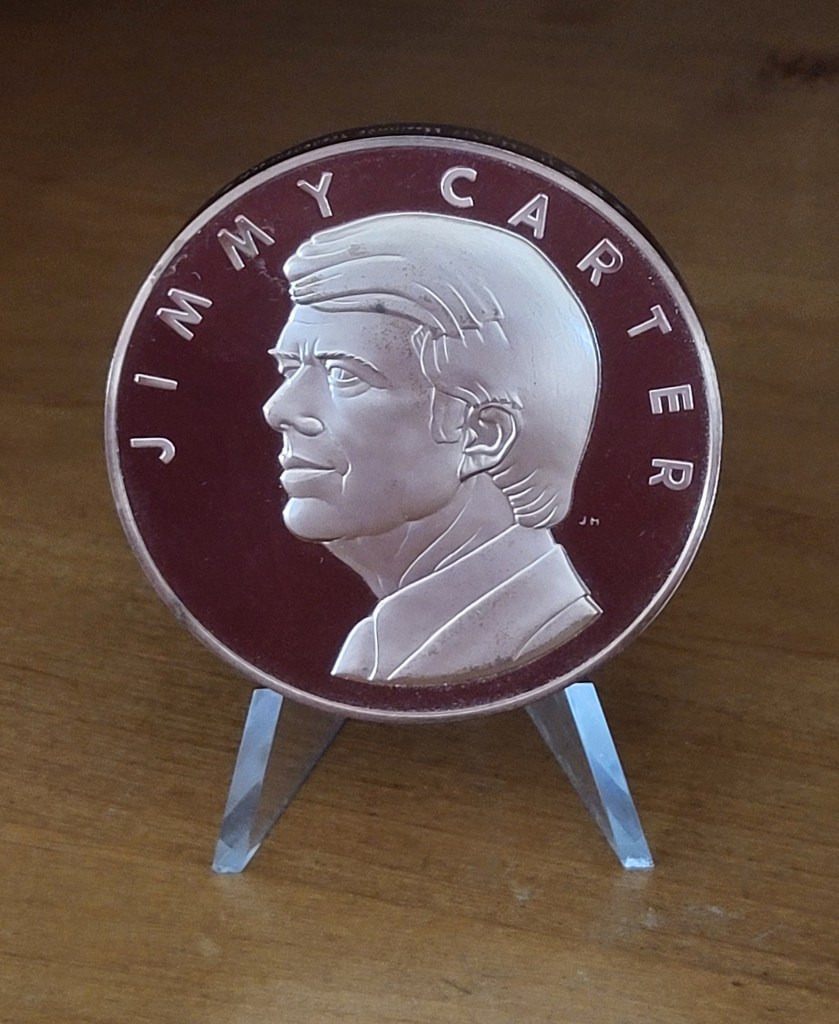
My mother was a collector of fine furniture, ceramic pitchers, and–occasionally–commemorative coins.
On March 17, 1977, she purchased this Franklin Mint medal. It celebrates the inauguration of Jimmy Carter, the thirty-ninth President of the United States.
This bronze coin has occupied a space inside a box in my father’s WWII army trunk for the past few decades.
I was nineteen and a first-time voter when I cast my ballot for Carter in November 1976.
Most of my college friends at the University of Missouri were Gerald Ford supporters.
I suppose they were willing to forgive him for pardoning Richard Nixon.
I wasn’t. I opted for Carter, the peanut farmer from Plains, Georgia.
As history would have it, Carter’s four years as president (1977 to 1981) included many ups and downs.
For instance, Carter successfully negotiated the Camp David Accords, political agreements signed by then Egyptian president Anwar Sadat and Israeli prime minister Menachem Begin.
Carter also signed into law bills that created the U.S. Department of Energy and Department of Education.
However, the Iran hostage crisis (when fifty-three U.S. diplomats and citizens were held hostage at the U.S. embassy in Tehran by a group of Iranian college students who supported the Iranian Revolution) and related oil crisis led to his unraveling popularity.
In November 1980, Ronald Reagan defeated Jimmy Carter. His loss was punctuated on January 20, 1981, when the hostages were released on the first day of Reagan’s presidency.
Of course, we now know Jimmy Carter wasn’t through yet. He lived another forty-three years and made good use of his century-long (1924-2024) life.
After leaving the White House–with his wife and life partner Rosalynn Carter ever by his side–he established the Carter Center. He worked tirelessly to promote and expand human rights.
That led him to receive the Nobel Peace Prize in 2002.
Jimmy and Rosalynn Carter also became famous for the houses they helped build for Habitat for Humanity and the faithful lives they shared with family and friends in their community and all around the world.
***
This morning, after watching C-SPAN coverage of Jimmy Carter’s funeral at the National Cathedral in Washington, D.C.–and listening to a parade of praise in eulogies given by past Republican and Democratic leaders and grieving family members–I extricated the bronze medallion.
I brought it into the light. I placed it on the shelf of our bureau in our Arizona sunroom. I pondered Jimmy Carter’s astounding legacy of faith, hope, service, and perseverance.
I wondered if–as he was laid to rest–our nation’s democracy might not be far behind.
I hate the trite phrase “only time will tell.” But it certainly applies as inauguration day–January 20, 2025–approaches.
Consider this. Tucked inside the box that normally houses the Carter medallion is a little booklet with information about the tradition of the presidential inaugural medals. Here is an excerpt:
“The Official 1977 Inaugural Medal commemorates the solemn ritual, repeated every four years, through which Americans and their President refresh the nation’s commitment to free government.
During the inauguration, the President, in the presence of Congress, pledges to serve faithfully and to uphold the Constitution to the best of his ability.
Americans have always treated this ceremony as a portentous moment in the life of the republic, a time of celebration and of renewed dedication.”
But we live in 2025. Will the incoming president uphold the Constitution to the best of his ability?
That bit of history–beyond the funereal pageantry of today–has yet to be written.






 Mark Johnson Stories