Tag: A Writer’s Life

Along the Back Fence

It’s not unusual for the proximity of neighbors to cause conflicts.

But often the bonds we forge with those next door–or in this case along the back fence–can add more texture and meaning to our lives than we once imagined.

Shortly after Tom and I moved west, I wrote Along the Back Fence about Millie–our Illinois neighbor from 1996 to 2017.

I’ve been thinking of her again recently, because the fifth anniversary of selling my Midwestern home is approaching.

This story first appeared in An Unobstructed View, a book about my personal journey from Illinois to Arizona in 2017 and an unexpected detour that awaited in the city where I was born.

In this world of turmoil and uncertainty, our best neighbors deliver color, comfort, and continuity.

I bet there’s a Millie in your life worth remembering.

***

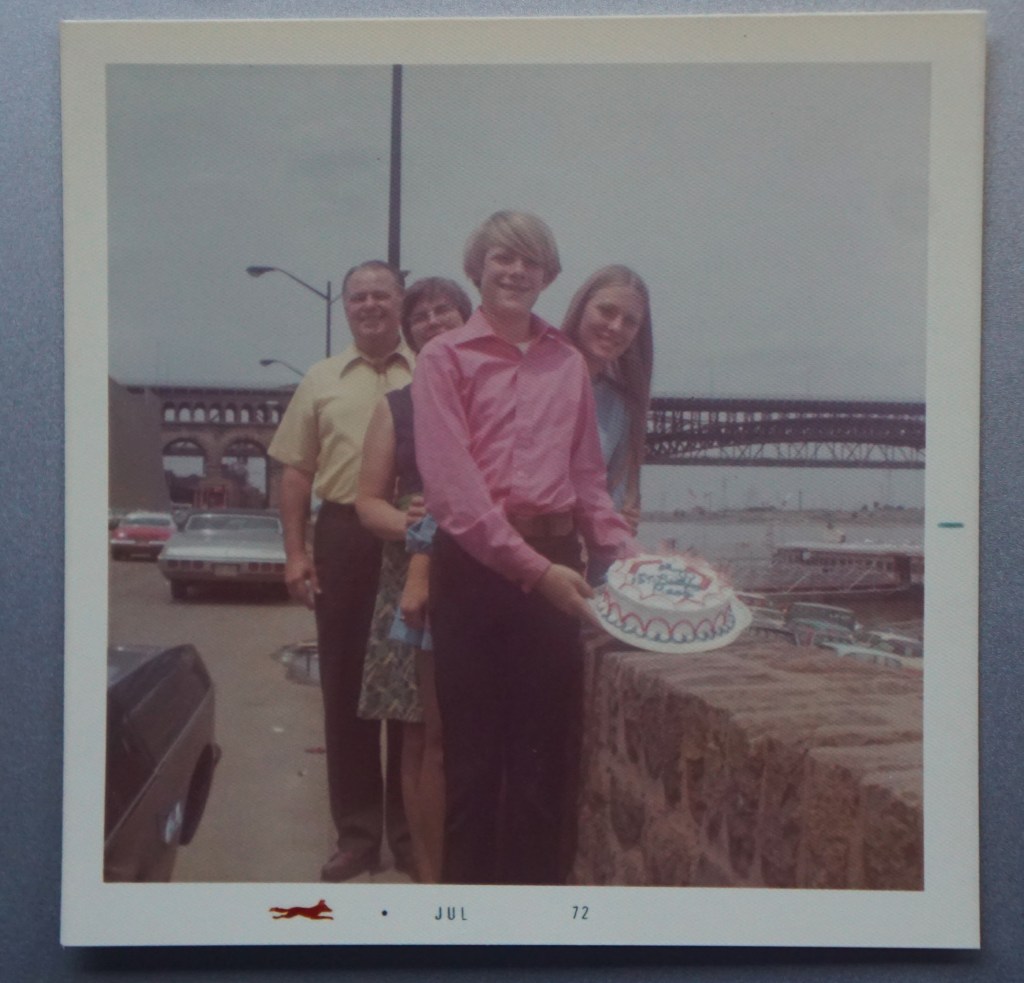
Long before I arrived at my Mount Prospect home, Millie loved her garden and the hibiscus plants she and her husband had planted on the other side of the back fence.

But when I first met my neighbor Millie in the summer of 1996, her husband had been gone for a few years and the exotic flowers were waning too. She was alone and lonely in her mid-seventies, but not in a quiet and retiring way. There was plenty of fight left in Millie.

It wasn’t an auspicious start for the two of us. I had begun to create a small compost pile in the far corner of my yard. She wasn’t happy about it–too many decomposing grass clippings and small spruce branches in one place she thought. In her view, I had created a mess.

When she complained about the smell that had started brewing there, I scrapped the idea and placed the yard materials by the curb for the next trash pickup. I didn’t want to alienate Millie. I didn’t want to contribute to her unhappiness.

I don’t think we had much to say to one another over the next few months. Only a quick hello here or there as I pushed my mower around my yard, and she tended to her garden that wrapped around her detached garage.

Eventually, we broke the ice. From one side of the fence, she told me about her love of roses. From the other, I introduced her to my sons and then Tom. After that, we found firm footing.

By the fall of 1998, Maggie was in the picture. I remember Millie leaning over to pet our dog’s voluminous ears. Millie would cradle Maggie’s head on either side when the dog placed her paws along the back fence. “How is that Maggie today?” she would ask. Our droopy-eyed pet had won her heart too.

Over time, Millie got to know more members of my family. One summer afternoon, Tom and I decided to invite Millie over for a backyard barbecue. My mother was visiting us from St. Louis.

Both Mom and Millie were gardeners. There was plenty for them to discuss about the flowers they had grown, nurtured, and cherished over the years. Not to mention the yummy three-bean salad Millie had whipped together in a jiffy.

“Next time I’ll bring my ambrosia salad,” Millie told us. “Everyone loves it!”

And there was a next time the following year. Tom’s mom and dad joined us from the other side of Mount Prospect. Sure enough, Millie brought her signature salad of mandarin oranges, maraschino cherries, crushed pineapple, and shredded coconut to compliment the relatively ordinary burgers and hot dogs we grilled that afternoon.

That was the last of our three-bean-and-ambrosia-salad moments with the older set. The seasons passed and so did our parents–Tom’s dad in 2012, my mom in 2013, Tom’s mom in 2015.

But Millie survived them all. She heard about each of our losses along the back fence. It gave me comfort to meet her there, though our encounters became few and far between as her own health–her own surefootedness–declined …

***

Rest assured, I’ll share part two of this story later this week.

Reentry

On Tuesday, April 26, 2022–the day Vice President Kamala Harris tested positive for Covid without symptoms–I did too. But with symptoms: fever, headache, congestion, and fatigue.

Ironically, it was also about the same time Dr. Anthony Fauci declared we had crossed the pandemic bridge and entered an endemic world, where the disease rate is at an acceptable or manageable level.

At that moment, I don’t think I believed him. There was nothing acceptable about the situation for Tom or me. As you might suspect, my husband soon developed the same symptoms.

For the following week, Tom and I took turns playing nurse, while pumping a flurry of fluids, acetaminophens, decongestants, and attaboy encouragements.

We slept sporadically, texted my sons and our sisters, cancelled plans with friends reluctantly like two men waving from a desert island, and zapped each other endlessly with our digital thermometer–up to 102.3, down to 99.6, up to 101.2, down to 100.2, finally back to 98.6.

We rode out the storm together, quarantining in the privacy of our cozy desert condo. Two kind friends left wonton soup outside our front door, as they were dealing with their own trauma of repairing their car so they could drive east. Back to their home in New York.

Another sweet neighbor placed a bar of chocolate on the mosaic tile table between our two wicker chairs. I snatched it as soon as she left. She knows about Tom’s dark chocolate addiction and my wedding vow in 2014 to keep him supplied with a bottomless supply of it.

Through it all, I think you could characterize our Covid cases as mild, though my anxiety flew through the roof for seven days. I shuddered to think what the outcome might have been.

What if we hadn’t been fully vaccinated and boosted twice? What if I could never see Tom’s smiling face again or gaze into his beautiful blue eyes that nearly match the bluish-gray t-shirt I gave him that doesn’t fit me anymore?

***

About a million Americans have died of Covid complications.

We are two of the lucky few. But this isn’t a story about luck. It’s about truth and science.

The vaccinations we lined up for protected us, kept us out of the hospital, and forestalled any notions of two more premature deaths. By following the science and getting inoculated, we dodged two bullets. The universe rewarded us exponentially by giving us more time together.

This morning it feels like we are both back to normal. We’ve been symptom free for several days. We returned to the gym for the first time in nearly two weeks. I mounted the treadmill. Tom opted for the elliptical. I smiled as I watched Tom exchange his hellos with a community of patrons and familiar faces.

But earlier in the morning–when I leaned out the front door to water our succulents under the fig tree–there was a defining moment with an extraordinary animal, which I won’t soon forget.

Our feral friend Poly, the community cat that has lived on the fringe of life for a long time, meowed and came closer to me than she ever has. After a brief photo opportunity, Tom handed me the bag of cat treats and I sprinkled a dozen or so on the sidewalk.

Once I closed the door, Poly left the shelter of our eaves–safe in her own moveable, quarantining bubble–and approached the kitty kernels.

Unceremoniously, she glanced up at me as if to say, “I understand how you feel, all worried and frayed. But you’ve made it through. You’ll get by. You’re a survivor. Just like me.”

324 and More

Today marks four years since I began my blogging adventure and obsession.

When I launched this website May 4, 2018, I wanted to promote my books and develop a greater literary presence online. Over time, that goal has been superseded by a desire to share topical stories about the extraordinary, meaningful moments and people that cross through one ordinary life.

It’s been no simple task nurturing my creativity in this chaotic world. Blogging has given voice to my memories, ideas, values, observations, and opinions. More than that, in my sixties it has become the organic structure I need to stay sharp, sane, hopeful, and whole.

Most definitely, blogging was my salvation during the height of the pandemic. The whimsical and serious tales I spun at my laptop became fodder for my fourth book about two gay men forging a new life in the Sonoran Desert.

This post is #324. That’s an average of eighty-one stories per year or nearly seven each month. Written at all hours of the day and night. Concocted in all sorts of moods: happy, sad, angry, reflective, devastated, and triumphant.

Thank you for joining me on this circuitous journey. If you follow me, you know I often share poetry. Frequently, I like to include photos that ignite and inspire an idea that might otherwise never have surfaced.

For nearly thirty years, I’ve written poems and stashed them in an expanding file. It’s a body of work that encompasses the highs and lows of six-and-a-half decades and chronicles the profound role nature plays in our everyday existence.

As I approach my 65th birthday in July, I feel an impulse to publish a collection of my most vivid poems. Would such a chapbook interest you? As you ponder that question, I hope you enjoy reading this verse.

When I wrote it May 7, 2016, Tom and I were Midwesterners–more familiar with blooming iris and peonies than spiky cacti and monsoon rains.

As an Illinois resident on the threshold of more change than I could imagine, I wanted to remember the imagery of past Mays.

My, our world has changed.

***

May’s Bouquet

Arriving welcome, clean and fresh, reflecting skies grow amorous.

Crisp at dawn, bursting through, captured by a mother’s view.

Blooming iris, sweet repose, ducklings lined up in a row.

Bounding blooms, fast and pure, veiled peonies pink allure.

Reaching high, bred for speed, stretching out to take the lead.

Calm til dusk, an even pace, ushered in the rain’s disgrace.

Gliding up, curling flow, blowing wishes afterglow.

Tempers flare, to dash away, majestic days of May’s bouquet.

In May 2017, I gathered this bouquet of fragrant iris from our Illinois garden and placed it on our table.

Pivot Point

As friends flock north and east, mockingbirds replace them. Stationed high in palms, they announce April is ending. Below, something bright is blooming.

We have reached our annual pivot point. We teeter between welcoming warmth and undeniable heat. There is no turning back to milder yesterdays.

Even in this age of escalating temperatures and worries, nature reminds us we are strong survivors. In a vast, blurry land of thorny problems, we shine.

On April 28, 2022, the Moroccan Mound cactus outside our door bloomed for the first time.

Ablaze

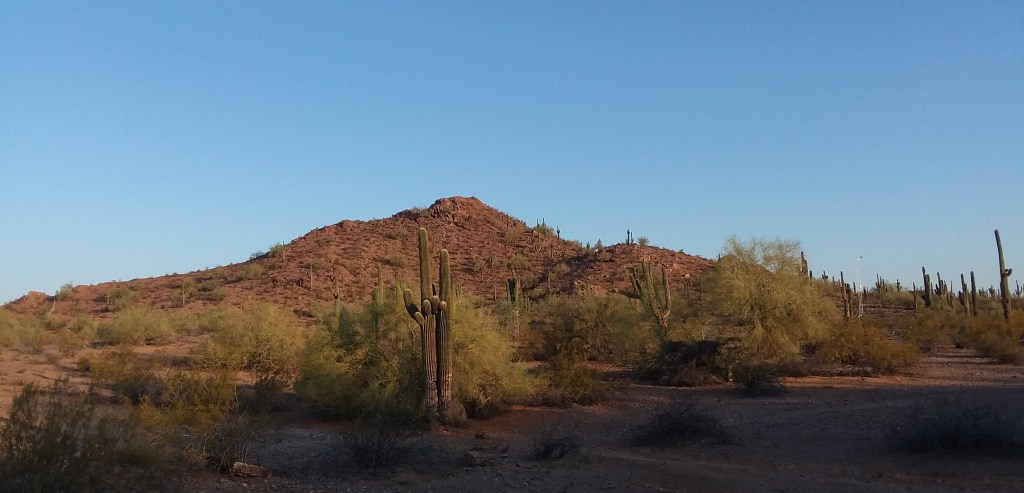
Through the weekend, the Tunnel Fire has burned 21,000 acres just north of Flagstaff, Arizona. But a few hundred miles south, the Valley of the Sun is ablaze in a kaleidoscope of color. In April’s final week, blooming wildflowers, cacti, and desert roses–and a resilient reptile–answer an age-old question. Yes, despite our warming planet, rare beauty remains in the Sonoran Desert.

Reality Check

This morning it was seventy-nine degrees at nine o’clock. Perfect for a swim. Forty lengths of the pool kept me whole. David trudged along beside me for most of it.

My neighbor–about ten years my senior–strides through the fluid to stay strong. He has difficulty walking but can do it more easily in the water.

The buoyancy provides the resistance and support he needs to keep going. Whenever I see him there, we smile, and exchange “good mornings” and I admire his tenacity.

Age and vulnerability have been swirling through my mind lately. Part of it is simply the frightening world we live in. The other component is the knowledge that I will turn sixty-five in July.

Tom and I have already enrolled in Medicare. Our cards came in the mail last week. We will meet with a broker in the next few weeks. She’ll help us select a Medicare supplement plan.

I feel a weird combination of relief–for having made it this far–and anxiety knowing what tomorrow will bring. I imagine some of you who read this will understand that both feelings can coexist on a daily basis.

The crapshoot of advancing age affords us a degree of wisdom to spread around if we choose to … and the accelerating sensation that we are riding on a runaway wagon traveling downhill. We had better make the most of the wild highs and bumpy lows on the journey.

I’ve always considered myself a relatively patient and understanding person. An active listener too. Sometimes I lean too far out over the tips of my skis (no, I’m not a skier, but humor me with this metaphor) and push too far outside my comfort zone. Soon after, I realize I’ve extended beyond my emotional limits. That’s when I become brittle and abrupt.

I am more this way now than I was as a younger man. I don’t know why, but as I write this sentence, I remember seeing this quality more prominently in my mother as she aged.

I had a boss thirty years ago who liked me more whenever I revealed this cut-to-the-chase attribute. She came to me whenever she needed a “reality check.”

Melba enjoyed knowing that I was willing to bend to make things work. But she could count on me to tell her when all of us on her team were about to break or that the latest corporate flavor-of-the-month boondoggle sucked.

However, others who experience this trait are surprised by my forthrightness. Think of it as kindness turned callousness if you push me too far, especially if it involves someone I love.

Something sudden like that happened on Saturday. Tom and I were at the gym, doing our regular hour-long routines of ellipticals, weights, and treadmills. An acquaintance there, someone we see frequently, approached my husband. Tom was in the middle of his workout.

This individual (I’ll call him Gabe) has an odd-and-unsettling habit of telling Tom that he doesn’t like him. It started out as sort of a running joke between them. But over time the joke Gabe recycles has worn thin. Tom wasn’t in the mood for it Saturday. He told Gabe so.

A short while later, Gabe approached me. He knows Tom and I are a couple. Sheepishly, he leaned in to admit he thought he’d pissed off Tom. As my discomfort intensified, I continued to plod along on the elliptical. I tried to switch the subject with Gabe. I asked how he was.

I need to digress. Probably every time I’ve talked with Gabe (in the four years I’ve known him) he has bent my ear and told me his life is a shambles. He’s dealing with lots of significant issues I won’t go into here.

I feel compassion for him, so I’ve listened figuring things would one day get better. But they haven’t. In all of that time, I can’t remember him asking me about my life.

Anyway, Gabe left, but circled back later to tell me–again–how miserable his life is. In a flash, my patience vanished. I felt used. Disrespected. I took a breath. I knew I was way out over my skis. I needed to find a way to rescue myself. I was not the therapist he needs.

It was time for a verbal reality check between Gabe and me. Especially after what I had seen transpire between Gabe and Tom out of the corner of my eye fifteen minutes before.

The words that flew out of my mouth were something like “You’re not the only one with problems. Look around. Every person in this gym (I pointed around me) is dealing with shit.”

Gabe was dumbfounded. He told me to stay away from him. That won’t be a problem.

***

It’s been difficult for me to let go of this experience. I know that I was angry with Gabe for his behavior with Tom. On some level, I was defending my husband. But I also feel guilty for being so brusque with him. Clearly, he needs professional help.

At any rate, I need to own my part in it. I was tired of being a doormat for his bipolar banter. I felt I had to save myself.

If you’ve read any of my books, you know why. My father was a loose cannon. More aptly, he had intense mood swings and unresolved traumas from his WWII experience.

Around 1970, Dad was diagnosed as bipolar. This came after years of trial-and-error treatments, shock therapy, and prescription medications. Our family lived with his emotional illness for decades without answers or relief. At times, it was devastating. It was our dark reality.

As a child, I felt trapped in the same house with Dad whenever his outbursts would appear. He was intensely unhappy, and it spread to my mother, sister and me.

Frequently, Dad resorted to verbal abuse. Less often, physical violence. Throwing shoes at me. Punching his fist through a bedroom door. I was scared, but–at the same time–I loved my father.

Sometimes, even as an adult, these old issues reappear. Writing about it helps (and remembering the counsel of my own therapist) but maybe I will never entirely get over the feelings of anxiety from my earliest years. Maybe I will always live in fear of crash landing in a snow drift with my skis tangled and limbs broken.

Bottom line: it is my worst nightmare to be near someone volatile. Someone who has no boundaries. As uncomfortable as I feel about my exchange with Gabe, I had reached my limits with him.

In a world of sadness and pain, I couldn’t remain silent any longer. I had to speak my truth and restore my power. I think that’s what survivors do.

***

Here’s my reality check.

It’s 3 p.m. on April 19, 2022. The heat is on in Scottsdale, Arizona; it’s now ninety-seven degrees.

I’ll never snow ski; I’m too afraid of speed and broken bones.

Dad’s been gone nearly thirty years.

Gabe’s problems are his to untangle or not.

I have my own life to maintain and manage.

I am living in the Sonoran Desert with my kind husband.

We are the new recipients of Medicare cards.

Together we’ll see what the future brings.

Remembering the Magic

As I’ve gotten older, I’ve discovered I need more private time. This feels like an odd thing for me to admit, because–at one time–I would have considered myself a strong extrovert.

Now that I’ve been away from my consulting career for more than eight years, I realize I was more of an introvert all along. One who was good at solving problems, facilitating outcomes, and wearing a multitude of hats. I was required to be “on” far more than I wanted.

Finding the magic as a writer has been the result of tunneling in versus extending out. It’s been an exercise in spelunking … getting lost in caves of consciousness … then exploring that space.

This creative cocooning is an activity I love, and one I have become protective of. (Translated, that means I get grumpy when there are too many social demands on my time. I can imagine my husband nodding knowingly as I write this.)

Even so, there have been times over the past two years, when I’ve missed the human connections that many of us took for granted in a pre-pandemic world. For instance, reaching out to engage with readers in person or simply being in the same room with others to experience the impromptu moments of life.

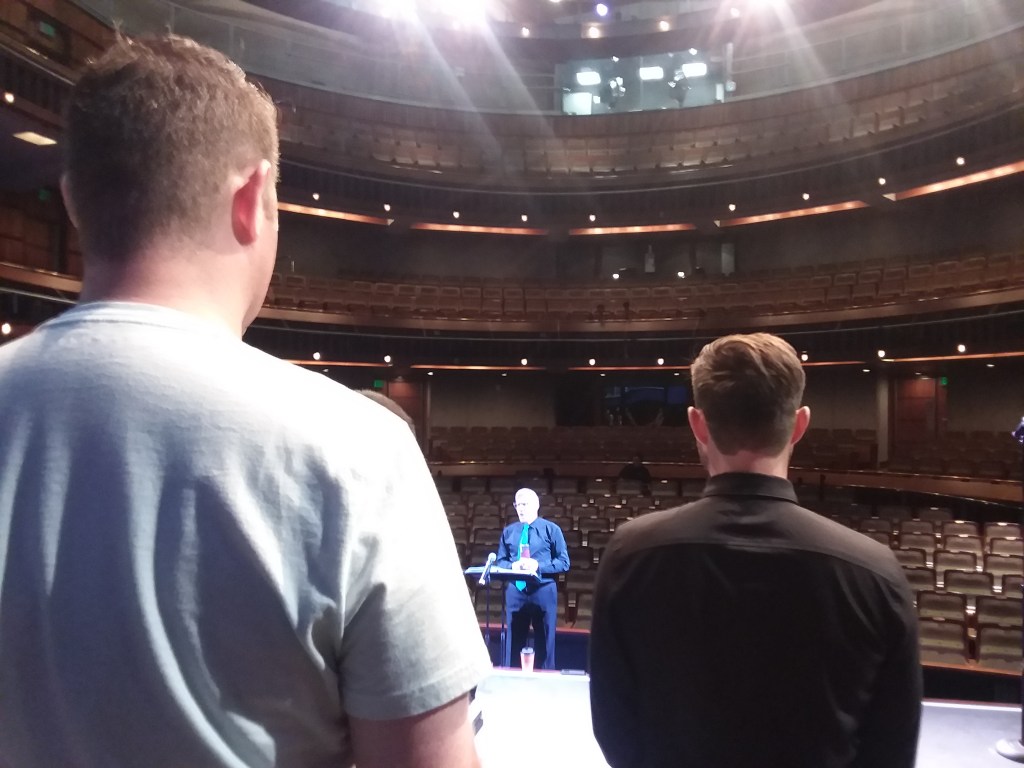
On Friday night, I got a dose of the creative community I craved during the depths of the pandemic. Tom and I attended a Storyline SLAM event at Changing Hands bookstore in Phoenix. The theme of the evening was Magic, so each story needed to include that component in one form or another.

The process was pretty loose. Organic might be a better word. Eight people–four before intermission, four after–took turns telling stories on stage in six-minute segments.

When each storyteller finished, five judges (sprinkled in the audience of one hundred) held up mini tote boards with a score. Thirty points were the most possible, because the highest and lowest scores, raised high by the judges, were tossed out.

Driving there, Tom and I knew there was an outside possibility that members of the audience could volunteer to tell their stories in the moment. So, I brought one of my books, An Unobstructed View, in the car–just in case I summoned the courage to get up on stage. The idea intrigued and petrified me.

I’ll cut to the chase. I wrote my name on a slip of paper when we got to the event. I dropped it into a box, where it might be drawn. And it was. As I chugged a glass of pinot noir and squirmed in my seat, I learned I would be number three on stage to tell a story.

When my turn arrived, the anxiety I felt was palpable. Still, I walked to the stage and stood before the mic. I opened my book to page 41 and began reading from a chapter titled The Best Ears of Our Lives. Here’s an excerpt of what I shared that night.

… in October 1998, I became a dog owner again. We found our family dog in an Arlington Heights pet store. A high-pitched bell at the top of the door jingled, signaling our arrival as we pushed through the entrance. Tom and I walked past a wall of cages containing an assortment of critters with doleful eyes tracking our every move. The noisiest of the bunch was a tri-colored basset hound puppy with a white-tipped tail, brown-and-white face, and voluminous black velvet ears. She barked, yelped, and wiggled near the latch of her cage as if to shout, “Look over here. Take me home. You will never find a better dog than me!”… I knew we had turned the page and a dog-eared corner. This tenacious pup had cast a spell on us.

For most of the next decade, Nick, Kirk, Tom, and I would write a chapter together, featuring our shared love for Maggie as the glue that would help us all bond. As Maggie’s body grew, her limbs spread, and her breathing deepened at night, our basset hound further infiltrated our lives. We would never be prepared for the day we’d have to let her go.

The crowd applauded. I smiled, exhaled, walked back to my chair, and sat next to Tom. He kissed me on the cheek. Moments later, my score appeared … 27 out of a possible 30. But the numbers really didn’t matter. It was simply the act of sharing my story and getting an immediate response that fueled happiness and relief.

When the evening ended, an exuberant lady (she told a fun and charismatic story about the magic of motherhood) won the Storyline SLAM event with a perfect score of 30. I finished third out of eight. Not bad for a last-minute decision by an introvert to take the stage.

Most of all, the experience reminded me to live for today in this uncertain world, but also to find the time and space to embrace and remember the magic. It can appear in any form–long velveteen ears on an autumn day or an improbable six minutes on stage in the spring–when we least expect it.

Our magical Maggie, posing in our Illinois backyard in October 1998.

Get Happy

Today, I’m lost in thought about screen-and-stage legend Judy Garland, a film she starred in that sparked my early imagination, a recent experience that renewed my love for live theater, and a song, Get Happy, she made famous.

Forget your troubles, come on get happy, you better chase all your cares away.
Shout hallelujah, come on get happy, get ready for the judgement day.

***

Beginning in 1959, and throughout the 60s, it happened only once a year: CBS aired a special TV broadcast of The Wizard of Oz, the magical MGM film released in 1939.

Like thousands of Baby Boomers across the U.S., my sister Diane and I waited impatiently for the annual ritual. We sat cross-legged, mesmerized in front of our RCA console. We squealed with delight and fear when a ferocious cyclone swept Dorothy into the Kansas sky. In short order, she, Toto (her loyal dog) and their house landed with a thud somewhere over the rainbow.

For those precious hours, Diane and I absorbed and memorized every fanciful song, image and character–the Scarecrow, the Tin Man, the Cowardly Lion, the Munchkins, the Flying Monkeys–Dorothy encountered along the yellow brick road. Though our TV projected black-and-white images only, our imaginations manufactured the scenes in vivid color.

As the years passed, we recited every iconic line of dialogue–“I’ll get you, my pretty … and your little dog, too”–uttered by the Wicked Witch of the West. Whenever she appeared in a puff of smoke, it shook us to the core. But we always knew she would melt in the end, thanks to a handy bucket of water on a ledge and Dorothy’s resourceful decision to grab it in a crucial moment.

Knowing that delicious outcome, and that Dorothy and Toto would ultimately make it back home to Kansas safely, made watching the film one of the happiest and most enduring memories of my childhood.

Looking back, I think it was Judy Garland, playing Dorothy, who captivated me most. Her sense of wonder, innocence, tenacity, good citizenship, pizzazz, and beautiful voice filled the frame. I don’t think there is a more stirring, iconic moment in film than Judy singing Somewhere Over the Rainbow.

Of course, children and adults can watch The Wizard of Oz whenever they want now. But, in the 1960s, the film’s relative inaccessibility, imagination, and message … that it was possible to find happiness and peace “right in my own backyard” … was a shared experience and sense of idealism that no longer exists.

Isn’t it ironic that, in an age when virtually any film or music is available anytime, we are barraged with a mountain of images and problematic news–pandemics, politics, and Putin–that shock our sensibilities and clog our ability to bolster our happiness?

***

2022 marks the centennial celebration of Judy Garland’s life. (She was born June 10, 1922; died June 22, 1969, at age 47.)

To remember and relive her remarkable film, stage and song legacy–amassed in less than five decades–crooner Michael Feinstein has produced a masterful ninety-minute show, called Get Happy!

On Sunday, March 20, Tom and I were in the audience for Feinstein’s dazzling evening performance and multi-media program at the Scottsdale Center for the Performing Arts. It included renditions of many of Judy’s favorite tunes, along with seldom-seen-or-heard images and stories from her life.

About midway through Feinstein’s stellar performance, he paused to tell a story about Judy Garland in 1941. That year, at age nineteen, she bought her parents (who came from modest means in Grand Rapids, Minnesota) a home.

Judy recorded tapes of herself singing to her family in their home, but for years after her death mysteriously those recordings couldn’t be found. Remarkably, Feinstein had the opportunity to visit the home and discovered them in a hollow wall. He played one of those for us as a black-and-white image of a teenage Judy Garland, posing in a tailored suit, filled the screen above the stage.

The song Judy was singing, I’ll Be Seeing You, brought me to tears as I held Tom’s hand. We were seated on the aisle in row Q. Judy never recorded it professionally, but the tune was one of my mother’s favorites. So much so, that Diane and I chose a version of it to play at Mom’s memorial service in 2013.

As Judy Garland’s bright and soaring voice filled the auditorium Sunday night, I was transported back to the early 1960s and the happiness I felt watching The Wizard of Oz.

Mom was curled up on the couch. Diane and I were glued to the floor in front of our RCA. Together we followed Judy’s voice and steps stride for stride.

We were on our annual adventure somewhere over the rainbow.

Eight Days on the Emerald Island

There is no better time than St. Patrick’s Day to pay tribute to the Emerald Island.

In late August 2017–just six weeks after I suffered a mild heart attack–Tom and I boarded a flight for Dublin, Ireland.

It was an excursion we had planned months before. But on July 6th (our shared sixtieth birthday) the trip and our future felt very much in doubt as I lie on a gurney in a St. Louis hospital.

Remarkably, my health improved considerably in a month. Doctors in Scottsdale, Arizona–my new hometown–encouraged us to proceed with our plans. The journey to Ireland would help us heal.

Looking back five years, both of us were anxious about traveling abroad, but we also needed to reclaim our joy. As I wrote in An Unobstructed View, Tom and I spent eight days with forty other travelers from around the world. Brian, our capable guide with CIE Tours, led us clockwise around the island.

It’s a bit of a blur now. But in one week’s time we moved from Dublin to Waterford, Killarney, the Ring of Kerry, the Cliffs of Moher, Galway, the sheepdogs in Sligo, the Giant’s Causeway in North Ireland, and the Titanic Museum in Belfast … before returning to Dublin and riding atop a double-decker bus with the wind racing through my hair.

Along the way, on our farewell dinner with the tour, we enjoyed an evening of Irish songs and music at the Glyde Inn just south of Dundalk.

In the spontaneity of the experience, I was pulled onto the floor to join in a broom dance. For a few fleeting moments, I rediscovered my spark away from the worries of the previous month.

I also spotted a little old Irish lady, singing her heart out across the room. She resembled my Scotch-Irish mother, who never had the opportunity to return to her ancestral home country. Seeing her there was an important step in my healing process.

In 2019, I wrote The Irish Mist. My poem is a tribute to the comfort I felt looking out over the Atlantic Ocean across the vast Cliffs of Moher on the west coast of Ireland as the clouds rolled in on August 27, 2017.

***

I’ll always remember you, rolling in over the gaelic green.

I felt cool comfort knowing the veiled intentions you whispered in my ear wouldn’t be denied.

No matter how much I wanted to gaze beyond the moss and ferns you shrouded, you held me there.

You knew I needed to stand strong above the craggy cliffs of my past.

You knew I needed to feel rooted to the emerald island, thankful for the mystery of my mending heart.