Tag: A Writer’s Life

FREE to Read as You Shelter in Place

MarkJohnsonBooks_Jan2019 013 (1000x645)

Perhaps you’re feeling isolated and afraid. Like me, you’re worried about the implications of this global pandemic. In need of a creative escape from the closing walls. Concerned for loved ones and friends, who live in places that are feeling the brunt of this crisis.

You’re tired and queasy from the daily Tilt-A-Whirl of news bulletins. Searching for truth. Dealing with loss. Texting with daughters and sons, mothers and fathers, sisters and brothers to see how they’re coping. Craving a retreat into the comfort of family connections and the healing properties of nature.

I’m here to help relieve the pain with this reading stimulus offer. From Saturday, March 21, through Wednesday, March 25, Kindle copies of all three of my books are FREE on Amazon.

From Fertile Ground

Tales of a Rollercoaster Operator

An Unobstructed View

All you need to do is click on the links, go to Amazon, download the books and curl up in a cozy corner of your home.

Once you finish each book, please take a few minutes to post your reviews on Amazon and/or Goodreads … especially if you feel my stories have helped to rejuvenate your spirit or soothe your soul.

One more thing. I’m thinking of you. Stay well and happy reading!


Nesting

MourningDove_031920

Peace and solitude nestled near a neighbor’s door. Mourning dove moments we crave under the eaves. Nesting. Perfectly prescribed for the first day of spring.


Express Yourself

DiscPark_031820

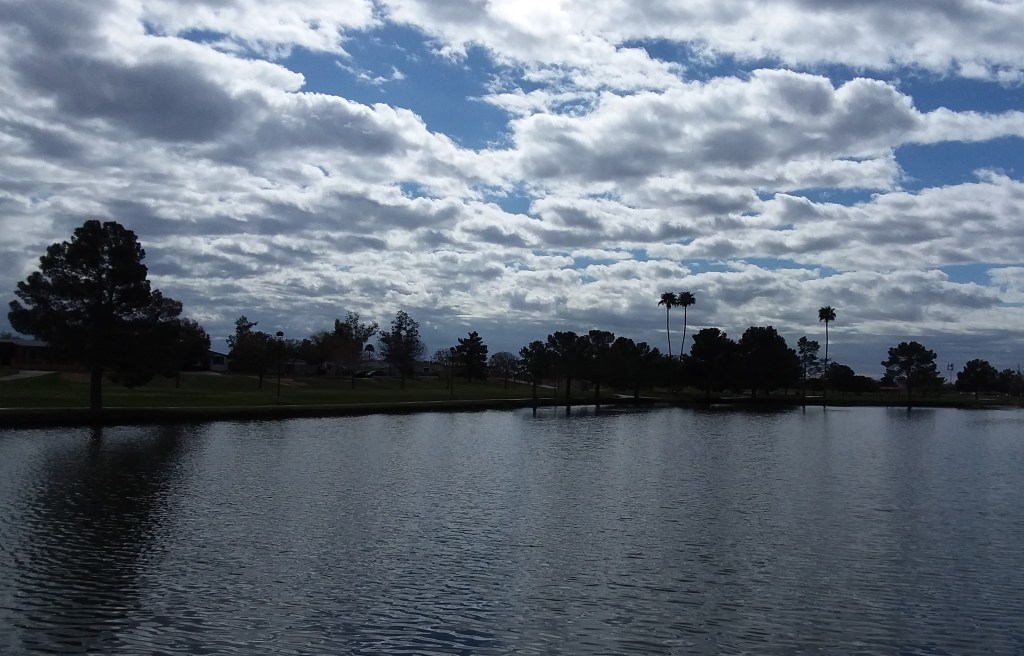
Wednesday, March 18, 2020, was a quiet morning at disc park in south Scottsdale. Vista del Camino Park is its official name, but Tom and I prefer this less formal identifier. It’s more like the scruffy disc golfers and white egrets who play and troll there.

This is the same park we walked (slowly and gingerly for me) in August 2017, just a month after my mild heart attack, when darkness descended and science produced a confirming solar eclipse for a short while.

Now the darkness is back for a more lengthy stay it appears, under global pandemic circumstances, but (despite our growing anxiety and the reported numbers of COVID-19 cases) we try to focus on the brightness in the southern sky peeking through the clouds after a morning shower.

All of us are living within newly defined parameters. The headliner is social distancing, characterized by taps of the elbow with people we would rather embrace. At worst, it feels as if we are existing in a Petri dish in some vast and diabolical experiment. At best, these new rules and regulations challenge us to find new ways to connect and express ourselves.

Last night was a perfect example. My Tuesday evenings are normally devoted to rehearsing with friends in the Phoenix Metropolitan Men’s Chorus (PMMC). It’s a community of sixty or seventy diverse and talented gay men. Given the threats of the present pandemic, our regular, in-person singing sessions have been cancelled for the next few  weeks. Possibly longer. We don’t know what the future will bring.

But on St. Patrick’s Day 2020, what would normally have been a raucous Tuesday of singing and mingling, became an online vocal experiment. Our choral leaders hatched a scheme to rehearse through Facebook Live.

In the face of social distancing we’re using social media to assemble first and second tenors on Tuesday evenings–baritones and basses on Thursday nights–to fine-tune and polish our selection of twenty-two, gay-anthem tunes for our still-planned Born This Way performances in June. We’re also attempting to maintain our sense of community in these uncertain times.

Last night at 7 o’clock we began to travel and sing down this new virtual road together. I sat in front of my laptop in Scottsdale with my music close at hand. The other tenors did the same from their respective homes. Marc, our artistic director, and three other PMMC leaders took turns singing the music. They asked us to do the same from our remote locations.

Don’t go for second best baby; put your love to the test. You know, you know you got to make him express how he feels and maybe then you’ll know your love is real … 

If you love Madonna (and, honestly, who doesn’t?), you’ll recognize these lyrics from Express Yourself, her 1989 smash hit. It was the first song we sang together in our virtual vocal experiment.

By the time rehearsal ended at 9:30, we had run through another six or seven other numbers and exchanged countless constructive and snarky comments online. All that really matters is the experiment worked. We stayed connected. We kept our voices oiled. Our spirits soothed.

This morning on my walk with Tom, I wasn’t ready to let St. Patrick’s Day 2020 go just yet. As we stepped out of our car, I decided it was perfectly fine and appropriate–within social distancing guidelines–to unveil my shamrock socks for all the pandemic world to see.

To express myself. To keep my voice and spirit alive here in the Valley of the Sun.

ShamrockSocks_031820


Three Writers and a Birthday

S & G Ferrell in 1930s

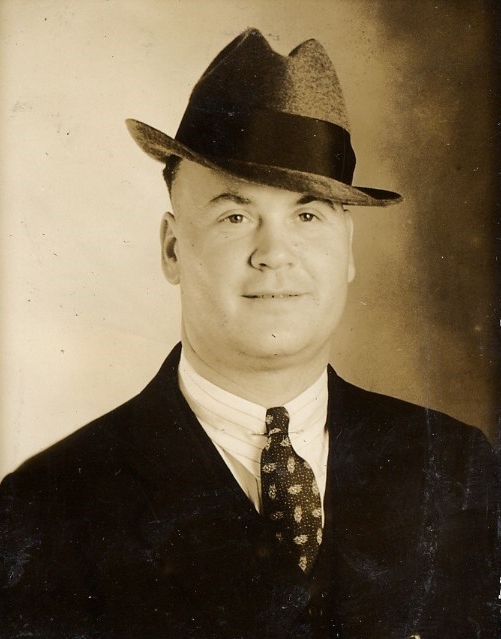
On this sunny and breezy, seventy-degree day in the Sonoran Desert, I celebrate the life of Sherrell Richardson Ferrell. (He preferred S.R. Ferrell, because he thought it sounded more dignified.) March 9 would have been my maternal grandfather’s one-hundred-and-nineteenth birthday.

S.R. was a mountain of a man, who loved his Huntersville, North Carolina farm. I still remember him climbing the creaking steps of his back porch. Coming in from tending to his cattle and crops. Removing the broad-brimmed hat that shaded him from the Carolina heat. Swatting horseflies that followed him through the screen door. Mopping his brow and grabbing a bar of soap to wash the red earth off his massive arms and hands.

On the surface, it would seem S.R. and I had little in common other than our blood line. He was born in 1901 … a straight-and-practical, stoic Republican, who lived his entire life in the rural south. I was born in 1957 … a gay-and-artistic, emotional Democrat who made a living in a major Midwestern metropolis before escaping to the desert.

But after reading his fifty-two years of diary entries five years ago … a chronicle of every day in his life from age thirty-two in 1933 until his death at age eighty-four in 1985 … I know now we will always share our grief for Georgia Ferrell (his wife and my grandmother) and our writing impulses to leave behind a trail of our divergent lives.

Neither S.R. or I imagined that I would write a book about our journeys. That I would tell the story of a third writer between us … his oldest daughter Helen, my resilient mother … who left the south, survived her traumas and kept writing her wisdom-filled letters to ensure her family would remember her world and intellect.

But it is all clear to me now. More than any other, From Fertile Ground is the book I was meant to write. It is the story of all three of us finding our paths, loving our families, making our way against the odds. It is a story I was meant to share with the world.

During our visits to Huntersville in the 1960s, my sister Diane and I chased the peacocks that patrolled the farm. Inevitably, each time we returned to the St. Louis suburbs, we left with a few prized feathers and another batch of memories of our Grandpa Ferrell.

There he sat. Alone with his thoughts. Gliding in his chair like a prehistoric blogger. Recording the highlights of his day in his diary each night before bed. Hoisting his sore body out of his rocker. Placing his diary back on the mantle. Climbing the winding stairs to his bedroom for another chance to do it all again the following day.

***

This morning Tom and I took a hike with John and Sharon, good friends visiting from St. Louis. We walked portions of the Tom’s Thumb Trail in the McDowell Sonoran Preserve in north Scottsdale.

As we followed the switchbacks up and down the trail, it dawned on me that I am now nearly the same age S.R. was when I chased his peacocks and vacationed on his farm in 1962 and 1964. When he taught me to milk the cows. When he brought his ripe cantaloupes and melons in from the fields to prepare them for market.

Of course, S.R. never hiked this rugged mountain path. He never visited the sand and sun of the Arizona desert. Neither did Helen. They both preferred the cooler air, the green-and-misty escapes to the Smoky Mountains, the more fertile ground.

But there is comfort knowing that my grandfather’s lineage, his Scotch-Irish tenacity, his southern roots, his physical strength, his propensity to write, and his unmistakable Ferrell nose are with me on the trail of life.

They are all with me on my journey.

MarkJohnson_TomsThumb_030920


No Drone Zone

NoDroneZone_030520

I never want to be that guy. The bore who tells the same stories at a party. The one you can’t escape in the corner of the room when all you want to do is wipe that silly-and-smug smile off his face. More specifically, the writer who drones on about subjects that don’t matter to anyone but himself.

I certainly wonder from time to time if the things I have to say are truly meaningful to others. If my synchronistic, slice-of-life stories and observations about universal subjects like family, fatherhood, friendship and flowers–not to mention love, loss, and late-in-life dreams and adventures–are fresh enough for followers or those who happen to read one of my books or stumble upon this page.

I’m not sure this classifies as a fear. But at the very least I have my creative doubts and vulnerabilities. I imagine it’s a condition other writers experience. Particularly when they’ve been diligently honing their craft for a while (i.e., written and published three books and nearly two years of bi-weekly blog posts) and strive to remain relevant in a culture that too often tweets and discards people, their ideas and historical perspectives more quickly than a wrapper around a fast-food sandwich.

Who knew this entire thread of creative questioning would be stimulated by a hike this morning in Papago Park? Where Tom and I amassed ten-thousand steps by eleven o’clock and a “No Drone Zone” sign caught my eye before today’s round of alliteration and wordplay could begin to take flight.

It was all the confirmation I needed. That remote-controlled, pilot-less aircraft or missiles are prohibited in this quiet corner of Phoenix (home to the nearby Desert Botanical Garden and Phoenix Zoo), where rugged buttes are patrolled by bighorn sheep.

That every book or post that bears my name is prepared with love, authenticity and good intentions.

That I’m doing my best to honor the meaningful and meaningless moments here in the “No Drone Zone” of my post-Midwestern life.


March On

March2_030120 (2)

Retreat from impending pandemics, pundit prognostications and presidential prattle. Play in the garden. Greet the grace of nature. Gaze at gliding coyotes and giant cardons. Grant Sunday succulents a proper home. Gather and savor southern-facing light. Stand tall and shine in the darkness. Apply aloe. Ease the pain. March on.

The Island of Misfit Boys

I’m not a sociologist, psychologist, psychiatrist or cultural anthropologist. Just an observant, sensitive and reasonably intelligent sixty-two-year-old gay American male author, who is concerned about the plight of our boys and young men.

I should also tell you I am an ardent supporter of gender equality. Equal rights. Equal opportunity. Equal pay for the same job. In fact, I think women are at least as qualified as men to capably fulfill the requirements of most any position… including that of President of the United States, though–regrettably–we have yet to elect our first female Commander-in-Chief.

During the course of my thirty-four-year communication career, many of my best bosses and mentors were smart, savvy and successful women. I had a few decent male managers too, but looking back, it’s the women from who I learned the most. They were the ones who encouraged me to take on projects that enhanced my skills, rewarded me for my contributions, and made the greatest positive difference in my career.

I don’t have any empirical data to draw from, but now that I have more time to ponder the “what ifs” of life, I’m seeing a disturbing trend. In the past few years, I’ve encountered a disproportionate number of bright young men (straight and gay) in their twenties and thirties, who are lonely, disenfranchised and struggling. Fighting for their lives as they face their addictions. Trying to launch and differentiate authentic lives in a society that still clings to narrow views of masculinity and offers few accessible male role models.

What worries me is the lack of meaningful structure and focus I see in the lives of young American males. (By the way, in my mind, a passion for fantasy football leagues, video games or binge drinking doesn’t count. As a rule, I don’t view these activities as life affirming or mind expanding, though they can be fun diversions.)

I was discussing this topic with my husband and a close male friend recently, and suddenly found myself transported back to sixth grade in suburban St. Louis. I had just received a writing award from the Daughters of the American Revolution for a piece I had written about the Stamp Act. I don’t recall the focus of my paper. Just the fact that I received recognition for my writing.

I remember that most of the other award recipients were girls. Somewhere in a dog-eared scrapbook from 1968, there is a photograph of all of us standing with our adoring teacher. She, my parents and the female students were proud of our accomplishments. But the other boys? Not so much. The feeling I got from them was:

“Writing is for girls. It’s not something a real boy should be proud of. What really matters is your athletic prowess, your ability to tie Boy Scout knots or cut and polish hard wood with your hands in shop class.”

I realize how ridiculous this sounds, but the feelings that stung my ten-year-old psyche were real. They were also never heard or validated.

As a sixth-grader, what price did I pay for internalizing the notion that writing was a less-than-masculine endeavor? Did this and other similar experiences discourage me from pursuing a literary life until my mid fifties? When did it become uncool for boys to be smart?

In 2020, could it be that as we’re beginning to realize and remedy all the ways American girls have been undervalued in our society, we’re still duping our boys and young men into believing that reading and writing are “softer skills” that might lead someone to suspect they are gay?

Are we sending the message to our boys that it isn’t acceptable within our masculinity framework to be smart, creative and artistic in the United States? Have we boxed our boys into believing some sort of myopic masculine mythology? Is this why some of them are lost or adrift? Is this why some of them snap?

I don’t have answers to any of these difficult questions. But I think we could start by listening to our boys, letting them voice their fears, loving them for their strengths and frailties, and encouraging them to follow their dreams whether it leads to refining the inner workings of an airplane engine, nursing a segment of our aging population or writing the next great American novel.

Have we created a metaphorical place for our young men, which they are desperately trying to escape?

What more can we do to help guide, challenge and mentor the young men in American society so that they can find their bliss and leave the island of misfit boys?


Raining and Ringing

CosantiBells1_022020

Rare rain falls and pings against carport roofs. Such a solar sabbatical allows time for sun worshipers to pause and reflect on echoes ordinarily unheard.

Nature’s water droplets are like Cosanti bronze windbells. No two are identical. They hang and wave in the air at the whim of the wind.

Chiseled workmen clad in protective suits, gloves, helmets and visors pour 2,200-degree molten metal into sand-shaped molds in Paradise Valley.

A day later, they will extract cooled chimes handcrafted in burnished and patina finishes. The heat will forge the artistry. The wind will do the rest.

Eventually the melodious bells will leave the foundry, carefully wrapped in designed boxes for unknown destinations out of their control.

Some will ring in desert breezes on sun-scorched, palatial-or-postage-stamp patios in optimistic Arizona towns like Gold Canyon or Fountain Hills.

Others will fly with snowbirds to reign and ring above concrete back porches or cedar decks in harsher climates where snow collects on spruce tree limbs.

All of them will deliver unintended, unbridled and unfiltered messages. Raining here and ringing there for all to hear who are aware.


Field of Possibilities

FieldOfWildflowers_Feb2020

We live a block from this blaze of yellow and orange. It’s really not a field. It’s a swatch of a neighbor’s front yard filled with wildflowers that thrive on February opportunities, which the Valley of the Sun affords.

One of the things I’ve learned since leaving corporate life six years ago is that capturing images of nature lights my creative fire. Doing so, reminds me of the field of possibilities that await in life. Even for a guy who’s sixty-two.

Perhaps especially for a guy who’s sixty-two, because I still have a lot of observations to share. Things I need to say about my world, my nation, my state, my community, my family, my marriage, my individuality. Ideas I need to extract and plant out of my brain, water and nurture … just so I can give them light and see them appear and bloom on a page.

The fascinating part of the creative process is that when I sat down in front of my laptop this morning I had no clue what I would write about. But then I saw this photo on my phone and it spoke to me. In some way, the larger message I heard was “Keep writing, Mark. Write about what you know. What you observe. What you feel. What you dream of and worry about.”

So that’s what I do. A little every day. Sometimes I share it here. Other times I put it in a file with notes of other raw or unrefined observations that quickly blossom and fade in the desert sun.

But it’s the field of possibilities that continue to be my source of motivation. That prompt me to push ahead with my collection of true Arizona stories and desert fantasies, which I hope to publish in the next year. That connect me to a few fabulous followers who come here to read what I have to say.

I’ll keep doing it as long as I feel that impulse.


Snapdragons in February

Snapdragons_Feb2020

I suppose local meteorologists would tell you we have four seasons in the Valley of the Sun. But I wouldn’t characterize them as the same qualifying quadrants most residents of the northern hemisphere experience.

We don’t really have spring, summer, fall and winter in Scottsdale, Arizona. Instead, after living here year-round for the past two-and-a-half years, I would describe our seasons as spring (February and March), summer (April and May), mega-summer (our 100-plus oven existence of June through September), and autumn (October through January).

Nothing approaching arctic sensibility occurs here in February or anytime for that matter. Though, like this transformation of the seasons, I acknowledge that living in the Sonoran Desert I have become a different version of myself. I have shed my larger epidermis and middle-aged Midwestern fat deposits and reemerged as a trimmer-and-thinner-skinned desert rat.

Whenever I grab my hoodie on the way out the door on a sixty-degree day, after plucking another daily dose of Plavix generic substitute from my pill tray and gulping it with juice, it is evidence of my lighter persona. Now, my more swiftly-flowing, sixty-something blood often requires an extra man-made layer.

In addition to the physical changes in my Arizona existence, most assuredly February in the Sonoran Desert is nothing like the sled-riding, snow-blowing scenes of my past. It is sweet-and-sparkling spring time when the Acacia trees bloom. Cool forty-degree temperatures in the mornings. Bright seventy-degree afternoons. Just the right combination for wildflowers, which have suddenly decided to display their blossoms along roadsides, arid avenues and neighborhood yards.

Even our container of snapdragons is getting into the spring fling act. Tucked under the eaves of our front window, the elongated yellow blooms have begun to emerge from seedling skulls, which we dried and saved from the previous batch the year before.

In a few weeks, I expect our entire pot of snapdragons will be ablaze in color. Then, when the temperatures rise and April becomes May, the stalks will begin to dry and wither in the torrid summer sun.

Never fear. Tom and I will salvage the seeds. Save them for the next cycle. Wait for them to bloom again in a future February in Scottsdale, Arizona.