In this season of rebirth, I am reminded of my transformative journey that began five Aprils ago.
***
I should have known better. Life had taught me there was nothing certain about any journey.
I had already navigated the ups and downs of my St. Louis childhood, struggled along as a single dad, shed illusions of a straight existence in favor of an authentic life, and retraced the path of my mother’s life from fertile ground.
Yet, I didn’t expect the journey I was about to embark upon with my husband–waving goodbye to one home and resurfacing in another–would prove to be as circuitous.
By the fourth month of 2017, Tom and I had drawn up the details of our dream. We would sell our home in northern Illinois; escape the cold; move to Scottsdale, Arizona; and live in the desert permanently. We wouldn’t be denied.
It all began in April with the physical trappings of certainty. We were locked into a familiar pattern of cool and damp Lake Michigan air with only a ray or two of sun filtering through the clouds. But as we prepared to leave behind the permutations of our past, we also knew there was heavy lifting to be done.
Before we could leave the Midwest and say goodbye to our Illinois family and friends, we needed to sell our home in Chicago’s northwest suburbs.
***
What you just read is a portion of the prologue from An Unobstructed View. If you find yourself intrigued and pondering your own personal transformation, my third book will have special meaning for you. Download a free copy on Amazon through Monday, April 18.
One simple request: once you are through, please take a few moments to post your review.
I have Georgia on my mind today. Not the Peach Tree state, but my peach-ice-cream-loving grandmother. April 7 would have been my maternal grandma’s 119th birthday.
Warm-hearted and hard-working, Georgia lived most of her seventy-one years in North Carolina.
In 1914, Georgia Evabell Miller met Sherrell Richardson (S.R.) Ferrell. Both attended a one-room school in Mecklenburg County. Six years later, they married at Georgia’s home in the same community. She was sixteen; he was nineteen.
A generation before I appeared, Georgia’s ordinary rural existence–tending to family, home, meals, and livestock–took an extraordinary toll on her body and emotional wellbeing. She bore four children: Helen (my mother) and Richard in the mid 1920s; James and Frances in the early 1930s.
In between, Georgia suffered a double whammy of grief and pain. Richard died of meningitis in 1926 one month before his first birthday. Not long after, cervical cancer compounded Georgia’s trauma. She was bedridden for an extended period. Helen grew up quickly and helped care for her mother.
Even with Georgia’s burden and her heavy body that contributed to arthritic knees and misshapen feet, my grandma maintained a girlish southern giggle into her late fifties and beyond.
In the summer of ’62, during one of our family visits to the farm, I absorbed the scene like a ready sponge as she prepared ham, grits, and biscuits for breakfast.
I loved Georgia and her jolly nature. As she toiled and told rambling stories over the sink, rolls of laughter shook her stout body. If she were here, she would describe it as the “gift of gab” handed down through her Irish descent.
Intermittently, she tossed table scraps and leftovers into a slop bucket for a trio of hungry hogs that waited impatiently in their pen.
On occasion, I accompanied her whenever the contents came close to sloshing over the sides of the dented metal pail. Together we squealed as the pigs poked their large snouts through wooden slats to explore what concoction was on the menu.
Like a southern-stitched patchwork quilt handed down through the generations to keep them warm, this moment remains cordoned off in my 1960s Carolina consciousness. It lives next door to Georgia’s humid hugs.
When I was a toddler, I begged for her to scoop me into the lap of her tattered periwinkle dress … churn butter or crank ice cream on the sagging back porch … venture into the earthen cellar where she stored pickled fruits and vegetables … or gather eggs from the chicken coup and cradle them in her apron on the return trip.
A victim of heart disease and decades of early mornings and long days working the farm, Georgia died nearly forty-eight years ago on July 4, 1974.
Two days later (after we drove through the night from St. Louis to attend her funeral), sprays of gladiolas surrounded her casket.
I can still envision the tacky floral arrangement–sent by a neighbor–with a plastic telephone teetering on top. Three words were written in ribbon: “God has called.” Ironically, my grieving grandpa loved it most.
Through our tears, Frances and I laughed about it. Georgia would have liked that and the image of my aunt and me consoling each other on my seventeenth birthday. We stood over her fresh grave in Huntersville, North Carolina, at a little cemetery outside Asbury United Methodist Church.
It was the center of the universe in “Ferrelltown”–where my southern family worshipped, married, gathered as a community, celebrated birthdays, consumed countless cakes and delectable pies, buried the beloved, and grieved for those who left early and stayed late.
***
Years later, it is the thought of Georgia’s gentility and kindness that endures. It is the love and laughter she planted in my heart that will never die.
As I began to write From Fertile Ground after my mother died–and later when I returned from North Carolina after another round of consoling with Frances and visit to my grandparents’ graves in the church yard–Annie Lennox’ soaring voice from her CD Nostalgia inspired me.
It was her stirring, melancholy rendition of the Ray Charles’ classic Georgia on My Mind that captivated me most. Listening to it, I channeled my grief and reconstructed my southern memories before they landed on the pages of my book.
Every child should be so lucky to spend a few weeks every other summer with a grandparent who simply smothers them with goodness and genuine love. That and the bucolic snippets of a farm populated with kittens, puppies, cows, chickens, pigs, and peacocks are forever stitched in my psyche.
When you add them all up, what do all these vivid memories mean? That in the course of any life, it is the collective music of a simple-but-extraordinary grandma’s unconditional love that keeps us hoping, that keeps us dreaming, that keeps us living, that keeps us singing.
Long after she is gone.
***
I said Georgia Georgia A song of you Comes as sweet and clear As moonlight through the pines.
Other arms reach out to me Other eyes smile tenderly Still in peaceful dreams I see The road leads back to you.
I said Georgia Oh Georgia, no peace I find Just an old sweet song Keeps Georgia on my mind.
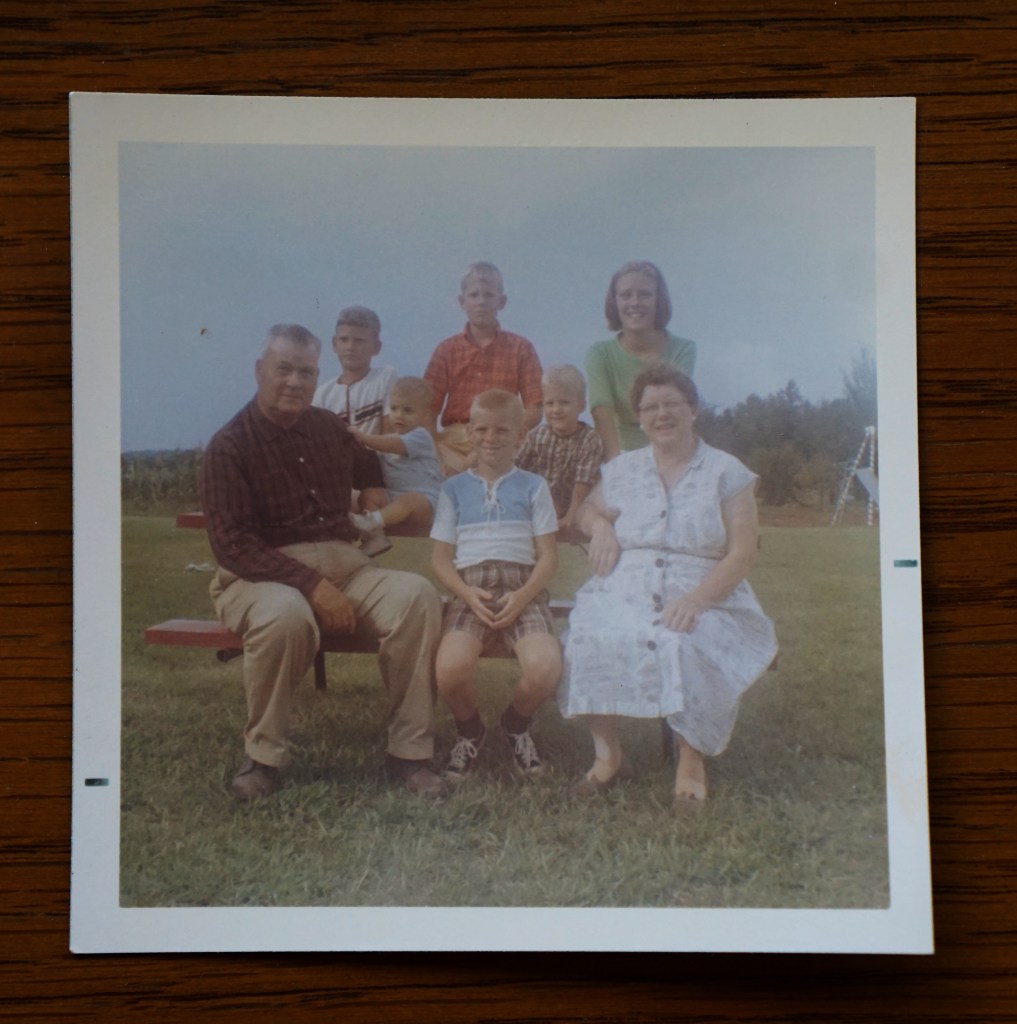
Georgia at age fifty-three on the steps of my parents’ apartment during a rare visit to St. Louis in 1956. About a decade later, she and S.R. enjoyed the company of six of their seven grandchildren in rural NC.
Warmer, brighter, and dryer than my midwestern memories, the arrival of April in the Sonoran Desert means we are a step closer to the oven.
I’ve come to welcome the regularity of the sun and heat. They define who we are: slimmer survivors, comfortable in shorts and sandals minus the cloud cover and weighty coats of our past lives.
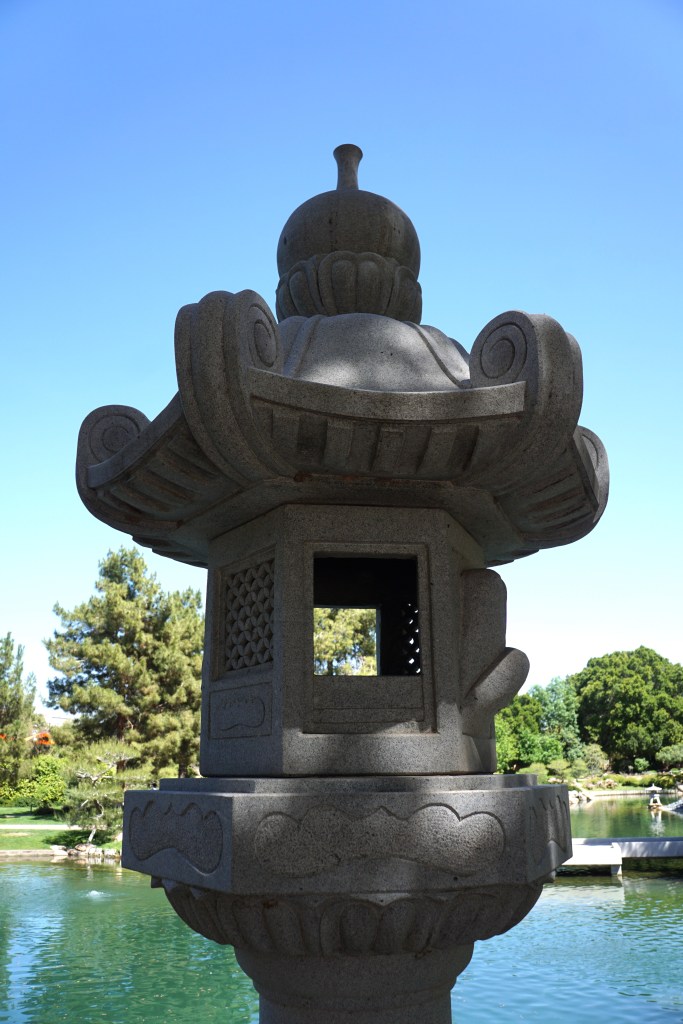
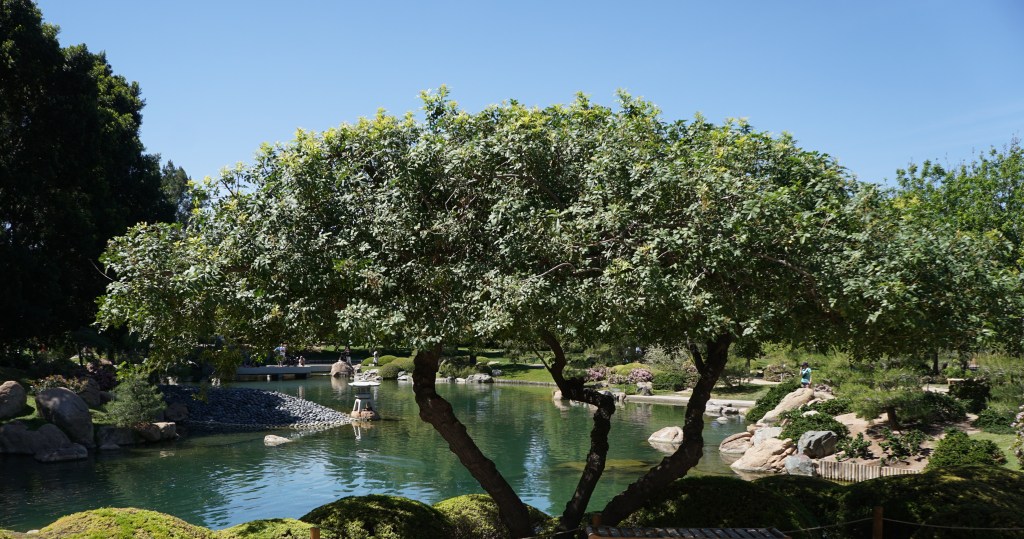
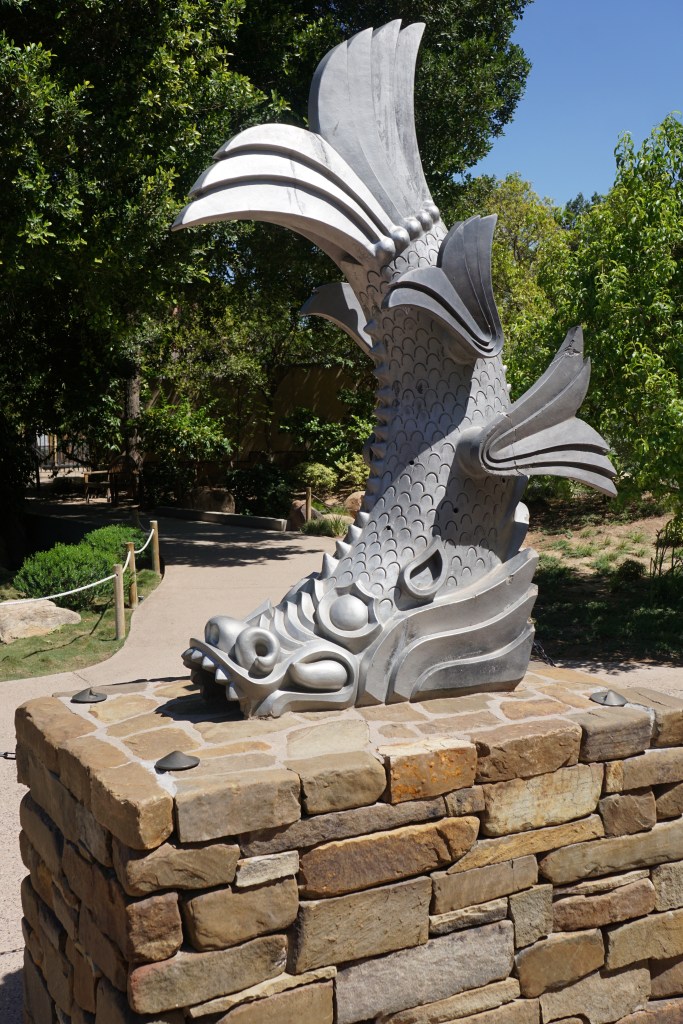
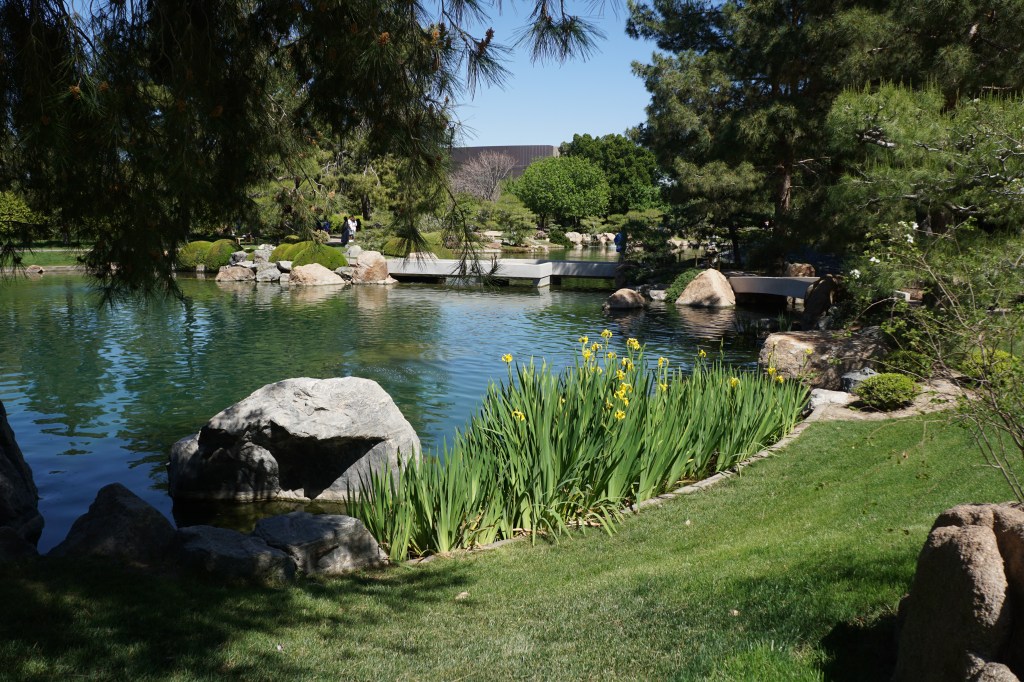
No matter the month, if you’re willing to dig beneath the palms that frame the burgeoning Phoenix skyline, you’ll find the Japanese Friendship Garden (named RoHoEn) coexisting with concrete in an urban setting.
Planted at 1125 N. 3rd Avenue (just west of Central Avenue and south of I-10 on the way to L.A.), this hidden Phoenix gem is an unexpected eastern oasis deposited amidst the flurry of western civilization.
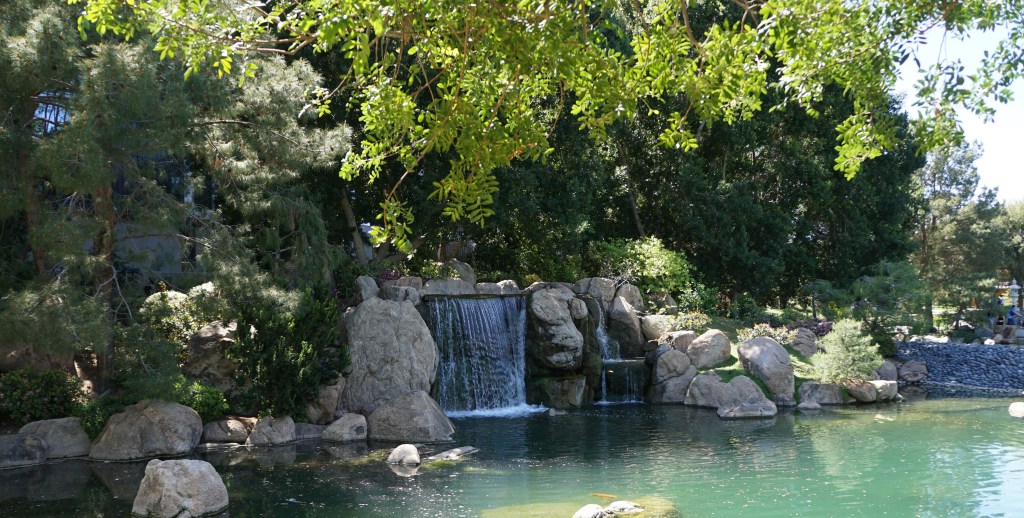
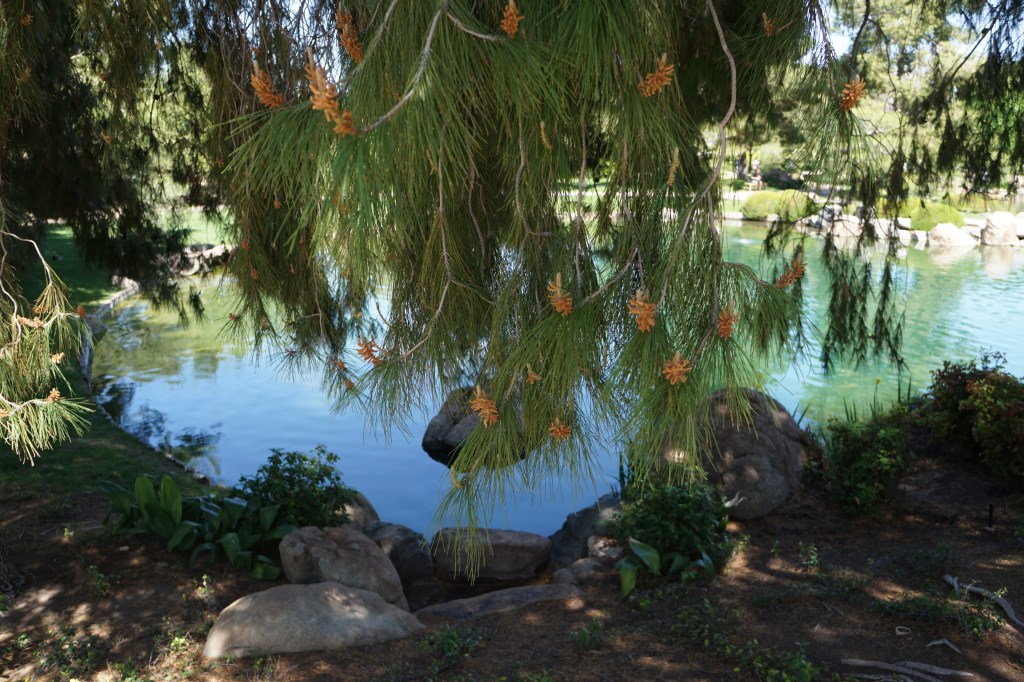
Protected by the shade of a high-rise apartment building, colorful koi dance beneath the surface of a shallow lake, a canopy of pines, sculpted shrubs, gentle waterfalls, and peaceful pagodas.
Of course, many come to the Valley of the Sun to relax by the pool. But if you prefer a different kind of escape, the garden is an ideal place to stroll in the shade, pause on a weekday, feed the fish, and nourish your soul.
Note: Located in the heart of Phoenix, the 3.5-acre Japanese Friendship Garden is a joint project of the City of Phoenix and its Sister City, Himeji, Japan. I captured these photos during an afternoon visit with Tom on Wednesday, March 30, 2022.
Life is a mysterious mosaic of beginnings and endings, hellos and goodbyes, births and deaths, marriages and divorces, successes and failures.
It is human to create and nurture vivid memories within the confines of these wins and losses. Yet, in reality, we spend most of our time existing before and after the highs and lows.
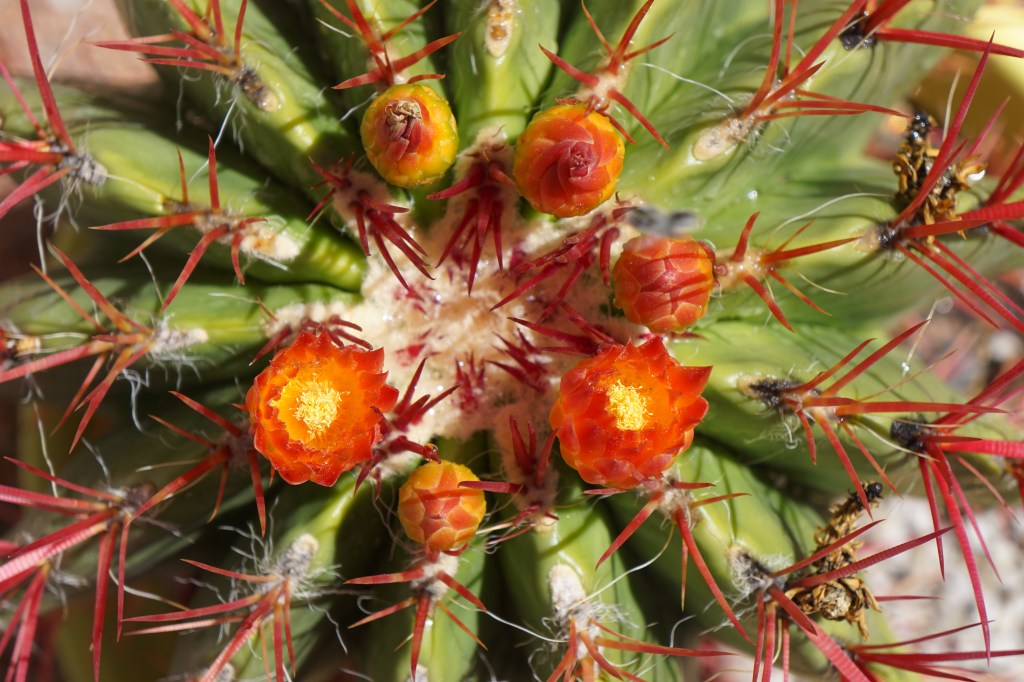
Nature displays a different path to follow. It encourages us to savor the space between budding and deflating events. It reminds us to live in the present, thorns and all.
It’s time to dig out the loose change that’s fallen between your couch cushions and put it to good use! From April 23 to 30, you can download a Kindle copy of my latest book, I Think I’ll Prune the Lemon Tree, for just ninety-nine cents on Amazon.
Set against the rugged landscape of Arizona’s Sonoran Desert, my anthology of thirty-nine essays (some whimsical, some serious) explores the themes of family, community, authenticity, creativity, and uncertainty before and during COVID-19.
Here’s what one reader had to say: “Focusing on stories from his recent relocation as a full-time Arizona resident, Mark mines his past for insights into his new life, reflects deeper into the after-effects of surviving a health crisis, and even includes poems and works of short fiction. A great new collection from a distinctive contemporary voice.”
Late yesterday afternoon–a mid-April throwback Monday squeezed in before the Sonoran heat arrives in full force–I met John and Len, my full-time, sixty-something friends and part-time Polynesian Paradise neighbors, at the north edge of our community. We played horseshoes.
Two sandy, part-sun-part-shade horseshoe pits (spaced about fifty feet apart) have existed in our condo complex since the early 1960s. In 2021, residents and guests seldom use them. It’s more common for folks to walk by and not think twice about the horseshoe pits and their history on the way to their mailboxes.
That didn’t stop John, Len, and me from reclaiming the space and recapturing a practice that our fathers and grandfathers enjoyed more frequently in the twentieth century. The primitive, low-stress gaming experience was just my speed: slow, nostalgic and gentlemanly. It was a light-hearted, jovial hour of tossing, joking, clinking, clanking, and male bonding. (By the way, John won on Monday. He came from behind with a well-tossed ringer. Len and I will survive. We will live to throw horseshoes another day.)
Anyway, the activity rekindled a memory I wrote about and published in 2017 in a story titled They Pitch Horseshoes, Don’t They? from Tales of a Rollercoaster Operator, my book of Missouri recollections from the 1960s and 70s. It’s available on Amazon in paperback and Kindle.
What follows are excerpts. The setting? Babler State Park and the rolling rural countryside thirty miles west of St. Louis in October 1961. While the men were throwing horseshoes that day, I discovered a primitive-and-glassy nirvana: marbles.
***
Clink clank clink. Clink clank clink. It was the sound of metal on metal. The men in our family–Dad, Uncle Ralph and Uncle Harry–were hammering stakes into two sand pits about fifty feet apart. They sure do like to fling horseshoes, don’t they, I thought. Within minutes, they were tossing the U-shaped irons from one end to the other, hoping to catch the right angle and rack up a ringer …
On this particular occasion, while the women in our family unfurled the tablecloth and unpacked the meat for grilling, and the men settled into their game and passed cold bottles of Falstaff between throws, I wandered down a path to investigate the picnic area. That’s when I found a vacant campsite nearby and an abandoned plastic bag of multi-colored glass marbles wedged into a gap between the flat rocks of a stone bench.
In my visual memory, this was a To Kill a Mockingbird moment. You know, like when Jem and Scout found Boo Radley’s toys and trinkets buried in the trunk of a big ole tree. In hindsight, I suppose Boo had nothing to do with my glassy discovery. Another child had simply and accidentally lost his or her marbles. For some period of minutes, hours, days or weeks, these multi-faceted marbles were no one’s. They were lost in an unassigned gaming galaxy. But in the universe of fair play, it was Finders Keepers. This treasure was mine …
When I pulled Dad away from his pitching and showed him what I had found, his smiled doubled instantly. It felt like we had discovered a whole new language mined from an archeological dig … In a flash, Dad and my uncles suspended their horseshoe tossing, reverted to their childhoods, and surrounded me with explanations and names for the different marbles–many of them laced with swirls of colorful strands …
Marbles became my forever home of circular undisrupted creative possibilities. After our 1961 picnic was over and the sun began to set, we snuffed out the campfire, folded up the red gingham tablecloth, and packed away our picnic basket. I stepped up into the back seat of our Plymouth with my new marbles in tow.
Over the coming weeks and months, Dad pitched more horseshoes at the farm of Ed and Ollie Puetz near Gray Summit, Missouri, where we picnicked with family and friends and I watched the men drink another round of brews and play the game they loved.
Meanwhile, I added marbles to my glassy collection: aggies (made of agate) swirling with various ribbon patterns inside, tigers (clear with orange-yellow stripes), opaques (milky green, blue, and gray marbles) and cat’s eyes (they look like what they sound like).
All of my marbles became a creative extension of me. I played my instant-game-in-a-bag any time and any place–mostly at home on our basement floor on ordinary rainy days after kindergarten. All I had to do was obey one rule: “Mark, don’t leave your marbles in the middle of the floor.”
Are you missing your favorite monkey? Are you searching for a bridge to a higher plain? Do you need to be reminded that you are beautiful? You’ll find them all here along the Crosscut Canal between Scottsdale and Tempe.
Now that I have a little more distance from Good Friday, it’s clear how painful it was to witness Gary, my neighbor, die of congestive heart failure right outside my front door. Especially because Gary and I see/saw the same cardiologist. (In case you don’t know, I had my own heart trauma nearly four years ago. My husband Tom was the one watching the calamity unfold that day, rushing to get me to an emergency room in St. Louis on our sixtieth birthday.)
At any rate, if you’re like me, you’ve experienced the wide swings of life. Joy and sorrow. Victory and defeat. Jubilation and devastation. I think the secret to contentment is expecting and accepting both ends of the spectrum, then finding your balance somewhere between the two extremes.
On Palm Sunday, I found myself savoring an author’s dream come true. I was reading passages from my latest book to an attentive audience and signing copies in our community clubhouse. Five days later on Good Friday, Gary collapsed outside his and my condo. A few minutes later, he died in my grasp.
For the next two days–through Easter Sunday–I felt out of sorts and sick to my stomach. I was searching for my equilibrium, battling side effects of shock, and absorbing the protective properties of my second COVID-19 vaccination, as more requests for my book came via texts and front-door visits.
On Monday, I began to find some semblance of my equilibrium. I knocked on my neighbor Bob’s door. He and I had been there with Pat (Gary’s wife) when her world came crashing down. “Milwaukee Bob” (Pat calls him that because that’s where he and his wife Barb live most of the year) is adjusting to what he witnessed too.
Though it is the fig tree Bob and I stood beside, giving Gary and Pat comfort and support in the trauma of that Good Friday moment, he and Barb bought a copy of my book, I Think I’ll Prune the Lemon Tree. They weren’t able to make it to the book signing and reading on Palm Sunday.
On Tuesday morning, I exchanged hugs with Gary’s daughter, Andrea. She had flown in from Chicago with her husband and three children to comfort her mother Pat. Through tears, Andrea thanked me for being there for her mother and father. Her family’s spring Arizona vacation (planned before her father’s demise) was transformed into a mix of grieving, coping, swimming, and horseback riding. Her dad’s remains will be interred in Illinois at a later date.
It is Wednesday night now. I feel stronger again. I realize the tender result of Gary’s sudden death … that, through care and happenstance, I will be bonded to Bob, Pat, Andrea, and her family for life. This morning Tom and I joined a handful of friends for yoga in the park. Between ten and eleven o’clock, we stretched and posed on our mats. I felt the caress of a cool southern breeze under the shade of a tall pine tree. I heard the needles of the pine whisper and the call of the mockingbirds above us. I assumed my tree pose. I felt nature cradle me. I swayed, but found my footing on uneven ground.



 Mark Johnson Stories