Tag: Barnes-Jewish Hospital

Reflections on Fatherhood

In the metaphoric scrapbook of life, fatherhood is a life-long accumulation, an amalgamation of significant and insignificant moments, encounters and touchstones.

The day-to-day physical and financial responsibilities of fatherhood are long gone for me. That equates to a mix of heavy lifting, unconditional love, sincere relief, treasured memories, heartfelt celebrations, and a few episodes of painful regrets.

But that is all in the rearview mirror now. At this age (just a few weeks from my sixty-ninth birthday), my moments of fatherhood with my sons–Nick is forty-two, Kirk is thirty-seven–have morphed into fewer-but-sweeter encounters. A few shared dinners here with Nick. An exchange of “check-in” text messages with Kirk there, punctuated by bi-monthly, thirty-minute phone conversations.

It makes me happy to see how Nick and Kirk have built independent lives with meaningful relationships and sustaining jobs. My constant availability is no longer essential to their lives, but my love for them only continues to grow … and their love and appreciation for me and my life experiences does, too.

***

In June 2019, as Father’s Day approached, I wrote a piece about a conversation I had with Jacob. He was a new father and EKG technician who cared for me in Barnes-Jewish Hospital in 2017 in St. Louis, as I reclined on a gurney and dealt with the pain and uncertainty of a mild heart attack.

I remember how I provided encouragement for Jacob’s new status as a young dad as he attended to me. It took my mind off the trauma of those moments. So, in a sense, we helped each other navigate unchartered waters.

Our paths haven’t crossed since that inauspicious July day. But by now Jacob’s son is nine years old. I wonder how he and his dad are faring.

If I could speak with Jacob again, my advice–listed below in italics and pulled directly from my June 2019 essay–would include the same ten unsolicited bits of advice from seven years ago, but with a few additions.

***

1. Love your son … and tell him you do.

2. Listen to and validate his dreams.

3. Provide him with an honest and safe home.

4. Buy him nutritious food and encourage him to exercise.

5. Cheer him on when he succeeds. Encourage him when he fails.

6. Don’t spend a lot of money buying him new things. Spend it on shared experiences instead.

7. Teach him the importance of learning and saving for a rainy day.

8. Show him what it means to respect animals, nature, and diverse people.

9. Explain to him that it’s a sign of strength for a man to ask questions and show vulnerability.

10. Love your son no matter who he loves. Remind him that you will always be his dad.

***

Of course, the world has changed dramatically in the past seven years. It’s a more fearful place.

I still cling to hope that our country will find its way out of the abyss. For that to happen, the onus will be on dads (and moms) to give more of themselves. So, I have added these five caveats to my list:

11. Teach your son to honor equality and respect the past and present contributions of women and minorities.

12. Always seek the truth and beware of false idols.

13. Own your mistakes and learn from them.

14. Be a good neighbor and kind citizen.

15. Do the right thing. Stand up for your convictions. Your son is watching.
All About Angels

Photo by K ZHAO on Pexels.com

In the soundtrack of our lives–I believe one exists–sometimes a word or phrase from a conversation with a friend or acquaintance stops us in our tracks.

That happened for me recently while wearing my Writer in Residence hat at the Scottsdale Public Library in a one-on-one meeting with another writer. She looked at me with kindness and said with a warm smile:

“I’ll bet you’ve had lots of angels in your life.”

My response? “Yes, I have!”

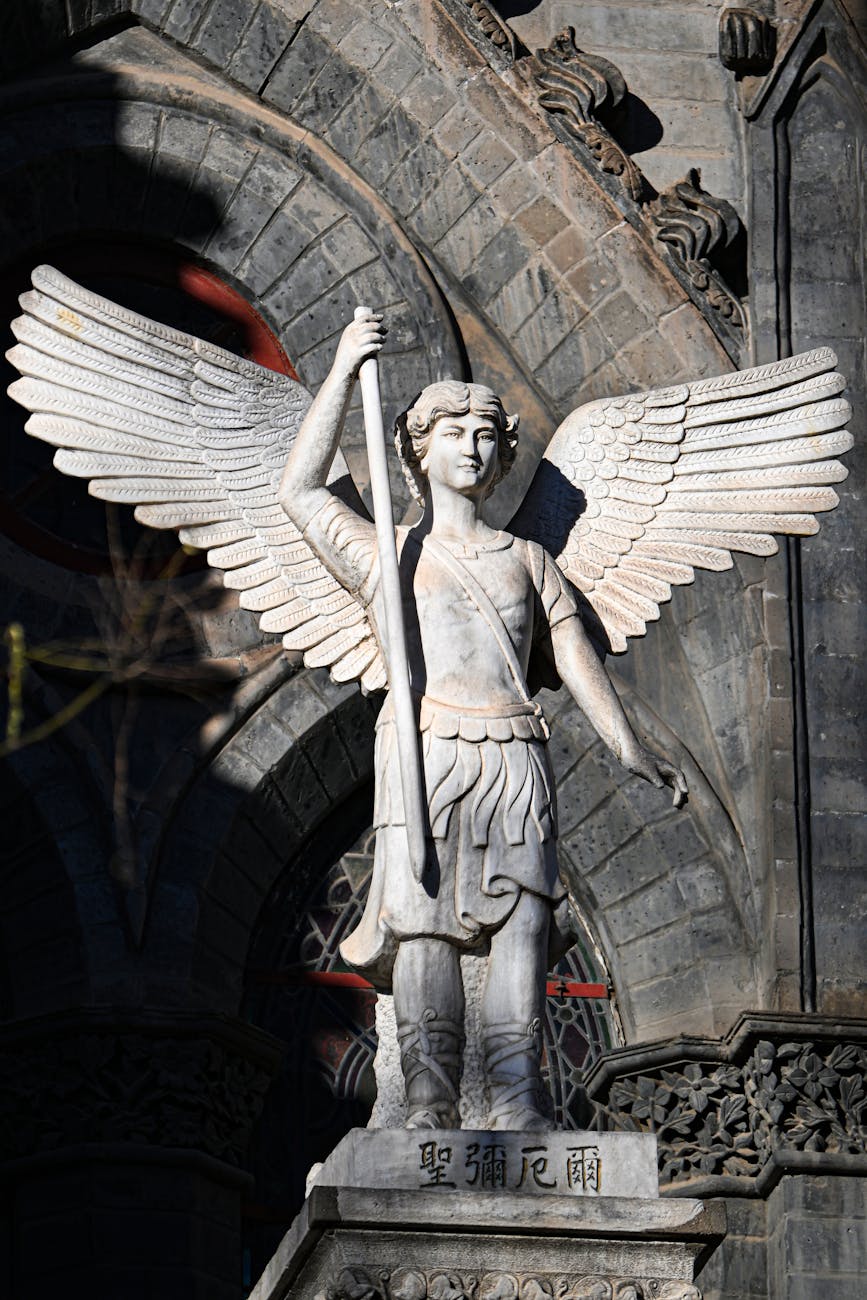
I am not a religious person, but most definitely spiritual. So, I took her observation to mean there are unexplained positive forces at play … weaving in and out of my life with love.

I have definitely had my share of “guardian angels” in my sixty-eight years.

Some have appeared at my side for long stretches. Tom (my husband), Helen (my mother), and Valerie (my therapist years ago) have been visible angels in my life with lasting influence.

Others, like Rachel–a nurse at Barnes Jewish Hospital in St. Louis who floated in and out of my room in the middle of the night–helped keep me alive after I suffered a mild heart attack in 2017. She was mostly assuredly an angel.

Then there are the non-visible angels with wings that take flight in unusual ways. For instance, the serendipitous feelings of warmth and safety I feel when I am gardening, or singing, or swimming, or writing, or walking in nature.

Whenever this happens, I feel like angels are watching over me.

I’m a believer that whatever energy we spread in the universe in our everyday lives–good or bad–it eventually finds its way back to us in waves that envelope us.

As I get older, I find myself pondering these metaphysical or philosophical questions more closely. I’m more open to the idea of forces at play that don’t always add up mathematically or logically.

Certainly, at the end of the day–at the end of my life whenever that may be–I’d rather be held up by the wings of an angel for the love and goodness I’ve brought to the world than destroyed by the deleterious effects of a devil for the havoc I’ve caused.

My Fortunate Life

I lead a fortunate life. I don’t mean that in a material, financial or social sense; like many of you, I am concerned about inflation, the bear market, high gas prices, potential fall-out from the mid-term elections, and global and domestic horrors eroding personal freedoms, savings and investments, and a general sense of security for you and me.

Still, I acknowledge I have more to be thankful for than most people: a modest-but-comfortable home in a warm climate; a loving and supportive spouse; two adult sons who are gainfully employed and contributing members of society; a diverse community of friends; and the time to pursue and develop my literary and musical interests.

Plus, I’m a relatively healthy, sixty-five-year-old male. I make it a priority to exercise regularly, eat smart, and see my doctors as needed. Though it’s been more than five years since I suffered a mild heart attack, I haven’t forgotten the trauma of July 6, 2017, or dismissed the gratitude I feel for that team of doctors and nurses at Barnes-Jewish Hospital in St. Louis, Missouri–people I likely will never see again.

That painful experience no longer defines me. It has paled somewhat. Yet it informs my choices, perspective, and sense of gratitude. It has morphed into a badge of survivorship, which I feel an obligation to share with the universe through my writing and day-in-day-out personal encounters.

Occasionally, I receive a fund-raising or participation request from an Arizona contact with the American Heart Association (AHA). We met in 2018.

A few weeks ago, she asked me to share my story of survival–virtually–with employees of a large retail organization on October 17. To explain that donations to the AHA aid lifesaving research that allows heart and stroke survivors–like me–to enjoy longer and more complete lives.

So that’s what I’ll be doing on Monday. Twice … once in the morning; once in the afternoon. Telling my story of survival in three to five minutes to a large group of employees via video conference.

I figure it’s the least I can do to pay it forward and possibly ease the pain for some other unsuspecting man or woman, who with the help of the AHA might live longer, breathe more easily, and witness a few more breathtaking sunsets in the Valley of the Sun or elsewhere.

On October 5, 2022, I captured this Sonoran sunset in Papago Park on my walk with Tom a mile from our home in Scottsdale, Arizona.

Setup Complete

A delivery man handed me a box at my front door on Thursday. Inside was my new Samsung phone. It includes a lot more memory and features than my previous model.

“Great. No big deal,” you might think. “After all, we live in a world where techie products and capability change every few minutes and many people buy a new device every year or so.”

But I object, your honor. It is a big deal for this guy.

This is not a purchase I make frequently. It’s not so much the cost. It’s the drama and tumultuous change required. And, when I make such a change, I need and expect support to pull me through the uncertainty.

It’s the fear of losing all my contacts and photos that I don’t want to send into the cloud (wherever that is) that amps up my anxiety from “reasonable human being” to “caged animal.”

Let’s peel a few more layers of the emotional onion.

***

On July 9, 2017 (yes, more than five years ago!), Tom and I bought my previous Samsung phone at a Verizon Wireless store in St. Louis, Missouri. We were between homes at the time, on our way west from the Chicago suburbs to Scottsdale, Arizona. I was fresh out of the hospital.

More background. On July 5, 2017, somewhere in Southern Illinois, my previous phone died. Strangely, the next morning–it was our 60th birthday–I suffered a mild heart attack in St. Louis.

My husband and the medical staff at Barnes-Jewish Hospital in St. Louis saved my life. Tom got me to the hospital lickety-split. The cardio team performed an angioplasty. They found an obstruction in the left side of my heart.

The next day, once my blood pressure was stable, the team installed two stents in my heart. Remarkably, I left the hospital two days later with a new lease on life, no cell phone, and a story that would become my third book: An Unobstructed View.

Tom and I bought a functioning phone the following day in the city where I was born in 1957.

***

On Friday, I drove to a nearby Verizon Wireless store in Tempe, Arizona, with my new phone. Two representatives–one in person, another via live chat–had told me Verizon would help me transfer my data and activate my new phone.

But Verizon left me high and dry.

When I walked in the store to describe what I needed, a young representative told me they didn’t/wouldn’t do that. My anxiety and anger soared. After a volley of choice words, I announced “I’m outta here.”

I left the store an emotional wreck.

When I arrived home, Tom tried to console me, but I was inconsolable. He suggested I contact Geek Squad at Best Buy. We have a total tech support plan there. I made an appointment.

On Saturday, I arrived at Best Buy, in the same Tempe Marketplace mall where the Verizon debacle occurred. Over the next hour, the Geek Squad team activated my phone and helped me transfer my data.

All three “blue-shirted” technicians, who assisted me, treated me with respect. Like the medical team at Barnes-Jewish Hospital five years ago, they restored my hope in human care and kindness.

***

Think about it. Like the fragility of our personal health, and the heart that ticks inside us, so much of our world is tied to this one important item we carry in our pockets (instead of our chests).

When that one thing (heart or phone) becomes vulnerable, so are we.

Fortunately, my phone setup is complete now. It feels like I have my life back. Tomorrow (Monday), I see my cardiologist for my annual checkup. My ticker is strong. I’m in much better shape physically than I was five years ago. I expect a good report.