Tag: fear

In September’s Stillness

It was a bright September Tuesday morning. Clear skies, mild temperatures, and low humidity. A perfect day in the Chicago suburbs.

At around 7:30 on September 11, 2001, I pulled up to the curb at Lincoln Junior High to drop off Kirk, my twelve-year-old son. He scampered ahead and waved goodbye.

Forty-four-year-old me drove to the nearby RecPlex for a quick swim at the indoor pool. On the way to the locker room to change, I saw a small cluster of folks gathered silently around a TV.

A plane had just struck the north tower of the World Trade Center in New York. Dire images of smoke and debris filled the sky.

Minutes later, a second plane pierced the south tower. It was just the beginning of the madness.

Terror spread quickly through the skies to crash scenes at two other sites: the Pentagon in Washington, D.C., and a field in Shanksville, Pennsylvania.

Captivated and numb in disbelief near the vending machines in the lobby hundreds of miles away, we stood dumbfounded and helpless–gaping in September’s stillness–as ripples of the horrific news and images unfolded.

Ultimately, 2,977 victims died that day, casualties of the September 11 attacks at the hands of eighteen foreign hijackers and many more strategists who infiltrated American skies.

Thousands more were injured and sustained life-long trauma, including citizens and rescue workers exposed to toxins at Ground Zero in Lower Manhattan in New York.

***

It’s been twenty-four years. We are still trying to make sense of how much we lost, how much our lives changed, that day.

I don’t mean the inconveniences of air travel. Yes, that’s a pain.

Much worse, gun violence, school shootings, assassinations, and homegrown terrorism are the norm in the United States. Through it all, we have become as divided as ever.

Just yesterday, the latest two unrelated horrors–one a school shooting near Denver, the other the assassination of a vocal, right-wing protagonist–dominated the news cycle.

The solution is obvious. We need to remember our traumas and learn from them. Institute tighter gun laws in this country, not more thoughts and prayers.

I do believe our leaders have failed us. We have voted the wrong ones into positions of authority. Instead of quieting the storm and pulling us together, they are threatening those who don’t agree with them.

If we don’t make changes soon, our legacy will be continued bloodshed, not the freedom, opportunities, and equality we have espoused as a nation for generations.

***

My twelve-year-old son is now thirty-six and living in Chicago. He is a therapist. Kirk specializes in helping individuals who have experienced some sort of trauma.

I couldn’t be prouder of Kirk and the work he is doing. At a young age, I witnessed his kindness, his empathy toward classmates, neighbors, and family members.

Now he is honing his skills, while providing relief to those who need it most in American society.

I try to do the same through my writing. Telling the stories as I see them but leaving you with a glimmer of insight, relief and hope.

If there was one positive thing that sprang from the 9/11 attacks, it was the way our nation coalesced–at least in the short term–around the victims, their families, their stories in 2001.

As a nation, we were forced to take a breath as we dug through the rubble. We forged ahead to provide a salve to treat the psychological trauma we all felt.

Somehow, in 2025, we have lost our wits. We have forgotten how to love the less fortunate, protect our children, and teach them to be critical thinkers rather than conspiracy theorists.

We had better wake up fast, pass gun laws, rediscover our compassion, and find our better selves soon.

I Don’t Pretend

It’s late Friday afternoon in the desert. The mockingbird outside our backdoor is singing his or her heart out. It’s a tender, hopeful, pre-weekend serenade … a chirpy, lyrical refrain coming from the top of a telephone pole that connects our heavier world of technology and dissonant news and noise.

None of us knows what tomorrow will bring … ever. But especially now.

Case in point: early this afternoon as Tom and I devoured a few remaining slices of sausage and veggie pizza from the night before, a military jet zoomed overhead.

The sudden surge of decibels jarred our nerves. Though we live near a military base at Papago Park, we rarely hear that intense noise. Only an occasional squadron of helicopters arriving or departing.

We are a nation of divided people living on the edge of time, sound, and sensibility. Each day when we climb out of bed, we are aware of the dismantling of institutions we have come to know and respect.

Each day we are threatened by another batch of edicts tossed out the sidedoor by an authoritarian regime bringing shame and constant anxiety to those of us raised to believe in a country that once valued high ideals over low morals.

I don’t pretend to have the answers. But I know silence will kill us.

I won’t pretend to be someone I’m not. Or as I have said frequently to friends lately, “I’m not putting this genie back in a bottle.”

What do I mean? I spent too many years as a teenager and young adult (of the 1970s, 80s and early 90s) denying my true gay identity, subverting my whole self to try to fit into a predominantly straight, suburban culture.

That caused me (and others in my life at the time) tremendous personal pain. And, on a larger scale, denying the truth kept our society from advancing to a higher plain of equality, freedom, and human possibilities.

Yet now our federal (and some of our state and local government officials, too) are attempting to wipe away the contributions and accomplishments of our “diverse” people from websites and history books.

For instance, native code talkers who–by virtue of their distinct language–were instrumental in helping to bring an end to World War II.

Did you know that recently pages on the Arlington National Cemetery website–highlighting the graves of Black and female service members–have been removed?

These and other efforts are designed to erase the accomplishments of women and people of color.

How far will this attempt at whitewashing our history go? I don’t pretend to know. But I do know that the best attributes of our diverse culture exist in the past and present and people need to know about these contributions.

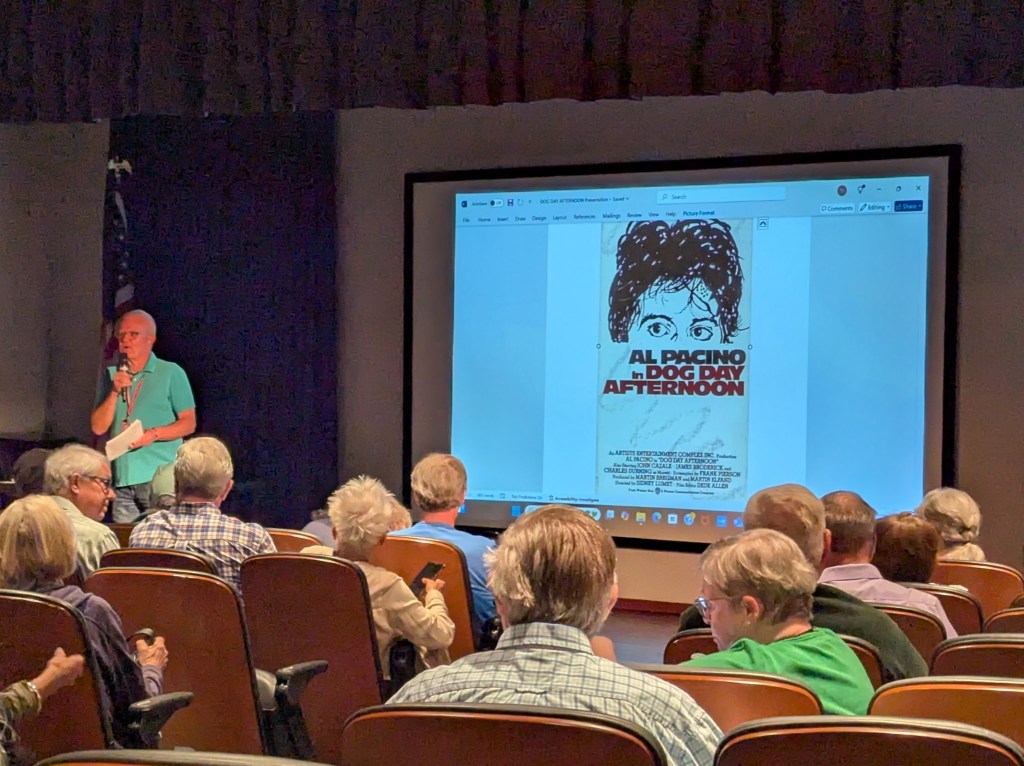
My husband Tom, an aficionado of films from the 1960s and 70s, has been leading a film series this winter and spring at the Scottsdale Public Library, titled “Movies That Matter: the 1970s.”

Each Monday afternoon, between 75 and 100 people attend this free series. The audience is mostly white people who love great films.

Last week, Tom screened “Dog Day Afternoon”. Directed by Sidney Lumet and starring Al Pacino, the film–based on a true story that occurred in Brooklyn, New York, in the 1970s–chronicles a botched bank robbery in the heat of the summer.

It’s an intense and sometimes funny film early on. Pacino plays Sonny. He’s desperate to get the money his partner needs for a sex change operation. But we don’t know that until more than half the movie has spooled through what once was a movie projector.

It’s a must-see flick. I won’t spoil the outcome if you haven’t seen it. But the most meaningful and important aspect of this story is that 93 people attended. They listened to Tom’s stage-setting intro for historical context. They watched the film, and then they talked about it. Together.

They talked about what it meant. They examined the techniques employed in the film to tell the story effectively. They existed in that space for three hours as a community of people in a shared experience.

I don’t pretend to know all of the political affiliations represented in that room. But I’m certain they left with a greater appreciation for film and how it can shed light on the differences and pressures–like them or not–that have existed in our American society for decades.

Tom delivers his opening remarks at a screening of Dog Day Afternoon at the Scottsdale Public Library on March 17, 2025. Photo by our friend and neighbor Diego.

Destination Unknown

I was about to embark on a journey. But not remotely ready. Nonetheless, I was expected to begin Day One of a new job, in uniform as a United Airlines flight attendant.

A crowd of other newbies gathered around me. We lined up to have our security photos taken by a young, rather handsome cameraman with a large head. He teetered on a tiny chair with his knees protruding beyond his elbows.

When it came to be my turn, the blond figure told me to stand on an X marked on the floor. Then, he stood to reveal his true height.

His elongated body stretched for nearly eight feet before he snapped my photograph and disappeared behind a funhouse mirror.

A primitive machine spit out my image, but I don’t remember receiving my security credentials.

About this time, my husband appeared on the other side of a window that contained a metal tray below. He told me he wanted to slide cash to me under the glass. He thought I might need it on my journey. He said he would meet me on the other side. I felt disoriented and dismayed.

Moments later, I found myself standing in front of a harried female administrative assistant. She sat behind an old desk with stacks of papers and files surrounding her. She worked for United. She told me I needed to board my first flight in about thirty minutes, but that my hair was unkempt.

As she handed me a boarding pass, she spieled off a list of complicated directions that would lead me to a trusted stylist in the terminal. She insisted there was time to accomplish this necessary task, though I would need to run to catch my flight.

I felt anxious. Unprepared for my journey. Unsure of the safety protocols. Disturbed that the length of my hair was causing me trouble. Lost in a once-familiar Chicago terminal that was now foreign to me.

That’s when I woke up.

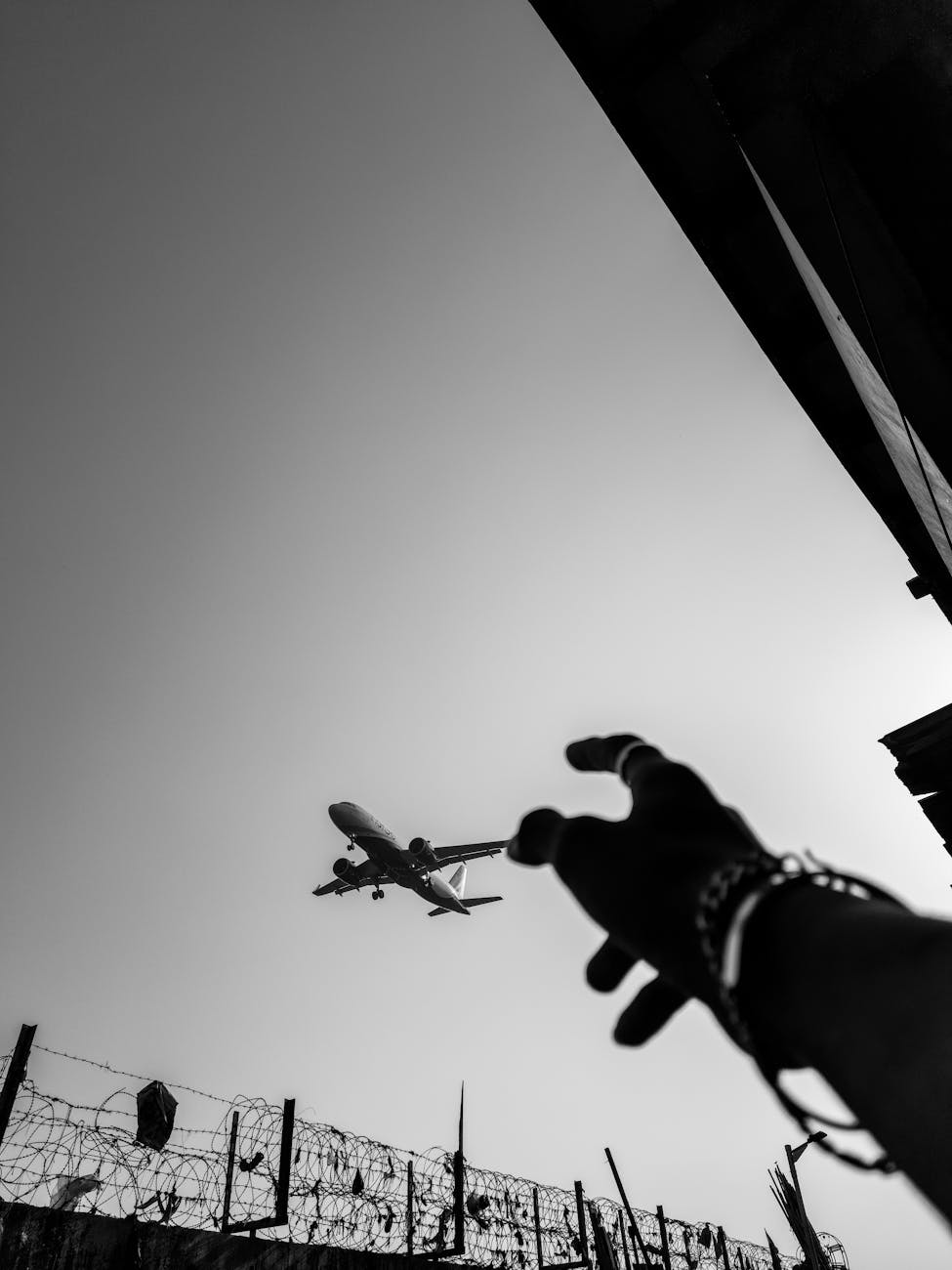
Photo by Keith Lobo on Pexels.com

Keep On Swimming

This hollow ache persists

with every desperate breath,

every tear-stained cheek,

every filthy promise,

every shattered dream,

every shady severance.

As sorry, shallow sands

erode under our bare feet

and wash away at sea

with this tidal wave

of falsities and regrets,

we must link arms,

preserve those struggling

to tread treacherous waters,

and resolve together

to fight these shark attacks,

to keep on swimming.

Photo by Emiliano Arano on Pexels.com

In the Old Days

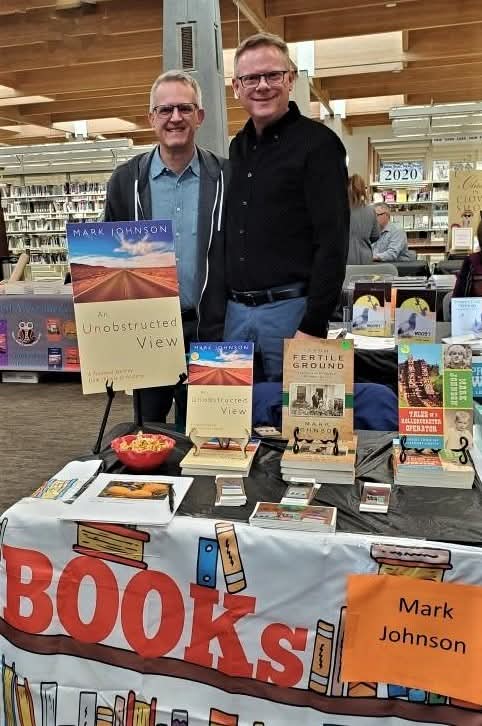
In the old days (the pre-Covid days)–just five years ago this week–I hawked my books with my husband by my side at a local author book fair at the Scottsdale Public Library.

We didn’t know about the dark days ahead. Holed up in our cozy condo. Wondering if we and our closest family and friends would survive. Wondering if the race to create a viable vaccine might save us.

Fortunately, science did produce a vaccine that saved lives (for those of us who had the gumption to protect ourselves and others).

We did survive and Tom and I have gone on to create new chapters at the library … him leading several successful film series; me guiding those intent upon writing their own memoirs.

Strangely, those Covid years feel quaint now as our nation disintegrates daily. Tom and I cling to one other, as our nation turns a blind eye toward anyone who is different.

Yes, we have many friends and family who love us. But, to put it bluntly, I don’t feel safe. This experience of living in 2025 in the United States (we aren’t really united) has cued old tapes in my psyche that remind me that–once again–I am living in a straight, white world of shallow masculinity.

I will keep trudging along. Loving my husband. Guiding my adult sons. Speaking my mind. Telling my stories. Holding my closest friends close. Giving to organizations that might make a difference. Advocating for those less fortunate. Donating my time, talents, and voice to the Scottsdale Public Library and the Phoenix Gay Men’s Chorus.

Most of all–like many of you–I just need to keep breathing today. And, for tomorrow and the next day, I need to save any reserves of energy and sanity I have to fight the good fight.

Down, But Still Out

When I saw you

from across the room

high-five your conspirators,

the simmer of my sadness

escalated into a boiling frenzy.

What audacity … to celebrate

at the funeral of my beloved,

to dance on graves and marble stones

that ripple and repeat on rolling hills.

While I grieve for her and them,

I grieve more for all of us

and what will come next.

Yes, I am down … gutted really.

But I am still out and

I am determined to rise up.

I still have my past and present,

even if I don’t know my future.

I still have my passion.

I still have my chosen family.

I still have my truth.

I still have my identity.

I still have my voice.

Reality Check

This morning it was seventy-nine degrees at nine o’clock. Perfect for a swim. Forty lengths of the pool kept me whole. David trudged along beside me for most of it.

My neighbor–about ten years my senior–strides through the fluid to stay strong. He has difficulty walking but can do it more easily in the water.

The buoyancy provides the resistance and support he needs to keep going. Whenever I see him there, we smile, and exchange “good mornings” and I admire his tenacity.

Age and vulnerability have been swirling through my mind lately. Part of it is simply the frightening world we live in. The other component is the knowledge that I will turn sixty-five in July.

Tom and I have already enrolled in Medicare. Our cards came in the mail last week. We will meet with a broker in the next few weeks. She’ll help us select a Medicare supplement plan.

I feel a weird combination of relief–for having made it this far–and anxiety knowing what tomorrow will bring. I imagine some of you who read this will understand that both feelings can coexist on a daily basis.

The crapshoot of advancing age affords us a degree of wisdom to spread around if we choose to … and the accelerating sensation that we are riding on a runaway wagon traveling downhill. We had better make the most of the wild highs and bumpy lows on the journey.

I’ve always considered myself a relatively patient and understanding person. An active listener too. Sometimes I lean too far out over the tips of my skis (no, I’m not a skier, but humor me with this metaphor) and push too far outside my comfort zone. Soon after, I realize I’ve extended beyond my emotional limits. That’s when I become brittle and abrupt.

I am more this way now than I was as a younger man. I don’t know why, but as I write this sentence, I remember seeing this quality more prominently in my mother as she aged.

I had a boss thirty years ago who liked me more whenever I revealed this cut-to-the-chase attribute. She came to me whenever she needed a “reality check.”

Melba enjoyed knowing that I was willing to bend to make things work. But she could count on me to tell her when all of us on her team were about to break or that the latest corporate flavor-of-the-month boondoggle sucked.

However, others who experience this trait are surprised by my forthrightness. Think of it as kindness turned callousness if you push me too far, especially if it involves someone I love.

Something sudden like that happened on Saturday. Tom and I were at the gym, doing our regular hour-long routines of ellipticals, weights, and treadmills. An acquaintance there, someone we see frequently, approached my husband. Tom was in the middle of his workout.

This individual (I’ll call him Gabe) has an odd-and-unsettling habit of telling Tom that he doesn’t like him. It started out as sort of a running joke between them. But over time the joke Gabe recycles has worn thin. Tom wasn’t in the mood for it Saturday. He told Gabe so.

A short while later, Gabe approached me. He knows Tom and I are a couple. Sheepishly, he leaned in to admit he thought he’d pissed off Tom. As my discomfort intensified, I continued to plod along on the elliptical. I tried to switch the subject with Gabe. I asked how he was.

I need to digress. Probably every time I’ve talked with Gabe (in the four years I’ve known him) he has bent my ear and told me his life is a shambles. He’s dealing with lots of significant issues I won’t go into here.

I feel compassion for him, so I’ve listened figuring things would one day get better. But they haven’t. In all of that time, I can’t remember him asking me about my life.

Anyway, Gabe left, but circled back later to tell me–again–how miserable his life is. In a flash, my patience vanished. I felt used. Disrespected. I took a breath. I knew I was way out over my skis. I needed to find a way to rescue myself. I was not the therapist he needs.

It was time for a verbal reality check between Gabe and me. Especially after what I had seen transpire between Gabe and Tom out of the corner of my eye fifteen minutes before.

The words that flew out of my mouth were something like “You’re not the only one with problems. Look around. Every person in this gym (I pointed around me) is dealing with shit.”

Gabe was dumbfounded. He told me to stay away from him. That won’t be a problem.

***

It’s been difficult for me to let go of this experience. I know that I was angry with Gabe for his behavior with Tom. On some level, I was defending my husband. But I also feel guilty for being so brusque with him. Clearly, he needs professional help.

At any rate, I need to own my part in it. I was tired of being a doormat for his bipolar banter. I felt I had to save myself.

If you’ve read any of my books, you know why. My father was a loose cannon. More aptly, he had intense mood swings and unresolved traumas from his WWII experience.

Around 1970, Dad was diagnosed as bipolar. This came after years of trial-and-error treatments, shock therapy, and prescription medications. Our family lived with his emotional illness for decades without answers or relief. At times, it was devastating. It was our dark reality.

As a child, I felt trapped in the same house with Dad whenever his outbursts would appear. He was intensely unhappy, and it spread to my mother, sister and me.

Frequently, Dad resorted to verbal abuse. Less often, physical violence. Throwing shoes at me. Punching his fist through a bedroom door. I was scared, but–at the same time–I loved my father.

Sometimes, even as an adult, these old issues reappear. Writing about it helps (and remembering the counsel of my own therapist) but maybe I will never entirely get over the feelings of anxiety from my earliest years. Maybe I will always live in fear of crash landing in a snow drift with my skis tangled and limbs broken.

Bottom line: it is my worst nightmare to be near someone volatile. Someone who has no boundaries. As uncomfortable as I feel about my exchange with Gabe, I had reached my limits with him.

In a world of sadness and pain, I couldn’t remain silent any longer. I had to speak my truth and restore my power. I think that’s what survivors do.

***

Here’s my reality check.

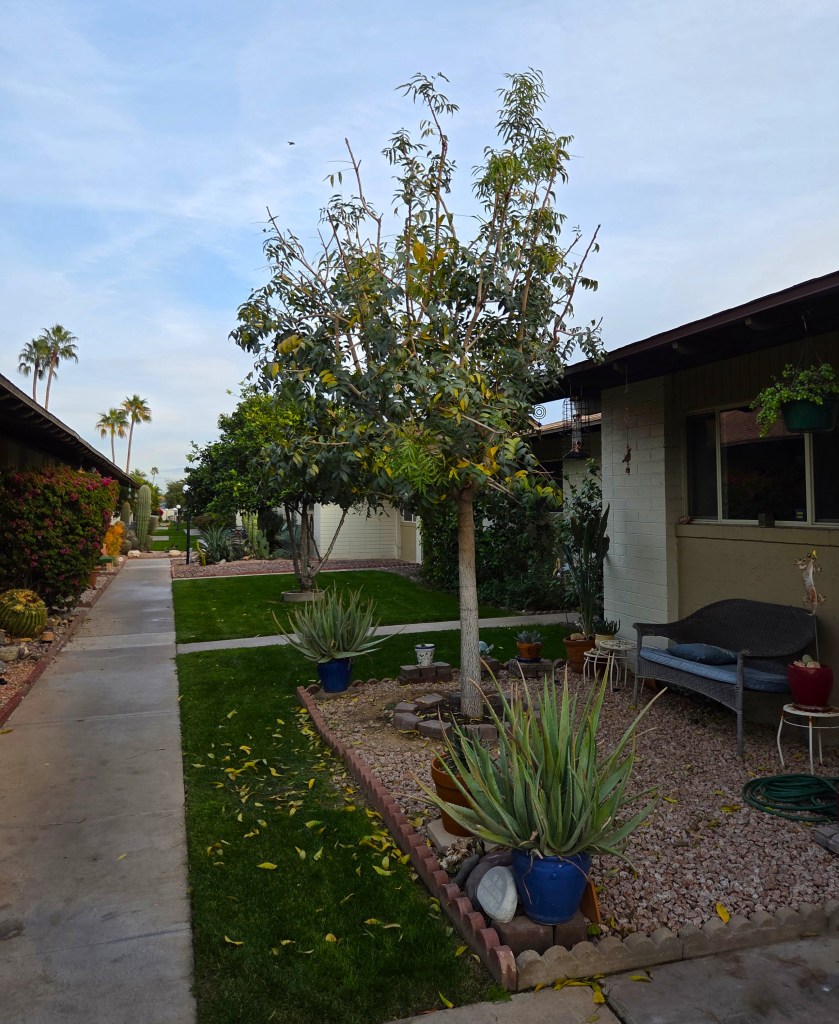
It’s 3 p.m. on April 19, 2022. The heat is on in Scottsdale, Arizona; it’s now ninety-seven degrees.

I’ll never snow ski; I’m too afraid of speed and broken bones.

Dad’s been gone nearly thirty years.

Gabe’s problems are his to untangle or not.

I have my own life to maintain and manage.

I am living in the Sonoran Desert with my kind husband.

We are the new recipients of Medicare cards.

Together we’ll see what the future brings.
Fallout

We sat–quietly and obediently–in rows facing the front of the room. Most of the girls wore frilly dresses, bangs, and patent-leather shoes; the boys sported bold-striped shirts, crew cuts, and bright-white Keds.

Our mornings and early afternoons were occupied with simple math, spelling, reading, recess, and cartons of cold milk on lunch trays. The American flag draped over the alphabet border above the blackboard.

Images of George, Abraham, and John–Washington, Lincoln, and Kennedy–stood guard. I suspect they were there to ease our minds and protect our American innocence.

If only it were that simple.

***

I don’t remember feeling fear, when our teacher told us it was time for another drill. We knew the routine and followed instructions.

A voice on the public address system told us when to practice hiding under our desks, when to duck and cover, when to escape to fallout shelters in hallways if a bomb were dropped.

It lasted but a few minutes. We covered our heads and faces until the all-clear signal came from our teacher. We absorbed the fear–the height of the Cold War–without knowing what it was.

This was what we knew in the early 1960s in middle America. We were fortunate these were merely practice drills, false alarms.

I imagine the scenes weren’t much different in schools on the outskirts of Chicago, Cincinnati or Cleveland. At Mesnier School in Affton–ten miles from downtown St. Louis–we aspired to a gleaming symbol. We lived in the shadow of an emerging national monument.

By its completion in 1965, the Gateway Arch would soar, though across the nation the fog of pollution and social issues intensified.

As history would have it, all of the names of St. Louis school children would be stored in a time capsule in the base of the Arch. Mine is among them.

Back in the classroom, between random drills and parent-teacher conferences, we learned to add, subtract, multiply, and divide. We tied our shoes and kept on skipping in a world where rules were prescribed narrowly for girls and boys.

This was the credo for boys: Get good grades in school. Be prepared. Keep your eye on the ball. Run faster. Jump higher. Find a decent job. Don’t be a sissy. Meet and marry a woman. Buy a house. Have kids. Keep your nose to the grindstone. Pass the baton to the next generation.

But what about those of us who are different? Where do we fit into the story? We had to figure that out for ourselves.

***

The sixties weren’t pretty. Assassinations reigned. The Vietnam War raged. Poverty and racism amplified. People felt trapped, ready to shed the remnants of restrictive gender roles and sexuality, sealed in the repressive 1950s.

But the world is exponentially more complicated now. The latest madman is hellbent on ravaging innocent people in Ukraine. Though love appears in abundance in many circles across all continents, ignorance and hate manifest themselves next door and around the world.

Once again, sixty years later, we find ourselves living in fear of the fallout. We must find ways to duck and cover, to speak the truth while standing as tall and mighty as the Gateway Arch.

We owe it to our children and grandchildren to put politics aside, to protect our planet, to uphold individual rights and civil liberties, to teach them about black and white, but also the color and grayness of the world and all its permutations. Pandemic or not, they are watching.

Even if they don’t know it, the youngest members of our society are counting on us to speak the truth, denounce racism and hate, celebrate gay and straight lives, and to teach them that every generation has a responsibility to remember and honor the seminal moments in history, and–hopefully–carry the best of humanity forward.

Sad Saturday

I don’t normally dive headlong into political and social issues, but I feel a sense of doom and anger percolating inside me tonight after the acquittal of our previous president. I won’t mention his name here. I wish I had the power to encourage every media outlet to do the same, because what he wants more than anything is attention.

Today forty-three pathetic, posturing Republican senators disavowed a mountain of evidence presented by the impeachment managers, who connected the dots. They directly linked his unconscionable actions to an insurrection that caused death and destruction at the U.S. Capitol on January 6. But our unnamed ex-president has slithered away unpunished once again.

I know the past twelve months have been difficult all around the world. Families have lost loved ones: mothers, fathers, sisters, brothers, spouses, grandparents, aunts, uncles, and children. But what we have endured in the United States has been monumentally horrible.

Nearly 500,000 Americans have died from complications of COVID-19. As the numbers continue to mount, we’ve witnessed countless stories of unfortunate souls–many of them minorities–who have lost their lives and their livelihoods. We’ve watched as the evil of racism and hatefulness has surfaced and been fueled by rhetoric from the White House. It was once a hallowed place.

We’ve dodged crazy conversations with neighbors and ex-friends, who believe any number of preposterous conspiracy theories, especially the big lie of a rigged election, when all the facts and evidence tell us otherwise. We’ve shuttered our lives to survive, shrunken our existences to cope, masked our faces to protect ourselves and our neighbors, covered our eyes in horror at news reports, and swallowed hard to salvage any shred of our remaining dignity and sanity.

Now we are required to suck it up once again, and watch the shameful evidence of senior governmental officials who are more concerned with securing their political futures than what they were elected to do on behalf of the American people … to preserve, protect, and defend the Constitution of the United States.

I don’t know if there is a silver lining in any of this. But, at least eighty-one million of us had the gumption to choose a forty-sixth president, who has a heart and good intentions. Joe Biden has already proven he will roll up his sleeves and fight on behalf of all of the American people, even those who didn’t vote for him. He and Kamala Harris are doing what they can to right this sinking ship and ramp up the distribution of vaccines across the country.

But here’s the biggest question of all. Even if we survive this global pandemic physically, what will be left of our democracy if we allow our past president to walk away without ever paying a price for the deep pain and intentional harm he has brought to our nation?

Echo

Like many of you, I feel my life has shrunk over the past six months. Collateral damage of this pandemic. This isn’t the first time I’ve written about this, but now it is resonating with a new spin.

There was a period yesterday afternoon when the sadness of all the personal losses and societal disruption (physical, social and psychological … exacerbated by the leadership vacuum in this country) brought me to tears.

Today I’m feeling better. Just typing these words helps. Writing and sharing my thoughts always seems to alleviate the pain. Yet, strangely, I have to constantly remind myself of this need to bring voice to my observations and worries.

I’ve been concerned about losing my voice … literally and figuratively. I’m not singing right now. I’m hoping that will change in the fall again with the Phoenix Gay Men’s Chorus. But it’s too soon to say. The wait may be longer. Much longer.

I also see what our current administration has attempted to do over the past three-plus years to muffle our voices, discredit the media and diminish our first amendment rights.

This isn’t the America I grew up in. But this is where we are now. Ugly. Divided. Fighting for our lives and our democratic existence. I can only hope there are enough of us outraged citizens, who will vote for a change in the White House in November.

Even in all the turmoil, Tom and I are managing to get by here in our Arizona community. We walk and swim before the heat rolls in. We wear our masks. We go out sparingly. To the store. To Walgreens for our prescriptions. I went to the Scottsdale library yesterday for a change of scenery.

I thought my mini field trip would lift my spirits, but when I saw all three of my books on the Local Author shelf it left me feeling sad and disconnected, because I remembered standing in front of my books at the Local Author Book Sale in February.

When life was different. When people could converse and share ideas in person. Smile. Shake hands. Hug even. I suspect it will be months (years?) before that will happen again.

In our shrunken sphere of influence, there is one other place Tom and I frequent. Echo Coffee, an independent coffee shop in south Scottsdale.

It makes us happy to go to Echo for carry out. We love their coffee, ice tea and delicious chocolate chip scones and feel good about supporting this local business.

We feel a personal connection to the place, because our friend Rob is the owner. He bought Echo in December 2019, just a few months before the pandemic descended on all of us.

Tom and I have watched as Rob has gallantly and adeptly adjusted on the fly to keep his business afloat and open, while refashioning the feel of the place to reflect his personality and values.

Rob donates one percent of all sales to an Echo Grant program that awards “ambitious and incredible creators the funding they need” … helping the artists and musicians in our community sustain themselves and thrive.

The sound of Echo is a quiet, comfortable, unobtrusive vibe … a coffee shop inspiring art, compassion and humanity … where local students, artists, musicians, readers, writers and caring citizens go for a cup of Joe, to reconnect with themselves, or chat with the friendly staff … even if it needs to be behind masks and at greater distances than before.

This morning Tom and I drove to Echo. We bought a few drinks for take-out. From behind our respective masks, we exchanged pleasantries with Lydia and Kallie. They were working the counter.

Previously, Rob told me he liked my writing. So, I told him I wanted to donate a few of my books to Echo. I handed Lydia a bag containing three of them, which she immediately added to the Echo bookshelf.

Though the tables at Echo are fewer now and spread out at more comfortable distances, customers can still pull a book from Rob’s shelf and read a chapter or two if they choose as they sip their coffee on a weary Wednesday or sunny Saturday.

For Tom and me, visiting Echo (as well as checking on Rob and his team) gives us an added purpose to our shrinking lives. Plus there is the satisfaction of knowing we are supporting a business we believe in, helping a friend in need, adding to the local artistic flavor of our community, and leaving an impression that will echo in a place we love.