Tag: Grief

Nineteen

September 11, 2001, began as a sparkling, late-summer day in Mount Prospect, Illinois. It was the Chamber-of-Commerce kind I wanted to bottle and save to replace a coming cold-and-dreary, twenty-four hours in February, when Chicago snowdrifts and endless grey skies surely would pile up on our long driveway.

Carefree Kirk and I left our home on North Forest Avenue shortly after 7 a.m. Ten minutes later, my twelve-year-old son skipped out the passenger side of our green Saturn sedan, slammed the door, turned his head, and waved goodbye as he scampered toward the entrance of Lincoln Junior High School.

Neither of us knew the magnitude of the destruction, numbness, mayhem and tragedy that was coming within the hour that day. Horrific images from New York City, Washington, D.C., and Shanksville, Pennsylvania–cities forever fused by the news of the planes that crashed there and thousands of innocent lives lost.

It’s been nineteen years since that defining series of moments: shattered glass, toppling towers, and gut-wrenching grief–even for those of us fortunate not to have lost a loved one in the madness.

It feels longer than that to me, because during those nearly two decades we’ve endured a heaping helping of natural disasters (remember Hurricane Katrina?) and social unrest through the viewfinder of an unrelenting news cycle.

A generation of children born in 2001 have since graduated from high school and gone off to college, begun trade school or entered the work force. Certainly, they can Google what happened on September 11, 2001, but they don’t have the emotions of the moment to draw from or the experience of witnessing the deep sadness and disarray as the images cascaded across our TVs on a loop.

Kirk is thirty-one years old now. A school counselor. Living in Chicago. Guiding children (in person from behind Plexiglass partitions) through the pitfalls and dramas of their evolving lives. This is their tragedy of now: a global pandemic, a fractured republic, a nation on fire. This is their stream of difficult defining moments.

No matter what transpires on September 11, 2020, it will shape the choices they make, the lives they lead, the stories of survival they tell, the votes they cast one day–at eighteen, nineteen and beyond–as the next generation trailing in queue opens its eyes to a new day.

Riding High in Gatlinburg

GatlinburgTN_August1970 (2)

In August of 1970, I felt I had lost my father. The trauma of his World War II emotional scars, heart disease and bi-polar diagnosis had consumed him. My thirteen-year-old self-consciousness and his fifty-six-year-old discontent didn’t know what to make of each other.

It seemed like the only thing Walter and I shared was our love for the St. Louis Cardinals. Muggy but mighty moments together in the bleachers of Busch Memorial Stadium. Watching Bob Gibson dazzle and dominate National League hitters in the sixties, while Lou Brock stole bases and our hearts.

But beyond baseball, the schism between my father and me was more than a “generation gap” (a phrase you never hear any more). It felt as if a grand canyon–a dark and sinister abyss nothing like the Arizona wonder four hours north of me by car in my sixties–existed between us.

As Dad pursued my love, validation and respect, I withdrew further into the fear and anxiety of my crowded teenage closet. My sister and mother felt the weight of Dad’s unhappiness and family drama too.

Yet, fifty years ago with Walter behind the wheel of our boxy Chevy Biscayne, the Johnson family from the St. Louis suburbs (Walter, Helen, Diane and Mark) threw caution to the wind and set sail on a summer vacation.

Our destination? Huntersville, North Carolina–seventeen miles north of Charlotte–where we would spend a week with my mother’s family on the rocky-but-fertile ground of my grandparents’ farm in the Tar Heel State.

Past the midpoint of our journey, we drove up and around the hairpin curves of the Great Smoky Mountains of Tennessee. Dad guided our clunky sedan into town, where we were welcomed by the grits and glitz of Gatlinburg.

Spontaneously, soon after we parked, we decided to board a ski lift (technically, the Gatlinburg Skylift) into the August mist. Mom and Diane boarded first. Dad and I trailed behind, climbing over the tall trees shrouding Crockett Mountain. I don’t remember much more about the day. Only that it felt as if the four of us had escaped our troubles into the clouds of Tennessee for a few hours.

More than five decades have passed. Since 2017, I’ve more closely identified with my father and his plight, because of my advancing age and our shared mild heart attack experiences separated by fifty-five years.

The grief for Dad has felt more palpable to me in the past three weeks, because the baseball team we loved and cheered for in the humidity of St. Louis summers–the team I still love today–has suffered through a COVID-19 outbreak; to date ten players and eight staff members of the St. Louis Cardinals have tested positive for the virus.

When the outbreak first appeared in late July, the team quarantined in a Milwaukee hotel for several days before heading back to St. Louis to live in isolation in early August, like so many ordinary citizens in a country consumed by viral hot spots.

During that time, the other twenty-nine Major League Baseball teams played on. But the St. Louis Cardinals sequestered themselves for more than two weeks, hoping for a string of several consecutive days of negative testing, which would clear them to resume their season on the field.

As the Cardinals season went dormant, I felt depressed. A portion of my past and present life had been pealed away and thrown in the dumpster. It was as if the last remnant of the troubled father I loved (a man who fought for his country and died in 1993) had been stripped away and laid to rest. His team. My team. Our team had become another COVID-19 casualty.

Finally, the fog–like a Gatlinburg mist–has begun to lift. This morning Diane sent me a text from her suburban Chicago home. “Cards driving forty rental cars via I-55 to Chicago … Playing fifty-plus games in forty days. Hope you’re feeling better. Love you!”

Indeed, on Friday, August 14 the St. Louis Cardinals are driving in separate cars from St. Louis to Chicago to resume their baseball season on Saturday. After a seventeen-day hiatus, Dad’s, Diane’s and my redbirds will resume their baseball season on August 15. They will play a doubleheader against the Chicago White Sox and a third game on Sunday, before a five-game set (including two more doubleheaders) against the Chicago Cubs at Wrigley Field.

The Cardinals will begin the long climb back with a new batch of young players from their farm system on their roster and a veteran, big-game pitcher–thirty-eight-year-old Adam Wainwright–on the mound. He’ll start Game One in the Windy City.

If the Cardinals are able to finish their season, they will complete fifty-five contests in the following forty-four days. It will require a herculean effort by a team with a rich history. Eleven World Series championships, more than any other National League franchise.

No matter how this version of the Cardinals perform, I feel the tide of hope returning. Seeing them back on the baseball diamond will feel like a victory. Plus, Diane and I will still have each other, our bittersweet memories of family vacations, and a string of glorious years to recall cheering with Dad for Gibson, Brock and the Cardinals.

Now, our 2020 team is about to take the field to restore a little of sanity to our world. As they do, I have the memory of Dad and me side-by-side on a yellow chairlift. Him with his trusty Daily Word magazine of inspirational thoughts tucked in his shirt pocket. Me smiling, but brimming with worry as I gripped the lap bar tightly.

In spite of our differences then, Dad and I had much more in common beyond baseball in 1970 than I knew or ever imagined. Together, we were fighting for survival. Riding high in Gatlinburg.


Garden Shadows

GardenShadows_072620

It’s become one of our beloved desert traditions. For the past three years on July 26th, Tom and I have walked to the Desert Botanical Garden.

Actually, we visit this physical and psychological oasis, tucked inside the easternmost edge of the Phoenix city limits, a few dozen times in a typical year. Because of the pandemic, only recently have we been able to return.

Twice in the past month–early on Sunday mornings–we arrived at a reserved time, stood as an electric eye scanned my phone confirming our tickets and membership, and entered behind our protective masks.

We love the stillness of the garden. The proximity to our home. The majesty of the saguaros and cardon cacti. The exotic succulents. The spiky boojum trees. The dazzling desert roses. The prickly pears in bloom. The tranquility and color of the wildflowers in spring. The harvest of the herb garden in summer.

The chatter of desert wrens, thrashers, woodpeckers and hummingbirds. The playfulness of the ground squirrels. Lizards pausing to do push ups on the trails. Bullfrogs croaking from a pond. Plentiful cottontails in the thicket. Occasional coyotes, long-eared jackrabbits, and road runners scurrying by to say hello and goodbye. Yesterday we spotted the latter two.

Most of all, it’s the connection to the natural desert landscape–and memories of those we’ve loved and lost–that draws us back. That’s where July 26th becomes significant. Yesterday would have been my mother’s ninety-seventh birthday.

Helen, a lifelong gardener and lover of nature, never joined us here. But it was a place she would have enjoyed for all of the reasons I’ve listed.

It’s a natural choice for Tom and I to come here each year on her birthday to acknowledge her past place in the world. To remember her shadow. Her legacy. The love and lasting positive impact she had on my life. Tom’s life. My sons’ lives. My sister’s life. All of our lives.

Of course, her physical shadow disappeared seven-and-a-half years ago. But Tom and I have carried the gardening mantle forward here in Arizona. Just as my sister Diane does at her home in Illinois. At this point, it’s our turn to appear at the front of the line in longevity, visibility and vulnerability.

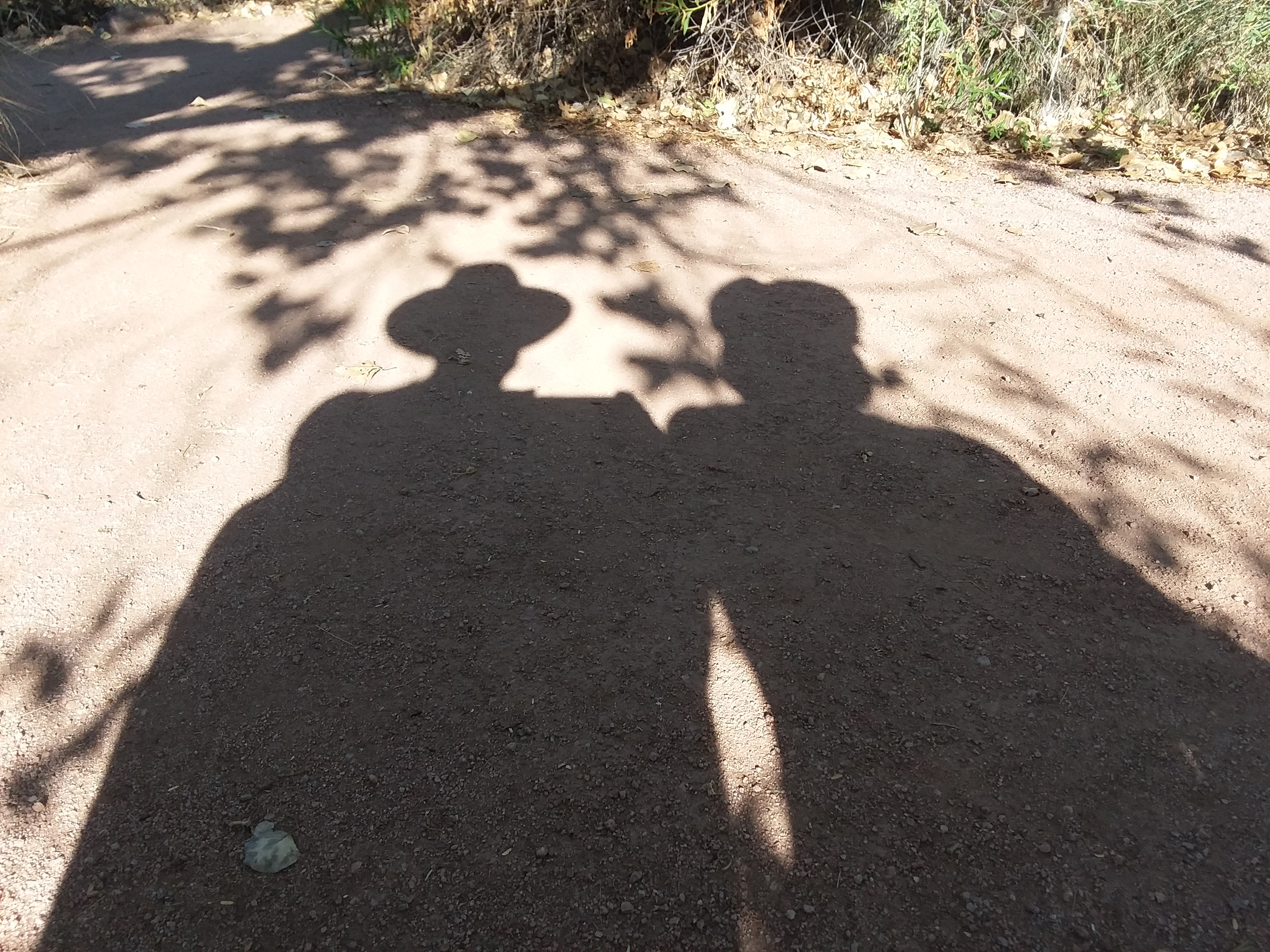
So there Tom and I sat on Sunday. Casting our shadows in the garden on July 26, 2020. Pausing under the trees to reflect on how many we’ve loved and lost … four parents … and how far we’ve come together.

Doing our best to enjoy each day in spite of the turmoil that surrounds us. Taking cover from the pandemic under the shade of our broad-brimmed hats. Absorbing the comfort and magic of nature just outside our door.


The Golden Hour

GoldenHour_June2020

Between 2004 and 2009, Helen stood patiently on her third-floor condo balcony and waited for the fleeting color to appear near the end of each day.

Her inanimate accomplice was one of those disposal Kodak cameras from Walgreens. It soothed her shutterbug sensibility.

Nature photography was the perfect hobby for a woman in her eighties, who loved art and the clockwork of the calendar and the seasons.

Earlier in her life, she worked too hard to find the time to anticipate and ponder the legacy of sparkling sunsets.

But, as the remaining rays in my mother’s life flickered on the northeastern Illinois horizon, she found comfort in the hues that came and went.

Like a National Geographic photographer on assignment, she felt it was her duty to capture the most vivid color of each passing day.

***

Whenever Tom and I walk west after dinner toward the Papago Park buttes, I feel Helen’s anticipation … how she might have felt if she’d seen the Sonoran sunsets of our sixties.

During the last few years of her life she asked, “Do you think you and Tom will retire in Arizona?”

It gave her comfort to know we might fall in love with the western sky.

After the heavy lifting of our responsibilities was through, she could imagine our stunning sunsets … the colors, lights and textures.

She could dream of the golden hour after she was gone.


Three Writers and a Birthday

S & G Ferrell in 1930s

On this sunny and breezy, seventy-degree day in the Sonoran Desert, I celebrate the life of Sherrell Richardson Ferrell. (He preferred S.R. Ferrell, because he thought it sounded more dignified.) March 9 would have been my maternal grandfather’s one-hundred-and-nineteenth birthday.

S.R. was a mountain of a man, who loved his Huntersville, North Carolina farm. I still remember him climbing the creaking steps of his back porch. Coming in from tending to his cattle and crops. Removing the broad-brimmed hat that shaded him from the Carolina heat. Swatting horseflies that followed him through the screen door. Mopping his brow and grabbing a bar of soap to wash the red earth off his massive arms and hands.

On the surface, it would seem S.R. and I had little in common other than our blood line. He was born in 1901 … a straight-and-practical, stoic Republican, who lived his entire life in the rural south. I was born in 1957 … a gay-and-artistic, emotional Democrat who made a living in a major Midwestern metropolis before escaping to the desert.

But after reading his fifty-two years of diary entries five years ago … a chronicle of every day in his life from age thirty-two in 1933 until his death at age eighty-four in 1985 … I know now we will always share our grief for Georgia Ferrell (his wife and my grandmother) and our writing impulses to leave behind a trail of our divergent lives.

Neither S.R. or I imagined that I would write a book about our journeys. That I would tell the story of a third writer between us … his oldest daughter Helen, my resilient mother … who left the south, survived her traumas and kept writing her wisdom-filled letters to ensure her family would remember her world and intellect.

But it is all clear to me now. More than any other, From Fertile Ground is the book I was meant to write. It is the story of all three of us finding our paths, loving our families, making our way against the odds. It is a story I was meant to share with the world.

During our visits to Huntersville in the 1960s, my sister Diane and I chased the peacocks that patrolled the farm. Inevitably, each time we returned to the St. Louis suburbs, we left with a few prized feathers and another batch of memories of our Grandpa Ferrell.

There he sat. Alone with his thoughts. Gliding in his chair like a prehistoric blogger. Recording the highlights of his day in his diary each night before bed. Hoisting his sore body out of his rocker. Placing his diary back on the mantle. Climbing the winding stairs to his bedroom for another chance to do it all again the following day.

***

This morning Tom and I took a hike with John and Sharon, good friends visiting from St. Louis. We walked portions of the Tom’s Thumb Trail in the McDowell Sonoran Preserve in north Scottsdale.

As we followed the switchbacks up and down the trail, it dawned on me that I am now nearly the same age S.R. was when I chased his peacocks and vacationed on his farm in 1962 and 1964. When he taught me to milk the cows. When he brought his ripe cantaloupes and melons in from the fields to prepare them for market.

Of course, S.R. never hiked this rugged mountain path. He never visited the sand and sun of the Arizona desert. Neither did Helen. They both preferred the cooler air, the green-and-misty escapes to the Smoky Mountains, the more fertile ground.

But there is comfort knowing that my grandfather’s lineage, his Scotch-Irish tenacity, his southern roots, his physical strength, his propensity to write, and his unmistakable Ferrell nose are with me on the trail of life.

They are all with me on my journey.

MarkJohnson_TomsThumb_030920


What Shall Be

Desert Sky 2_041014

It doesn’t matter if shadows stretch or fears fly,

If breezes blow or mountains move,

If blossoms bloom or battles blaze,

If dreams delight or courts connive.

In January, July or November,

Or somewhere in between,

You will remind me what was,

What is and what shall be.


Written by Mark Johnson

January 26, 2020

Another January

There are few certainties in life, but certainly January will always be a difficult month for me. It will always be the dreaded thirty-one days at the start of the year when grief reappears. When grief rattles my brain and reminds me of the final moments of my mother’s life on January 26, 2013, when grief introduced the real culprit: the void that took her place.

Strangely writing these sentences comforts me, just as writing From Fertile Ground–the story of my journey with grief–comforted me in 2015 when I needed it most. Just as reading this passage from my book (written nearly five years ago on January 27, 2015) comforted me this morning when I woke up at 3:30 and couldn’t fall back to sleep.

***

Chapter 12: Helen Came Home Today

My mother was cremated. About a week after she died in January 2013, I drove to pick up her remains.

When I arrived at the Illinois Cremation Society in Downers Grove, the attendant greeted me with a sheepish smile and carefully handed me the mahogany urn. You would think this experience would have cued tears and deep sadness within me, but it didn’t. Instead, I felt a quiet sense of purpose and a strange jolt of adrenalin. Maybe that was just another side effect of my grief.

Without hesitating, I tucked Mom’s remains under my arm, left the building, opened the passenger door of my 2012 Hyundai Sonata, and placed the container on the floor of the front seat. I couldn’t imagine the tragedy of putting Mom’s ashes on the seat itself and then facing the possibility that they might spill everywhere if I had to stop suddenly.

I scooted around to the driver’s side, opened my door, turned the key to start the engine, and sighed. This would be my final drive with my mother. Now some sadness was beginning to creep in.

Ironically, Mom never rode in this car when she was alive. I had bought it just eight months before, when she was already sliding deep into her physical decline. However, I remember one warm Saturday morning in the summer of 2012.

I was pushing Mom in her wheelchair, circling the Brighton Gardens grounds where she lived. She was wearing her powder blue baseball cap and green, cable-knit cardigan sweater. We completed one or two laps around the building and paused a few times to reflect and chat about my job, my sons, where I might be traveling next on business.

Before we headed back inside, I took a slight detour to the other side of the parking lot where my new car was parked. As we approached the car, I stopped near the right rear bumper and applied the wheelchair brake, so she could get a closer look within the limits of her macular degeneration.

We had a brief, but happy exchange:

“I bought a new car, Mom.”

“You did? What color is it?”

“Indigo.”

***

Tom and I still drive our 2012 Hyundai Sonata. It’s served us well over the past seven-and-a-half years. Most important, it got us to Arizona in July 2017 when everything else in our life seemed to go haywire.

Mom lived to be eighty-nine. Ironically, the odometer on our trusty indigo sedan is about to surpass 89,000 miles. I don’t know how many more years it will last. Though we change the oil regularly and do a decent job maintaining it, the upholstery is showing wear. The steering column creaks whenever we hit a bump. I need to take it to the dealer to check that out. It probably needs new shock absorbers too.

But other than a few hours of sleep, all isn’t lost. I have a good life in Arizona. Mom would have been happy for Tom and me … living in a warmer climate, sharing the joys and pains together, making new friends, holding onto those who’ve been with us all along the way, watching my sons evolve into the kind and productive adults their grandmother always knew they would be, telling my stories from the desert, coping with life’s misfortunes and maladies, doing my best to survive another January without her.


This Bow’s for You, Tyler

Comfort8_040915

On the last day of the last year in a decade of euphoric highs and historic lows, I learned that Tyler passed away. Complications from cancer took my friend, who lit the stage with a wide and tender smile.

Five years ago, Tyler was my tenor-two singing comrade with Windy City Gay Chorus (WCGC). We stood in the light together and performed for two years in our tuxedos in Chicago … and on one other impromptu occasion at the GALA choral festival in July 2016 in Denver.

Even though he had moved to the Cincinnati area with his husband the year before, Tyler rejoined WCGC in the Rocky Mountains for our showstopper finale performance of I Love You More, the beautiful and haunting signature piece from Tyler’s Suite.

I remember hugging Tyler that day … welcoming him back on stage to sing the piece we had rehearsed, cherished and performed together the previous year. (Ironically, it’s a tribute to the life of another Tyler … Tyler Clementi … the Rutgers University student who jumped to his death from the George Washington Bridge in 2010 after his roommate used a webcam to capture him sharing an intimate kiss with another man.)

After our mile high performance with WCGC, I recall a darker day … perhaps two years ago … when my friend Tyler, about twenty years my junior, posted a message online saying he was battling cancer.

Over the next year or so, we traded messages two or three times. I followed his progress on his blog. Sent warm wishes from Arizona. Rooted him on as he faced his cancer treatments. But that musical moment in Denver … on July 6, 2016 … was the last time I would see him.

This morning I cried as I read the message Tyler’s husband posted online. Telling us Tyler had lost his battle with cancer on December 30, 2019.

Tyler is gone … but never forgotten. Bright. Engaging. Sweet. Handsome. Enthusiastic. Talented. Adventurous. Ever-optimistic. That’s the Tyler I’ll remember standing by me in Chicago and Denver.

This bow’s for you, Tyler.


My Everlasting Christmas Wish

YouEverlasting_December2019

In the darkest days of the final year of the aughts, Helen diminished like the decade’s December light. But from her cozy corner apartment at Brighton Gardens in Wheaton, Illinois, she and her prized African violets persevered. Collectively, they captured remaining rays through two windows. One faced west. The other north.

It was independent living of sorts for those like my mother, who had fallen physically or slipped mentally. Helen had done both. Her descent prompted my sister Diane and me to move Mom and her favorite belongings from her two-bedroom condo into smaller and safer quarters ten months before.

As Christmas 2009 drew near, I was befuddled. What could I give my nature-and-poetry-loving mother that she didn’t already have? My inner monologue told me to write something for her. To bridge the gap from my mid-sixties matinee memory of Mom, Diane and me seated side-by-side in a St. Louis theater. Hypnotized by Doctor Zhivago and scenes of Yuri at a desk penning poetry in the icy rural castle of Varykino.

Perhaps with a little inspiration from Boris Pasternak, I knew what to do. Far from the snow-covered majesty and drama of Russian landscapes and revolutions, I composed and framed a poem for Helen from the relative flatness of my Illinois home.

On Christmas Eve, Tom and I carried it with us to our family holiday. On December 24, it was our tradition to gather at my sister’s home, where she, brother-in-law Steve, Mom, Tom and I would savor thin-crust pizza and thick eggnog, devour delectable desserts, and listen to our favorite Christmas music.

As the evening progressed, we retired to the living room for the main event: our annual, round-robin gift exchange. As the unopened presents dwindled, I leaned down, plucked my gift from the pile, and handed it to Mom on the other side of the circle.

Seated in her wing-back chair, she paused and looked up at me before unwinding red tissue paper. Slowly Mom revealed the contents and examined the rectangular-shaped object. She mustered five words of amazement as she pulled the gift closer within the limitations of her macular degeneration:

“You wrote me a poem.”

During the last three years of her life, Helen propped the poem on a table near the door of her apartment. Across the room from the chair where she read, watched TV and eventually received breathing treatments to ease her congestive heart failure in her last days. I saw it there each time I left. I think it gave both of us comfort in her final days.

After she died on January 26, 2013, Diane and I divided her remaining possessions and re-potted cuttings of her African violets to place on the window sills of our respective homes. Naturally, I kept the poem. When I finalized From Fertile Ground (the story of my journey after Helen’s demise) in 2015, I found the right place to insert it in the book.

In 2017, the poem came with Tom and me as we made our way in our indigo Sonata on our westward odyssey. Today, it resides on top of a wooden file cabinet in our sun room near the back door of our Scottsdale home. It’s a place Helen never visited, but one she would have loved.

***

You Everlasting

You are the comfort of nature.

Eternally pressed.

The first magnolia petal of spring.

The last gingko leaf of autumn.

The determined orchid that flourishes.

The lingering annual that endures.

Perennial.


You are high and low tide.

Remarkably present.

The hidden, tranquil meadow.

The crackle and thump of fresh melon.

The dancing firefly,

In a warm Carolina sky.

The soulful howl of a January hound,

Waiting by the gate.

Undeniable.


You are the simplest wisdom.

Gracefully proud.

The tender touch of summer days,

That melt but never fade.

The breaking dawn of blues and greens,

Forever in my memories.

The resilient path,

Carved and captured in my heart.

The polished gem of hopeful dreams.

Everlasting.

***

Ten years have passed since that tender Christmas Eve moment at my sister’s home. Mom will be gone seven years in January. The pain of her loss has softened considerably, though now it returns like an old familiar friend on holidays, birthdays and anniversaries to remind me how much I loved her.

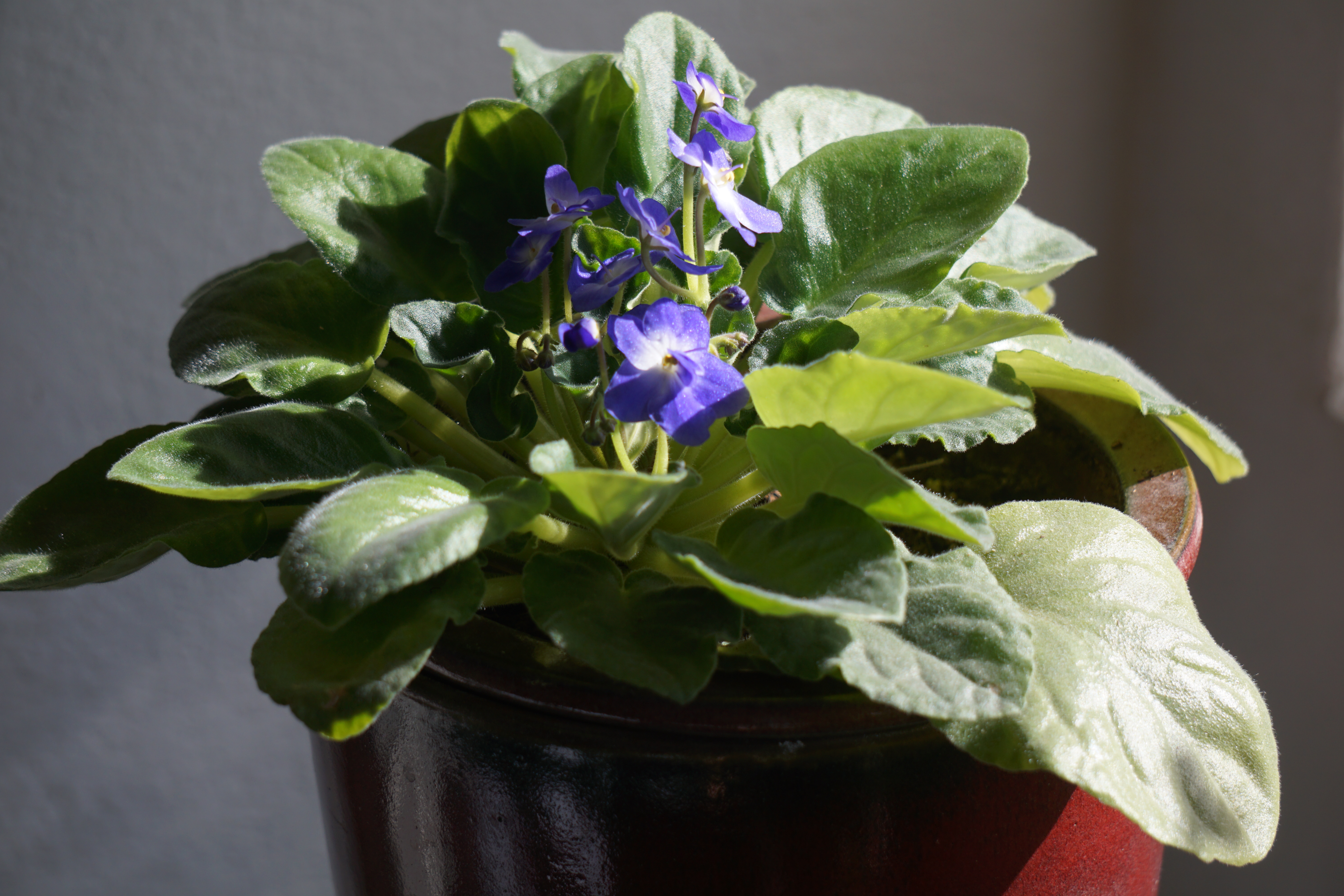
Remarkably, a cutting of one of my mother’s African violets, which she nurtured during the last ten or more years of her life, continues to thrive with Tom and me near our southern-facing windows. Yesterday on winter solstice, it absorbed the heat of the Scottsdale sun. Its purple blooms on the shortest day of the year are evidence that sometimes … against all odds … life and love go on.

As Christmas 2019 approaches, perhaps you’re like me. Thankful for life today. Thankful for family and friends who bring joy. Thankful for the memories of those who’ve gone and the reminders they’ve left behind.

Perhaps this story of everlasting gratitude will give you comfort and strength as you prepare to celebrate with family and friends … as you remember those absent from your circle.

This is my everlasting Christmas wish.
DSC08788.JPG


A Fateful Friday Fifty-Six Years Ago

FFG_Photo 1

For all of his eighty-five years, S.R. Ferrell lived an ordinary and unassuming twentieth-century rural life. Before the first rays of sunlight emerged each morning, my grandfather rose to milk the cows, tend to his crops, and complete a never-ending list of chores on his Huntersville, North Carolina farm. Every night before bed, until the day he died in 1985, the stoic farmer recorded his brief thoughts about the day (like the pages you see here from 1962).

Five years ago, as I perused his diary entries and told the story of my hard-working grandfather in From Fertile Ground, I discovered that many of the things S.R. wrote were rather mundane. But, every once in a while, I unearthed a hidden gem. A startling first-hand account of a momentous day in American history. Ironically, my grandfather was sixty-two … the same age I am today … when he wrote the following on November 22, 1963. It was a fateful Friday. Exactly fifty-six years ago.

***

I went to pasture to work up some wood and haul it to the house. Mr. and Mrs. P.E. Miller came this morning to get some strawberry plants. Then they went on to Charlotte. I hauled more wood in the afternoon.

President Kennedy, 46, was assassinated at twelve o’clock noon in Dallas, Texas. Lyndon Johnson is now president.

Partly cloudy. Warm. 56 degree low. 77 degree high.

***

While S.R. Ferrell was toiling on his farm in Huntersville and John Fitzgerald Kennedy was dying in Dallas, I was an innocent six-year-old schoolboy in suburban St. Louis in November 1963. Probably sitting at my first grade desk practicing my spelling.

I remember my teacher crying in the front of the classroom that day. As she tried to compose herself, she told us school would end early. Soon after, we filed to the cloak room to put on our jackets. We boarded our buses for our respective homes.

That weekend, I sat glued to the floor in front of our family’s black-and-white TV and watched Jack Ruby shoot Lee Harvey Oswald. And, in the horrific and historic days that followed, JFK’s three-year-old son saluted his father’s passing, flag-draped casket. That image may have been the most mournful of all.

We’ll never know how the world would have evolved if JFK had lived to write another chapter in American history. But somehow the world kept spinning and S.R. Ferrell kept writing. And I have the comfort of knowing that my grandfather’s account of November 22, 1963 is forever chronicled in Chapter 39 of From Fertile Ground. You’ll find it on page 157 of my first book.