Tag: history

Today and Tomorrow

Uncertainty exists in every day, in every life. I try not to dwell on it, but on this day–the 250th anniversary of the United States adopting our Declaration of Independence–uncertainty is our next-door neighbor.

I certainly remember our 200th anniversary, our bi-centennial celebration, in 1976. I was a bright-eyed, long-haired, eighteen-year-old, idealistic American.

Living in suburban St. Louis, I recall seeing the tall ships grace New York Harbor on our console TV on July 4, 1976.

That summer I worked at Six Flags Over Mid-America near St. Louis. As a tribute to the bicentennial, the Screamin’ Eagle rollercoaster roared across the sky. It was the newest, tallest, fastest ride in the park. Teens rode it again and again just for the thrill of it.

Even though the corruption of Watergate and the devastation of the Vietnam War were still fresh in the American psyche, in 1976 it felt like all Americans lived under and abided by one set of rules. That we aspired to one vision.

That the United States of America–the collective red, white and blue–was one nation and indivisible. A beacon of hope and freedom. That we believed, honored, and protected the notion of life, liberty, the pursuit of happiness, and justice. For all.

Over the past several years, like a rollercoaster that has jumped the tracks, we have been derailed by a malicious force. I don’t need to–or want to–speak their names. They have fostered twenty-four-hour-a-day uncertainty and anxiety in this nation I still love.

What I choose to celebrate today are the American citizens who still hold fast to the principle our nation was founded under: freedom and justice for all Americans, no matter your skin color, ethnicity, religious beliefs, sexual orientation, gender, social or economic status.

That is the memory of the United States of America I am proud of.

That is the country my father and thousands of other true patriots have bravely fought for and defended.

That is the country I knew and lived in yesterday.

That is the country I still dream of and worry over.

That is the country I cling to and pray for on July 4, 2026.

That is the country I want to live in today and tomorrow.
Hope Is Never Silent

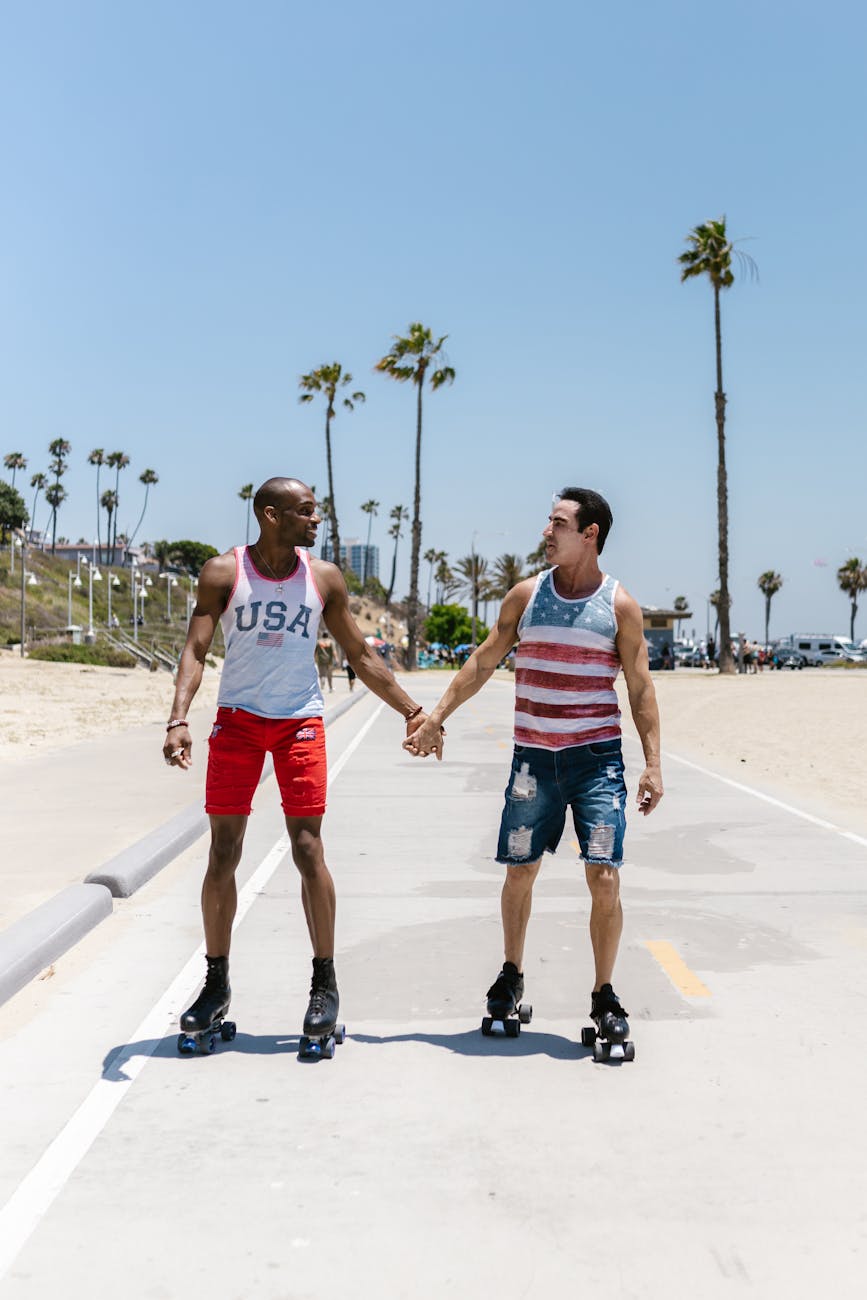
Photo by RDNE Stock project on Pexels.com

Today–May 22–is Harvey Milk Day.

On what would have been his ninety-sixth birthday, I want to remind the world that Harvey Milk’s spirit of compassion, authenticity, equality, and hope still lives within each of us in the LGBTQ community … nearly fifty years after his assassination in November 1978.

In 1977, Harvey Milk was the first openly gay man to be elected to public office in California as a member of the San Francisco Board of Supervisors. Despite his short political career, he quickly became an icon in San Francisco and a galvanizing force and inspiration for the LGBTQ community for his unbridled commitment to civil rights.

We will never know what Harvey Milk might have said if he had lived to see the dream of national marriage equality become a reality in the United States in 2015 and now–eleven years later on the other end of the spectrum–to witness the rapid, daily decay of American democracy, American institutions, and American civil liberties.

But I’m a hopeful person and so was Harvey.

He believed “hope is never silent.” He also believed in visibility, whether it means two men holding hands while roller-skating under the palms or standing in protest … raising our voices in solidarity … and living openly on days that aren’t nearly as sunny.

In these frightening times, the impulse for some might be to take a step or two back into the closet. But Harvey would have encouraged all of us–gay and straight–to do the opposite. To step forward with conviction.

Take a moment to read some of Harvey’s encouraging words.

Harvey’s hope and memory is a salve for all of us–gay and straight–who believe in truth and decency.

Though Harvey is long gone, his legacy of authenticity and hope still lives.

***

“I know you can’t live on hope alone; but without hope, life is not worth living. So you, and you and you: you got to give them hope; you got to give them hope.” Harvey Milk

“Every gay person must come out. As difficult as it is, you must tell your immediate family. You must tell your relatives. You must tell your friends if indeed they are your friends. You must tell the people you work with. You must tell the people in the stores you shop in. Once they realize that we are indeed their children, that we are indeed everywhere, every myth, every lie, every innuendo will be destroyed once and for all. And once you do, you will feel so much better.” Harvey Milk

Laid to Rest

My mother was a collector of fine furniture, ceramic pitchers, and–occasionally–commemorative coins.

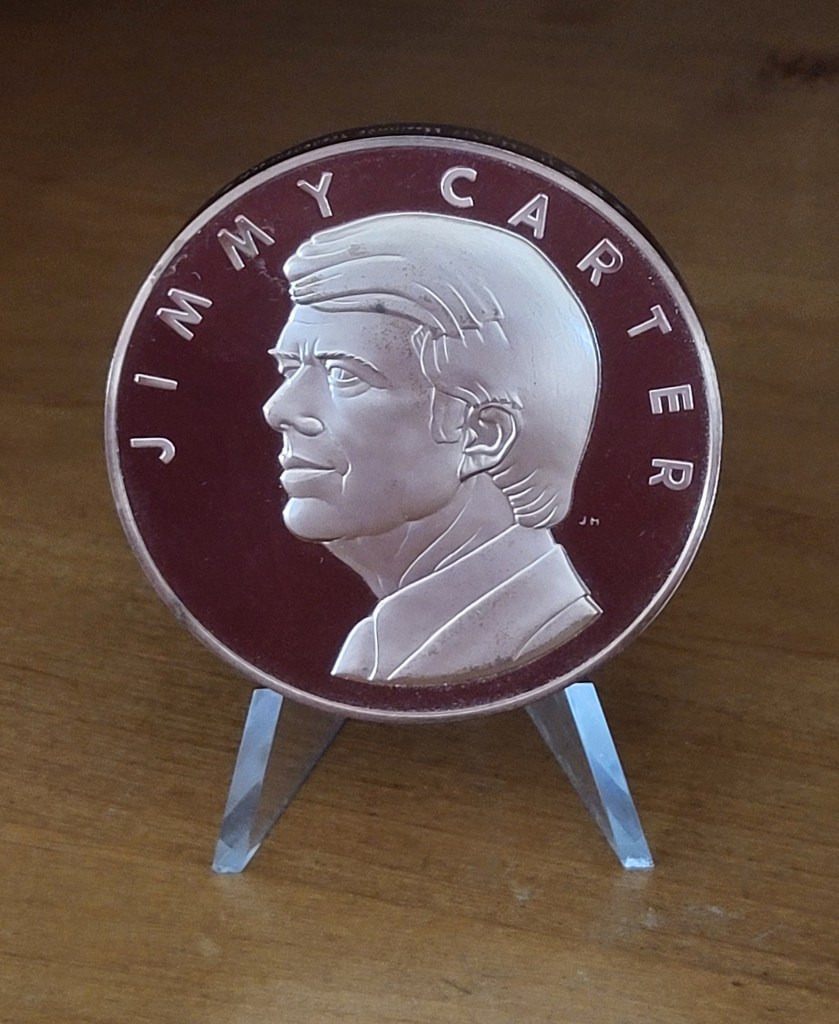
On March 17, 1977, she purchased this Franklin Mint medal. It celebrates the inauguration of Jimmy Carter, the thirty-ninth President of the United States.

This bronze coin has occupied a space inside a box in my father’s WWII army trunk for the past few decades.

I was nineteen and a first-time voter when I cast my ballot for Carter in November 1976.

Most of my college friends at the University of Missouri were Gerald Ford supporters.

I suppose they were willing to forgive him for pardoning Richard Nixon.

I wasn’t. I opted for Carter, the peanut farmer from Plains, Georgia.

As history would have it, Carter’s four years as president (1977 to 1981) included many ups and downs.

For instance, Carter successfully negotiated the Camp David Accords, political agreements signed by then Egyptian president Anwar Sadat and Israeli prime minister Menachem Begin.

Carter also signed into law bills that created the U.S. Department of Energy and Department of Education.

However, the Iran hostage crisis (when fifty-three U.S. diplomats and citizens were held hostage at the U.S. embassy in Tehran by a group of Iranian college students who supported the Iranian Revolution) and related oil crisis led to his unraveling popularity.

In November 1980, Ronald Reagan defeated Jimmy Carter. His loss was punctuated on January 20, 1981, when the hostages were released on the first day of Reagan’s presidency.

Of course, we now know Jimmy Carter wasn’t through yet. He lived another forty-three years and made good use of his century-long (1924-2024) life.

After leaving the White House–with his wife and life partner Rosalynn Carter ever by his side–he established the Carter Center. He worked tirelessly to promote and expand human rights.

That led him to receive the Nobel Peace Prize in 2002.

Jimmy and Rosalynn Carter also became famous for the houses they helped build for Habitat for Humanity and the faithful lives they shared with family and friends in their community and all around the world.

***

This morning, after watching C-SPAN coverage of Jimmy Carter’s funeral at the National Cathedral in Washington, D.C.–and listening to a parade of praise in eulogies given by past Republican and Democratic leaders and grieving family members–I extricated the bronze medallion.

I brought it into the light. I placed it on the shelf of our bureau in our Arizona sunroom. I pondered Jimmy Carter’s astounding legacy of faith, hope, service, and perseverance.

I wondered if–as he was laid to rest–our nation’s democracy might not be far behind.

I hate the trite phrase “only time will tell.” But it certainly applies as inauguration day–January 20, 2025–approaches.

Consider this. Tucked inside the box that normally houses the Carter medallion is a little booklet with information about the tradition of the presidential inaugural medals. Here is an excerpt:

“The Official 1977 Inaugural Medal commemorates the solemn ritual, repeated every four years, through which Americans and their President refresh the nation’s commitment to free government.

During the inauguration, the President, in the presence of Congress, pledges to serve faithfully and to uphold the Constitution to the best of his ability.

Americans have always treated this ceremony as a portentous moment in the life of the republic, a time of celebration and of renewed dedication.”

But we live in 2025. Will the incoming president uphold the Constitution to the best of his ability?

That bit of history–beyond the funereal pageantry of today–has yet to be written.

They Fought So Hard

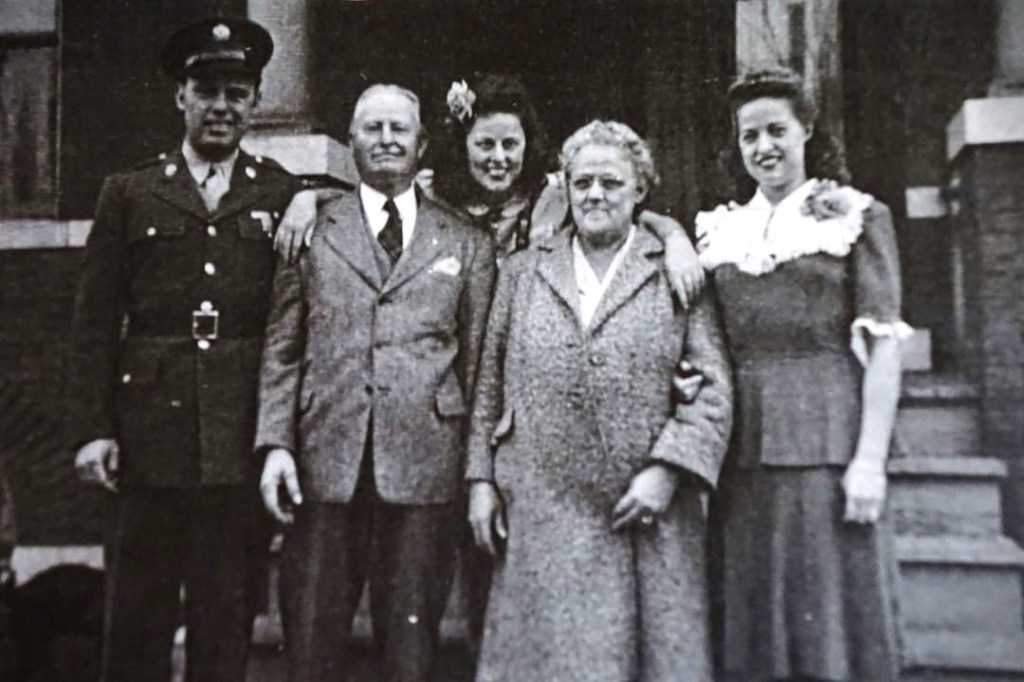
Albert, Louise, and their three adult children–Thelma, Violet, and Walter–led ordinary lives.

In the fall of 1944, they were a big-hearted, hard-working, working-class family–living in a flat on Labadie Avenue on the north side of St. Louis.

To be precise, Thelma and Walter lived with their parents. Violet and her husband Harry lived nearby.

At any rate, they were a close family with strong opinions, loud voices, and a propensity to gather around the radio for FDR’s inspiring Fireside Chats.

Like all patriotic American families of that era, they planted a Victory Garden to grow their own vegetables, rationed household supplies, and bought war bonds to support American troops fighting overseas in Europe and the Pacific.

They did it all for the sake of protecting and maintaining freedom in a war-torn world.

Walter, Albert, Thelma, Louise, and Violet in late 1944.

When Walter was drafted and deployed to Europe (Harry, too) you might say the family had extra skin in the game of war.

He left New York Harbor–aboard the Queen Mary ship with hundreds of other soldiers–on New Year’s Eve 1944.

Five days later, he landed at the Firth of Clyde in Scotland … and, in short order, he found himself on the front lines scurrying from foxhole to foxhole in the Battle of the Bulge in the forested Ardenne region of France.

As the war in Europe wound down in 1945, he marched with the first group of US army personnel who met with the Russian army on the Elbe River on the eastern front of the war.

Walter survived the ordeal–in part because of the regular flow of love letters and encouragement he received from his sisters and parents.

Walter returned to the US on the U.S.S. Monticello in July 1945 … for a thirty-day leave prior to going to fight in the Pacific.

He was supposed to depart in mid-August, but on August 6, the US dropped the first atomic bomb on Japan and the war ended shortly thereafter.

Walter’s fighting days were over. He was discharged from the service on October 11, 1945.

A few years later–sometime after he met his future wife Helen in January 1948 at Westminster Ballroom in St. Louis–he confided that the Russian soldiers were some of the roughest, battle-hardened men.

At any rate, despite the “shellshock”, nightmares, and frozen feet Walter brought home with him, he (and Harry) came home in one piece.

***

I’ve thought a lot about Walter and Helen (my dad and mom), Thelma and Violet (my aunts), Albert and Louise (my grandparents) … the Johnson family … since the election last week.

All of them have been gone a long time, but in a sense–today–I feel I am grieving my own loss of freedom, as well as their legacy. The one they fought so hard to uphold.

I’m not giving up, but that is how I feel on Veterans Day 2024.

Early this afternoon, I pulled out Dad’s World War II army trunk.

It contains pieces of his uniform–including the wool hat and golden medallion he wore eighty years ago as he was preparing to preserve freedom on behalf of his country.

Finding it there with his few remaining possessions gave me strength.

In the coming days, weeks, months, and years, I’m going to do my best to draw from the resiliency in my family’s DNA to find specific ways to uphold democracy in my Arizona community.

You can be sure I also will continue to exercise my voice–through prose and poetry–and influence others in a positive fashion as we head into an uncertain and potentially ominous period in our country’s history.

Worth the Journey

On Thursday, as I was flying home over the Atlantic Ocean at 38,000 feet with my husband on an eleven-hour, nonstop British Airways flight from London to Phoenix, I wondered “what will I choose to write about our week-long journey through England and Scotland?”

Today, it is this big picture observation. At this somewhat advanced stage of life–I am sixty-seven going on sixty-eight–traveling to previously unseen, faraway places is both the great rejuvenator and the not-so-great discombobulator.

Even so, as I shed the remnants of jet lag, I’ve gathered new memories and experiences that fire the creative and sensory synapses of my brain … reigniting splendid moments that transcend the ordinary view from the couch.

We certainly brought home a boatload of those: from performance #29,771 of The Mousetrap at the St. Martin’s Theatre in London’s West End; to fascinating tours of Buckingham Palace, Windsor Castle, and the Roman baths of Bath, England; to heavy rains on the road that led us to William Shakespeare’s family home in Stratford-upon-Avon; through the Lake District of the splendid English countryside and discovering poet William Wordsworth’s grave in Grasmere; to a photographic moment with statues of The Beatles in Liverpool; to a blustery climb up the cobblestones in Scotland into the sky of the Edinburgh Castle; to winding down circuitous streets that finally led us to find the Writer’s Museum proclaiming the literary achievements of Scottish icons Robert Burns, Sir Walter Scott, and Robert Louis Stevenson.

And that says nothing about the fine food and acquaintances we met along the way.

I will be recounting each of these adventures and more in the coming days. But, for now, I simply want to remember this serene moment, gliding on the top deck of the Swan on Lake Windemere in England on Tuesday, September 24, 2024.

Yes, it was a short week and two long flights across the pond.

But it was worth the journey.