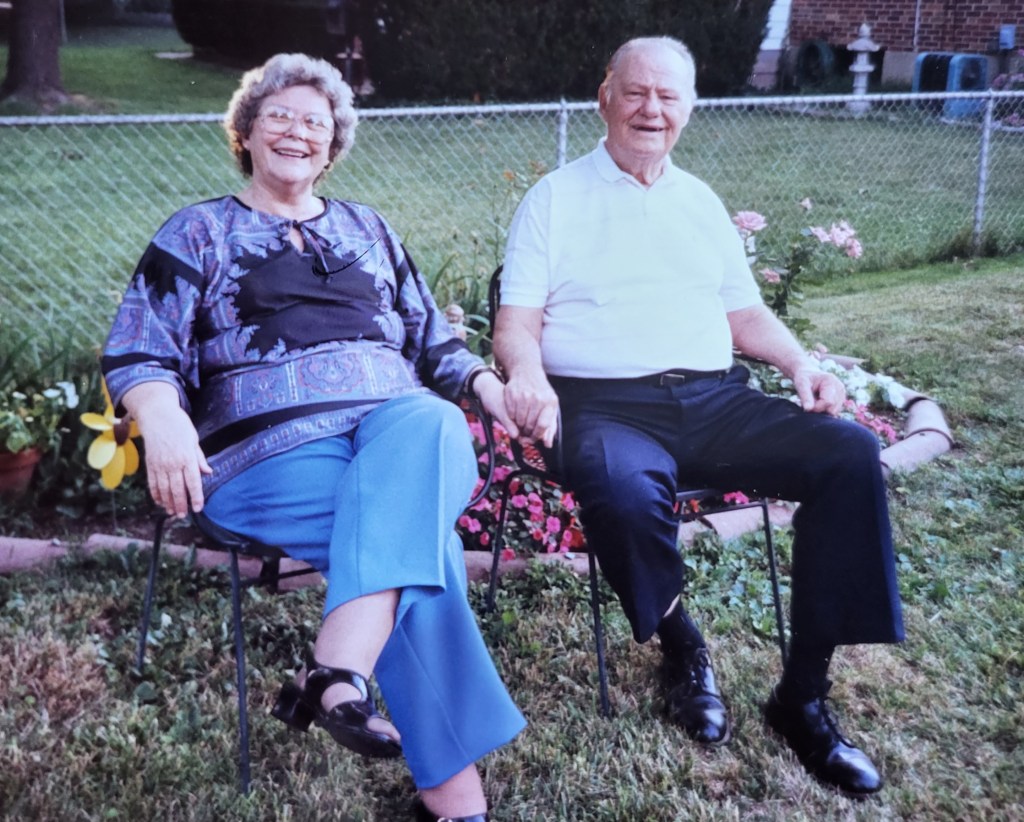
Tag: Mom and Dad

Higher Ground

In January 2014, the fog of grief occupied my brain and body. My mother had been gone one year, but I hadn’t yet found a constructive way to heal and process my grief.

Along the way, my husband Tom and therapist Valerie encouraged me to embark on a new path that would help me recapture my creative spirit.

I decided to leave my communication consulting career. Soon after, I began to write personal stories that mattered to me. Vivid recollections inspired and spawned by grief. Observations about love and loss in my family that helped me chart a new course and publish my first book, From Fertile Ground.

With time and reflection, I wrote four more books about the tender and whimsical ups and downs of childhood, the poignancy of leaving one home and surviving to find another, the adventures of creating a new life in the Arizona desert, and the poetry that has stirred inside me for thirty years and finally escaped to land on a page.

In small and large ways, my mother is in every one of those books and numerous essays. Yet she didn’t live long enough to read any of it, except one poem I gave her on Christmas Eve 2009.

I know now that writing about her in new and different ways has kept her wisdom and generosity alive and accessible for me.

July 26, 2024, would have been Helen F. Johnson’s 101st birthday. I knew I wanted to write about that, but until my fingers hit the keyboard, I wasn’t sure what I would say … because I thought I’d said it all before.

Maybe I haven’t.

How I loved and admired–and still remember–her tenacity. Her legacy of letters. Her devotion to family, friends, and the power of nature.

She would have loved the artistic life Tom and I have created in Arizona among the buttes and cacti. Writing stories, screening movies, singing songs, feeding stray cats.

Making new friends, while remembering old ones. Doing our best to guide and encourage my sons–her beloved grandsons–as they make their way toward the middle of their lives.

Cherishing each moment of our retirement years, without ever knowing where it will lead. Never wanting to know how or when it will end.

On July 26, 2012, we celebrated my mother’s eighty-ninth birthday together. It was her last.

Twelve years have passed. I’m much older, more appreciative and impatient. But also, wiser. Healthier. Gayer. Grayer. More contented with my own life and legacy. More worried about the world’s plight.

Grief is no longer my catalyst, my nemesis, my companion. Of course, I see it in the rearview mirror. But, with the passage of time, I discovered higher ground without the ghost of grief.

I no longer think of my mother every day. But when I do, I am grateful for the moments she and I shared–the gifts of memories and photographs I treasure–and the propensity to write about it.

All of this runs through our DNA.

My mother and me, celebrating her eighty-ninth birthday in Wheaton, Illinois, on July 26, 2012.

No Walk in the Park

On a regular basis, all of us encounter unexpected small and large obstacles.

One day, they may be as fixable as a “low tire pressure” warning light that illuminates on the dashboard.

The next, something far more unimaginable, unexplainable and unrepairable. Like learning of the apparent suicide of a forty-three-year-old friend, who seemed to embody the definition of vitality.

It was simple to stop at Discount Tire to ask an attendant to increase the air pressure in our tires. (The cooler desert temperatures must have deflated them.)

It will take much longer–time, space, and reflection–for Tom and me to process Chad’s demise.

I’ve often thought that resiliency is one of the most important human characteristics to cultivate.

It is our ability to cope, process, manage, and emote our way through or around life’s setbacks that defines our longevity. This latest loss confirms my belief.

These observations surfaced this morning during a walk in the park in my community. At Chaparral Park in Scottsdale, Arizona to be precise.

My husband and I had just finished our yoga class. Afterwards, he wanted to lift a few weights in the gym.

I opted for stretching my legs on my own under a few puffy clouds that dotted Arizona’s wide-open October sky.

Near the midpoint of my walk a fit couple jogged up as I waited for the light to turn green at Chaparral and Hayden roads. One of them admired my shirt.

“You must be in the medical profession,” he gestured toward the beating heart I wore proudly.

“No, I’m a heart attack survivor,” I explained. “I helped raise money for the American Heart Association.”

They smiled and wished me well. Then, they dashed off when the WALK sign turned white.

It was a simple exchange, a reminder of a trauma I experienced and wrote about which now feels way off in the rearview mirror.

But those few sentences with two sympathetic strangers infused me with a renewed appreciation for my personal resiliency.

No doubt, it’s a quality I observed in my mother, a saver and survivor. She always described herself as a child of the Depression.

It’s also a trait I began to mine in my thirties after my divorce. A strength I’ve fine-tuned on countless treadmills since suffering a mild heart attack six-plus years ago on my sixtieth birthday.

I have no regrets regarding my friendship with Chad, but I wish he would have called Tom or me before he made his worst and most irreversible decision.

I would have told him that while life is no walk in the park, it is always worth the fight. To find a skilled therapist. To dig deep on the darkest days. To survive the pain. To accept our losses.

To embrace each and every day we are granted. To reach out for love and hope. To live to see tomorrow.

Labor of Love

My parents labored through much of their forty-five years of marriage. In that sense, it is fitting that their wedding anniversary–September 4–often coincides with Labor Day, as it does this year.

Despite their differences, struggles, and heartaches, by the late 1980s Mom and Dad seemed more content whenever I drove from Chicago to visit them in St. Louis.

Mom had retired from her stressful government job. She spent more time in her beloved garden. Dad’s mental illness had quieted. He found solace, reading his Daily Word in their wing-backed chair.

Ironically, this more even footing in their relationship appeared as their physical frailties–and risk of falling–became more obvious.

They went to church together. They cultivated deeper friendships with neighbors. They dined regularly at nearby Grone’s Cafeteria. Life was much simpler.

Comparatively, Tom and I are far more active in our “retirement” than my parents ever were. But we have discovered a similar contentment. There are fewer demands on us. We spend more time on the things we enjoy with the people–friends and family–who mean the most to us.

Today–on what would have been Helen and Walter Johnson’s 75th wedding anniversary–the two people holding hands in this photo are the ones I choose to remember.

But, even during the troubles and heavy lifting of their younger years, I’m grateful for the many things they taught me. How to respect the elderly. How to save for a rainy day. How to be kind to neighbors and care for animals. How to put people before material things. How to be a loyal friend. How to work hard and earn my keep. How to show compassion.

Most important of all, how to love my family, warts and all.

Certainly, by watching Helen and Walter struggle, I learned lessons about how to endure in a world that can often feel unendurable. That may feel like a strange way to pay tribute to my parents on their diamond wedding anniversary. But it’s honest and true.

Though Dad has been gone thirty years and Mom ten, the love I feel for them endures.

In the summer of 1988, Helen and Walter Johnson enjoyed their suburban St. Louis backyard. Mom was 65; Dad was 74.