Tag: Nature

So Long, Old Friend

Millie_102819.JPG

“Just wanted to tell you that Millie passed away.

She was ninety-nine years old. What a life.”

Tom and I received this text today from Kathy, a close friend and neighbor who lived two doors north of us in Mount Prospect, Illinois. The community was our home until July 2017.

Millie, another of our neighbors, was an ever-enduring matriarch. She lived one block over. Directly behind us for two decades. Evidently, she died a few days ago.

I remember Millie fondly, tending to her flowers along the back fence. She was one part avid gardener and rose lover, one part suburban dynamo, one part cantankerous character.

Millie left a lasting impression on my family and me. So much so that I wrote Along the Back Fence, an essay about her and our relationship. It became a chapter in An Unobstructed View, my book of reflections on the meaning of my Illinois life.

Millie didn’t quite make it to her one hundredth birthday, which would have occurred in early January. But as a tribute to her and long-lasting neighbors everywhere who enrich our lives, I choose to celebrate as if she had.

Here’s my story and an image of a rose I captured across the sidewalk in another neighbor’s yard in sunny Arizona.

So long, old friend.

***

Along the Back Fence

Long before I arrived at my Mount Prospect home, Millie loved her garden and the hibiscus plants she and her husband had planted on the other side of the back fence. But when I first met my neighbor Millie in the summer of 1996, her husband had been gone for a few years and the exotic flowers were waning too. She was alone and lonely in her mid-seventies, but not in a quiet and retiring way. There was plenty of fight left in Millie.

It wasn’t an auspicious start for the two of us. I had begun to create a small compost pile in the far corner of my yard. She wasn’t happy about it—too many decomposing grass clippings and small spruce branches in one place she thought. In her view, I had created a mess. So when she complained about the smell that had started brewing there, I scrapped the idea and placed the yard materials by the curb for the next trash pickup. I didn’t want to alienate Millie. I didn’t want to contribute to her unhappiness.

I don’t think we had too much to say to one another over the next few months. Only a quick hello here and there as I pushed my mower around my yard and she tended to her garden that wrapped around her detached garage. Eventually, we broke the ice.  From one side of the fence, she told me about her love of roses. From the other, I introduced her to my sons and then Tom. After that, we found firm footing.

By the fall of 1998, Maggie was in the picture. I remember Millie leaning over to pet our dog’s voluminous ears. Millie would cradle Maggie’s head on either side when the dog placed her paws along the back fence. “How is that Maggie today?” she would ask. Our droopy-eyed pet had won her heart too.

Over time, Millie got to know more members of my family. On one summer afternoon, Tom and I decided to invite Millie over for a backyard barbecue. My mother was visiting us from St. Louis. Both Mom and Millie were gardeners. There was plenty for them to discuss about the flowers they had grown, nurtured, and cherished over the years. Not to mention the yummy three-bean salad Millie had whipped together in a jiffy.

“Next time I’ll bring my ambrosia salad,” Millie told us. “Everyone loves it!”

And there was a next time the following year. Tom’s mom and dad joined us from their home on the other side of Mount Prospect. Sure enough, Millie brought her signature dish of mandarin oranges, maraschino cherries, crushed pineapple, and shredded coconut to compliment the relatively ordinary burgers and hot dogs we grilled that afternoon.

That was the last of our three-bean-and-ambrosia-salad moments with the older set. The seasons passed and so did our parents—Tom’s dad in 2012, my mom in 2013, Tom’s mom in 2015. But Millie survived them all. She heard about each of our losses along the back fence. It gave me comfort to meet her there, though our encounters became few and far between as her own health—her own sure-footedness—declined.

In the summer of 2016, I waved to Millie as I worked in my backyard. Frail and in her nineties, she was seated on a chair on her deck with Yolanda, her live-in caregiver, nearby. Millie motioned to me to meet them by the back fence. With Yolanda at her side, it took a few minutes for Millie to navigate her way there. But there was never any doubt she would make it.

When she arrived, I reached out to give her a hug as she leaned in to rest her head on my shoulder. She told me she still loved to admire the perennial blooms that came and went, but her gardening days were over. She simply didn’t have the physical energy for it any more. Nonetheless, she wanted to gift the only remaining rose bush in her yard to Tom and me, if I would dig it up from the side of her garage and find a place to transplant it in our backyard.

Though I didn’t know where we’d find room for the bush, I was touched by the gesture. I grabbed a shovel from the garage, wedged the toe of my shoe in the cyclone fence, and boosted myself over onto Millie’s lush lawn. Tom found our wheelbarrow and lifted it over too. It took me nearly thirty minutes of digging before I could pry the stubborn bush out of the ground. But it finally succumbed. When I left Millie’s yard with the bush, I thanked her and gave her another hug and kiss on the cheek. We had come a long way from our early compost pile days.

“I love you guys,” she said.

“We love you too, Millie,” I assured her.

Before Tom and I moved the following summer, we waved to Millie a few more times from our backyard whenever we mowed our lawn and saw her perched on her deck, presiding over her floral-filled memories.

And the red rose bush—which we carefully transplanted alongside our driveway and propped up with tomato stakes and chicken wire—took root and bloomed before we departed.

We left it there for the new owners to enjoy.

It only seemed fitting.


Sand Dollar Days

Sanddollars_102219.JPG

Here in Scottsdale, Arizona, I have a good life. Warm, simple and true.

Exhibit A: though it’s late October (more than a month since most outdoor pools in the U.S. closed for the summer), today I completed my morning swim as I usually do at our Olympic-size community pool … thirty lengths under blue skies and eighty-degree temperatures.

Despite this frequently idyllic scenario, every locale has its drawbacks. For us in the Sonoran Desert, it’s the unforgiving heat in June, July and August … especially in the summer of 2019 when monsoon storms mysteriously didn’t materialize … and the fact that we live a few hundred miles from the closest beach on the Pacific Ocean. Put another way, we have plenty of sand, but no sand dollars to dazzle our days.

Unless, of course, you have a thoughtful friend such as Glenn. On Monday, having just returned from a week in San Diego, our neighbor and gentle-yoga comrade surprised Tom and me with a little beauty from the west coast: a handful of bleached skeletons of dead sand dollars.

Unfortunately, we weren’t home when Glenn stopped by, so he left them in a transparent tray near our back door. Who knew these sandy gems would one day wash up on the shore in land-locked Scottsdale, Arizona?

According to folklore and Wikipedia, sand dollars have come to represent all sorts of things. For instance, coins misplaced by mermaids or the lost citizens of Atlantis. Christian missionaries saw symbolism in the five-fold radial design, comparing it with the Star of Bethlehem.

I prefer to think of the sand dollars simply as a gift of nature. A reflection of grand, infinite, and ever-radiating design. Something like ripples of water on the surface of the ocean or individualized snowflakes that fall and decorate the sky and then the streets (not in Scottsdale, but surely back in my previous hometown of Mount Prospect, Illinois).

Better yet, I see sand dollars as a symbol of the interconnected way friends like Glenn enter and influence our lives. At first they may appear on the periphery. But over time they make their way on shore. They begin to leave their own personalized mark. They remind us to be grateful for the kindnesses of neighbors and friends who grace our lives. They teach us to be thankful for the goodness of our sand dollar days.


Palm and Pine and Sycamore

Palm_102019

Pine_102019.jpg

Sycamore_102019.jpg

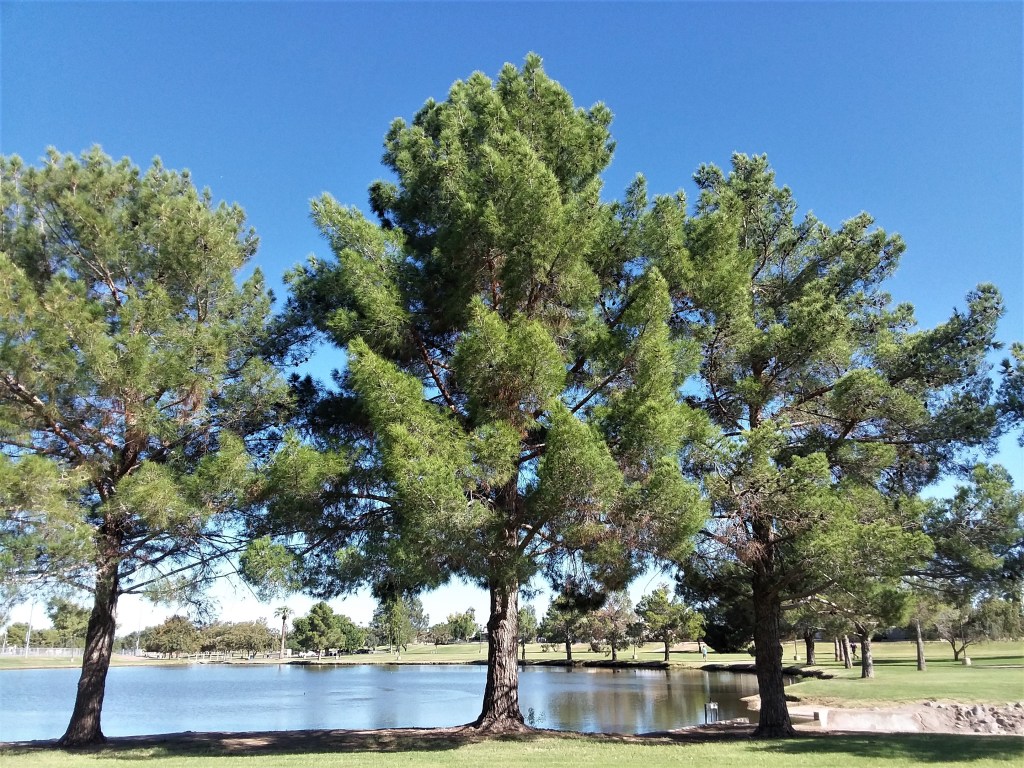
Three gather to whisper, one natural grace.

Sure shiny October, rare shady space.

Beckoning branches, bowing before.

Triumphant triad, truth to adore.

Forever delight, never ignore.

Palm and pine and sycamore.


By Mark Johnson, October 20, 2019

After Grief Swallowed Me Whole

FFG_Photo 20

In October 2015, I was a fixture in front of my laptop. I spent endless hours painstakingly polishing the final draft of my first book, From Fertile Ground. It’s the story of my journey after my mother’s death in 2013.

With help from a trail of letters and diary entries my mother and grandfather left behind, writing renewed my spirit. It led me out of the darkness and propelled me forward. After grief swallowed me whole, I finally reemerged and rediscovered sunlight at the end of a numb and winding road.

Intuitively, I realized I needed to share my story openly with the world. That of a gay man, loving husband, devoted father and grateful son searching for answers. I dreamed it would help others find a new path and navigate their way through grief.

Not long after I published From Fertile Ground in February 2016, friends and strangers began to post reviews online. They described how they were moved by the book and its lessons of love and loss. My dream was coming true.

By the end of 2017, things had gotten rather quiet. That’s what happens with books and creative accomplishments. They come and go no matter how much you want them to linger. They flash across the sky like shooting stars and then fall off the radar.

Fortunately, every once in a while, there is a glimmer or twinkle to remind you of their importance long after they first appear. That happened last week when I read a new review posted on Goodreads and Amazon … a review that reminded me why I decided to publish the book in the first place:

“This book is a life compass if you are experiencing loss or disruption in your family.

From Fertile Ground came to me at precisely the right time in my life. Mark’s perspective and reflection helped me to navigate loss and disruption in my own life. I pulled from his examples and experiences to temper my feelings and expectations. I ultimately gained a great deal of comfort and reassurance from his novel, and I continue to think back on it often as my life continues to evolve.

Throughout the book, I enjoyed getting to know Mark and his family. They are relatable people demonstrating courage, compassion, and love. The poem he wrote and included that was a tribute to his mom was one of my favorites. I also really enjoyed seeing his relationship with his children evolve from childhood to adulthood.”

This is the kind of glorious feedback that motivates me to keep sharing stories. To shine a light on truths … both personal and universal. To bring a little love, inspiration, comfort and reassurance to a world that really needs it. To devote time each day to my literary passion. To pen the next poem and dust off that fictionalized piece that I keep going back to. To live the life of a writer. It’s what I was meant to do. It is my fertile ground.

Oh, Lemon Trees and Lizards

LemonTree1_100819

Ordinarily, pruning branches in our condo complex is something our landscape crew attends to. But they haven’t appeared lately. So, last week Tom and I dusted off our hedge trimmers. We gave haircuts to the fig and orange trees in our row. We didn’t mind. We had the time, energy and motivation.

Today, I stood in front of our mid-century condo. Gazing east as the morning light forced me to shield my eyes. Surveying the overgrown boughs of a luscious lemon tree that shrouded the sidewalk to our parking lot. Hands on hips, I uttered these seven words:

I think I’ll prune the lemon tree.

Yes, a guy born and raised in the Midwest, near towering oaks and majestic maples that abandon their leaves every October, now trims fragrant citrus fruits in autumn and says these peculiar things. Who is this crazy person? Where did this new language come from?

Let me be clear. This wasn’t the first time I was privy to this sort of newfangled, desert phraseology.  In the fall of 2017, just a few months after my husband and I left Illinois and moved into our Arizona condo, he shouted the following previously undocumented sentence as I wrote at my desk:

There’s a lizard in the sink.

As calmly as possible, I pressed “save” on whatever I was writing and scampered into the kitchen to see what Tom had discovered. Indeed, there was a lizard in the trap of the sink. He was no more than two inches long and frozen like a tiny statue exhumed from an archaeological dig. I’m sure he was frightened by the two giant heads peering down at him.

If you’re an animal lover like we are, you’ll be delighted to learn that we didn’t freak out and smash him in the sink. Instead, we kept our wits. We scooped him onto a piece of paper and carried him outside to safety.

Slowly, he slithered off into the desert landscape to resume his natural existence. Just a few yards away from where the freshly shorn fig, orange and lemon trees live in this sun-drenched land of sand and saguaros.

I never thought I’d live here. Oh, lemon trees and lizards, I never thought I’d say and hear such things.


Waiting to be Fed

WaitingtobeFed_100619

Eight o’clock on a seventy-degree October morning. Tom and I walk three thousand steps west from our condo door and arrive here. Squint and you can conjure the head of a giant tortoise emerging over the hill … waiting to be fed. In reality, the only ones scouring for breakfast are the three microscopic bighorn sheep climbing the Papago buttes in the Phoenix Zoo on the right side of the frame.

Surreal giant tortoises and real bighorn sheep on a spectacular Sunday. Such is life in the rugged, yet serene, Sonoran desert.

Lost and Found

20190908_184338

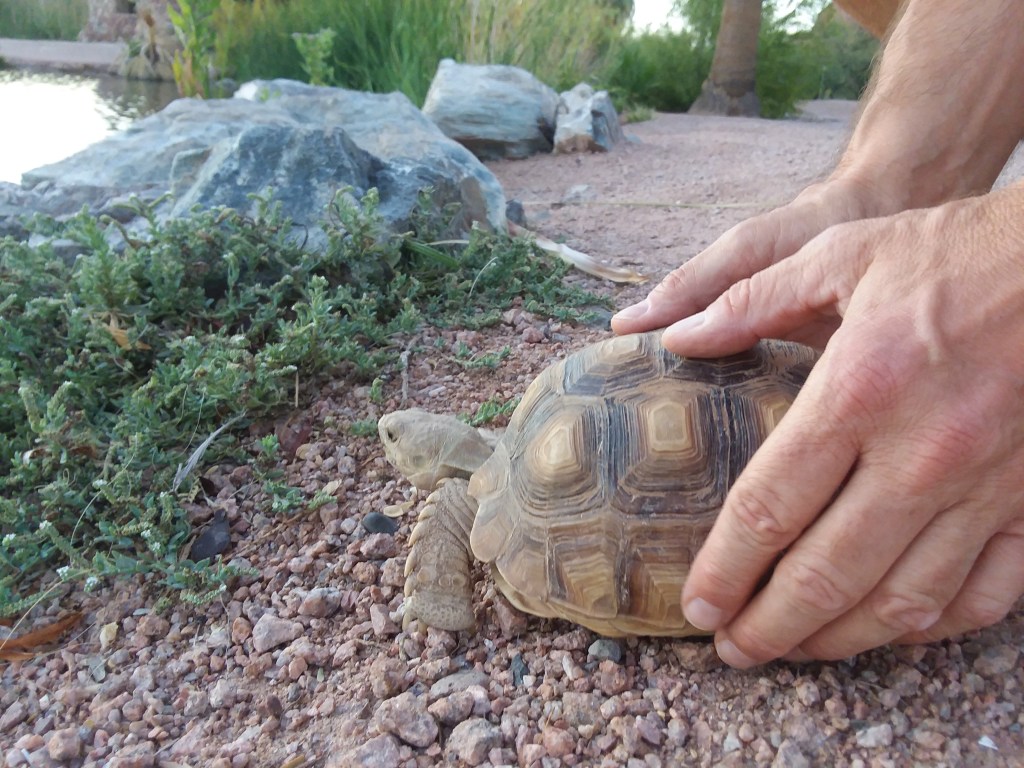
You were lost. Stranded on a concrete path. On the way to nowhere. Far from food and water. Farther from home and hope than you knew.

You didn’t mind when we intervened. We carried you in careful palms. Wind in your face. Legs suspended. Each step we took felt like a mile.

You were ready to roam when we reached your desert oasis. We lowered you to the water’s edge. Your feet touched the ground. You never looked back.

You were found.


A Path I Might Have Missed

DSC07801 (2)

There you stood, rare and bright. Defying the odds. Shining in a field far away. Flourishing in a wide open world. Sparkling in the foreground of my dreams.

I still see you, sunny and true. Unfolding under the sky. Craning for a mountain view. Growing taller everyday. Promising petals on a path I might have missed.

Written by Mark Johnson, September 6, 2019

Still Counting in September

PillTray_090219

“What greater thing is there for two human souls than to feel that they are joined — to strengthen each other — to be at one with each other in silent unspeakable memories.”

George Eliot — English novelist, poet, journalist and translator

***

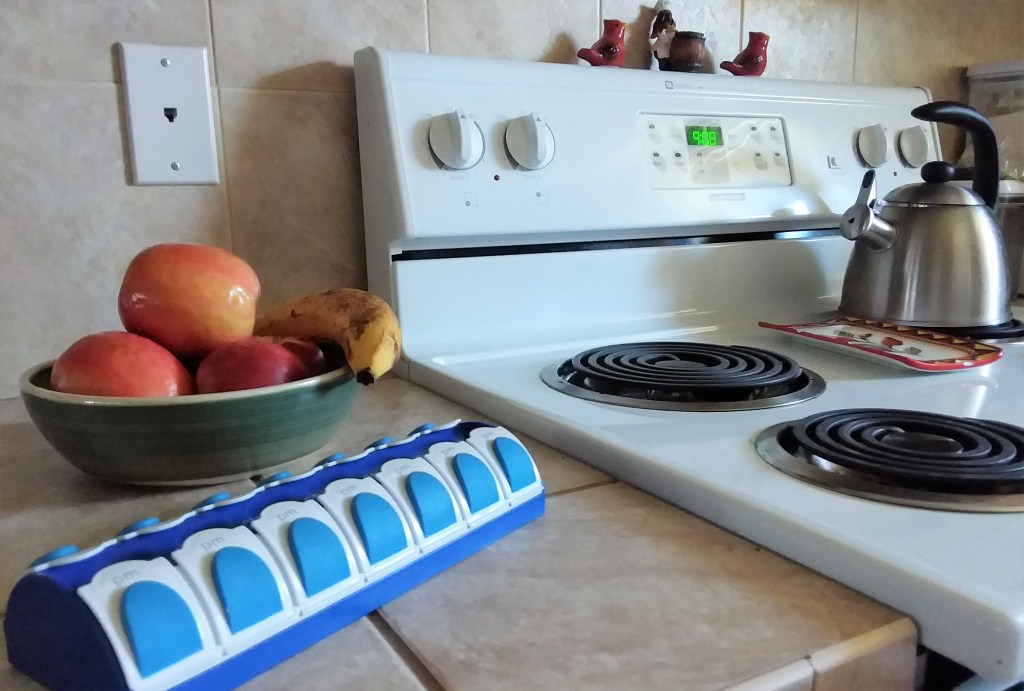
George Eliot had it right. Memories are a powerful human connection. Without a moment’s notice, we can be transported back to a person, time, and place. Often, this happens as we complete our simplest daily activities at home in the kitchen. Pouring a cup of coffee. Biting into a crunchy apple. Stirring a pot on the stove. Or, in my case, counting and depositing pills into a tray.

On the surface, this may seem like a purely clinical exercise. But it was something significant I did for my mother during the last several years of her life as her macular degeneration worsened. As her dementia deepened. Every other Saturday morning, I drove twenty miles from my home in one Chicago suburb to hers in another. Each time I counted out two weeks worth of medications for her.

Of course, our visits consisted of more than medication administration. We shared late breakfasts, early lunches, short walks and longer stories about our lives and love of family and nature whenever her health and the weather permitted. Neither of us ever imagined I’d  write about our journey years later in what became From Fertile Ground.

Yesterday in Arizona, as I was filling my own tray of medications for the coming week, I was reminded of those intimate Saturday mornings with my mother. Sorting her pills in past Septembers. Doing what I could to help sustain her life for another two weeks as the late summer light in northern Illinois produced elongated shadows.

Of course, it was all worth it. I would do it all over again. But at least now I have the memories to savor. At least I’m still counting in September.


Hot Rods to Hell

DSC08182

Despite the hellish Arizona heat (which has had me in a funk) and the general absence of much-needed monsoon rains this summer (more on that later), there is something stunning and cinematic about living in the desert southwest. Big skies. Jagged mountains. Spiky saguaros. Red rocks. Dazzling sunsets.

I realize I may get a few eye rolls here from a pragmatist. Or someone who’s lived in the Valley of the Sun for his or her entire life. But remember. I’m coming at this from the perspective of having spent thirty-plus years of my life in relative flatness. Namely, northern Illinois, where you can drive for miles and know you’ll never see a rise in the grade of the road.

Evidently, I’m not alone in recognizing the allure of a western landscape. Case in point: Hot Rods to Hell. It’s a rollicking road trip film about a middle-aged couple, who decide to leave behind the civilization of the east for an overdue escape to the desert in the west.

As the 1967 flick begins, traveling salesman Tom is recovering from a car accident that has injured his spine. Fortunately, he survives mostly intact. But he’s left with jittery nerves and a chronic back ailment. Tom and his wife, Peg, decide the best antidote is to leave their Boston home. They opt to spend their later years operating a motel in the California desert. They figure it will be a quieter existence and the dry heat will be good for Tom’s back.

It all makes sense, right? But they encounter a few problems on their way west. Tom (played by a haggard Dana Andrews, who’s nearing the end of his rope and career) and Peg (portrayed by a frantic Jeanne Crain, who must have needed the money desperately) are derailed on their journey by a band of teenage hoodlums.

The carousing kids crave controversy, drag racing and Tina. She’s Tom’s and Peg’s shapely, seventeen-year-old daughter. The terrible teens become fixated on the idea of trying to drive Tom and his family off the road. Apparently, just for the thrill of it and the chance for a rendezvous with Tina.

It would be criminal of me to spoil the ending of this overwrought, drive-in disaster, because it is a super-suspenseful spectacle that devolves into scene upon scene of jaw-dropping, delicious, B-movie mania. However, be forewarned. This desert debacle includes a cameo appearance by Mickey Rooney, Jr., and his band, (yes, Mickey had a son … and his son had a band) performing poorly in a seedy club that just happens to be on the premises of the motel, where Tom and Peg will soon become landlords.

At any rate, if you follow my stories, you know that, beyond the fact that my husband’s name also is Tom, there actually is a thread of thematic truth to be salvaged here. (Even though, my Tom doesn’t have a back problem or a nervous disorder; we have no plans to buy or manage a motel hideaway; we don’t have a teenage daughter; my name isn’t Peg; and I my friends tell me I look nothing like Jeanne Crain.)

When Tom and I packed up our car and traveled west in July 2017, my surprise heart attack in St. Louis nearly ran us off the road like a pack of hell-bent, drag-racing teens frantic for on An Unobstructed View. But, like Tom and Peg, we survived the experience. Now in my wide-eyed sixties, I write poetry. I dodge crazy Arizona drivers. I tell screwball slice-of-life stories. I bask in the dry heat. I swim outdoors to keep my heart pumping.

And, when torrential rains boil over the mountain peaks and spill into the valley, I savor the monsoon storms. Like the one that blew in last night unexpectedly. Blowing dust and bending palm trees. Igniting the atmosphere. Lighting up the sky. Dumping an inch of rain on the parched Phoenix area. Reminding me as I drove home through the shadowy Papago buttes that these “bonus” years in the desert southwest after that fateful road trip are an ever-evolving chapter in a story that’s far from flat.