Tag: reflections

Elder Gay

I met a new friend for lunch yesterday. It’s a rather unusual, sweet story. For that reason, I need to write about it.

About three months ago, a young reporter sent me a message via my contact page. He saw a nostalgic piece I wrote about my college years at the University of Missouri.

It included a reference to Hinkson Creek and an abandoned quarry there, which I and many other college freshmen and freshwomen frequented on Friday nights to swim and party.

Apparently, the creek is now polluted–has been for more than thirty years–with an array of contaminants, but there is a push by various environmental groups to salvage it.

In his note, this earnest reporter–a journalism student at the same university I graduated from in 1979–wanted to talk with me to include a few comments about my recollections of Hinkson Creek. He wanted to give the story some texture and a touch of humanity.

As background, I don’t always respond to these sorts of messages. Too many of them are generated by bots or feel exploitive. But this one felt different. So, I responded.

A few days later, we had a pleasant phone conversation. I shared information about the fun I had with friends at Hinkson Creek in the mid 1970s and how sad it was for me to learn that Hinkson Creek is now unsafe due to the presence of E. coli in the water (according to data on the EPA website).

Before I said goodbye to the reporter, he told me how ironic it was that I lived in the Phoenix area, because he would be moving to the Valley of the Sun in July to be with his partner. I suggested he contact me again once he got situated here.

Last week, I received a text from this young man, this recent Mizzou journalism graduate who is forty-eight years younger than me.

He now lives in Phoenix and is looking for a writing job here. He included a link to the story he wrote which appeared in the Columbia Missourian with a few quotes from me.

It’s a thorough, well-researched story, but that’s not the point of my story.

Anyway, I thanked him for sending the link to me. He asked if I was still interested in meeting for lunch. I responded with a definite YES.

Yesterday afternoon–one day before the rain finally arrived to ease our parched earth here–we met in person.

This smart, enterprising, young gay man and I talked about his job search, my writing and my husband’s passion for films, how he and his partner met, his love of writing and music, his early impressions of Phoenix, and my recommendation that he find his place in the LGBTQA community here.

I told him that at this point in my life it is especially meaningful for me to help a younger man–a young gay man–by offering a little guidance in a harsh world.

He smiled when I told him I would pick up the check and–before we parted ways, but after I invited him and his partner to come to the next Phoenix Gay Men’s Chorus concert in December–he said jokingly that meeting me is kind of like having an “elder gay” to talk with.

Ordinarily, I wouldn’t want to be referred to as an “elder” anything. But in this case, it was a term of endearment. So, I laughed and accepted it that way.

***

My wise, sassy, and “elderly” Aunt Thelma once told me when she was in her late sixties, and I was about this young reporter’s age, that “we are all like ships passing in the night.”

I have always taken that to mean that life is fleeting, and that we should try to help each other around every turn. That we should try to do the right thing, because we never know what tomorrow may bring.

I think Thelma would have been proud of me yesterday.

Who could have imagined that a story about a polluted creek would lead to a pleasant lunch?

More important, that I might reach forward to help a young gay man, while looking back to remember that unrealized twenty-one-year-old-gay version of me who most certainly would have loved a little advice from an “elder gay” friend.
A Dad’s Dream

Though nothing is predictable in 2026, the arc of every life includes mostly ordinary activities: going to work; shopping for groceries; filling up the gas tank; navigating small and large challenges that enter unannounced.

But it is the less frequent, extraordinary moments–the rites of passage–that outweigh the mundane tasks of life. Graduations. Weddings. Births. Deaths. They supersede in our psyches. They flicker forever in our memories.

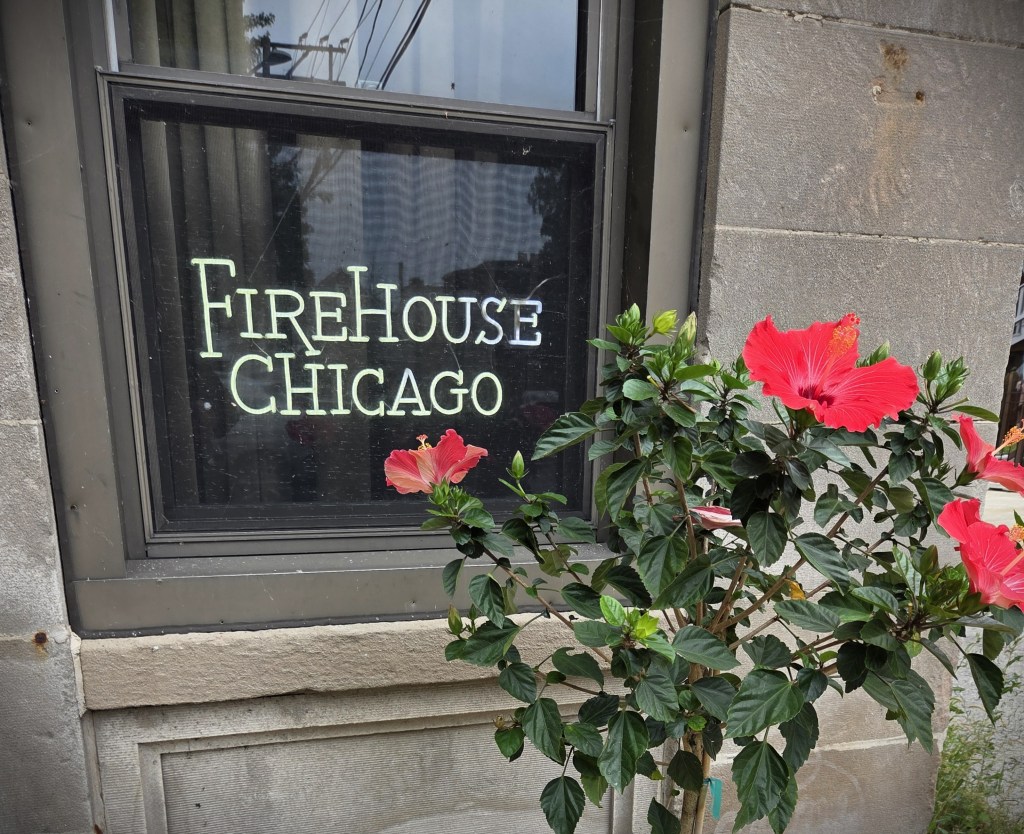
On Saturday, August 29, one hundred and twenty of us gathered at the Firehouse Chicago (a decommissioned firehouse transformed into a wedding venue) in the Edgewater neighborhood of the Second City. We came to witness the marriage of Kirk and Jennifer, my younger son and daughter-in-law.

It is a dream come true for any parent to see their adult child find their own path. To be more specific, this dad survived a heart attack on his sixtieth birthday. So, living to see Kirk marry the one he loves–the one who loves him–is the proverbial cherry on top of a hot fudge sundae.

Jennifer’s and Kirk’s early-evening, outdoor wedding ceremony was a cultural tapestry. It melded elements from their collective Jewish and Catholic upbringing.

For instance, they were married under a chuppah, a rectangular wooden structure laden with flowers. In the Jewish faith, it symbolizes the home they will build together.

After they shared their vows, a proud gay couple (my husband Tom and I) read the couple’s loving intentions for their marriage, for their families, for those who have gone before them, for their community, for the world at large in need of a hefty infusion of love, hope, humanity, equality. In every instance, the response from the congregation came in return: “Hear Our Prayer.”

A brief, unexpected shower in the middle of the ceremony–ushered in by rolling gusts of wind and the steady thrum of chirping cicadas–never dampened our spirits. It only added to the texture of the day.

As I write this, Tom and I are back home in Scottsdale, Arizona. I am fighting off the remnants of a cold. We have unpacked our bags from Chicago but haven’t yet unpacked every indelible moment from this whirlwind family wedding.

I do know in my heart that this was more than a joyous wedding. It was a healing experience to mend fences with my ex. To conjure the spirits of family members gone but still loved. To stand tall beside my husband for all the world to see. To feel true love, palpable and present, beaming between my son and his bride.

All of it gave me hope.

Canad-ahh

Somewhere between Jasper and Banff–during the last week of July 2026 in Alberta, Canada, on a coach, on a trail, or in a hotel room–I lost my neon-yellow Phoenix Gay Men’s Chorus cap.

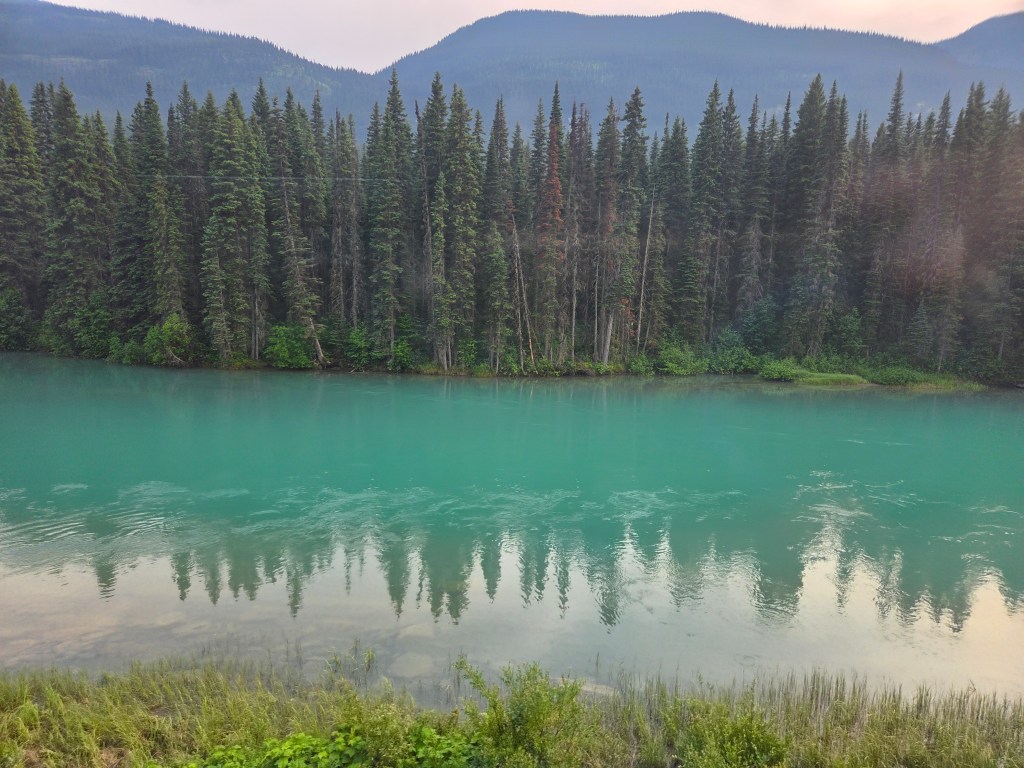
But what I found with my husband in Canada’s astounding scenery and emerald waters is far greater, more meaningful, and certainly more lasting in the flipping pages of my memory.

Tom and I planned our Canada adventure months ago to commemorate thirty years of being together. (We met in the Chicago suburbs in August 1996.) Fresh Tracks, a Canadian tour group, helped us orchestrate our eight-day itinerary.

I told my husband, “I want to spend money in Canada in 2026.” I wanted to see the beauty above us on the map. I wanted to embrace the scenery and people, who are our northern neighbors.

I wanted them to know that many–probably most–Americans love and respect them. We admire their commitment to protect their natural resources.

Over the course of the next week, I was able to see that first-hand in the cleanliness of their national parks. No plastic bottles rattled around in rivers, lakes, or streams.

I have craved a visit to the coastline and mountains of Vancouver for years. So, we started there.

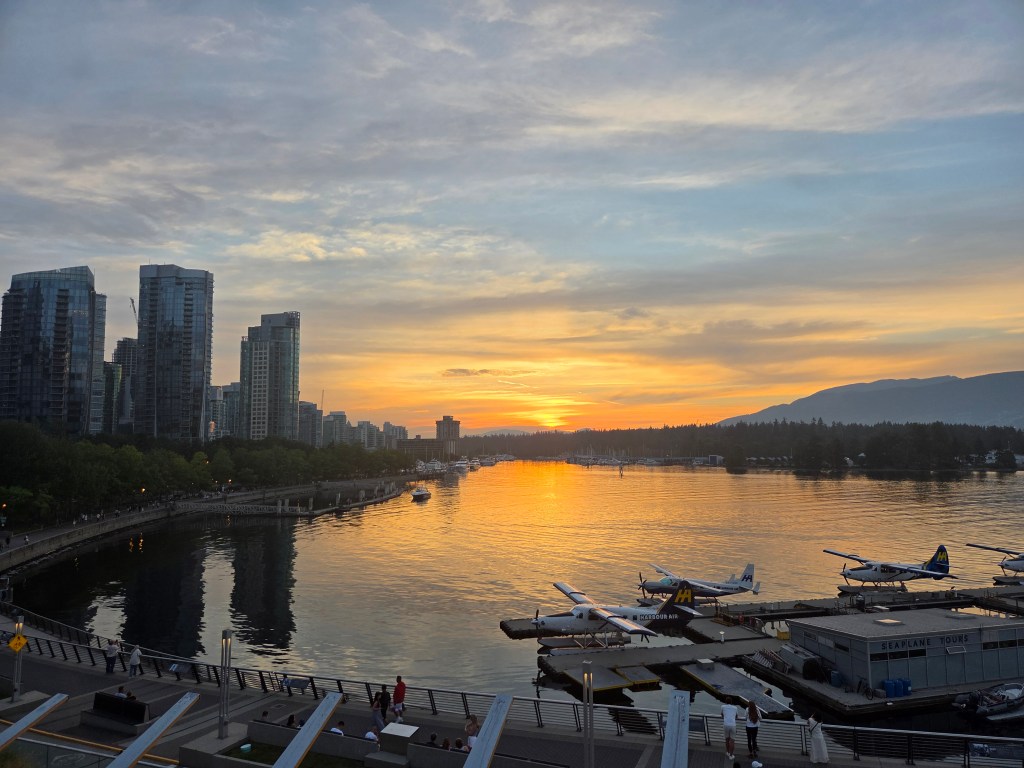
Fresh Tracks arranged an exquisite dinner for us at the Coal Harbour Cactus Club. We toasted each of with a glass of prosecco and watched the sun set over the bay. It painted a tranquil mood across a colorful canvas.

We expected to spend the following few days traveling via train on the Rocky Mountaineer through the Canadian Rockies. But fires in British Columbia limited the rail portion of our excursion to one day.

We made the best of it, traveling from Vancouver to Kamloops via coach with about thirty others. Two kind, upbeat Rocky Mountaineer staffers walked down the aisle handing out water and snacks–packages of chips, cookies, and candy.

Early on the morning of July 24, we climbed onto another coach that escorted us to the Rocky Mountaineer rail station in Kamloops a mere twenty minutes away.

Sifting through the smoke-tinged skies of Kamloops, we boarded the train and arrived on the top deck for a Gold Leaf view through a glass-encased dome.

We introduced ourselves to Mark and Kim, a fun-and-friendly couple from Abilene, Texas, who sat across the aisle. All four of us–and a train full of others–faced forward.

For the following ten hours, the welcoming, service-focused Rocky Mountaineer team entertained us with vivid stories of the landscape we would traverse together and the animals we might encounter.

At scheduled intervals, they invited us to the lower level of the train for a sumptuous, gourmet breakfast … I fell in love with the lemon cranberry bread topped with a decadent glaze.

Several hours later, we returned there for a delicious lunch/dinner, prepared magically by a team of chefs on board. The wine and drinks were free flowing.

We downed a glass of mimosa–and later pinot noir–as we traded stories with Mark and Kim and gasped at the steep river-laden mountains and canyons that brought us to Jasper … an easy-going ski-town still recovering and rebuilding after a devastating forest fire in 2024.

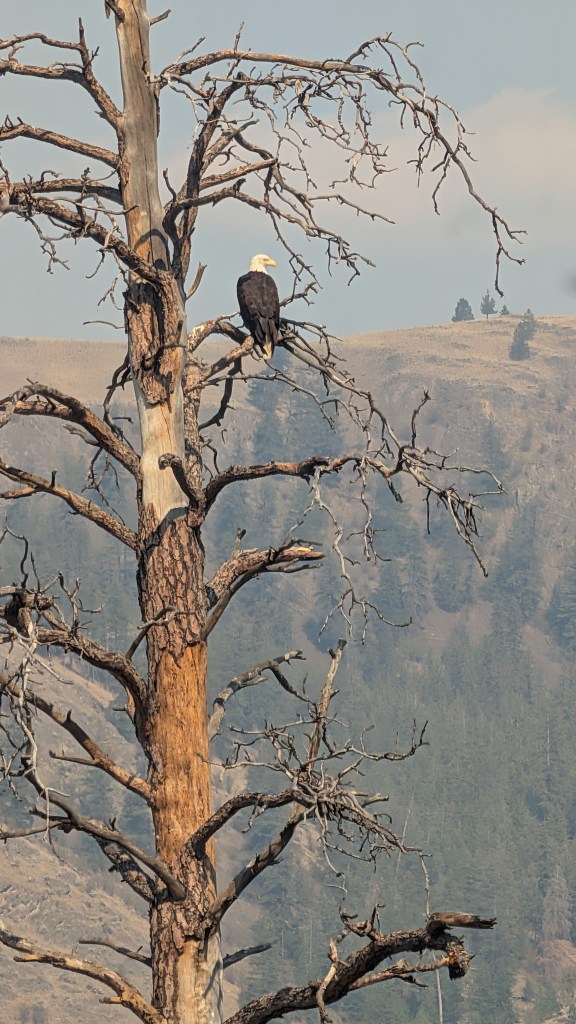
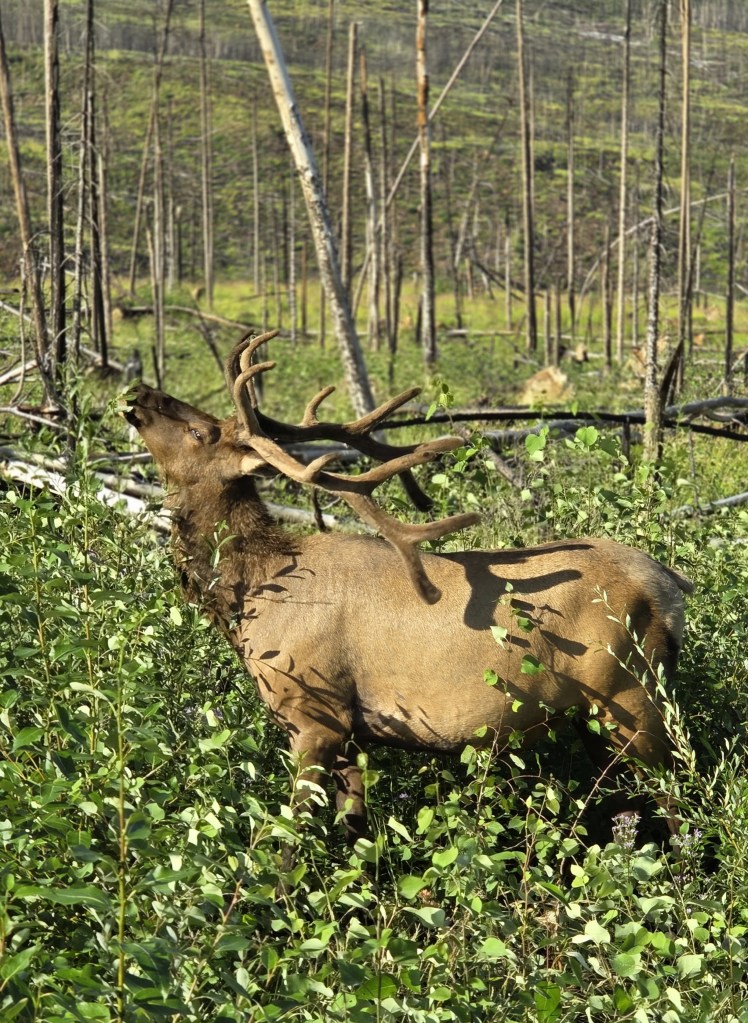
Along the way, eagles, elk, and big horn sheep guided us sparingly. They appeared unimpressed and unconcerned with our presence as we rode by, though we on our train cars and coaches lunged for our cameras and phones in pockets to bring home evidence that we had actually seen wildlife, unjaded and unaware of the news in any day.

Midway on our vacation, after leaving Jasper, we spent a night and morning frolicking at the iconic Chateau Lake Louise. We absorbed the privilege of simply being there and seized the moment by capturing photos of the breathtaking scenery … something Tom’s parents had done when they visited Lake Louise in 1988.

A highlight of our trip was journeying to the Columbia Icefield in Alberta. When we arrived there in our Sundog coach, we donned four layers each, including our easily packed windbreakers. They proved ideal as we ventured out to walk on a glacier.

The temperature on my phone said fifty degrees Fahrenheit. In the icy, pine-scented air it felt more like forty with a biting breeze. Of course, my blood is thinner now, living nearly all of my days in the Sonoran Desert.

By the time we arrived in Banff, it meant we were nearing the end of our Canada adventure. I did my best to “soak up the scenery” as my father said back in the 60s as we rode up and down hairpin turns in the Smoky Mountains of Tennessee and North Carolina.

Well-appointed lodges and snazzy shops line the main streets in Banff. At times we felt the size of overflowing, late-July crowds and traffic there.

None of that deterred my fascination with the Bow River rapids–and ultimately its falls–that raced through town or the eight-minute gondola ride we took on our final Banff day beyond alpine heights to the top of Sulphur Mountain.

Through it all — as I paused to “soak up” breathtaking scenery in the form of still photos and even a few videos of waterfalls and vast mountain ranges stretching far beyond my senses — I realized the most important thing of all: I was blessed to witness the wonder of western Canada in July 2026 and to see all of it with the man I love.

The Language of the Desert

I live in the Sonoran Desert and the Sonoran Desert lives in me. That’s been the case for nine years. My most prolific ones as a writer.

The language of the desert–like grains of sand that blow in through the door–is now part of my creative being.

Shimmering sunsets. Slithering lizards. Skittish quail. Stray cats. Spiky cacti and succulents. Scattering snowbirds. And those are just a sample from the letter “s”.

When I served as a “Writer in Residence” at the Scottsdale Public Library last spring, I prompted the writers in my workshop to explore the role setting plays in the stories of their lives.

I asked them to consider a place in their lives that is or was prominent and how that place might be considered a character in what they have to say. In the stories they want to show and tell.

The places I have lived or frequented have certainly provided texture to my existence and informed my perspective. The orange earth of the Carolinas. The rolling hills of Missouri. The flatlands of Illinois. The rugged buttes of the Arizona desert.

They represent distinct periods in my life, and–in hindsight–I now understand better why they each deserve their proximity across my body of literary work, six books … a lifetime of stories.

The heat here in July is intense. But it is bearable because the Sonoran Desert–even in its most torrid state–is otherworldly.

At times it feels as if I am living on the moon. The astonishing natural beauty and stately saguaros–sentinels that stand tall in valleys and on hillsides here–have led me to a creative destination outside the orbit of my midwestern sensibilities.

One where I “write on” … as I just celebrated my sixty-ninth birthday and begin this final lap in my sixties. Learning and growing. Teaching and influencing.

Standing tall as a gay man, a husband, a father, a writer. Proud as a saguaro despite my visits to the cardiologist and dermatologist to manage my personal frailties. Rooted to this vivid place, the Valley of the Sun, that is my home.

***

Note to those of you who live in the Phoenix metropolitan area: On Thursday, July 16, from 5 to 7 p.m., I will be signing and selling copies of my latest book, Sixty-Something Days, at Grounds on 2nd in Old Town Scottsdale, located at 3703 N. 69th St.

This charming neighborhood place (coffee and wine bar) is one of my favorite spots in our Scottsdale, Arizona, community. It truly is an inclusive, creative space my husband Tom and I frequent to write, read, and chill with friends. In fact, I wrote and edited a considerable portion of my latest book there.

If you are in the area, stop by to sell hello, grab a book and a glass of wine. I also will have a few copies of my other five books–memoirs, poetry, and short fiction–on hand in case you are looking for options to add to your summer reading list.

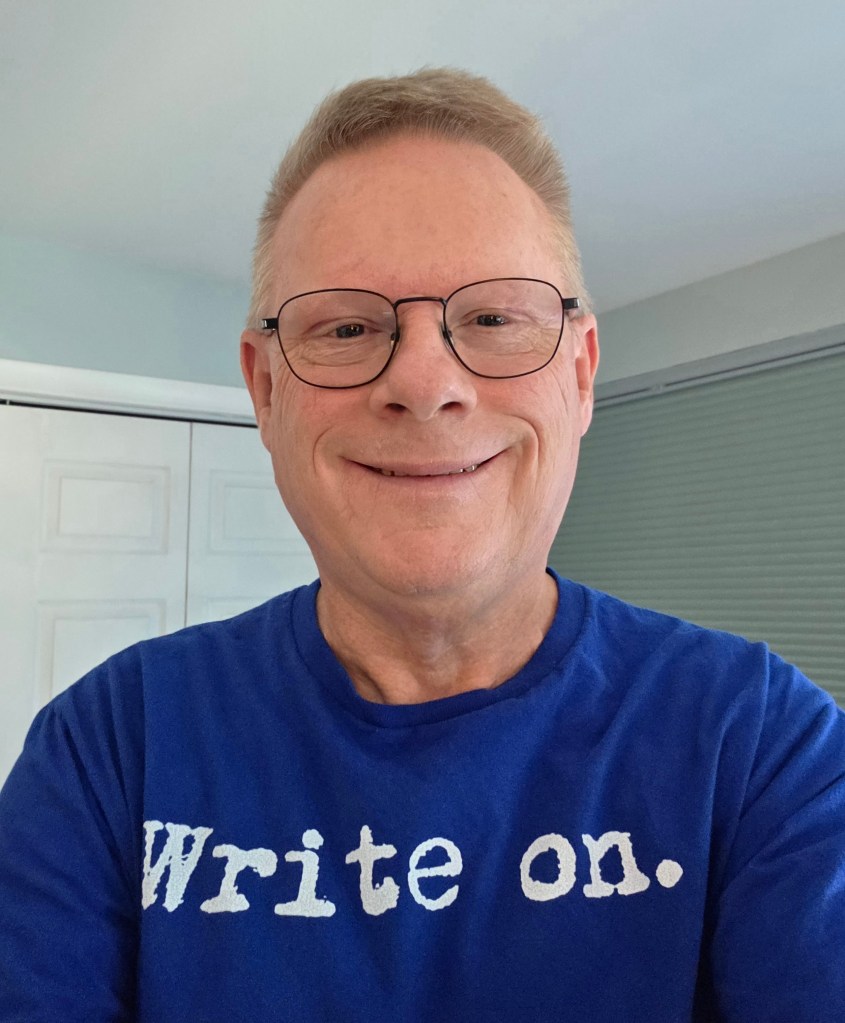
In April 2026, friends at the Scottsdale Public Library gave me this shirt after I completed my “Writer in Residence” stint there.

Too Darn Hot

“But when the thermometer goes way up and the weather is sizzlin’ hot, mister man with a plan is not. ‘Cause it’s too, too, too darn hot.”

***

As the heat rolls into the Valley of the Sun this week–100-plus high temperatures through Saturday–this snappy tune, which Cole Porter wrote in 1948 for his Broadway show Kiss Me Kate, repeats through my brain.

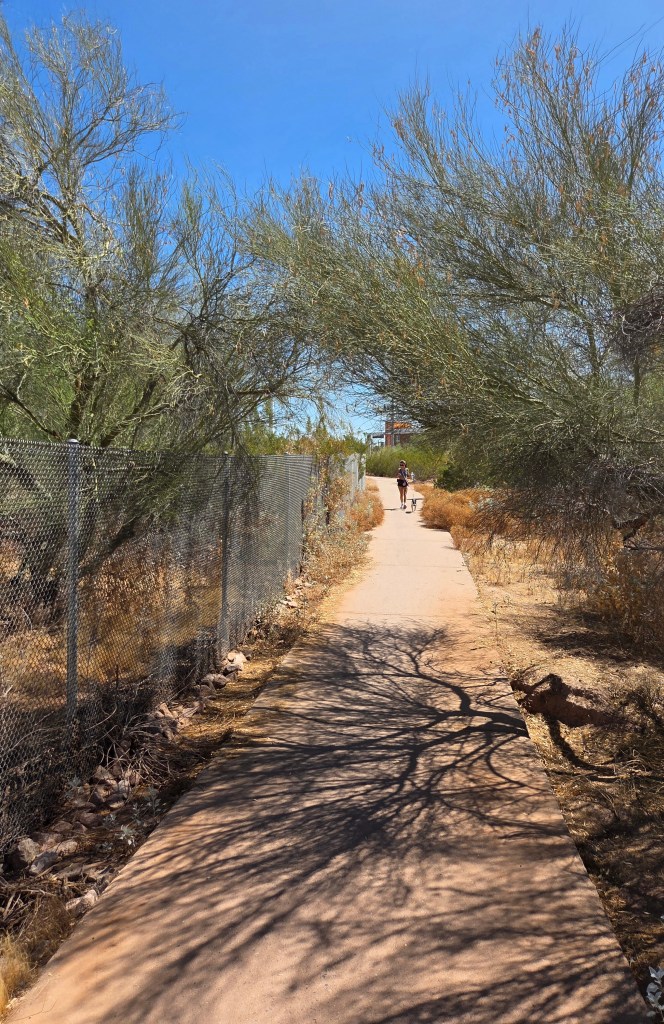
It’s certainly “Too Darn Hot” to hike outside in June here, unless you do it early in the day. That’s what I–and a young woman walking her Boston terrier–did Monday around 9 a.m. Nobody else was on the Papago Park trail near my home.

This morning I opted for swimming thirty lengths in the relative cool of Chapparal Pool. How I’ve missed submerging myself underwater (thanks to a couple of dermatological procedures that kept me at bay).

In the afternoons, you’re better off holding up in the Scottsdale Public Library to escape the heat. That’s where Tom and I have sequestered ourselves today, along with a few dozen others, strategically stationed at square wooden tables, hovering over their books and laptops.

Other than the heat references, why would I be channeling an old Broadway tune? Because my next choral concert with the Phoenix Gay Men’s Chorus–“Broadway Lights”– is fast approaching: June 27 (2 p.m. and 7 p.m.) and June 28 (2 p.m.) at Tempe Center for the Arts.

As described in our promotional materials, “It will be a spectacular celebration of some of Broadway’s most beloved musicals. From the soaring melodies of Wicked and The Sound of Music, to the show-stopping energy of Hamilton, Moulin Rouge!, Hairspray, Into the Woods, The Book of Mormon, The Wiz, and The Greatest Showman, this season finale is packed with music that has captivated audiences around the world.”

Coincidentally, “Too Darn Hot”–timed beautifully with the inevitable onset of our desert heat–is the closing number for Act One.

If you live in the Phoenix metropolitan area, step into one of the coolest concert venues around: the Tempe Center for the Arts. Get your tickets at http://www.phxgmc.org.

You may be wondering “Since it is Pride month, is there a LGBTQ Pride element to this concert?” The answer is a resounding “YES!”

My chorus mate August and I have teamed up to write the libretto for the concert. It features nine storytellers, who will describe how Broadway music has served as a beacon for the LGBTQ+ community in happy and sad times.

Together–the music, the stories, and a slate of hot dance numbers–will combine to create a full theatrical production, which our loyal audience has come to expect.

This will mark the completion of my ninth season (singing and writing for) with the Phoenix Gay Men’s Chorus.

I still recall auditioning for the chorus in August 2017. Tom and I had just moved to Arizona from the Chicago area.

I was depressed and anxious, desperately trying to regain my health, to uncover an unobstructed view after surviving a heart attack on the way west in July 2017 on our sixtieth birthday.

Finding the chorus, nurturing new friendships, and reigniting my passion for singing has been a key element in my recovery. It helped me lighten my mood and smile again.

When I step onto the stage again on June 27, I know I will feel grateful for the music and the nine years of creative discovery. But also, for this safe haven. This supportive community of people.

They have helped me to realize I still have a lot to give. I still have a lot to say. I still have the ability to stand on a stage and raise my voice, especially now as we cling to the hope that–maybe someday–our democracy can be salvaged.

Hope Is Never Silent

Photo by RDNE Stock project on Pexels.com

Today–May 22–is Harvey Milk Day.

On what would have been his ninety-sixth birthday, I want to remind the world that Harvey Milk’s spirit of compassion, authenticity, equality, and hope still lives within each of us in the LGBTQ community … nearly fifty years after his assassination in November 1978.

In 1977, Harvey Milk was the first openly gay man to be elected to public office in California as a member of the San Francisco Board of Supervisors. Despite his short political career, he quickly became an icon in San Francisco and a galvanizing force and inspiration for the LGBTQ community for his unbridled commitment to civil rights.

We will never know what Harvey Milk might have said if he had lived to see the dream of national marriage equality become a reality in the United States in 2015 and now–eleven years later on the other end of the spectrum–to witness the rapid, daily decay of American democracy, American institutions, and American civil liberties.

But I’m a hopeful person and so was Harvey.

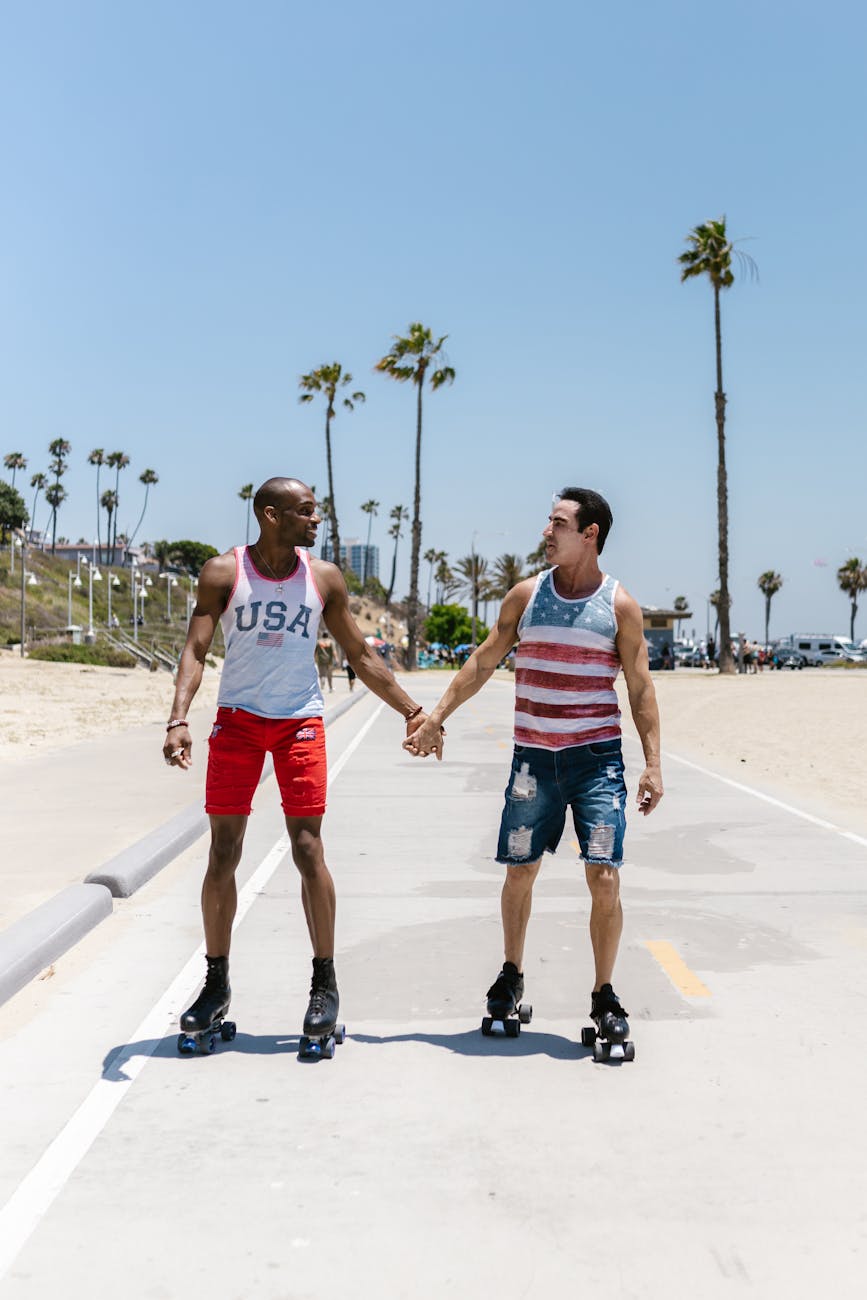
He believed “hope is never silent.” He also believed in visibility, whether it means two men holding hands while roller-skating under the palms or standing in protest … raising our voices in solidarity … and living openly on days that aren’t nearly as sunny.

In these frightening times, the impulse for some might be to take a step or two back into the closet. But Harvey would have encouraged all of us–gay and straight–to do the opposite. To step forward with conviction.

Take a moment to read some of Harvey’s encouraging words.

Harvey’s hope and memory is a salve for all of us–gay and straight–who believe in truth and decency.

Though Harvey is long gone, his legacy of authenticity and hope still lives.

***

“I know you can’t live on hope alone; but without hope, life is not worth living. So you, and you and you: you got to give them hope; you got to give them hope.” Harvey Milk

“Every gay person must come out. As difficult as it is, you must tell your immediate family. You must tell your relatives. You must tell your friends if indeed they are your friends. You must tell the people you work with. You must tell the people in the stores you shop in. Once they realize that we are indeed their children, that we are indeed everywhere, every myth, every lie, every innuendo will be destroyed once and for all. And once you do, you will feel so much better.” Harvey Milk

Another Orbit

This is my space, but I feel it has eluded me lately in the blur of life.

Like the game of Chutes and Ladders, in this month of April I’ve moved forward a few paces–writing another meaningful libretto for the next Phoenix Gay Men’s Chorus concert, Broadway Lights, in late June–while sliding back to heal from physical and emotional setbacks: two discomforting dermatological surgeries; one momentous funeral for a close cousin.

Grief has a mysterious way of throwing you into another orbit. That is where I live and breathe right now. Part of me stands on the sandy soil of Scottsdale, Arizona. Another piece is spinning somewhere else in the stratosphere.

The loss of Phyllis cut close. Not only because I loved her. But because I know she loved me. And she was a significant part of the fabric of my young life in her proximity to others I loved. Others we loved. All of whom are gone.

Our grandparents, Albert and Louise. Her mother, Violet. My father, Walter. My mother, Helen. Our aunt, Thelma.

Despite my disrupted and sometimes traumatic home life in the 1960s–featuring my father’s bipolar swings and my mother’s evening coping mechanism behind the broadsheet of the St. Louis Post-Dispatch–love existed there in our suburban St. Louis house. Love I felt. Love I excavated. Love I salvaged and carried forward. Love I still feel today.

Phyllis appeared in our home a few times a year. Usually in July to celebrate my birthday in our big backyard and in December in our living room to share Christmas dinner and exchange gifts. She was an integral presence in those moments.

There is one other moment that was purely ours. It happened just once. She must have been twenty. I was ten. She was an undergrad at the University of Missouri in St. Louis (UMSL). We both loved sports. She invited me to join her at an UMSL Rivermen basketball game.

I don’t remember much about it … how we got there, what we said to one another … just that we sat side by side in the stands rooting for the Rivermen. I just remember being proud of her. She was pretty, smart, and fun … and she wanted to spend time with her young cousin. It touched me deeply

As I write this, I realize Phyllis represented a form of stability in my life at that time … an escape to a more even, peaceful place that no one in my family of origin could provide.

Identifying that helps me to realize why this loss has hit so hard.

***

On Wednesday, April 22–Earth Day–my husband and I attended a volunteer recognition event at the Scottsdale Public Library. Alexa, the supervisor of volunteers, recognized Tom for his outstanding-and-popular movie series–and then me for my memoir-writing workshops–at the library in 2025.

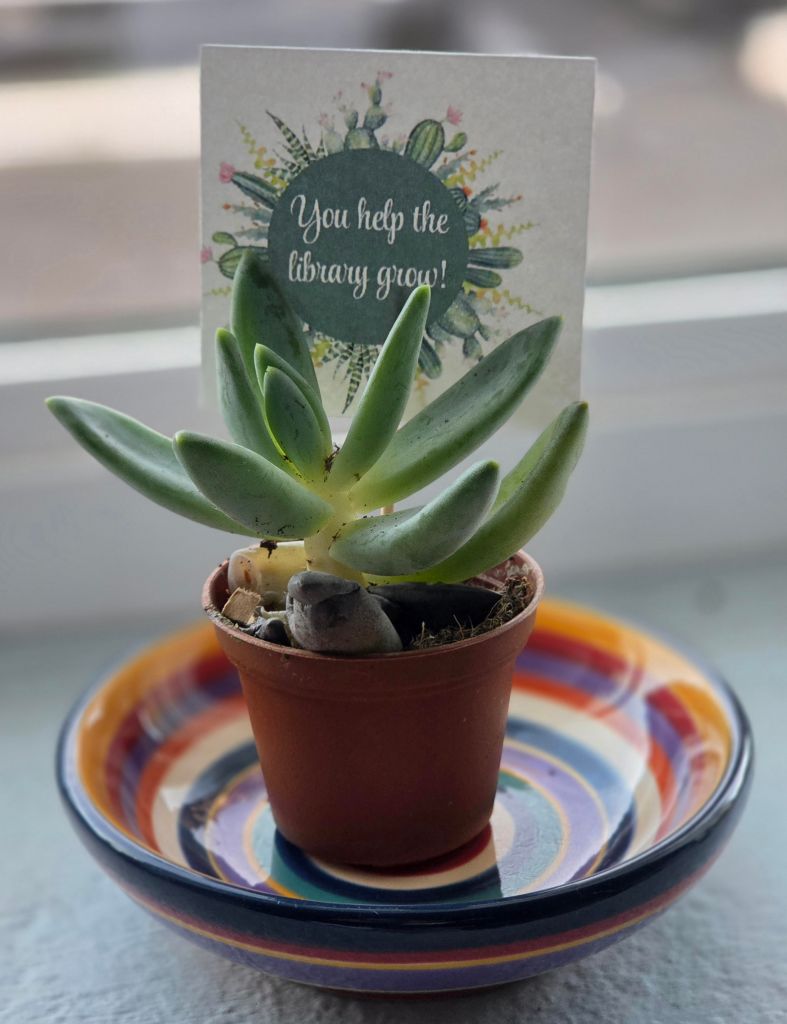
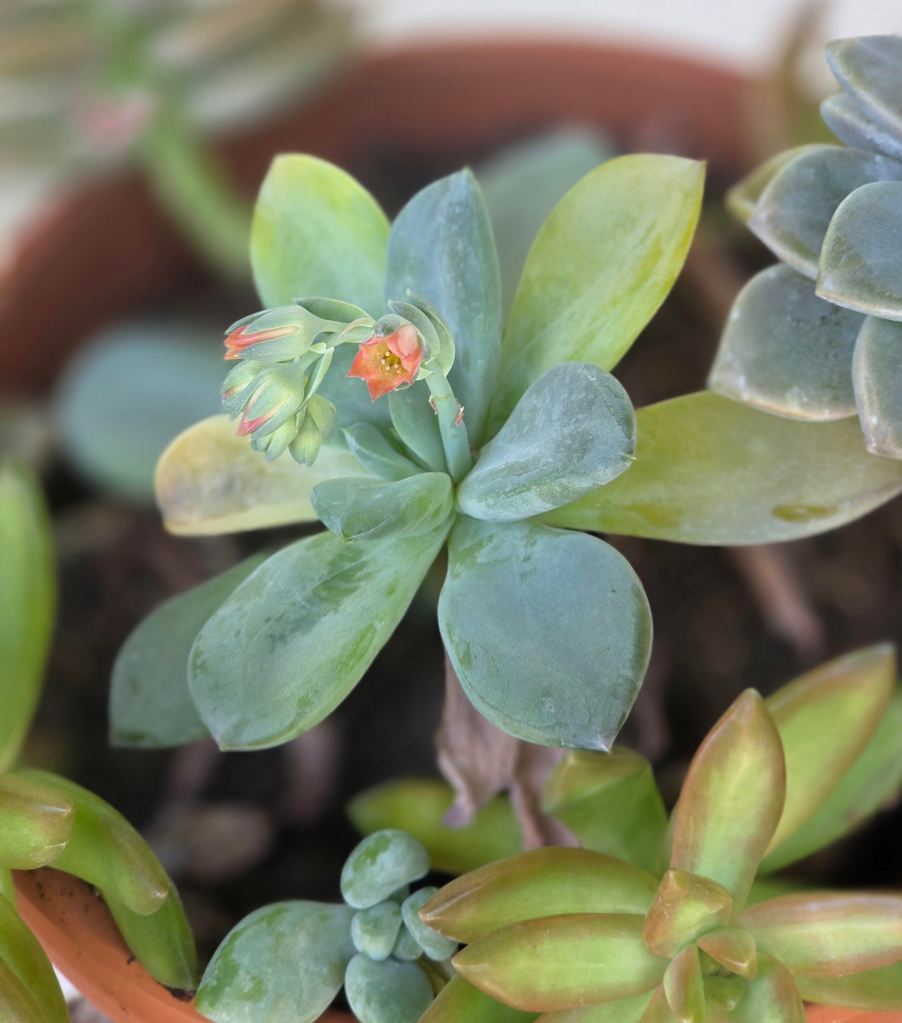
We each brought home a certificate, thanking us for our volunteering efforts, along with a tiny succulent plant bearing an important message. We placed both of them on the windowsill of our south-facing sunroom in Scottsdale.

They will serve as a reminder for me that–even in my late sixties–I’m helping others grow in my community.

I know Phyllis, a life-long educator, valued that, too.

Sensitivity

I pride myself on my sensitivity.

In my book, empathy is an essential quality for writers and human beings in general. It opens the door to developing deep and trusting relationships, but it also exposes us to emotional and physical pain. In this month of April, I have experienced both.

***

On Friday, April 10, Tom and I said goodbye to my cousin Phyllis.

The day before, we flew to St. Louis and enjoyed a nostalgic salad-and-pizza dinner with family in St. Charles, Missouri.

We gathered around a round, wooden table–balancing paper plates piled with food, while sifting through dog-eared photographs of Phyllis with living and deceased members of our Johnson family from the past seventy-five years.

In that space, I felt a meaningful connection with Tom (Phyllis’ husband), Austin and Bryant (her adult sons) and their respective spouses (Amanda and Kelsey).

Meanwhile, Phyllis’ four grandchildren–ranging in age from three to eight years old–danced around the island in Bryant and Kelsey’s kitchen, occasionally patting the head of Bennelli, their large-and-lovable labrador.

Despite the grief associated with the loss of Phyllis, it was a family moment I will cherish. One Phyllis would have loved.

The next morning, Tom and I drove to the funeral at Immanuel Lutheran Church in St. Charles with my sister Diane and brother-in-law Steve.

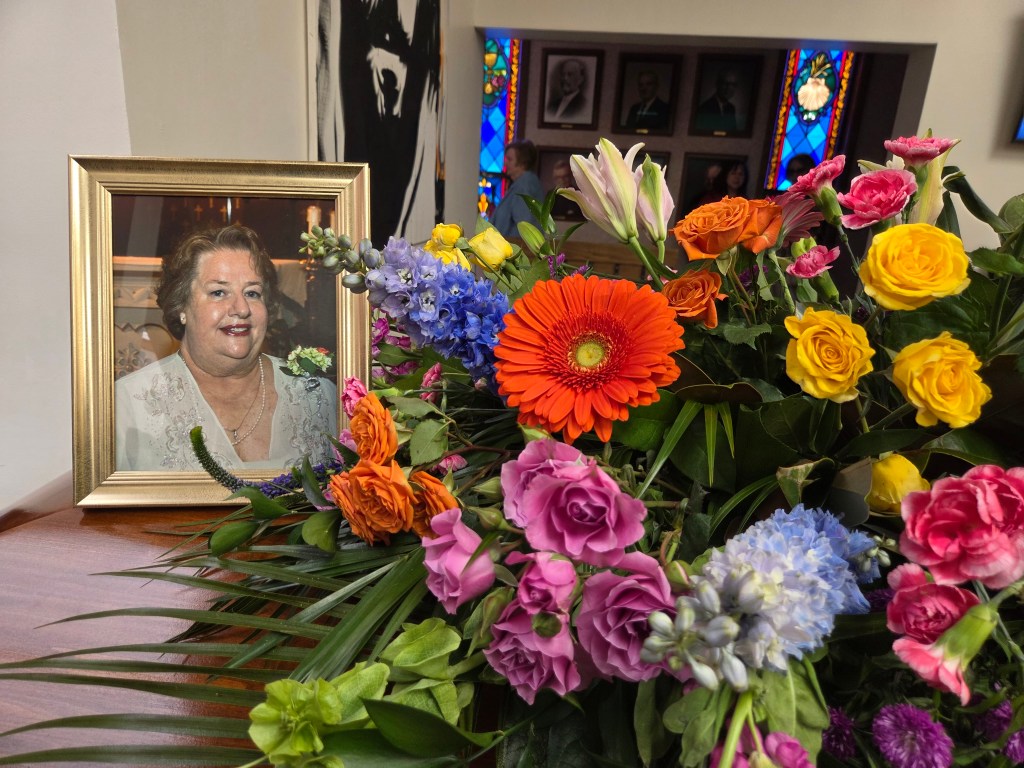
In a large open space connected to the church, Kelsey and Bryant had carefully assembled still photos–from throughout Phyllis’ life–on boards anchored by easels. They placed them beside her closed casket adorned with sprays of colorful blooms.

Overhead, at the other end of the room on a large screen, other images of Phyllis and her family and friends faded in and out on a large screen TV.

As people began moving into the church for the 11:30 funeral service, I felt anxious. Jumpy.

A mix of nostalgia and peace washed over me, as Tom and I found a place to sit at the far-left end of the fourth pew. Diane and Steve joined us there.

I scanned the program and saw that after readings from the old and new testaments–slotted between two church hymns–I would walk to the lectern to share “Words from the Family”. To give a eulogy. To pay tribute to my closest cousin’s life.

I’ve done a lot of public speaking, presenting, and singing on a multitude of stages in my life–but few things as personal as this. I breathed in deeply to quiet my nerves. I unfolded my prepared words and looked out over a congregation of probably two hundred: Phyllis’ family, friends, teaching colleagues, students, caregivers.

In that moment, my anxiety lifted and flew away. “I am honored today to remember Phyllis. She was my cousin. We were born a decade apart in St. Louis,” I began.

The words and phrases flowed effortlessly from there, as I looked into the tearful eyes of immediate family members–three generations side-by-side spread across the first pew.

“I admired Phyllis’ poise, her style, her intellect, her ambition, her sensibility,” I continued. Before I knew it, I was reciting verses from I poem I wrote for Phyllis: The Love We Shared.

I closed my notes. I left the lectern. I paused to pat Austin, Phyllis’ eldest son, on the shoulder for reassurance, kissed him on the forehead, then returned to the fourth pew and sat beside my husband.

I pulled a wrinkled tissue from my suit pocket, dabbed my eyes, and felt sadness and love reverberate throughout the church.

***

Tom and I returned to Arizona last Saturday.

Today I found myself dealing with another form of sensitivity … sensitivity to the sun.

This morning my dermatologist–in an out-patient procedure called MOHS surgery–removed a small patch of cancerous cells from the bicep of my right arm. As I write this, I am taped up with a sizeable patch over that area.

The good news is he removed all of the problematic tissue. There is no pain, just the anxiety (and the pinch of a few needles for numbing) that immediately preceded this morning’s appointment.

In a few weeks, the remnants of that procedure will fade. My dermatologist will extract the stitches.

I will be left with my fourth such scar–one on each limb ironically–from excisions and dermo procedures.

In a sense, these scars are “badges of honor” for having lived nearly sixty-nine years and survived a series of setbacks.

They are proof that as long as I live–as long as I write, sing, slather on sunscreen, and pause to remember the ones I love–I will also remain super sensitive to the blazing Arizona sun.

Anything But Ordinary

On this Easter Sunday, it would be easy to pass by the emerging April blooms of a hidden succulent.

But I forced myself to stop, to welcome, to examine nature’s delicate offering outside my desert door.

Though barely visible beneath the eaves of loss and loud proclamations, it is anything but ordinary.

Looking Over My Shoulder

Back and forth from one end of the pool to the other on this hotter-than-average, magnificent March morning. March 24, 2026, from 9:00 to 9:30 a.m. to be precise. Thirty lengths in the deep end of Eldorado Pool in Scottsdale, Arizona.

Somehow, I wrangled my own lane today. I don’t mind sharing but always feel freer on unobstructed Tuesdays and Thursdays. There are fewer swim-class participants to contend with on those days and–now that the Cactus League baseball games have ended–some of the snowbirds have begun to flock home.

Breathing every eight or ten strokes, looking over my right shoulder, swimming south to north, I spy the blazing sun that threatens my sensitive skin and the wispy-white contrail of a commercial plane flying high above.

Serendipitously, the repetitive swimming motion reminds me what I want to write about today. It is the tenth anniversary of publishing my first book: From Fertile Ground.

On March 24, 2016, Barack Obama was president. I didn’t imagine the waves of what was to come: the growing political insanity, the dismantling of once-reliable American institutions, the general implosion of our democracy in one decade. Who could?

Back then, Tom and I were snowbirds–splitting time between our homes in Mount Prospect, Illinois, and Scottsdale, Arizona.

I wrote most of my inaugural book–a three-generation writer’s mosaic about love and loss in my family–from the suburban flatness of northern Illinois.

But working online–back and forth like a swimmer logging laps between my editor and book designer in Nashville, Tennessee, and me in Scottsdale–I made my final edits in the rugged western landscape of the Grand Canyon State.

I remember the pride of holding the first physical copy of my first book later that week. I know I cried. It was a release of joy and amazement. Most definitely, a seminal moment I shared with my husband.

Sadness crept in, too, because I had written the book to process my grief after my mother’s passing. In a physical sense, I wasn’t able to celebrate that literary moment with her.

But I also know that writing about her and her wisdom-filled letters, my father and his unrealized poetry, my grandfather and fifty-three years of diary entries, and the general sense of freedom I felt visiting my grandparents in the 1960s at their rambling North Carolina farm allowed me to create a healing path out of my grief.

It was–and still is–a story I was meant to write and publish. One I wanted to share with others navigating the devastation of grief.

In the past ten years since From Fertile Ground was born, writing has become that free, unbridled swimming lane that is purely mine. Welcome waves of water and creativity running from my mid-fifties to my late sixties.

Whenever I jump into my writing in the deep end of my emotions, I find a way back to the surface with a new story. Many of them have landed on the pages of my other five books: Tales of a Rollercoaster Operator in 2017; An Unobstructed View in 2018; I Think I’ll Prune the Lemon Tree in 2021; A Path I Might Have Missed in 2023; and Sixty-Something Days in 2025.

Of course, I take pride in that body of work and–more recently–find it tremendously gratifying to share what I have learned with other writers, who need an experienced coach … and a few practical ideas … to tell their own stories.

Today, I also pause and wonder–with a touch of sadness as I write this–how many more stories lie ahead for me. Though I still feel strong, capable, creative, and alive in these golden years swimming back and forth under the Arizona sun, I also feel more vulnerable.

Part of it is the process of aging. The other is the narrowing swim lanes of American society that constrain freedom and the expression of ideas.

Having said that, I choose to end this story on a positive note. Today, I choose to relish the goodness of my life with Tom in this rugged landscape. To give thanks for all the stories that have come from fertile ground over the past ten years … as well as those I have salvaged from the depths of the pool looking over my shoulder to beloved people and places that now live on the page.