In the course of any life–whether you are a woodpecker, hummingbird or a species without wings–sometimes the best you can do is to find nourishment where you can … and just hang on.
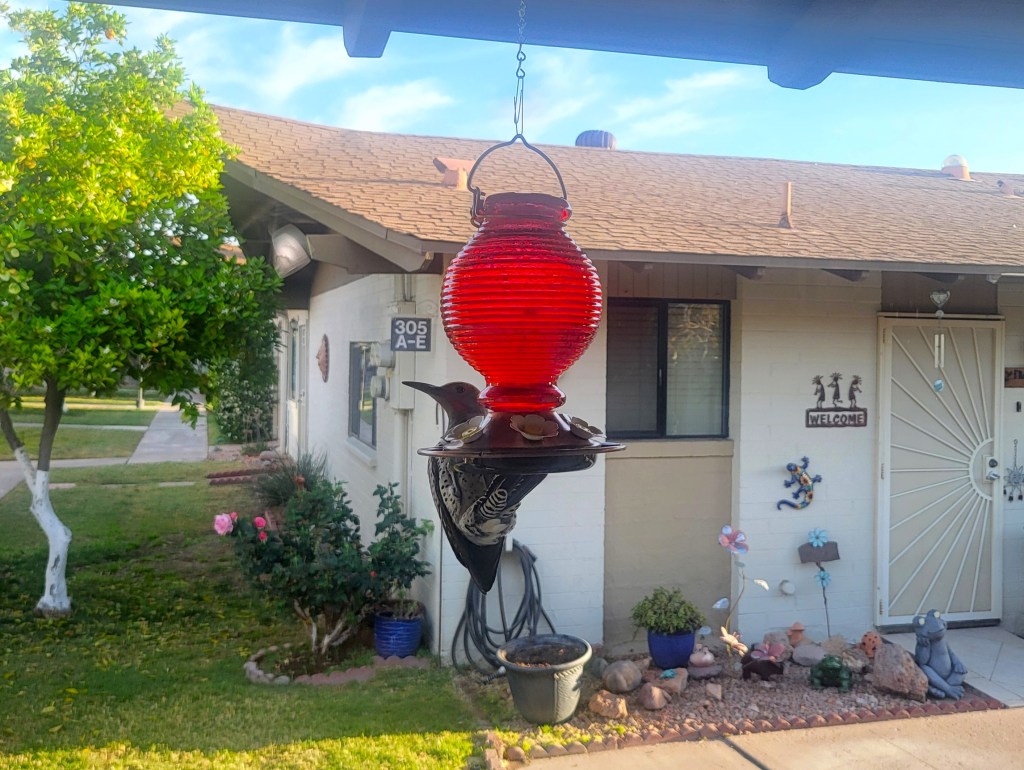
In the course of any life–whether you are a woodpecker, hummingbird or a species without wings–sometimes the best you can do is to find nourishment where you can … and just hang on.
On a regular basis, all of us encounter unexpected small and large obstacles.
One day, they may be as fixable as a “low tire pressure” warning light that illuminates on the dashboard.
The next, something far more unimaginable, unexplainable and unrepairable. Like learning of the apparent suicide of a forty-three-year-old friend, who seemed to embody the definition of vitality.
It was simple to stop at Discount Tire to ask an attendant to increase the air pressure in our tires. (The cooler desert temperatures must have deflated them.)
It will take much longer–time, space, and reflection–for Tom and me to process Chad’s demise.
I’ve often thought that resiliency is one of the most important human characteristics to cultivate.
It is our ability to cope, process, manage, and emote our way through or around life’s setbacks that defines our longevity. This latest loss confirms my belief.
These observations surfaced this morning during a walk in the park in my community. At Chaparral Park in Scottsdale, Arizona to be precise.
My husband and I had just finished our yoga class. Afterwards, he wanted to lift a few weights in the gym.
I opted for stretching my legs on my own under a few puffy clouds that dotted Arizona’s wide-open October sky.
Near the midpoint of my walk a fit couple jogged up as I waited for the light to turn green at Chaparral and Hayden roads. One of them admired my shirt.
“You must be in the medical profession,” he gestured toward the beating heart I wore proudly.
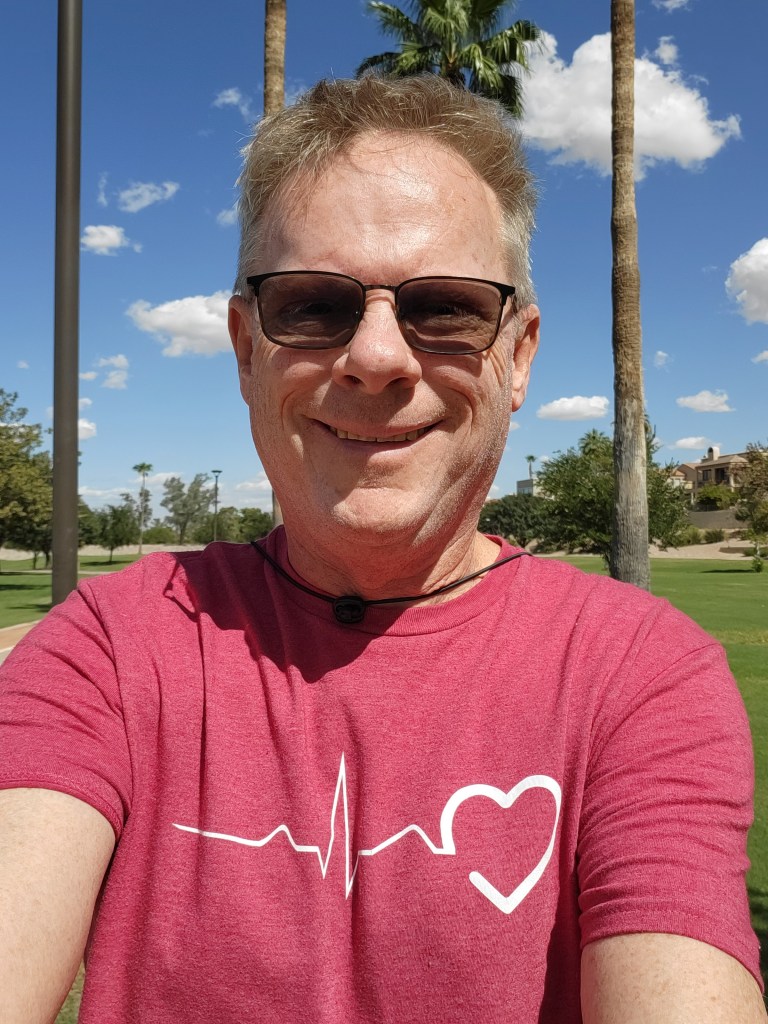
“No, I’m a heart attack survivor,” I explained. “I helped raise money for the American Heart Association.”
They smiled and wished me well. Then, they dashed off when the WALK sign turned white.
It was a simple exchange, a reminder of a trauma I experienced and wrote about which now feels way off in the rearview mirror.
But those few sentences with two sympathetic strangers infused me with a renewed appreciation for my personal resiliency.
No doubt, it’s a quality I observed in my mother, a saver and survivor. She always described herself as a child of the Depression.
It’s also a trait I began to mine in my thirties after my divorce. A strength I’ve fine-tuned on countless treadmills since suffering a mild heart attack six-plus years ago on my sixtieth birthday.
I have no regrets regarding my friendship with Chad, but I wish he would have called Tom or me before he made his worst and most irreversible decision.
I would have told him that while life is no walk in the park, it is always worth the fight. To find a skilled therapist. To dig deep on the darkest days. To survive the pain. To accept our losses.
To embrace each and every day we are granted. To reach out for love and hope. To live to see tomorrow.
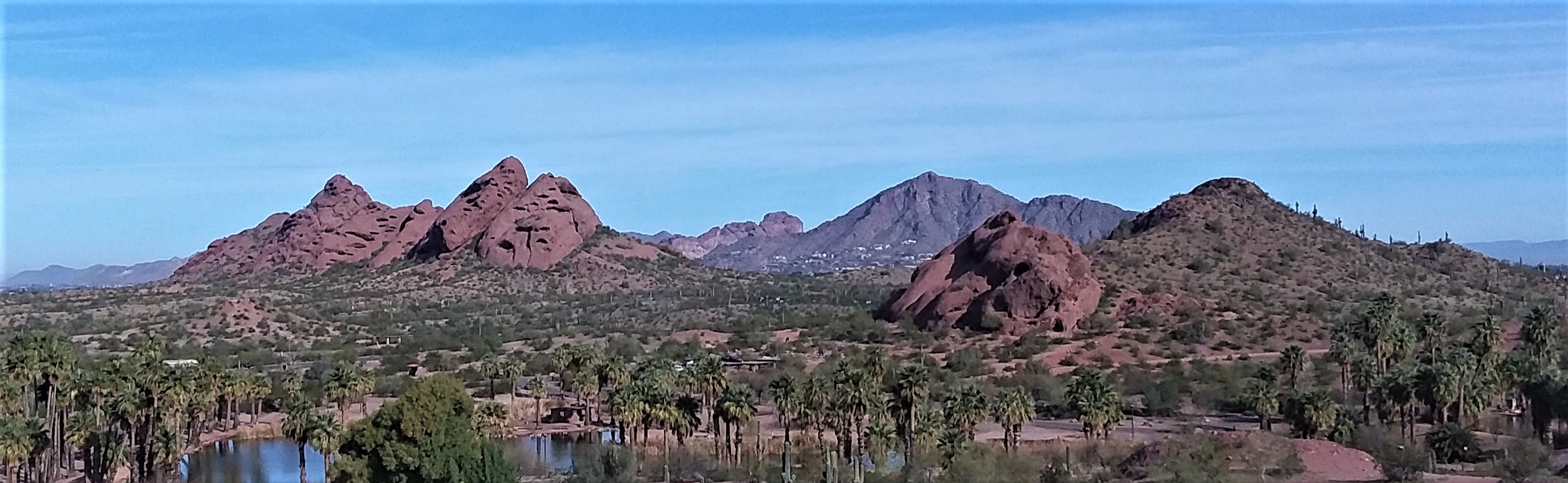
When I look around me, it feels as if I’ve popped the lid off my space craft, poked my head outside, and discovered that I’ve landed on the face of the moon. How is it possible that this warm and dry space, these buttes and saguaros, this vast sky and terrain exist just steps from my modest home?
This is … far and away … a better life than the one I imagined. Especially when I recall a doctor in St. Louis telling me he’d discovered a blockage on the left side of my heart in 2017 on the way west. I couldn’t have predicted that personal scare. Or the global fright of this pandemic that has suddenly increased the value of toilet paper, hand sanitizer, protective masks, social distance and personal space.
What’s my point? Rarely does life turn out the way we expect it will. Sometimes it’s better. Sometimes it’s worse. Sometimes it’s just different. Like five years ago this week. Kirk, my younger son, was on the other side of the world volunteering for the Peace Corps on the Vanuatu Islands. I was worried about his safety and well being, because a natural phenomenon was swirling and creating havoc. This is what I wrote on April 9, 2015:
Kirk is on a plane heading back to the U.S. from his Peace Corps assignment in Vanuatu. It’s been a wild ride for him — and even more so for the citizens of Vanuatu — since Cyclone Pam made a direct hit on the islands in mid March.
Perhaps there is a blessing in all of this. Kirk was able to go back to the island of Tanna, where he had been living and teaching children for the past 15 months. Sadly, much of the island was decimated and seven of the villagers lost their lives. However, he reconnected with his host family, whom all survived, and shared an Easter service with them before saying goodbye.
I can’t begin to express how proud I am of Kirk for the positive differences he has made in the lives of people on the other side of the world. This Peace Corps experience will live with him forever and though I will never meet his host family I am certain they were touched by his generous spirit, warmth and kindness.
Fortunately, since returning to the United States, Kirk’s built a good life. He received his Master of Education degree in 2019. Last fall, he landed a job in the Chicago area as a school counselor. In late March, the day before he began to shelter in place like thousands of other Chicagoans, he moved into a new apartment. He’s even kept in touch with some of his Peace Corps friends, who’ve scattered across the country since 2015.
Like all of us, Kirk is now living through another round of upheaval. The good news is I can connect with him online, over the phone, and via text. Last weekend, he took Tom and me on a virtual tour of his new space. Like five years ago, I am relieved to know he is okay physically and doing his best to adapt to this precarious situation. But, I still worry about his well being and that of his older brother Nick, who lives near us in Arizona with his family.
Tom and I see Nick more frequently. Before the world went on lockdown, we were able to squeeze in a few impromptu episodes of basketball at a safe distance at an outdoor court in Tempe. But now Nick might as well be living on the moon. We don’t expect to be with each other for a while. We’re all sheltering in place. Clamoring for the close-range contact. Hankering for the hugs, handshakes and high fives. Remembering the movie nights and mostaccioli. When will we be able to share those again?
With all that we’re missing and the Easter holiday coming this weekend, I felt the need to be together in some fashion with my immediate family … Kirk in Chicago … Nick, Aida, Mia and Tony in Tempe … Tom and me in Scottsdale.
So, on Sunday night, we’re having a virtual, non-traditional gathering. I call it Pie Time, but we’ll be sharing our favorite desserts … fruit pies and carrot cakes … from our respective homes. Thanks to Zoom, we’ll be able to see each other’s faces online. Hear our laughs. See our smiles on the screen.
It won’t be a perfect Easter, but we’re alive and well. We’ll be together in 2020. Like every other family, celebrating or not, we’ll be doing what we can to get by. Far and away. Hoping and praying for good health without knowing what tomorrow will bring.

I am forever a father. A son too, though the earthly connections to my parents ended seven years ago. Still, I choose to embed the themes of both father and son dynamics in my writing. I believe those roles and identities are rich with possibilities and pitfalls. They remind us of our past, our present, our place in the world.
Knowing my thematic propensities, recently Tom gave me a thoughtful, funny book that explores both sides of the equation. I’ll confess Michael Chabon’s stories Pops: Fatherhood in Pieces captivated me from the start–chronicling the escapades with his style-conscious, adolescent son Abe on their Paris Men’s Fashion Week odyssey–until the end when we learn of Pops, the doctor, and the author’s observations of his dad. That left me in tears.
It reminded me of my own father, Walter. How he coaxed me to tag along in 1962 when he got his hair cut. I was his number one son. At least that’s the way he introduced me to waiting patrons at the cosmetology college. Each time we went I feared Walter would force me to agree to a buzz cut from a boisterous barber, who snapped his cape like a matador and plucked black combs from tall jars of blue disinfectant.
I went along with Dad’s scheme anyway. I cowered behind his high-waisted, pleated pants before he stepped up into a swiveling chair for a cheap trim, a quick shave, and a dose of baseball banter between square-headed men wearing starched white shirts and boxy black-framed glasses.
In reality, I was Walter’s only son–four-year-old Bosco. It was an endearment he bestowed upon me, because I painstakingly pumped and stirred chocolate syrup of the same name into tall glasses of cold milk. In exchange, I sat in awe of my gregarious father as he gulped his coffee and savored his soggy Shredded Wheat. We loved each other, our playfulness, and kitchen table excesses.
Though Walter has been gone for more than twenty six years, I was thinking of him as I finished reading Michael Chabon’s book last weekend. Then, in the same two-day period, along came a fresh chapter of my own fatherhood. Both of my sons, Kirk from Chicago and Nick from Tempe, came to support me on Saturday in my literary life at the 7th Annual Local Author book sale in Scottsdale.
Behind the scenes, they’ve been there since 2014 when I waved goodbye to corporate life. Rooting me on to explore this late-in-life literary fantasy that has become a reality. But Saturday was different.
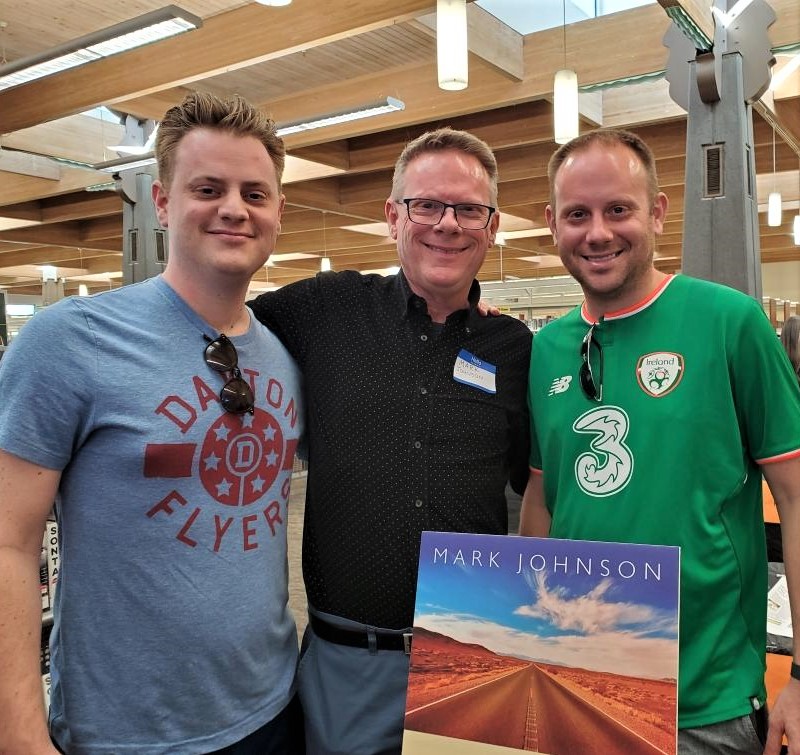
I stood before Tom. First he took my photo in front of my table. Behind my three books. Later when Kirk and Nick arrived, I stood between my two adult sons. I remembered how far we’ve come since February 1992 … when my own fatherhood felt it had shattered in pieces … when their mother and I told them we were divorcing. I was moving into a new home. They would spend half of their lives with each of us.
Fortunately, in 1992 I had the gumption to stay in their lives and love them. We built a life together. Then Tom came along in 1996 and, over time, they learned to love him too. Together we stood by Kirk and Nick as they grew.
And then, suddenly on Saturday, they were standing by me.

I’m boarding my dusty desert time machine again. Back a mere six years to the end of another odd-numbered year. 2013 was the last full year of my gainfully employed life. When I still claimed consulting colleagues and commuted to a confining cube in Chicago’s Loop.
Though I now earn a pittance stringing words together, I don’t miss the corporate skin I shed. In my sixties, storytelling from the desk of my cozy Scottsdale condo or a nearby coffee shop is a better fit. It quenches my quest for creativity. It placates my sense of purpose. It validates my voice. Plus doing it on my terms means I don’t have to kowtow to a boss and a set of corporate standards.
That got me thinking about how we Americans define ourselves on resumes. Often, the words we use describe things we’ve accomplished or labels we’ve become accustomed to. Certainly not who we are. Not what makes us tick. Not what we dream of or what nightmares we’ve endured.
Let’s face it. Most of us have survived significant traumas. Maybe we’d be better off if we touted our tenacity. If we recounted our rebounds from setbacks. If we honored our innate interests and abilities.
The biggest events on my trauma resume read something like this: divorced in 1992; fatherless in 1993; motherless in 2013; survived a mild heart attack in 2017. Of course, those seismic events don’t account for the day-in-day-out stress of single parenthood and a thirty-four-year corporate career juggling assignments and clients.
The good news is I’ve cleared all of those hurdles and discovered a fair amount of positive energy to counterbalance the traumas: finding and nurturing a committed twenty-three-year relationship with my husband; parenting two boys into their thirty-something adulthood; singing on stage with other gay men from 2010 to 2019; realizing a second career as an author beginning in 2015; writing and publishing three books since; and continuing to tell my stories from the wide-and-warm space of Arizona’s Sonoran Desert.
All of this is a giant preamble to tell you that I ran across my circa-2013 resume this week from my days as a consultant. I found it on one of my many flash drives. Near the top, under the “Career Overview” heading, it reads:
Results-oriented, strategic consultant with deep expertise in organizational change, employment branding, talent and rewards communication, diversity and philanthropy.
This is how I described myself on paper as an associate partner with Aon Hewitt six years ago. There’s nothing technically wrong with the words here. They accurately described my work experience and knowledge as a consultant who ran between meetings, collaborated on countless conference calls, and massaged executive egos.
It’s just that the statement is gobbledygook. It didn’t describe the man I was then. Certainly not the man I’ve become. So, even though I’m not in the market for a new job in 2020, I decided to take a crack at recasting my resume. How would I describe myself today in real-life terms in the same number of words? Maybe it would read something like this:
Sixtyish survivor, storyteller and truth-seeking author, who writes about the magnificent, mundane, messy and meaningful moments of life.
Ah. That’s much better.
 Mark Johnson Stories