Tag: St. Louis

Gone Girl

In the late 1970s, I interviewed my father’s older sister, Aunt Thelma, for a college folklore project. Sitting across the table from me in her suburban north St. Louis kitchen, she waxed on about her philosophy of life.

“Honey, we’re all just ships passing in the night,” Thelma offered with a faraway look in her eyes. “We have to make the most of the time we have together.”

My beloved, charismatic, animal-loving aunt has been gone for twenty-six years. I miss her, but I don’t think about her often. However, she is on my mind this week.

Not because she died in October 1999. Instead, it is the wisdom of her words that apply to a recent development in my life.

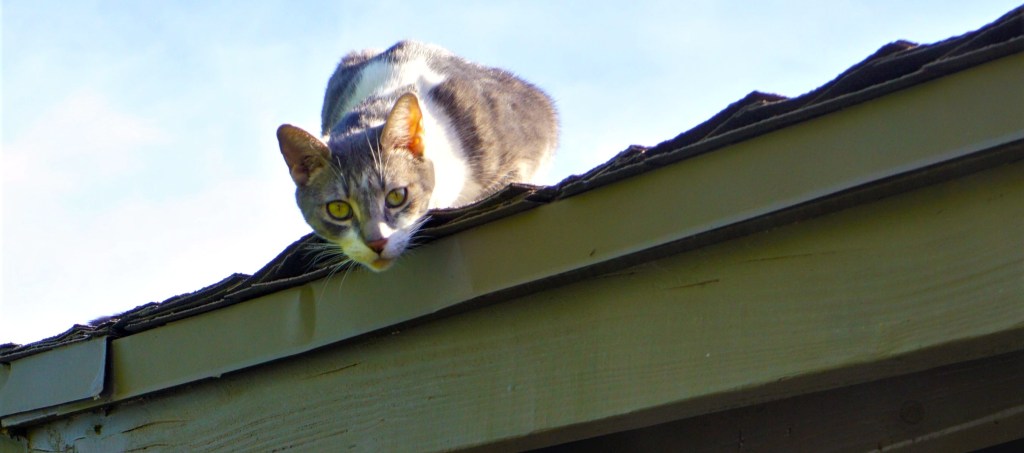
Poly–the gray-and-white stray cat I’ve written about frequently–has disappeared. She’s been gone for about a month. None of our neighbors have seen her recently either.

It’s possible that she has become someone’s indoor cat, but I doubt she would stand for that. She is/was a free spirit.

Instead, I fear she may be a casualty of a series of monsoon storms that swept through the Phoenix area in late September and early October. Or, perhaps, a random coyote nabbed her.

I miss our morning moments together … seeing her curled on the blue cushion of one of our wicker chairs beneath our kitchen window.

I miss watching her twirling acrobatics on our sidewalk, hearing her frantic meows as Tom or I opened another can of Sheba sustainable tuna and spooned it into a chipped ramakin for her to devour on our kitchen floor.

If Poly is gone permanently, she certainly added a playful, natural dimension of love to our Polynesian Paradise community, since early May 2021 when I first spotted her peering down at me from a neighbor’s roof.

If you follow my blog, you know Poly inspired a litany of cat tales that appeared here. They are warm and silly Arizona chapters I never would have imagined writing a decade ago.

It is ironic that Poly vanished about the time I completed the manuscript for my latest book, Sixty-Something Days, which is now in the final stages of production. I will publish it sometime in November.

The good news is several stories of my feral friend appear prominently in the book. The time we spent together, like two ships passing in the night, will have a literary life, because she has added an unexpected dimension to my Arizona sunset years.

Now–on this bewitching Friday as my book follows Poly’s example and prepares to set sail–that unlikely bond between two men and a lovable, mysterious feline character will exist on the pages for anyone who cares to read about it.

The Arc and The Arch: Part Two

Spotty storm clouds gathered in the distance on the morning of Saturday, September 20. Tom and I drove northwest twenty miles, across the Missouri River.

Our destination was Breeze Park in Weldon Spring, Missouri. My cousin Phyllis–a retired teacher–is convalescing there, hoping to regain her strength after a series of health complications.

Phyllis’ mother Violet and my father Walter were twins born in St. Louis. It was 1913. More than fifty years later, the Gateway Arch would rise and transform the St. Louis riverfront. Teetering warehouses once stood on cobblestone streets there, in this fur-trading town founded just west of the Mississippi River in 1764.

In the arc of life, Phyllis and I (both Baby Boomers) also arrived–she in 1947, I in 1957–before the historic completion of the Arch, our nation’s tallest monument, on October 28, 1965.

But today I reflect on our personal connection. Like me, Phyllis and her husband Tom also raised two sons born in the 1980s. Austin and Bryant are now in their early forties and late thirties respectively. A touch younger than my son Nick; a shade older than my son Kirk.

Now in their late seventies, Tom and Phyllis are meeting the healthcare challenges of life head on. Negotiating the unpleasantness of aging and inherent losses (their lovable golden retriever Truman passed recently). They are doing their best to push ahead. To stay hopeful. Or as my mother–a child of the Depression–would have said “trying to keep a stiff upper lip.”

Given these developments, I wanted to spend time with them while we were in the St. Louis area. Especially because–beyond my sister Diane who now lives in northern Illinois–they are the closest remaining strands of family from my Missouri years: 1957 to 1980 … my Tales of a Rollercoaster Operator years.

On Saturday, when my husband and I arrived just past 9:30, we wound our way down halls, past friendly staff and other visitors, to Phyllis’ room. She was delighted to see us. So was her Tom. He arrived a few minutes later with a big smile and box of gooey pastries for us to share.

The next two hours were a heart-warming oasis of conversation and listening between the four of us. We spent our time commiserating over the latest news, but–more importantly–strengthening our family bond during a challenging period for them personally.

Phyllis is hoping to return to their home soon in nearby St. Charles. As anyone would, she is missing the familiarity and comfort of her life. Longing for peace away from medical equipment and disruptive procedures. Her kind, caregiving husband is also searching for peace.

Before Tom and I left, we hugged and took photos together outside on a beautiful, flower-laden patio at Breeze Park. I kissed Phyllis on the cheek. A few tears materialized for both of us, not knowing what tomorrow will bring.

At the least, we shared those upbeat Saturday moments, built upon our 1960s memories of our once-vital, long-gone boisterous St. Louis relatives gathering around us every Christmas, Easter, and Independence Day.

To our credit, in our later years, long after our sons became adults, we have formed reciprocal connections. Most notably, Phyllis, Tom and their family joined Tom and me for an Italian dinner in St. Louis in route to our new home in Arizona in July 2017.

Now they share stories and photos via text of their four growing grandchildren, and I write stories about my St. Louis origins, which she has encouraged, helped inspire, read, and followed diligently.

All of this, through a period of uncertainty, sustains us in our sixty-and-seventy-something years across the miles.

***

Just after noon Saturday, Tom and I returned to Creve Coeur. We landed in the driveway of our friends John and Sharon.

We were about to share the rest of the weekend with them and their loyal eight-year-old-shepherd-beagle-mix Nickel at their stylish, mid-century home … hike with John through a dense forested area overlooking Creve Coeur Lake, then get caught in the rain in historic downtown St. Charles … drive into St. Louis for a Cardinals/Brewers game at Busch Stadium Saturday night … and still later, on Sunday evening, attend our Class of 1975 Affton High School reunion together at Grant’s Farm.

The clouds cleared Saturday evening and ushered in cooler temperatures. Seated together with close friends at Busch Stadium, three levels up directly behind home plate, it didn’t seem to matter that my beloved Cardinals lost 3-2.

Yes, it was the latest evidence in a disappointing sub-par year. But on the horizon, beyond the stadium’s outfield walls, the twilight of a blue sky and puffy clouds perfectly framed the Gateway Arch at the center.

Architect Eero Saarinen’s monument to a dream is still standing, rising above the cobblestones and the fray, as it approaches its sixtieth birthday.

The Arc and The Arch: Part One

The arc of life in my sixties–its highs and lows–has proved mostly to be an unexpected artistic one. Yet it is an uneven tapestry of co-existing emotions: fear for our eroding democracy; love for new and old friends; and boundless gratitude currently after returning to St. Louis for my Affton High School Class of ’75 reunion and reconciling my midwestern roots with my southwestern reality.

***

A trip to St. Louis would not be complete without a visit to my parents’ graves at Jefferson Barracks National Cemetery. So, we began there.

On Friday, September 19, Tom and I stopped at Dierberg’s in Creve Coeur near our hotel to buy a handful of burnt orange carnations.

Twenty minutes later, we arrived in the sea of marble stones on rolling hills ten miles south of downtown St. Louis.

We parked our rented Mazda SUV and tiptoed past a veteran’s funeral in progress under a makeshift canopy. A female vocalist sang Amazing Grace. Instantly, my tears began to flow.

Each time I go to Jefferson Barracks, it is a touchstone experience. Tapping one side of the stone and then the other. Remembering the love and best intentions of Helen and Walter Johnson–both long gone but not forgotten.

Minutes later, sitting on a nearby bench with Tom under the sturdy branches of an oak tree that has lost its earliest leaves due to an especially dry Missouri summer.

Friday afternoon was also somber and reflective. We met our friend Mark, a docent at St. Louis Kaplan Feldman Holocaust Museum, for a visit there.

He guided us through horrific-then-hopeful survivor stories, images, and vintage artifacts, curated from proud Jewish St. Louis residents who lived through the awful experience. Only a few remain, but their legacies live on.

All in all, it was a chilling, relevant, immersive few hours. Cautionary evidence of hate and authoritarian evil that inundated the world in the 1930s and 40s, and now–in the US in 2025–threatens the existence of those who are not straight, Christian white men.

After deep breaths and a refreshing Friday nap in our hotel, Tom and I drove to University City for an evening with Mark and his husband David at their home. It was a celebration of our unfolding friendship.

At sunset, they lit candles and recited Shabbat blessings before we shared wine and bread. At their table, I felt our bond of friendship, which began just a few years ago, grow.

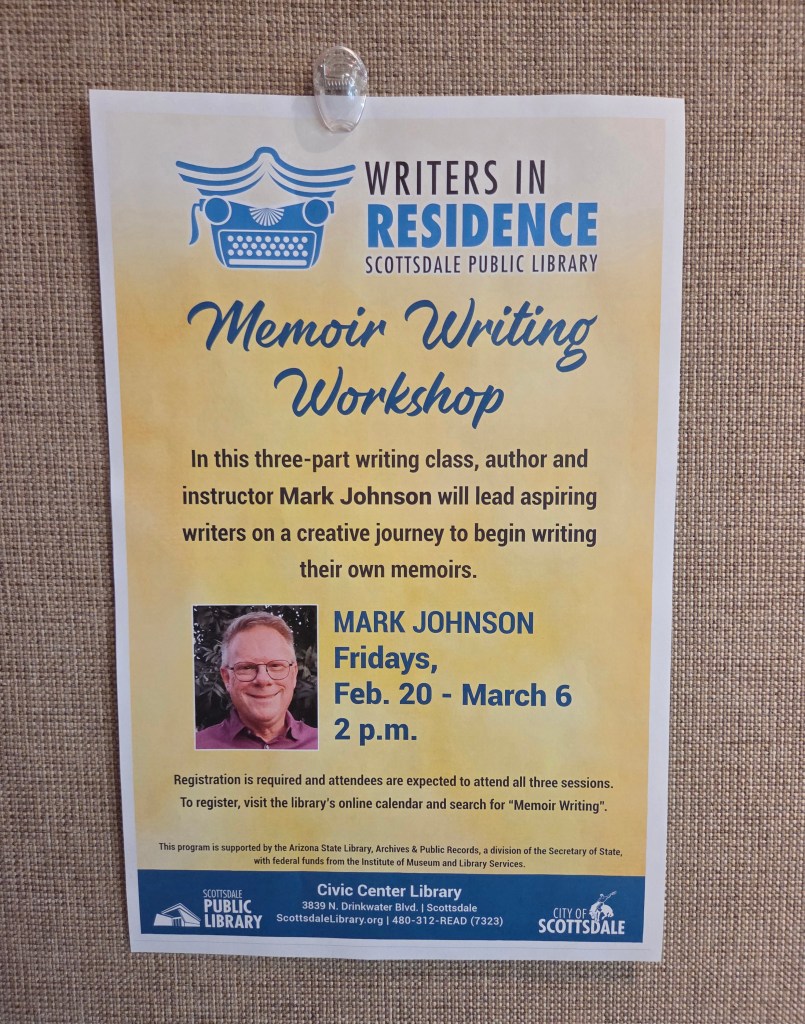
We met Mark and David when–as snowbirds living part-time in Arizona–they first attended one of Tom’s free film screenings at the Scottsdale Public Library.

Now, they have become the newest, welcoming community component of our St. Louis connection.

Another Day, Another Story

After my mother died on this day in 2013 at age eighty-nine, my grief took root.

With a little time, a lot of reflecting and journaling, and the support of a small circle of family and friends, I found and nurtured my own path from the branches of despair.

By 2015, I had carved out a storyteller’s life Helen Johnson would have loved. Late that year, I flew to North Carolina to visit Frances, her only sister.

Spending time with Frances in the state where both were born–and revisiting childhood memories of my grandparents’ farm in Huntersville, NC–propelled my creativity.

In March of 2016, I completed and published my first book, From Fertile Ground. It is the story of my journey and grief.

If you’ve read this story about three writers (my grandfather, mother, and me) and their love of family, you know this isn’t really the cover.

Today I’ve superimposed this photo of Helen and Frances together (in my sister’s backyard in 2003 or 2004 in northern Illinois) to remember them both.

Why? Because Frances was the last physical vestige of that rural, 1960s world for me. When she died six months ago at age ninety-one, I metaphorically waved goodbye to those years of running amok barefoot on warm summer days in the Tar Heel State.

Of course, I will always have rich memories of my wise-and-frugal mother, who wrote countless letters, and my fun-loving aunt, who traveled the world in her retirement years. In their own ways, they inspired me to tell my story.

Today–as I remember them both–I can walk into the sunroom of the Scottsdale, Arizona condo where Tom and I now live. I can pull my book off the shelf and find this passage.

“What I knew before was that the farm was a place of discovery for me and the fertile ground there was a physical and psychological refuge from the hardships of our family drama in St. Louis. What I know now is that I would need to go back to North Carolina to come to terms with my grief and integrate my southern memories with my present-day, real-life adult existence.”

I can take solace in the fact that I’ve written about Helen and Frances–who they were, who they loved.

Though they are both gone, they live on the pages.

One Hundred Years, One Hundred Words

It’s a daunting task, trying to capture a full life–in this case, my mother’s–in one hundred words (and a dozen pictures). But, today, on the one hundredth anniversary of her birth, this is how I choose to remember Helen Matilda Ferrell Johnson, beyond our story that sprang From Fertile Ground.

***

Born July 26, 1923; High Point, North Carolina.

Child of the Depression.

Dutiful daughter. Responsible older sister.

Fine furniture lover.

1945. St. Louis, Missouri, bound.

Patient wife. Long fuse. Quick temper.

Attentive mother. Hard worker.

Loyal friend. Compassionate trailblazer.

Unintended, unidentified feminist.

Reliable next-door neighbor.

Proud mother. Devoted grandmother.

Smart saver and investor.

Advocate for the disabled and needy.

Southern storyteller. Avid letter writer.

Rock and shell hunter.

Animal advocate. Grateful green thumb.

Observant camera bug. Crafty potter.

Contented retiree. Resilient fighter.

Northern Illinois octogenarian.

Wise realist. Chair rocker.

Fading sunset lover.

Gone January 26, 2013; Wheaton, Illinois.

Full moon.

Light-hearted Escape

It’s been another challenging year for many. We won’t soon forget the previous twelve months … brimming with health concerns, natural disasters, social upheaval, global traumas, political shenanigans, and inflationary woes.

Why not end 2022–or start 2023–on a positive note with a light-hearted escape? From now until January 2, for only ninety-nine cents, you can download a copy of my book Tales of a Rollercoaster Operator on Amazon.

It’s a universal collection of tales that focuses on my love of family and pop culture. A nostalgic series of twenty-six funny and poignant essays about growing up in St. Louis in the 1960s and 1970s.

The final story in the book, A New Year Resolution, fills me with hope and the warm, comforting possibilities of life even after seemingly awful things happen.

I wrote it as a testament to the good citizenship of my father and mother, who did the right thing on a cold January morning more than sixty years ago.

Happy reading and Happy New Year!

My Fortunate Life

I lead a fortunate life. I don’t mean that in a material, financial or social sense; like many of you, I am concerned about inflation, the bear market, high gas prices, potential fall-out from the mid-term elections, and global and domestic horrors eroding personal freedoms, savings and investments, and a general sense of security for you and me.

Still, I acknowledge I have more to be thankful for than most people: a modest-but-comfortable home in a warm climate; a loving and supportive spouse; two adult sons who are gainfully employed and contributing members of society; a diverse community of friends; and the time to pursue and develop my literary and musical interests.

Plus, I’m a relatively healthy, sixty-five-year-old male. I make it a priority to exercise regularly, eat smart, and see my doctors as needed. Though it’s been more than five years since I suffered a mild heart attack, I haven’t forgotten the trauma of July 6, 2017, or dismissed the gratitude I feel for that team of doctors and nurses at Barnes-Jewish Hospital in St. Louis, Missouri–people I likely will never see again.

That painful experience no longer defines me. It has paled somewhat. Yet it informs my choices, perspective, and sense of gratitude. It has morphed into a badge of survivorship, which I feel an obligation to share with the universe through my writing and day-in-day-out personal encounters.

Occasionally, I receive a fund-raising or participation request from an Arizona contact with the American Heart Association (AHA). We met in 2018.

A few weeks ago, she asked me to share my story of survival–virtually–with employees of a large retail organization on October 17. To explain that donations to the AHA aid lifesaving research that allows heart and stroke survivors–like me–to enjoy longer and more complete lives.

So that’s what I’ll be doing on Monday. Twice … once in the morning; once in the afternoon. Telling my story of survival in three to five minutes to a large group of employees via video conference.

I figure it’s the least I can do to pay it forward and possibly ease the pain for some other unsuspecting man or woman, who with the help of the AHA might live longer, breathe more easily, and witness a few more breathtaking sunsets in the Valley of the Sun or elsewhere.

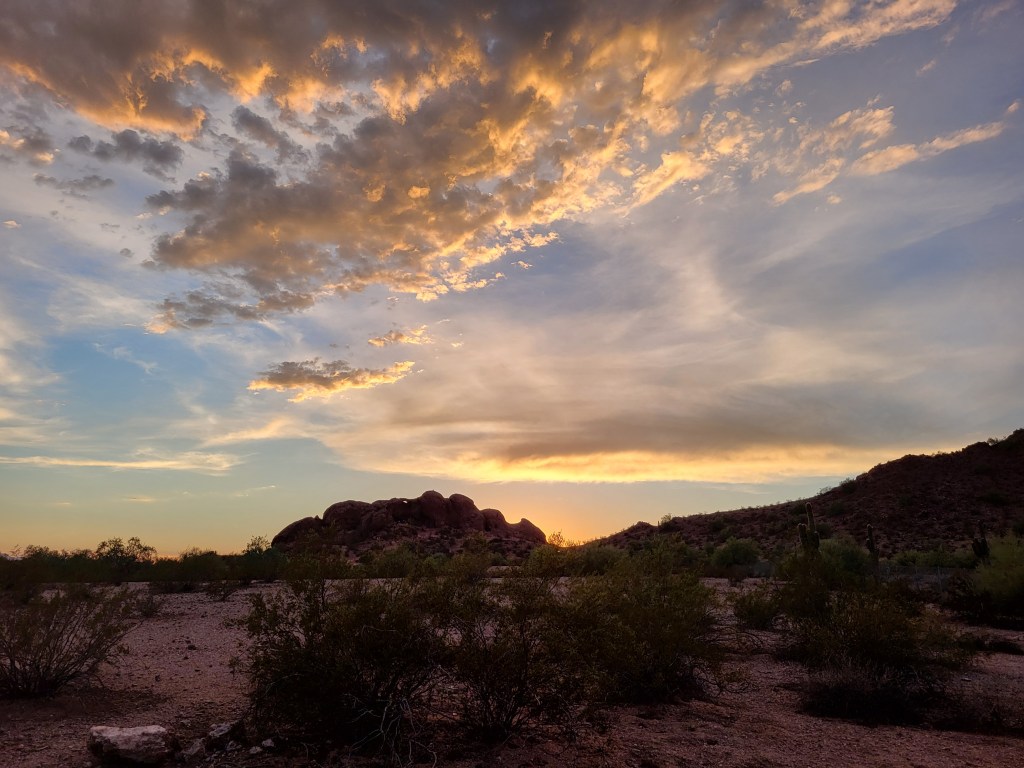
On October 5, 2022, I captured this Sonoran sunset in Papago Park on my walk with Tom a mile from our home in Scottsdale, Arizona.

The Clothesline

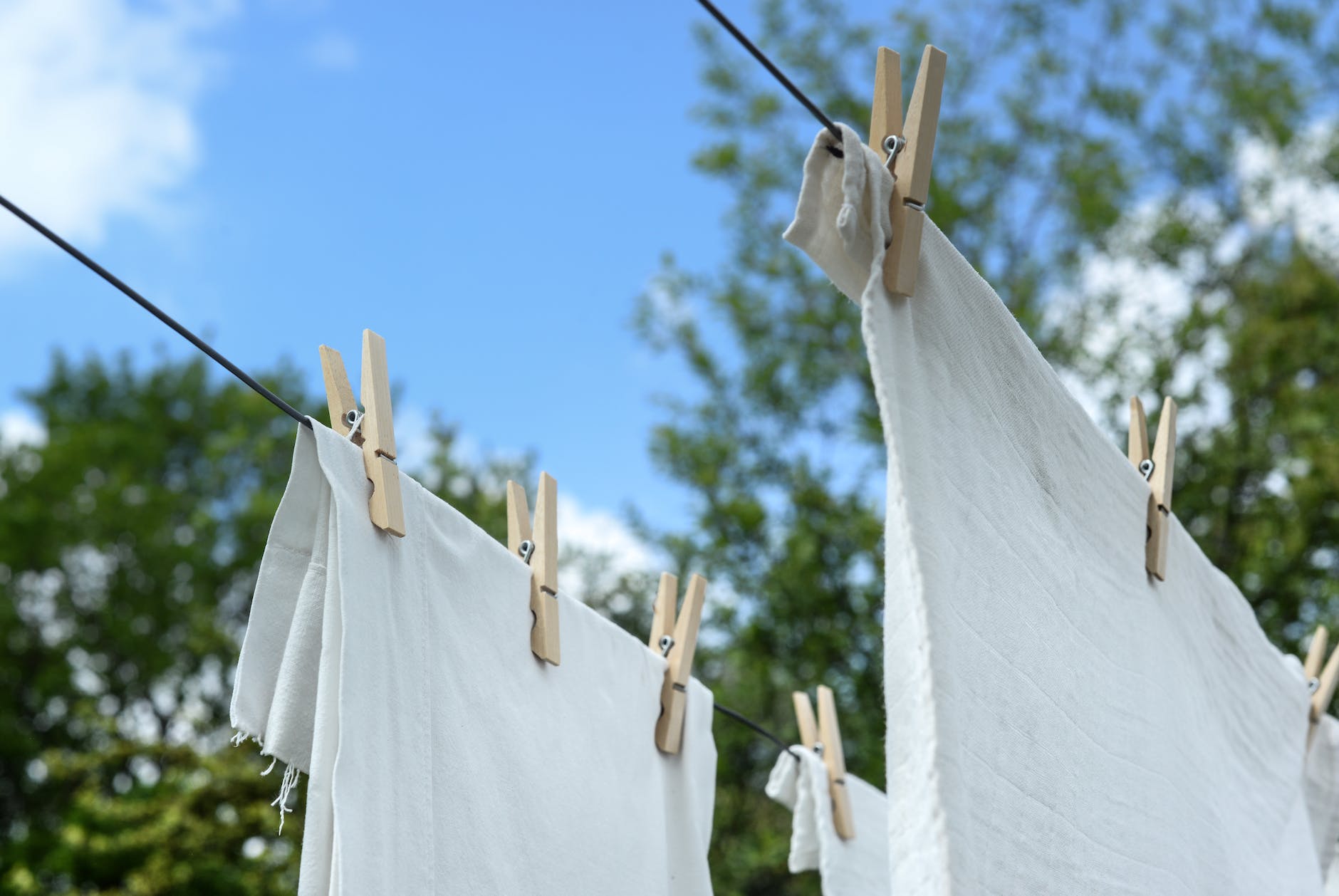
Photo by Skitterphoto on Pexels.com

It was laundry day. So, this morning, Tom and I grabbed our pouch of wooden clothespins and walked five hundred steps or so to the landing behind our condo clubhouse.

For the next five minutes–shielding our eyes from the penetrating sun–we stood on the concrete there, hanging our just-washed, delicate shorts and shirts on the community clothesline to dry in the desert breeze.

Call me old fashioned. But I don’t mind doing this. In fact, I enjoy it. Especially as fall approaches and the air begins to cool.

More important, the plastic-coated clothesline connects my present life to my past. It represents the resiliency I’ve watched, absorbed, and carried forward.

It reminds me of the family members I’ve lost, but still love, and the survival instincts they instilled in me sixty years ago. What follows are excerpts from my book, Tales of a Rollercoaster Operator.

***

It was my second week of kindergarten, and I was just beginning to adjust to a new routine. On a warm and breezy mid-September afternoon in 1962–September 13 to be exact–I left my Mesnier School classroom and stepped aboard my regular bus for the trip home.

Within ten minutes, the driver arrived at the top of South Yorkshire Drive. She opened the door and several of us scampered down the stairs. I waved goodbye to a few remaining classmates still on board.

The driver closed the louvered door and pushed ahead. I meandered home. It was no more than a five-minute walk up our block and our driveway. Then, in an instant, a breathtaking late summer day transformed into an early fall for our family.

I saw my mother standing just beyond the backyard gate. She was wearing a sundress, lost in thought, uncoiling clean, damp towels and sheets from a laundry basket. Happy, our beagle-mixed hound, was out of reach too. He was sniffing the ground and frolicking miles away, it seemed, along the back fence.

“Your father’s had a heart attack.” Mom recited her words slowly and deliberately, like a woman treading deep water searching for a longer breath.

I didn’t comprehend what she had to say. But it couldn’t be good news, I thought as she plucked wooden clothespins from a pouch. She was working to keep her ragged emotions and the flapping sheets in check, preparing to clip wet linens to parallel plastic-encased clotheslines that stretched east and west across our yard.

Soon we walked into the house with our empty white-lattice basket, and I learned more. Dad had become ill on day two of his new job as a porter at McDonnell-Douglas. He was helping a coworker lift an airplane nosecone. Suddenly, he felt a sharp pain in his chest. He was rushed to Deaconess Hospital on Oakland Avenue near Forest Park. That’s where he would recuperate for the next month …

Each time we visited Dad, he was bedridden. I couldn’t comprehend what could keep my father lying in one location for so long–unable to toss horseshoes, fly kites, or drive us to parades or ballgames. But Dad insisted he would rebound.

Like the popular song from Bye Bye Birdie that played on the transistor radio near his bedside, Dad told me, “Son, I’ve Got a Lot of Living to Do.”

***

The next decade was difficult for our family. Watching Dad drift away physically and emotionally, filled me with anxiety. He never recovered fully, though the man who fought in World War II and the Battle of the Bulge soldiered on until his death in 1993.

Meanwhile, my mother kept our family afloat financially. She went back to work in March 1963 and did her best to balance life at home and in the office. When she died in 2013, she left behind a legacy of wisdom that I cherish and share.

Watching my parents toil produced a silver lining. Seeing them tread deep water for all those years gave me something I never imagined: the will to face my own personal challenges, standing tall as a proud gay man, and surviving my own heart attack on my sixtieth birthday.

Of course, it all began in the suburbs of St. Louis in September 1962. That sagging clothesline swayed. But it never snapped.

And, here in the Sonoran Desert in 2022, another clothesline sways 1,400 miles west.

It’s a much less turbulent September day.

It All Began in April

In this season of rebirth, I am reminded of my transformative journey that began five Aprils ago.

***

I should have known better. Life had taught me there was nothing certain about any journey.

I had already navigated the ups and downs of my St. Louis childhood, struggled along as a single dad, shed illusions of a straight existence in favor of an authentic life, and retraced the path of my mother’s life from fertile ground.

Yet, I didn’t expect the journey I was about to embark upon with my husband–waving goodbye to one home and resurfacing in another–would prove to be as circuitous.

By the fourth month of 2017, Tom and I had drawn up the details of our dream. We would sell our home in northern Illinois; escape the cold; move to Scottsdale, Arizona; and live in the desert permanently. We wouldn’t be denied.

It all began in April with the physical trappings of certainty. We were locked into a familiar pattern of cool and damp Lake Michigan air with only a ray or two of sun filtering through the clouds. But as we prepared to leave behind the permutations of our past, we also knew there was heavy lifting to be done.

Before we could leave the Midwest and say goodbye to our Illinois family and friends, we needed to sell our home in Chicago’s northwest suburbs.

***

What you just read is a portion of the prologue from An Unobstructed View. If you find yourself intrigued and pondering your own personal transformation, my third book will have special meaning for you. Download a free copy on Amazon through Monday, April 18.

One simple request: once you are through, please take a few moments to post your review.

Be Mine

We all know it when we feel it … love. When it is there, it fills our hearts and lights up the world.

I’m not only referring to romantic and physical love between two human beings–two men, two women, or a woman and man. Most of us need and want some form of that depending on our orientation.

True love goes beyond the jewelry commercials that implore men to buy rings for their sweethearts. It appears in many forms–parental love, neighborly love, pet love, friendship, companionship, etc. In my heart and mind, love is a close cousin of natural beauty, peace, kindness, and human decency.

As Tom and I strolled in the sun this morning along the Crosscut Canal in Scottsdale, I was transported back to grade school in the St. Louis suburbs and the Valentine’s Days of my 1960s childhood.

In those days, we created and decorated our individual holiday mail slots, fashioned out of shoe boxes and adorned with red, pink and white construction paper. Some were simple. Others grandiose, laden with tiny, pastel-colored candy hearts bearing messages. “Be Mine” was my favorite, because it communicated a winning combination of love, playfulness, and commitment.

Each year, our teachers were careful to instruct us to bring a paper valentine for each child in our classroom. Most of us followed the rules and returned with a packet of store-bought cards featuring Looney Tunes cartoon characters, Superman, cuddly puppies and kittens. Then, we went around the room and deposited all of our “love” messages. (Sixty years ago, we also had parties and trays of decorated cupcakes delivered by two or three “room moms” to our classrooms.)

Then and now, I liked the kindness and equity of that valentine distribution plan. Of course, some kids were more popular than others, but this even-handed method leveled the valentine playing field. In practice at least, each child got to feel the love of opening a box filled with valentines from each of his or her classmates.

I confess. I don’t know how schools treat Valentine’s Day now. But I suspect it’s a different animal. At a time when children and adults are bombarded with messages of fear and pandemic uncertainty, we are living in a world with a short supply of love. We need valentines more than ever this year.

It doesn’t cost much to whisper a message of love to a friend. Or to send a text or drop a card in the mailboxes of those in your metaphoric classroom.

Do it today. I’ll start. Won’t you be mine?

On January 26, 2022, I captured this photo of two geese sharing a tender moment on the path of life at the Riparian Preserve in Gilbert, Arizona.