Tag: Storytelling

The Little Red Wagon (Part One)

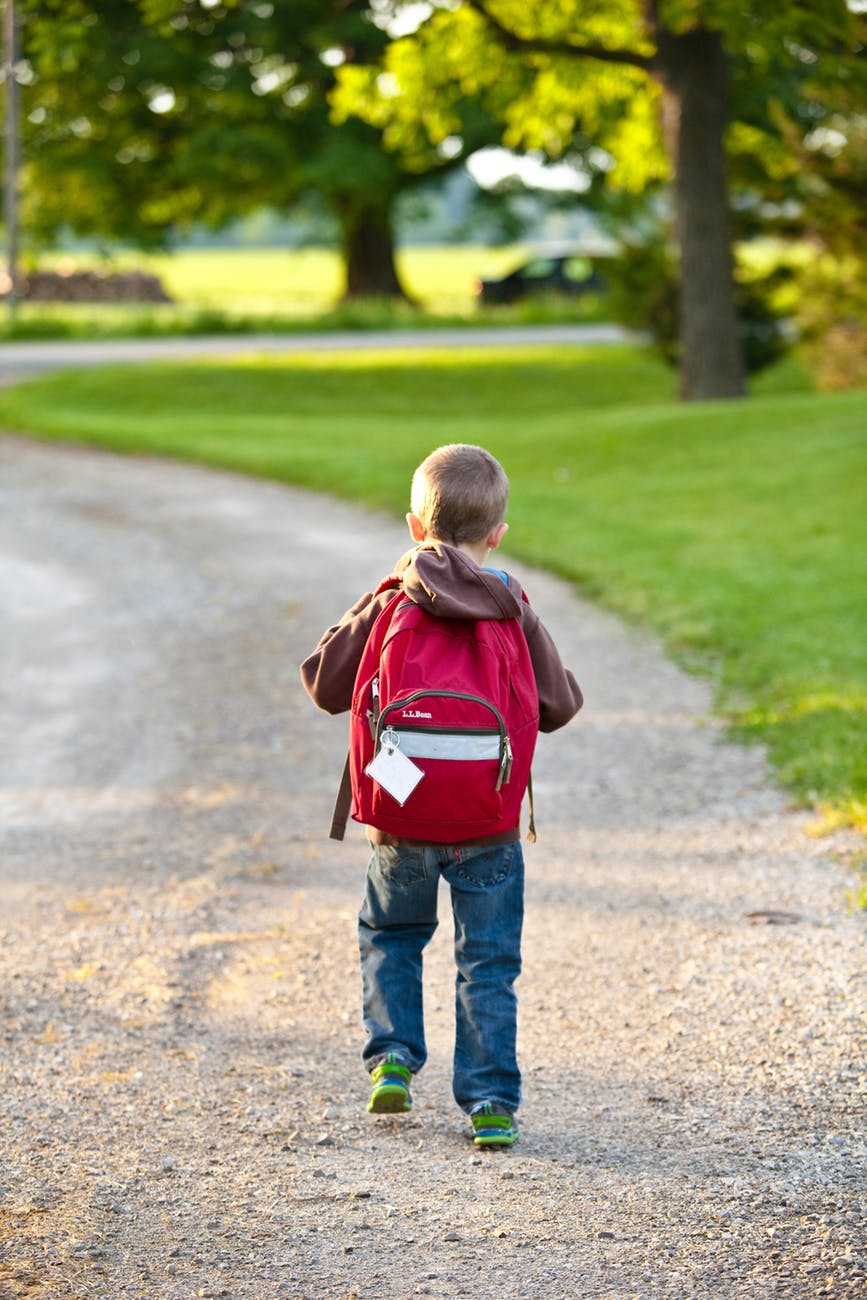
boy in brown hoodie carrying red backpack while walking on dirt road near tall trees
Photo by Pixabay on Pexels.com

I’m traveling during much of September. While I’m away, I hope you’ll enjoy this story (divided in two parts) about a different sort of journey. The Little Red Wagon first appeared in Tales of a Rollercoaster Operator, a book I wrote and published in 2017 about the ups and downs of my early years in St. Louis, Missouri.

***

It was my second week of kindergarten and I was just beginning to adjust to a new routine. On a warm and breezy mid-September afternoon in 1962 — September 13 to be exact — I left my Mesnier School classroom and stepped aboard my regular bus for the trip home.

Within ten minutes, the driver arrived at the top of South Yorkshire Drive. She opened up the door and several of us scampered down the stairs. I waved goodbye to a few remaining classmates still on board. The driver closed the louvered door and pushed ahead. I meandered home. It was no more than a five-minute walk up our block and our driveway. Then, in an instant, a breathtaking late summer day transformed into an early fall for our family.

I saw my mother standing just beyond the backyard gate. She was wearing a sundress, lost in thought, uncoiling clean, damp towels and sheets from a laundry basket. Happy, our beagle-mixed hound, was out of reach too. He was sniffing the ground and frolicking miles away, it seemed, along the backyard fence.

“Your father’s had a heart attack.” Mom recited her words slowly and deliberately, like a woman treading deep water searching for a longer breath.

I didn’t comprehend what she had to say. But it couldn’t be good news, I thought as she plucked wooden clothespins from a pouch. She was working to keep her ragged emotions and the flapping sheets in check, preparing to clip wet linens to parallel plastic-encased clotheslines that stretched east and west across our yard.

Soon we walked into the house with our empty white-lattice basket and I learned more. Dad had become ill on day two of his new job as a porter at McDonnell-Douglas. He was helping a coworker lift an airplane nosecone. Suddenly, he felt a sharp pain in his chest. He was rushed to Deaconess Hospital on Oakland Avenue near Forest Park. That’s where he would recuperate for the next month.

During the next thirty days, my mother, sister and I visited Dad several times each week. I remember boosting myself up to sit on the edge of his bed. I swiveled my head to watch portions of unidentifiable westerns and night-time dramas on a grainy black-and-white TV mounted high above on the facing wall across the room.

Every few minutes, the nurses trooped into Dad’s room to adjust his bed, prop him up higher on his pillow, bring pills and water in paper cups, and deliver trays of bland food and a bonus cup of ice cream Dad wasn’t allowed to eat. Instead of throwing away the ice cream, he gave it to me as a treat.

Each time we visited Dad, he was bedridden. I couldn’t comprehend what could keep my father lying in one location for so long — unable to toss horseshoes, fly kites, or drive us to parades or ballgames.

But, Dad insisted he would rebound. Like the popular song from Bye Bye Birdie that played on the transistor radio near his bedside, Dad told me, “Son, I’ve Got a Lot of Living to Do.”
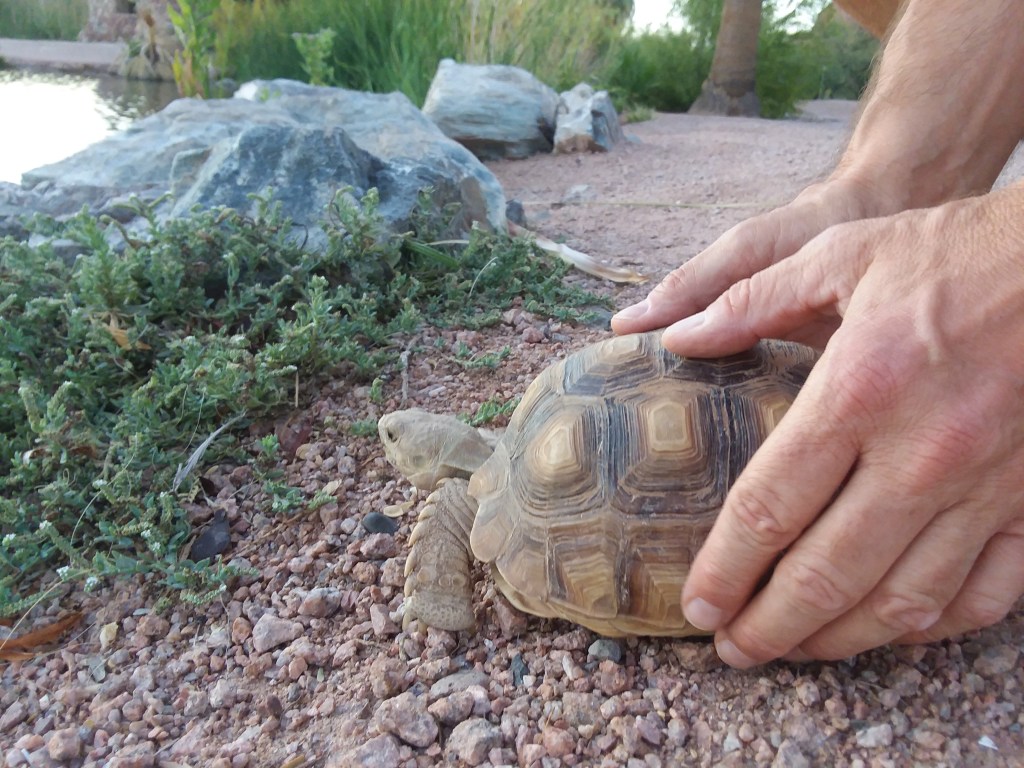
Lost and Found

20190908_184338

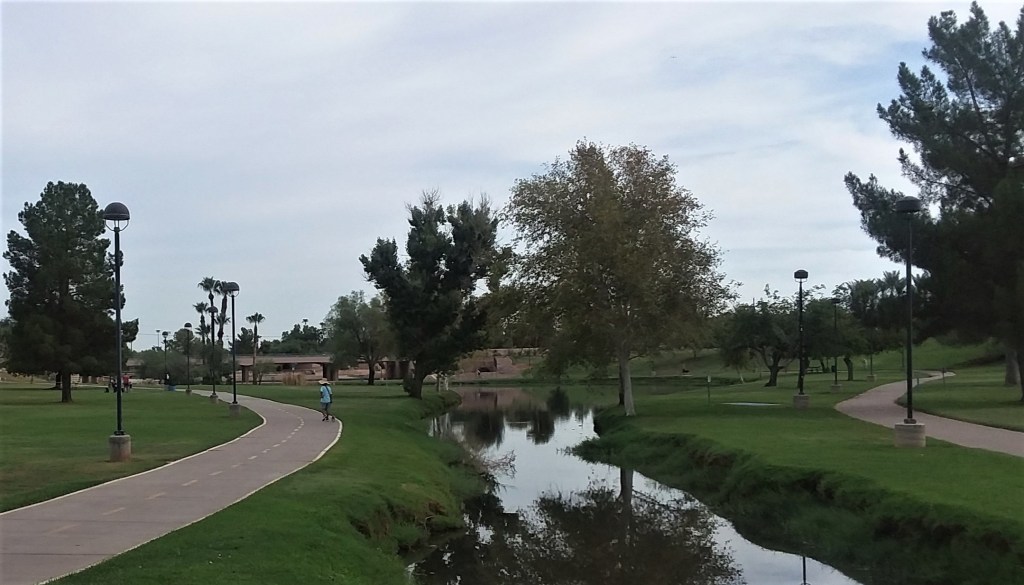
You were lost. Stranded on a concrete path. On the way to nowhere. Far from food and water. Farther from home and hope than you knew.

You didn’t mind when we intervened. We carried you in careful palms. Wind in your face. Legs suspended. Each step we took felt like a mile.

You were ready to roam when we reached your desert oasis. We lowered you to the water’s edge. Your feet touched the ground. You never looked back.

You were found.


A Path I Might Have Missed

DSC07801 (2)

There you stood, rare and bright. Defying the odds. Shining in a field far away. Flourishing in a wide open world. Sparkling in the foreground of my dreams.

I still see you, sunny and true. Unfolding under the sky. Craning for a mountain view. Growing taller everyday. Promising petals on a path I might have missed.

Written by Mark Johnson, September 6, 2019

Still Counting in September

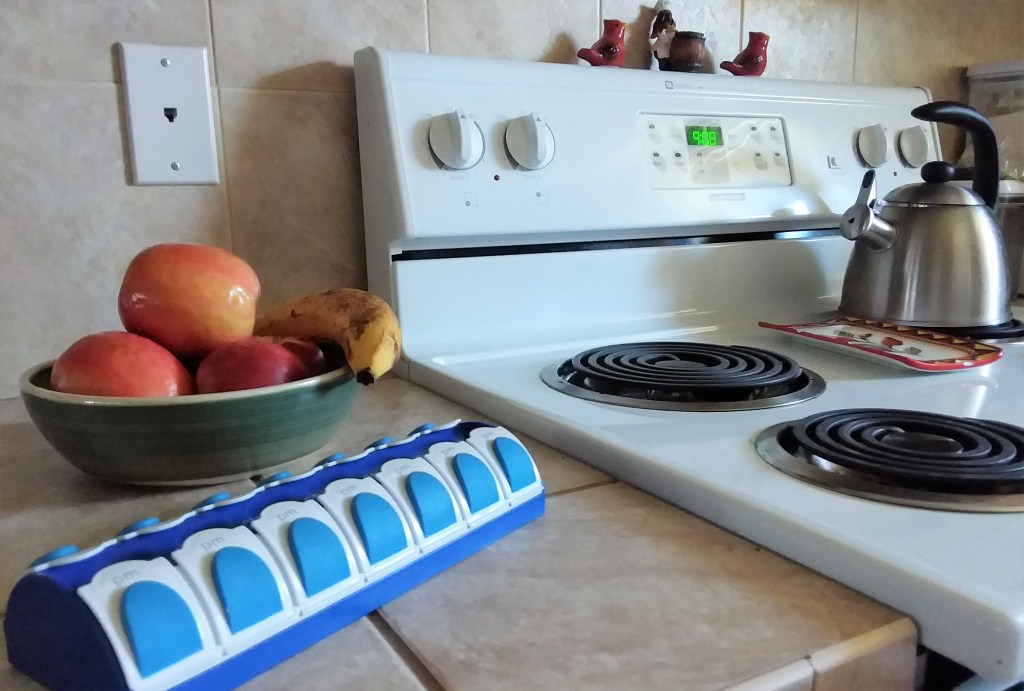
PillTray_090219

“What greater thing is there for two human souls than to feel that they are joined — to strengthen each other — to be at one with each other in silent unspeakable memories.”

George Eliot — English novelist, poet, journalist and translator

***

George Eliot had it right. Memories are a powerful human connection. Without a moment’s notice, we can be transported back to a person, time, and place. Often, this happens as we complete our simplest daily activities at home in the kitchen. Pouring a cup of coffee. Biting into a crunchy apple. Stirring a pot on the stove. Or, in my case, counting and depositing pills into a tray.

On the surface, this may seem like a purely clinical exercise. But it was something significant I did for my mother during the last several years of her life as her macular degeneration worsened. As her dementia deepened. Every other Saturday morning, I drove twenty miles from my home in one Chicago suburb to hers in another. Each time I counted out two weeks worth of medications for her.

Of course, our visits consisted of more than medication administration. We shared late breakfasts, early lunches, short walks and longer stories about our lives and love of family and nature whenever her health and the weather permitted. Neither of us ever imagined I’d  write about our journey years later in what became From Fertile Ground.

Yesterday in Arizona, as I was filling my own tray of medications for the coming week, I was reminded of those intimate Saturday mornings with my mother. Sorting her pills in past Septembers. Doing what I could to help sustain her life for another two weeks as the late summer light in northern Illinois produced elongated shadows.

Of course, it was all worth it. I would do it all over again. But at least now I have the memories to savor. At least I’m still counting in September.


Hot Rods to Hell

DSC08182

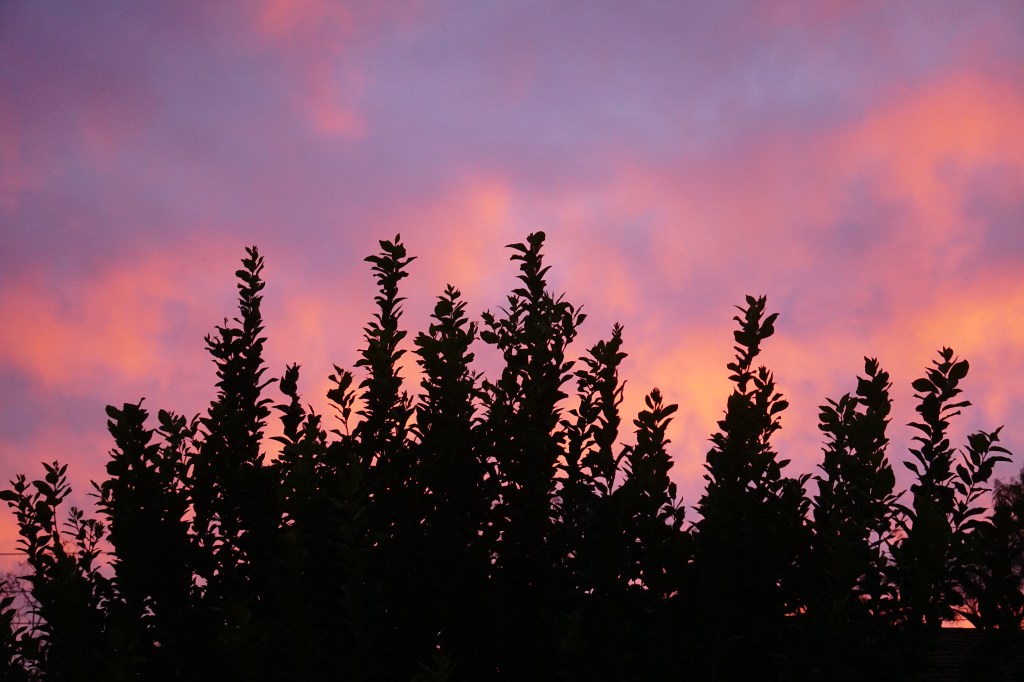
Despite the hellish Arizona heat (which has had me in a funk) and the general absence of much-needed monsoon rains this summer (more on that later), there is something stunning and cinematic about living in the desert southwest. Big skies. Jagged mountains. Spiky saguaros. Red rocks. Dazzling sunsets.

I realize I may get a few eye rolls here from a pragmatist. Or someone who’s lived in the Valley of the Sun for his or her entire life. But remember. I’m coming at this from the perspective of having spent thirty-plus years of my life in relative flatness. Namely, northern Illinois, where you can drive for miles and know you’ll never see a rise in the grade of the road.

Evidently, I’m not alone in recognizing the allure of a western landscape. Case in point: Hot Rods to Hell. It’s a rollicking road trip film about a middle-aged couple, who decide to leave behind the civilization of the east for an overdue escape to the desert in the west.

As the 1967 flick begins, traveling salesman Tom is recovering from a car accident that has injured his spine. Fortunately, he survives mostly intact. But he’s left with jittery nerves and a chronic back ailment. Tom and his wife, Peg, decide the best antidote is to leave their Boston home. They opt to spend their later years operating a motel in the California desert. They figure it will be a quieter existence and the dry heat will be good for Tom’s back.

It all makes sense, right? But they encounter a few problems on their way west. Tom (played by a haggard Dana Andrews, who’s nearing the end of his rope and career) and Peg (portrayed by a frantic Jeanne Crain, who must have needed the money desperately) are derailed on their journey by a band of teenage hoodlums.

The carousing kids crave controversy, drag racing and Tina. She’s Tom’s and Peg’s shapely, seventeen-year-old daughter. The terrible teens become fixated on the idea of trying to drive Tom and his family off the road. Apparently, just for the thrill of it and the chance for a rendezvous with Tina.

It would be criminal of me to spoil the ending of this overwrought, drive-in disaster, because it is a super-suspenseful spectacle that devolves into scene upon scene of jaw-dropping, delicious, B-movie mania. However, be forewarned. This desert debacle includes a cameo appearance by Mickey Rooney, Jr., and his band, (yes, Mickey had a son … and his son had a band) performing poorly in a seedy club that just happens to be on the premises of the motel, where Tom and Peg will soon become landlords.

At any rate, if you follow my stories, you know that, beyond the fact that my husband’s name also is Tom, there actually is a thread of thematic truth to be salvaged here. (Even though, my Tom doesn’t have a back problem or a nervous disorder; we have no plans to buy or manage a motel hideaway; we don’t have a teenage daughter; my name isn’t Peg; and I my friends tell me I look nothing like Jeanne Crain.)

When Tom and I packed up our car and traveled west in July 2017, my surprise heart attack in St. Louis nearly ran us off the road like a pack of hell-bent, drag-racing teens frantic for on An Unobstructed View. But, like Tom and Peg, we survived the experience. Now in my wide-eyed sixties, I write poetry. I dodge crazy Arizona drivers. I tell screwball slice-of-life stories. I bask in the dry heat. I swim outdoors to keep my heart pumping.

And, when torrential rains boil over the mountain peaks and spill into the valley, I savor the monsoon storms. Like the one that blew in last night unexpectedly. Blowing dust and bending palm trees. Igniting the atmosphere. Lighting up the sky. Dumping an inch of rain on the parched Phoenix area. Reminding me as I drove home through the shadowy Papago buttes that these “bonus” years in the desert southwest after that fateful road trip are an ever-evolving chapter in a story that’s far from flat.


Where Will the Staircase Lead?

Starved Rock Stairway_110314

As a Midwestern kid of the 1960s, the last few weeks of summer never felt like an ending to me. Though the leaves on the trees would gradually yellow, turn brown and inevitably fall, the approach of September spelled a renewal of sorts. New possibilities. New hopes. New dreams. New beginnings. All of it hinged on the promise of a new school year.

Of course, I’m no youngster anymore. I’ve been out of school for decades. Technically, out of the workplace, too, since 2014. I’ve moved away from the hustle of Chicago and live a quieter life in Arizona. But, I’m no dinosaur. I’m fully aware of the troubling signs in our country and world (I’m leaving this vague purposely; you can define it however you wish), and yet I try to maintain a sense of optimism as we all prepare to turn the page to another season … another September.

Every time I sit down in front of my laptop to tell another story or write another poem, I feel a giddy sense of creative anticipation. My motivation is simple. It’s what I was meant to do. This life-affirming need to write runs through my blood. It’s spurred me to write and publish three books (something I couldn’t have foreseen five years ago). It keeps me learning, growing, exploring and seeking new ground. It keeps me relevant. It keeps me vital. It keeps me wondering. It keeps me asking personal questions such as these:

“What will the next semester (it’s my semester with my syllabus) bring?”

“Where do I want to devote my creative energies in the coming year?”

“Should I focus on developing a book of my poetry? Would anybody read it?”

“What about teaching a memoir-writing class?”

“Should I dive back into the fictionalized story I’ve begun to build?”

“Am I better served to continue telling my stories here?”

“No matter what I decide, what kinds of new friends will I meet along the way?”

“Is my writing making a positive difference in the lives of others?”

All of these thoughts have been racing through my mind as I read the stories of friends and acquaintances online. Emotional messages about defining moments as they send their children off to school. To begin first grade. To start the last year of high school. To drive or fly to that adventurous freshman year of college … away from home, away from mom and dad. To launch a new job and career as a school counselor (as my younger son just did) welcoming new challenges and fresh faces.

This is the good stuff of life. New beginnings. Moving along the unpredictable path. Educating ourselves. Broadening our horizons. Enjoying today, but also looking forward from time to time. Charting our creative journeys. Reminding ourselves of our gifts and how they can make a difference in the world. Imagining the possibilities as we climb ahead and wonder  … “Where will the staircase lead?”

Under the Eaves

DSC07653 (2)

You greet me in the morning, flying under the eaves. Serene and steady. Zooming in for nearby nectar. Always aiming to adapt.

I see how you and your cautious cousins coexist. You skitter across pebbled paths. Nest atop spiky saguaros. Hoot through dusty darkness.

You are the best among us. Feathered and unfettered advocates for organic order. If only we could soar like you in this Sonoran life.

The Irish Mist

DSC07357 (3).JPG

I’ll always remember you, rolling in over the gaelic green. I felt cool comfort knowing the veiled intentions you whispered in my ear wouldn’t be denied. No matter how much I wanted to gaze beyond the moss and ferns you shrouded, you held me there. You knew I needed to stand strong above the craggy cliffs of my past. You knew I needed to feel rooted to the emerald island, thankful for the mystery of my mending heart.

That’s Not My Bag, Baby

DSC08312 (2).JPG

In reality, it is my bag. I just wanted to say it wasn’t, so I could quote Austin Powers: International Man of Mystery from the 1997 movie that spoofs 1960s spy films. This commemorative swingin’ sixties Woodstock bag, while not remotely vintage, was a groovy gift from a friend about ten years ago. She knew how much my husband and I love pop culture from that era. Primarily because we were children of the sixties.

Truth be told, now that we are fully ensconced in our sixties, Tom and I schlep this colorful tote bag with us on fall, winter, and spring Saturday mornings when we shop for fresh fruits and vegetables at the Scottsdale Farmers Market here in Arizona.

By now, I’m sure you’ve realized this Baby Boomer bag is nothing more than a lame prop for me to tell a story about the fiftieth anniversary of the Woodstock festival … billed as “Three Days of Peace and Music” … a pivotal moment in popular music history which actually stretched into four days (August 15-18, 1969) of peace, rock, sex, drugs, rain, mud and traffic on and around Max Yasgur’s 600-acre dairy farm in Bethel, New York.

The irony of me writing this story is that I have no personal connection to Woodstock. No substantive recollection of it either. It wasn’t so much that Woodstock wasn’t my bag. It simply wasn’t on my radar as a twelve-year-old boy living in the steamy suburbs of St. Louis, Missouri, in 1969. Perhaps I was a little too young. Or maybe just a little too out of touch with what was happening outside my immediate world.

My focus was on other things closer to home. Mostly, following my beloved St. Louis Cardinals, collecting baseball cards and creating my own canvas to obsessively scribe the scores of all twenty-four major league baseball teams on it every day from April to September of 1969. As I described in my book Tales of a Rollercoaster Operator, by the end of the regular season, I had recorded 3,888 handwritten ball scores and squeezed them onto one giant rolled up piece of paper!

You can see I had no time or inclination to join the wave of Woodstock worshipers from afar. Even if I had, my Lawrence-Welk-loving parents had different ideas of what constituted popular music … a-oney-and-a-twoy-and-a … and they controlled the TV dial in our household.

It would be another thirty years before I’d really see and hear Woodstock. The moment of enlightenment came in the form of a grainy VHS tape of the 1970 film that won the Academy Award for Best Documentary Feature. I sat with my future husband on the love seat in his Schaumburg-Illinois condo. Together we immersed ourselves in the actual performances, interviews with some of the artists, and candid footage of the fans.

Thanks to the film and the resourcefulness of my movie-loving husband, I got to see and hear Richie Havens open the show and Jimi Hendrix close it on the same well-traveled stage before a sea of soaked teens. Though it had taken me thirty years longer than the rest of the country, I had finally closed the gap in my knowledge about the “Three Days of Peace and Music” in mid-August 1969 that would come to define the counterculture movement of our generation.


The Voice Outside

TheVoiceOutside_081019 (2)

This is a story of yin and yang. Restrained versus unrestrained. Where The Voice Inside (meek, demure, and hidden) miraculously coexists in counterbalance with the voice outside (loud, proud and unbridled) in Arizona’s wide open summery spaces.

***

I always hear him before I see him. Just as I did on Saturday morning. A monastic monk gone mad. Singing gibberish uncontrollably. Strolling in the park in a mental loop in his floppy straw hat. Flanked by his forever-forgiving Chihuahua companion.

He’s carefree and unflappable enough to envy and pity.  Lost and shielded by his atonal, bombastic sound effects that produce no real harm … only distance from the rest of us too leery to cross his path or break through his maniacal vibrations in the unforgiving heat.