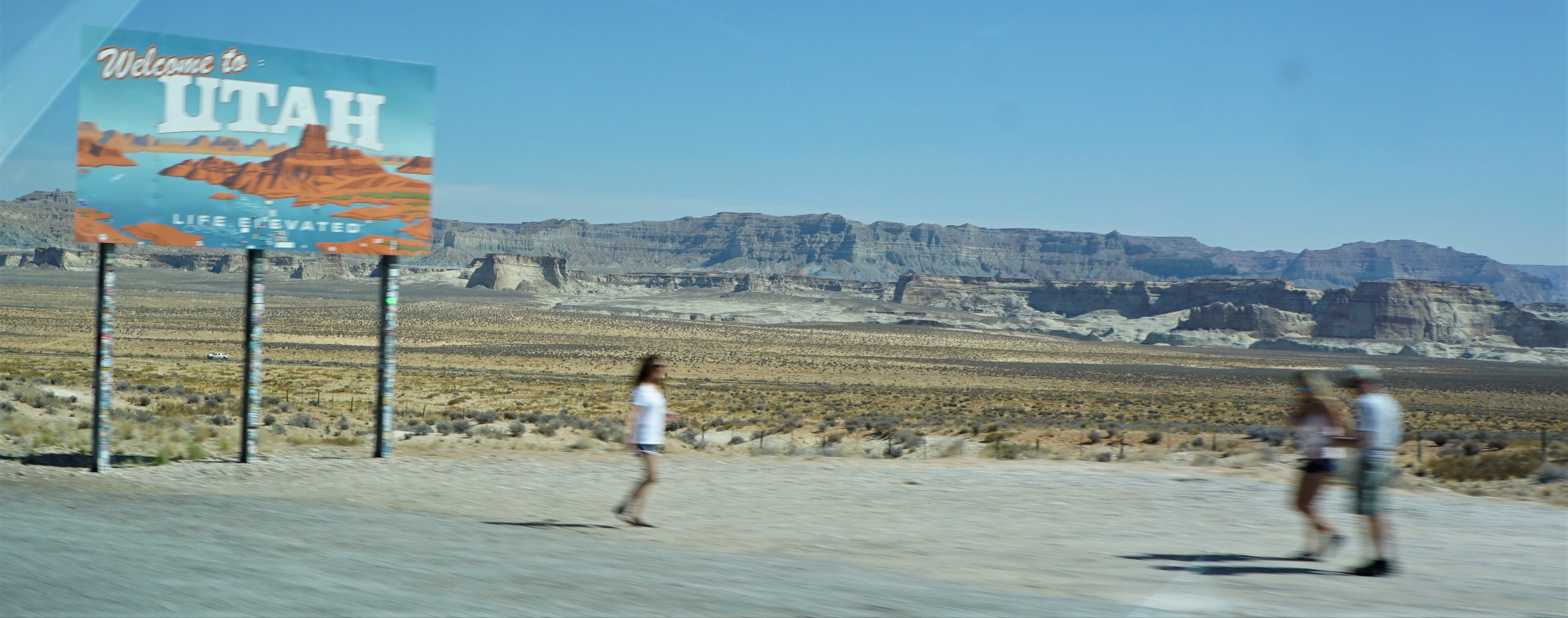
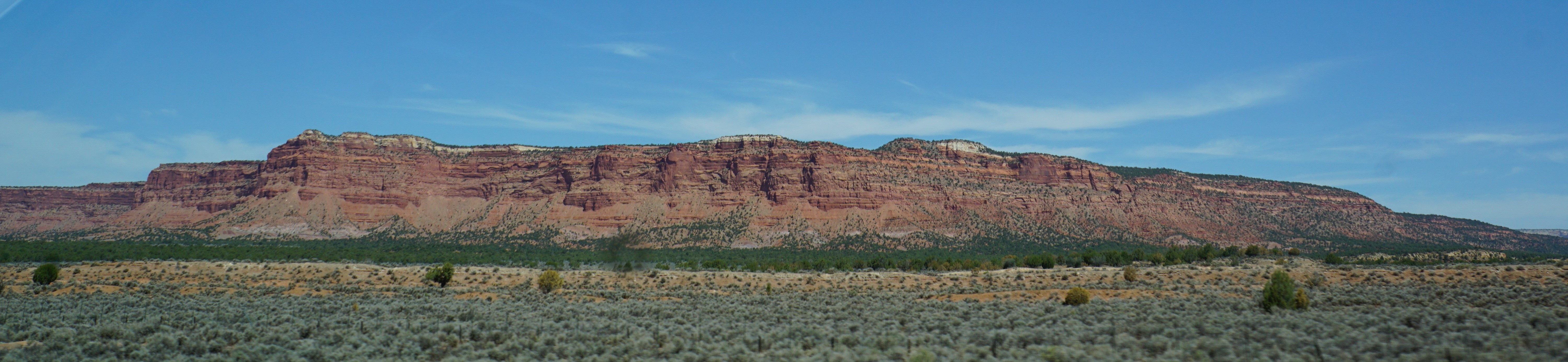
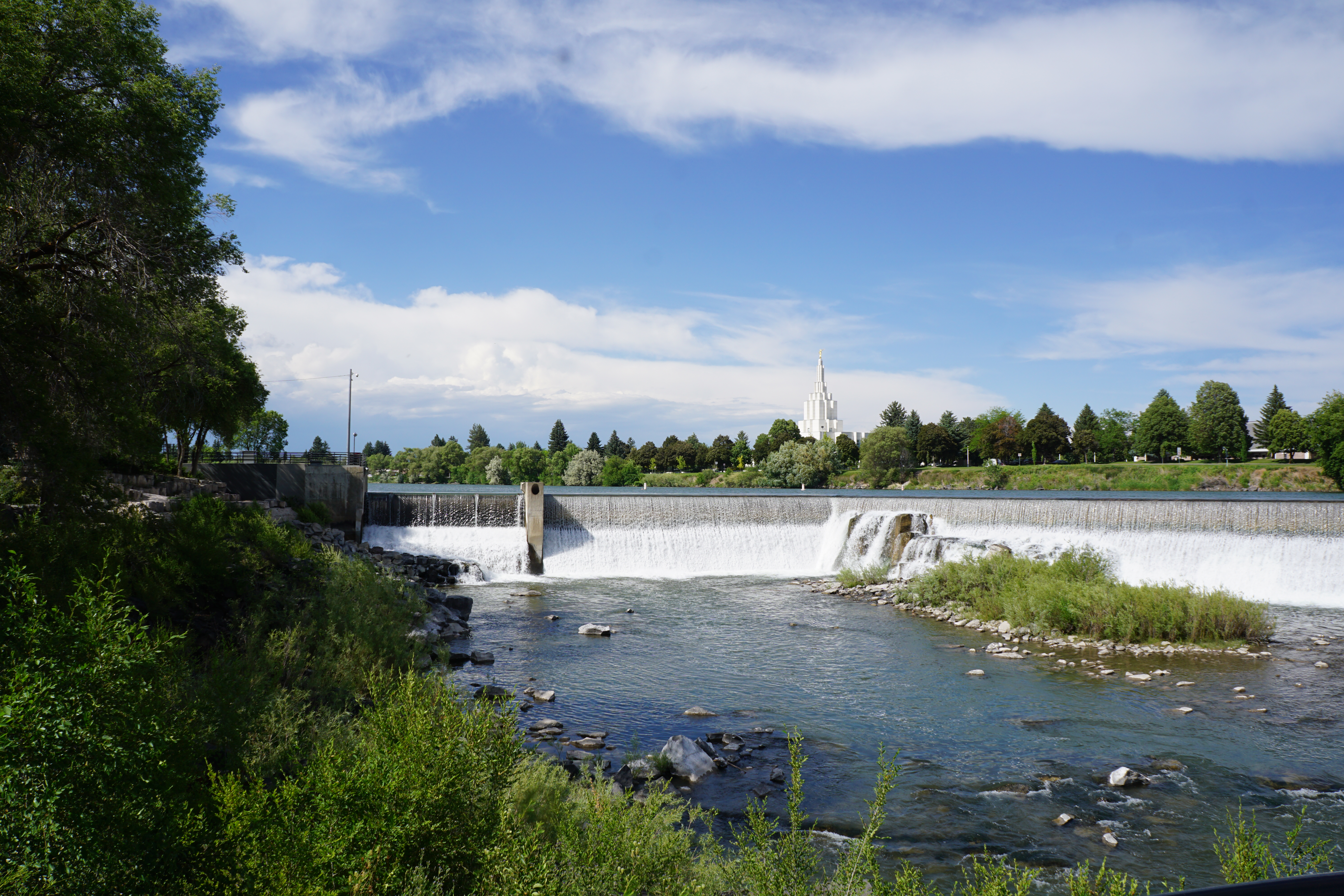
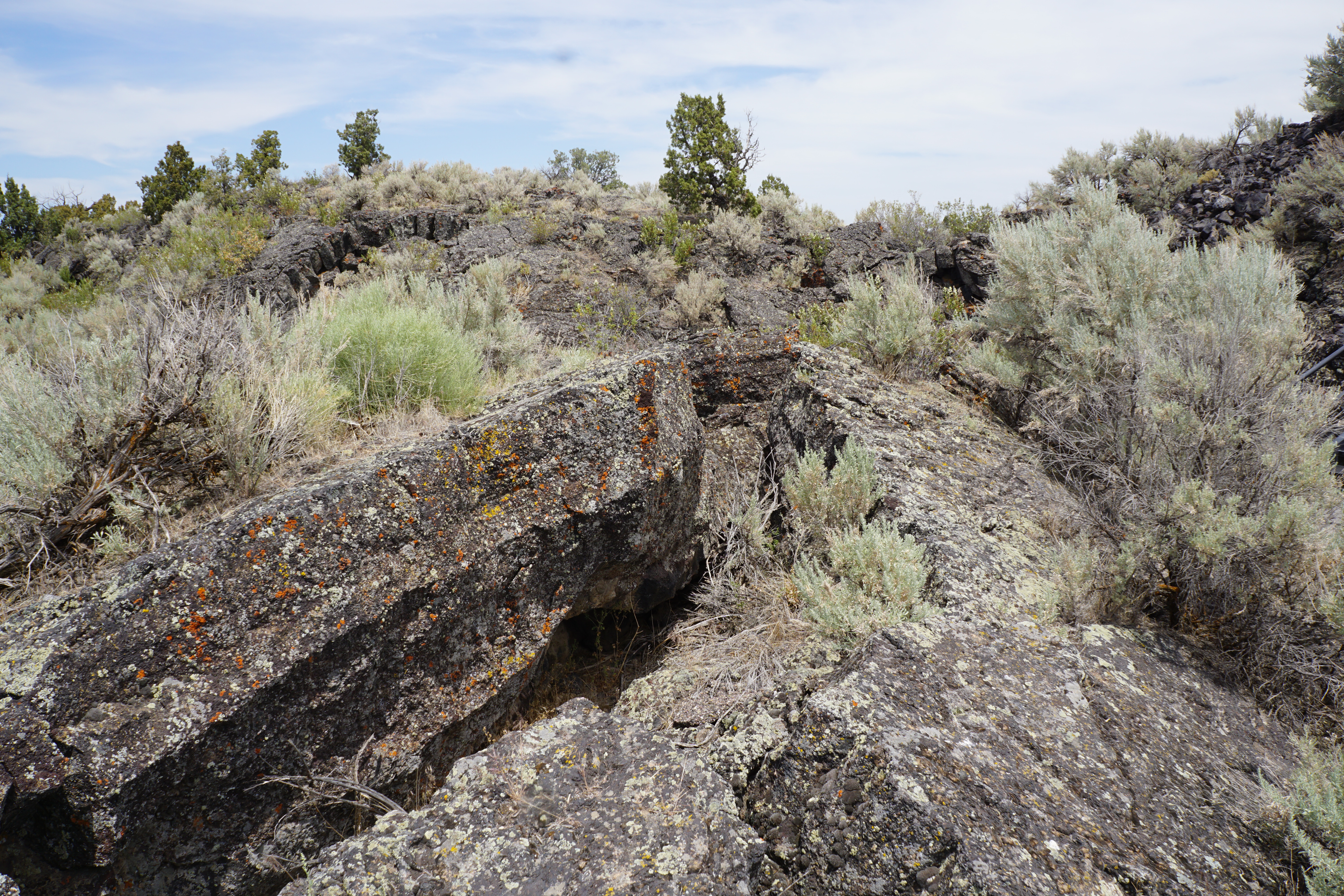
Traveling through the West, it is the beauty, desolation, and vastness that inspire me most. The sky and geography of Utah and Idaho collude to create soaring, lasting impressions. They seduce me, whispering ancient tales and promising a blur of stories of high plains, dusty buttes, painted plateaus, river rapids, and arid summer days.
As we travel highways and backroads, we gather and stack our stones. We accumulate memories of lovers and friends, tranquility and turmoil, balance and incongruity, strength and vulnerability.
Our teetering stones represent the yin and yang of our natural existence. Without them, we would have nothing to account for our discoveries, our disappointments, our victories, our losses, our presence.
Gaze beyond the earth to the cerulean sky. It lightens our load. The blueness invites us to forget the gravity of our stones, to aspire to possibilities loftier, to imagine peace over the weight of our past.
I wasn’t in the crowd on June 5, 1971–fifty years ago today–when Six Flags Over Mid-America first opened its gates in the rolling countryside of Eureka, Missouri.
But I remember the feeling of unbridled anticipation when I read about it in the St. Louis Post-Dispatch and saw the coverage of the grand opening on local TV stations. I wondered, what would this new amusement park feel like, smell like, taste like?
Sometime in late June or early July came my inaugural visit. As I skipped through the turnstiles of the gleaming attraction with friends, I remember the exuberance I felt. It was like running out the doors on the last day of school and discovering a carefree, sparkling universe on the outskirts of St. Louis … all rolled into one.
We raced from ride to ride and show to show, devoured fried chicken and strawberry popsicles, cooled off in the splash of the Log Flume, and tossed our arms in the air when the River King Mine Train (the park’s first rollercoaster) left the station. How we screeched when the bottom of our stomachs dropped on the final plunge.
In the summer of ’71, I had no clue or premonition that I would actually learn how to drive that same rollercoaster three years later as a fresh-scrubbed seasonal Six Flags employee … or that the experience would become a metaphor and inspiration for a light-hearted book I would write in 2016 about the ups and downs of my Missouri life in the 1960s and 70s. But life is full of surprises. Both of those things happened.
On this fiftieth anniversary, I still recall the fun of those more innocent days as a guest and the thrill of landing my first job at Six Flags Over Mid-America in 1974 … not to mention the twists and turns that would follow for the next three summers as a rollercoaster operator.
As a tribute to the history of Six Flags (and all the fun and energetic cohorts who worked beside me in the mid 70s), I want to share To Chase Another Thrill. It’s a poem I wrote in June 2016, which captures the feeling of manning the rollercoaster controls. It first appeared in Tales of a Rollercoaster Operator in 2017.
***
I am the purveyor of ups and downs, for an hour or so each day,
Standing high above the crowd, ready to guide your way.
I study the nearby dashboard, flustered faces in a row,
Itching for a two-minute joy ride, with others persuaded to go.
I see the bars locked tightly, the crew is stepping back,
Leaving the station to squeals on wheels, it’s time to ride the track.
I know just what will happen, the train will climb three lifts,
Rounding bends and taking falls, rising from the dips.
I hear the train returning, it’s climbing up the hill,
Applying brakes and coming home, to chase another thrill.
It’s a big job, keeping the trees pruned in our complex. Yes, it’s like me to prune the lemon tree outside our front door and write a book of essays set against the beauty and warmth of this Sonoran Desert life.
But trimming palms exists in another stratosphere in the hall of fame of pruning and gardening. You’ll never find me shimmying up the trunk of a palm (think Gilligan’s Island) to sculpt them to look like this. It requires experts, like the crew that descended upon us yesterday. Even so, I admire the tidy end result and occupy myself by photographing the uplifting outcome and telling a story about it.
As the first holiday weekend of summer approaches, the manicured appearance of these Polynesian Paradise palms reminds me that I live in a relatively carefree resort community. I’m not stranded (perpetually) on a unchartered island like Gilligan, the Skipper, Mr. and Mrs. Howell, Ginger, the Professor and Mary Ann were in the 1960s, but I am far removed from the demanding midwestern life I left behind.
I’m grateful for this slower pace and quieter life. As summer approaches, I wish you the same. We all need time to reflect and rejuvenate our spirits, time to get lost in a silly old sitcom, time to read a good book, time to pour a cool drink, time to relax and indulge ourselves under a favorite tree.
More than a shameless ripoff of the Tennessee Williams play and the ensuing 1958 movie starring Elizabeth Taylor and Paul Newman, this is a story about our community cat and the Sonoran Desert heat. Both are staring down at us on May 1.
Early this morning, Tom and I spotted Poly on our neighbor’s roof. (Poly is the name I’ve given the bright-eyed feline that has made our enclave her home; we aren’t sure who she belongs to, but she is everywhere in our retro Polynesian Paradise condo complex).
In pursuit of Saturday’s breakfast, persistent Poly was stalking a mourning dove and her baby nesting safely (they thought) under the eaves. Tom’s response was to worry about the well-being of the birds. Mine was to grab my digital camera and to stumble outside in my robe to document the moment.
Eventually, Poly slinked away without a catch. She pattered across the roof to find mischief elsewhere, perhaps on a back patio somewhere down the row. We likely won’t see her for a few days. That’s her pattern, at least. Appear. Disappear. Resurface. At dusk later this week, I expect she will reemerge and patrol the sidewalk in search of an evening snack.
The dry heat is more constant, less whimsical than Poly. Once it appears in early May (we expect a high of ninety-eight degrees in Scottsdale today), we know triple digits aren’t far away. But Tom and I have learned to adapt to the “oven” that is the Sonoran Desert from May through September. In a strange way, it’s become a familiar, returning friend.
In the Phoenix area, early morning and late evening walks or swims are the solution in the summer months … along with a few strategically planned escapes into the cooling pines of northern Arizona. This June we expect to venture even farther north to spend a few days with friends in Bozeman, Montana.
After a year of relative hibernation, I expect driving on the open roads and discovering new vistas in Arizona, Utah, Idaho and Montana will feel like a real adventure. It will certainly be welcome relief after the fright and disorientation of a pandemic year.
But even if we were forced to stay put another year and tough it out indoors away from the midday sun, the summer months are relatively peaceful in Scottsdale, because visitors leave to avoid the heat. For that reason, I give them high marks. I look forward to the quiet, to more time to reflect and write, and to hearing the potential pitter-patter of Poly’s cat paws pacing down our scorching sidewalk or across our hot (not tin) roof.
Our best and worst memories have a way of softening and sharpening as we age. Like photos pressed in the pages of a family scrapbook, some of them fade and crack. Others, through the lens of our selective memory, grow more brilliant.
I don’t know what it will feel like to look back on 2020 in ten or twenty years. But, as we work to survive the entirety of this preposterous year, I suspect our memories will follow the same unpredictable pattern.
On the morning of December 25, after a breakfast of scrambled eggs and English muffins, my husband and I watched A Christmas Story.
Like many of you, I have seen this satirical and nostalgic film countless times. It’s one of my holiday favorites. The 1983 movie, directed by Bob Clark, is narrated by author Jean Shepherd and based on his stories of growing up in the Hammond, Indiana area (near Chicago) in the 1940s.
The writing is witty and the editing superb, but what I love most about the film (starring Melinda Dillon, Daren McGavin, and Peter Billingsley) is the sense of time and place it captures.
Like the endless scarves, hats, gloves, and buckled boots the kids wear to protect themselves from the cold and piles of snow, the film produces layer upon layer of lasting humor, warmth and comfort … told through the eyes of a nine-year-old boy. It is an exaggerated ode to a lost era in the United States. For all of these reasons, it is imminently watchable despite its constant availability.
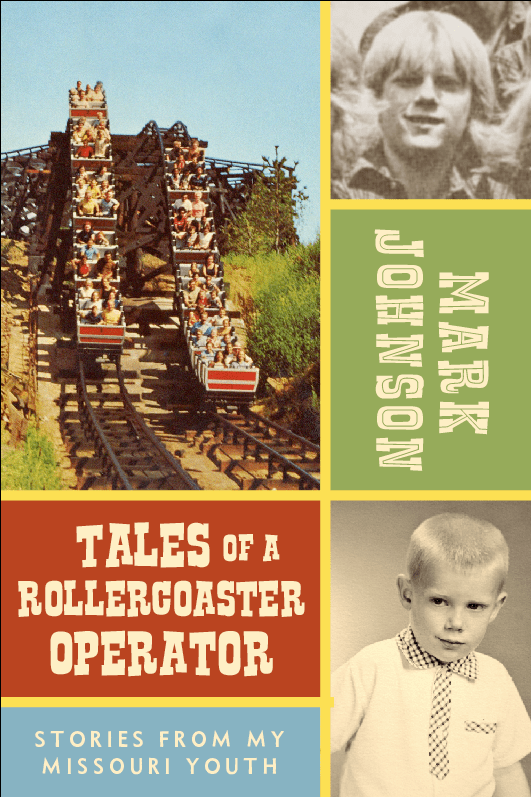
In hindsight, warmth also was the feeling I intended to capture in my book, Tales of a Rollercoaster Operator, published in 2017. I wanted to leave behind a record of what it felt like to grow up in the hot St. Louis, Missouri suburbs in the 1960s and 70s.
It was an age when kids ran barefoot, chased ice cream trucks, played with marbles, watched dads toss horseshoes, cuddled with puppies in backyard pools, performed tricks for Halloween treats, banged pots and pans outside to celebrate New Years Eve, sucked on popsicles to beat the heat with the neighborhood kids on scorching summer afternoons, and (in my case, at the age of sixteen in 1974) learned to operator a rollercoaster.
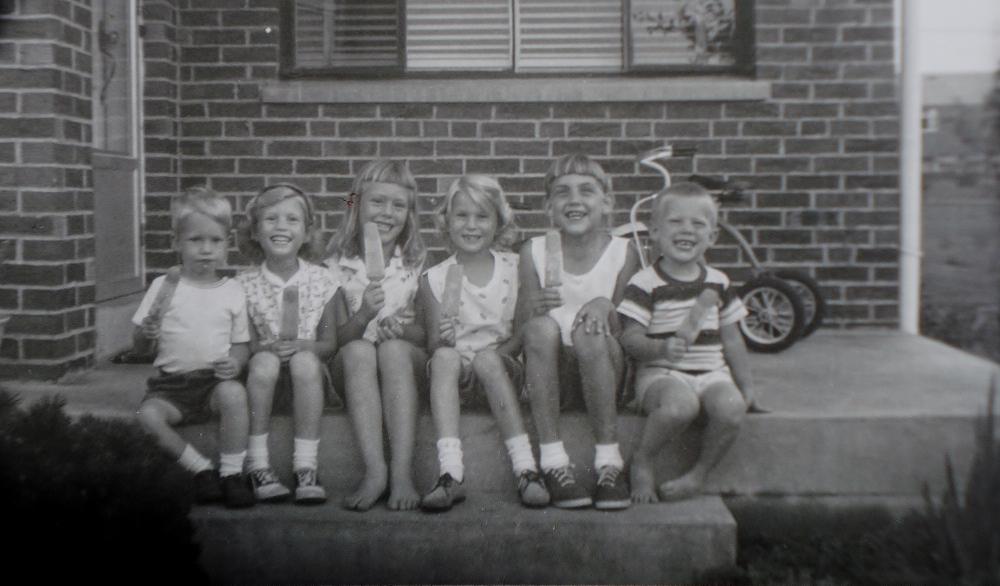
This was my front porch (circa 1960) in Affton, Missouri: Jimmy; Marianne; Diane; Suzy; Carol; and me. My mother sealed the moment with the help of her Brownie camera. Now the image lives forever in my light-hearted book of Missouri memories.
It certainly was a more innocent time. But, as we grew, the world became more complicated. We watched and listened to Walter Cronkite. We believed everything he told us through our black-and-white TVs. That included images and stories of JFK’s assassination, the first steps on the moon, Watergate, and the raging Vietnam War.
At any rate, if you’re looking for a little warmth and nostalgia to get you through the winter, I have an antidote. Download a free copy of Tales of a Rollercoaster Operator through the end of 2020.
As we prepare to cross into a new year and hope for brighter days ahead, maybe my stories of a bygone period in American life will inspire you to laugh a little, revisit your youth, dust-off your favorite memories, and find new meaning in the indelible moments that stay with you for a lifetime.
Though September’s seventy-five-degree mornings are beginning to offer cooling relief from the Phoenix-area heat, the fire barrel cactus outside our back door is sunburned.
Fortunately, it’s still spiky, spunky, and nosy–always leaning to one side to eavesdrop as neighbors walk to the Crosscut Canal for an early morning stroll.
But the normally green skin of my old friend has turned to yellow. Matching the pot it resides in. More than fifty days of summer sun exposure in one-hundred-ten-degree heat will do that to you.
It isn’t practical for me to rub Aloe Vera gel on my plant with the piercing personality. That’s an especially bad idea for an avid gardener on a blood thinner. The spurting blood from my fingers would splash on our sidewalk.
Instead, Tom and I have shrouded it with two pieces of gauzy black cloth. This cactus shield of sorts (like a veil for an old Italian woman in mourning) should help it recover over time.
If I could, I would wrap the whole warming world and the body of every person in this protective material (along with a required mask, of course).
My scheme would give everyone a chance to breathe, grieve and heal away from harsh elements: devastating fires, thick smoke, high winds, swirling hurricanes, global pandemics, crippling anxiety, and one particularly- problematic-and-pontificating politician.
When Nick called on Wednesday afternoon to tell us the air conditioning in their Tempe, Arizona home was out, I could hear the desperation in my thirty-six-year-old son’s voice.
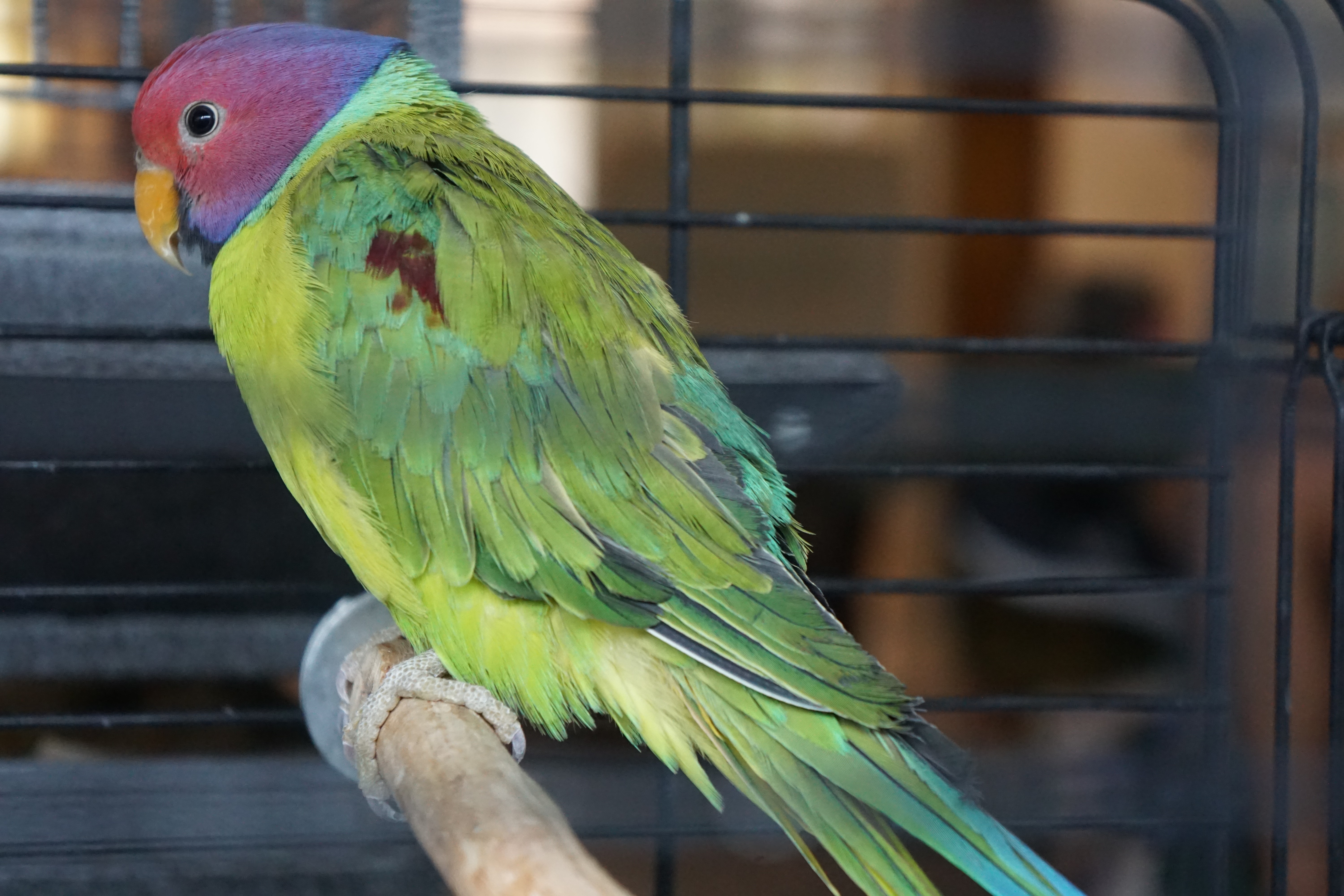
He and girlfriend Aida had found a hotel room nearby for themselves, Aida’s teenage children (Mia and Tony) and Yorkshire terrier (Bella). But they needed a cool space for African grey (Zumra) and colorful conure (Kiki) to mark time until a wayward AC replacement part could be identified and shipped in the middle of a pandemic.
“Bring ’em on over,” I said. Tom, the ever-loving animal lover, nodded in agreement. “They’ll be comfortable here in our sun room.” We couldn’t imagine two exotic birds toughing it out, panting and squawking in a ninety-seven degree house in this endless, torrid Sonoran summer.
Without a hitch, we shouldered the feeding and watering responsibility. Surrogate parents (or possibly grandparents) to a couple of feathered gremlins who gazed at us through the bars of their cages and produced an errant squeak here or a flurry of acrobatic activity there. Simple, rhythmic reminders of where we were living for three days and nights: Birdland 2020.
Our featured performers dazzled us by carefully plucking multi-grain wafers, plantain chips, and sliced green grapes from our palms (without severing our fingertips with their impressive beaks), while balancing like circus performers on high-wire perches.
The only sideshow acts missing were a shouting ringmaster, dancing bears, freshly-spun cotton candy, and an oily carnival barker manning the carousel, as calliope music blared from the boombox in our living room.
Of course, the complete circus spectacle described here existed only in my storytelling imagination. Though on Thursday night, extra-curricular activities DID include a monsoon storm raging outside as Zumra and Kiki twirled and Joe Biden unfurled a passionate speech. All of it summoned the rain and hope we had missed for months. No … years.
Now we are empty nesters again. Nick and Aida picked up Zumra and Kiki on Saturday evening. Their entire entourage is holed up in a larger, more comfortable apartment for the remainder of this week as they wait for permanent resolution on their uncomfortable AC odyssey.
All isn’t lost. Tom and I have the marvelous memory of two exotic travelers. Flapping, but unflappable. Unaware of the mayhem in the human world, Zumra and Kiki flew in and out in August, graced us with their plumage, and stole our bird-loving hearts.
While outside hummingbirds, mourning doves, mockingbirds, finches, desert wrens, and lovebirds brighten our world in Arizona every day. If we remember to look and listen, they remind us that nature is king, no matter who lives in the White House.
It’s July. It’s hot. It’s dry. It’s the Sonoran Desert. No surprises there.
But one-hundred-eleven? One-hundred-eleven again? One-hundred-thirteen? One-hundred-fifteen? One-hundred-seventeen?
These are the forecast high temperatures for Scottsdale, Arizona for Wednesday through Sunday of this week.
I’m not sharing this information to inspire pity or compassion. After all, I chose to live here.
Plus I won’t ever have to worry again about snow removal. Or icy sidewalks. Or digging decaying leaves out of gutters.
Or shoveling two-to-three feet of drifting snow. Or the cilia in my nostrils freezing solid in winter. Or driving down the street to discover that the snowplows have come through and blocked our driveway.
These are Chicago memories. November. December. January. February. March. April can be cold too. So can May.
Anyway, back to July in Arizona. It will rain again in the Valley of the Sun … some day.
Probably a vengeful monsoon or two in late July and August. The washes will fill up. And when they do, the thermometer will dip below 100. Sweater weather?
The local weather forecasters will have another monsoon story to tell. How to prepare for the next storm.
They’ll send their TV news crews out on the roads. To show us that actual rain is falling.
That the pavement on streets is wet. That windshield wipers are swooshing back and forth across glass. Only in Arizona will these ever be considered newsworthy.
Tom and I have figured out ways to manage in the Arizona heat. Early morning walks or swims or masked trips to the store. Reading and writing and yoga in the middle of the day in the AC of our condo.
Lighter meals. Fruit smoothies for lunch. Complements of the new Ninja we bought.
Scrabble. Game shows. Reruns of old sitcoms. That Girl and The Brady Bunch are our latest fixations.
Quiet dinners at home. Late evening strolls to the canal after the sun is down and the temperature is closer to 100 again.
This is the life of a desert rat. Living under the radar. Thinner. Tanner. Dryer. More tolerant of our advanced degrees.
It was about 90 degrees at 7 o’clock when I grabbed my broad-brimmed hat, a tall bottle of water, and a cool, damp towel to cover the back of my neck. My husband and I were heading to Vista del Camino Park for our early morning walk before the temperatures escalated past 100. Such is life in July in Arizona’s Sonoran Desert.
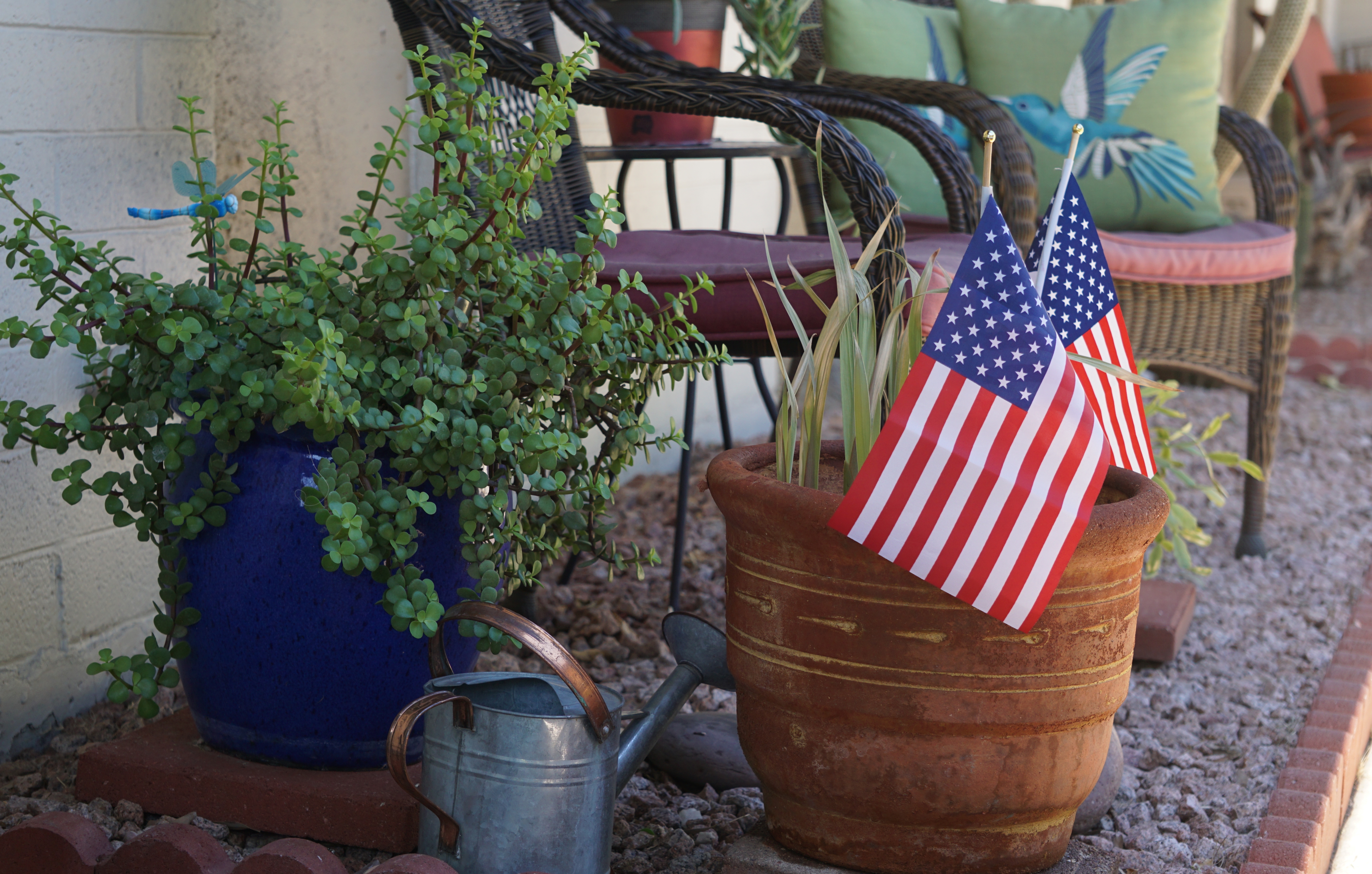
The elephant foot succulents on the north side of our condo don’t seem to mind. They are coping just fine. Under the eaves. Resting in the shade most of the day. We decided to move our container of gladiolas next to them. They were getting torched on the south side in the all-day sun. Maybe the American flags will help boost their spirits as Independence Day approaches.
I’ve learned to accept and adapt to July’s torrid temperatures here … since that day nearly two years ago when I survived to tell the story of An Unobstructed View. As long as you keep a ready supply of water nearby and stay indoors during the spike in the afternoon heat, it’s manageable.
This year we’ve planned a few strategic July escapes, as well. One to the stunning red rocks of Sedona a few hours north. Another further up Interstate 17 into the fragrant, tall pines and mountains of Flagstaff, where the air is thinner and the temperatures are twenty-five degrees cooler.
Truly, life in Arizona is a story of extremes … and remarkable beauty.






 Mark Johnson Stories