Tag: Travel

Safe Haven

I don’t typically tackle social and political issues in my blog. I prefer to focus on the splendor of love, family, community, nature, and serendipity that runs through our lives.

But over the past weeks and months–years, really–I’ve been ruminating over what it feels like to live in the heaviness and post-Covid-social-upheaval of the United States in 2024.

Even though I am in good health and am fortunate to have the companionship of my husband and a cozy home, I often feel a gnawing, low-level anxiety.

I attribute this to worry. What will happen to disenfranchised members of our community–non-white immigrants, people of color, minority women, all women, all children, elderly people, trans people, gay people (like me), etc.–who would be especially vulnerable if our past president (the one just found guilty on thirty-four felony counts by a jury of his peers) should be elected in November?

I should tell you this blogpost isn’t intended to sway your opinion. I don’t think that is possible. I can’t imagine any American being undecided–not in this us-versus-them world exacerbated by lies and constant media attention.

Yes, I will vote for Joe Biden. It’s pretty simple for me. I’m not naive. Of course, he’s made mistakes, but he’s done a lot of good for our country economically and otherwise. I see him as a decent man–the only decent man whose name will appear on the 2024 Presidential ballot. I think he has the best interests of Americans in mind and sees the presidency as a job designed to serve the people, not his personal agendas.

If you feel differently, you are entitled to that. Just know that the democratic values and rule of law that generations of American men and women have fought for will be flushed down the toilet if enough people in swing states like Arizona vote for the other guy. I won’t include his name here.

Why did I choose to write about this today? Because I suddenly have greater clarity concerning all of the weight, which I’ve been carrying around concerning the potential loss of a safe haven–something all of us are entitled to.

The remarkable thing is my clarity came from an incident outside my front door on Sunday morning … an incident involving a feral animal Tom and I have come to love.

If you follow my blog, you know I’m talking about Poly. For the past three years, on many mornings she has appeared at our front door. Poly lives a reckless life, but at the very least is the beneficiary of food on the cool tile of our entryway (and probably others).

Her visits are a brief escape from the heat of the Sonoran Desert. Maybe her visits are also an escape for Tom and me to leave behind the worries of the world, which I’ve outlined above.

Recently, Poly has moved closer to us. Winding her way around our ankles. Sleeping in our wicker chairs. She has even decided to sleep outside on the gravel underneath our loveseat on occasion… before she moves on to explore other places, porches, and hideaways. Such is the life of a lovable, but forever-feral feline.

Anyway, on Sunday morning one of our neighbors (someone we care about who owns a sweet dog) happened to approach our front door at the same time Poly was eating with our door ajar. Normally, the dog is on a leash, but she wasn’t yesterday–though she should have been.

Poly (and I) were freaked. She ran out our door and down the sidewalk as the dog chased in hot pursuit. I feared for her safety and gave my neighbor an angry earful for not leashing her dog.

As I swam laps this morning in Scottsdale, I realized that my rightful (but intense) anger had roots. Metaphorically, in my mind and heart at least, Poly represented the plight of thousands of vulnerable Americans who might be on the run … whose lives might be in danger if we lose our democracy.

I say that knowing that some of my LGBTQ friends–particularly those in the trans community–are considering alternative plans of where to live if Biden doesn’t win the election. That’s a daunting thought and potential reality, which you may not be aware of if you don’t have gay friends.

One thing I am certain of. It doesn’t have to be Pride month for me to remain authentic and visible. I will continue to care about those less fortunate (humans and animals) … no matter what happens in November and beyond … because we all deserve respect and kindness … no matter who we love … no matter our identity.

Meanwhile, back in our Polynesian Paradise community, my neighbor and I have repaired our relationship and regained our equilibrium. (She apologized for not having her dog on leash and told me she hoped it wouldn’t deter Poly from returning.)

Late yesterday, Poly reappeared–safe and sound–outside our front door. This morning, she had her breakfast on the cool tile of our Sonoran entryway.

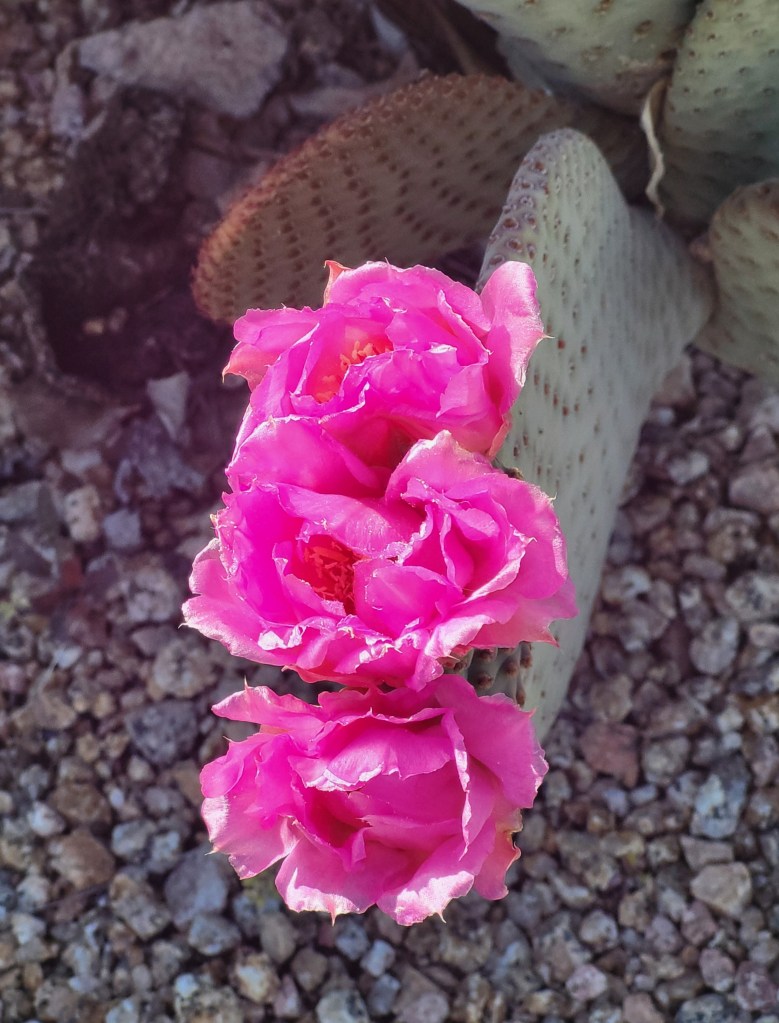
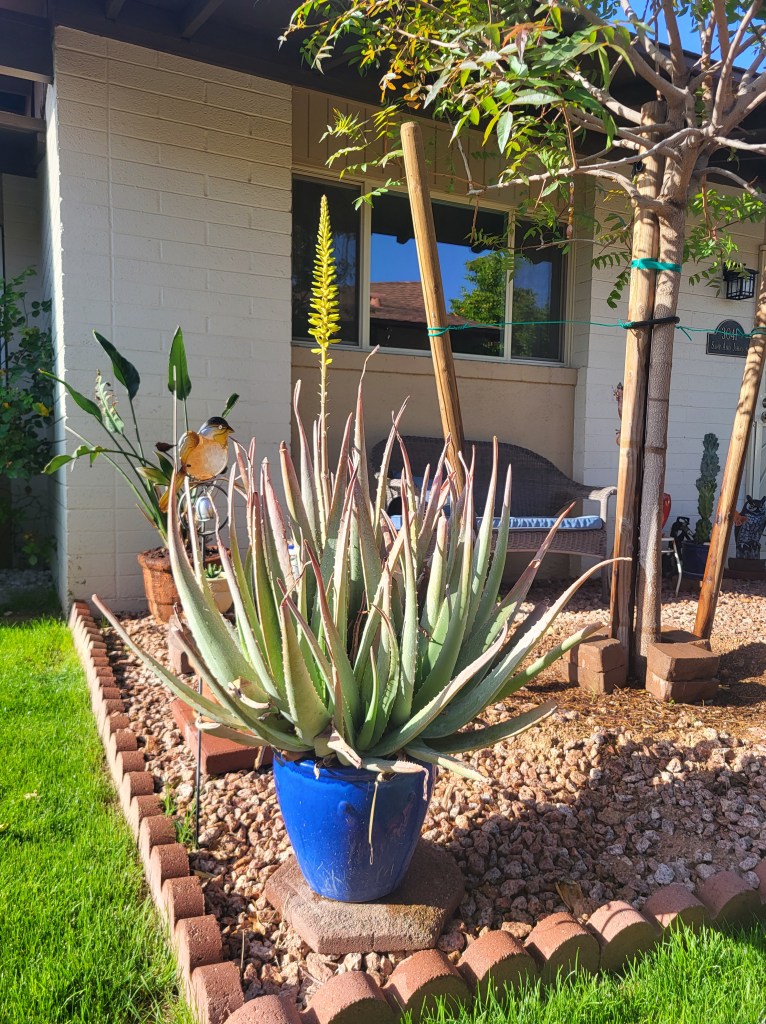
An hour later, I found her tucked underneath the loveseat in her safe haven. Peeking through the cacti containers and elephant food succulent on our patio, she allowed me to take this photo.

I am thankful Poly (and I) survived our Sunday scare. I hope our nation and democracy are as fortunate in November.

The Soldier on the Hill

I last visited my father’s grave at Jefferson Barracks National Cemetery in September 2021.

If there is such a thing as beauty to behold in a final resting place for those who served, it exists there just south of St. Louis on the banks of the Mississippi River–fourteen hundred miles east of where I live and write today.

On this Memorial Day, I remember Dad–and the thousands of fallen soldiers gathered around him–with twelve lines I wrote on August 27, 1996 … almost three years after he died.

This poem and forty-one others appear in my book A Path I Might Have Missed.

***

The Soldier on the Hill

I talked with the soldier on the hill today.

We sat, we cried, we laughed, we prayed.

The bells rang true, the trees stood free.

A breeze swept past to welcome me.

Shadows filled the landscape then.

Tempers rose without his pen.

Snowflakes fell, the grass turned green.

All without a change of scene.

Now the soldier rests with them,

Hand-in-hand–all blessed again.

They greet another trailing soul.

Who makes the journey past the knoll.

April in Scottsdale

My title doesn’t quite have the ring, rhythm and dreamy sway of April in Paris (the 1932 song composed by Vernon Duke with lyrics by Yip Harburg).

But then the Sonoran Desert, which we in Scottsdale inhabit in the Valley of the Sun, is nothing like the iconic French city (or so I’ve heard).

Late March rains and chillier-than-normal temperatures have produced a green early April in central Arizona. Perhaps the greenest I can recall, since Tom and I moved here in 2017. We hope this is a trend and precursor to a cooler, wetter summer.

As snowbirds fly (or drive) east and north to return to their predominant nests, we full-time desert dwellers are left with more space to roam and the promise of new life that will sustain us.

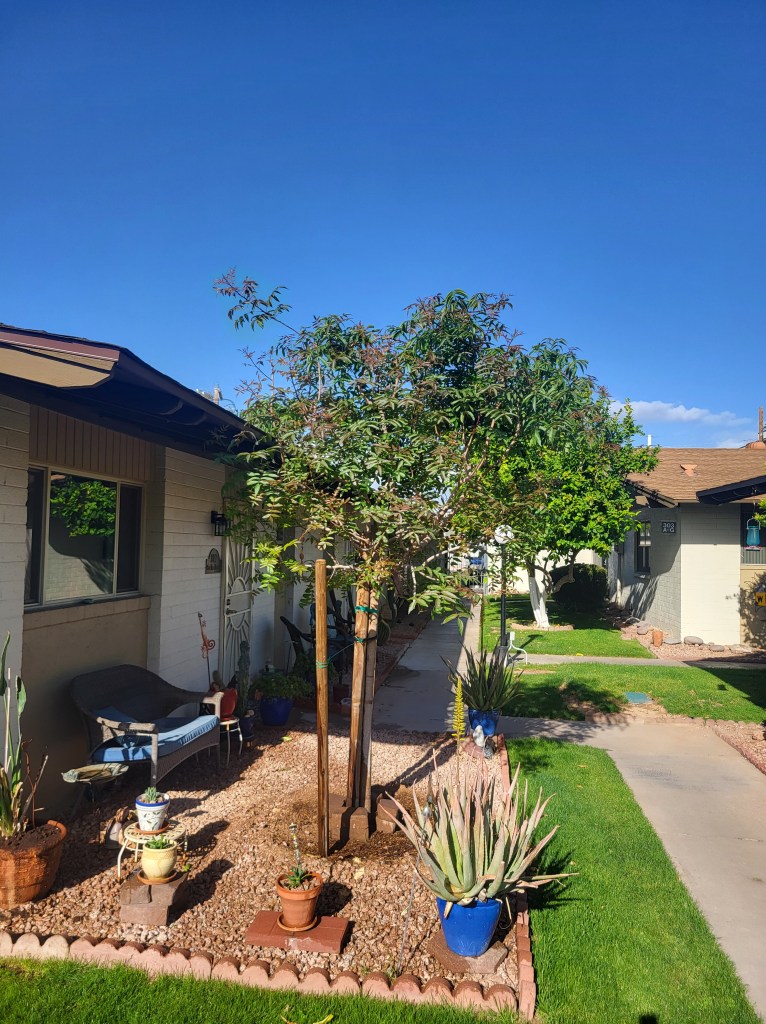
Even in the desert, April colors and possibilities burst forth from cacti, succulents, and containers. But most notably from the earth where newly planted trees such as our Red Push Pistache–those we’ve only just begun to know–prepare to dip the tips of their leaves in ink and write their own stories.

Libretto #3

My friend Randy–baritone section leader for the Phoenix Gay Men’s Chorus–surprised me at rehearsal on Tuesday night. He handed me this descriptive name plate, which–four years ago in the depths of Covid–felt unlikely and unreachable.

As background, this unforeseen opportunity in my writing journey emerged in 2022, when I wrote lyrics for a few original songs for the Phoenix Gay Men’s Chorus (PHXGMC).

Shortly after, PHXGMC’s artistic director Marc asked if I would have an interest in crafting a libretto for Born to Be Brave, the June 2023 performance.

Quickly, that led to libretto #2–Thanks for the Memories: A Gay Christmas Carol–performed in December 2023. Remarkably, what began as a novelty developed into a creative trend.

Over the past few months, I’ve been “noodling” and “angsting” over libretto #3. Marc, Scott (our choreographer) and I met a few times this winter to select the music and brainstorm creative approaches for Encore, our June 22-23 concert at Tempe Center for the Arts.

Randy knows I’ve been working on this behind the scenes. But what he doesn’t know (until he reads this) is I finished drafting libretto #3 on the same day he smiled and handed me his gift.

A beautiful arrangement of A Million Dreams from The Greatest Showman will open the show. That’s ironic, because–in my wildest dreams–I never imagined seeing the word “librettist” attached to my identity.

Son, student, graduate, husband, father, writer, gay man, friend, consultant, author, tenor, teacher, mentor, citizen, democrat, neighbor, dreamer, idealist, survivor, poet … yes. But lyricist and librettist? No.

I think this is one of life’s lessons. That the person you ultimately become at 65 or beyond may not reveal itself at 20, 30, 40 or 50.

But if you hang around long enough, and allow yourself to explore outside your comfort zone, you might discover you are capable of creating something meaningful you never dreamed of.

Wide and Deep

My heart raced and jaw clenched. Like thousands of Americans, on Tuesday I tuned in to watch true patriots from Arizona and Georgia do the right thing.

The 2020 election numbers–votes counted and recounted numerous times–don’t lie. Neither did Arizona House Speaker Rusty Bowers, Georgia Secretary of State Brad Raffensperger and his deputy Gabe Sterling, and Georgia election worker, Shaye Moss.

At a defining moment in American history, on June 21, 2022, they delivered their testimony before the U.S. House Select Committee investigating the January 6, 2021, attack on the U.S. Capitol.

They sat before the nation. They breathed deeply, mopped their brows, and somehow maintained their composure. They told us how they kept their fingers in the dike to keep a corrupt president and his allies from breaking through the dam and cheating the American people. They upheld the law and the letter of the U.S. Constitution.

Over three hours of testimony, we heard heart-stopping stories. Each witness detailed how some of those who still support the ex-president have threatened and targeted their professional and personal lives. All in an effort to illegally change the outcome of the 2020 election.

In this one blog post, it is impossible to address the sense of fear, anxiety, and division that exists in our current culture. But suffice it to say, this insurrection and its related tentacles run wide and deep. It appears there is much more evidence to come. Each day we brace ourselves for more of the ugly truth about the targeting of public servants and slates of fake electors.

What will happen next in this drama? Who knows? But the biggest question of all looms on the horizon: Will the U.S. Department of Justice pursue criminal charges against the forty-fifth President of the United States and others who apparently have violated the rule of law?

Young and old alike, we watch and wait. Our nation’s future is at stake. Our sense of freedom hangs in the balance.

***

Tuesday’s hearing occurred fifty years and four days after five men were arrested for breaking into the Democratic National Committee headquarters at the Watergate Hotel in Washington, D.C.

Soon after, the Watergate political scandal dominated our lives. Our nation was thrust into the pain and complexity of a constitutional crisis and investigation that would expose President Richard Nixon and members of his administration.

I was a teenager at the time. I didn’t understand the gravity of the Watergate scandal. But I remember the anxiety of uncertainty that pervaded our country and how outraged I felt that our president would lie and cheat and do all he could to try to cover up his deceit. That pain has resurfaced today.

I also remember pausing for breakfast with my friends John and Jon in the middle of our western camping adventure on August 9, 1974. It was the day Nixon finally resigned after two years of political denial and trauma.

John, Jon and I chowed down on steak and eggs in a dark tavern/diner somewhere in Wyoming, while on the other side of the room, through the tube of a grainy black-and-white TV, we watched Nixon break the news in an address to the nation.

Before and after that moment, my buddies and I drove through miles and miles of magnificent western landscapes–mostly through the Rocky Mountains in Colorado and Wyoming. But we also ventured through the beauty and desolation of Arizona and New Mexico.

Imagine three sets of parents of three teenagers, permitting one seventeen-year-old and two sixteen-year-old boys to pack up a beat-up AMC Javelin without adult supervision. Somehow, we convinced them to let us go.

Over a ten-day period, the three of us towed a small camper more than a thousand miles each way from St. Louis to the Rockies and back again. We had fun, drank Coors beer, exercised our freedom, cooked over a Coleman stove, slept in a tent, and managed to stay out of trouble. Those were simpler and safer days. That trip wouldn’t happen today.

As a young man about to begin my senior year of high school, the possibilities of life surrounding me traveled as wide and deep as the terrain you see in this photo of Shiprock, New Mexico, which I captured and saved from our 1974 journey.

Little did I know that one day nearly five decades down the road–as I approached my sixty-fifth birthday in this western literary chapter of my life–our nation would face a much darker and historic challenge.

We must find a way to restore some semblance of sanity to our culture and political process … we must punish the perpetrators to resurrect our democracy from the jaws of an insurrection that continue to haunt us.

The Irish Mist

DSC07357 (3).JPG

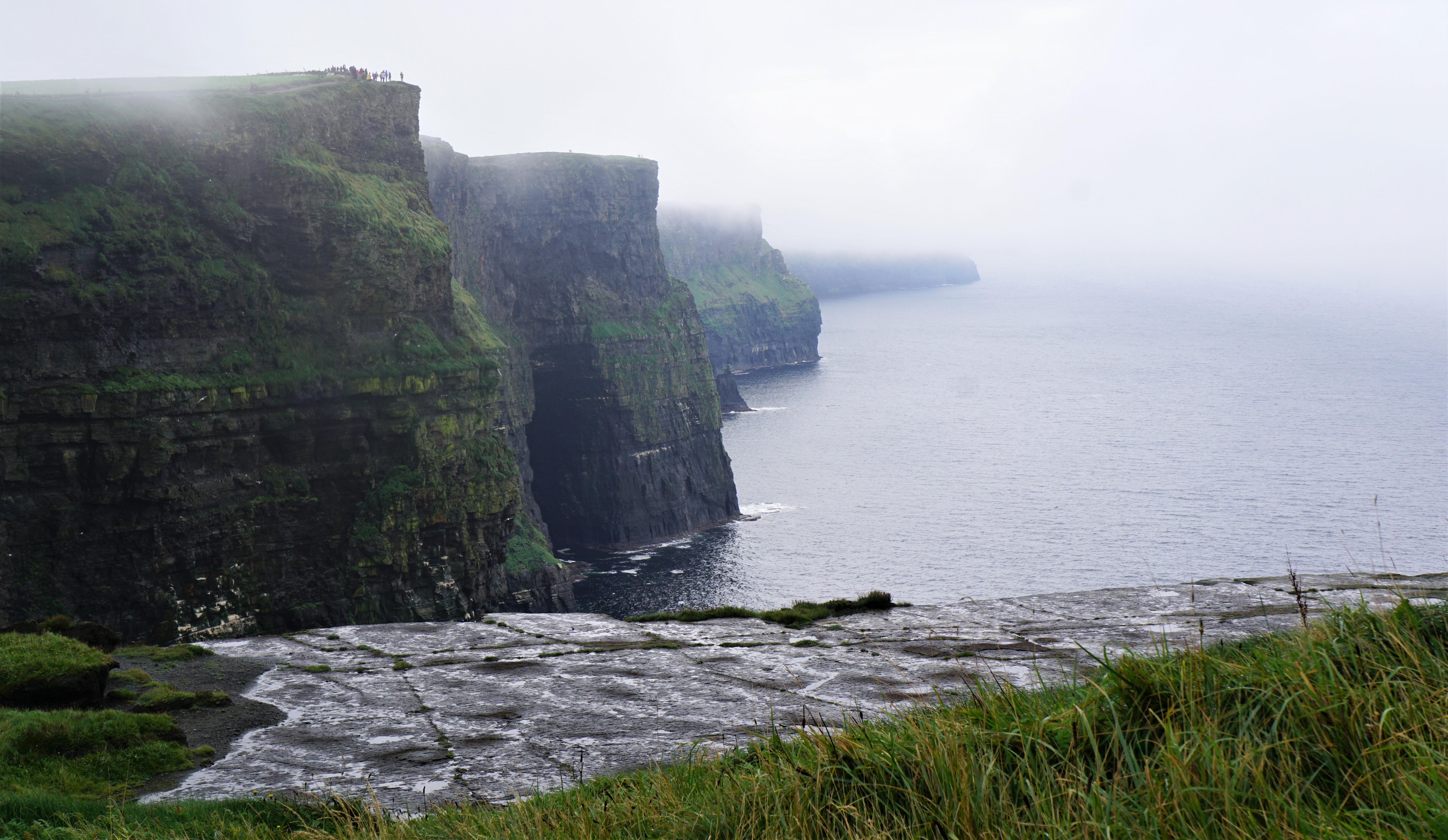
I’ll always remember you, rolling in over the gaelic green. I felt cool comfort knowing the veiled intentions you whispered in my ear wouldn’t be denied. No matter how much I wanted to gaze beyond the moss and ferns you shrouded, you held me there. You knew I needed to stand strong above the craggy cliffs of my past. You knew I needed to feel rooted to the emerald island, thankful for the mystery of my mending heart.

To See It All Clearly

NewGlasses_080619 (2)

I was wearing broken blended bifocals when my husband Tom and I arrived at our new home in Scottsdale, Arizona, on July 12, 2017. The frames had cracked in St. Louis during our July 6 cardiac ordeal there. Then, on the evening of July 10, as we prepared to check into our hotel room in Weatherford, Oklahoma, they proceeded to fall apart. The lenses landed on the counter in a clatter. I sighed and shrugged as Tom, the front desk attendant and I took turns taping the pieces back together.

Like the death of my smart phone heading south from Chicago to St. Louis earlier in our journey, it was just the latest mishap on our way west from one home to another … the latest coincidental casualty in the Bermuda Triangle of my mild heart attack (an oxymoron far less laughable than jumbo shrimp) on my sixtieth birthday in the city where I was born.

Fortunately, we arrived safely in Arizona less than a week after a cardiac swat team at Barnes-Jewish Hospital in St. Louis removed the blockage in the left side of my heart and inserted two sparkling stents for good measure. By the middle of July, Tom and I found The Frame Doctor in Phoenix. For sixty bucks, he was able to salvage my lenses (they were undamaged) and insert them (a much less delicate procedure than the one with my back on a gurney back in St. Louis) into a new, somewhat stylish, set of frames that served me well in my first two years as an aspiring Sonoran Desert rat.

But I began to notice some changes in my vision recently. So, in July I visited my new ophthalmologist for an annual eye exam. He confirmed what I already knew. My vision had changed. He told me I needed a stronger prescription and a new pair of eyeglasses. I picked them up on Tuesday.

Perhaps it’s strangely poetic that the mangled glasses that got me here … the glasses that made it possible for me to write An Unobstructed View and tell my stories here about my first two years in Arizona … have now been retired. They have become my back ups. The more powerful ones you see above, straddling my latest book, have taken their place. I’m counting on them to do their job in my blended bifocal world. Propped on my nose, they will accompany me wherever I go.

I’ll need them to see it all clearly … every memorable and not-so-memorable moment, every stunning Scottsdale sunset and monsoon storm, every word I read and write on the road that is life’s journey.


Confessions from 11,510 Feet

Snowbowl_072819

For a few minutes last Sunday, I was up on the roof. No, I wasn’t cleaning the debris out of my gutters. My husband Tom and I, along with John and Sharon (two lifelong friends visiting from St. Louis), were on a two-day, Flagstaff sightseeing mission, seeking northern Arizona’s coolest and highest spots.

On a rare, seventy-degree-and-mostly-sunny afternoon, we boarded the Agassiz Chairlift (elevation 9,500 feet in the San Francisco Peaks) and rode above the tall pines another 2,000 feet to the top of the Arizona Snowbowl ski resort.

Of course, this excursion was just for summer thrills. There wasn’t any of the frozen white stuff in late July. In fact, if there had been snow, I would have been far away for two reasons:

#1 … Unlike our friends from St. Louis who learned to ski when they lived in Europe, I’m not a snow bunny. Though Tom and I are in good shape for guys in their sixties, neither of us has skied much. On a personal note, I don’t care to risk broken bones on slippery slopes. I’m not interested in more pain or tempting fate. I figure it’ll arrive soon enough without me paving the way for a new and expensive relationship with an orthopedic surgeon. Besides, I already have a cardiologist and wouldn’t want him to get jealous.

#2 … I’ve endured enough cold and snowy Chicago days and nights to last a lifetime. To be precise, thirty-seven winters back in the relative flatness of northeastern Illinois.  Think sub-zero temperatures and howling winds in December and January and repeated rounds of snow-blowing to clear your western-exposed driveway in February and you’ll have the right mental image.

In all seriousness, Tom and I enjoyed getting reacquainted with John and Sharon. It had been nearly five years since we’d seen them. And, naturally, both the chairlift ride and the mountain scenery in our home state were breathtaking.

Hmmm … now that I think about it, perhaps our Rocky Mountain experience and my choice of adjectives have more to do with the thinner air I felt pumping in and out of my lungs at a high altitude than the actual view.

Either way, you can be sure I followed the rules on this sign. I did no running on Sunday. Just some light walking and a little heavy breathing until it was time for us to board the chairlift for the return trip, descend the mountainside, and climb down from Arizona’s magnificent and majestic roof.


I Didn’t Know, Indigo

Indigo_April2018

I didn’t know what roads we’d take eighty-two thousand miles ago.

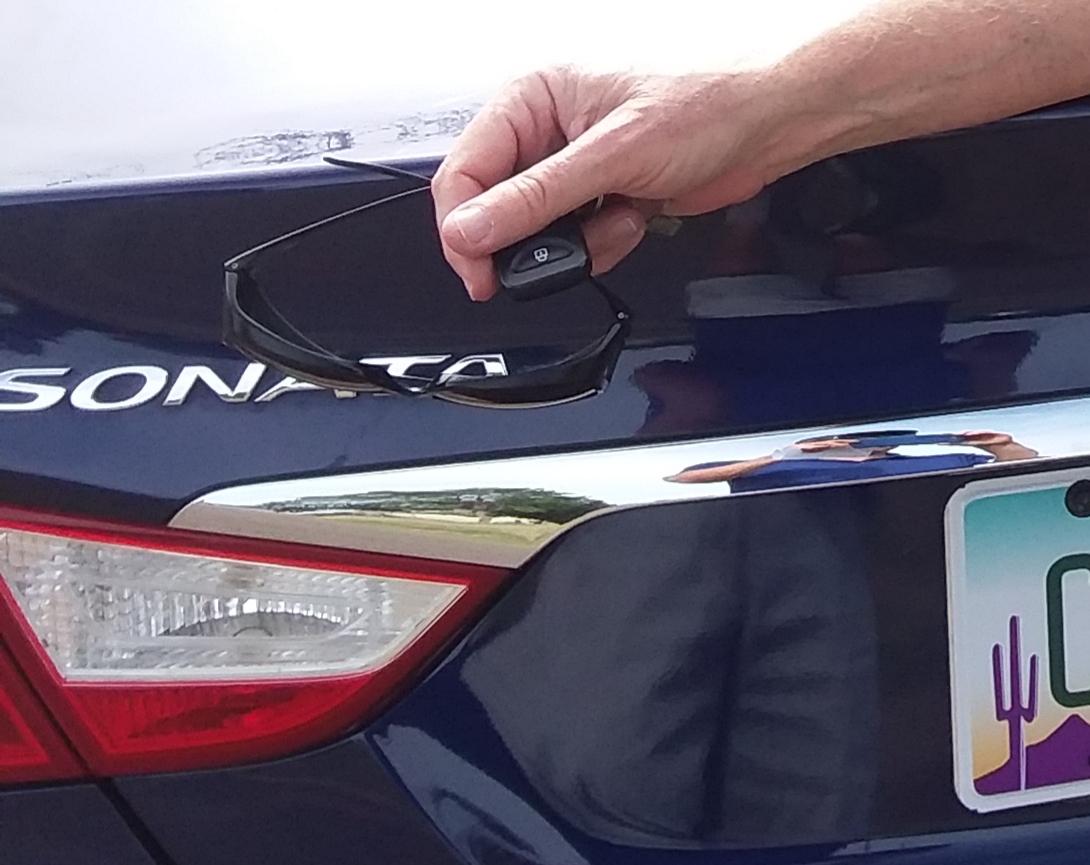
“I bought a new car, Mom” … “What color is it?” … “Indigo.”

I didn’t know we’d escort her ashes in Illinois.

I didn’t know we’d dodge a windswept tumbleweed in Albuquerque.

I didn’t know we’d take a desperate left turn in St. Louis.

I didn’t know we’d go back to the Grand Canyon rim to gather pine cones.

I didn’t know any of it seven years ago.

I only knew you’d be the one to carry us home.


By Mark Johnson

May 21, 2019