Back and forth from one end of the pool to the other on this hotter-than-average, magnificent March morning. March 24, 2026, from 9:00 to 9:30 a.m. to be precise. Thirty lengths in the deep end of Eldorado Pool in Scottsdale, Arizona.
Somehow, I wrangled my own lane today. I don’t mind sharing but always feel freer on unobstructed Tuesdays and Thursdays. There are fewer swim-class participants to contend with on those days and–now that the Cactus League baseball games have ended–some of the snowbirds have begun to flock home.
Breathing every eight or ten strokes, looking over my right shoulder, swimming south to north, I spy the blazing sun that threatens my sensitive skin and the wispy-white contrail of a commercial plane flying high above.
Serendipitously, the repetitive swimming motion reminds me what I want to write about today. It is the tenth anniversary of publishing my first book: From Fertile Ground.
On March 24, 2016, Barack Obama was president. I didn’t imagine the waves of what was to come: the growing political insanity, the dismantling of once-reliable American institutions, the general implosion of our democracy in one decade. Who could?
Back then, Tom and I were snowbirds–splitting time between our homes in Mount Prospect, Illinois, and Scottsdale, Arizona.
I wrote most of my inaugural book–a three-generation writer’s mosaic about love and loss in my family–from the suburban flatness of northern Illinois.
But working online–back and forth like a swimmer logging laps between my editor and book designer in Nashville, Tennessee, and me in Scottsdale–I made my final edits in the rugged western landscape of the Grand Canyon State.
I remember the pride of holding the first physical copy of my first book later that week. I know I cried. It was a release of joy and amazement. Most definitely, a seminal moment I shared with my husband.
Sadness crept in, too, because I had written the book to process my grief after my mother’s passing. In a physical sense, I wasn’t able to celebrate that literary moment with her.
But I also know that writing about her and her wisdom-filled letters, my father and his unrealized poetry, my grandfather and fifty-three years of diary entries, and the general sense of freedom I felt visiting my grandparents in the 1960s at their rambling North Carolina farm allowed me to create a healing path out of my grief.
It was–and still is–a story I was meant to write and publish. One I wanted to share with others navigating the devastation of grief.
In the past ten years since From Fertile Ground was born, writing has become that free, unbridled swimming lane that is purely mine. Welcome waves of water and creativity running from my mid-fifties to my late sixties.
Of course, I take pride in that body of work and–more recently–find it tremendously gratifying to share what I have learned with other writers, who need an experienced coach … and a few practical ideas … to tell their own stories.
Today, I also pause and wonder–with a touch of sadness as I write this–how many more stories lie ahead for me. Though I still feel strong, capable, creative, and alive in these golden years swimming back and forth under the Arizona sun, I also feel more vulnerable.
Part of it is the process of aging. The other is the narrowing swim lanes of American society that constrain freedom and the expression of ideas.
Having said that, I choose to end this story on a positive note. Today, I choose to relish the goodness of my life with Tom in this rugged landscape. To give thanks for all the stories that have come from fertile ground over the past ten years … as well as those I have salvaged from the depths of the pool looking over my shoulder to beloved people and places that now live on the page.
In the soundtrack of our lives–I believe one exists–sometimes a word or phrase from a conversation with a friend or acquaintance stops us in our tracks.
That happened for me recently while wearing my Writer in Residence hat at the Scottsdale Public Library in a one-on-one meeting with another writer. She looked at me with kindness and said with a warm smile:
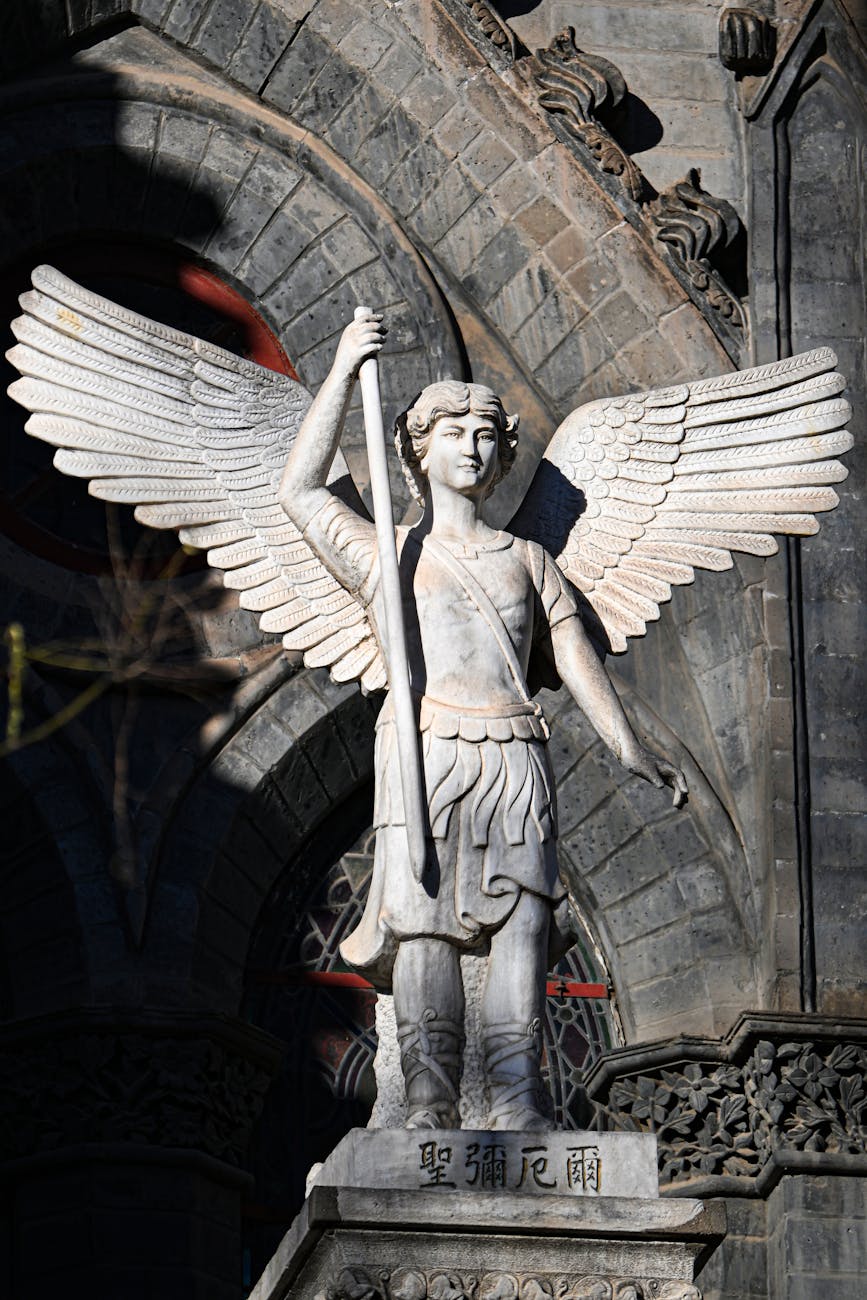
“I’ll bet you’ve had lots of angels in your life.”
My response? “Yes, I have!”
I am not a religious person, but most definitely spiritual. So, I took her observation to mean there are unexplained positive forces at play … weaving in and out of my life with love.
I have definitely had my share of “guardian angels” in my sixty-eight years.
Some have appeared at my side for long stretches. Tom (my husband), Helen (my mother), and Valerie (my therapist years ago) have been visible angels in my life with lasting influence.
Others, like Rachel–a nurse at Barnes Jewish Hospital in St. Louis who floated in and out of my room in the middle of the night–helped keep me alive after I suffered a mild heart attack in 2017. She was mostly assuredly an angel.
Then there are the non-visible angels with wings that take flight in unusual ways. For instance, the serendipitous feelings of warmth and safety I feel when I am gardening, or singing, or swimming, or writing, or walking in nature.
Whenever this happens, I feel like angels are watching over me.
I’m a believer that whatever energy we spread in the universe in our everyday lives–good or bad–it eventually finds its way back to us in waves that envelope us.
As I get older, I find myself pondering these metaphysical or philosophical questions more closely. I’m more open to the idea of forces at play that don’t always add up mathematically or logically.
Certainly, at the end of the day–at the end of my life whenever that may be–I’d rather be held up by the wings of an angel for the love and goodness I’ve brought to the world than destroyed by the deleterious effects of a devil for the havoc I’ve caused.
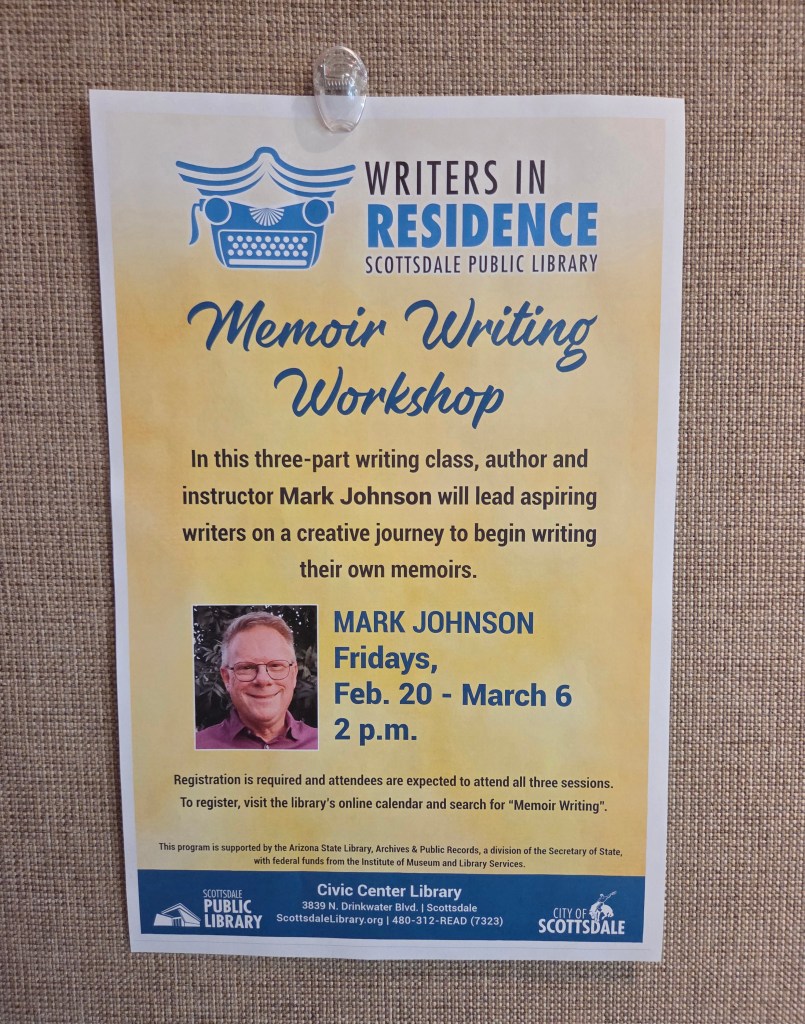
In mid-February, fourteen gathered around a long, rectangular table with me.
Now, as sunset approaches on this “Writer in Residence” version of my memoir-writing workshop, the group has winnowed to a tenacious, courageous ten. Eight women and two men intent upon writing and sharing stories from their vivid lives.
In less than three weeks, this talented group has bonded over personal stories of deep reflection, relationships, transformation, and wonder. These are a collection of some of the images and settings I will remember from the pages of our storied moments together:
Recalling the lingering, indelible scent of a father’s shaving creme permeating a modest 1960’s back bathroom;
Uprooting a life to care for an aging parent only to discover new love and an unanticipated chapter in an unlikely land;
Finding the energy and conviction to finish that marathon that no one in her family thought she would complete decades ago;
Channeling every ounce of strength to leave an abusive relationship and find much-needed support;
Recounting an early-in-life adventure to Los Angeles to fulfill a California dream;
Forgiving a gang of grackles for their messy transgressions;
Revisiting and releasing decades of shame and blame for the loss of a cow and calf in the barn of one’s rural past;
Celebrating the sacred space of freedom and unbridled joy forged inside a first car; and
Trudging along a circuitous trail to discover a meadow of brilliant fireflies dancing on the crest of a hill.
My role has been to provide tools, encouragement, and a safe place for these and other creative odysseys to emerge, land on the page, gain traction, and marry with the proud and animated vocal cords of these ten inspiring individuals.
On March 6, the sun sets on our journey together. Before we depart, I will encourage my newest friends to keep writing.
Together, we also will give thanks for the creative talent that lies within each of us … and the collective magic we manufactured on three consecutive Fridays in an otherwise ordinary Civic Center conference room on the first floor of a remarkable community space: the Scottsdale Public Library.
This is not a story about some knock-off DNA test that will help you discover your ancestral roots.
Instead, it is a story with no definite answers. A story that will unfold with memories, ideas, thoughts, feelings, words, and sentences. All to be generated by fourteen writers–eleven women and three men–who have joined me (Writer in Residence in February and March) on a three-week memoir-writing odyssey at the Scottsdale Public Library.
Our journey together began February 20 in the SHC program room, in a wing of the Civic Center Libary devoted to Scottsdale history. Who knows, maybe some literary history is about to be made there.
We spent our first thirty minutes learning about each other. The youngest of our cohort is in her early twenties. The oldest beyond ninety. They and the other twelve (mostly in their fifties and sixties) told me in a few sentences why they were drawn to the workshop.
Some have been writing for years. They are fine-tuning their craft. Others are new and perhaps a little intimidated about the idea of sharing their writing with a group of strangers. But with time they will learn the benefit of bringing voice to the words they will assemble on a page.
From my previous workshops, I have learned that leading a memoir-writing session is deeply personal. So, in our first meeting, I worked to create a trusting, respectful space and asked that they also commit to that. It is essential, because when people tell their stories it is often raw and revealing.
After we settled in, we began writing. I gave the group this prompt: “My most vivid or meaningful February memory is …….”
After fifteen quiet minutes of pens scribbling across paper, eight of the fourteen offered to share what they wrote. I will honor our verbal confidentiality agreement and not share the content here but suffice it to say that an array of diverse stories came from that one prompt.
At the end of that exercise, I told them we had just illustrated that–like each of them–their memories, stories, voices are unique. What they have experienced in their lives is worthy of writing and sharing.
In fact, we–as writers–have a responsibility to do so. Especially now in a country brimming with external pressures designed to constrain a myriad of human thoughts, feelings, and ideas.
The group has an assignment this week: to write one-to-two manuscript pages that paint a picture of a setting–a place replete with vivid memories for them personally.
To help prime the creative pump, I read this passage to them from my third book, An Unobstructed View.
***
In June 1980, I left my parents’ home in the rolling suburbs of St. Louis, Missouri, to launch my career and create my own life in the relative flatness of northern Illinois. Jimmy Carter’s stay in the White House was winding down, but my hopes were high and trending up, and so would the volume of my days and nights in the Chicago area.
Unlike the state’s long and slender physical shape, I didn’t know my Illinois roots would ever extend far and wide. I couldn’t imagine I would live and work in the Chicago area for the next thirty-seven years–that I would occupy Illinois, and it would inhabit me for the most significant portion of my life.
Yet I would marry; divorce; raise two sons; change jobs multiple times; build a lucrative career; bury both of my parents; find my way out of the closet; live openly as a gay man; discover love again; marry a second time; retire from corporate life; begin a second career as an author; and say goodbye to my Cook County neighbors, family, and friends just a few days shy of my sixtieth birthday for a new adventure and warmer climes in the desert southwest.
All of it happened while I was living in the Land of Lincoln.
***
The room was quiet as I read. Compassion danced across their faces.
I can’t wait to listen to these fourteen writers tell their stories and help shape their literary journeys.
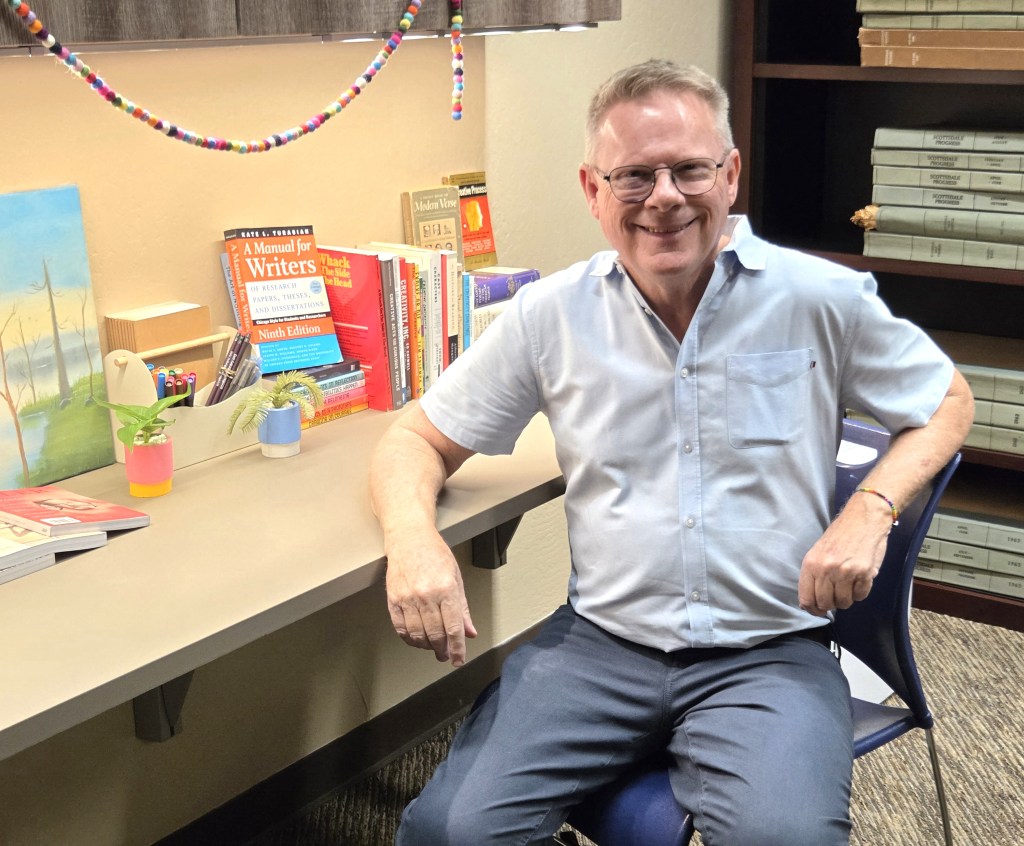
This week, I began my two-month writer-in-residence stint at the Scottsdale Public Library.
This magnificent moment never appeared on my personal viewfinder when I stepped away from my communication consulting career twelve years ago. (I was mired in grief after my mother’s death.) But maybe it should have.
I had spent thirty-four years writing for small, medium, and large-sized companies. Helping them tell their stories. So, I had spent a good deal of time honing my writing craft. But it was never personal.
Finally, in February 2014, I began to tell my stories. That led to my first book, From Fertile Ground.
It is a memoir, which I published in 2016. Now, five books and a decade later, I’m coaching aspiring writers, sharing what I have learned along the way.
On Monday afternoons in February and March, I’ll be meeting one-on-one here in The Alcove, a triangular-shaped office at the Scottsdale Public Library, with other storytellers.
(I also will lead a three-part, memoir-writing workshop for a group of sixteen writers in February and March in a space around the corner from The Alcove.)
It will be my pleasure–my honor really–to help guide young and old participants on their creative journeys. No doubt, I will learn a few important things from them, too.
More than anything, if I can help others by unlocking or fine-tuning their writing prowess and passion, then I will have done my job.
We must continue to record and share our personal truths, our fears, our dreams, our memories with others without fear of repercussions.
I believe that is especially significant at this moment in American history.
Inside The Alcove or outside in the everyday world, let’s all vow to keep writing in 2026.
Because art–and that certainly includes good writing– informs, engages, entertains, inspires, and spurs the heart, mind, and spirit. It helps us develop greater compassion for one another and reach new heights.
I believe we can do all that and more by telling our stories.
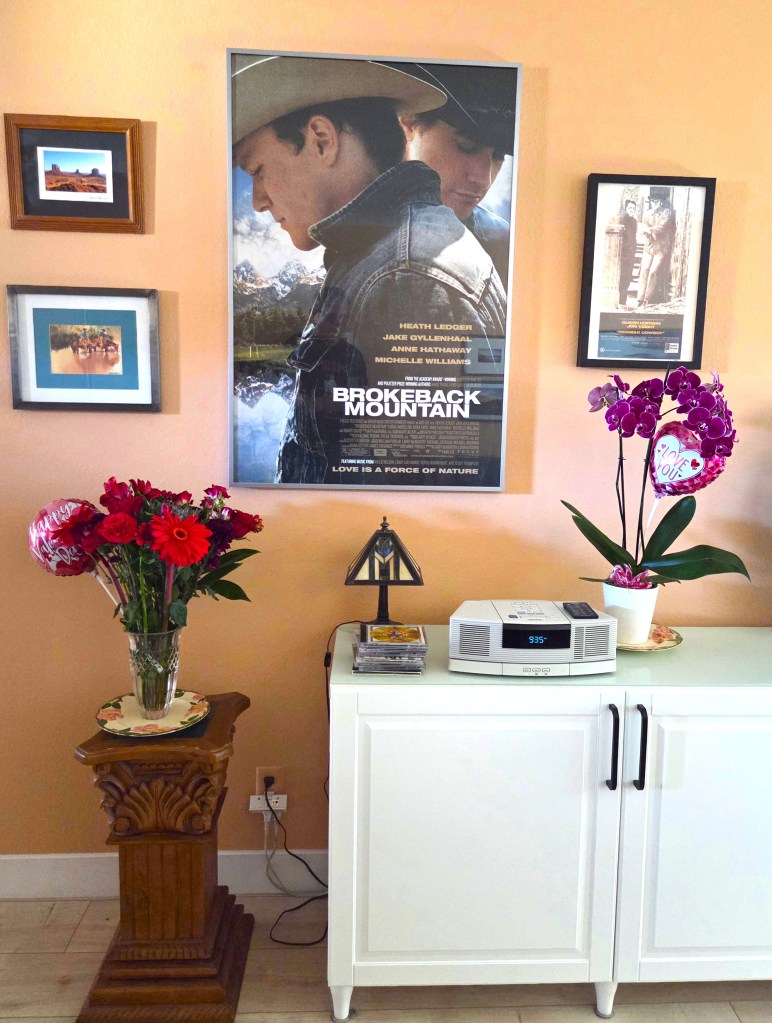
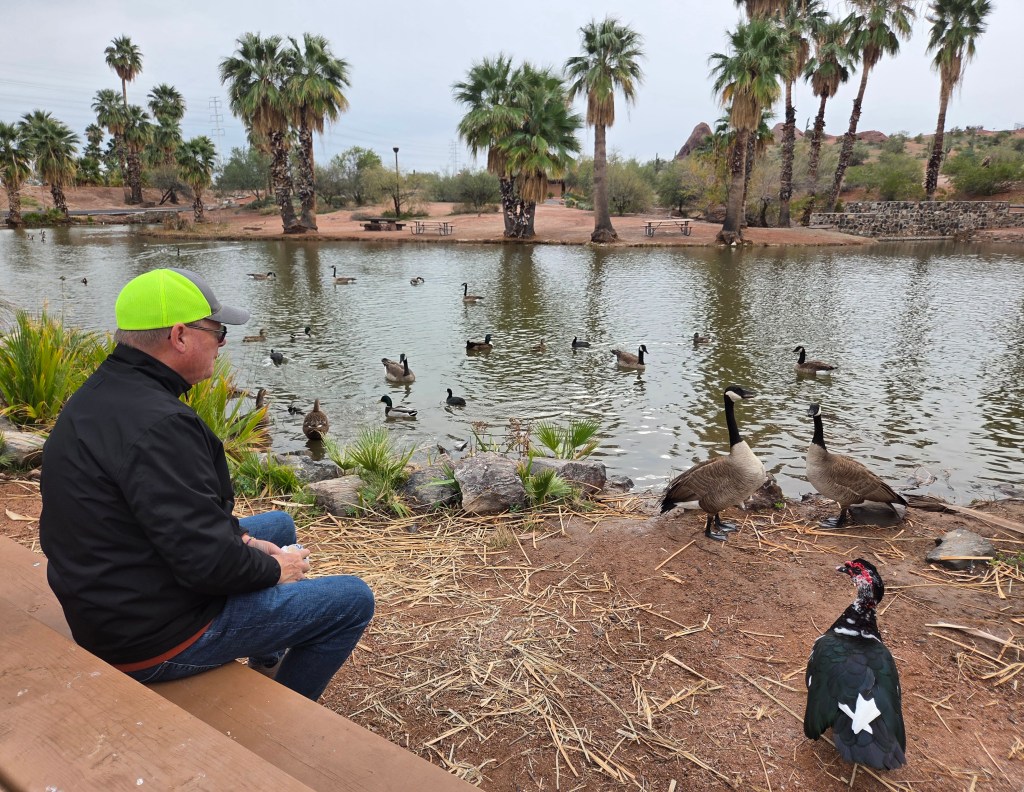
While we box up our flickering, ever-tangled holiday lights, compartmentalize them with our fading democracy, shove them into insanity’s dusty attic beside our president’s latest lawless actions streaming 24/7, we also attempt to climb above and beyond accumulating ominous clouds, by feeding old-year bread to new-year geese, by examining each piece of life’s puzzle with bleary-but-thoughtful eyes, by loving ourselves, each other, and all animals, by emulating kind lives under fleeting desert candlelight, by resuming our daily quest for survivorship and unflappable wisdom, even as every institution, every once-reliable media conglomerate or teetering motherboard (like the dying one on Tom’s old phone) signals the end is near and must be replaced. So, we replace it. We move on. We give thanks. We cherish every labor of love and every hidden oasis. We welcome every petite, heartful bouquet. We marvel at one rare, exquisite, night-blooming cereus, paint-plus-provenance. It is the perfect gift on canvas from a dear friend.
The downstream darkness of January is real, but in our upstream hearts, in the serenity of nature (and now framed in splendor on our living room wall thanks to Dougal) there is a profound, constant, but private reminder: there is always beauty and hope, even when there is darkness.
Back in the early 1960s, Mom plucked two mounds of dough out of our Philco refrigerator.
She plopped them on the kitchen counter to let them soften and warm to room temperature, then pulled her rolling pin out of the cupboard.
Diane and I took our places on either side of her, holding our primitive cookie cutters. Grey. Flimsy. Metal.
One was a simple star. The second, a classic Christmas tree. The third, a basic bell. The fourth, a reindeer in flight. The last one, a profile of Santa Claus carrying a pack of toys.
Further down the counter, two slightly bent cookie sheets waited, along with green and red sugar sprinkles we would soon shake above our freshly formed Christmas cookies.
But, in this gauzy 60s slice of life featuring baking, rolling out the dough had to come first.
Mom reached into her container of flour and tossed a handful on the counter. Then, dusted the wooden roller with the remains.
She leaned in with the rolling pin and pressed the dough. Back and forth with equal measures of love. The surface expanded with our hearts and imagination.
We took turns dipping the cutters into the flour, creating our shapes in the dough.
Then, we lifted them carefully with a spatula onto the cookie sheets, added the sprinkles, and slid them into the oven for eight to ten minutes.
While the first batch of cookies baked, Mom gathered the bits of dough that remained. She created a smaller ball and flattened it out with the roller. Together, we repeated the process.
It was 1961. I was four years old. Diane was seven. We felt loved, safe in the presence of our mother.
***
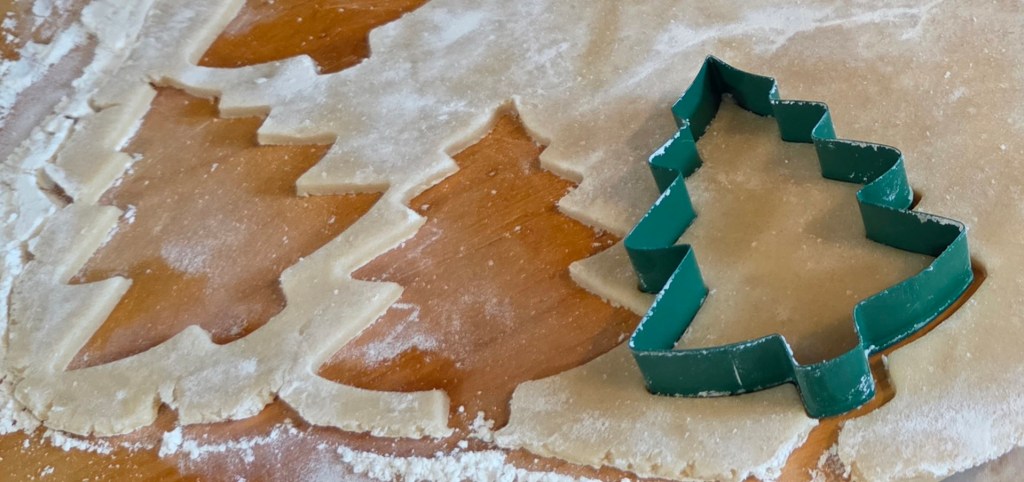
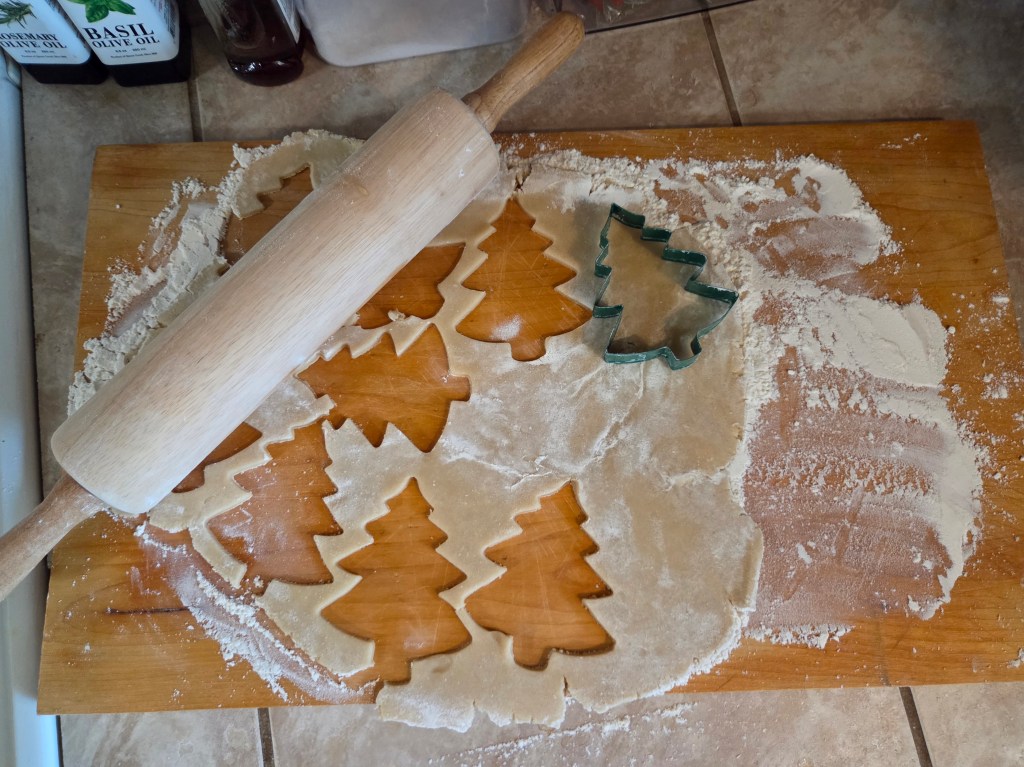
Earlier this week, I found one green Christmas cookie cutter in our kitchen drawer here in Arizona. It was a gift from our friend Jillian a few years ago, but I hadn’t made sugar cookies from scratch since those early days in suburban St. Louis with my long-gone mother.
Tom and I bought a wooden rolling pin, and I found an easy sugar cookie recipe online. I assembled the ingredients to make the dough: butter, sugar, flour, one egg, a teaspoon of vanilla extract, and a dash of salt.
I mixed it all together and let the dough settle in two large discs in the fridge overnight.
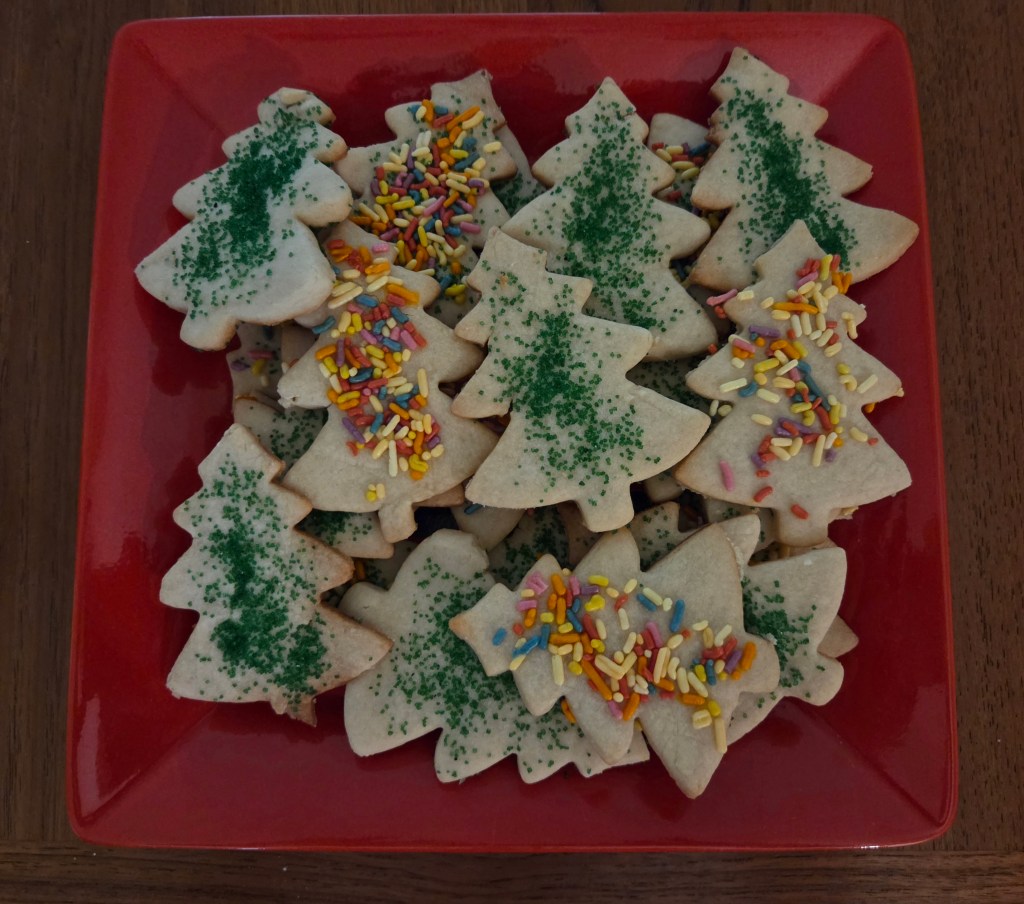
On Monday, I rolled out the dough, cut the cookies, and topped my Christmas trees with green and rainbow-colored sprinkles. Then, I slid several trays of cookies into the oven to bake.
Why this year? I don’t really know, except to say it’s been an awful period in our country even though I’m a survivor and somehow have reached new creative heights in my personal life in 2025: several memoir-writing workshops, two joyful holiday concerts, and another book.
And, of course, I still miss my mother. She’s been gone since January 2013, but the grief reappears with the holidays. I suppose I needed to feel her presence again.
I needed to rescue my past Christmas-cookie-cutting memory with Mom. To keep that sweet, simple goodness alive in the stillness of my kitchen. To shepherd it into my present Arizona life with Tom and breathe new life into that tradition.