Like many of you, I know grief. It is that clumsy, unwelcome house guest we imagine will never leave.
When it arrives, grief dominates our lives. It keeps us awake at night, saturates our sensibilities, zaps our strength, and slows the progression of time.
At its onset, grief feels like a heavy stone we must carry in our pocket. A character in the 2010 dramatic film Rabbit Hole describes it that way. With time, we grow accustom to the stone. We become grateful for the stone, because we realize it is all that remains of the person we loved and lost.
One day, without expecting it, grief is less heavy, less present. The achiness has packed its bags and moved on. We aren’t sure why or where it has gone–maybe down the hall, across the street, or into the next zip code. But grief is never far away. It returns to comfort us on milestone days: birthdays, holidays, and anniversaries.
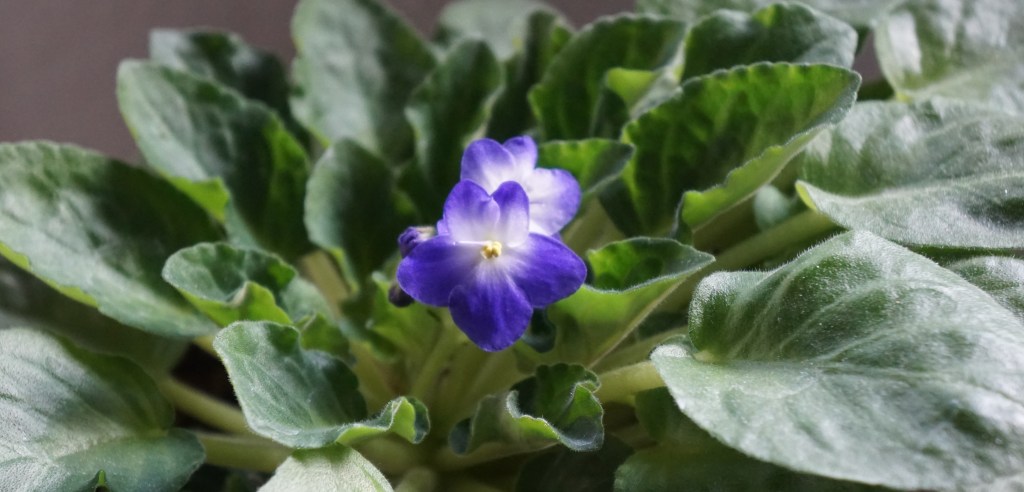
Grief appears on regular days too. It leaves little reminders to certify our humanity and frailty. It lingers in the cool air and warm sunshine of a spring day. It hangs in the lyrics of an old nostalgic tune, I’ll Be Seeing You, sung by Peggy Lee. It grows on the window sill in the perennial bloom of an African violet.
It’s been eight years since my mother died at age eighty-nine. January 26, 2013 was a bitter morning in the Chicago suburbs, meteorologically and personally. About 2 a.m., my sister Diane called with the news.
Immediately, Tom and I bundled up and drove twenty miles south (from our home in Mount Prospect to Mom’s third-floor apartment at Brighton Gardens in Wheaton, Illinois).
That morning I kissed my mother’s forehead and patted her hand one final time. As my husband and I left the building, a full moon dominated the frozen sky.
Grief moved in with us that day. At the time, I didn’t know it would repurpose itself and transform from a stone to a familiar fog to a blanket of possibilities.
But grief is cagy. It can be an enemy or an ally. It became my muse, the catalyst for my creativity. With grief by my side, between 2014 and 2016, I wrote and published From Fertile Ground.
Over the past five years, friends, acquaintances, and readers I will never meet in person have posted heartfelt reviews. They have told me how the story of my grief–and my grandfather’s and mother’s written legacies–helped them examine their lives, process their sadness, and restore some semblance of hope.
Writing the book was my catharsis too. Like the final line from the Peggy Lee tune which describes my feelings of loss perfectly–“I’ll be looking at the moon, but I’ll be seeing you”–the pages of my book are permanent evidence of the grief I felt, which diffused with the passing of eight years. On days when I need confirmation of what 2013 to 2016 felt like, I can pick up my book and remember.
After our wise, nature-loving mother died, Diane did a kind thing. She divided up Mom’s African violets–one a shade of pink, the other a purplish blue–for the two of us to carry forward and display in our respective homes.
The plants originated in St. Louis in the 1980s or 1990s. They traveled to the Chicago area with Mom in 2004 when she moved north to be closer to us in her final years.
In July 2017, when Tom and I left Illinois and moved to Arizona, we wedged them in a laundry basket in the back seat of our Hyundai Sonata. Ultimately, we deposited them on our southern-facing window sill in Scottsdale.
In 2019, the pink African violet died, but the lone one is a survivor. It captures the warm rays of the Sonoran Desert sun. It blooms every winter and has chosen this week–eight years after Helen Johnson left the world–to dazzle us once again.
When I examine the vibrant blues and greens the plant offers, it eases my mind. It reminds me that memories of the mother I loved and her lasting impact are never far away. That the mind-numbing initial waves of tears and grief led me to a softer reality, which is bearable, tender, and life affirming.
Even as we wander in the dark through the depths of this global pandemic, there is strange comfort knowing grief will always be there in some form or another to acknowledge our past, present and future losses. Because if grief never appeared, we would discover a harsher reality … that we never loved at all.
Thank you, grief, for filling the void. I’ll be seeing you.

 Mark Johnson Stories