Category: Creative nonfiction

My Lemon Tree Book is Live!

The trail of my literary life has led here. The Kindle version of my fourth book, I Think I’ll Prune the Lemon Tree, is now available on Amazon. (Paperbacks are in production and will be available for purchase at this same location on Amazon in the next few days).

The rush of adrenaline I feel today is at least as satisfying as books one, two and three, because I’ve devoted more than three years to this creative endeavor–imagining, developing, polishing, and agonizing over it.

In that sense, today is a combination of the exhilaration of unwrapping Christmas presents, skipping out the door on the last day of school, feeling weak in the knees the first time I approached the edge of the Grand Canyon, and hoping for a clean bill of health from my cardiologist. It’s all of that rolled into a freshly-baked batch of chocolate chip cookies.

In this anthology of Arizona stories, I dig deeper into themes that are important to me: the lasting love and comfort of family and friends; the humor, irony, and poetry in everyday situations; the profound beauty of nature and how it shapes us; the joy of realizing a literary life; and the conviction required to be an authentic gay man–a real gay couple–in a world often rife with ignorance.

As you might expect, the upheaval we have all faced in Coronaville (my name for our shared global address of uncertainty) is present here too. How could it not be? The pandemic has dominated our lives and–at its core–this is a non-sequential personal and societal 2017-to-2020 slice of life.

All of these themes–and flights of fancy (backward and forward in time) to visit familiar and new people and places–run through my book. They are the threads in this tapestry that has become my writing style. They are the elements of the sometimes-whimsical-sometimes-serious voice I have unearthed in my life with Tom in the warmth of the Sonoran Desert.

As we wait for our vaccinations and continue to hope we will recapture the most important strands of our disrupted lives, I think you will find comfort, honesty and humor in I Think I’ll Prune the Lemon Tree. I also think it is a testimonial to the importance of our families, communities, and human connections as we strive to sustain ourselves no matter where we live, no matter where this journey leads us.

From Crab Apples to Lemon Trees

In June 1962, a month before my fifth birthday, I stood alone outside the west wall of my brick childhood home. I wore my high-top Keds and cargo shorts with crazy pockets. The wind raced past my crew cut.

Our three-bedroom ranch in south suburban St. Louis appeared identical to two dozen others in the neighborhood, except ours featured a flowering pink crab apple tree with stair-step limbs I loved to climb.

In the shade of the branches, a clear thought jumped to the forefront of my brain. “I am different. I have important things to say.” The idea lingered and swirled through my consciousness.

As I look back at that vivid memory—one of my earliest—I must have recognized I was unlike most of the other boys. At that young age, I must have known I was gay. I must have begun to identify a need to share my thoughts and tell my stories one day.

Since that moment, I have lived at least four lives—shaped by local geography—and written four books. I have played in the red earth of North Carolina, navigated the rolling hills of Missouri, survived the flatlands of Illinois, and discovered the peaks and valleys of Arizona.

I never imagined I would live and write in my sixties in the rugged landscape of the Sonoran Desert, but the trail of life has led me here to the threshold of publishing my fourth book, I Think I’ll Prune the Lemon Tree. It will appear on Amazon (in paperback and Kindle versions) in late January or early February. Of course, once it is available for purchase, I will let you know.

In the first three years of my Arizona residency—2017 through 2020—the Grand Canyon State has enriched and shaped my life with natural beauty, profound uncertainty, and joyful humor. My goal was to reflect all three in this book, and develop a larger narrative about a gay man and his husband fulfilling their dreams, reflecting on their experiences, hoping to survive a global pandemic, and aging in a bold landscape.

If you are drawn to the themes I explore here on my blog and in my books—nature, family, community, heritage, human rights, humor, love, loss, health, truth, diversity, and creativity—I think you will enjoy reading my latest book.

Of course, nearly six decades have passed since I stood by that flowering pink crab apple tree I loved as a child. It has been replaced by the citrus trees that surround Tom and me in our sixties in our Scottsdale condo community. But the value of memory and storytelling is that I can remember the most important trees, past and present. I can choose to honor each of them.

Little did I know that one day a luscious lemon tree, thirty feet outside my front door, would inspire me to write and share the broader stories of my Arizona life.

The Warmth of a Good Story

Our best and worst memories have a way of softening and sharpening as we age. Like photos pressed in the pages of a family scrapbook, some of them fade and crack. Others, through the lens of our selective memory, grow more brilliant.

I don’t know what it will feel like to look back on 2020 in ten or twenty years. But, as we work to survive the entirety of this preposterous year, I suspect our memories will follow the same unpredictable pattern.

On the morning of December 25, after a breakfast of scrambled eggs and English muffins, my husband and I watched A Christmas Story.

Like many of you, I have seen this satirical and nostalgic film countless times. It’s one of my holiday favorites. The 1983 movie, directed by Bob Clark, is narrated by author Jean Shepherd and based on his stories of growing up in the Hammond, Indiana area (near Chicago) in the 1940s.

The writing is witty and the editing superb, but what I love most about the film (starring Melinda Dillon, Daren McGavin, and Peter Billingsley) is the sense of time and place it captures.

Like the endless scarves, hats, gloves, and buckled boots the kids wear to protect themselves from the cold and piles of snow, the film produces layer upon layer of lasting humor, warmth and comfort … told through the eyes of a nine-year-old boy. It is an exaggerated ode to a lost era in the United States. For all of these reasons, it is imminently watchable despite its constant availability.

In hindsight, warmth also was the feeling I intended to capture in my book, Tales of a Rollercoaster Operator, published in 2017. I wanted to leave behind a record of what it felt like to grow up in the hot St. Louis, Missouri suburbs in the 1960s and 70s.

It was an age when kids ran barefoot, chased ice cream trucks, played with marbles, watched dads toss horseshoes, cuddled with puppies in backyard pools, performed tricks for Halloween treats, banged pots and pans outside to celebrate New Years Eve, sucked on popsicles to beat the heat with the neighborhood kids on scorching summer afternoons, and (in my case, at the age of sixteen in 1974) learned to operator a rollercoaster.

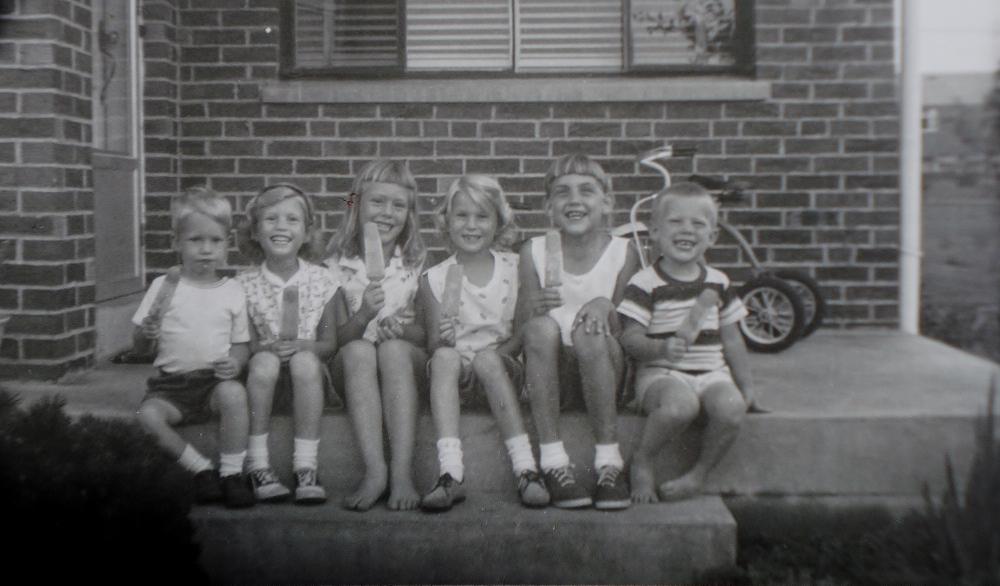
This was my front porch (circa 1960) in Affton, Missouri: Jimmy; Marianne; Diane; Suzy; Carol; and me. My mother sealed the moment with the help of her Brownie camera. Now the image lives forever in my light-hearted book of Missouri memories.

It certainly was a more innocent time. But, as we grew, the world became more complicated. We watched and listened to Walter Cronkite. We believed everything he told us through our black-and-white TVs. That included images and stories of JFK’s assassination, the first steps on the moon, Watergate, and the raging Vietnam War.

At any rate, if you’re looking for a little warmth and nostalgia to get you through the winter, I have an antidote. Download a free copy of Tales of a Rollercoaster Operator through the end of 2020.

As we prepare to cross into a new year and hope for brighter days ahead, maybe my stories of a bygone period in American life will inspire you to laugh a little, revisit your youth, dust-off your favorite memories, and find new meaning in the indelible moments that stay with you for a lifetime.

December Revisited

Sonoran Desert December days dazzle. Gone are dreary skies, icy gusts, swirling flurries, clanging Salvation Army bells, and busy Windy City sidewalk years wearing topcoats and backpacks. Still earlier, shedding St. Louis jackets and stocking caps. Hanging them on cloak room hooks before school started. Dreaming of holiday cupcakes and Santa’s flight trajectory.

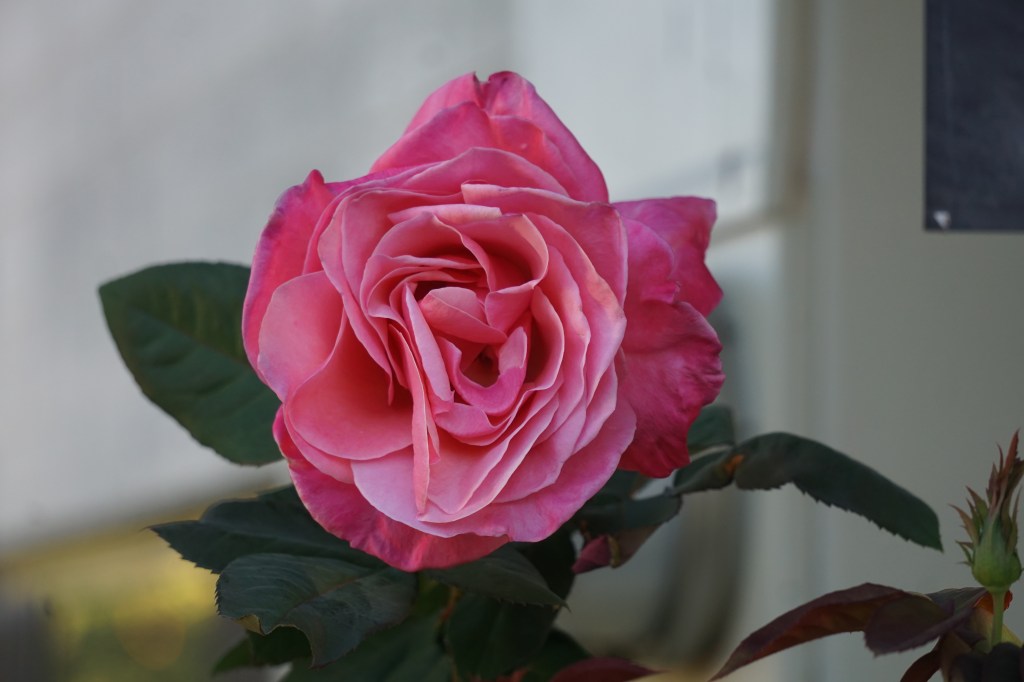
Arizona’s anonymous set designer has replaced them. Sparkling sun burns off the chill of the morning. A neighbor’s pink rose blooms and brightens the walk. A flock of chirpy lovebirds dash away on cue like pent-up kids scampering out the door for recess. Playful palms shimmer and brush the sand from the sky. Granting the splendor of December revisited.

A Gift to Ease Your Grief

As COVID-19 cases climb and shadows of worry and anxiety cast doubts, we stew in our numbness. We attempt to process the depth of our grief. It has no bounds.

Here in the United States, we prepare for a thankless Thanksgiving Day 2020 minus more than a quarter of a million Americans–gone, but not forgotten–who sat at tables beside us a year ago. Our hearts ache for them and their families.

Seven years ago grief consumed me as the first Thanksgiving after my mother’s death approached. Tom and I decided we needed a holiday getaway from our then suburban Chicago home. We needed to shake things up. To begin a new tradition in a place that wouldn’t spark the rawness of Midwestern memories.

Both of my sons loved the idea. They decided to join us for an extended Thanksgiving weekend in the Arizona desert. It felt as if the odds were against us when Tom developed pneumonia after raking leaves on a frosty early-November Illinois morning. But, remarkably, he rebounded quickly. We kept our plans to fly west.

On Thanksgiving Day, Kirk, Nick, his friend Stephanie, Tom and I dined outside at the Tempe Mission Palms Hotel. We enjoyed turkey and stuffing, seated around a courtyard patio table shaded by an orange tree.

Three months after that November 2013 trip, I retired from corporate life and began to feel a calling to write about my grief. I soon discovered that by honoring and answering my creative impulses, I could ride through the waves of tears and numbness and emerge whole on the other side.

As strange as it sounds, grief became the fertile ground for my writing journey. In 2016, I published my first book, From Fertile Ground. It tells the story of three writers–my grandfather, mother and me–and our desires to leave behind a legacy of our own distinctive observations of our family, our loves, our losses, our worlds.

In honor of Thanksgiving and those we’ve loved and lost, you can download a free Kindle copy of my book on Amazon from November 21 through November 25.

I hope reading it will inspire you (or a friend who is grieving) to find your fertile ground. To discover your voice. To channel your creativity. To emerge from the numbness. To tell your unvarnished story. Perhaps even to leave behind a brief review of my book online.

Important Things to Say

It is one of my earliest vivid memories. I was standing alone in June 1962. Outside the west side of my childhood home in Affton. Looking north toward the street. Wearing my high-top Keds and cargo shorts with crazy pockets. One month shy of my fifth birthday. The wind raced past my crew cut.

Our three-bedroom brick ranch in south suburban St. Louis, Missouri appeared nearly identical to two dozen others on South Yorkshire Drive. With one exception. Ours featured a flowering pink crab apple tree with stair-step limbs I loved to climb and droppings that stained our driveway.

At that moment, a clear and welcome thought jumped unannounced to the forefront of my brain and lingered for a few minutes. It swirled through my consciousness.

“I am also different. I have important things to say.”

As I look back at that memory, I realize that on some level I must have known I was gay. Not the same as most of the rest of the boys. Maybe even special. It was an intuition. A gut hunch without empirical data.

I was a shy child. I stayed out of trouble mostly. I didn’t rock the boat. I obeyed my parents. Later, I listened to my teachers and dodged bullies in middle school halls. I had lots of fears and creative ideas. Unfortunately, I never voiced many of them.

Now–nearly sixty years later–the voice that was never fully realized in my developing years has found a forum of its own. This is my two hundredth blog entry since launching my site in May 2018. For you who follow me frequently–especially the handful who comment regularly–thank you for taking the time out of your busy life to read what I write.

Recently, the pace of my postings has slowed so I can devote my attentions to another creative endeavor. I am currently finalizing a collection of essays and fantasies about my life in Arizona. My goal is to send these to my editor in November and publish my fourth book early in 2021. Rest assured, I will keep you posted on the delivery date of my newest arrival.

I suppose my writing commitment (in blog and book form) is my way of making up for lost time. When I sit before my laptop, spin my stories, enter my words, and press the “publish” button, I feel as if on some level I am speaking for that “different” little child who stood on his St. Louis driveway and pondered the world’s possibilities and problems.

I keep writing because he and I have important things to say.

Fall Colors

Back in March, when news of the pandemic began to assault our senses, Tom and I agreed we wanted to introduce a splash of color into our home. To bring a fresh bunch of store-bought flowers into our haven each week. To ease the pain of 2020 by creating our own bouquet of happiness.

Now that October is with us, I’ve been craving fall colors. Though I smile every time I see the scarlet bougainvillea blooms swaying in a gentle breeze outside our back door, we don’t enjoy crisp apple-picking days in the Sonoran Desert or a traditional array of autumn leaves.

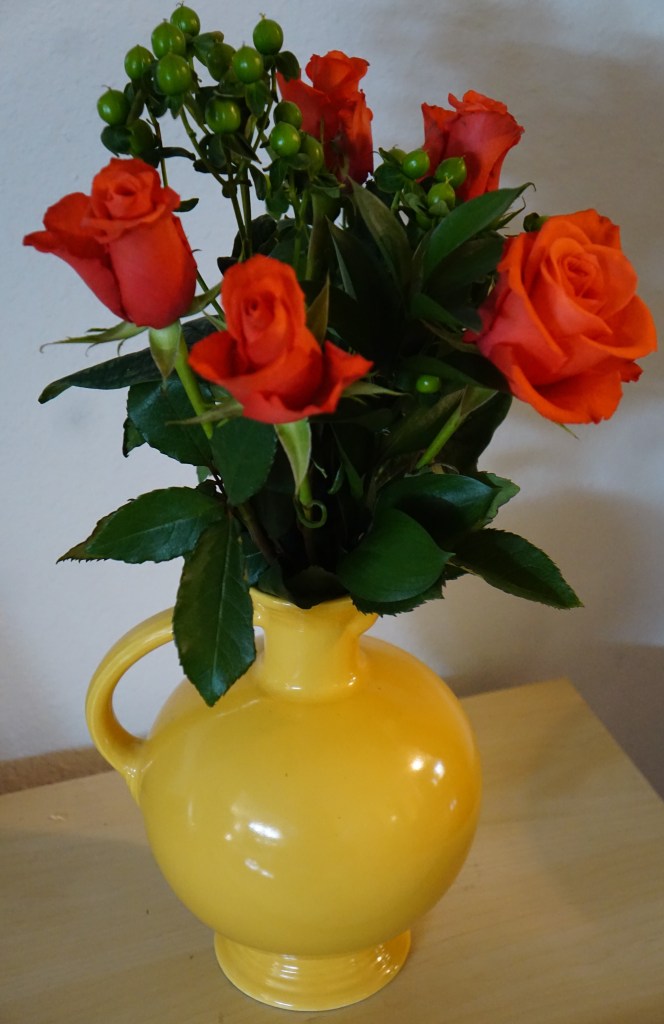
This week we brought home burnt orange roses to ogle over. As I freed them from the plastic wrap, the interior designer in me recommended placing them in my mother’s canary yellow Fiesta pitcher from the 1940s.

Full disclosure. In the past week, I also have bought and consumed organic pumpkin spiced applesauce, transferred two decorative harvest dinner plates (Mom also left those behind) from the hutch in our sun room to our kitchen cabinet, positioned our plastic jack-o-lantern on top of our living room bookshelf, and rescued two orange-black-and-white, witchy-and-batty cupcake dish towels from the cupboard.

After all, it’s October. Even if it is 2020, we have to manufacturer our own of version autumnal happiness and humor our Halloween hankerings. Our lives are more than COVID-19 results and election prognostications. We must maintain some sense of stability and go on living.

Rain

On the first morning of autumn, September’s long-forgotten-and-seldom-seen sister dropped in from beyond the buttes.

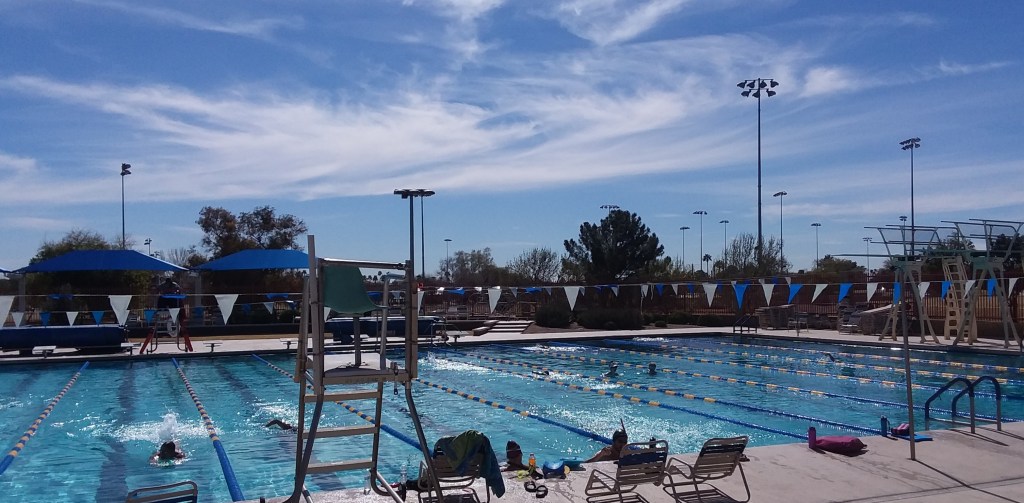
Unreliable rain interrupted an eight o’clock swim. She had ghosted us all summer. Promised her return. Teased us with phantom forecasts.

She stayed for ten minutes. Long enough to soothe freckled shoulders, heal parched souls, and cast a creosote cocktail over the palms.

Her intoxicating personality was the change we needed to silence the sameness. To swim and dance again under the clouds of our desert dreams.

Harsh Elements

Though September’s seventy-five-degree mornings are beginning to offer cooling relief from the Phoenix-area heat, the fire barrel cactus outside our back door is sunburned.

Fortunately, it’s still spiky, spunky, and nosy–always leaning to one side to eavesdrop as neighbors walk to the Crosscut Canal for an early morning stroll.

But the normally green skin of my old friend has turned to yellow. Matching the pot it resides in. More than fifty days of summer sun exposure in one-hundred-ten-degree heat will do that to you.

It isn’t practical for me to rub Aloe Vera gel on my plant with the piercing personality. That’s an especially bad idea for an avid gardener on a blood thinner. The spurting blood from my fingers would splash on our sidewalk.

Instead, Tom and I have shrouded it with two pieces of gauzy black cloth. This cactus shield of sorts (like a veil for an old Italian woman in mourning) should help it recover over time.

If I could, I would wrap the whole warming world and the body of every person in this protective material (along with a required mask, of course).

My scheme would give everyone a chance to breathe, grieve and heal away from harsh elements: devastating fires, thick smoke, high winds, swirling hurricanes, global pandemics, crippling anxiety, and one particularly- problematic-and-pontificating politician.

If only it were that simple.  

Birdland 2020

Zumra_082220

When Nick called on Wednesday afternoon to tell us the air conditioning in their Tempe, Arizona home was out, I could hear the desperation in my thirty-six-year-old son’s voice.

He and girlfriend Aida had found a hotel room nearby for themselves, Aida’s teenage children (Mia and Tony) and Yorkshire terrier (Bella). But they needed a cool space for African grey (Zumra) and colorful conure (Kiki) to mark time until a wayward AC replacement part could be identified and shipped in the middle of a pandemic.

“Bring ’em on over,” I said. Tom, the ever-loving animal lover, nodded in agreement. “They’ll be comfortable here in our sun room.” We couldn’t imagine two exotic birds toughing it out, panting and squawking in a ninety-seven degree house in this endless, torrid Sonoran summer.

Without a hitch, we shouldered the feeding and watering responsibility. Surrogate parents (or possibly grandparents) to a couple of feathered gremlins who gazed at us through the bars of their cages and produced an errant squeak here or a flurry of acrobatic activity there. Simple, rhythmic reminders of where we were living for three days and nights: Birdland 2020.

Our featured performers dazzled us by carefully plucking multi-grain wafers, plantain chips, and sliced green grapes from our palms (without severing our fingertips with their impressive beaks), while balancing like circus performers on high-wire perches.

The only sideshow acts missing were a shouting ringmaster, dancing bears, freshly-spun cotton candy, and an oily carnival barker manning the carousel, as calliope music blared from the boombox in our living room.

Of course, the complete circus spectacle described here existed only in my storytelling imagination. Though on Thursday night, extra-curricular activities DID include a monsoon storm raging outside as Zumra and Kiki twirled and Joe Biden unfurled a  passionate speech. All of it summoned the rain and hope we had missed for months. No … years.

Now we are empty nesters again. Nick and Aida picked up Zumra and Kiki on Saturday evening. Their entire entourage is holed up in a larger, more comfortable apartment for the remainder of this week as they wait for permanent resolution on their uncomfortable AC odyssey.

All isn’t lost. Tom and I have the marvelous memory of two exotic travelers. Flapping, but unflappable. Unaware of the mayhem in the human world, Zumra and Kiki flew in and out in August, graced us with their plumage, and stole our bird-loving hearts.

While outside hummingbirds, mourning doves, mockingbirds, finches, desert wrens, and lovebirds brighten our world in Arizona every day. If we remember to look and listen, they remind us that nature is king, no matter who lives in the White House.

Kiki_082220