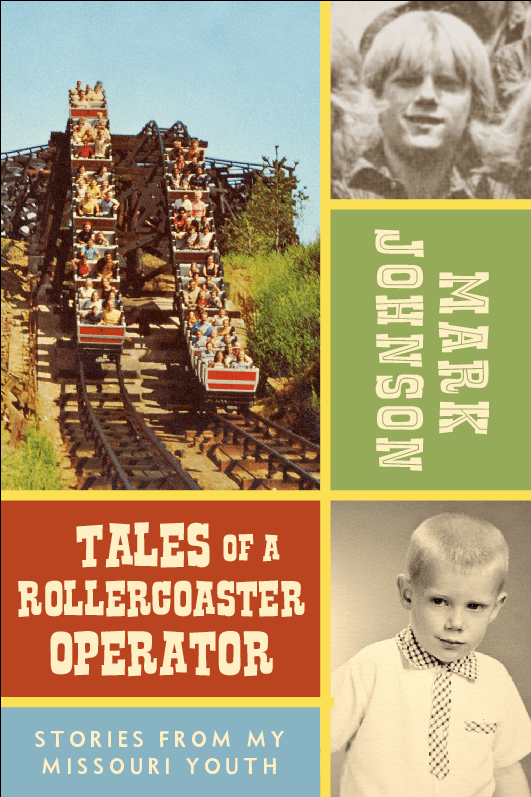
In April 1974, I became a rollercoaster operator. It was my first job. I was sixteen years old.
Like most teenagers, I didn’t have a clue about life. But, as I think about it more than forty-seven years later, “driving” the River King Mine Train at Six Flags Over Mid-America near St. Louis became the creative catalyst for twenty-six, up-and-down stories from my Missouri childhood. I call them MOstalgic tales of American culture in the 1960s and 70s, when children had far more freedom to grow, play and run amok.
From December 20 through 22, you can download a free Kindle copy of Tales of a Rollercoaster Operator on Amazon worldwide. It’s my holiday gift to you.
The last essay in the book is especially timely. It celebrates a chance encounter with a mysterious stranger nearly sixty years ago on New Year’s Day 1962.
As 2021 draws to a close, perhaps my stories will make you smile. Maybe even inspire you to post a review online. But, at the very least, I hope they prompt you to remember a simpler time and the twists, turns and thrills from your own childhood–wherever you were born, wherever you grew up, wherever you called home.
My husband is an excellent cook. In a given two-week period, he gladly prepares chicken, tilapia, salmon, cod, turkey meatloaf (along with potatoes, Brussels sprouts, green beans) and pasta of every kind. I am thankful for him and all the things he does for us.
What is my contribution? I am the baker in our family. I concoct corn bread, blueberry muffins, chocolate chip cookies and the like. Oh, and on special occasions, I prepare and bake pies.
Our two deep dish favorites are egg custard (a silky treat handed down from my southern/maternal family) and Dutch apple (a recipe I found online several years ago). The latter has become our go-to dessert for Thanksgiving.
More than cake or cookies, I think the smell of pie baking in the oven will always cue my emotions and provide deep dish comfort. That first and last forkful of crumbly goodness with a cup of coffee won’t hurt either.
Anyway, this morning I stood over the kitchen sink and sliced eight Granny Smith apples for this year’s pie filling. Over the years, I’ve discovered the tartness of Granny Smiths make them ideal for baking.
That piece of wisdom came from my mother. So, naturally, I thought of her as I prepared a pie for Tom and me. It doesn’t matter that my mother has been gone for nearly nine years. Her influence in my life endures.
During the last four years of Helen Johnson’s life, she lived at Brighton Gardens, an assisted living facility in Wheaton, Illinois. My mother loved to bake and glaze ceramic pottery in a class there.
For her last Thanksgiving–2012–our family gathered a few weeks early in a community room at Brighton Gardens to celebrate the holiday together. Mom was in hospice at that point and declining rapidly, so that seemed like the safe thing to do at the time.
Meanwhile, back down the hall in her empty apartment, I can still imagine the shelves and tables of her room lined with family photos and a dozen or more of her prized pieces of homemade pottery.
Remarkably, my mother lived two more months. After she passed, my sister Diane and I held a memorial in early February for her. We brought many of the pieces of pottery with us to the funeral home and placed them on tables around the room.
When family and close friends departed after the service that night, we asked that they choose a piece of her art and take it with them.
Today, I still have at least a half dozen of Mom’s fired-and-glazed pottery from her Brighton Gardens days in our two-bedroom home in Scottsdale, Arizona.
At Thanksgiving every year, I bring out this ceramic turkey-shaped napkin holder she made. It is inscribed with her name “Helen J.” brushed on the bottom.
It’s stationed on our Thanksgiving table … next to my delectable, deep dish Dutch apple pie … ready to create a new batch of memories for Tom and me on Thanksgiving Day 2021 in our Arizona home.
Here in the U.S. we are preparing for Thanksgiving. For some, that will mean traveling again–despite this unrelenting global pandemic–to see loved ones and share a feast. For others, it will consist of a quiet, simple meal at home (if we are lucky to have one) with little fanfare.
No matter which end of the spectrum you find yourself on, I hope you have the opportunity to reflect on what you are thankful for as November’s days wind down.
I am most thankful for good health, the love and companionship of my husband, a cozy condo in a warm climate we call home, and the positive relationship I’ve nurtured and forged with each of my adult sons.
It’s a real gift, after suffering a mild heart attack in 2017, to see Nick and Kirk grow and evolve in their thirties … and a welcome change from the heavy-lifting of child rearing I experienced in the 1990s and early 2000s.
Near the top of my “thankfulness” list is the time, ability, and creative energy to write. I’m proud of each of the four books I’ve drafted, polished, and published since 2016. (Plus, since May 2018, I’ve worked diligently to generate and post 286 stories and poems here on my blog. That’s an average of seven pieces of free original content per month.)
If you are a regular follower or first-time visitor who has stumbled upon my page, I have wrapped up a Thanksgiving gift for you.
Through November 25, go to Amazon and download your free Kindle copy of I Think I’ll Prune the Lemon Tree, my latest book. (By the way, if you live outside the U.S., I believe many of you will be able to download a copy through your local Amazon connection.)
If you’re an independent writer like me, you know how important and challenging it is to try to build traction with a community of readers. Online reviews help immensely.
So, once you finish reading my anthology of thirty-nine whimsical and serious essays, I hope you’ll take a moment to rate and/or review my book online.
Thank you to my loyal followers, and happy reading!
Long after the most cherished and meaningful moments pass, our memories–good, bad, vivid, and foggy–endure like saguaro cacti dotting the terrain of our vast consciousness.
***
Over the weekend, the lone survivor of my mother’s prized African violet plants died. Tom and I discovered it withered on the window sill of our Scottsdale condo. I supposed it succumbed to the heat of the desert’s afternoon sun.
The plants originated in St. Louis in the 1980s or 1990s. They traveled to the Chicago area with Mom when she moved north to be closer to my sister Diane and me in 2004.
When Mom died in January 2013, Diane divided up the remaining African violets–one a shade of pink, the other a purplish blue–for the two of us to carry forward and display in our respective homes.
For the next four years, my cuttings flourished in our Mount Prospect, Illinois home. In early July 2017, Tom and I wedged them in a laundry basket in the back seat of our Hyundai Sonata. We brought them west from Illinois to our new home in Arizona.
On the road, after I suffered a mild heart attack in St. Louis and couldn’t lift anything for a few weeks, I remember my husband carrying the African violets between our car and hotel rooms in Missouri, Oklahoma and New Mexico to protect them from fluctuating temperatures overnight. It’s a memory I will always treasure.
When we arrived in Scottsdale on July 12, 2017, Tom and I deposited the plants on our southern-facing window sill. The pink African violet lived two more years before petering out in 2019. Now the purple one is gone too. It last bloomed ten months ago in January 2021 … eight years after Helen Johnson’s passing.
Of course, I feel a twinge or two of sadness. This marks the end of a long, circuitous chapter, connecting my present life to the past memories of my nature-loving mother.
But, at this point (four-plus years in my Arizona home), Tom and I feel rooted in the desert. We have chosen and nurtured plants that embellish our life in this warm, dry place: bougainvillea, desert roses, succulents, even a bird of paradise.
To be sure, though their physical evidence is gone, the stories of the traveling African violets and the memories of their captivating blooms will be with me as I hike the rises and falls of the Sonoran Desert with Tom.
Writing is my thing. Not arithmetic. It has never been my forte. Going way back to 8th grade, I was lost in algebra class. That precipitated a math do-over in 9th grade.
Nonetheless, I realize we live in a number-centric society. Keeping track of and understanding numbers allows us to measure progress or lack there of.
Of course, the most obvious and disheartening example these days is the accelerating number of COVID cases and deaths, thanks to the Delta variant and a disturbing number of Americans who are still unwilling to get vaccinated for their sake and those around them.
But that’s not what this post is about. I want to talk about the personal side of math–when you find yourself counting life’s numbers and celebrating the love, commitment, and longevity they represent.
Today marks 25 years since Tom and I met. In this ever-changing society, I’m proud of that significant number, though it pales when compared with the total our neighbors Mary and Earl have accumulated. They will celebrate their 55th wedding anniversary in October.
At any rate, Tom and I are thankful to be together for a quarter of a century. We’re escaping the summer heat of Scottsdale to spend a few cooler nights in a cozy B&B in Flagstaff, a mountain community we love.
We’re like a lot of gay couples in the sense that we remember and celebrate 2 anniversaries: the day (August 17, 1996) we met and the day (September 6, 2014) almost 7 years ago when we were married in an outdoor courtyard on a gorgeous late summer afternoon in Illinois, surrounded by 60 friends and family members.
In 1996, we didn’t imagine it would ever be legal in the United States for same-sex couples to marry and receive equal rights to those of straight ones. The idea of marriage equality was barely a whisper. Less than 2 decades later it became a reality thanks to a movement we fully endorsed … proof of an astonishing, positive shift supported by a majority of American people.
In the time since Tom and I met at a northwest suburban Chicago gay bar, we have emerged from a hidden life to an open one. Along the way, we have counted life’s numbers.
Collectively, in the past 25 years we have: raised and counseled my 2 boys into adulthood; loved and lost 1 adorable basset hound and 1 crafty cockatiel; cared for and buried 3 of our parents; endured 36 years in the workforce; vacationed in 4 European countries (Italy, Ireland, Germany, and Austria) and 10 or 12 American states; watched our favorite baseball teams win 3 World Series (2 for my St. Louis Cardinals in 2006 and 2011; 1 for Tom’s Chicago Cubs in 2016); written and published 5 books; and survived 1 mild heart attack during 1 cross-country move. As I write this, we continue to navigate our way through 1 global pandemic that won’t end.
Of course, the glue that keeps our relationship going isn’t really about the numbers. It’s in the love and laughter we share, the relationships we’ve formed with friends and neighbors, the hundreds of movies we’ve watched together, the countless Scrabble games we’ve played over coffee, the unexpected hospital visits we’ve negotiated, the quieter moments reading and writing we protect; and the sense of day-in-day-out respect, comfort, and security we provide one another.
When it comes to the most important relationship in my life, it makes perfect sense why I’m not a math guy. I simply can’t put a number or value on the love Tom and I share, the hurdles we’ve cleared, and the successes we’ve realized.
Together, we are greater than the sum of our parts.
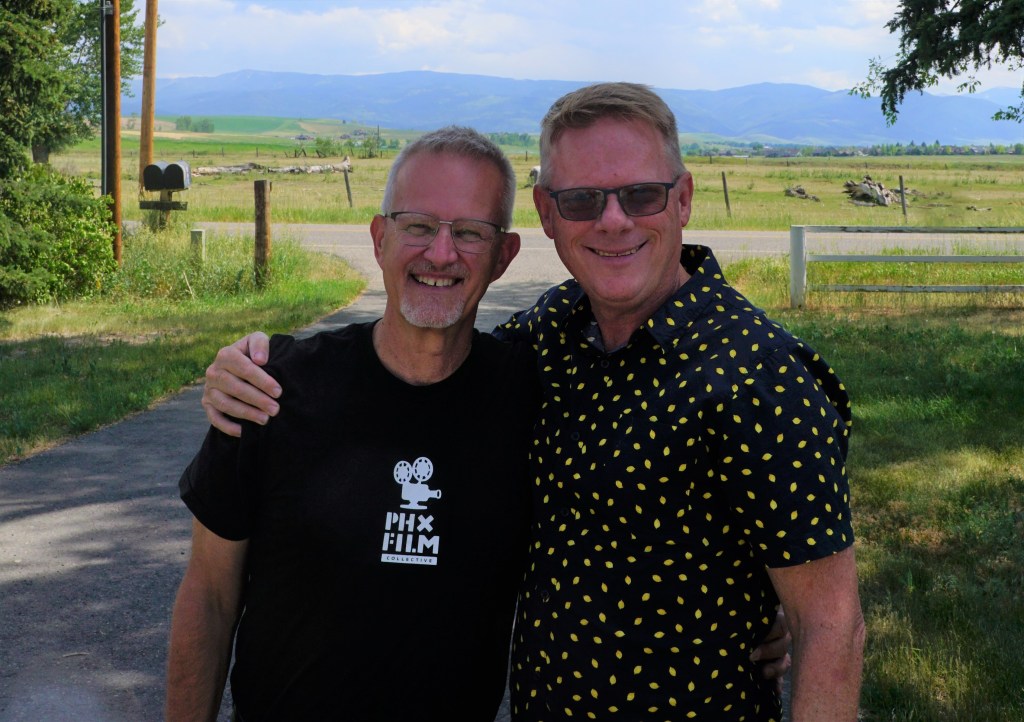
Tom and me in October 1996 enjoying a Wisconsin weekend.Tom and me in June 2021 during our Montana vacation.
Every time Tom and I cross the wash at Vista del Camino Park, we inhale the distinctive, earthy bite of three sycamores planted in a sea of palms and eucalyptus.
It’s a pleasant surprise to learn sycamores survive in the desert. Hybrids growing by lakes and streams are like midwestern transplants: leaner, smoother, tanner. Don’t be fooled. Their roots are one-hundred-percent sycamore.
***
Fifty years ago, in the summer of 1971, I traveled for the first time to a much wetter region of the country with my father, mother and sister. We left St. Louis for a week to explore the Great Lakes.
Our vacation was by no means a full immersion. It was more like motel-and-diner hopping on a shoestring budget as we headed north and then east.
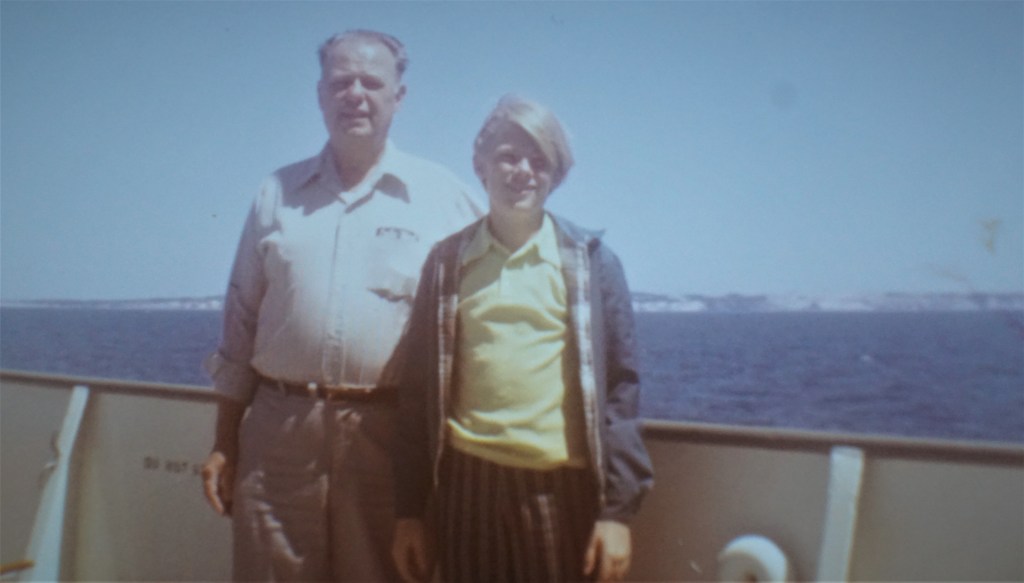
Dad insisted we stop on the north side of Chicago just long enough to dip our toes in frigid Lake Michigan. From there, we continued on in our Chevy Biscayne to Milwaukee, Wisconsin to board a car ferry and cross the same lake together.
In the eyes of this fourteen-year-old passenger, the ferry was faster and far more intriguing than the prospect of driving a few hundred miles on congested highways past Illinois’ and Indiana’s stained ports, steel mills, and smoke stacks.
Under a bright sky, we squinted at the lake’s choppy waters and stood on the top deck of the boat with other passengers, while below attendants squeezed vehicles into the hull for ballast. Gulls danced and dipped in the air above.
Our destination? Ludington, Michigan … a town I knew nothing about on the eastern shore. I remember Ludington as a quiet, clean community with deep beaches. We didn’t stay long. Dad wanted to drive us north to Sleepy Bear Dunes National Lakeshore, where I would climb more steep midwestern piles of sand than I could imagine.
Eventually, we made our way farther north to Sioux Ste. Marie and zipped up our jackets. A cool summer breeze buffeted our hair as we watched international vessels line up and pass through the Soo Locks that connect Lake Superior and Lake Huron.
Toward the end of our weeklong Michigan adventure, we found our way south to Greenfield Village and the Henry Ford Museum in Dearborn. I felt the sense of history there, but none of it compared with the exhilaration of the ferry ride near the start of our trip.
Fifty years later, it is the lake Dad and I crossed together–and the real and metaphorical channels we navigated as father and son–that I remember most.
Dad and me on the ferry crossing Lake Michigan from Milwaukee, Wisconsin to Ludington, Michigan in July 1971.
This season of triple digits in Arizona–followed by a few days of overdue, soaking monsoon rains–is the perfect time to rummage indoors through personal, vintage photos.
The best of them, like peering into the Grand Canyon, leave me with a mix of joy and insignificance. They tell stories about humanity before I entered the picture.
I’m fortunate to have accumulated photographic treasures from both sides of my family. Some of them, tattered and faded, date back to the early 1900s.
I don’t recall seeing this image from July 1955 before. I imagine one of my maternal grandparents captured it on their Huntersville, North Carolina farm. Sixty-six years later, I stumbled across it in a forgotten album. Today, on July 26, 2021, it is speaking loudly through the sepia tone.
If she were alive, the woman on the left (my mother, Helen Ferrell Johnson) would be celebrating her ninety-eighth birthday today. In 1955, she held my sister Diane on her lap and celebrated her thirty-second birthday with her sister Frances (cradling her first born, Michael) and brother Jim by her side in her original home state.
Mom has been gone since 2013. Grief has taught me there will be days like today when I miss her smile, wisdom, perspective and resolve. Fortunately, thanks to the passage of time, the abyss of grief–the Grand Canyon of loss–subsided in 2015 as I wrote.
When you love someone, grief is the price you pay. It is everlasting, sometimes surprising, but often predictable. Photos, birthdays, anniversaries, and specific songs (I’ll Be Seeing You sung by Peggy Lee) provide the cues.
What makes this photo a rare find is that I have just a few images of my mother and her adult siblings together. Helen left North Carolina right after World War II to begin a new life in a bigger city … St. Louis, Missouri … where she and Dad met, married, settled, raised Diane and me, and discovered their share of happy, challenging, and unbearable moments together.
Jim and Frances stayed to build their lives in the Tar Heel State. They were teenagers on the farm in the late 40s. In the 50s, Jim and Frances (born in 1930 and 1932 respectively) left the nest, but returned frequently to this front porch that faced west. They met and married partners, traveled a few miles down the road to raise their families, and remained near their parents.
What I love most about this photo is the sense of possibilities and optimism in the eyes of Helen, Frances, and Jim. The wear and worry of life hadn’t yet entered the picture. By the mid 60s, Helen had two children. Frances had three. Jim had two. My grandparents loved all seven of us grandchildren. We now lead disparate lives.
Mom loved her brother. He was a friendly, handsome man, who loved to fish, hunt, drink beer, and smoke cigarettes. Unfortunately, the harsh realities and complexities of life had a way of catching up with Jim. In 1987, he died of lung cancer at age fifty-six. When she learned of Jim’s passing, it frightened her. Mom saw his demise as a harbinger of her own mortality. She retired immediately after returning from his funeral.
Frances still lives in North Carolina. She is the most significant personal connection I have to my southern roots. I spoke with her a few months ago. She isn’t the spitfire she once was, but is content with her husband in their Davidson, North Carolina home.
Like all of us who remain, Frances is thankful to have survived the pandemic. She is looking forward to her ninetieth birthday, which she will celebrate January 1, 2022. In 2015, two years after Mom died, I traveled south to see Frances. At that time, we needed to see and hug each other to escape the throes of grief.
My quest to rediscover my southern family and find comfort with Frances ultimately became fodder for From Fertile Ground, my first book. It’s the story of my journey and grief told in part through the writings my grandfather and mother left behind. If you’ve lost someone close recently and are living with the fog of grief, I hope you’ll pick up a copy of my book. Reading it may soothe you.
With each passing year, I continue to find more fertile ground from the photos and writings my mother and father left behind. Reexamining them and rediscovering their importance reactivates the love I feel for imperfect–yet beloved–family members. They shaped my past and the memories of them still inform my present.
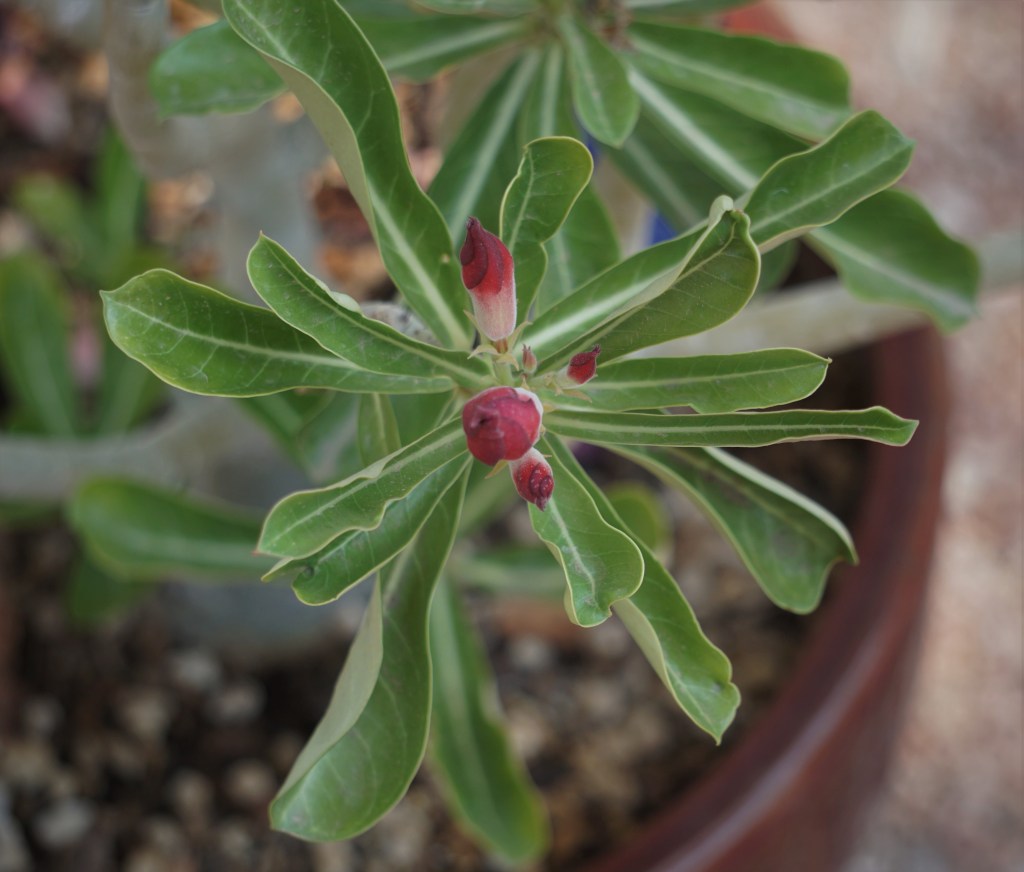
If you are a betting man or woman, fours are wild today. Four double-red desert rose buds are primed to burst on our back patio; this sixty-four-year-old writer (who has written four books) swam twenty-four laps at Chaparral Pool this morning; and July 12 is the fourth anniversary of Tom and me arriving (finally) at our Arizona home after a hospital stay in St. Louis.
Dad would have loved the synchronicity–the magical, random alignment–of these fours. He was a numerology freak. Like me, he also was a dreamer, poet, sentimentalist, Cardinal-baseball lover, and heart-attack survivor.
My father never met Tom. A week shy of his eightieth birthday, he died before my husband and I began dating nearly twenty-five years ago. I don’t think Dad would have understood our relationship, but he would have continued to love me anyway.
I also believe he would have loved Tom’s smile, enthusiasm, and youthful spirit … and marveled at my resolve to create an authentic life with a soulmate, while raising Nick and Kirk and living long enough to see my two young sons evolve into intelligent, critical-thinking, thirty-something men.
Most of all, Dad would have admired–possibly envied–the free-flowing, simple, yet meaningful life Tom and I have built in our sixties in the warmth (okay, intense heat) of the Sonoran Desert. After surviving my heart attack blip four years ago, we have our health and plenty of time to exercise, write, read, reflect, and nurture friendships.
Tom and I no longer have to worry about the demands of holding down regular/traditional jobs or living up to narrow standards prescribed by somebody else. I realize what a privilege that is, even though there was a time in my previously closeted and discriminated life when I felt I would never find a path through the labyrinth.
Yesterday, four of us gay friends who met in Arizona in 2017 and formed an impromptu book discussion group in 2018 … Brian, Mike, Tom and me (plus Andy, a longer-term friend living in Chicago who joined the conversation via Facetime) … gathered, talked and laughed in the friendly, freshly painted confines of our Scottsdale den/guest room. We were there to exchange ideas and mixed reviews of The Days of Anna Madrigal, first published by Armistead Maupin in 2014. It was our first book group discussion since sometime in 2019, months before the pandemic began to ravage the world.
As I reflect on the three hours we spent together Sunday … critiquing various aspects of Maupin’s novel that I think missed the mark, recounting our original fascination with Maupin’s Tales of the City characters on Barbary Lane and the resulting PBS phenomenon in the 1990s, catching up on our own personal lives, telling summer stories of travel, and sharing brunch after surviving the dread of 2020 … I am especially thankful for friends such as Brian and Mike, who entered our lives in Arizona. Our Grand Canyon State friends have enriched our world after the St. Louis storm.
No matter how hot it gets in the Phoenix area this summer (110, 111, 112 degrees, and so on) … or whether the monsoons finally materialize and spill promised moisture into the Valley of the Sun this week as forecasters say they will … the lead of this personal story is the beauty of our desert roses, our mutual investment with new neighbors and friends between 2017 and 2021. During that time, we have come to love a whole new batch of people (and they have loved us) in our first four years in Arizona. It is a dream come true beyond the friends and family we continue to love in Illinois and Missouri.
From various avenues–literary, yoga, choral, gymnastic, canine, and cinematic–new Arizona friends and acquaintances have helped us heal, renewed our spirits, made us laugh, and stretched our creative sensibilities to new heights. I certainly didn’t see the breadth of this late-in-life resurgence coming from my precarious station in a hospital bed in St. Louis on July 6, 2017.
Dad would have loved these literary bonus years after the rises and falls of our midwestern life … these days of desert friendships and roses for Tom and me. Like the rousing song from Bye Bye Birdie, which played on the transistor radio next to Dad’s hospital bed as he recovered from his own St. Louis heart attack in September 1962, I’ve still got A Lot of Livin’ to Do.
It’s near the end of Mother’s Day 2021, but I couldn’t let this day pass without paying tribute to Helen Johnson, my resilient mother. Today, as I puttered in the garden–a universal place she loved–and planted impatiens in a shady spot under the eaves of my Scottsdale home, I channeled memories of her. Here’s a little story about the two of us.
***
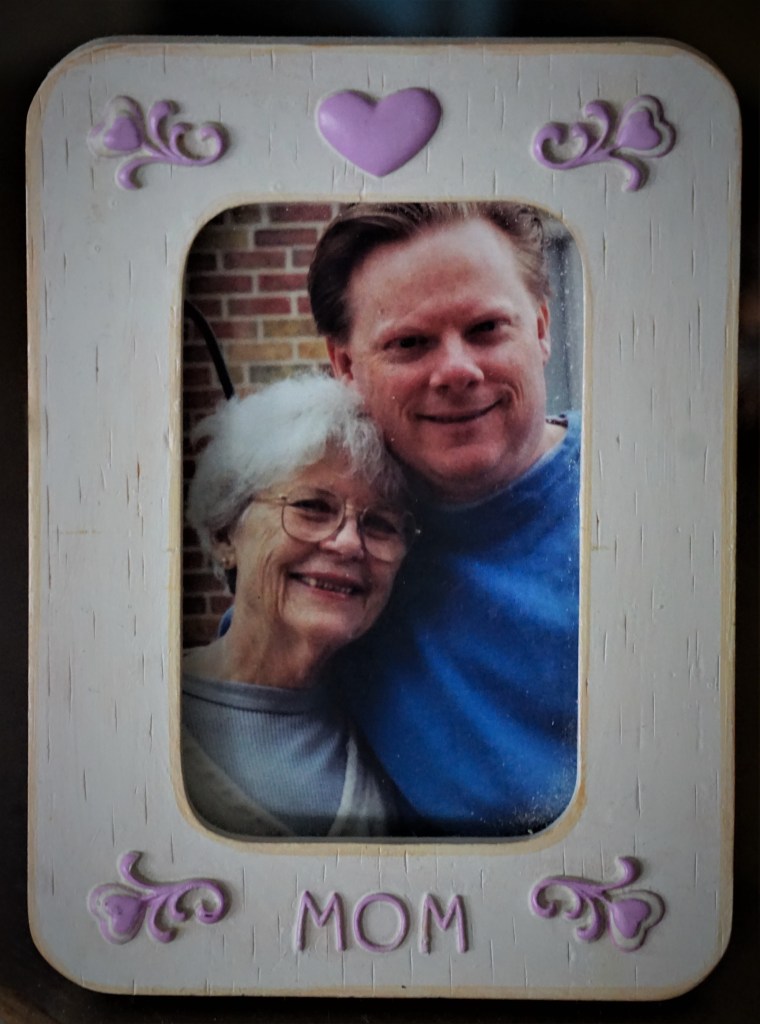
Mom was 74 and I was 40 on Mother’s Day 1998. This is one of my favorite photos of us, standing outside her south suburban St. Louis home that day twenty-three years ago. It captures the essence of the lifelong bond and love between us. As her edges softened in her seventies and eighties and my appreciation for her vulnerabilities, strengths, and wisdom grew in my forties and fifties, our relationship deepened.
What I’ve learned since her death in 2013 (and my father’s in 1993) is that our relationships with our parents don’t end when they die. They evolve. We carry bittersweet and tender memories of them with us everywhere (in my case from North Carolina and Missouri to Illinois and Arizona).
I no longer think of my mother every day, but her gifts are part of the fabric of my life in the Sonoran Desert (a place she never visited) in a far less obvious way than they were back in St. Louis in 1998. For that reason, she appears in all four of my books. Sometimes as true reflections of the person she was; other times in fictional flights of fancy.
As long as I’m around, I will carry with me her love of gardening, impatience with ineptitude, kindness for neighbors, thirst for knowledge, respect for the written word, and commitment to family. In good times and bad, I am forever grateful for the legacy of love my mother left me and the path she provided to follow with my two sons.
Happy Mother’s Day to all mothers, who work each day to make a positive difference in the lives of their children.
It’s time to dig out the loose change that’s fallen between your couch cushions and put it to good use! From April 23 to 30, you can download a Kindle copy of my latest book, I Think I’ll Prune the Lemon Tree, for just ninety-nine cents on Amazon.
Set against the rugged landscape of Arizona’s Sonoran Desert, my anthology of thirty-nine essays (some whimsical, some serious) explores the themes of family, community, authenticity, creativity, and uncertainty before and during COVID-19.
Here’s what one reader had to say: “Focusing on stories from his recent relocation as a full-time Arizona resident, Mark mines his past for insights into his new life, reflects deeper into the after-effects of surviving a health crisis, and even includes poems and works of short fiction. A great new collection from a distinctive contemporary voice.”