Warmer, brighter, and dryer than my midwestern memories, the arrival of April in the Sonoran Desert means we are a step closer to the oven.
I’ve come to welcome the regularity of the sun and heat. They define who we are: slimmer survivors, comfortable in shorts and sandals minus the cloud cover and weighty coats of our past lives.
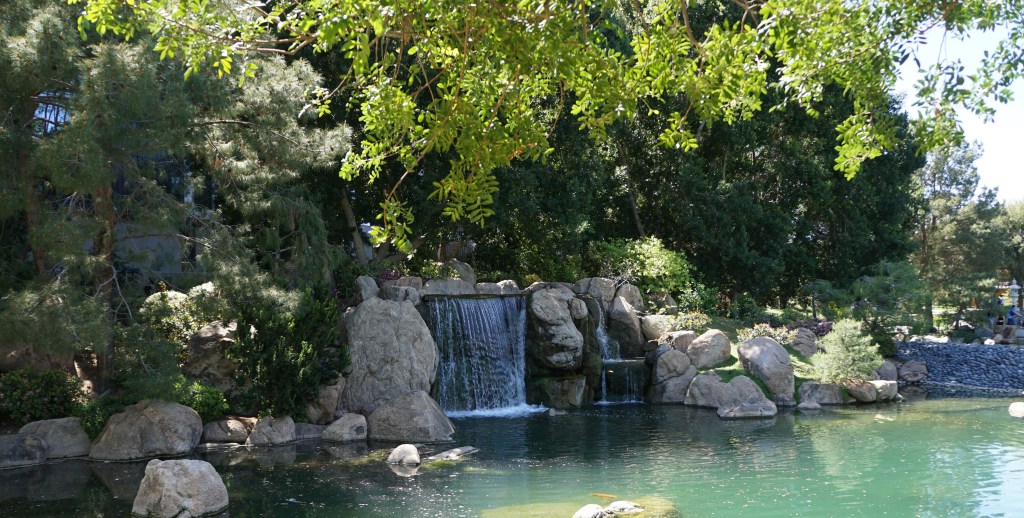
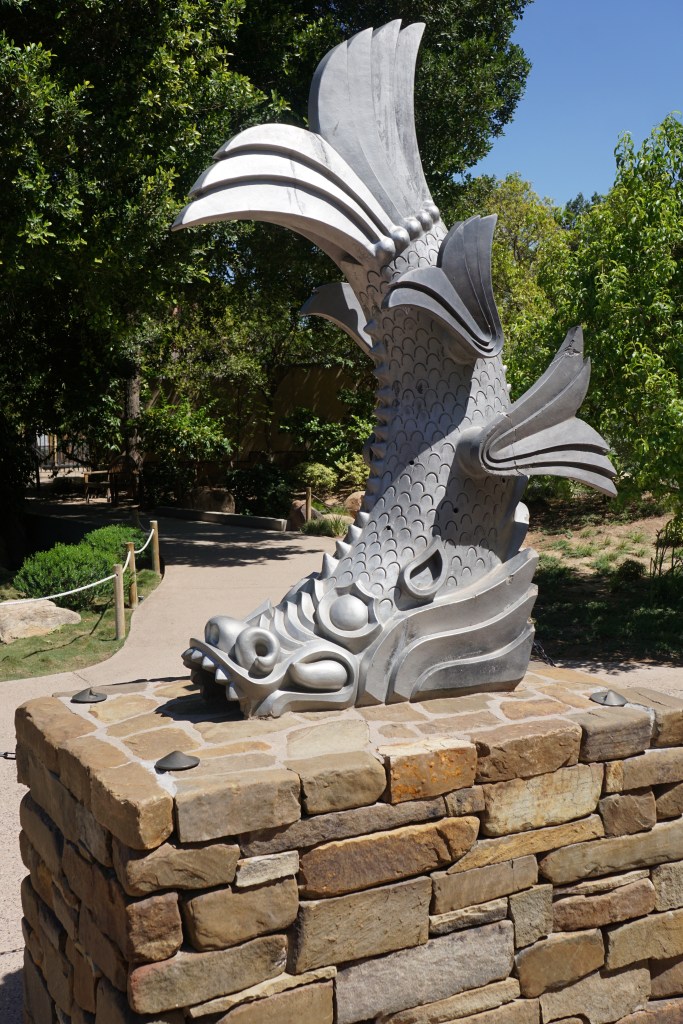
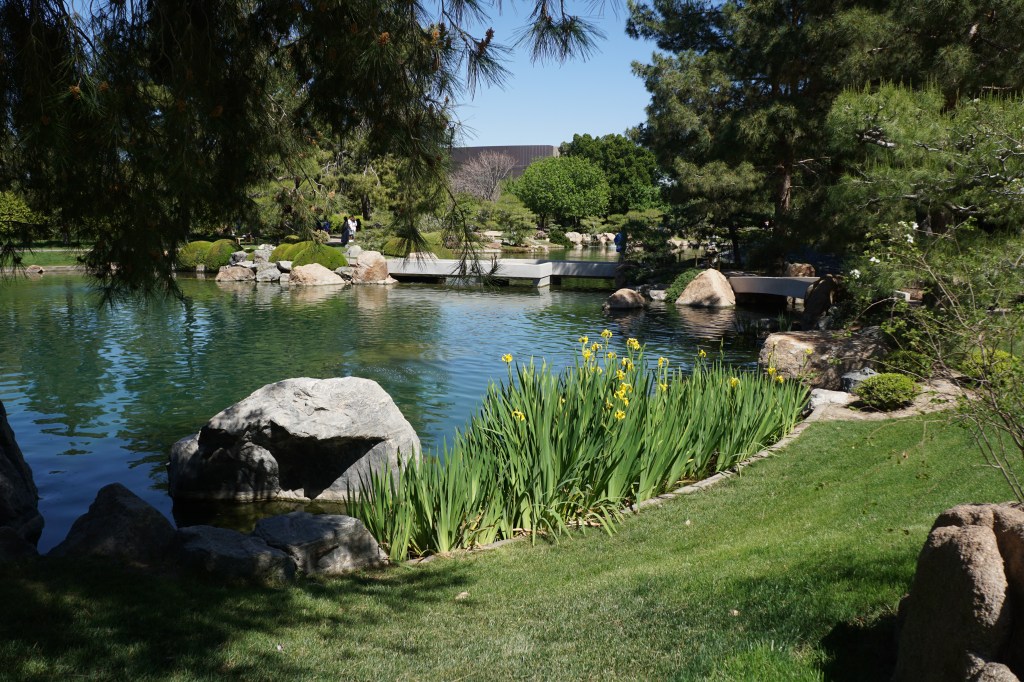
No matter the month, if you’re willing to dig beneath the palms that frame the burgeoning Phoenix skyline, you’ll find the Japanese Friendship Garden (named RoHoEn) coexisting with concrete in an urban setting.
Planted at 1125 N. 3rd Avenue (just west of Central Avenue and south of I-10 on the way to L.A.), this hidden Phoenix gem is an unexpected eastern oasis deposited amidst the flurry of western civilization.
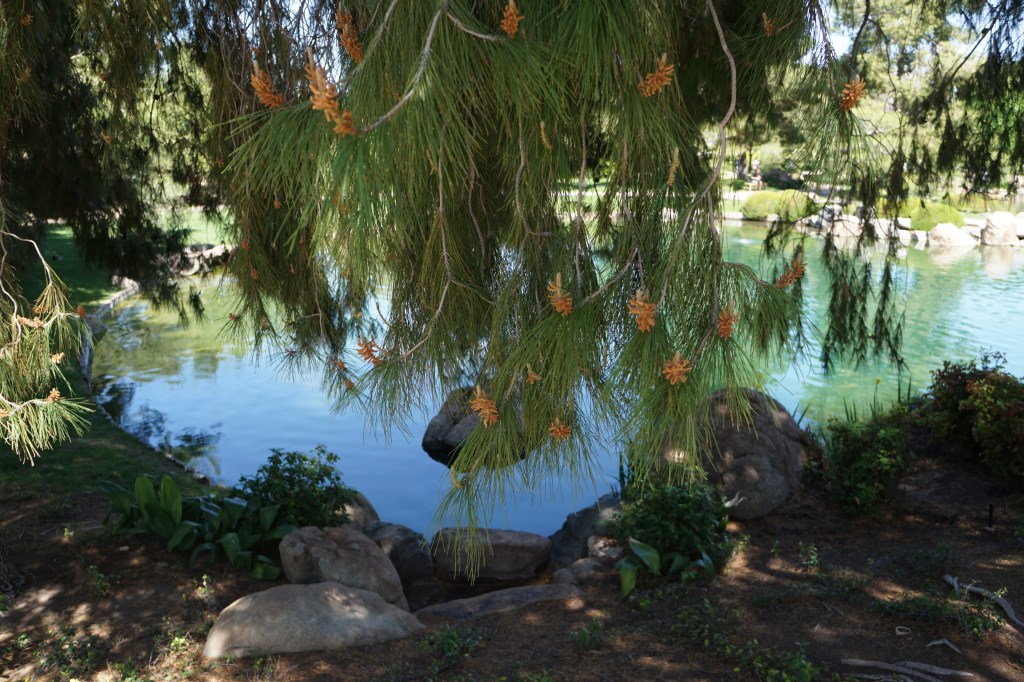
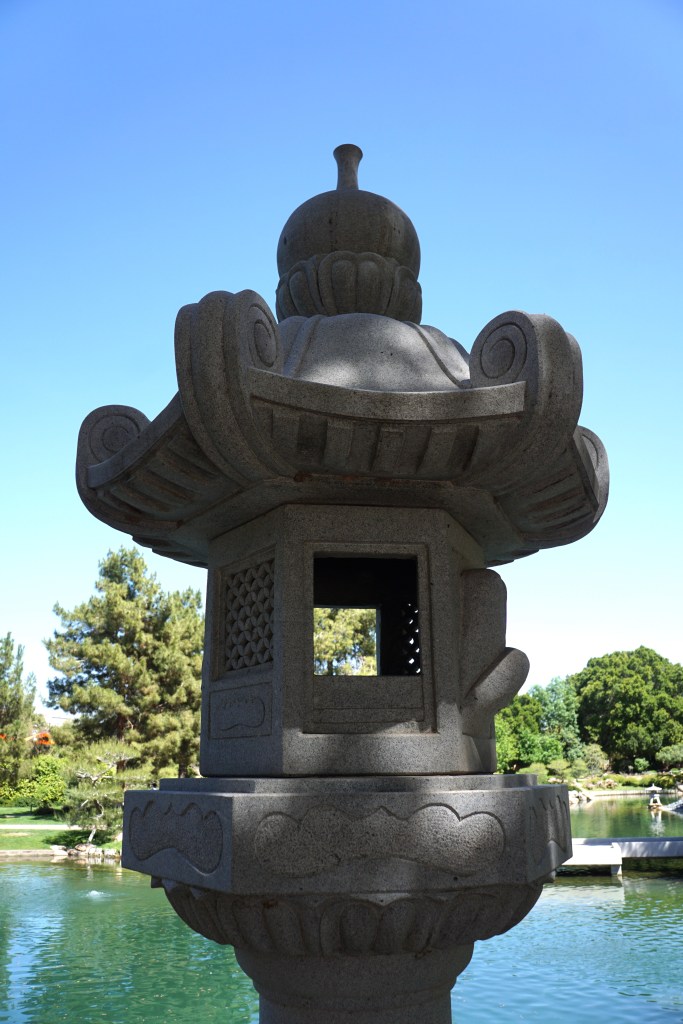
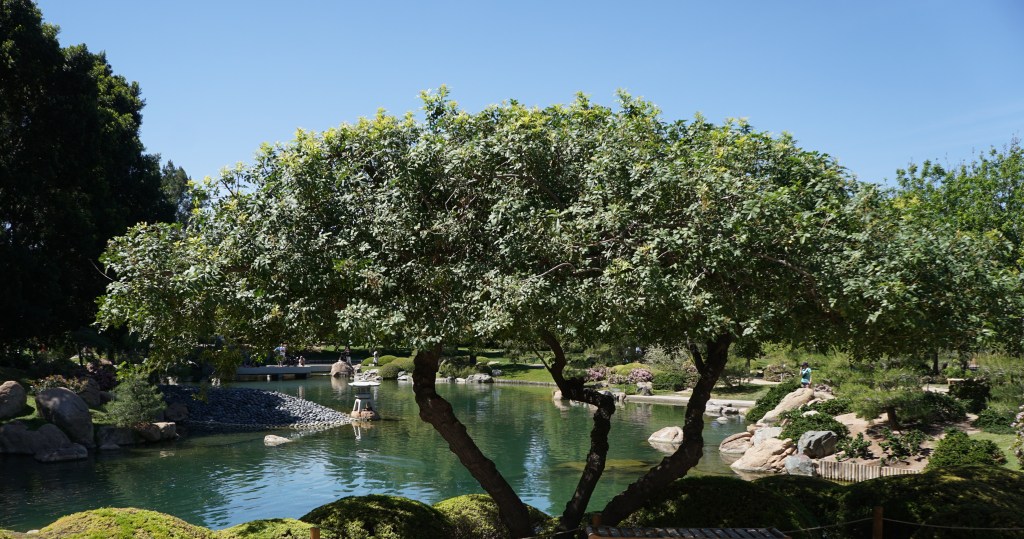
Protected by the shade of a high-rise apartment building, colorful koi dance beneath the surface of a shallow lake, a canopy of pines, sculpted shrubs, gentle waterfalls, and peaceful pagodas.
Of course, many come to the Valley of the Sun to relax by the pool. But if you prefer a different kind of escape, the garden is an ideal place to stroll in the shade, pause on a weekday, feed the fish, and nourish your soul.
Note: Located in the heart of Phoenix, the 3.5-acre Japanese Friendship Garden is a joint project of the City of Phoenix and its Sister City, Himeji, Japan. I captured these photos during an afternoon visit with Tom on Wednesday, March 30, 2022.
As I’ve gotten older, I’ve discovered I need more private time. This feels like an odd thing for me to admit, because–at one time–I would have considered myself a strong extrovert.
Now that I’ve been away from my consulting career for more than eight years, I realize I was more of an introvert all along. One who was good at solving problems, facilitating outcomes, and wearing a multitude of hats. I was required to be “on” far more than I wanted.
Finding the magic as a writer has been the result of tunneling in versus extending out. It’s been an exercise in spelunking … getting lost in caves of consciousness … then exploring that space.
This creative cocooning is an activity I love, and one I have become protective of. (Translated, that means I get grumpy when there are too many social demands on my time. I can imagine my husband nodding knowingly as I write this.)
Even so, there have been times over the past two years, when I’ve missed the human connections that many of us took for granted in a pre-pandemic world. For instance, reaching out to engage with readers in person or simply being in the same room with others to experience the impromptu moments of life.
On Friday night, I got a dose of the creative community I craved during the depths of the pandemic. Tom and I attended a Storyline SLAM event at Changing Hands bookstore in Phoenix. The theme of the evening was Magic, so each story needed to include that component in one form or another.
The process was pretty loose. Organic might be a better word. Eight people–four before intermission, four after–took turns telling stories on stage in six-minute segments.
When each storyteller finished, five judges (sprinkled in the audience of one hundred) held up mini tote boards with a score. Thirty points were the most possible, because the highest and lowest scores, raised high by the judges, were tossed out.
Driving there, Tom and I knew there was an outside possibility that members of the audience could volunteer to tell their stories in the moment. So, I brought one of my books, An Unobstructed View, in the car–just in case I summoned the courage to get up on stage. The idea intrigued and petrified me.
I’ll cut to the chase. I wrote my name on a slip of paper when we got to the event. I dropped it into a box, where it might be drawn. And it was. As I chugged a glass of pinot noir and squirmed in my seat, I learned I would be number three on stage to tell a story.
When my turn arrived, the anxiety I felt was palpable. Still, I walked to the stage and stood before the mic. I opened my book to page 41 and began reading from a chapter titled The Best Ears of Our Lives. Here’s an excerpt of what I shared that night.
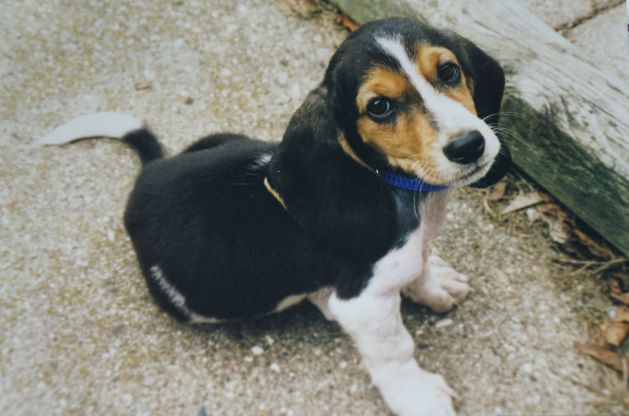
… in October 1998, I became a dog owner again. We found our family dog in an Arlington Heights pet store. A high-pitched bell at the top of the door jingled, signaling our arrival as we pushed through the entrance. Tom and I walked past a wall of cages containing an assortment of critters with doleful eyes tracking our every move. The noisiest of the bunch was a tri-colored basset hound puppy with a white-tipped tail, brown-and-white face, and voluminous black velvet ears. She barked, yelped, and wiggled near the latch of her cage as if to shout, “Look over here. Take me home. You will never find a better dog than me!”… I knew we had turned the page and a dog-eared corner. This tenacious pup had cast a spell on us.
For most of the next decade, Nick, Kirk, Tom, and I would write a chapter together, featuring our shared love for Maggie as the glue that would help us all bond. As Maggie’s body grew, her limbs spread, and her breathing deepened at night, our basset hound further infiltrated our lives. We would never be prepared for the day we’d have to let her go.
The crowd applauded. I smiled, exhaled, walked back to my chair, and sat next to Tom. He kissed me on the cheek. Moments later, my score appeared … 27 out of a possible 30. But the numbers really didn’t matter. It was simply the act of sharing my story and getting an immediate response that fueled happiness and relief.
When the evening ended, an exuberant lady (she told a fun and charismatic story about the magic of motherhood) won the Storyline SLAM event with a perfect score of 30. I finished third out of eight. Not bad for a last-minute decision by an introvert to take the stage.
Most of all, the experience reminded me to live for today in this uncertain world, but also to find the time and space to embrace and remember the magic. It can appear in any form–long velveteen ears on an autumn day or an improbable six minutes on stage in the spring–when we least expect it.
Our magical Maggie, posing in our Illinois backyard in October 1998.
There is no better time than St. Patrick’s Day to pay tribute to the Emerald Island.
In late August 2017–just six weeks after I suffered a mild heart attack–Tom and I boarded a flight for Dublin, Ireland.
It was an excursion we had planned months before. But on July 6th (our shared sixtieth birthday) the trip and our future felt very much in doubt as I lie on a gurney in a St. Louis hospital.
Remarkably, my health improved considerably in a month. Doctors in Scottsdale, Arizona–my new hometown–encouraged us to proceed with our plans. The journey to Ireland would help us heal.
Looking back five years, both of us were anxious about traveling abroad, but we also needed to reclaim our joy. As I wrote in An Unobstructed View, Tom and I spent eight days with forty other travelers from around the world. Brian, our capable guide with CIE Tours, led us clockwise around the island.
It’s a bit of a blur now. But in one week’s time we moved from Dublin to Waterford, Killarney, the Ring of Kerry, the Cliffs of Moher, Galway, the sheepdogs in Sligo, the Giant’s Causeway in North Ireland, and the Titanic Museum in Belfast … before returning to Dublin and riding atop a double-decker bus with the wind racing through my hair.
Along the way, on our farewell dinner with the tour, we enjoyed an evening of Irish songs and music at the Glyde Inn just south of Dundalk.
In the spontaneity of the experience, I was pulled onto the floor to join in a broom dance. For a few fleeting moments, I rediscovered my spark away from the worries of the previous month.
I also spotted a little old Irish lady, singing her heart out across the room. She resembled my Scotch-Irish mother, who never had the opportunity to return to her ancestral home country. Seeing her there was an important step in my healing process.
In 2019, I wrote The Irish Mist. My poem is a tribute to the comfort I felt looking out over the Atlantic Ocean across the vast Cliffs of Moher on the west coast of Ireland as the clouds rolled in on August 27, 2017.
***
I’ll always remember you, rolling in over the gaelic green.
I felt cool comfort knowing the veiled intentions you whispered in my ear wouldn’t be denied.
No matter how much I wanted to gaze beyond the moss and ferns you shrouded, you held me there.
You knew I needed to stand strong above the craggy cliffs of my past.
You knew I needed to feel rooted to the emerald island, thankful for the mystery of my mending heart.
You are an emerging gentle giant, a loyal Sonoran duchess ready to frolic among the thorns in a land far from your kingdom.
Your soulful eyes tell a simple truth: that the blazing sun rises and sets on every life, every civilization. But we must soldier on.
While the madness in the front yard of life drains us, it is these tender backyard moments that fill our hearts and restore our spirits.
Through it all, nature reigns. You are supreme.
Katie is the inspiration for my poem. She is Glenn’s and Peggy’s lovable Newfoundland puppy. On March 1, 2022, Tom and I stopped by for an hour or so to keep her company while our friends were away.
I’m convinced. Long after the American Southwest has curled to a crisp–scientists reported this week that we are experiencing the driest two decades in 1,200 years–cats will roam the Sonoran Desert and reign supreme.
I have no scientific proof to support my theory. Just a small sampling of feline friends–feral and domestic–in my Polynesian Paradise focus group.
With a flick of their tails and a few meows at our door, they cavort in our community, roll in the rocks, climb the walls and roofs, slink down the sidewalks, and generally get what they need and want to survive–above and below the eaves, but under the radar.
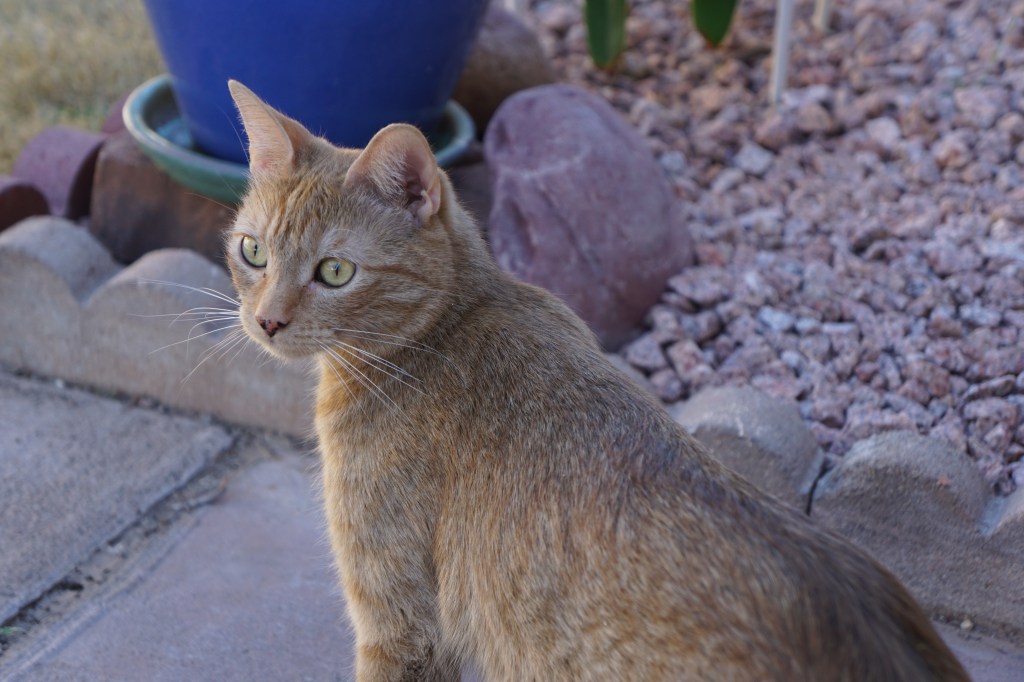
They appear magically each day. Goldy (she lives down the lane), Blanca (she lives kitty corner) and Poly (she lives everywhere in trees, on roofs, and under stars) plot to pounce on unsuspecting doves and finches.
Later they connive and clamor to devour Friskies Party Mix and ramakins of milk offered by we residents (suckers), who enjoy the show and the reasonably-priced (free) admission.
The three (and others yet to be catalogued) twist and glide in independent circles, careful to dodge owners with dogs on leashes that glance and sniff as they stroll by.
Blue-eyed Blanca, the friendliest of the bunch, has been known to hop into this reporter’s lap and purr. This leads me to wonder if she is really a dog trapped in a cat’s body.
Or maybe she is a long-lost relative, desperately trying to communicate. In any case, she enjoys kneading dough on my leg, catnapping on our loveseat, and (I suspect) worming her way into another story.
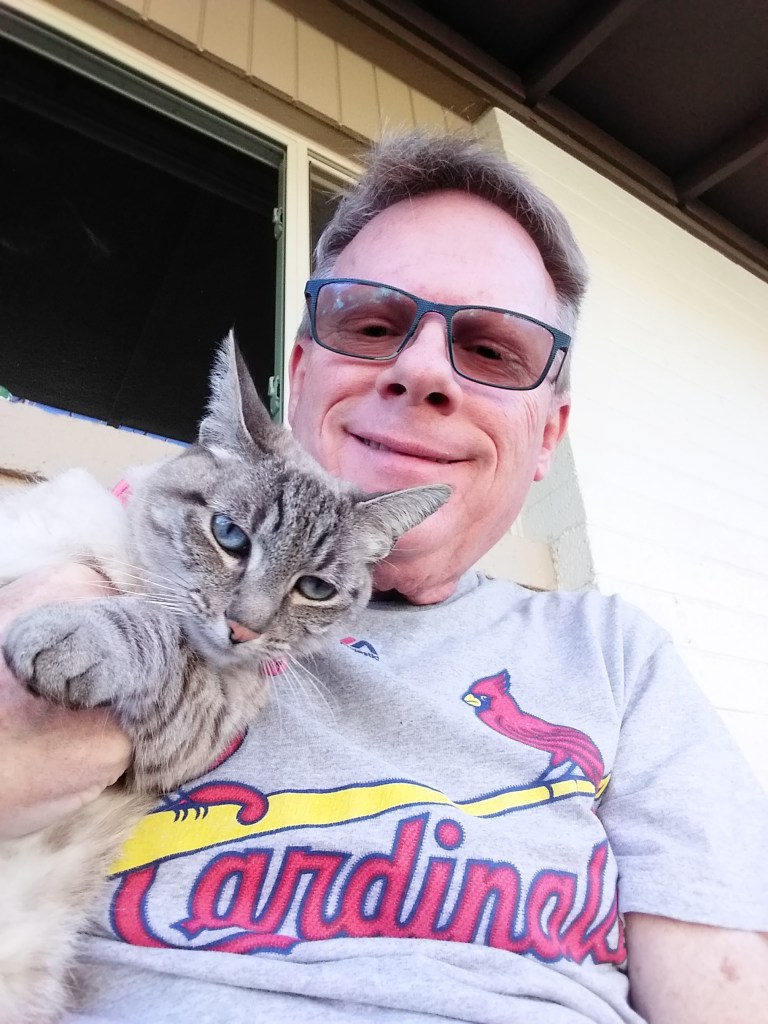
Poly on the roof, Goldy on the sidewalk, Blanca in my lap.
We all know it when we feel it … love. When it is there, it fills our hearts and lights up the world.
I’m not only referring to romantic and physical love between two human beings–two men, two women, or a woman and man. Most of us need and want some form of that depending on our orientation.
True love goes beyond the jewelry commercials that implore men to buy rings for their sweethearts. It appears in many forms–parental love, neighborly love, pet love, friendship, companionship, etc. In my heart and mind, love is a close cousin of natural beauty, peace, kindness, and human decency.
As Tom and I strolled in the sun this morning along the Crosscut Canal in Scottsdale, I was transported back to grade school in the St. Louis suburbs and the Valentine’s Days of my 1960s childhood.
In those days, we created and decorated our individual holiday mail slots, fashioned out of shoe boxes and adorned with red, pink and white construction paper. Some were simple. Others grandiose, laden with tiny, pastel-colored candy hearts bearing messages. “Be Mine” was my favorite, because it communicated a winning combination of love, playfulness, and commitment.
Each year, our teachers were careful to instruct us to bring a paper valentine for each child in our classroom. Most of us followed the rules and returned with a packet of store-bought cards featuring Looney Tunes cartoon characters, Superman, cuddly puppies and kittens. Then, we went around the room and deposited all of our “love” messages. (Sixty years ago, we also had parties and trays of decorated cupcakes delivered by two or three “room moms” to our classrooms.)
Then and now, I liked the kindness and equity of that valentine distribution plan. Of course, some kids were more popular than others, but this even-handed method leveled the valentine playing field. In practice at least, each child got to feel the love of opening a box filled with valentines from each of his or her classmates.
I confess. I don’t know how schools treat Valentine’s Day now. But I suspect it’s a different animal. At a time when children and adults are bombarded with messages of fear and pandemic uncertainty, we are living in a world with a short supply of love. We need valentines more than ever this year.
It doesn’t cost much to whisper a message of love to a friend. Or to send a text or drop a card in the mailboxes of those in your metaphoric classroom.
Do it today. I’ll start. Won’t you be mine?
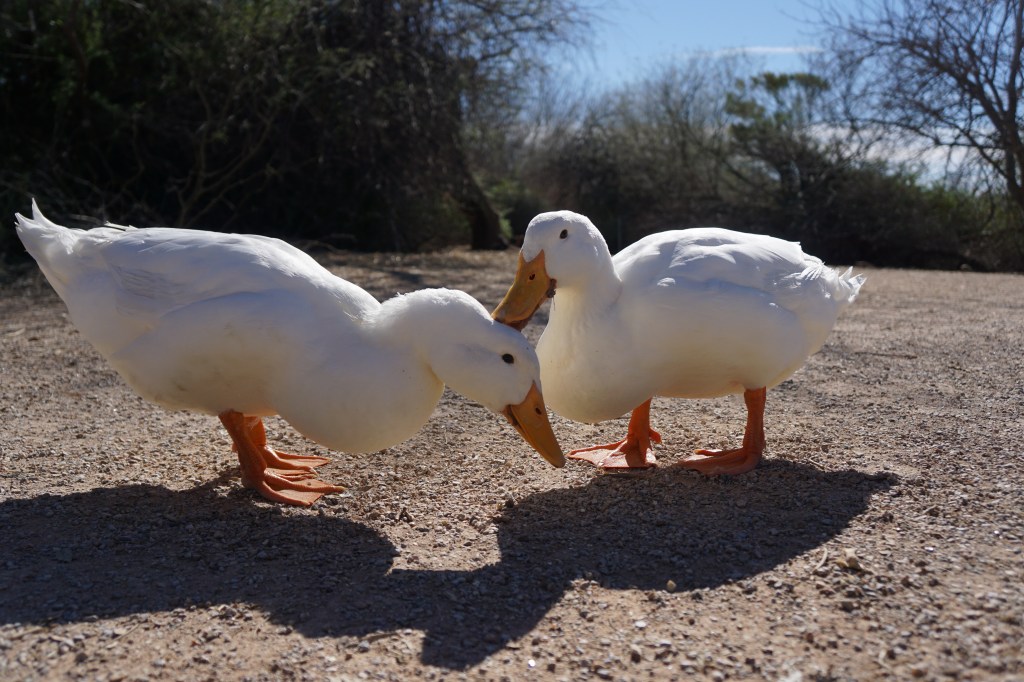
On January 26, 2022, I captured this photo of two geese sharing a tender moment on the path of life at the Riparian Preserve in Gilbert, Arizona.
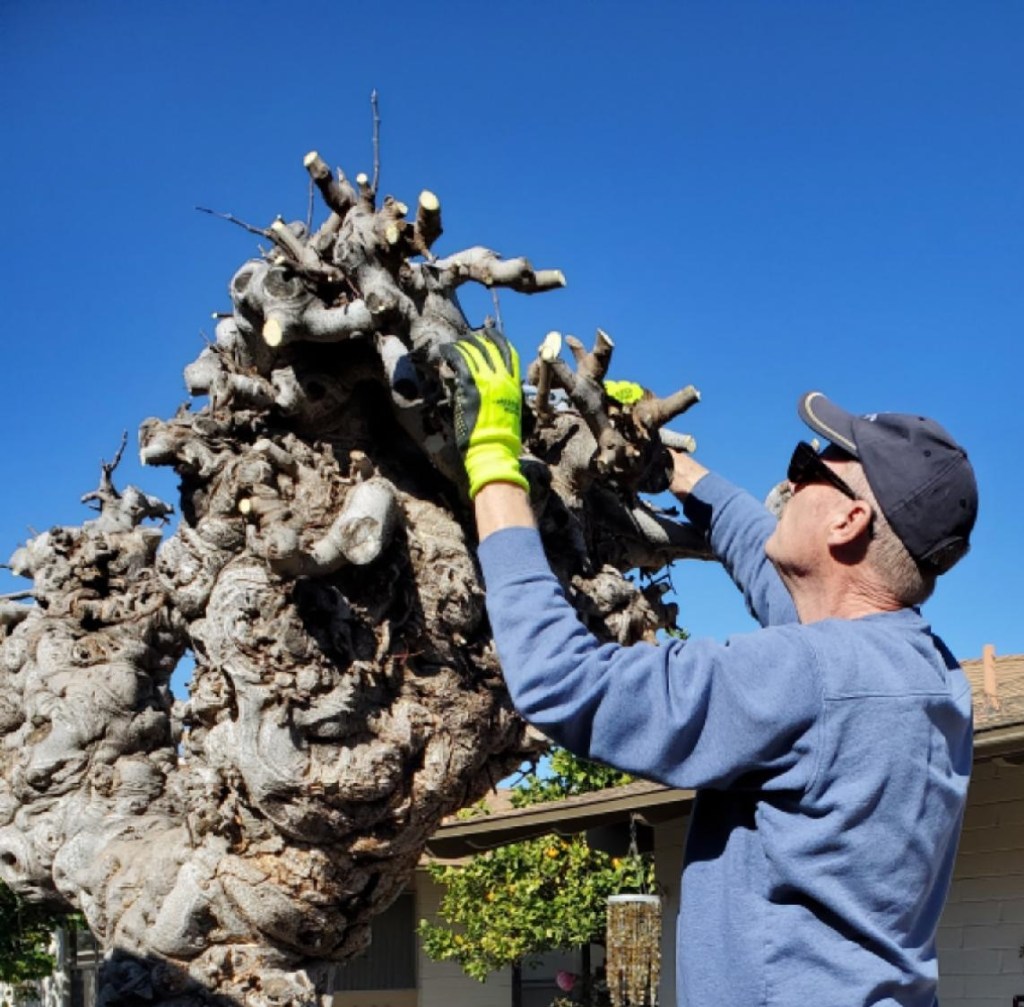
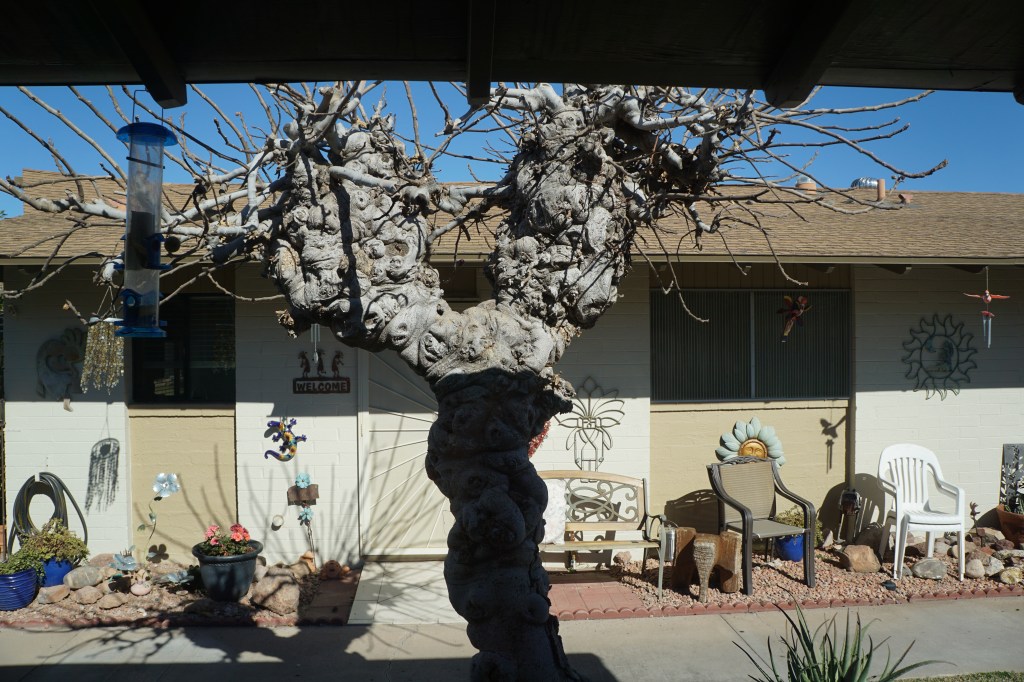
Me pruning the fig tree outside our front door in Scottsdale on February 8, 2022.
I’m at it again, pairing the random recent pruning of our fig tree with a story of my first haircut in a land far away but never forgotten.
***
In the arc of life, St. Louis, Missouri, was my first hometown; Scottsdale, Arizona, will likely be my last. Beyond this personal connection, they have little in common.
They certainly aren’t Sister Cities. The former is a muggy midwestern city shrinking in population on the banks of the Mississippi River; the latter, a dry western town growing exponentially in the Sonoran Desert.
Though, if you follow NFL franchise history, you know the present-day Arizona Cardinals made their home in St. Louis from 1960 through 1987. As a kid, I rooted for the Big Red there.
Now I cheer for this iteration of the Cardinals here. Regrettably, the team’s promising 2021-22 season faded in December and January. They won’t appear in the Super Bowl. The Bengals and Rams will be featured instead on Sunday.
At this stage of life–when I’m not writing or singing or swimming or exercising or baking or eating or sleeping or following my baseball and football Cardinals (the first still resides in St. Louis)–you might find me giving or getting trims.
Let me be clear. The giving involves me manipulating large garden shears and a hand saw to prune (only occasionally) a few of the fruit trees in our condo community. I even wrote and published a book of stories a year ago, which alludes to this activity in the title.
Anyway, on Tuesday, Tom and I were outside giving trims again. We pruned the fig tree near our front door. It’s an annual thing we do in February. It keeps the tree healthy.
We actually enjoy doing it. It’s a way for us to contribute to the well-being of our condo community and pamper the gnarled tree that provides shade on our hottest summer days.
On the other hand, the getting part of this is a different story. It equates to me sitting in a chair and having a stylist trim my hair with clippers and scissors every six weeks.
Most recently, I had this done two weeks ago at a Super Cuts in Scottsdale. But the first time was August 13, 1958, in St. Louis. I was a little over one year old. Someone named Frank Goetz did the trimming.
How do I know the who, what, when and where of this? My mother kept a detailed baby book of photos and anecdotes from the first seven years of my life.
Inside is a treasure trove of memories: things I would never have known or remembered if she hadn’t taken the time to maintain this personal record. She even kept a lock of my cut blond hair from that day, sealed it in a small envelope, and pasted it on a scrapbook page.
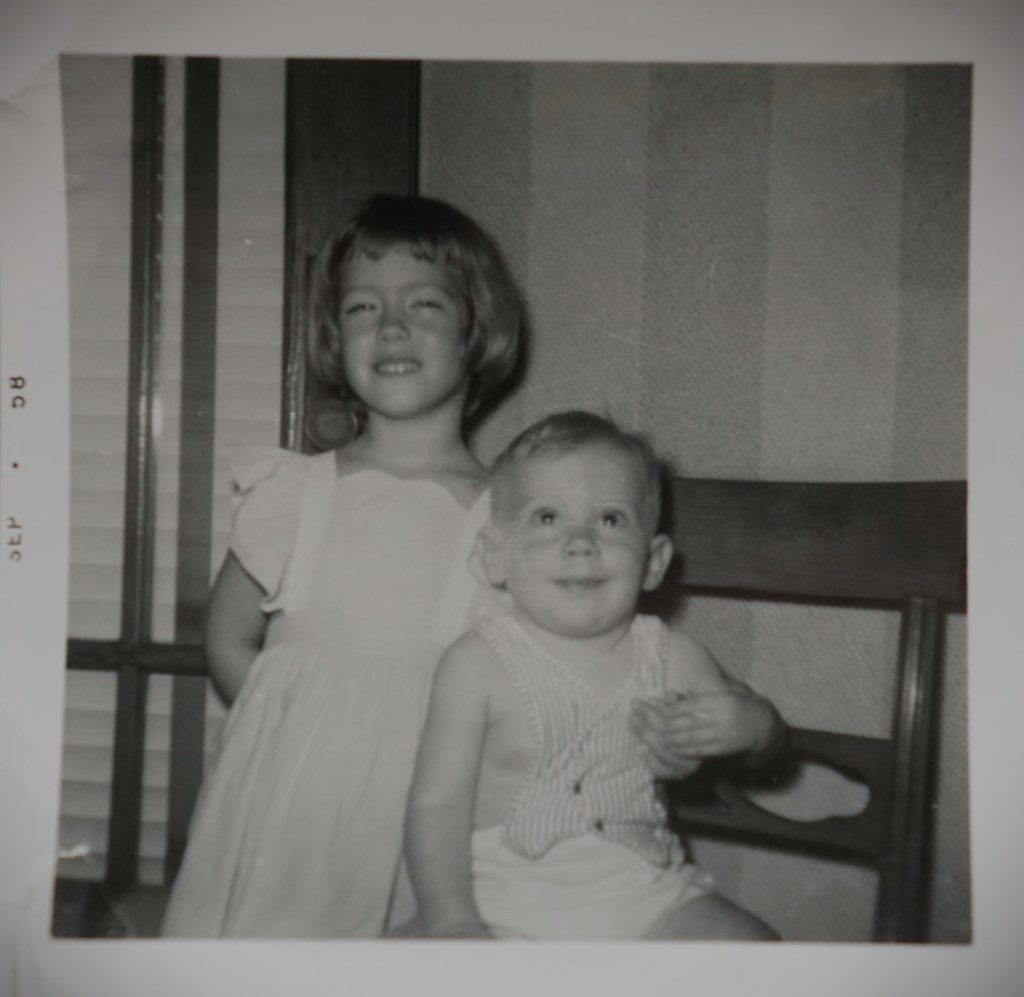
This morning, a day after Tom and I finished giving our fig tree its annual haircut, I pulled out the baby book from our hallway closet. In short order, I stumbled upon this photo.
Isn’t it funny and magical how a grainy black-and-white photo can transport you to another era and instantly pair the scissor cities of your imagined and true-life experiences?
On August 13, 1958, my sister Diane posed with me in St. Louis moments after I got my first haircut.
Dad was a twin, who loved twin digits. Today’s lineup of numerals would have sent him into orbit.
I don’t often think of my father; he’s been gone since 1993. But, whenever I remember the best of him–his numerology fascination, the proud way he stood at attention and saluted the American flag when it passed at parades, his WWII trunk and possessions I keep–it makes me smile.
In spite of what’s happening in the news–growing unrest and tension in eastern Europe, a pandemic that has dominated our lives for two years, and another Midwestern winter storm on Ground Hog Day that’s causing havoc–there is evenness and continuity in today’s numbers, 2-2-22.
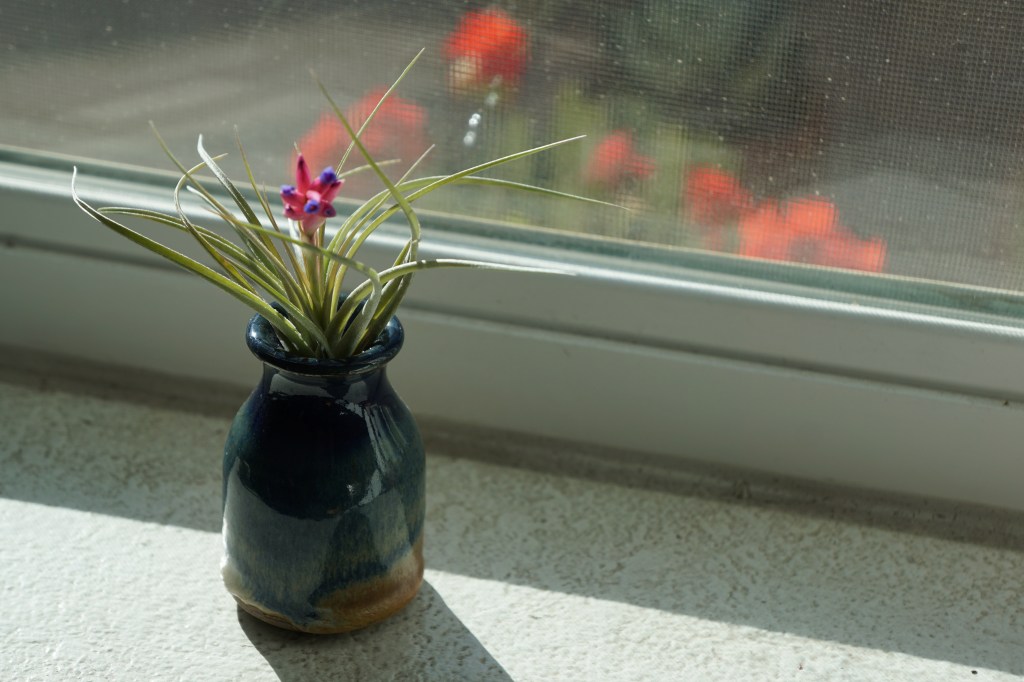
Just as there is peace and beauty blooming in two forms in my home in mid-winter; in an air plant inside, stationed on our Arizona windowsill; and in a red geranium outside, soaking in the morning sun on our southern-facing patio.
Nearly six months ago, Tom and I were driving south through the plains of Idaho after a pleasant visit with friends in Bozeman, Montana.
A green road sign told us we were approaching the town of Pocatello. Late on the morning of June 28, we pulled off the road to explore. I wanted to see a place I had never been, though–in an alternative universe–it might have become my world. Let me explain.
In the early 1970s, Mom was a staffing specialist for the Defense Mapping Agency in St. Louis. One day she came home from work (she was the bread winner in our family after Dad suffered a heart attack) to tell us her job might be transferred to Pocatello, Idaho. If so, we might be moving west.
As it turns out, we didn’t come close to moving to Pocatello. We stayed in St. Louis. But, as a teenager, I believed for a few months that an Idaho existence was a real possibility; that we would leave; that I would need to make new friends in an unfamiliar, remote state. That mindset was my motivation for wanting to examine Pocatello with my husband fifty years later.
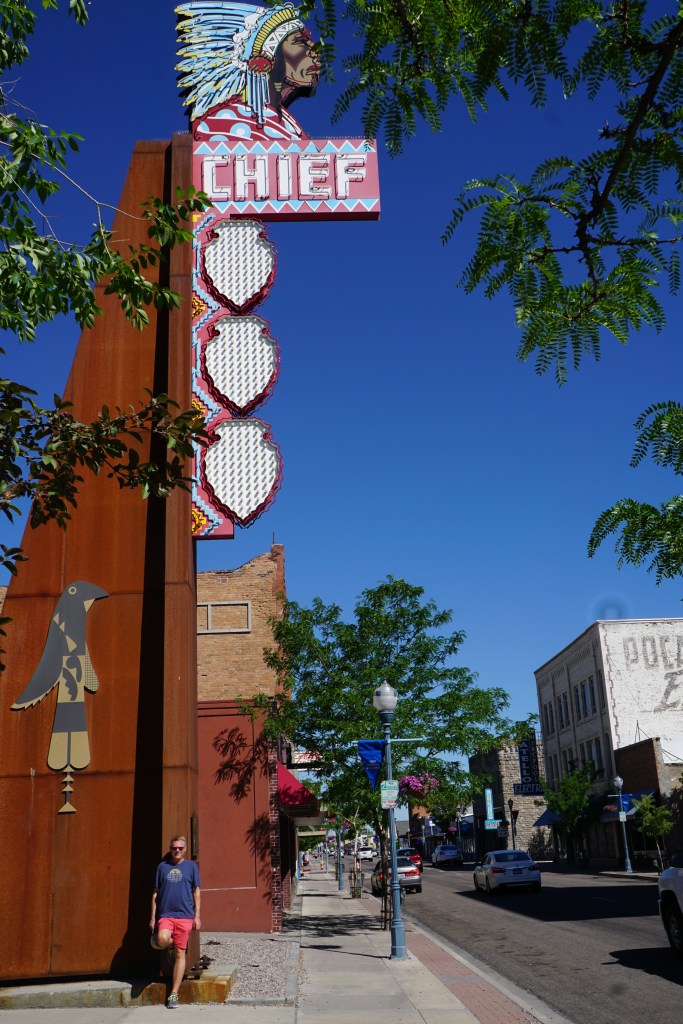
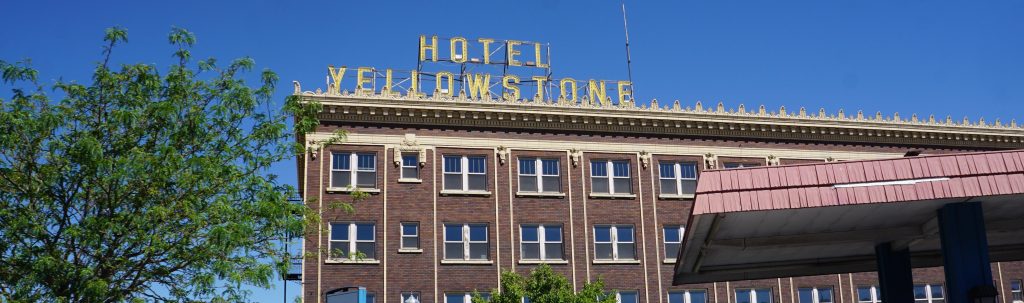
For the next few hours, Tom and I roamed the streets of Pocatello. We took photos outside the local high school, paused at the site of the Chief movie theater (it burned in 1993), inquired about the repurposed status of the Hotel Yellowstone, and gazed through the windows of an abandoned Greyhound bus depot.
In front of a thrift store with a rainbow flag in the window, we had the nerve to stop two young men (one was wearing a Schitt’s Creek T-shirt) to ask them what it was like to be gay and grow up in Pocatello. They hesitated for a moment but discovered Tom and I … a couple and a couple of writers … had no ulterior motives. We simply wanted to know what it was like to live there; I was mining future story ideas.
So, they obliged. They told us they had carved out decent lives, gone to a local college, and made friends in their community, though–they confessed–it was tough being openly gay in predominantly Mormon Idaho and Utah. We thanked them for stopping to say hello and sharing their insights. We wished them well and said goodbye.
Before Tom and I walked back to our rented SUV to continue on our journey, we made a final stop in a local art gallery. That’s where I spotted a speckled-blue glazed mug, made by a local potter. It bears the shape of the state of Idaho. I couldn’t leave without buying it. I needed a physical souvenir of the spontaneous moments Tom and I shared in a town that might have been mine, but never was.
Since that unforeseen experience in June, I have consumed dozens of cups of coffee and tea from my Idaho mug–many while writing the next blog post or poem. In a sense, the sight of the mug stirs my creativity, especially when I need a jolt.
As Christmas approaches and 2021 draws to a close, this artful mug reminds me how important it is for all of us–writers or not–to leave the highway of life from time to time. To keep our minds open to diverse people and unfamiliar worlds. To explore the “what ifs” that keep us wondering where the next story will come from. To seize the Pocatello moments when they appear and imagine the possibilities of what they may inspire in 2022 and beyond.