It’s rare for me to rise to witness morning’s first light. But, at 4:45 a.m., I was thirsty and warm.
I peeked from our den window through the Sunday slats of our vertical blinds to see a line of doves welcome the day.
I heard the clock ticking in the hall, then reclined on the couch to check the news feed on my phone.
Soon after, I heard Tom stir. Bleary eyed, he staggered into the living room to check on me.
We resolved to soothe our parched throats with cold water from the fridge. That’s what you do in June in Arizona. You hydrate over and over again to endure the heat of the desert.
By 5:30ish, we had summoned enough energy to pull on our shorts and socks, tie our shoes, grab our floppy hats and sunglasses, and step toward the alley that would lead us to the Crosscut Canal and Papago Park.
Just outside our door, our neighbor Glenn happened by with Mason and Katie, his two gentle-giant Newfoundlands, tugging him along.
We exchanged good mornings. Tom patted and stroked Mason’s long back. Katie and I locked eyes. Most of the puppy’s brown fur has turned black. Soon she we will be full grown.
We said our goodbyes. Tom and I continued walking west. When we reached the canal at 5:45, my phone told me it was 84 degrees–on the way to 113 by late afternoon.
Scorching, yes, but any person in their right mind knows to stay inside (or at least cover up) when the heat spikes. June isn’t a month to be savored in the Sonoran Desert. It’s simply one to survive.
By 6:00, we had walked past a few joggers and the full length of the fence that separates the canal path with the Desert Botanical Garden. We decided to stop and turn around.
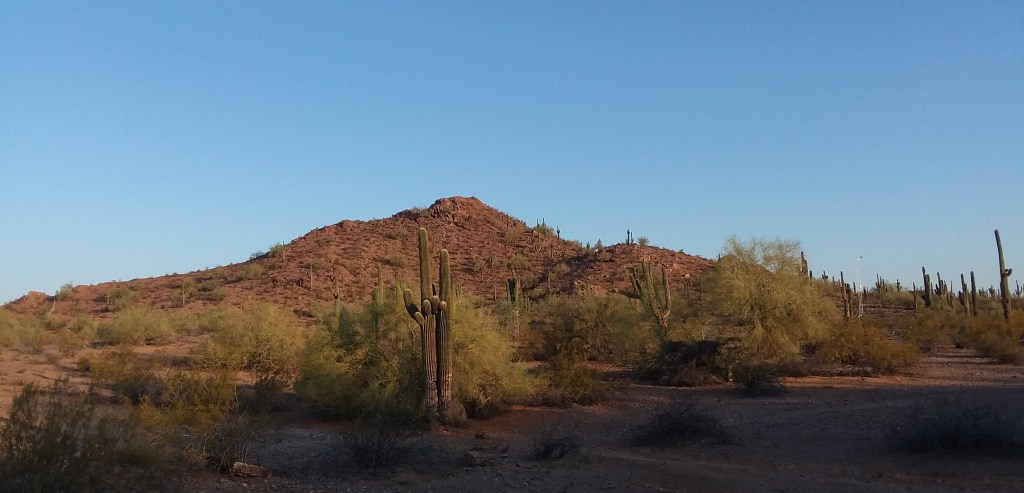
The sun was beginning to bear down. I paused, peered west, pulled my phone from my pocket, and captured the saguaros waking in the morning light.
On our return trip, a few monarchs danced and perched on the milkwood near the fence line. Tiny lizards skittered by as we chugged water from our bottles.
We retraced our steps, crossed the pedestrian bridge, welcomed shade from the Roadrunner apartment complex, turned the corner down the alley, and headed east to our cozy two-bedroom condo.
Ruminating from the threshold of Medicare eligibility, this is how I choose to remember my parents in their later years: content and seated side-by-side, listening to jazz in St. Louis on the banks of the Mississippi River.
If you’ve read my first book, you know Helen and Walter had a complicated and volatile relationship. But by the mid-to-late-80s–after the heavy lifting of jobs, child rearing, and the daily swirl of Dad’s bipolar rants–they found a more peaceful coexistence.
Together they rediscovered a love of Dixieland jazz under the shadow of the Gateway Arch. They tossed their metal folding chairs (latticed with yellow and white nylon strips) into the trunk of their sensible sedan, drove downtown, and evidently walked to this shady spot.
It happened just steps away from the cobblestones that led to the now-defunct Admiral Boat and historic Eads Bridge that still connects Missouri and Illinois. (If you squint, you’ll see them both in the background.)
I remember the faint giddy-up in my fading father’s voice over the phone. He described what he and Mom experienced … together … rousing, organic music played by happy people. Trumpeters, saxophonists, trombonists blaring on a summer’s day.
Best of all, all that glorious music was FREE. Products of the Great Depression, Dad’s and Mom’s frugality was baked into their souls. Thankfully, it transferred magically into mine.
Years later, as I gathered coupons for a trip to the grocery store with her in northern Illinois, my mother would smile with pride at me from under her floppy hat and announce, “You’re a good shopper, honey.”
I imagine my sister Diane took this photo. At the time, she lived near them in the St. Louis suburbs. I had already moved to Chicago in 1980 to launch my communication career and create a life with Jean, then my wife.
Busy in my late twenties and early thirties, I was happy to know of a positive change in my parents’ relationship, but I think I dismissed their newfound glee and meeting of the minds. Digging deeper, maybe I felt sad that I missed this better chapter.
Now that I’ve arrived at the station in life depicted in this photo–greater leisure time, protective hats, contentment, wisdom, and personal vulnerability–I see more clearly how tragic it is that we Americans dismiss the trajectory of our older citizens in favor of youth and vitality.
It seems like it should be the exact opposite. Other cultures figured that out long ago. Why is it we are so hung up on viewing the activities and lives of young people as more valuable? The Kardashians? Please!
It boils down to money, marketing, and economics. Companies know that many seniors–then and now–live on fixed incomes. They don’t have the disposable income they once did. But what a shame to diminish their worth and assign it a dollar amount.
This story–part nostalgic reflection, part rant on agism–was prompted by rejection. No, I wasn’t job hunting. Five months ago, I entered my latest book in a contest with Memoir Magazine. I had high hopes I might at least get some sort of honorable mention.
On Sunday, I received a cordial, strategically written email thanking me for my submission. Then the other shoe dropped. Though my set of whimsical-and-serious Arizona stories and flights of fancy made it through the initial review, it didn’t land on the short list.
I have to admit. I was crestfallen. I think I’m a damn good writer. I also realize the competition was stiff. I lead a relatively ordinary life with my husband. At this point, my life isn’t filled with drama. It’s my calling to write stories about what it means to age, what it means to be gay, what it means to exist and survive in this crazy world.
Yes, as my husband reminds me, there will be other opportunities, other contests to consider. But especially now (three weeks after testing positive for Covid and fortunately recovering) none of us knows what tomorrow will bring.
All of this brings me back to Helen and Walter … and all that jazz they enjoyed under the Arch in the 1980s. I suppose I’m better off just enjoying the moments of life as they appear, singing when I want to sing (I have a brief solo in my June concert with the Phoenix Gay Men’s Chorus), writing what I want to write, and caring less about accolades and awards.
I guess I’m better off giving thanks for the perspective that comes with aging. No matter whether the literary world or the greater universe ever recognizes what I have to say, I have my life. I have my voice. I have my writing.
As we cross through the middle of May, it’s time to share the conclusion of the story of Millie, my neighbor, and our relationship that spanned twenty years Along the Back Fence.This story first appeared inAn Unobstructed View.
***
In the summer of 2016, I waved to Millie as I worked in my backyard. Frail and in her nineties, she was seated on a chair on her deck with Yolanda, her live-in caregiver, nearby.
Millie motioned to me to meet them by the back fence. With Yolanda at her side, it took a few minutes for Millie to navigate her way there. But there was never any doubt she would make it.
When she arrived, I leaned out to give her a hug and she rested her head on my shoulder. She told me she loved to admire the perennial blooms that came and went, but her gardening days were over. She simply didn’t have the physical energy for it anymore.
Nonetheless, she wanted to gift the only remaining rose bush in her yard to Tom and me, if I would dig it up from her side of the yard and find a place to transplant it in our backyard.
Though I didn’t know where we’d find room for the bush, I was touched by the gesture. I grabbed a shovel from the garage, wedged the toe of my shoe in the cyclone fence, and boosted myself over onto Millie’s lush lawn. Tom found our wheelbarrow and lifted it over too.
It took me nearly thirty minutes of digging before I could pry the stubborn bush out of the ground. But it finally succumbed. When I left Millie’s yard with the bush, I thanked her and gave her another hug and kiss on the cheek. We had come a long way from our early compost pile days.
“I love you guys,” she said.
“We love you too, Millie,” I assured her.
Before Tom and I moved the following summer, we waved to Millie a few more times from our backyard whenever we mowed our lawn and saw her perched on her deck, presiding over her floral-filled memories.
And the red rose bush–which we carefully transplanted alongside our driveway and propped up with tomato stakes and chicken wire–took root and bloomed before we departed.
We left it there for the new owners to enjoy.
It only seemed fitting.
***
In late October 2019, Kathy–another of our Mount Prospect, Illinois neighbors–called with sad, but inevitable, news. Millie had passed away, just a few months shy of her 100th birthday.
In May 2022, I fantasize that somewhere in a distant universe, Millie is preparing to serve up a Tupperware container filled with ambrosia salad for all her friends.
In reality, seventeen hundred miles west of my previous Illinois home, it is our Arizona neighbors who are about to be dazzled by a summer-long perennial display compliments of our double-red desert rose bush.
The arrival of this much-anticipated splash of brilliant color is something Millie would have loved.
On Tuesday, April 26, 2022–the day Vice President Kamala Harris tested positive for Covid without symptoms–I did too. But with symptoms: fever, headache, congestion, and fatigue.
Ironically, it was also about the same time Dr. Anthony Fauci declared we had crossed the pandemic bridge and entered an endemic world, where the disease rate is at an acceptable or manageable level.
At that moment, I don’t think I believed him. There was nothing acceptable about the situation for Tom or me. As you might suspect, my husband soon developed the same symptoms.
For the following week, Tom and I took turns playing nurse, while pumping a flurry of fluids, acetaminophens, decongestants, and attaboy encouragements.
We slept sporadically, texted my sons and our sisters, cancelled plans with friends reluctantly like two men waving from a desert island, and zapped each other endlessly with our digital thermometer–up to 102.3, down to 99.6, up to 101.2, down to 100.2, finally back to 98.6.
We rode out the storm together, quarantining in the privacy of our cozy desert condo. Two kind friends left wonton soup outside our front door, as they were dealing with their own trauma of repairing their car so they could drive east. Back to their home in New York.
Another sweet neighbor placed a bar of chocolate on the mosaic tile table between our two wicker chairs. I snatched it as soon as she left. She knows about Tom’s dark chocolate addiction and my wedding vow in 2014 to keep him supplied with a bottomless supply of it.
Through it all, I think you could characterize our Covid cases as mild, though my anxiety flew through the roof for seven days. I shuddered to think what the outcome might have been.
What if we hadn’t been fully vaccinated and boosted twice? What if I could never see Tom’s smiling face again or gaze into his beautiful blue eyes that nearly match the bluish-gray t-shirt I gave him that doesn’t fit me anymore?
***
About a million Americans have died of Covid complications.
We are two of the lucky few. But this isn’t a story about luck. It’s about truth and science.
The vaccinations we lined up for protected us, kept us out of the hospital, and forestalled any notions of two more premature deaths. By following the science and getting inoculated, we dodged two bullets. The universe rewarded us exponentially by giving us more time together.
This morning it feels like we are both back to normal. We’ve been symptom free for several days. We returned to the gym for the first time in nearly two weeks. I mounted the treadmill. Tom opted for the elliptical. I smiled as I watched Tom exchange his hellos with a community of patrons and familiar faces.
But earlier in the morning–when I leaned out the front door to water our succulents under the fig tree–there was a defining moment with an extraordinary animal, which I won’t soon forget.
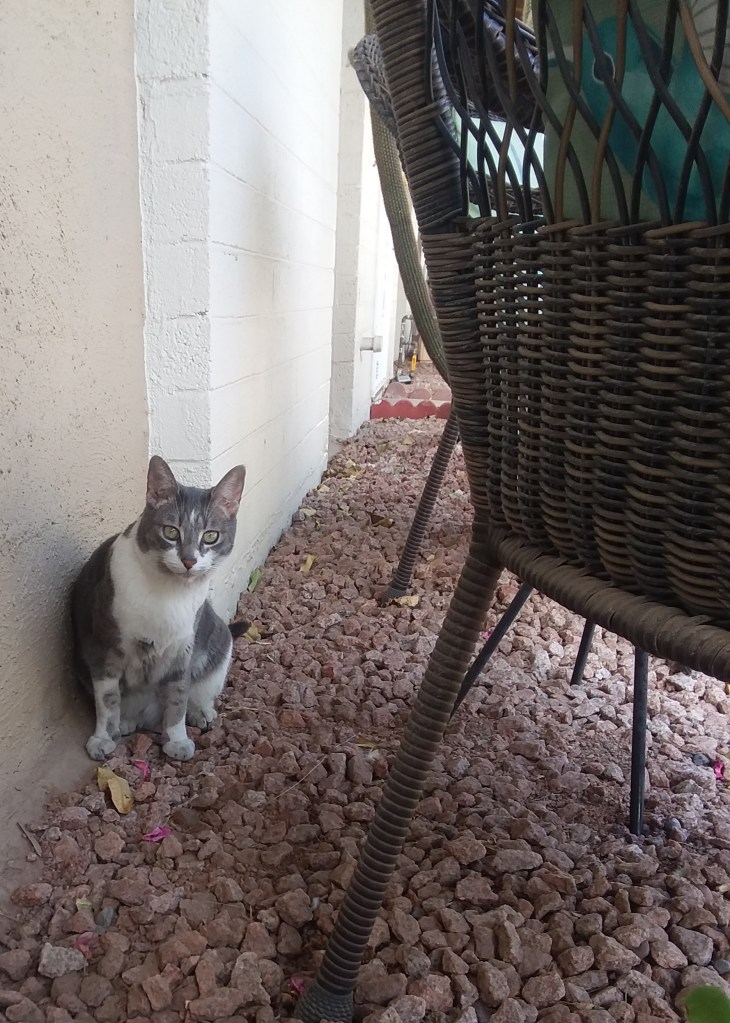
Our feral friend Poly, the community cat that has lived on the fringe of life for a long time, meowed and came closer to me than she ever has. After a brief photo opportunity, Tom handed me the bag of cat treats and I sprinkled a dozen or so on the sidewalk.
Once I closed the door, Poly left the shelter of our eaves–safe in her own moveable, quarantining bubble–and approached the kitty kernels.
Unceremoniously, she glanced up at me as if to say, “I understand how you feel, all worried and frayed. But you’ve made it through. You’ll get by. You’re a survivor. Just like me.”
Today marks four years since I began my blogging adventure and obsession.
When I launched this website May 4, 2018, I wanted to promote my books and develop a greater literary presence online. Over time, that goal has been superseded by a desire to share topical stories about the extraordinary, meaningful moments and people that cross through one ordinary life.
It’s been no simple task nurturing my creativity in this chaotic world. Blogging has given voice to my memories, ideas, values, observations, and opinions. More than that, in my sixties it has become the organic structure I need to stay sharp, sane, hopeful, and whole.
Most definitely, blogging was my salvation during the height of the pandemic. The whimsical and serious tales I spun at my laptop became fodder for my fourth book about two gay men forging a new life in the Sonoran Desert.
This post is #324. That’s an average of eighty-one stories per year or nearly seven each month. Written at all hours of the day and night. Concocted in all sorts of moods: happy, sad, angry, reflective, devastated, and triumphant.
Thank you for joining me on this circuitous journey. If you follow me, you know I often share poetry. Frequently, I like to include photos that ignite and inspire an idea that might otherwise never have surfaced.
For nearly thirty years, I’ve written poems and stashed them in an expanding file. It’s a body of work that encompasses the highs and lows of six-and-a-half decades and chronicles the profound role nature plays in our everyday existence.
As I approach my 65th birthday in July, I feel an impulse to publish a collection of my most vivid poems. Would such a chapbook interest you? As you ponder that question, I hope you enjoy reading this verse.
When I wrote it May 7, 2016, Tom and I were Midwesterners–more familiar with blooming iris and peonies than spiky cacti and monsoon rains.
As an Illinois resident on the threshold of more change than I could imagine, I wanted to remember the imagery of past Mays.
My, our world has changed.
***
May’s Bouquet
Arriving welcome, clean and fresh, reflecting skies grow amorous.
Crisp at dawn, bursting through, captured by a mother’s view.
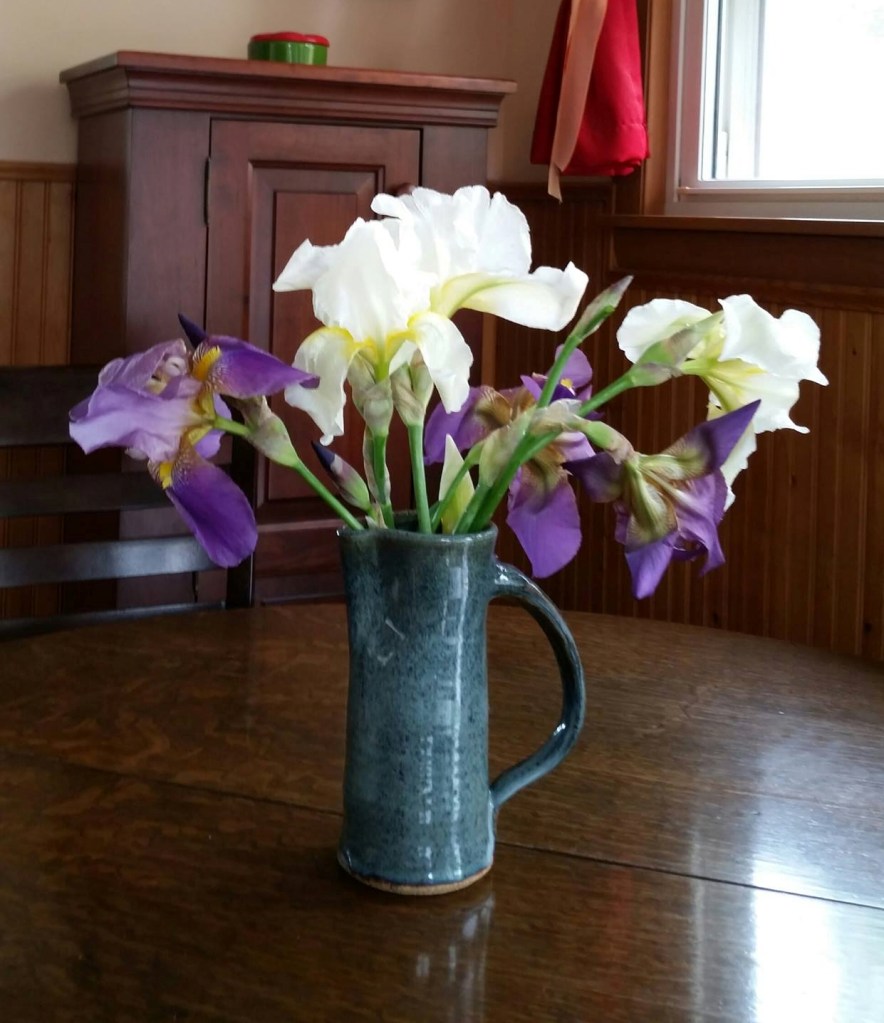
Blooming iris, sweet repose, ducklings lined up in a row.
Bounding blooms, fast and pure, veiled peonies pink allure.
Reaching high, bred for speed, stretching out to take the lead.
Calm til dusk, an even pace, ushered in the rain’s disgrace.
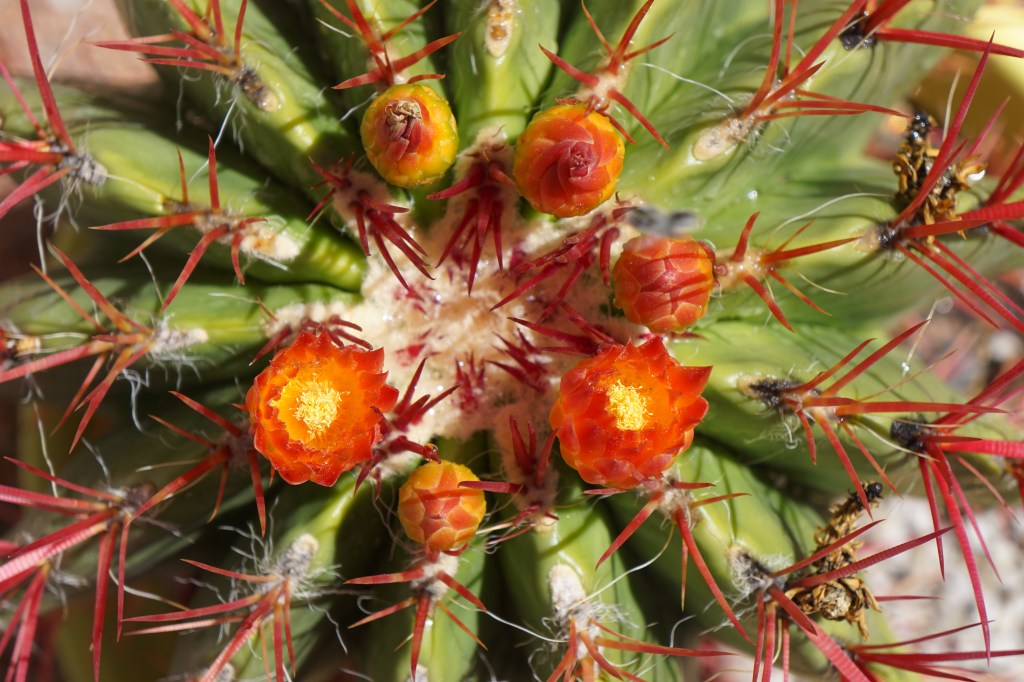
As friends flock north and east, mockingbirds replace them. Stationed high in palms, they announce April is ending. Below, something bright is blooming.
We have reached our annual pivot point. We teeter between welcoming warmth and undeniable heat. There is no turning back to milder yesterdays.
Even in this age of escalating temperatures and worries, nature reminds us we are strong survivors. In a vast, blurry land of thorny problems, we shine.
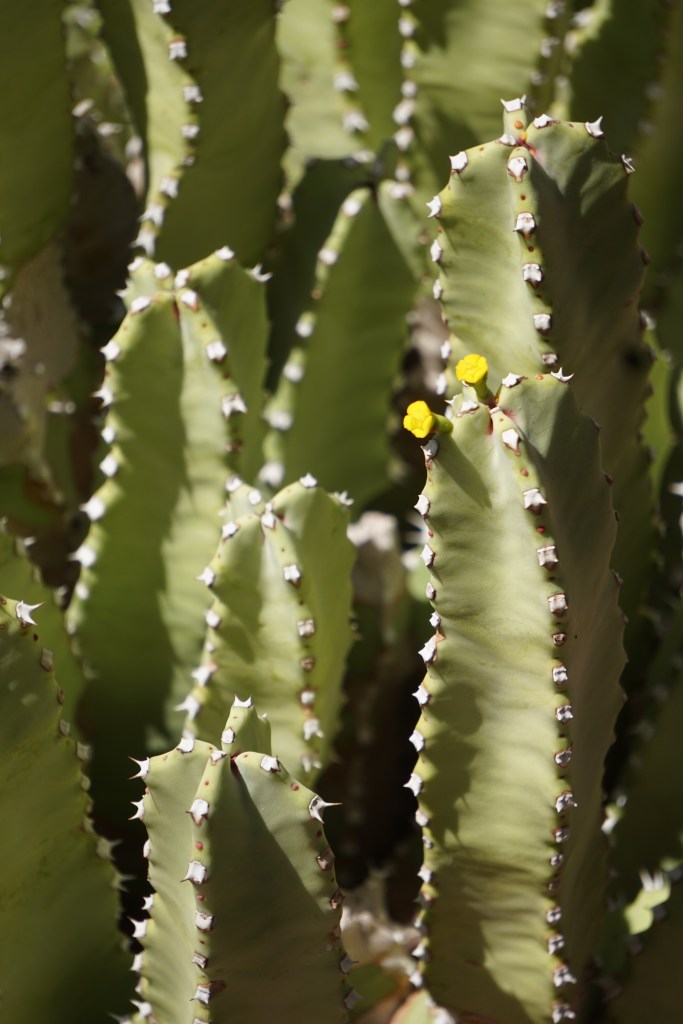
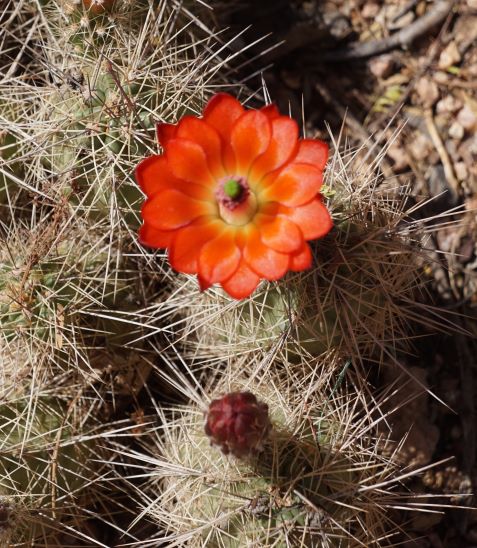
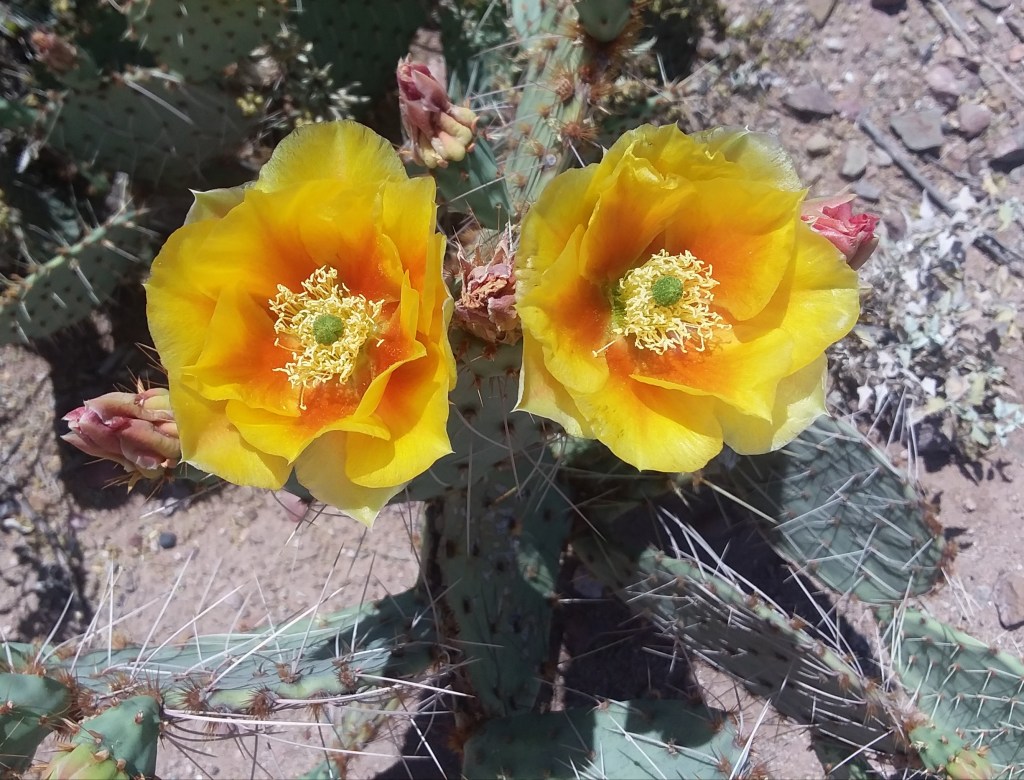
On April 28, 2022, the Moroccan Mound cactus outside our door bloomed for the first time.
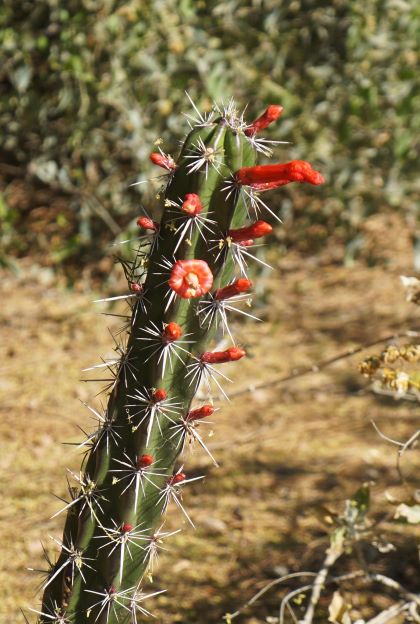
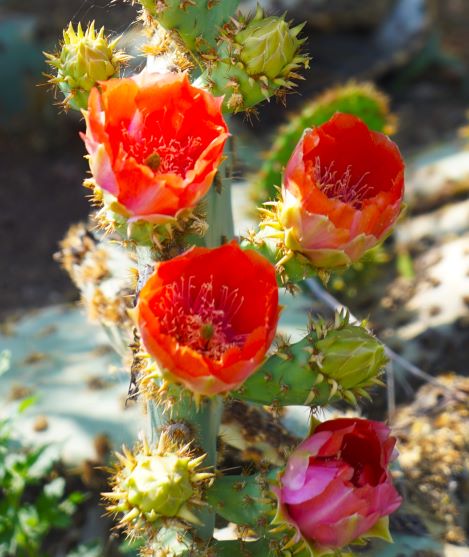
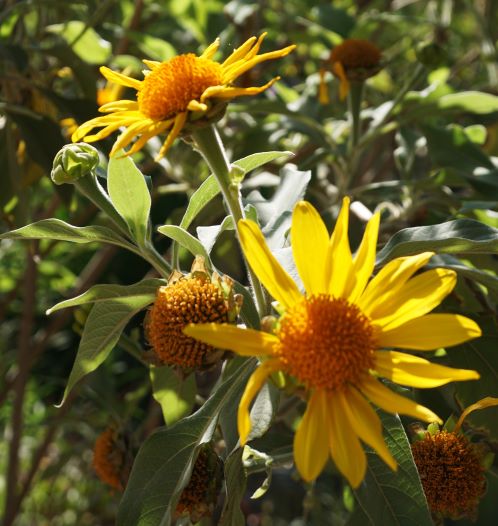
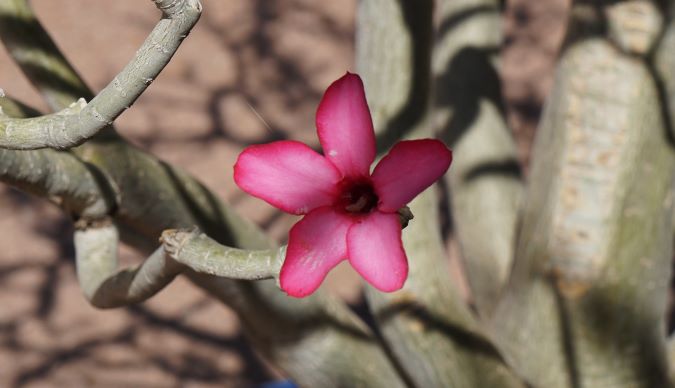
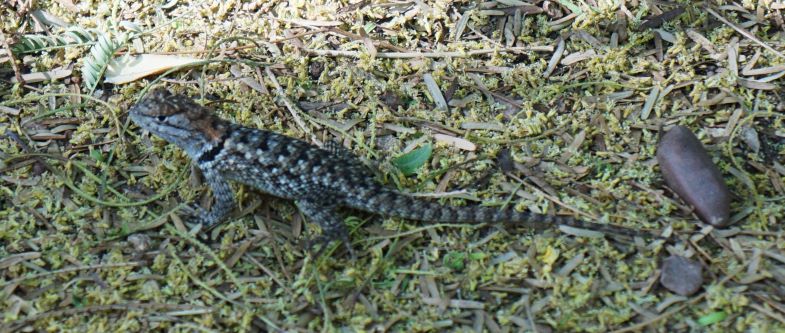
Through the weekend, the Tunnel Fire has burned 21,000 acres just north of Flagstaff, Arizona. But a few hundred miles south, the Valley of the Sun is ablaze in a kaleidoscope of color. In April’s final week, blooming wildflowers, cacti, and desert roses–and a resilient reptile–answer an age-old question. Yes, despite our warming planet, rare beauty remains in the Sonoran Desert.