Category: Photography

What Is Remembered Lives

Long after the most cherished and meaningful moments pass, our memories–good, bad, vivid, and foggy–endure like saguaro cacti dotting the terrain of our vast consciousness.

***

Over the weekend, the lone survivor of my mother’s prized African violet plants died. Tom and I discovered it withered on the window sill of our Scottsdale condo. I supposed it succumbed to the heat of the desert’s afternoon sun.

I’ve chronicled the journey and symbolism of Mom’s African violets before–here and in two of my books: From Fertile Ground and An Unobstructed View.

The plants originated in St. Louis in the 1980s or 1990s. They traveled to the Chicago area with Mom when she moved north to be closer to my sister Diane and me in 2004.

When Mom died in January 2013, Diane divided up the remaining African violets–one a shade of pink, the other a purplish blue–for the two of us to carry forward and display in our respective homes.

For the next four years, my cuttings flourished in our Mount Prospect, Illinois home. In early July 2017, Tom and I wedged them in a laundry basket in the back seat of our Hyundai Sonata. We brought them west from Illinois to our new home in Arizona.

On the road, after I suffered a mild heart attack in St. Louis and couldn’t lift anything for a few weeks, I remember my husband carrying the African violets between our car and hotel rooms in Missouri, Oklahoma and New Mexico to protect them from fluctuating temperatures overnight. It’s a memory I will always treasure.

When we arrived in Scottsdale on July 12, 2017, Tom and I deposited the plants on our southern-facing window sill. The pink African violet lived two more years before petering out in 2019. Now the purple one is gone too. It last bloomed ten months ago in January 2021 … eight years after Helen Johnson’s passing.

Of course, I feel a twinge or two of sadness. This marks the end of a long, circuitous chapter, connecting my present life to the past memories of my nature-loving mother.

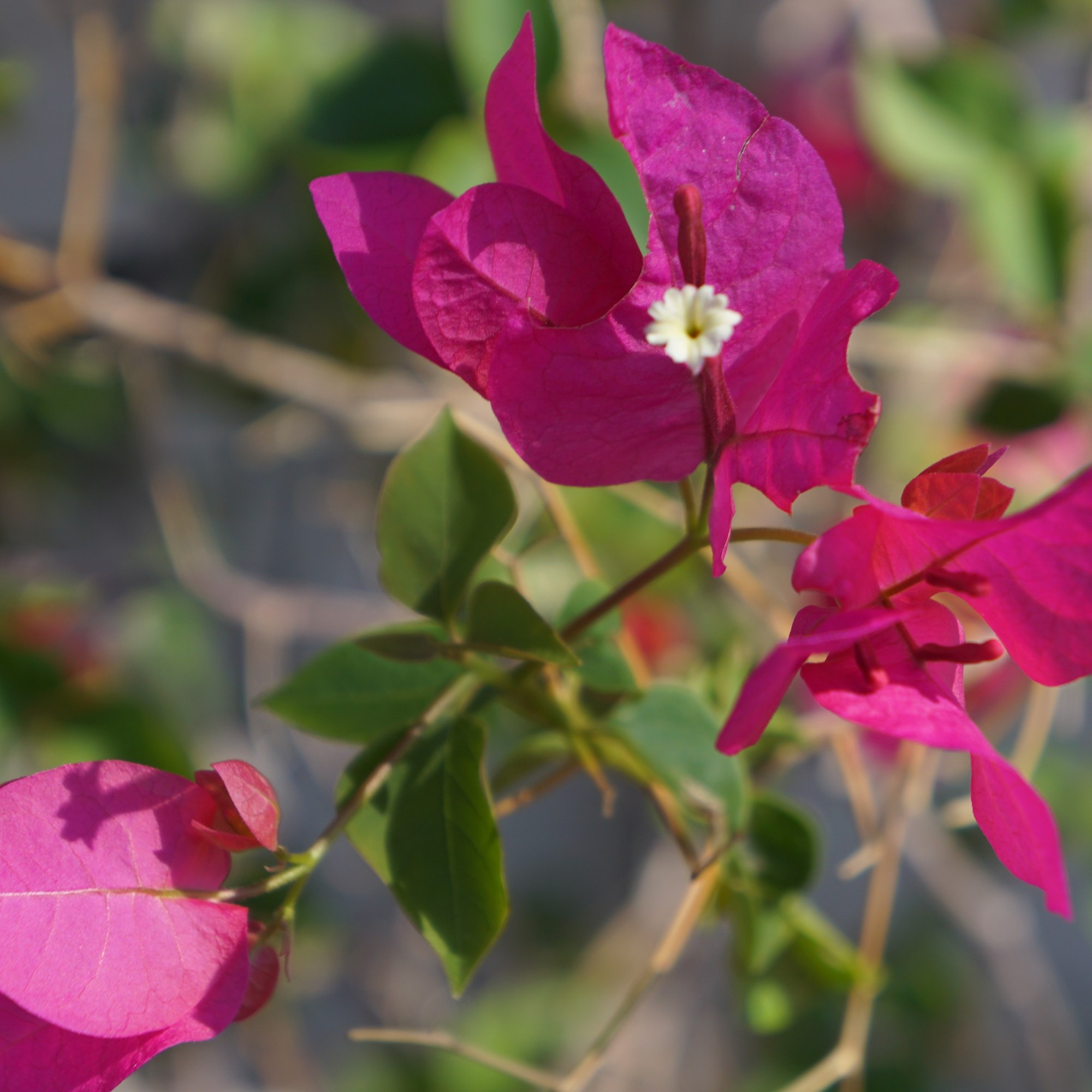
But, at this point (four-plus years in my Arizona home), Tom and I feel rooted in the desert. We have chosen and nurtured plants that embellish our life in this warm, dry place: bougainvillea, desert roses, succulents, even a bird of paradise.

To be sure, though their physical evidence is gone, the stories of the traveling African violets and the memories of their captivating blooms will be with me as I hike the rises and falls of the Sonoran Desert with Tom.

What is remembered lives.

Late October in the Valley of the Sun

Late October days are warm here; nights and early mornings cool and invigorating.

Fall is far more subtle in the Valley of the Sun than most of the rest of the Northern Hemisphere. October doesn’t flash across the horizon and announce its presence in burnt orange, blood red and sunflower yellow.

You need to be a non-traditionalist to observe and appreciate autumn in the Sonoran Desert. To watch the tangelo, grapefruit and lemon fruits transition slowly from green to yellow. They will be ripe for the picking by late December or early January, and we will have juicy citrus and fresh lemonade once again.

As a crew of two arrived to put the finishing touches on our bathroom remodeling project inside, outside Blanca played troubadour, curling and rolling on the sidewalk.

With her frolicking assistance–and the more obvious aid of my telephoto lens–I captured these golden images on a quiet late Wednesday morning in our Polynesian Paradise community.

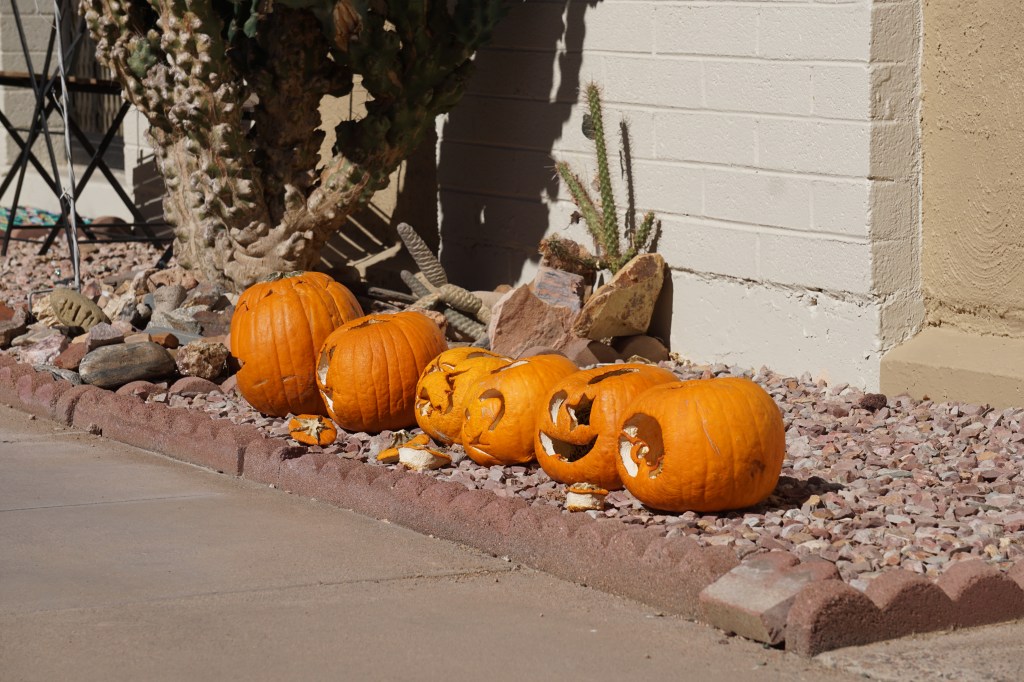
To be sure, Arizona’s desert is alive with distinction in late October. Where else might feline shenanigans, the promise of citrus, blooming hibiscus, and Halloween coexist?

Alive Again

The arrival of October 2021 has signaled a significant and welcome change … a downtick in temperatures and an uptick in tourist activity in Old Town Scottsdale, Arizona, to bolster the hungry tourism sector.

Scottsdale, Arizona is alive again. September’s scorching heat has been replaced with cooler October mornings, ideal-and-swimmable-eighty-degree afternoons, shorter days, and dazzling sunsets framed by palm trees gazing west.

Tourists are back too–in relative abundance, in posh pools, in surviving restaurants, in newly-minted hotels, on mountain bikes, on sidewalk scooters, on rolling streams of Segways.

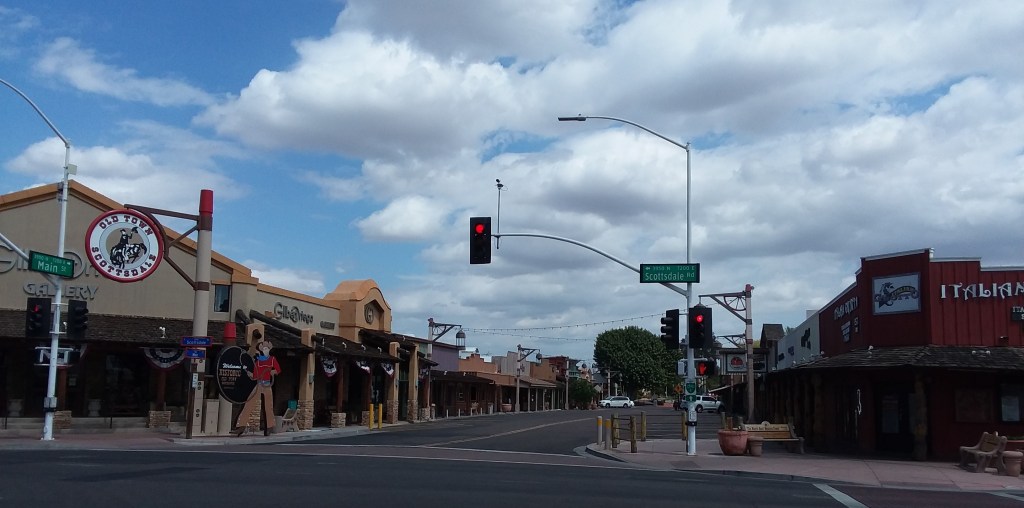
It’s a far cry from the desolation of April 2020 when Old Town Scottsdale was first shuttered by a raging pandemic that persists eighteen months later, though many imagine it has vanished.

A view of an empty, ghost-town-like Old Town Scottsdale, Arizona … looking east down Main Street … near the start of the global pandemic in April 2020.

Blue-eyed Blanca

There’s a new girl in town. She twists and tumbles between the gravel and spiky cacti on the otherwise ordinary sidewalk outside our Sonoran door.

Blanca purrs, arches her back, and flashes penetrating blue eyes. Of course, scraps of sliced turkey, ramakins of milk, and endless strokes of her fur follow.

We might have scooped her up, but discovered Blanca belongs to a neighbor. That misfortune won’t prevent our pampering or shared shenanigans.

In Autumn

After living through four summers, autumns, winters, and springs in Scottsdale, Arizona, I’ve decided autumn is my favorite time of year here.

Most 100-degree temperatures are vanishing from our ten-day forecast. The monsoons have packed their bags and left town with the dusty drama and wet havoc that only unexpected and unwelcome guests incite. And large flocks of snow birds have yet to fly in.

Mornings are a notch or two cooler–in the 70s–than they were in late summer. Perfect for sipping coffee outside under the eaves.

Did you know we’re frost-free? You won’t find icy substances on our pumpkins or windshields. Ever.

You won’t witness a foliage kaleidoscope here either. Or crunch through piles of leaves. Or rake. Stay away if that’s your thing.

I didn’t intend for this to be a Scottsdale Chamber of Commerce ad (though it sounds like a back-handed, bizarre one). But if you like plenty of pool days, pleasant dry mornings for hikes, warm-to-hot September and October highs, shorts, flipflops, spiky saguaros, and startling sunsets long after Labor Day is a distant memory, come to the Valley of the Sun.

Do it in autumn.

I captured this autumn sunset on September 25, 2020 at Papago Park in Phoenix, Arizona, a mile from my Scottsdale home.

Midwest Reunion: Part One

It rained most of September 4, 2021, in eastern Missouri. Fortunately, scattered-but-heavy showers didn’t wash away our plans.

At nine a.m., Tom and I drove north thirty minutes from our room at Hampton Inn Valley Park to visit my cousin Phyllis and her family in their St. Charles, Missouri home.

After we exchanged hugs, Phyllis’ husband Tom prepared homemade blueberry-and-apple pancakes. We volleyed catch-up stories between the kitchen and family room, while their golden retriever Truman sidled up to Tom and me on the couch, placed each of his front paws in our laps, and stole our hearts.

For the next two hours eleven of us–spread across three generations–gathered around a rectangular kitchen table framed by angled windows and a lush backyard.

The two Toms, Phyllis and I represented the senior set. Amanda, Austin, Kelsey, and Bryant smiled and shared stories of their thirty-something, heavy-lifting, career-and-child-rearing years. They shepherded and cradled: three-year-old Ava, who danced around the table in her princess gown; adorable one-year-old Violet, who is learning to walk; and baby Brooks born in July with a head of hair.

It was a treat for me to spend time with them all, the entirety of my Johnson family connection that remains in the St. Louis area.

Thankfully, the reunion around Phyllis’ and Tom’s table superseded our previous encounter at an Italian restaurant in St. Louis on July 5, 2017. It was one day before I suffered a mild heart attack as Tom and I walked to Left Bank Books in St. Louis’ central west end to see my book of light-hearted Missouri stories on the shelf.

***

When we left St. Charles just before noon, I pointed our rental car southeast. Tom typed the address for Jefferson Barracks National Cemetery into his smartphone to find the most direct route to my parents’ graves.

Ironically, our most recent visit to the rolling hills of white marble grave markers on the banks of the Mississippi River was four years ago–the same day we last saw Phyllis and Tom. But on this occasion–September 4–we were in town on what would have been Dad’s and Mom’s seventy-third wedding anniversary.

I had hoped to stop somewhere for a small bunch of flowers to leave on their graves. That never happened. Instead, we arrived at the cemetery entrance empty handed, made two right turns and one left, drove past the chapel, traveled up a hill, and parked our rental car under a tree.

About the time we arrived, the rain paused. We walked a hundred steps or so to DD 355, where Dad and Mom are buried near a large oak tree. As Tom and I surveyed the grounds and knelt quietly, he spotted two acorns side-by-side on top of the wet grass on Mom’s side of the marker.

Before we left, I placed the acorns on top of the marker in honor of their wedding anniversary.

I suppose even in the solemn solitude of a cemetery the strength of our family ties endure and life goes on.

My parents, Walter A. Johnson and Helen F. Johnson, are buried at Jefferson Barracks National Cemetery south of St. Louis, Missouri. Walter was a sergeant in the Army, who served in World War II. Mom and Dad met on January 4, 1948 and married on September 4, 1948 in St. Louis. Walter died one week shy of his eightieth birthday, on November 26, 1993. Helen passed away on January 26, 2013. She was eighty-nine years old.

The Catbird Seat

In the dog days, our community cat gets top billing. From the crook of our gnarled fig tree, Poly waits to swat an unsuspecting finch ready to extract seeds.

Staring me down through our den window, Poly assumes this enviable position at seven o’clock a few mornings each week. I tap on the glass to dissuade her. I can’t bear to see a finch fall or for Poly to end up behind bars.

On other days, Poly plays it safe. After the sprinklers stop hissing, she rests on the ground in the shade under the eaves or cavorts with her taffy-colored feline friend.

Poly is that hard-to-corral library book I don’t own, filling each page with texture and character. As summer winds down, she plots in the catbird seat. I don’t want our chapters to end, but someday soon I suspect they will.

Crossing Lakes of Consciousness

Every time Tom and I cross the wash at Vista del Camino Park, we inhale the distinctive, earthy bite of three sycamores planted in a sea of palms and eucalyptus.

It’s a pleasant surprise to learn sycamores survive in the desert. Hybrids growing by lakes and streams are like midwestern transplants: leaner, smoother, tanner. Don’t be fooled. Their roots are one-hundred-percent sycamore.

***

Fifty years ago, in the summer of 1971, I traveled for the first time to a much wetter region of the country with my father, mother and sister. We left St. Louis for a week to explore the Great Lakes.

Our vacation was by no means a full immersion. It was more like motel-and-diner hopping on a shoestring budget as we headed north and then east.

Dad insisted we stop on the north side of Chicago just long enough to dip our toes in frigid Lake Michigan. From there, we continued on in our Chevy Biscayne to Milwaukee, Wisconsin to board a car ferry and cross the same lake together.

In the eyes of this fourteen-year-old passenger, the ferry was faster and far more intriguing than the prospect of driving a few hundred miles on congested highways past Illinois’ and Indiana’s stained ports, steel mills, and smoke stacks.

Under a bright sky, we squinted at the lake’s choppy waters and stood on the top deck of the boat with other passengers, while below attendants squeezed vehicles into the hull for ballast. Gulls danced and dipped in the air above.

Our destination? Ludington, Michigan … a town I knew nothing about on the eastern shore. I remember Ludington as a quiet, clean community with deep beaches. We didn’t stay long. Dad wanted to drive us north to Sleepy Bear Dunes National Lakeshore, where I would climb more steep midwestern piles of sand than I could imagine.

Eventually, we made our way farther north to Sioux Ste. Marie and zipped up our jackets. A cool summer breeze buffeted our hair as we watched international vessels line up and pass through the Soo Locks that connect Lake Superior and Lake Huron.

Toward the end of our weeklong Michigan adventure, we found our way south to Greenfield Village and the Henry Ford Museum in Dearborn. I felt the sense of history there, but none of it compared with the exhilaration of the ferry ride near the start of our trip.

Fifty years later, it is the lake Dad and I crossed together–and the real and metaphorical channels we navigated as father and son–that I remember most.

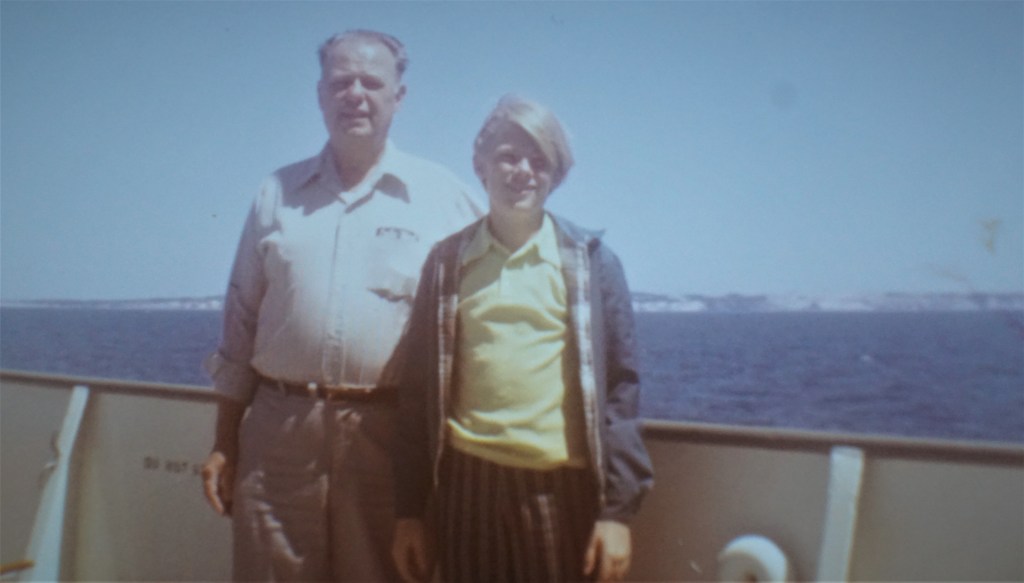
Dad and me on the ferry crossing Lake Michigan from Milwaukee, Wisconsin to Ludington, Michigan in July 1971.

Another August Day

I breathe outside, inside the oven. Slices of spiky beauty abound above and below me, never beneath. Summer’s puppies pad and pant. They dream of full water bowls and cool tile floors.

Finches pluck seeds like Olympic gymnasts mastering Tokyo’s uneven bars. Thrashers ravage ripe figs in a hot breeze. Doves dare to take a Sonoran dip in the remnants of monsoon rains.

What else could it be? Another August day.