Sadly, today is another day that 2,396 Americans will lose their lives to heart disease — America’s #1 killer.
I know the personal pain of heart disease. If you follow my blog, you know I’m a heart attack survivor. (I wrote a book about that trauma, which happened on my sixtieth birthday).
Fortunately, by changing my diet, losing weight, exercising regularly, practicing yoga, sharing my story of survival, and following the recommendations of my cardiologist, I now lead a much healthier life.
I also remember our family’s difficult plight after my father suffered a heart attack sixty years ago at age forty-nine. Though he lived another thirty years, he was never quite able to regain the vigor and enthusiasm of his pre-coronary life.
This year and next I am focusing my fundraising and volunteering efforts to help the American Heart Association (AHA), culminating with the Phoenix-area Heart Walk on March 25, 2023.
Today–on this Giving Tuesday–I’ve already donated $250 to the AHA (which includes the 2022 royalties I have earned on all four of my books).
Join me in making a difference by clicking on the link below and contributing to the Phoenix Chapter of the American Heart Association. Until midnight tonight, every dollar you give will be matched to be worth twice as much.
The dollars you give will go to important scientific research that will help save the lives of babies born with heart defects and adults coping with life-threatening heart disease.
I really do believe that our hearts beat as one when we share our time, money, and talents. No matter which charities you chose to support, thank you for the difference you make in your community on this Giving Tuesday … and every day.
It wasn’t an unpleasant sound that stirred my brain before 5 a.m. It was a light desert wind filtering through our tubular chimes that woke and evoked me and distant sounds. Reassuring, comforting ones from suburban St. Louis.
***
Mom was always the first one up.
From my middle bedroom–a connecting space with two doors wedged between the hall and kitchen–I could hear her creaking on linoleum, shuffling in slippers, opening drawers, turning on the dial to the radio, reaching into the refrigerator, sizzling bacon in a skillet, placing the kettle on the stove, and pouring hot water over a teaspoon or two of instant coffee.
Then, at night–when the day was done–it was the splash of rain and swirling sensation of fallen leaves on the metal awning outside my bedroom window that soothed me. Or Happy’s soulful howl, craning his neck as he responded to the calls of other dogs in the neighborhood.
As I huddled under the covers on a twin bed, these sounds beckoned me to sleep. Now, as I remember them and write about them on my laptop, they exist and endure.
Certainly, the memory of them gets richer because they have been gone longer. They rise to the top like the cream of milk, while what happened yesterday might easily be forgotten tomorrow.
I would be lost if I couldn’t listen and remember the sounds of the past. In the moment they were invisible, fleeting footprints. But they echo in my thankful memory … lasting reminders of the texture, meaning, depth, people, and love I hear and remember.
I confess. Like many independent writers, I dream of dozens of rave reviews online from readers and a steady stream of royalties.
But that rarely happens. Most of us are not that fortunate. It doesn’t mean our books aren’t worthy of praise and financial rewards. It just means that it is difficult to remain visible and compelling without a marketing budget. The literary competition runs wide and deep in the Amazon distribution ocean of new and old releases.
Even so, behind the scenes–when someone buys one or more of my books on Amazon–royalties appear on my author dashboard and land magically in my checking account a few months later.
It isn’t the amount that makes me happy. (It’s usually a trickle, no more than five or ten dollars, though in a rare month the dollars can spike higher.) It’s the acknowledgement that someone continues to derive value and meaning from one of my “very creative, heart-warming stories.”
That phrase in quotes is the way the staff at Barnes & Noble in Mesa, Arizona describes my books on their shelves. When I saw this, I felt honored because the motivation for my writing comes from my heart and the myriad of emotions–love, loss, happiness, discontent, hope, disappointment–we all feel.
Recently, a development director with the American Heart Association (AHA) in Arizona asked if I would be an Executive with Heartto help raise money for their 2023 campaign. Without hesitation, I said “yes.”
Technically, it runs from February 1 through March 24 and concludes with a Heart Walk in the Valley of the Sun. But on “Giving Tuesday” this year (November 29) I will donate the $200 in book royalties I have earned in 2022 to the AHA to help support the fight against heart disease and stroke. An anonymous donor will match that amount.
Ironically, in the coming few months, I will remember both of my parents who succumbed to heart disease. My dad died after suffering his second heart attack on November 26, 1993. It was the day after Thanksgiving twenty-nine years ago. My mother passed on January 26, 2013–nearly ten years ago on a frigid Illinois morning–due to congestive heart failure.
In their honor, I will increase my $200 donation to the AHA by $10 for every purchase of An Unobstructed View between now and November 29. In case you don’t know, the book is a personal account of my transformative journey with Tom, moving from Illinois to Arizona in 2017 and navigating a frightening detour in St. Louis in between. It’s my heartfelt story of survival.
I hope you’ll purchase a copy for yourself or a friend. When you do, you will fill my heart with joy and benefit others–like me–who are building strong hearts and longer, more meaningful lives.
Over the next few weeks as we celebrate the Thanksgiving holiday in the United States, I encourage you to also give thanks for those you love and those who love you … and the heart that beats inside you every moment of every day.
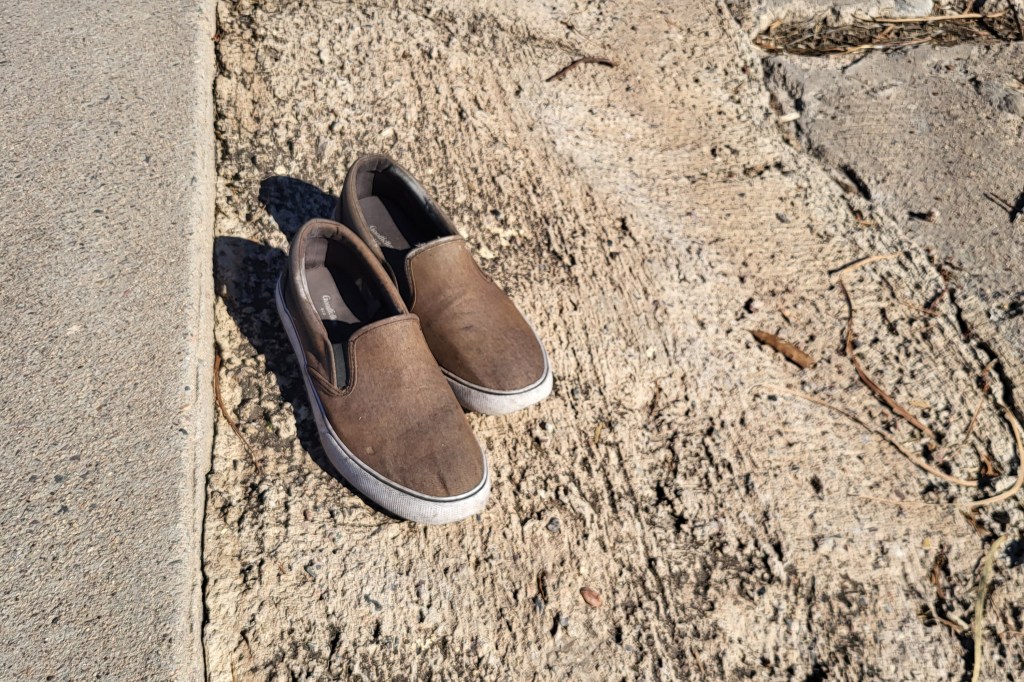
November 3 was a brisk Thursday morning in Scottsdale, Arizona. But when I walked past these empty soles on the edge of Camelback Road after my workout at the gym, I felt an eerie sensation. It was almost like learning a close friend had died or vanished.
My focus shifted immediately away from our cooler-than-average temperatures in the Valley of the Sun. I felt compelled to pay tribute to the remnants of a life well lived. To stop and take this photo and–three days later–write a story about what I saw and felt in those moments. Because that is what I do.
What would provoke someone to leave behind a pair of decent canvas shoes on the side of the road in such an orderly fashion? Did they suddenly outlive their usefulness? Perhaps they were simply an extra pair a homeless person could no longer carry. Or the sensible shoes were forgotten by someone who waited for a bus and was ready to advance to the next station in life.
For my storytelling purposes they are a metaphor for the sense of displacement many of us feel in our country. We’ve been pushed to jump out of our shoes from the criminal escape antics of our past president and the barrage of political ads spewing venom through our devices. Whatever the case, we wait for the next shoe to drop as we anticipate the outcome of the mid-term elections.
If you follow my blog, you know I am a positive person. Generally. I’m thankful for the beauty of nature that surrounds me and the quieter life my husband and I have carved into the desert landscape.
But as a nation we teeter on the precipice of despair. The future of democracy–as I’ve known it for my 65 years and 181 years before that–is definitely on the ballot this coming Tuesday.
Tom and I have already voted. Nearly two weeks ago. I checked the boxes alongside the names of only those who will protect our democracy. Not the high-profile election deniers in Arizona running for senator, governor, secretary of state, and attorney general. We need to believe them when they tell us they wouldn’t necessarily respect and honor the will of the majority of the people.
If you live in the U.S., be sure to vote on or before Tuesday. When you do, I hope you will support those who uphold our beloved U.S. Constitution.
Otherwise, I fear that the close friend who disappeared without their shoes is actually the democracy we once loved before we allowed it to vanish.
I lead a fortunate life. I don’t mean that in a material, financial or social sense; like many of you, I am concerned about inflation, the bear market, high gas prices, potential fall-out from the mid-term elections, and global and domestic horrors eroding personal freedoms, savings and investments, and a general sense of security for you and me.
Still, I acknowledge I have more to be thankful for than most people: a modest-but-comfortable home in a warm climate; a loving and supportive spouse; two adult sons who are gainfully employed and contributing members of society; a diverse community of friends; and the time to pursue and develop my literary and musical interests.
Plus, I’m a relatively healthy, sixty-five-year-old male. I make it a priority to exercise regularly, eat smart, and see my doctors as needed. Though it’s been more than five years since I suffered a mild heart attack, I haven’t forgotten the trauma of July 6, 2017, or dismissed the gratitude I feel for that team of doctors and nurses at Barnes-Jewish Hospital in St. Louis, Missouri–people I likely will never see again.
That painful experience no longer defines me. It has paled somewhat. Yet it informs my choices, perspective, and sense of gratitude. It has morphed into a badge of survivorship, which I feel an obligation to share with the universe through my writing and day-in-day-out personal encounters.
Occasionally, I receive a fund-raising or participation request from an Arizona contact with the American Heart Association (AHA). We met in 2018.
A few weeks ago, she asked me to share my story of survival–virtually–with employees of a large retail organization on October 17. To explain that donations to the AHA aid lifesaving research that allows heart and stroke survivors–like me–to enjoy longer and more complete lives.
So that’s what I’ll be doing on Monday. Twice … once in the morning; once in the afternoon. Telling my story of survival in three to five minutes to a large group of employees via video conference.
I figure it’s the least I can do to pay it forward and possibly ease the pain for some other unsuspecting man or woman, who with the help of the AHA might live longer, breathe more easily, and witness a few more breathtaking sunsets in the Valley of the Sun or elsewhere.
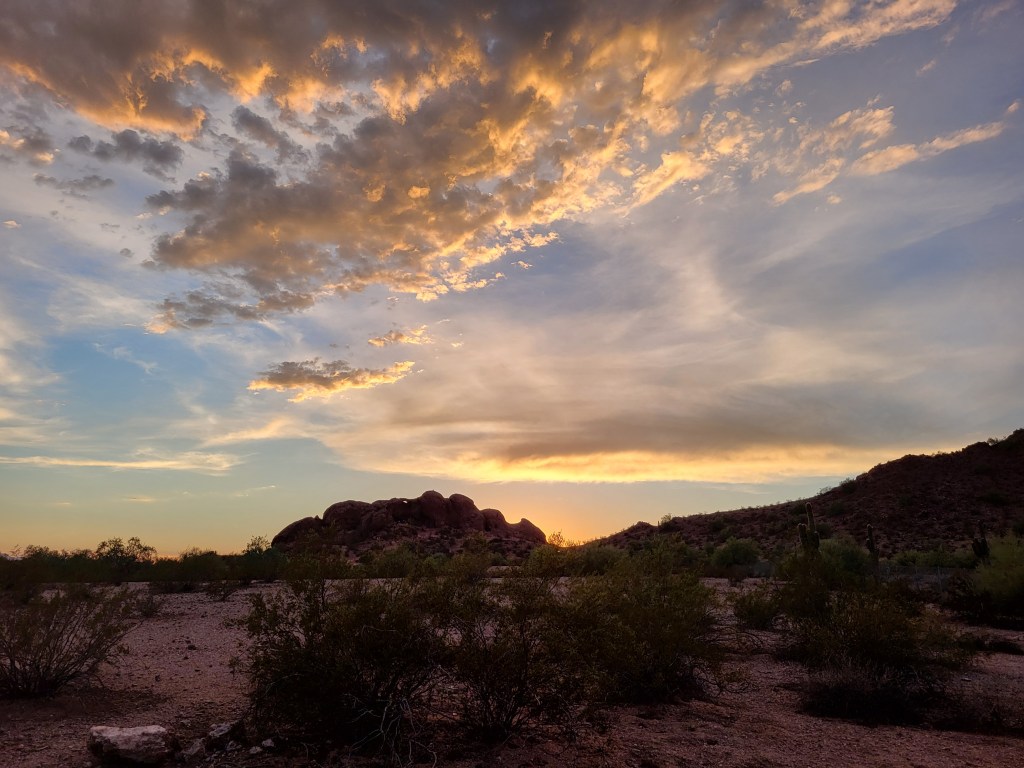
On October 5, 2022, I captured this Sonoran sunset in Papago Park on my walk with Tom a mile from our home in Scottsdale, Arizona.
When I auditioned for the Phoenix Metropolitan Men’s Chorus in August 2017–six weeks after I suffered a mild heart attack on the way west–we were both on the cusp of a transformation.
At sixty, I was searching for a new place to renew my love of singing (after seven years performing with Windy City Gay Chorus in Chicago); the chorus was twenty-six, preparing to spread its wings and a few years away from embracing a more public gay identity: the Phoenix Gay Men’s Chorus.
On Saturday evening, October 8, I stood on stage with about fifty of my chorus mates at the Kroc Center in south Phoenix. We performed our Mosaic of Voices concert. It was our tribute to triumphant stories shared by members of the Phoenix LGBTQ community–told through the power and inspiration of music.
I wore two hats for the occasion. Figuratively, I mean. I sang second tenor from the top row of the risers and realized a new creative wrinkle; I wrote the lyrics for three of the original songs we performed in the first set: Hope’s Trail, Our Second Act, and Mighty Mosaic. David E. Weck composed all of the music beautifully.
The first two were adapted from compelling, emotional, and personal stories submitted by Garry and Nico, members of the community. When I first read their stories in 2021 and began to develop lyrics, I felt it was important to honor and include many of their actual words in my lyrics. In turn, David then nurtured and shaped them into music.
The third song, Mighty Mosaic, began as a poem I wrote, specifically for the Mosaic of Voices concert. I created it to represent the rich, diverse, and sometimes-circuitous lives we lead in the LGBTQ community.
After last night–with its unveiling on stage before an appreciative audience of a few hundred–you might be inclined to call Mighty Mosaic an anthem. (It certainly felt inspiring for me to write it on June 2, 2021, and then sing it on October 8, 2022.) It celebrates who we are and what we believe. Here it is in its original form, before my words met David’s artful music.
***
Mighty Mosaic (Copyright 2021 Mark Johnson)
Morning, noon, and night, the fabric of our winding threads and uncertain spools form a fluid tapestry of brilliant and imperfect hues.
The pathways of our lives weave. This is who we are. This is what we believe.
In the heat of the day, our worn but sturdy strands lead us down rabbit holes, but–if we keep the faith–the enduring threads carry us through.
The pathways of our lives weave. This is who we are. This is what we believe.
We may travel from a foreign home or body, but when our identities emerge, they awaken our lonely spirits, they blend beautifully.
The pathways of our lives weave. This is who we are. This is what we believe.
Our jagged journeys–our truth trails from the pain of stark midnight to the peace and stillness of lavender daybreak–make us mighty.
The pathways of our lives weave. This is who we are. This is what we believe.
Gay, trans, straight or bi–black, brown, or white … single, attached, or married … young, old, or in between–this is our mosaic and the moment we celebrate what it means.
The pathways of our lives weave. This is who we are. This is what we believe.
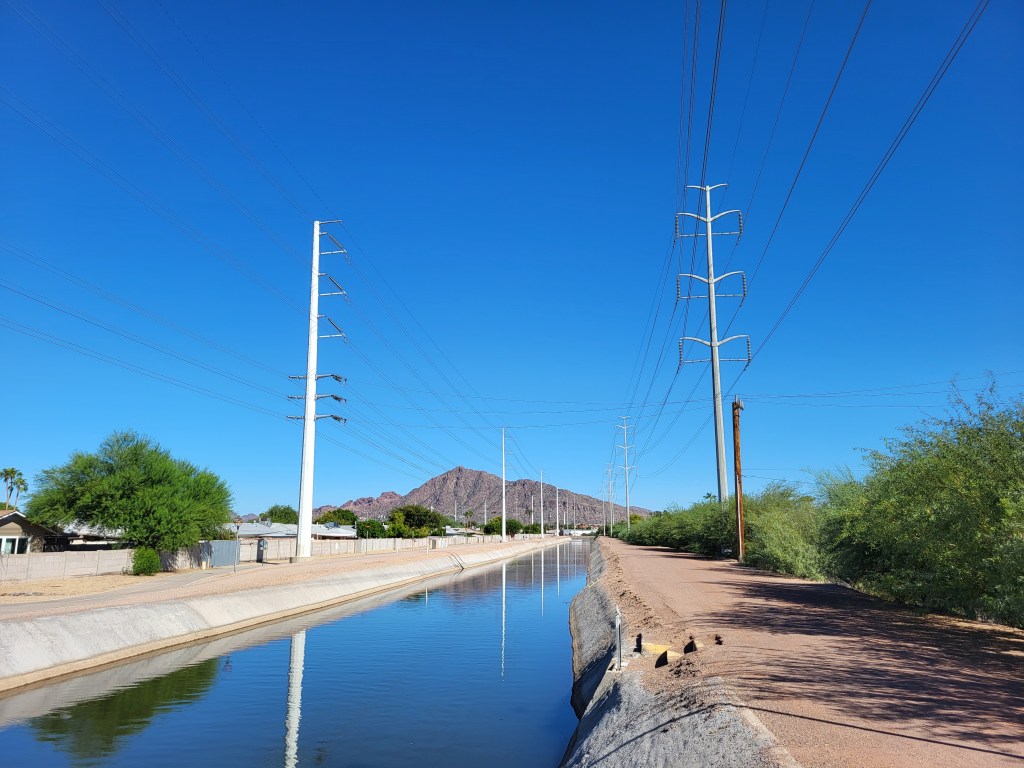
Sunday’s touch of soreness in my right arm–from Saturday’s latest Covid booster–didn’t deter me from capturing 5,266 steps along the Crosscut Canal and this blue-sky, north-facing view of Camelback Mountain from the bridge.
It was the calm I needed and inhaled to organize my thoughts. Away from the world but planted firmly on it. Serenaded by a few distant Sky Harbor departures, slow stream of bikes buzzing by, and family of Gambel’s quail rushing down the embankment for Sunday brunch.
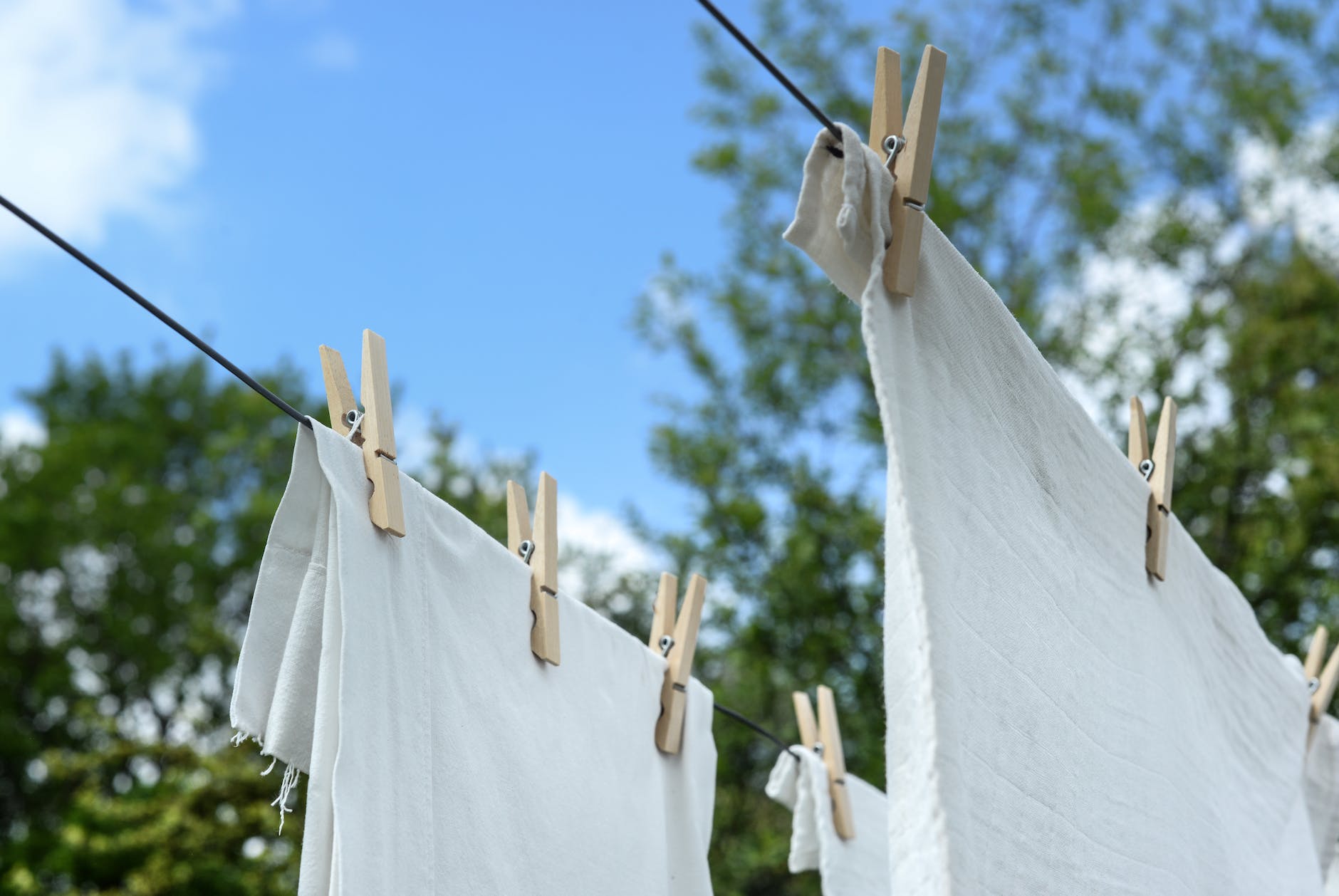
It was laundry day. So, this morning, Tom and I grabbed our pouch of wooden clothespins and walked five hundred steps or so to the landing behind our condo clubhouse.
For the next five minutes–shielding our eyes from the penetrating sun–we stood on the concrete there, hanging our just-washed, delicate shorts and shirts on the community clothesline to dry in the desert breeze.
Call me old fashioned. But I don’t mind doing this. In fact, I enjoy it. Especially as fall approaches and the air begins to cool.
More important, the plastic-coated clothesline connects my present life to my past. It represents the resiliency I’ve watched, absorbed, and carried forward.
It reminds me of the family members I’ve lost, but still love, and the survival instincts they instilled in me sixty years ago. What follows are excerpts from my book, Tales of a Rollercoaster Operator.
***
It was my second week of kindergarten, and I was just beginning to adjust to a new routine. On a warm and breezy mid-September afternoon in 1962–September 13 to be exact–I left my Mesnier School classroom and stepped aboard my regular bus for the trip home.
Within ten minutes, the driver arrived at the top of South Yorkshire Drive. She opened the door and several of us scampered down the stairs. I waved goodbye to a few remaining classmates still on board.
The driver closed the louvered door and pushed ahead. I meandered home. It was no more than a five-minute walk up our block and our driveway. Then, in an instant, a breathtaking late summer day transformed into an early fall for our family.
I saw my mother standing just beyond the backyard gate. She was wearing a sundress, lost in thought, uncoiling clean, damp towels and sheets from a laundry basket. Happy, our beagle-mixed hound, was out of reach too. He was sniffing the ground and frolicking miles away, it seemed, along the back fence.
“Your father’s had a heart attack.” Mom recited her words slowly and deliberately, like a woman treading deep water searching for a longer breath.
I didn’t comprehend what she had to say. But it couldn’t be good news, I thought as she plucked wooden clothespins from a pouch. She was working to keep her ragged emotions and the flapping sheets in check, preparing to clip wet linens to parallel plastic-encased clotheslines that stretched east and west across our yard.
Soon we walked into the house with our empty white-lattice basket, and I learned more. Dad had become ill on day two of his new job as a porter at McDonnell-Douglas. He was helping a coworker lift an airplane nosecone. Suddenly, he felt a sharp pain in his chest. He was rushed to Deaconess Hospital on Oakland Avenue near Forest Park. That’s where he would recuperate for the next month …
Each time we visited Dad, he was bedridden. I couldn’t comprehend what could keep my father lying in one location for so long–unable to toss horseshoes, fly kites, or drive us to parades or ballgames. But Dad insisted he would rebound.
Like the popular song from Bye Bye Birdie that played on the transistor radio near his bedside, Dad told me, “Son, I’ve Got a Lot of Living to Do.”
***
The next decade was difficult for our family. Watching Dad drift away physically and emotionally, filled me with anxiety. He never recovered fully, though the man who fought in World War II and the Battle of the Bulge soldiered on until his death in 1993.
Meanwhile, my mother kept our family afloat financially. She went back to work in March 1963 and did her best to balance life at home and in the office. When she died in 2013, she left behind a legacy of wisdom that I cherish and share.
Watching my parents toil produced a silver lining. Seeing them tread deep water for all those years gave me something I never imagined: the will to face my own personal challenges, standing tall as a proud gay man, and surviving my own heart attack on my sixtieth birthday.
Of course, it all began in the suburbs of St. Louis in September 1962. That sagging clothesline swayed. But it never snapped.
And, here in the Sonoran Desert in 2022, another clothesline sways 1,400 miles west.
Few films adeptly tackle the subject of aging. (Sure, it isn’t sexy or glamourous. But, if we’re lucky, it’s something we all must learn to navigate and accept.) Harry and Tonto is the exception.
Art Carney won the Best Actor Oscar in 1975 for his remarkable performance as Harry Coombes.
Released in 1974, the movie–directed by Paul Mazursky–tells the story of a seventy-plus, stubborn-yet-vulnerable, retired teacher and his trusty cat Tonto. They are forced to leave their Upper West Side New York City apartment after their building is condemned.
Their odyssey leads them from New York to Chicago to Los Angeles (with a few fascinating side adventures) in search of a new home.
This is much more than a road trip movie with a stellar supporting cast: Ellen Burstyn, Larry Hagman, Chief Dan George, Melanie Mayron, Geraldine Fitzgerald, and others.
It explores the complicated relationships and conflicts that come with family, as well as the sometimes surprisingly rich and meaningful connections we form with strangers across the generations, who cross our paths without warning.
If you read my blog regularly, it shouldn’t surprise you that I love a story about an old man and a cat. (After all, I’ve come to discover the clever ways felines weave in and out of our desert community on any given day.)
It’s really the tenderness of this film, not just the cat, that cement this as one of Tom’s and my favorites in spite of its dated references to 1970s pop culture. Over the years, we’ve screened it six or eight times. We watched it again over the Labor Day weekend.
For instance, there’s a scene where Harry is required to confirm the identity of a long-time friend–a man with no family–who has passed unexpectedly.
Harry arrives to view the body and ensure his pal gets a proper burial. The stark sadness of the situation and the real emotions that surface touch me every time I see it.
As you may have guessed, Tonto’s co-starring appearance–and the tight bond between man and cat–is a symbolic device in the story that gives it depth. The animal is a sounding board/alter ego for lonely Harry, whose wife (Annie) has died years before we meet them.
Because of the cat’s existence and place in his life, Harry finds a way to safely articulate his fears and dreams … and, as viewers, we get a front-row seat to their narrative, homelessness dilemma, and a cast of colorful characters who lead them to unexpected places and realizations.
In 2022, it’s rare to find a contemporary film with both the heart and art of Harry and Tonto. But that doesn’t deter us from digging into our personal archives to find this gem.
Rest assured. There are no spoilers here regarding the outcome. Just gratitude for Mazursky and crew who–nearly fifty years ago–crafted a film that skillfully explores the unvarnished truth about aging.
Best of all, it’s a creative and emotionally honest tale about the adventures of a man and his cat.
The calendar says September, but August-like heat abounds across the American west.
Thanks to a dome of high pressure, triple-digit Septemperatures in the Pacific Northwest, California, the Intermountain West, and (of course) here in Arizona are expected through the Labor Day weekend.
In the desert, we know how to navigate the heat. Carry a water bottle everywhere. Slather on sunscreen. Wear a hat. Exercise early. Do your chores in the morning. Stay inside during the heat of the afternoon. Reemerge at sundown to catch another dazzling sunset.
But there are troubling resource ramifications for this region that lie beneath the stark beauty, beyond late-summer-heat inconveniences.
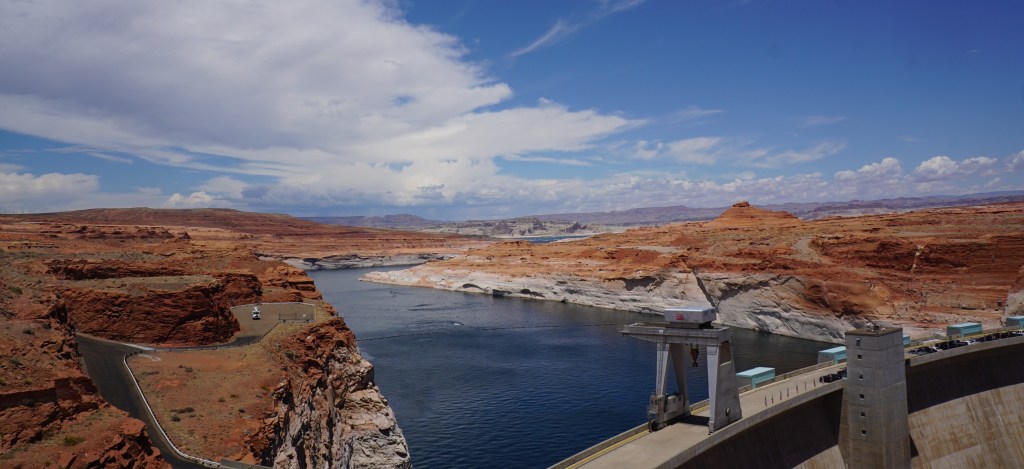
Lake Powell, our country’s second largest reservoir–it straddles the Utah and Arizona border–now stands at its lowest level since 1967.
According to a recent article on scitechdaily.com by Michael Carlowicz of the NASA Earth Observatory, on August 6, 2022, the water elevation of Lake Powell’s surface at Glen Canyon Dam was 3,535.38 feet. That’s 98 feet lower than August 2017 … and only twenty-six percent of its capacity.
In August, the U.S. Department of the Interior announced it will reduce the amount of water apportioned to states in the region.
Arizona will receive 21 percent less water from the Colorado River system in 2023. That is certain to hit farmers in the Grand Canyon State particularly hard.
Fortunately, water conservation efforts are trickling down across our state and communities like Scottsdale have begun to more aggressively manage the use of water. Plus, a wet monsoon season in our state has alleviated the drought in the short term.
But, with burgeoning population growth and climate uncertainties in this region, what will the future hold for the Colorado River basin and 40 million people–Las Vegas, Phoenix, Los Angeles, and San Diego–who rely on it for electric power and water?
In June 2021, I captured this photo of Lake Powell at Glen Canyon Dam in Page, Arizona.



 Mark Johnson Stories