Eight years ago this month, I left my communication consulting job at Aon Hewitt. Technically, I retired in January 2014, though I’ve hardly dropped off the face of the earth since then. I’ve simply escaped to the desert.
It feels strange for me to admit this: some details of my thirty-four-year communication career in Chicago–especially the most daunting moments with impossible clients–have faded. What I remember most are the creative accomplishments and closest colleagues.
Ironically, while our country has moved into a period of darkness and upheaval during the past eight years, I’ve transformed my life into one that more closely resembles who I am and what I value.
I’ve gotten married, moved cross country, survived a heart attack, dropped about forty pounds, found a new home with my husband, nurtured the artist inside, written four books and nearly 300 blog entries, coached both of my sons as they’ve navigated life and career changes, made a bunch of new friends in a warm climate, and evolved into a more contented person.
In that sense, trading my corporate life for that of an emerging, independent writer has felt more like shedding the weight of a familiar suit of armor to discover a more light-hearted, personal, and sometimes vulnerable existence underneath.
To mark the anniversary of my retirement–and subsequent literary emergence–I’m discounting the paperback version of my latest book, I Think I’ll Prune the Lemon Tree, on Amazon during the month of January.
Hopefully, this will be just the incentive you need to devote a little more time to reading in the new year.
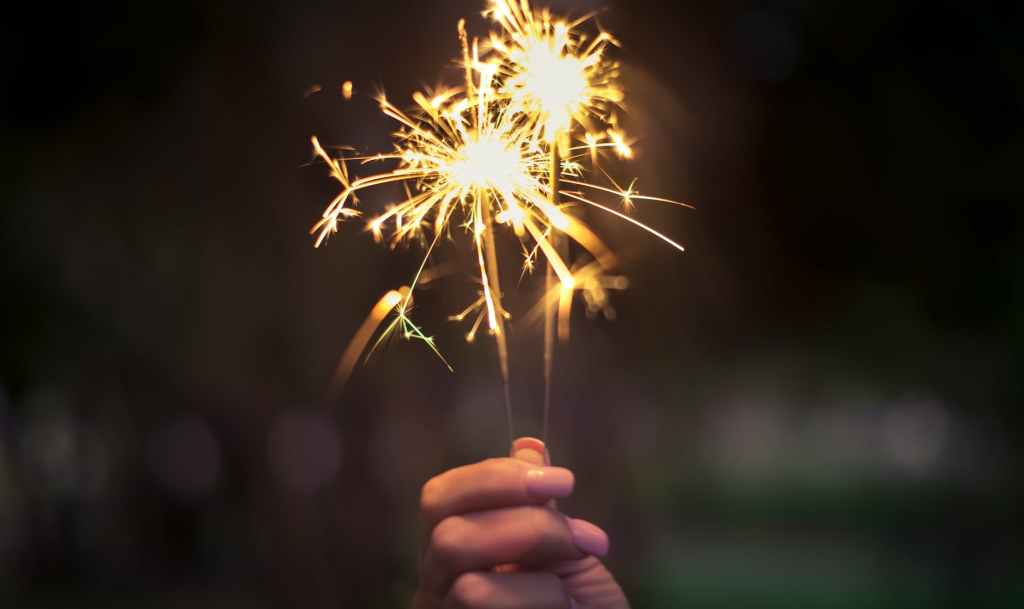
This is a true story about a chance encounter on New Year’s Day, January 1, 1962. It’s a testament to the good citizenship of my mother and father, who did the right thing sixty years ago.
The story, A New Year Resolution (I wrote it in 2017), fills me with hope and the warm possibilities of life even after seemingly awful things happen. It first appeared in Tales of a Rollercoaster Operator, my book of Missouri stories.
As we cross into 2022, I wish you good health and a few magical surprises to lighten your spirit.
***
Aunt Thelma was flush with frozen anticipation and prepared to toot her fringe-laced party horn. It’s how she felt every year. She had a new year resolution: to be the first out the door to inhale the cold remnants of December night air and replace it with January oxygen expectant with sharp promise and unassigned possibilities.
Thelma fumbled to secure the buttons on her worn car coat, snap her hat in place on the top of her wobbly bun, and race into the frigid Midwestern night. “Happy New Year,” she hollered leading her merry band out the door as the clock struck twelve. In an instant, the atmosphere from two distinct years comingled in her lungs and the clamoring began on cue.
Uncle Ralph, Mom, Dad, Diane, and I twirled our ratcheting noisemakers, flailed away with wooden spoons on pots and pans, and shrieked with glee. Magically, in an instant, the joys and regrets of 1961 were erased. Each of us had a fresh batch of winter air to contend with. It was January 1, 1962, in St. Louis, Missouri.
The frosty air told us it was too cold for the revelry to linger. By 12:15 a.m., we scurried back inside and returned our cockamamie thingamabobs and pointy hats. As Thelma and Ralph gathered it all and washed off the wooden spoons for safe keeping in the kitchen drawer, Dad and Mom broke the news to Diane and me. Our makeshift winter carnival was over.
With Dad behind the wheel, it was time to head home to South St. Louis County and our three-bedroom brick ranch in Affton. We had an hour-long drive ahead of us in our ’59 Plymouth.
Dad figured Hanley Road would be the most direct route. He could take the highway, but he didn’t want to contend with higher speeds and the potential for an anonymous, boozy driver veering head-on into his path. The thought of that was too much for his weary brain.
Under the whir of tires hugging cold pavement, Mom glanced over her left shoulder to check on the two of us in the backseat. Diane and I were beginning to fade. Mom knew we would be asleep soon. She and Dad were prepared to rouse us from our slumber once we pulled into the driveway. She felt comfort knowing we would need to be carried into the house and rolled into bed. She didn’t know there was more excitement coming before we trailed off to sleep.
A few minutes passed before something caught Mom’s eye between the high beams of an approaching car. She spotted a fuzzy figure up ahead a few hundred feet on the right shoulder. Someone was walking alone. From a distance, it could have been a man or woman. She and Dad couldn’t be sure.
Dad reduced his speed. As we approached, our headlights illuminated a bewildered young woman teetering on silver high heels, shivering under a skimpy mink stole thrown over her shoulders, exposing an emerald cocktail dress and too much skin on a cold night.
Mom verbalized what Dad was thinking. “Walter, I think she needs help. Let’s pull over and see if she needs a ride somewhere.” They rolled down their windows and waved her over to the car.
At first, the young woman’s eyes darted away. She could see a man was driving the car. But when she realized that an entire family was in the car, she relaxed a bit and approached on her fast-freezing feet.
“It’s so cold out, honey. Can we help you?” Mom offered through her partially open window. “Do you need a ride somewhere?”
“Yes,” she stammered. “I guess I do.” She grabbed the hinge of the back door and shimmied into the backseat next to Diane. “I was going home with a date after a New Year’s Eve party, and we got into a big fight. So, I got out. That bastard drove off and left me on the side of the road … Oh, I’m sorry about the language.”
“It’s alright,” Dad assured her. “We’re just glad we stopped. Point us in the right direction and we’ll get you home. What’s your name?”
“Oh, it’s Melba,” she confirmed. It was a name I’d seldom heard. Melba recited her address in Maplewood. By this time, any notion of sleep in our eyes was history. It vanished when Melba and her allure entered our world. We were wide-eyed and dumbfounded–captivated by her exotic name and slinky dress. Diane homed in on Melba’s beaded purse and shoes. I was mesmerized by her glistening green eyes, which flickered when cars flashed by. They matched her sequined gown.
Melba must have been an aspiring movie star or a lost character in a Twilight Zone episode, I thought. I wasn’t sure which. Either way, I was certain she was navigating a sudden detour on the road of life, trying to make the best of plans gone awry. She was craving silence in a secure sedan with no requirements, explanations, or assumptions.
From the front seat, Mom respected Melba’s need for quiet and distance. In the back, Diane and I sat motionless; we preferred to watch relief wash over Melba’s face. Dad focused on the tasks at hand: operating our vehicle and driving Melba home. He could tell the young woman was rattled. He wanted to return her home safely without fanfare.
Within twenty minutes, Dad pulled up in front of a tidy bungalow with white awnings and a steep front porch. This must be where Melba lived, I thought. Even though it was 1:30 a.m., all the lights inside Melba’s house were lit. I was thankful and relieved that her family had waited up.
With a flip of her hair from the top of her fur collar, Melba thanked Dad and Mom for the ride. She flashed a grateful smile, wrapped each end of her mink stole around her neck, patted Diane and me on the top of our heads, and braced for the cold air. She left the cozy warmth of our green sedan.
By this time, I had imagined a whole new life for Melba–a wandering, sensitive soul with a caring mother and father of her own, a nosey little brother, and a dream to escape her world and climb a ladder into a fairy-tale universe filled with brilliant stars.
Then, under the partial glow of a frosty January moon, I watched Melba ascend the concrete stairs, turn to wave goodbye, and step across the threshold of her ordinary front door into an awaiting aura. Certainly, New Year’s Day 1962 was off on a magical foot.
None of us thought we’d see Melba again. And we were right. Even so, all we needed was thirty minutes together to keep the memory alive. I curled up in the back seat next to my sister and considered the vision of Melba–coming and going in a pre-dawn hush.
There wasn’t much to say, but Dad knew what to do. He eased the car from the curb and guided us back onto the road. With a flash of his headlights, he signaled to Melba that all was good.
Nearly six months ago, Tom and I were driving south through the plains of Idaho after a pleasant visit with friends in Bozeman, Montana.
A green road sign told us we were approaching the town of Pocatello. Late on the morning of June 28, we pulled off the road to explore. I wanted to see a place I had never been, though–in an alternative universe–it might have become my world. Let me explain.
In the early 1970s, Mom was a staffing specialist for the Defense Mapping Agency in St. Louis. One day she came home from work (she was the bread winner in our family after Dad suffered a heart attack) to tell us her job might be transferred to Pocatello, Idaho. If so, we might be moving west.
As it turns out, we didn’t come close to moving to Pocatello. We stayed in St. Louis. But, as a teenager, I believed for a few months that an Idaho existence was a real possibility; that we would leave; that I would need to make new friends in an unfamiliar, remote state. That mindset was my motivation for wanting to examine Pocatello with my husband fifty years later.
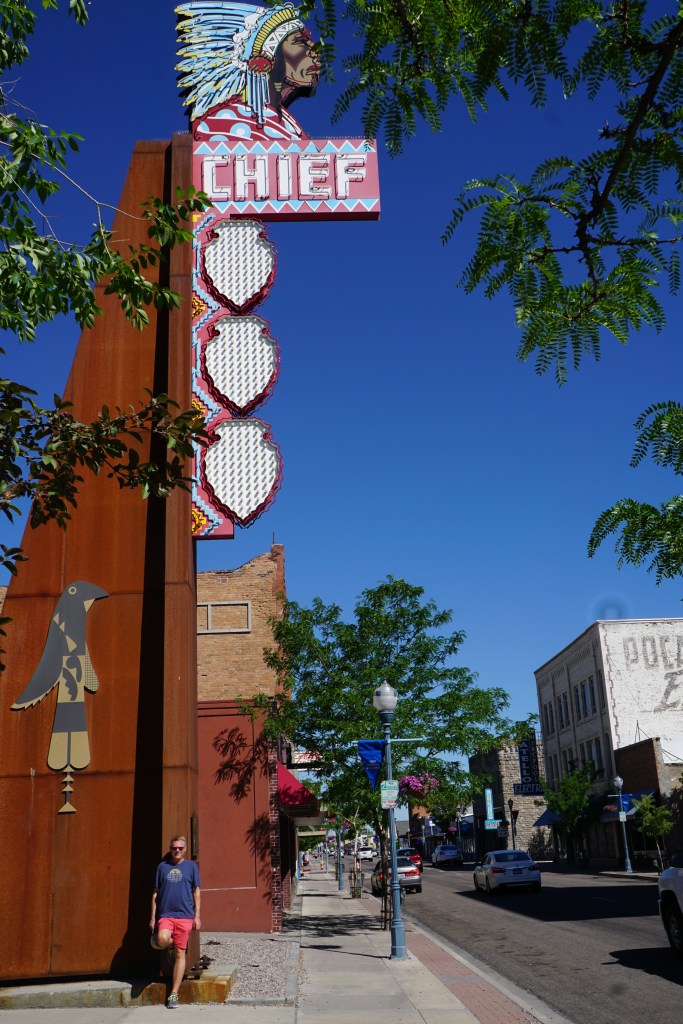
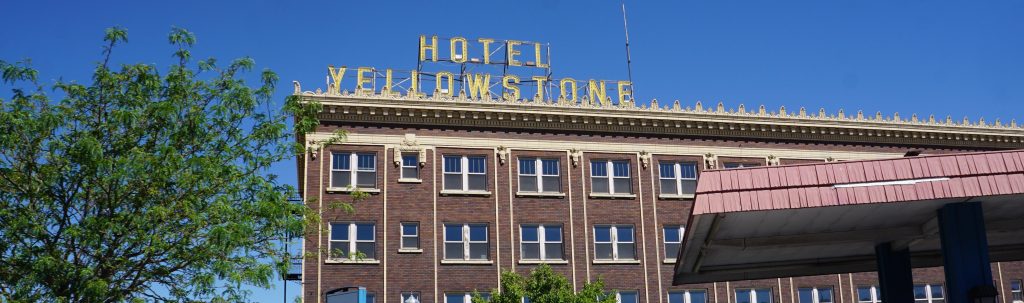
For the next few hours, Tom and I roamed the streets of Pocatello. We took photos outside the local high school, paused at the site of the Chief movie theater (it burned in 1993), inquired about the repurposed status of the Hotel Yellowstone, and gazed through the windows of an abandoned Greyhound bus depot.
In front of a thrift store with a rainbow flag in the window, we had the nerve to stop two young men (one was wearing a Schitt’s Creek T-shirt) to ask them what it was like to be gay and grow up in Pocatello. They hesitated for a moment but discovered Tom and I … a couple and a couple of writers … had no ulterior motives. We simply wanted to know what it was like to live there; I was mining future story ideas.
So, they obliged. They told us they had carved out decent lives, gone to a local college, and made friends in their community, though–they confessed–it was tough being openly gay in predominantly Mormon Idaho and Utah. We thanked them for stopping to say hello and sharing their insights. We wished them well and said goodbye.
Before Tom and I walked back to our rented SUV to continue on our journey, we made a final stop in a local art gallery. That’s where I spotted a speckled-blue glazed mug, made by a local potter. It bears the shape of the state of Idaho. I couldn’t leave without buying it. I needed a physical souvenir of the spontaneous moments Tom and I shared in a town that might have been mine, but never was.
Since that unforeseen experience in June, I have consumed dozens of cups of coffee and tea from my Idaho mug–many while writing the next blog post or poem. In a sense, the sight of the mug stirs my creativity, especially when I need a jolt.
As Christmas approaches and 2021 draws to a close, this artful mug reminds me how important it is for all of us–writers or not–to leave the highway of life from time to time. To keep our minds open to diverse people and unfamiliar worlds. To explore the “what ifs” that keep us wondering where the next story will come from. To seize the Pocatello moments when they appear and imagine the possibilities of what they may inspire in 2022 and beyond.
I’ve learned a lot in my sixty-four-plus years. Sometimes it feels like my brain is a swirling repository of “stuff” … data and memories.
On other days, it feels like I’ve found meaningful ways to synthesize my life experiences and relationships. Then–voila–I discover they have morphed magically into wisdom.
I’m not sure exactly when this wisdom thing began to kick into high gear, but probably in my fifties after my mother died. Then, certainly again at sixty when I suffered a mild heart attack. In both cases, I had to find my way back to the surface to breathe again and survive the depths of despair.
Most definitely, it is the challenging aspects of life–loss, fear, anxiety, discrimination–that prompt me to more forcefully explore, verbalize and share my opinions and feelings … not the happier, even moments.
I’ve been thinking about this because I have a few friends/relations who are dealing with difficult stuff. One is grieving the loss of a significant loving relationship while trying to find his way in a new job; the others are navigating the precipitous physical decline of two frail parents.
In both situations, I am there to provide empathy and support. I imagine these individuals feel as if they are lost in a dense forest without a compass. Yet, I suspect, the clouds will lift eventually. On no particular schedule, light will begin to filter through. Hope will reappear.
One day, the internalized aspects of loss and pain will spring from the ground like crocuses emerging from the frozen ground of winter. And, a new batch of wisdom will be born and saved for the next difficult encounter of life.
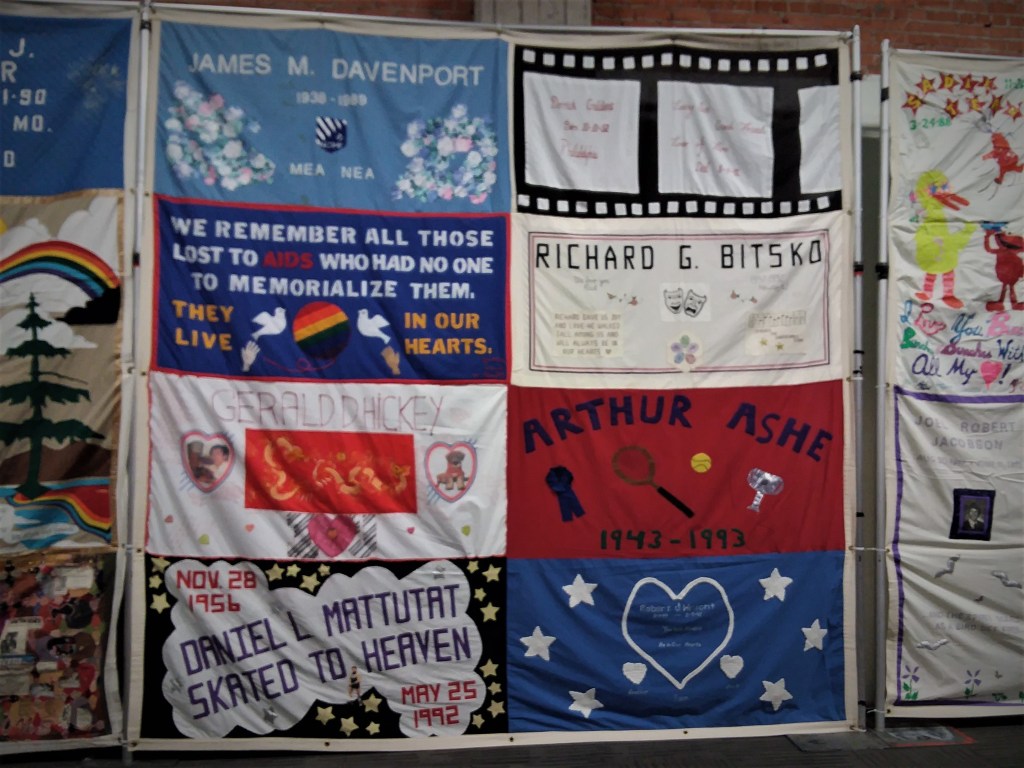
Last night my Phoenix Gay Men’s Chorus friends and I rehearsed at the Parsons Center for Health and Wellness surrounded by AIDS quilts. In a moment of silence, we remembered the suffering and all of the lives lost to a despicable disease. Today, on World AIDS Day, “we remember all those lost to AIDS who had no one to memorialize them. They live in our hearts.”
No flurries to be found, few leaves on the ground. It is morning sweatshirt weather as December approaches the desert from beyond mountain peaks.
Without ice to navigate, bighorn sheep shimmy down opposing buttes. Ducks paddle away the hours. A lone kingfisher trolls the canal for a morsel or two.
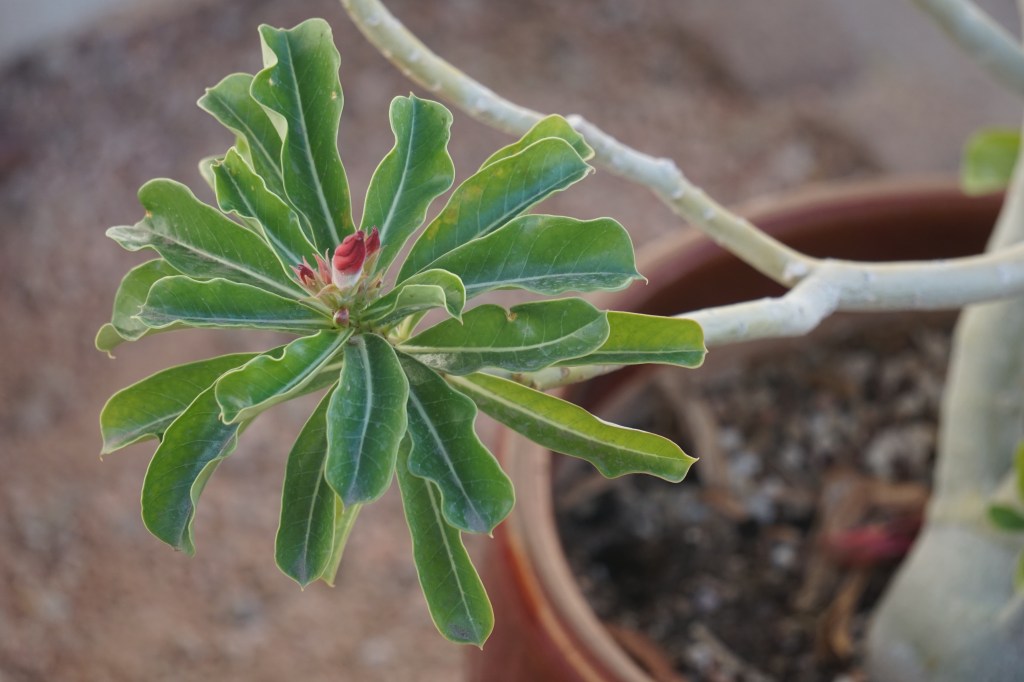
This is not the forecast for Decembers I remember. It is a warmer one I wish not to relinquish; the beginning of the last round of desert rose buds.
As November lapses and the twelfth month unfolds, nature delivers beauty and hope to our doorstep with the promise of blooms through Christmas.
My husband is an excellent cook. In a given two-week period, he gladly prepares chicken, tilapia, salmon, cod, turkey meatloaf (along with potatoes, Brussels sprouts, green beans) and pasta of every kind. I am thankful for him and all the things he does for us.
What is my contribution? I am the baker in our family. I concoct corn bread, blueberry muffins, chocolate chip cookies and the like. Oh, and on special occasions, I prepare and bake pies.
Our two deep dish favorites are egg custard (a silky treat handed down from my southern/maternal family) and Dutch apple (a recipe I found online several years ago). The latter has become our go-to dessert for Thanksgiving.
More than cake or cookies, I think the smell of pie baking in the oven will always cue my emotions and provide deep dish comfort. That first and last forkful of crumbly goodness with a cup of coffee won’t hurt either.
Anyway, this morning I stood over the kitchen sink and sliced eight Granny Smith apples for this year’s pie filling. Over the years, I’ve discovered the tartness of Granny Smiths make them ideal for baking.
That piece of wisdom came from my mother. So, naturally, I thought of her as I prepared a pie for Tom and me. It doesn’t matter that my mother has been gone for nearly nine years. Her influence in my life endures.
During the last four years of Helen Johnson’s life, she lived at Brighton Gardens, an assisted living facility in Wheaton, Illinois. My mother loved to bake and glaze ceramic pottery in a class there.
For her last Thanksgiving–2012–our family gathered a few weeks early in a community room at Brighton Gardens to celebrate the holiday together. Mom was in hospice at that point and declining rapidly, so that seemed like the safe thing to do at the time.
Meanwhile, back down the hall in her empty apartment, I can still imagine the shelves and tables of her room lined with family photos and a dozen or more of her prized pieces of homemade pottery.
Remarkably, my mother lived two more months. After she passed, my sister Diane and I held a memorial in early February for her. We brought many of the pieces of pottery with us to the funeral home and placed them on tables around the room.
When family and close friends departed after the service that night, we asked that they choose a piece of her art and take it with them.
Today, I still have at least a half dozen of Mom’s fired-and-glazed pottery from her Brighton Gardens days in our two-bedroom home in Scottsdale, Arizona.
At Thanksgiving every year, I bring out this ceramic turkey-shaped napkin holder she made. It is inscribed with her name “Helen J.” brushed on the bottom.
It’s stationed on our Thanksgiving table … next to my delectable, deep dish Dutch apple pie … ready to create a new batch of memories for Tom and me on Thanksgiving Day 2021 in our Arizona home.
Here in the U.S. we are preparing for Thanksgiving. For some, that will mean traveling again–despite this unrelenting global pandemic–to see loved ones and share a feast. For others, it will consist of a quiet, simple meal at home (if we are lucky to have one) with little fanfare.
No matter which end of the spectrum you find yourself on, I hope you have the opportunity to reflect on what you are thankful for as November’s days wind down.
I am most thankful for good health, the love and companionship of my husband, a cozy condo in a warm climate we call home, and the positive relationship I’ve nurtured and forged with each of my adult sons.
It’s a real gift, after suffering a mild heart attack in 2017, to see Nick and Kirk grow and evolve in their thirties … and a welcome change from the heavy-lifting of child rearing I experienced in the 1990s and early 2000s.
Near the top of my “thankfulness” list is the time, ability, and creative energy to write. I’m proud of each of the four books I’ve drafted, polished, and published since 2016. (Plus, since May 2018, I’ve worked diligently to generate and post 286 stories and poems here on my blog. That’s an average of seven pieces of free original content per month.)
If you are a regular follower or first-time visitor who has stumbled upon my page, I have wrapped up a Thanksgiving gift for you.
Through November 25, go to Amazon and download your free Kindle copy of I Think I’ll Prune the Lemon Tree, my latest book. (By the way, if you live outside the U.S., I believe many of you will be able to download a copy through your local Amazon connection.)
If you’re an independent writer like me, you know how important and challenging it is to try to build traction with a community of readers. Online reviews help immensely.
So, once you finish reading my anthology of thirty-nine whimsical and serious essays, I hope you’ll take a moment to rate and/or review my book online.
Thank you to my loyal followers, and happy reading!
Inviting but ominous as an empty bench, November casts its lingering light over Phoenix. It fades from somewhere to nowhere, between the gauzy clouds, beyond the distant mountains.
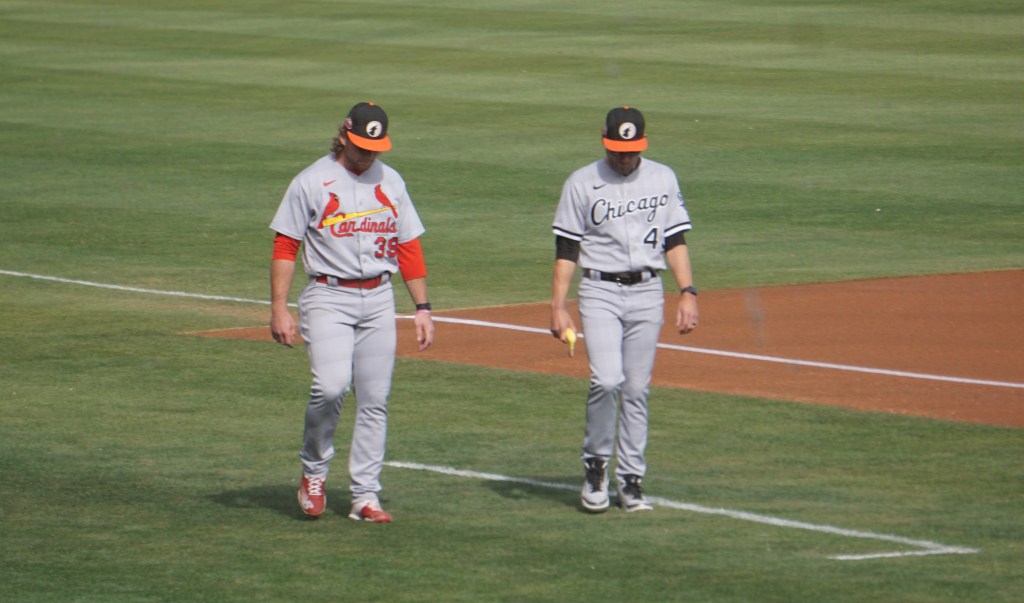
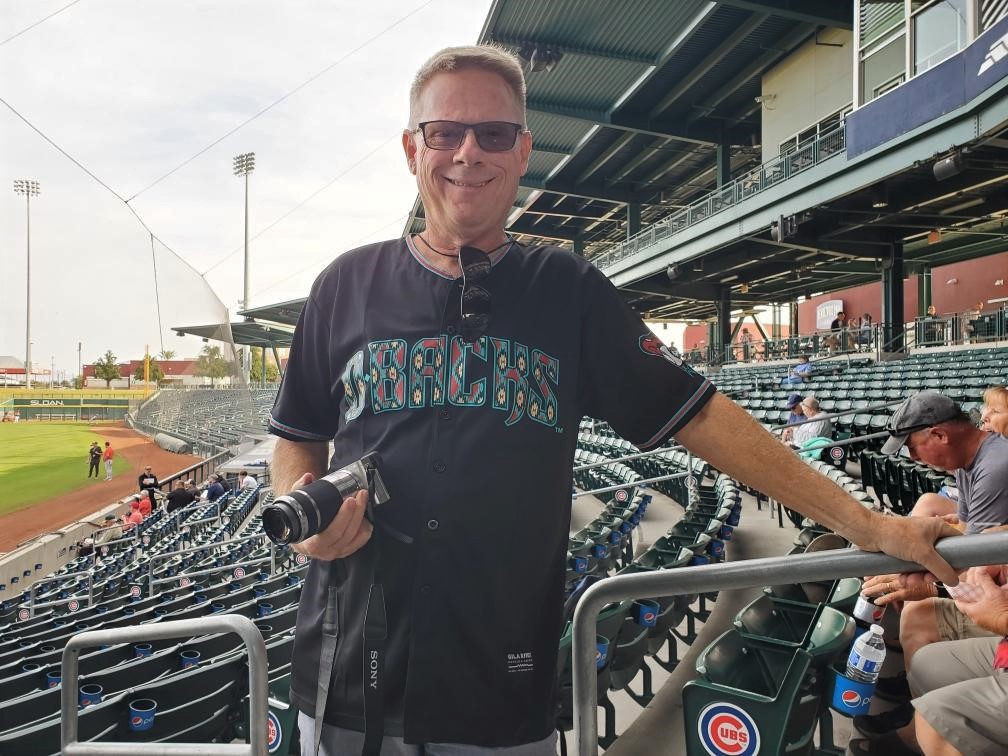
Where can you watch promising, future major league ball players perform outdoors in seventy degree temperatures in November, while spending just seven dollars a piece for two seniors to sit behind home plate?
At Arizona Fall League games at Sloan Park in Mesa. Consider it the perfect spot for baseball purists, major league scouts, western hat wearers, avid autograph seekers, foul ball hawks, and anyone simply wanting to chill in the shade and eat peanuts under the radar on a glorious afternoon in the Valley of the Sun.
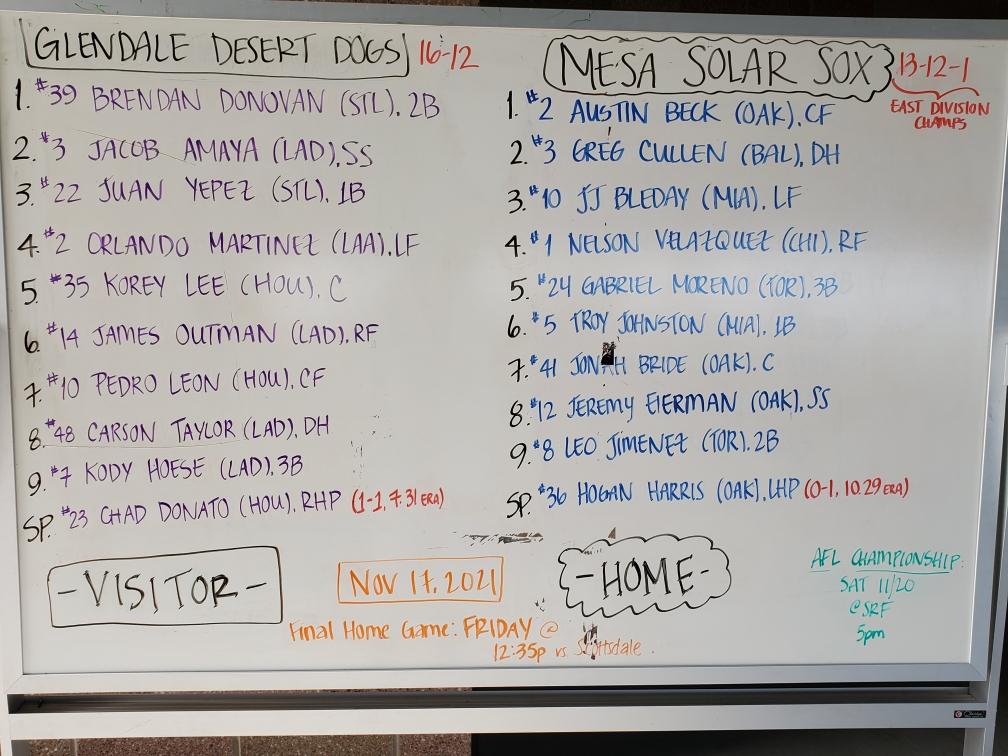
Final score on Wednesday, November 17, 2021 (as if it really mattered): Glendale Desert Dogs 3, Mesa Solar Sox 2.









 Mark Johnson Stories