Tag: Arizona

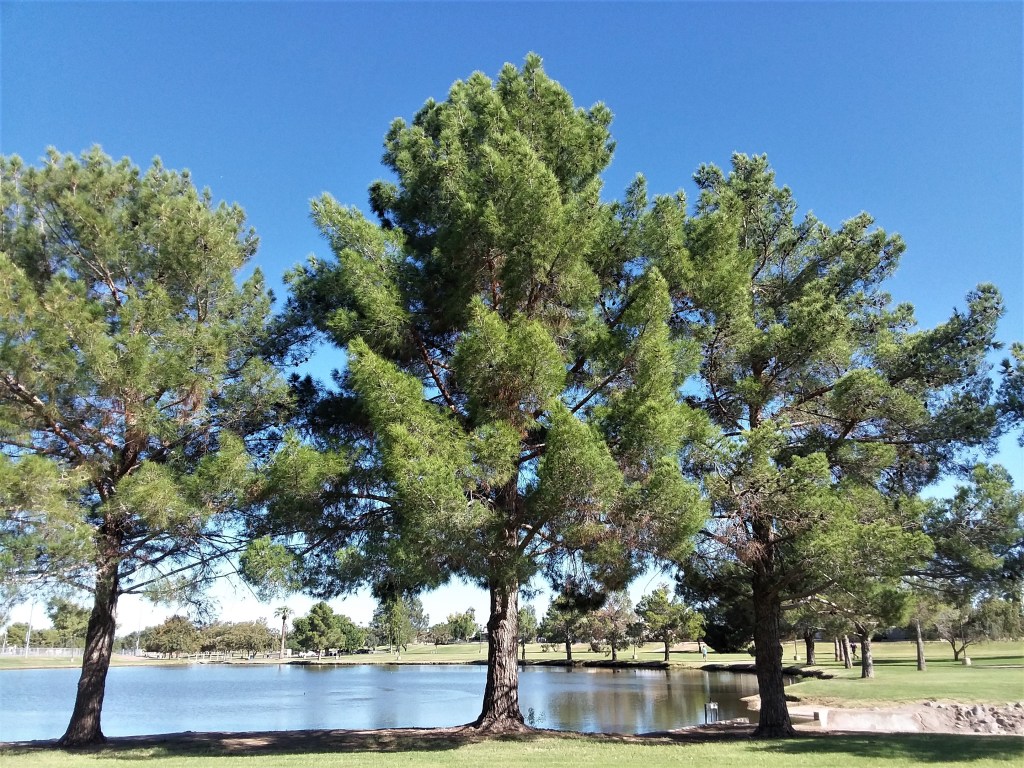
Palm and Pine and Sycamore

Palm_102019

Pine_102019.jpg

Sycamore_102019.jpg

Three gather to whisper, one natural grace.

Sure shiny October, rare shady space.

Beckoning branches, bowing before.

Triumphant triad, truth to adore.

Forever delight, never ignore.

Palm and pine and sycamore.


By Mark Johnson, October 20, 2019

Oh, Lemon Trees and Lizards

LemonTree1_100819

Ordinarily, pruning branches in our condo complex is something our landscape crew attends to. But they haven’t appeared lately. So, last week Tom and I dusted off our hedge trimmers. We gave haircuts to the fig and orange trees in our row. We didn’t mind. We had the time, energy and motivation.

Today, I stood in front of our mid-century condo. Gazing east as the morning light forced me to shield my eyes. Surveying the overgrown boughs of a luscious lemon tree that shrouded the sidewalk to our parking lot. Hands on hips, I uttered these seven words:

I think I’ll prune the lemon tree.

Yes, a guy born and raised in the Midwest, near towering oaks and majestic maples that abandon their leaves every October, now trims fragrant citrus fruits in autumn and says these peculiar things. Who is this crazy person? Where did this new language come from?

Let me be clear. This wasn’t the first time I was privy to this sort of newfangled, desert phraseology.  In the fall of 2017, just a few months after my husband and I left Illinois and moved into our Arizona condo, he shouted the following previously undocumented sentence as I wrote at my desk:

There’s a lizard in the sink.

As calmly as possible, I pressed “save” on whatever I was writing and scampered into the kitchen to see what Tom had discovered. Indeed, there was a lizard in the trap of the sink. He was no more than two inches long and frozen like a tiny statue exhumed from an archaeological dig. I’m sure he was frightened by the two giant heads peering down at him.

If you’re an animal lover like we are, you’ll be delighted to learn that we didn’t freak out and smash him in the sink. Instead, we kept our wits. We scooped him onto a piece of paper and carried him outside to safety.

Slowly, he slithered off into the desert landscape to resume his natural existence. Just a few yards away from where the freshly shorn fig, orange and lemon trees live in this sun-drenched land of sand and saguaros.

I never thought I’d live here. Oh, lemon trees and lizards, I never thought I’d say and hear such things.


Waiting to be Fed

WaitingtobeFed_100619

Eight o’clock on a seventy-degree October morning. Tom and I walk three thousand steps west from our condo door and arrive here. Squint and you can conjure the head of a giant tortoise emerging over the hill … waiting to be fed. In reality, the only ones scouring for breakfast are the three microscopic bighorn sheep climbing the Papago buttes in the Phoenix Zoo on the right side of the frame.

Surreal giant tortoises and real bighorn sheep on a spectacular Sunday. Such is life in the rugged, yet serene, Sonoran desert.

A Drink with Jam and Bread

Salzburg_Sept2019

Some memories are like rare monarch butterflies.  They land before you in a brilliant twist of fate. They perch on a sunflower petal for a moment, as one did yesterday on a path at the Desert Botanical Garden here in Phoenix. But before you know it, the moment has passed. The breathtaking beauty has flown away.

That’s how I felt about my visit to Salzburg, Austria, earlier this month. So, on the last day of September, before my fleeting recollections of fabled Austria fade and vanish into the sky, I’m going to turn back the clock almost two weeks to a few sensory-filled moments in this captivating and historic city.

***

It was the afternoon of September 17. A Tuesday, to be precise. Tom and I had just completed a walking tour of the city with forty others. Harold, our friendly and knowledgeable guide, led the way.

After the group disbanded for the day, my husband and I were craving some down time. That’s when we found the quiet comfort of Cafe Bazar, an historic haunt along the banks of the Salzach River. Given my literary endeavors, a friend had told us to go there. Since its birth in 1909, legends such as Marlene Dietrich, Thomas Mann, Arthur Miller, Klaus Maria Brandauer and many other artists have been Cafe Bazar guests. One can only imagine the magnitude of their stirring conversations.

At any rate, Tom and I sat in the same room where they had … soaking up the Salzburg scenery at a table for two on a Tuesday. To be clear, we didn’t sip tea while we ate our jam and bread. We each ordered a cup of Wiener melange (German for “Viennese blend”). One shot of espresso topped with a dollop of steamed milk and foam. Let’s just say it was the perfect complement to a freshly baked croissant and apricot jam in spectacular Salzburg.

If you’re a lover of The Sound of Music like me, you’ve already caught my creative drift. For an American baby boomer, it’s impossible to visit Salzburg and the surrounding area without recalling moments from the iconic 1965 movie musical.

You know, singing “Do-Re-Mi” like the Von Trapp kids did. Bobbing up and down on the steps in Mirabell Gardens. Pretending to dash around a bubbling fountain in formation in one of the freshly made outfits Maria made from old curtains. Channeling Julie Andrews as she twirls with her bag, struts under a canopy of trees, and sings “I Have Confidence.” Even consuming a drink with jam and bread at Cafe Bazar.

But, as charming and memorable as those Hollywood images are, they aren’t the real Salzburg. No other city can boast that it’s the birthplace of Wolfgang Amadeus Mozart, and Salzburg also has the distinction of appearing on the UNESCO World Heritage List. That designation came in 1996.

Twenty-three years later, in September 2019, two guys from Scottsdale, Arizona, passed through town. They sipped on a cup of Wiener melange with jam and bread, watched the world go by, and cherished the gift of Salzburg … a forever-artistic city.


Bavarian Bliss

DSC08361 (3).JPG

Munich  (“Home of the Monks”) is much more than beer and pretzels.

The capital of Bavaria and the third largest city in Germany has deep roots. According to the Encyclopaedia Britannica, they wind and trail back to the Benedictine monastery at Tegernsee, which was founded in 750.

Nearly twelve hundred years later, more than forty percent of Munich’s buildings were destroyed by Allied bombing raids during World War II. Today the city is a hub in the banking industry and home to the annual two-week Oktoberfest celebration, which ends on the first Sunday in October.

My husband and I toured Munich on September 15. It was a quiet Sunday about a week before all of the beer-laden and oompapa festivities of Oktoberfest. All of the shops were closed, but that didn’t faze us. We were content to ogle stylish Oktoberfest apparel through storefront glass and soak up summer temperatures. We couldn’t have ordered a more perfect day to navigate the normally bustling Marienplatz on foot.

We craned our necks skyward when the Glockenspiel in the New Town Hall played promptly at 11 a.m. Afterwards, we discovered a charming cafe and dined outside. We filled our bottles with fresh water streaming from a city fountain. Next, we were ready for a defining moment: climbing to the top of St. Peter’s Church for An Unobstructed View of the city’s historic skyline.

At this point, I realized how far Tom and I had come. I’m not talking about the actual distance from our home in Scottsdale, Arizona, to Munich, Germany, via a congested connection through Montreal with a sea of tired travelers. I’m referring to our personal journey.

After my cardiac event in St. Louis on July 6, 2017, the notion of climbing 299 steps skyward anywhere (much less in a tight space with few opportunities to pause) seemed implausible. Yet, without fanfare, on the last Sunday of summer in Munich two years later, Tom and I paid three euros a piece to an attendant for the experience of saying we had done it. We entered the church for the pleasure of mounting steep and circuitous steps. We joined a trail of able-bodied adventurers, who flowed up and down around us.

To the top of the church spire we climbed. Fifteen minutes later we arrived at the pinnacle. We took a deep breath or two and stepped out into an open-air observation area, where steel bars shielded us.

Together we wrapped our way around the circumference of the tower. We gazed across the horizon. We took a few more extended and grateful breaths. We captured a series of photos of a storied city.

Without the effects of beer or pretzels, we found our Bavarian bliss.


Lost and Found

20190908_184338

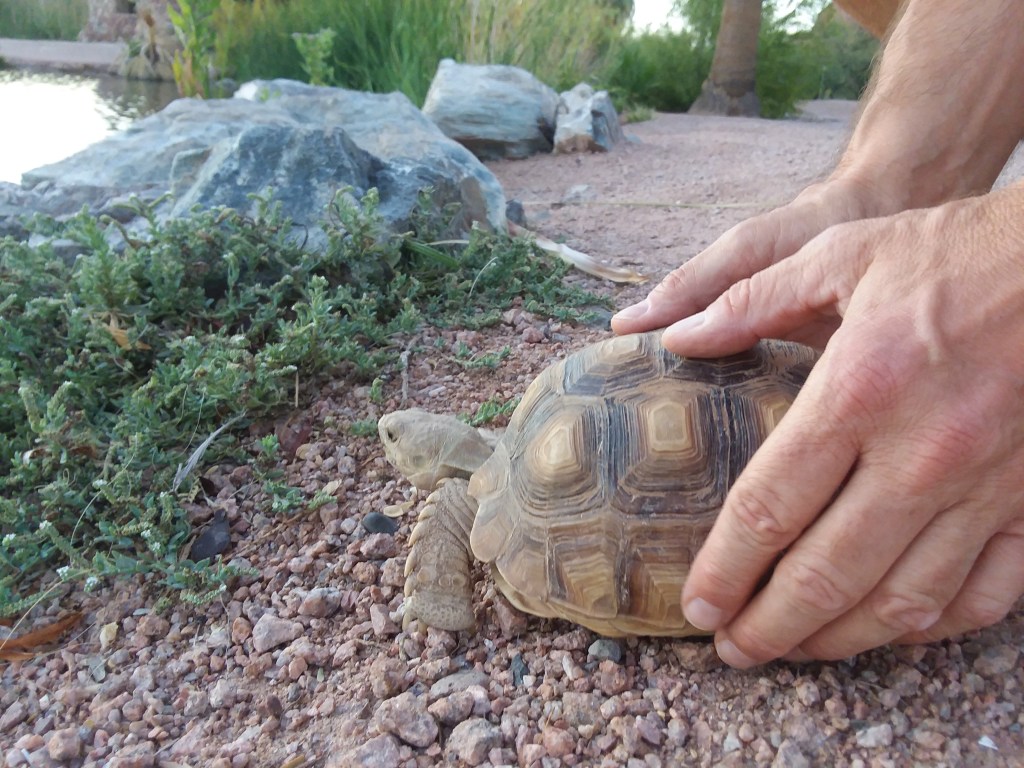
You were lost. Stranded on a concrete path. On the way to nowhere. Far from food and water. Farther from home and hope than you knew.

You didn’t mind when we intervened. We carried you in careful palms. Wind in your face. Legs suspended. Each step we took felt like a mile.

You were ready to roam when we reached your desert oasis. We lowered you to the water’s edge. Your feet touched the ground. You never looked back.

You were found.


A Path I Might Have Missed

DSC07801 (2)

There you stood, rare and bright. Defying the odds. Shining in a field far away. Flourishing in a wide open world. Sparkling in the foreground of my dreams.

I still see you, sunny and true. Unfolding under the sky. Craning for a mountain view. Growing taller everyday. Promising petals on a path I might have missed.

Written by Mark Johnson, September 6, 2019

Still Counting in September

PillTray_090219

“What greater thing is there for two human souls than to feel that they are joined — to strengthen each other — to be at one with each other in silent unspeakable memories.”

George Eliot — English novelist, poet, journalist and translator

***

George Eliot had it right. Memories are a powerful human connection. Without a moment’s notice, we can be transported back to a person, time, and place. Often, this happens as we complete our simplest daily activities at home in the kitchen. Pouring a cup of coffee. Biting into a crunchy apple. Stirring a pot on the stove. Or, in my case, counting and depositing pills into a tray.

On the surface, this may seem like a purely clinical exercise. But it was something significant I did for my mother during the last several years of her life as her macular degeneration worsened. As her dementia deepened. Every other Saturday morning, I drove twenty miles from my home in one Chicago suburb to hers in another. Each time I counted out two weeks worth of medications for her.

Of course, our visits consisted of more than medication administration. We shared late breakfasts, early lunches, short walks and longer stories about our lives and love of family and nature whenever her health and the weather permitted. Neither of us ever imagined I’d  write about our journey years later in what became From Fertile Ground.

Yesterday in Arizona, as I was filling my own tray of medications for the coming week, I was reminded of those intimate Saturday mornings with my mother. Sorting her pills in past Septembers. Doing what I could to help sustain her life for another two weeks as the late summer light in northern Illinois produced elongated shadows.

Of course, it was all worth it. I would do it all over again. But at least now I have the memories to savor. At least I’m still counting in September.


Hot Rods to Hell

DSC08182

Despite the hellish Arizona heat (which has had me in a funk) and the general absence of much-needed monsoon rains this summer (more on that later), there is something stunning and cinematic about living in the desert southwest. Big skies. Jagged mountains. Spiky saguaros. Red rocks. Dazzling sunsets.

I realize I may get a few eye rolls here from a pragmatist. Or someone who’s lived in the Valley of the Sun for his or her entire life. But remember. I’m coming at this from the perspective of having spent thirty-plus years of my life in relative flatness. Namely, northern Illinois, where you can drive for miles and know you’ll never see a rise in the grade of the road.

Evidently, I’m not alone in recognizing the allure of a western landscape. Case in point: Hot Rods to Hell. It’s a rollicking road trip film about a middle-aged couple, who decide to leave behind the civilization of the east for an overdue escape to the desert in the west.

As the 1967 flick begins, traveling salesman Tom is recovering from a car accident that has injured his spine. Fortunately, he survives mostly intact. But he’s left with jittery nerves and a chronic back ailment. Tom and his wife, Peg, decide the best antidote is to leave their Boston home. They opt to spend their later years operating a motel in the California desert. They figure it will be a quieter existence and the dry heat will be good for Tom’s back.

It all makes sense, right? But they encounter a few problems on their way west. Tom (played by a haggard Dana Andrews, who’s nearing the end of his rope and career) and Peg (portrayed by a frantic Jeanne Crain, who must have needed the money desperately) are derailed on their journey by a band of teenage hoodlums.

The carousing kids crave controversy, drag racing and Tina. She’s Tom’s and Peg’s shapely, seventeen-year-old daughter. The terrible teens become fixated on the idea of trying to drive Tom and his family off the road. Apparently, just for the thrill of it and the chance for a rendezvous with Tina.

It would be criminal of me to spoil the ending of this overwrought, drive-in disaster, because it is a super-suspenseful spectacle that devolves into scene upon scene of jaw-dropping, delicious, B-movie mania. However, be forewarned. This desert debacle includes a cameo appearance by Mickey Rooney, Jr., and his band, (yes, Mickey had a son … and his son had a band) performing poorly in a seedy club that just happens to be on the premises of the motel, where Tom and Peg will soon become landlords.

At any rate, if you follow my stories, you know that, beyond the fact that my husband’s name also is Tom, there actually is a thread of thematic truth to be salvaged here. (Even though, my Tom doesn’t have a back problem or a nervous disorder; we have no plans to buy or manage a motel hideaway; we don’t have a teenage daughter; my name isn’t Peg; and I my friends tell me I look nothing like Jeanne Crain.)

When Tom and I packed up our car and traveled west in July 2017, my surprise heart attack in St. Louis nearly ran us off the road like a pack of hell-bent, drag-racing teens frantic for on An Unobstructed View. But, like Tom and Peg, we survived the experience. Now in my wide-eyed sixties, I write poetry. I dodge crazy Arizona drivers. I tell screwball slice-of-life stories. I bask in the dry heat. I swim outdoors to keep my heart pumping.

And, when torrential rains boil over the mountain peaks and spill into the valley, I savor the monsoon storms. Like the one that blew in last night unexpectedly. Blowing dust and bending palm trees. Igniting the atmosphere. Lighting up the sky. Dumping an inch of rain on the parched Phoenix area. Reminding me as I drove home through the shadowy Papago buttes that these “bonus” years in the desert southwest after that fateful road trip are an ever-evolving chapter in a story that’s far from flat.


This Bowl of Life

DSC08110 (2)

Over the past four months, I’ve shared stories about life at a community gym in Scottsdale, known as Club SAR. My husband and I work out there frequently.

In May, I wrote about my altercation with a bully there. It shook me to the core, but I resolved To Stand Tall. I haven’t encountered any problems since.

In June, The Gym Reaper appeared and prompted me to write about her. Fortunately, she left without me or any other victims (that I know of).

In July, I observed tenderness and tenacity outside the boxing ring. Two men inspired me to write The Boxer and the Theatre of the Mind.

Now, in August, I have more to say. I have a deeper understanding of what this place represents for many of us who exercise there. Boxers in the ring. Rows of joggers on the treadmills. A steady stream of bodies lifting weights on a Saturday morning. A friendly and dedicated staff that greets us every day.

Clearly, it’s much more than the burning of calories that keeps all of us coming back. It’s the sense of community we feel … even love, perhaps … that gives us the hope we need to keep going. To keep fighting. To live another day.

This realization hit me as a friend left the ring and approached me. He smiled when he told me he’d found a new and better-paying job. That he was a recovering methadone addict. That he had once been homeless. That somehow he had climbed his way back. That the structure of boxing at Club SAR is an important part of his recovery. We hugged and I encouraged him to keep going. To keep telling his powerful story. Certainly, this is a community he desperately needs.

And he’s not alone. Another friend finished her circuit of weights and told me that her father’s health was failing. His long battle with multiple sclerosis had worn him down. She’s planning to fly across the country to visit him this coming week. This may be the last time she’ll see him. We traded contact information. Tom and I told her she should feel free to reach out to us at any time.

A third friend at Club SAR is working to rebuild his life after the devastation of an opioid addiction. His path to recovery has been long and arduous. But he’s making significant progress. He’s back at work now. He keeps fighting. Tom and I see him playing basketball and lifting weights on occasion. He’s joined us at our home a few times for dinner. We’re trying to make a positive difference in his life.

And then, of course, there’s me … a recovering heart trauma patient. I complete my cardio workout several times a week. Thankfully, the experience of my mild heart attack two-plus years ago has faded to a large degree. Life feels more normal now than it has for a long time. I think I’ve needed this community … this extended family … as much as the rest of the folks I’ve described above.

Sure, it’s up to each of us individually to overcome our own spiky problems. But we’re better off together. Taking care of our bodies. Our minds. Our spirits. Sharing our stories in this bowl of life.