Tag: Family

The Spirit of St. Louis

TORO_Photo16B (843x1000)

If you follow my blog or have read any of my books, you know I write frequently about the importance of family and home. Thematically, I’m a big believer that they shape and influence the trajectory of our lives.

Though I left St. Louis (my original hometown) nearly forty years ago, my Missouri memories have proven to be a source of creative inspiration, pride, joy and considerable heartache. In fact, I’m certain the Gateway to the West occupies a permanent strand in my DNA.

No one personifies the spirit of St. Louis in my memories more than Thelma DeLuca. She was my aunt. I’ve been thinking of Thelma a lot lately. Mostly because the twentieth anniversary of her passing is coming later this month. But also because Dad and she were lifelong St. Louis Cardinals fans.

Tonight their favorite team (and mine too) will host the Washington Nationals in Game 1 of the National League Championship Series. I’ll be watching the game on TV. If Thelma were living, she’d be doing the same. Cheering for her Redbirds. Wearing something red.

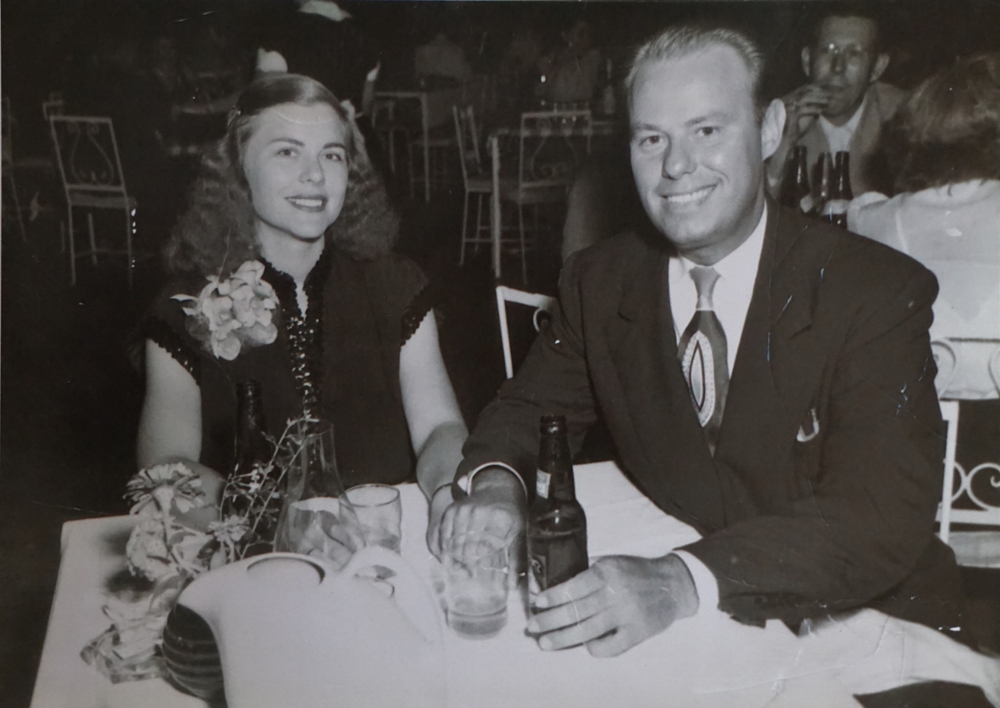
As a tribute to my aunt (shown here in a 1952 photo with “Bluebird”, her beloved blue Plymouth), I hope you’ll take a few minutes to enjoy this excerpt from Tales of a Rollercoaster Operator, my book of up-and-down stories about my Missouri youth.

* * *

Thelma’s middle name was Ruth, but it should have been Truth. She was Dad’s older sister, the life of the party, the leader of the band, a true original. There was no denying Thelma. She was the boldest, biggest-hearted member of the Johnson family. You always knew where she stood, because she would tell you with gusto. Like an Olympic gymnast on a quest for gold, she nailed the dismount, stuck the landing, and finished her routine planted firmly on the ground on the right side of an issue.

Thelma sheltered a collection of canines over the years. In the 1950s, when Lassie was king, she devoted her free time to Laddie, her prized collie. The dog won several blue ribbons with Thelma at his side. In the years that followed, she welcomed: Tina, the runt in a mixed-breed litter; Tor, a powerful but gentle Norwegian elkhound; and Heath Bar and Gizmo–Yorkshire Terriers–into her home. There’s no question she revered all of her pooches. I remember when I was a teenager as she moved in close to remind me with all the sincerity she could muster. “You know, dog is God spelled backwards,” she proclaimed …

In one breath Thelma, a lifelong Democrat, praised Harry Truman’s the-buck-stops-here forthrightness. In the next, she launched into a smooth glide down the hall on high heels with Uncle Ralph as Dean Martin sang Come Back to Sorrento or Vikki Carr belted out It Must Be Him on the hi-fi. All the while, Ralph’s prized braciole was baking in the oven.

Thelma craved the richness of relationships and the cumulative effect of what we learn from each other throughout a lifetime. Sitting at her kitchen table in the 1970s with a far-off look in her eyes, she leaned in with her wig slightly askew and told me, “Mark, we’re all like ships passing in the night.”

In her wake, Thelma certainly left her mark on me. Whenever she sent me a letter, she sealed it with a kiss–along with the letters SWAK written underneath in case her love was ever in question–leaving behind remnants of her red lipstick on the back of the envelope or at the bottom of her letter next to her signature. 

In 1976, Thelma gave me a small envelope filled with bicentennial coins: medallions, dollars, half dollars, and drummer boy quarters. She encouraged me to start a century box with these so that all of my “heirs will sit in awe and wonder about the old days back in 1976.” I still have the coins. It was a magnanimous gesture. I loved her for it and all of her convictions.

Like my dad, Thelma loved her St. Louis Cardinals. She was sixteen in 1926 when the National League Champion Cards played in their first World Series against the American League Champion New York Yankees, led by legendary slugger Babe Ruth.

The Cardinals won the series four games to three and were crowned World Series Champions for the first time. Rogers Hornsby was the Cardinals player-manager. Grover Cleveland Alexander was the winning pitcher in two of the Cardinals’ victories. Though Ruth clubbed three home runs in Game 4 and another in Game 7, the “Bambino” recorded the final out in Game 7 when the Cardinals caught him attempting to steal second base.

With a chuckle and a raspy voice, Thelma recounted that when the 1926 series was over, “I walked down the street chanting ‘Hornsby for President, Alexander for Mayor, Babe Ruth for dogcatcher, isn’t that fair?”

In April of 1979, during my senior year of college at Mizzou, I interviewed my aunt for a family folklore assignment. I was riveted as Thelma described the destruction from the September 29, 1927 tornado, which tore through St. Louis and killed seventy-eight people. She and my grandmother Louise Johnson huddled inside their home that day and rode out the storm safely.

At one point, they leaned against the front door with all their might to keep it from blowing off the hinges. When the violent storm was over, they ventured outside to discover houses on both sides of them had been lifted off their foundations. 

Thanks to Thelma and her recollections, the link to my Johnson family heritage and St. Louis history is alive and well. That was Thelma.
The Little Red Wagon (Part Two)

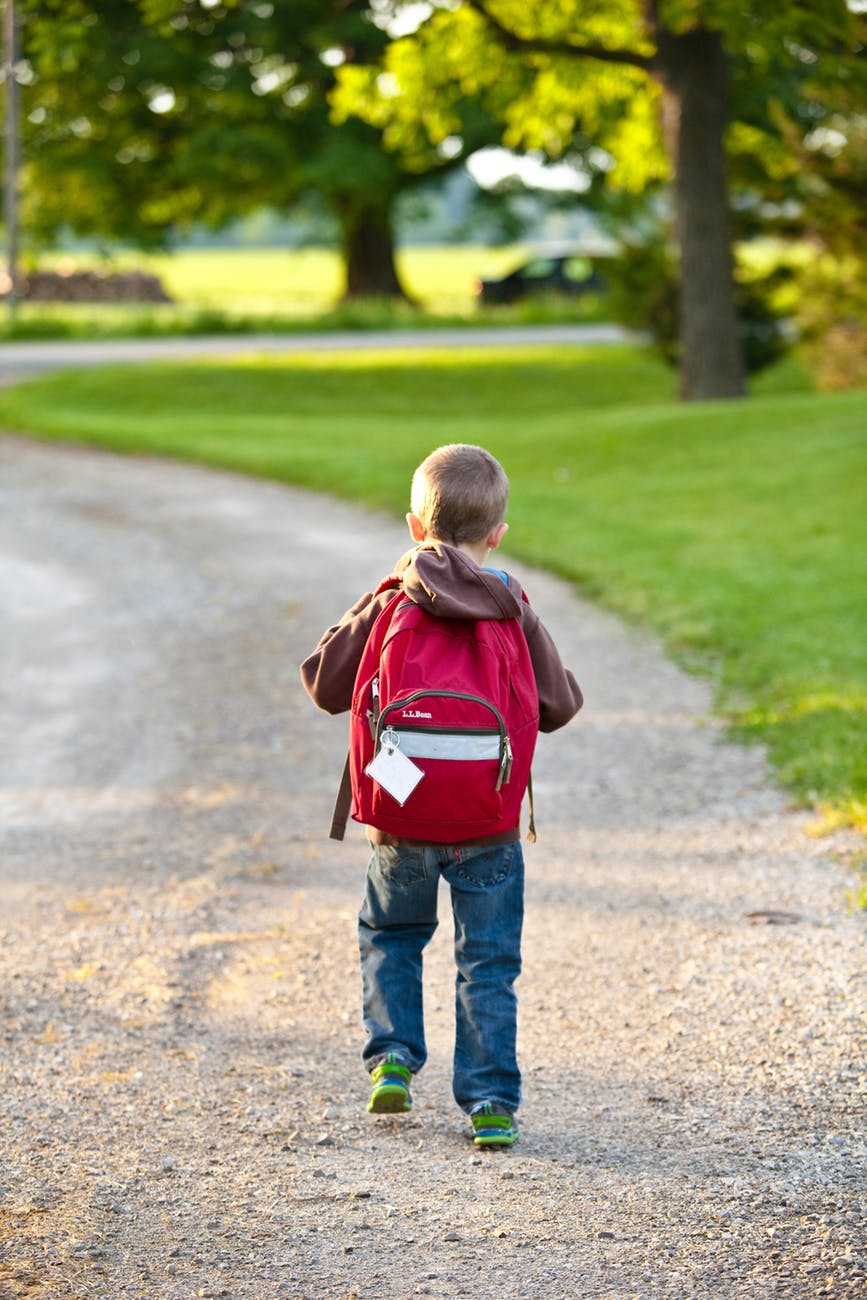
boy in brown hoodie carrying red backpack while walking on dirt road near tall trees
Photo by Pixabay on Pexels.com

I’m traveling during much of September. While I’m away, I hope you’ll enjoy this story (divided in two parts) about a different sort of journey. The Little Red Wagon first appeared in Tales of a Rollercoaster Operator, a book I wrote and published in 2017 about the ups and downs of my early years in St. Louis, Missouri.

***

… I wanted to believe Dad, but his recovery was slow in spite of his desire to regain his previous vitality. When he returned home in mid-October, he was depressed and agitated. He wasn’t able to return to work.

As the bills mounted, Mom felt the financial pressure grow. She could see that it would be months or years before he was able to resume working. So she began looking for a full-time job to begin replacing his lost income. Five months later, she found one as a stenographer at the Aeronautical Chart and Information Center, earning $4,000 a year.

During the next several years, I was filled with anxiety and uncertainty as I watched Dad struggle. I could see he had lost his bearings. He was drifting away physically and emotionally. But I also observed my mother’s resolve and resiliency under duress as she worked to balance her life at work and home.

In the summer of 1963, our ’59 Plymouth sedan died. Our family couldn’t afford to buy another car for several weeks. Fortunately, Mom was able to get a ride to and from her job with a coworker, but we were left without any conventional transportation to go to the store on weekends. That didn’t stop us. Mom realized we had another set of wheels parked beneath the house that could serve us in a pinch.

While Dad was convalescing at home on Saturday mornings, Mom, my sister Diane, and I pulled our slow-but-steady Radio Flyer — our little red wagon with four trusty wheels — behind us for a mile each way down and up the hills to Yorkshire Plaza. It was at the corner of Laclede Station Road and Watson Road. Our destination was Jansen’s IGA.

Jansen’s was the closest place to our home where we could buy meat, milk, eggs, fruits, and vegetables. It was an ordinary supermarket in a strip mall just off Route 66. After we bought a few bags of essentials for the coming week, we loaded them into our wagon and walked next door to the Kresge’s five-and-dime department store. Mom bought shampoo, soap, paper supplies, and other inexpensive household items there.

Our last stop at the strip mall — and my favorite on our weekly little red wagon tour — was Lubeley’s Bakery. It was a pastry-lover’s paradise. When we stepped through the doors of Lubeley’s, it felt as if we left our money worries and Dad’s illness behind. I was immediately swept away by a warm wave of freshly baked bread, gooey butter cake, sugar cookies, and yummy glazed donuts. Lubeley’s made such a positive impression on me that I recall saying to Mom late one morning, “I think I want to be a baker when I grow up.”

Mom pondered my revelation. With all the love and restraint she could muster, she confided, “Honey, you’ll have to get up awfully early if you want to be a baker. She knew I loved glazed donuts. She also knew how much I loved to sleep.

Eventually, we completed our Saturday shopping. We left Lubeley’s, Kresge’s, and Jansen’s behind. We climbed the hills of Laclede Station Road. We returned home with our little red wagon filled with groceries and a few waxed white paper bags. One contained two fresh loaves of bread. Inside the other was something you might consider non-essential for a family struggling to make ends meet: a half-dozen delectable glazed Lubeley’s donuts.

I firmly believe those heavenly baked goods kept our family afloat. We were hungry for security beyond the scope of our wagon. The donuts gave us hope that Dad would feel better, that he really did have a lot of living to do, and that one day we would see order restored in our lives.

We all craved the peace we deserved and the goodness of a glazed escape with a hole in the middle.

The Little Red Wagon (Part One)

boy in brown hoodie carrying red backpack while walking on dirt road near tall trees
Photo by Pixabay on Pexels.com

I’m traveling during much of September. While I’m away, I hope you’ll enjoy this story (divided in two parts) about a different sort of journey. The Little Red Wagon first appeared in Tales of a Rollercoaster Operator, a book I wrote and published in 2017 about the ups and downs of my early years in St. Louis, Missouri.

***

It was my second week of kindergarten and I was just beginning to adjust to a new routine. On a warm and breezy mid-September afternoon in 1962 — September 13 to be exact — I left my Mesnier School classroom and stepped aboard my regular bus for the trip home.

Within ten minutes, the driver arrived at the top of South Yorkshire Drive. She opened up the door and several of us scampered down the stairs. I waved goodbye to a few remaining classmates still on board. The driver closed the louvered door and pushed ahead. I meandered home. It was no more than a five-minute walk up our block and our driveway. Then, in an instant, a breathtaking late summer day transformed into an early fall for our family.

I saw my mother standing just beyond the backyard gate. She was wearing a sundress, lost in thought, uncoiling clean, damp towels and sheets from a laundry basket. Happy, our beagle-mixed hound, was out of reach too. He was sniffing the ground and frolicking miles away, it seemed, along the backyard fence.

“Your father’s had a heart attack.” Mom recited her words slowly and deliberately, like a woman treading deep water searching for a longer breath.

I didn’t comprehend what she had to say. But it couldn’t be good news, I thought as she plucked wooden clothespins from a pouch. She was working to keep her ragged emotions and the flapping sheets in check, preparing to clip wet linens to parallel plastic-encased clotheslines that stretched east and west across our yard.

Soon we walked into the house with our empty white-lattice basket and I learned more. Dad had become ill on day two of his new job as a porter at McDonnell-Douglas. He was helping a coworker lift an airplane nosecone. Suddenly, he felt a sharp pain in his chest. He was rushed to Deaconess Hospital on Oakland Avenue near Forest Park. That’s where he would recuperate for the next month.

During the next thirty days, my mother, sister and I visited Dad several times each week. I remember boosting myself up to sit on the edge of his bed. I swiveled my head to watch portions of unidentifiable westerns and night-time dramas on a grainy black-and-white TV mounted high above on the facing wall across the room.

Every few minutes, the nurses trooped into Dad’s room to adjust his bed, prop him up higher on his pillow, bring pills and water in paper cups, and deliver trays of bland food and a bonus cup of ice cream Dad wasn’t allowed to eat. Instead of throwing away the ice cream, he gave it to me as a treat.

Each time we visited Dad, he was bedridden. I couldn’t comprehend what could keep my father lying in one location for so long — unable to toss horseshoes, fly kites, or drive us to parades or ballgames.

But, Dad insisted he would rebound. Like the popular song from Bye Bye Birdie that played on the transistor radio near his bedside, Dad told me, “Son, I’ve Got a Lot of Living to Do.”

Still Counting in September

PillTray_090219

“What greater thing is there for two human souls than to feel that they are joined — to strengthen each other — to be at one with each other in silent unspeakable memories.”

George Eliot — English novelist, poet, journalist and translator

***

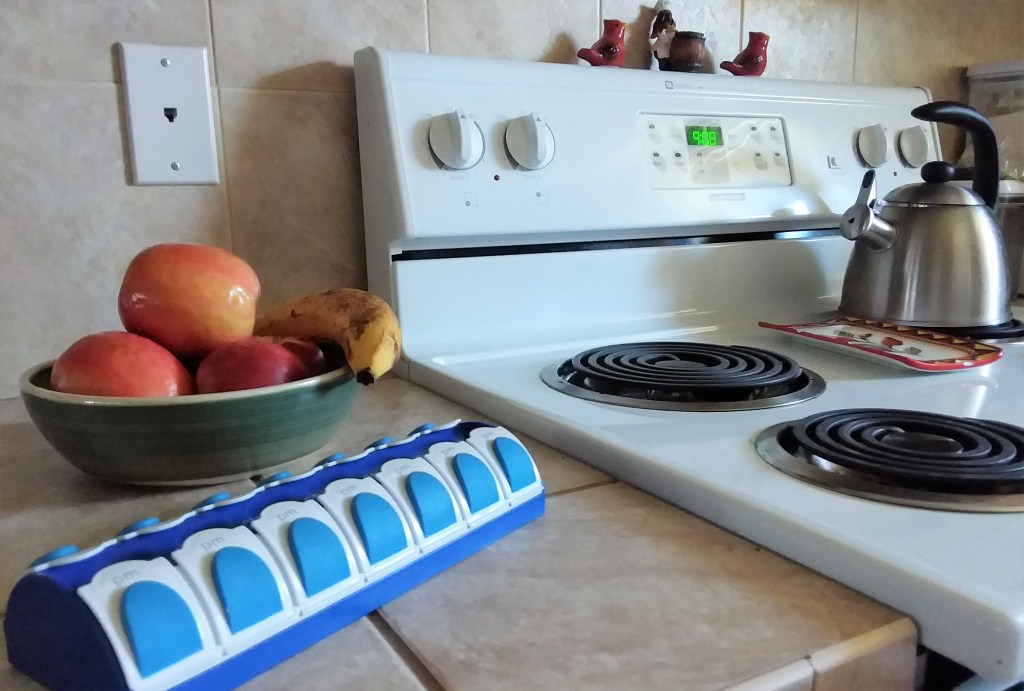
George Eliot had it right. Memories are a powerful human connection. Without a moment’s notice, we can be transported back to a person, time, and place. Often, this happens as we complete our simplest daily activities at home in the kitchen. Pouring a cup of coffee. Biting into a crunchy apple. Stirring a pot on the stove. Or, in my case, counting and depositing pills into a tray.

On the surface, this may seem like a purely clinical exercise. But it was something significant I did for my mother during the last several years of her life as her macular degeneration worsened. As her dementia deepened. Every other Saturday morning, I drove twenty miles from my home in one Chicago suburb to hers in another. Each time I counted out two weeks worth of medications for her.

Of course, our visits consisted of more than medication administration. We shared late breakfasts, early lunches, short walks and longer stories about our lives and love of family and nature whenever her health and the weather permitted. Neither of us ever imagined I’d  write about our journey years later in what became From Fertile Ground.

Yesterday in Arizona, as I was filling my own tray of medications for the coming week, I was reminded of those intimate Saturday mornings with my mother. Sorting her pills in past Septembers. Doing what I could to help sustain her life for another two weeks as the late summer light in northern Illinois produced elongated shadows.

Of course, it was all worth it. I would do it all over again. But at least now I have the memories to savor. At least I’m still counting in September.


This Bowl of Life

DSC08110 (2)

Over the past four months, I’ve shared stories about life at a community gym in Scottsdale, known as Club SAR. My husband and I work out there frequently.

In May, I wrote about my altercation with a bully there. It shook me to the core, but I resolved To Stand Tall. I haven’t encountered any problems since.

In June, The Gym Reaper appeared and prompted me to write about her. Fortunately, she left without me or any other victims (that I know of).

In July, I observed tenderness and tenacity outside the boxing ring. Two men inspired me to write The Boxer and the Theatre of the Mind.

Now, in August, I have more to say. I have a deeper understanding of what this place represents for many of us who exercise there. Boxers in the ring. Rows of joggers on the treadmills. A steady stream of bodies lifting weights on a Saturday morning. A friendly and dedicated staff that greets us every day.

Clearly, it’s much more than the burning of calories that keeps all of us coming back. It’s the sense of community we feel … even love, perhaps … that gives us the hope we need to keep going. To keep fighting. To live another day.

This realization hit me as a friend left the ring and approached me. He smiled when he told me he’d found a new and better-paying job. That he was a recovering methadone addict. That he had once been homeless. That somehow he had climbed his way back. That the structure of boxing at Club SAR is an important part of his recovery. We hugged and I encouraged him to keep going. To keep telling his powerful story. Certainly, this is a community he desperately needs.

And he’s not alone. Another friend finished her circuit of weights and told me that her father’s health was failing. His long battle with multiple sclerosis had worn him down. She’s planning to fly across the country to visit him this coming week. This may be the last time she’ll see him. We traded contact information. Tom and I told her she should feel free to reach out to us at any time.

A third friend at Club SAR is working to rebuild his life after the devastation of an opioid addiction. His path to recovery has been long and arduous. But he’s making significant progress. He’s back at work now. He keeps fighting. Tom and I see him playing basketball and lifting weights on occasion. He’s joined us at our home a few times for dinner. We’re trying to make a positive difference in his life.

And then, of course, there’s me … a recovering heart trauma patient. I complete my cardio workout several times a week. Thankfully, the experience of my mild heart attack two-plus years ago has faded to a large degree. Life feels more normal now than it has for a long time. I think I’ve needed this community … this extended family … as much as the rest of the folks I’ve described above.

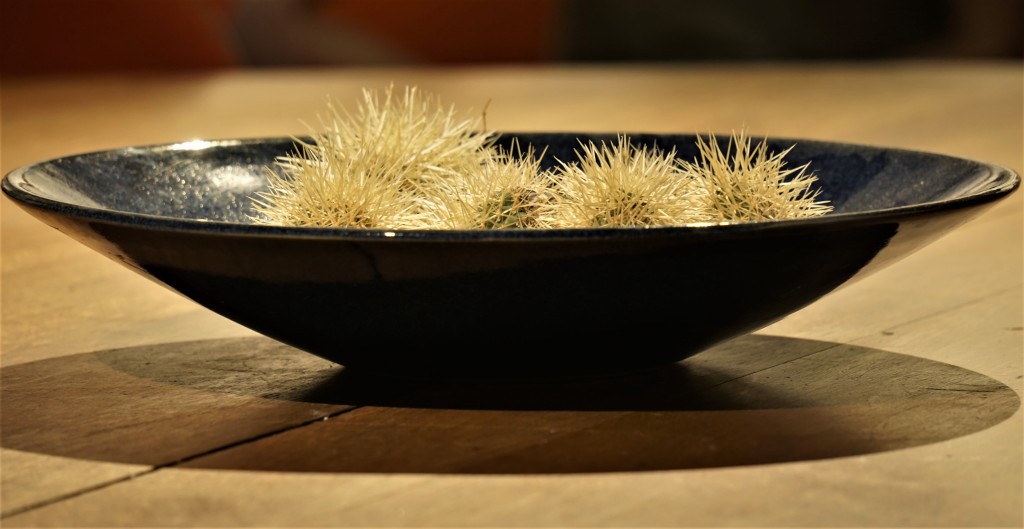
Sure, it’s up to each of us individually to overcome our own spiky problems. But we’re better off together. Taking care of our bodies. Our minds. Our spirits. Sharing our stories in this bowl of life.


The Irish Mist

DSC07357 (3).JPG

I’ll always remember you, rolling in over the gaelic green. I felt cool comfort knowing the veiled intentions you whispered in my ear wouldn’t be denied. No matter how much I wanted to gaze beyond the moss and ferns you shrouded, you held me there. You knew I needed to stand strong above the craggy cliffs of my past. You knew I needed to feel rooted to the emerald island, thankful for the mystery of my mending heart.

The Gist of Past Augusts

Wagon_080214

Securing pink and white hollyhocks that sagged across suburban lawns.

Devouring fresh melons and spitting out seeds at barefoot picnics.

Chasing patrolling peacocks to capture feathers for the trip home.

Cornering grasshoppers that jumped and landed from nowhere.

Dodging dragonflies that flitted, then perched in shallow waters.

Tiptoeing back to school over fading July-to-September bridges.

Discovering an old empty wagon laden with summer memories.

The World Was Our Oyster

HelenWalter_07261949 003 (1000x708)

My mother, Helen F. Johnson (the F was for Ferrell), sent me more than a thousand letters during her lifetime from her home in St. Louis. After she died in January 2013, reading them gave me comfort and strength.

Each letter contained a treasure trove of information: personal anecdotes, parenting and investment advice, and countless words of love and encouragement. (They and my grandpa Ferrell’s farm-life diaries from North Carolina inspired me to write and publish my first memoir, From Fertile Ground. It’s a story about love, loss and leaving your mark on the world.)

Inside Helen’s letter dated April 1, 2002, was this photo of her with my dad, Walter Johnson. Someone captured this image in Texas seventy years ago today (July 26th, 1949) on my mother’s twenty-sixth birthday. How do I know for sure? Because Helen wrote about it in her letter. Here’s a snippet of what she told me that day.

“… Walt and me when we were young and happy and the world was our oyster. It was taken on my 26th birthday at Club Seven Oaks–off the highway about halfway between San Antonio, TX and Austin, TX. We had been married 10 months. We had 14 happy years before he had his heart attack that took all our lives through some difficult times … It helps me to look at us then and remember there were some good years. Few people live a life without difficulties–something we learn as we live and age.”

Today, on what would have been my mother’s ninety-sixth birthday, the best way I know of celebrating her life, wisdom, and passion for letter writing, is to share her story … really our story … with the world. To that end, on July 26, 27 and 28, you can download a free Kindle copy of From Fertile Ground on Amazon.  I feature many more of Helen’s letters in my book.

Remembering Man’s First Lunar Landing

Apollo11Medal_July2019 001 (1000x946)

Like millions around the world, on July 20, 1969, I was glued to the Apollo 11 coverage. We strained to watch American astronauts Neil Armstrong and “Buzz” Aldrin become the first humans to land on the moon. It was nothing less than moonlight madness on CBS as my sister and I sat transfixed, cross-legged and sleepy-eyed in front of our grainy, black-and-white TV console.

We were all thirsty for every nuance of Walter Cronkite’s televised play-by-play, because it was a collective glorious moment for all Americans. Looking back, it was also strange redemption for the trauma we had endured less than six years before when — with a lump in his throat — Walter (the same trusted newsman) had the most painful task of all. To deliver the unfathomable news to a nation that John F. Kennedy had been assassinated. That our president with the lofty goal of landing a man on the moon would never see it realized.

When Christmas 1969 arrived, one of the presents under the tree from my mother and father was this Apollo 11/John F. Kennedy medal commemorating man’s first lunar landing. On the back it reads:

“I believe that this nation should commit itself to achieving the goal before this decade is out of landing a man on the moon and returning him safely to earth.”

John F. Kennedy, May 25, 1961

It may not surprise you to learn that at the time I received this gift, I was an unimpressed twelve year old. But fifty years later, it’s one of the items I treasure most from my parents. Not just for the sake of owning this beautiful and rare piece, designed by renowned sculptor Karen Worth.

But also because having the medal helps me to relive and cherish the memory of a remarkable moment in American history … when we reveled in a positive shared experience and were universally proud of our accomplishments as a nation.

Let It Commence

DePaulCommencement_061519

We’re a day away from the first day of summer in the Northern Hemisphere. But, based on the weather I experienced in Chicago this past week, you wouldn’t know summer is about to commence.

It was definitely a windbreaker week in the Windy City, where unpredictable weather abounds. Cool temperatures. Sporadic raindrops. Fog rolling in and out along the Lake Michigan shoreline. Just a fraction of the changeable weather I was familiar with when I lived in northern Illinois from 1980 to 2017.

The good news is none of it put a damper on my reason for being back in the “City of the Broad Shoulders” (thanks Carl Sandburg) for five days. I flew from Phoenix to Chicago with my husband for joyous reasons. We attended DePaul University’s 120th commencement. We celebrated my younger son’s latest achievement. Kirk can now add the designation Master of Education to his resume.

Last Saturday, the day before Father’s Day, I was one of several thousand proud family members and friends seated inside Wintrust Arena to share the moment with loved ones. The crowd included my older son Nick, who sat beside me. He and his girlfriend had also traveled back to Chicago to support his brother. It was a constant sea of smiles, cheers, blue caps and gowns as Kirk and the other beaming graduates crossed the stage one-by-one and accepted their diplomas during the commencement ceremony.

Incidentally, after this experience, I’ve decided I prefer the word “commencement” over “graduation”, because the former aptly describes the beginning of new opportunities … new doors opening in a person’s life that come with a significant achievement. (The latter feels more like an ending, a conclusion or a door closing after success.) At any rate, if you–or someone close to you–recently walked up to accept a diploma on any level, I wish you the greatest success in your next endeavor.

Summer is the perfect season for good things to commence. Warm breezes. Plenty of sun. A much-needed vacation. Perhaps even a little time to read a book just for the fun of it or explore a new degree or business venture you’ve been wanting to try. The one deep down inside you that keeps calling your name.

Go for it. Happy Summer. Let it commence.