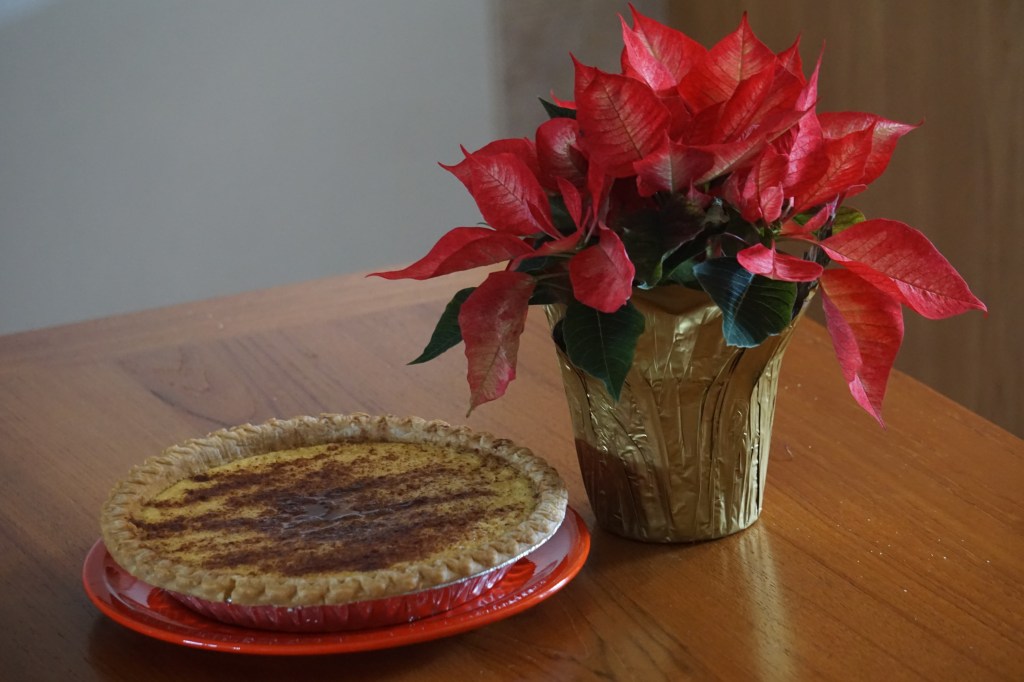
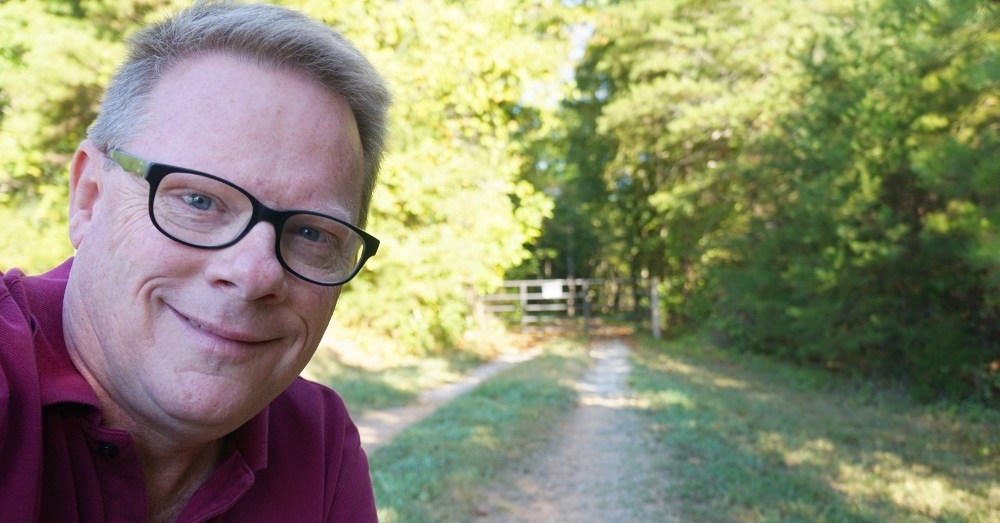
If you follow my blog, you know that–in addition to being a writer–I am the baker in our family. One of my favorite desserts for the holidays is egg custard pie.
If you’re looking for a simple-to-bake-and-creamy pie recipe, this one is a keeper. It definitely qualifies as comfort food at a time in the world when we could all use a heaping helping of that.
This recipe was passed to me via the southern branch of my family tree … from my mother, grandmother, and great-grandmother, Martha Jane Matilda Simpson Miller. She lived in rural Mecklenburg County, North Carolina, in the early 1900s.
* * *
Ingredients: 3/4 cup sugar, 1/2 stick butter, 4 large eggs, 3 tablespoons flour, 1 2/3 cups milk, 1 teaspoon vanilla.
Directions: Cream sugar and butter until light. Beat eggs and add to sugar/butter mixture. Add flour and beat until smooth. Add vanilla to milk. Mix milk into other ingredients gradually until smooth. Pour into an unbaked pie crust (deep dish) and bake at 350 degrees for 50 minutes or until custard is set and crust is brown. (The original recipe didn’t call for cinnamon, but I like it. If you do too, sprinkle the pie liberally before you place it in the oven.)
***
Incidentally, this egg custard pie recipe also appears in From Fertile Ground, my first book. which I wrote and published in 2016. It’s not a cookbook, but a memoir about love, loss, and grief … and the healing power of the written word across three generations of my family. If you haven’t read it, I hope you’ll check it out.
Most important, as 2021 comes to a close, I wish you good health. As we continue to endure this global health crisis, I encourage you to find comfort in your creative passions in 2022.
Grief is an insidious and universal human condition. When you love someone–and they leave or die–you need something to fill the space they’ve left behind. Grief enters to fill the void.
If you are in the midst of grieving (as I was in 2013 and 2014 after my mother passed away), it may feel as if you are wandering through a deep fog. Or you might wonder if you are chained to the floor in the middle of an empty room with water pouring in over all four walls and seeping through the floor boards.
That’s how grief can manifest itself, but for each of us the path is different. The loss lightens over the years. Still, we carry it wherever we go. It becomes an extension of us, ingrained in our identities.
In 2014 and 2015, I saved myself from drowning in grief by writing about it. My mother and grandfather helped immensely. They left behind a trail of their thoughts and experiences on paper … in the form of a mountain of letters from Helen (my resilient mother) and diaries from S.R. (my farming grandfather).
After my mother’s demise, reading her handwritten and wisdom-filled memories and her dad’s more stark observations prompted me to tell all three of our stories in one book. From Fertile Ground became my salvation. Yes, in 2015 it consumed me, but it also gave me renewed creative purpose and focus after I left my corporate job.
When I finished and published the book in 2016, I felt it was a story that would alleviate pain for grief-stricken souls. Five years later, I still feel that way. It helps me to revisit my book and my grief from time to time. Readers have taken the time to write reviews like this one online.
“From Fertile Ground” is more than just a terrific read. Johnson is generous in taking the reader into his world, his journey, his family, his emotions. In so doing, the reader obtains a soothing sense of identification of the human condition, particularly how we work through grief and loss. Johnson’s mother’s and grandfather’s letters are interspersed throughout the narrative (and connected) which adds to the reassuring sense of a collective history.
We live in a complicated world. Many of us are suffering through the side effects of loss and searching for answers. It gives me joy knowing that my book is a creative balm for many, possibly even an antidote for grief.
At any rate, as the days grow shorter in the Northern Hemisphere, I hope this personal and universal three-generation story inspires you and brightens your world … no matter who you’ve loved and lost, no matter where you live.
From Fertile Ground is a three-generation memoir and writer’s mosaic of love and loss. Published in 2016, it examines the implications of grief and our quest to make sense of our past so that we can find our path and move ahead.
The title of this post is a shameless ripoff of the old Beatles song, When I’m Sixty-Four. But my bastardization of the lyrics is appropriate. Today I turn sixty-four and I’m a writer who wants you to read my books. When you do, you will feed my desire to stay relevant.
Ask Tom. He’ll tell you. At this stage of life, I’m generally contented and thankful for good health, a comfortable home, and a loving husband. It is remarkable that we share the same birthday … same year too.
In 1957, our mothers never imagined their newborn sons–delivered three hundred miles and thirteen hours apart–would meet one day and marry. It certainly feels like a miracle to me.
Back to my writing. Whenever I wear my literary hat–which is frequently–I find myself questioning why my book sales have dried up like a sun-drenched Arizona river bed.
Of course, I promote my books online and do a little advertising here and there. I also market my stories on a personal basis, but when you’re an independent writer it’s easy for your books to get lost in the stacks of Amazon’s metaphorical bookshelf.
This concern I have is not quite an obsession, though it borders on it. I put a lot of thought and creativity into my writing. I want to share it with a wider circle of readers.
Perhaps my advancing age and occasional forgetfulness–did I tell you I turned sixty-four on July 6?–is what drives me to keep writing, to keep sharing my impressions and reflections of the world, to keep checking progress (or lack there of) on book sales, to keep wondering if readers will still read me.
The good news is I feel spry most days. (Of course, I wouldn’t consider using the word spry unless I were at least six decades old.) Anyway, I still have a lot to say and plenty of energy. So, on my sixty-fourth birthday, I’m going to tell you why you should buy and read my latest book, I Think I’ll Prune the Lemon Tree.
As a kid in the 1960s and early 1970s, I observed how hard my mother worked to provide for our family and to prepare meals that we all liked … even after working long days in an office.
Frequently, Mom bought Sealtest Neopolitan ice cream and wedged it into the freezer portion of our avocado-colored refrigerator next to the Swanson’s TV dinners.
Why Neapolitan? Because she and Dad liked strawberry ice cream, while my sister and I preferred chocolate and vanilla. If you aren’t familiar with Neapolitan (I rarely see it in the supermarket these days), it included all three flavors in a carton stacked side-by-side. So, theoretically, Neopolitan offered something for everyone in our family in one container.
This ice cream recollection captures precisely the creative thrust I wanted to achieve as I wrote my Arizona-based essays. I must have been channeling my mother’s shopping sensibilities.
I wanted my book to include something for everyone … humor and sincerity, social relevance and frivolity, truth and fantasy … and to comment on the relevance of every personal and geographical chapter in my life: Missouri, North Carolina, Illinois, and Arizona.
Now that summer is upon us and the heat has arrived, I strongly encourage you to consume your favorite flavor of ice cream to cool off and to buy a paperback or Kindle version of my Neopolitan book.
In the thirty-nine essays that appear in the book, you will enjoy lapping up several flavors. For instance, there are stories about: citrus and lizards; a hummingbird and a boxer; time travel; an eavesdropping barrel cactus; a return to Tucson through the looking glass of an authentic gay life; reflections on an extended visit to that dreaded place we all lived–Coronaville; the musings of an incredible shrinking man; a wayward Viennese waiter/writer struggling to tell his heart-wrenching story; a mid-century St. Louis custodian who bonded with a famous scrub woman; alliterative observations of flickers and fedoras; the golden hours of living in the Sonoran Desert; and much more.
When you read my book (and I hope you’ll review it too), you’ll be feeding your own creativity and doing this sixty-four-year-old writer a big favor. Yes, even after writing this long-winded essay, I still need to feel needed.
Now, back to the musical portion of my post and the final verse of a pop song that feels especially personal today.
***
Send me a postcard, drop me a line Stating point of view Indicate precisely what you mean to say Yours sincerely, wasting away
Give me your answer, fill in a form Mine for evermore Will you still need me, will you still feed me When I’m sixty-four*
*The Beatles released When I’m Sixty-Four (lyrics by John Lennon and Paul McCartney) on their 1967 album Sgt. Pepper’s Lonely Hearts Club Band.
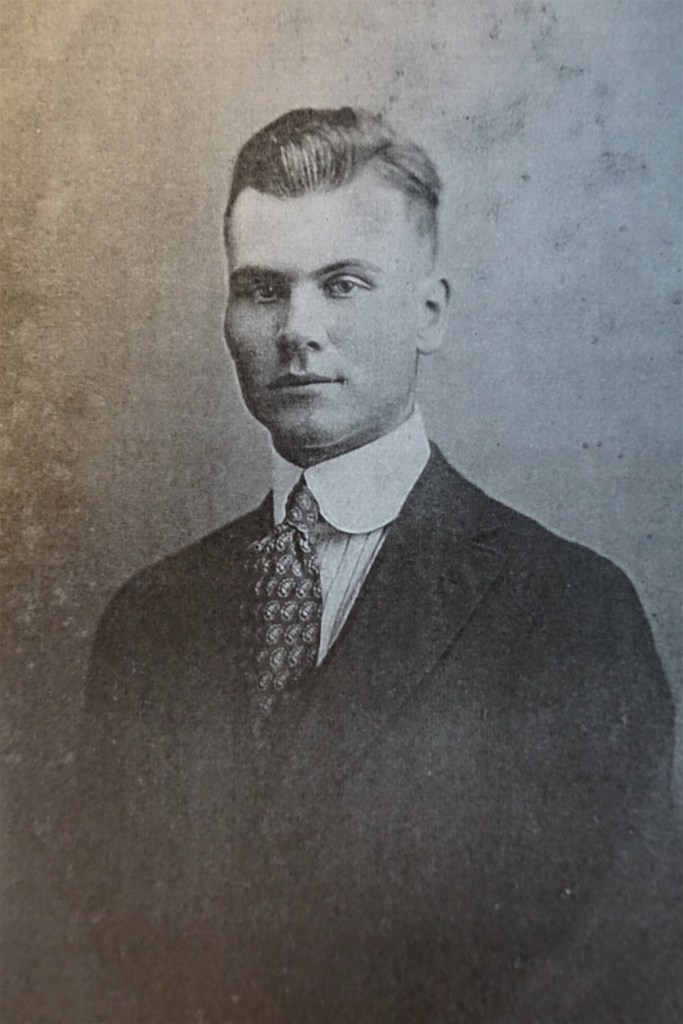
Sherrell Richardson Ferrell, my maternal grandfather, posing at age fifteen or sixteen in 1916 or 1917.
In my previous life, working as a consultant in the human resources world, I often helped companies communicate with employees about changes to their benefit plans.
Inevitably, this included grandfathering certain groups of long-service employees–insulating them from the benefits changes that would affect newer employees only.
This story is not about benefits. But in a sense it is, because I think my grandfather–Sherrell Richardson (S.R.) Ferrell–benefitted the world like all bloggers do when we leave behind our words, impressions, and observations.
S.R. penned his spartan, daily diary entries for more than fifty-two years–1933 to 1985. I featured a few dozen of his diary entries in my first book, From Fertile Ground, a three-generation writer’s mosaic about love and loss, which I wrote and published after my mother died.
Though S.R. scribbled all of his thoughts in long hand in tiny diaries and worked without a laptop or access to the internet, he lived like an early blogger extraordinaire–going about his rural North Carolina routine as a hosiery mill worker and later a farmer. At the end of each day, he recorded the minutia and magnificence of his days.
Evidence of S.R. Ferrell’s “blogging” life in the twentieth century and a sampling of more than fifty-two years of diaries he left behind.
Born on March 9, 1901, today would have been S.R.’s 120th birthday. In honor of my him (and the writing impulse that motivates and haunts all of us bloggers), my grandfather is my guest blogger today.
This is what S.R. Ferrell wrote fifty-nine years ago on a momentous Tuesday. It also appears as the opening to chapter two, Off Into Space, in From Fertile Ground.
Thank you for leaving behind a trail of your life, S.R., and Happy Birthday.
***
Tuesday, February 20, 1962
Watched Glenn’s capsule take off into space at 9:47 a.m. It made 3 trips around the earth at altitudes from 100 to 160 miles and the time for the three circuits was 4 hours 56 minutes and 26 seconds.
I went to Huntersville to send money order for insurance premium. Went to see Frances and boys.Fair. Cool. Ethel came by in afternoon. Martha Auten came to get turnip salad.
SR Ferrell diary entry … July 2, 1964 … from Huntersville, North Carolina.
I plowed corn in Bottoms until noon. We had showers of rain about 12:30 and I did not plow any this afternoon. I set out my blueberry plants this afternoon. President Johnson signed the “Civil Rights Law” into law today. Partly cloudy. Hot. I went to Charlie Gibson’s and got some tomatoes. 69 degrees (Low). 87 degrees (High).
***
My guest blogger is SR Ferrell. My maternal grandfather (Sherrell Richardson Ferrell was his full name) was a mountain of a man, devoted farmer and prolific writer. He left behind more than fifty years of simple-but-occasionally-profound diary accounts. He and they became central characters in From Fertile Ground, the story of my grief and quest to rediscover my southern roots.
About the same time SR (a staunch southern Republican) was plowing corn in North Carolina, LBJ (Lyndon Baines Johnson, a storied southern Democrat) was signing the Civil Rights Act on July 2, 1964. The legislation outlaws discrimination based on race, color, religion, sex or natural origin.
I’m grateful for this history and what we can learn from it. Especially in 2020. So far, it’s been a frantic, frail and frenetic year. Defined by the immediacy of terrible tweets that take precedence in American society over the truth and track record of yesterday. It’s important that we pause for a moment to give the longitudinal threads in our lives their proper respect and attention.
History has shown LBJ was responsible for escalating U.S. involvement in the Vietnam War. On the other hand, with a stroke of his pen, the 36th president also proved to have a positive impact on domestic policy. The Civil Rights Act prohibits unequal applications in voter registration, racial segregation in schools, employment and public accommodations.
Certainly, our country hasn’t always followed the rule and spirit of this law. If it had, we wouldn’t now face a long painful road ahead. Sifting through the wreckage of racism. Building a society that actively demonstrates black lives matter.
Unrelated to the prejudices of skin color, today in a surprising 6-3 decision, the Supreme Court affirmed the rights of LGBTQ workers. Citing Title VII of the Civil Rights Act, nearly fifty-six years after LBJ signed the law, SCOTUS ruled that no one can be fired from their job on the basis of sexual orientation or gender identity.
The SCOTUS decision was written by Justice Neil Gorsuch (a conservative appointed by Donald Trump), who said the “message” of the law is “simple and momentous: an individual’s homosexuality or transgender status is not relevant to employment decisions.”
In this case at least, equality and history win out. This is a ray of hope in an awful year.
Perhaps it’s also a present from the past to the present from a president (born in Stonewall, Texas, ironically) hundreds of miles from the Stonewall Inn uprising of New York that defined the beginning of the LGBTQ movement in June 1969 … less than six months after LBJ left the White House.
Truly July 2, 1964 was a mighty day for SR, LBJ and all Americans. … and, with the Supreme Court’s decision today, despite our current troubles, we’ve taken a step in the right direction toward civil rights supported at the federal level.
Perhaps you’re feeling isolated and afraid. Like me, you’re worried about the implications of this global pandemic. In need of a creative escape from the closing walls. Concerned for loved ones and friends, who live in places that are feeling the brunt of this crisis.
You’re tired and queasy from the daily Tilt-A-Whirl of news bulletins. Searching for truth. Dealing with loss. Texting with daughters and sons, mothers and fathers, sisters and brothers to see how they’re coping. Craving a retreat into the comfort of family connections and the healing properties of nature.
I’m here to help relieve the pain with this reading stimulus offer. From Saturday, March 21, through Wednesday, March 25, Kindle copies of all three of my books are FREE on Amazon.
All you need to do is click on the links, go to Amazon, download the books and curl up in a cozy corner of your home.
Once you finish each book, please take a few minutes to post your reviews on Amazon and/or Goodreads … especially if you feel my stories have helped to rejuvenate your spirit or soothe your soul.
One more thing. I’m thinking of you. Stay well and happy reading!
When my mother died in January 2013, she left behind a little money in an account. It was earmarked for charitable purposes only.
Over the years, my sister and I distributed small amounts to organizations in her name. Some money went to children’s charities; other stipends supported research to eradicate dreadful diseases.
With time, the account dwindled. The fund faded to the point where fees were beginning to gobble up money that would be better used by a charity. Seeing the dollars decline was something like witnessing the effects of the macular degeneration that clouded Helen Johnson’s vision late in life.
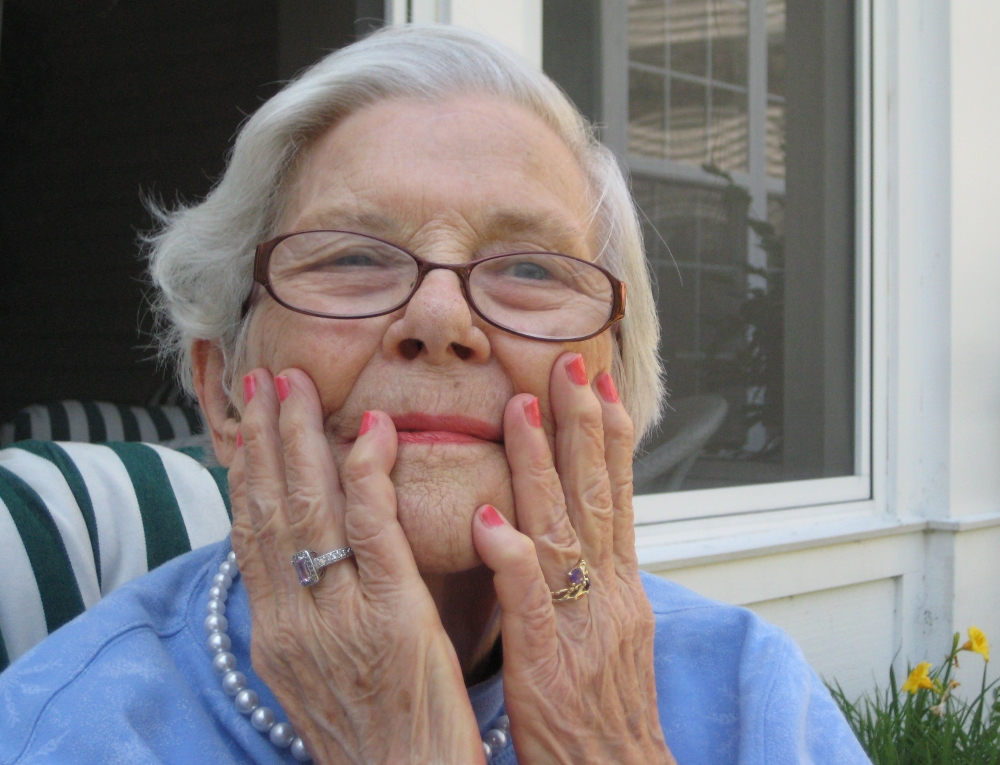
Today, after processing the final grant from her account, I imagined my mother sitting outside with me on a spring day in Wheaton, Illinois, where she lived her last few years. The daffodils bloomed as she modeled her freshly painted nails. It was a luxury she wouldn’t have dreamed of earlier in life … born of the rural South, a child of the Great Depression that left most families in turmoil, scraping to make ends meet.
Somehow, Helen survived all that. She left North Carolina at age twenty-two with two friends. She found a job in St. Louis, Missouri, just as World War II was ending. She met Walter Johnson. They married and brought two children into the world.
Helen went back to work after Walter had a heart attack in the fall of 1962. The next few years were lean ones for our family. Over time, Helen built a career and found ways to keep us afloat.
She and Walter had a tough time of it, but somehow they managed to stay together. They scrimped and saved. She retired in 1987. He died in 1993. She lived on, nurturing her family and flowers. Eventually, she said goodbye at 89.
Now, here I sit. Remembering my wise, kind and resilient mother. Knowing that the money she left behind will put food on the tables of hungry families in 2020, support the planting of shade-producing trees, grant a wish for a needy child, care for healthier hearts, and allow a few disadvantaged citizens to raise their voices proudly in an uncertain world.
On this sunny and breezy, seventy-degree day in the Sonoran Desert, I celebrate the life of Sherrell Richardson Ferrell. (He preferred S.R. Ferrell, because he thought it sounded more dignified.) March 9 would have been my maternal grandfather’s one-hundred-and-nineteenth birthday.
S.R. was a mountain of a man, who loved his Huntersville, North Carolina farm. I still remember him climbing the creaking steps of his back porch. Coming in from tending to his cattle and crops. Removing the broad-brimmed hat that shaded him from the Carolina heat. Swatting horseflies that followed him through the screen door. Mopping his brow and grabbing a bar of soap to wash the red earth off his massive arms and hands.
On the surface, it would seem S.R. and I had little in common other than our blood line. He was born in 1901 … a straight-and-practical, stoic Republican, who lived his entire life in the rural south. I was born in 1957 … a gay-and-artistic, emotional Democrat who made a living in a major Midwestern metropolis before escaping to the desert.
But after reading his fifty-two years of diary entries five years ago … a chronicle of every day in his life from age thirty-two in 1933 until his death at age eighty-four in 1985 … I know now we will always share our grief for Georgia Ferrell (his wife and my grandmother) and our writing impulses to leave behind a trail of our divergent lives.
Neither S.R. or I imagined that I would write a book about our journeys. That I would tell the story of a third writer between us … his oldest daughter Helen, my resilient mother … who left the south, survived her traumas and kept writing her wisdom-filled letters to ensure her family would remember her world and intellect.
But it is all clear to me now. More than any other, From Fertile Ground is the book I was meant to write. It is the story of all three of us finding our paths, loving our families, making our way against the odds. It is a story I was meant to share with the world.
During our visits to Huntersville in the 1960s, my sister Diane and I chased the peacocks that patrolled the farm. Inevitably, each time we returned to the St. Louis suburbs, we left with a few prized feathers and another batch of memories of our Grandpa Ferrell.
There he sat. Alone with his thoughts. Gliding in his chair like a prehistoric blogger. Recording the highlights of his day in his diary each night before bed. Hoisting his sore body out of his rocker. Placing his diary back on the mantle. Climbing the winding stairs to his bedroom for another chance to do it all again the following day.
***
This morning Tom and I took a hike with John and Sharon, good friends visiting from St. Louis. We walked portions of the Tom’s Thumb Trail in the McDowell Sonoran Preserve in north Scottsdale.
As we followed the switchbacks up and down the trail, it dawned on me that I am now nearly the same age S.R. was when I chased his peacocks and vacationed on his farm in 1962 and 1964. When he taught me to milk the cows. When he brought his ripe cantaloupes and melons in from the fields to prepare them for market.
Of course, S.R. never hiked this rugged mountain path. He never visited the sand and sun of the Arizona desert. Neither did Helen. They both preferred the cooler air, the green-and-misty escapes to the Smoky Mountains, the more fertile ground.
But there is comfort knowing that my grandfather’s lineage, his Scotch-Irish tenacity, his southern roots, his physical strength, his propensity to write, and his unmistakable Ferrell nose are with me on the trail of life.
Generations have insisted there is something wrong with lemons: When life gives you lemons, make lemonade. In other words, stop your whining and make the best of a bad situation.
I remember my demonstrative dad, a long-time salesman, declaring this in the 1960s. Perhaps he picked up this phrase from Missouri-born author and salesmanship lecturer Dale Carnegie’s 1948 book How to Stop Worrying and Start Living.
Although, according to Wikipedia, writer Elbert Hubbard originally coined the phrase in 1915 for an obituary he wrote to honor Marshall Pinckney Wilder, an actor who overcame physical disabilities to lead a fruitful life.
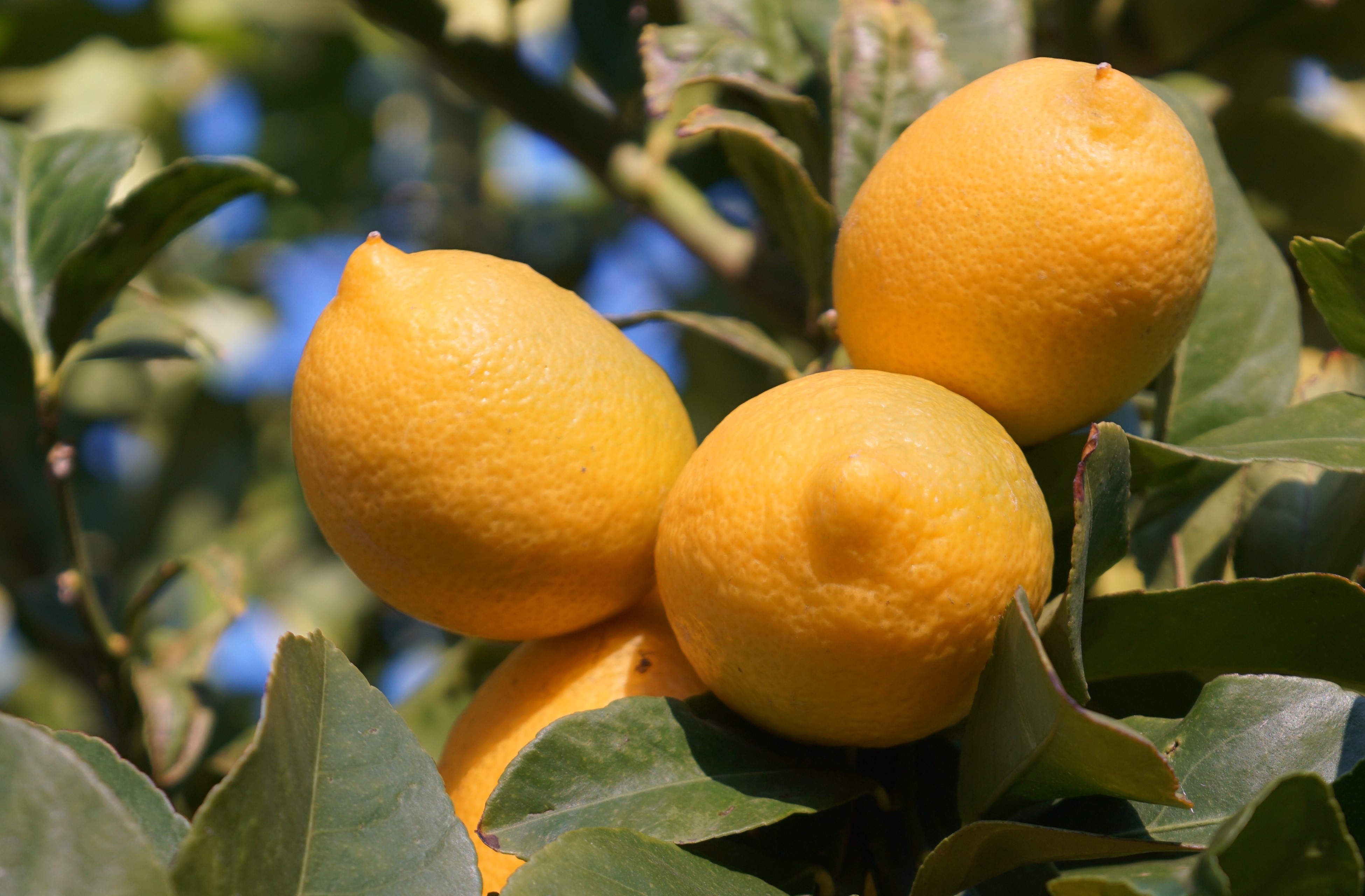
Anyway, I know lemons are sour, but what’s so horrible about having a luscious lemon tree outside your front door? Nothing as far as this Midwestern boy can tell. It’s laden with ripe-and-ready fruits every January, cascading a clean citrus scent (think Lemon Pledge furniture polish), whenever I walk past it.
Last Saturday, I snagged eight lemons from our condo complex tree, reached to the top shelf in our kitchen cabinet for our juicer, found a lemonade recipe on line and made fresh lemonade. (By the way, in my previous lives … in Missouri, Illinois or even on my grandfather’s North Carolina From Fertile Ground farm … the climate would have never permitted this.)
Of course, I added more than a gallon of water and a cup and a half of sugar to the lemon juice to neutralize the sour fruit flavor. I poured it all into our retro Kool-Aid-style glass pitcher and found space in our refrigerator to let the liquid contents cool.
Then on Sunday, Tom and I, along with Nick and Aida (my older son and his girlfriend), each enjoyed a tall glass of cold lemonade to celebrate the fruits of our fortunate Valley of the Sun existence.
I love luscious lemons. When life gives you them (on neighborhood trees in January or otherwise), make lemonade.
For all of his eighty-five years, S.R. Ferrell lived an ordinary and unassuming twentieth-century rural life. Before the first rays of sunlight emerged each morning, my grandfather rose to milk the cows, tend to his crops, and complete a never-ending list of chores on his Huntersville, North Carolina farm. Every night before bed, until the day he died in 1985, the stoic farmer recorded his brief thoughts about the day (like the pages you see here from 1962).
Five years ago, as I perused his diary entries and told the story of my hard-working grandfather in From Fertile Ground, I discovered that many of the things S.R. wrote were rather mundane. But, every once in a while, I unearthed a hidden gem. A startling first-hand account of a momentous day in American history. Ironically, my grandfather was sixty-two … the same age I am today … when he wrote the following on November 22, 1963. It was a fateful Friday. Exactly fifty-six years ago.
***
I went to pasture to work up some wood and haul it to the house. Mr. and Mrs. P.E. Miller came this morning to get some strawberry plants. Then they went on to Charlotte. I hauled more wood in the afternoon.
President Kennedy, 46, was assassinated at twelve o’clock noon in Dallas, Texas. Lyndon Johnson is now president.
While S.R. Ferrell was toiling on his farm in Huntersville and John Fitzgerald Kennedy was dying in Dallas, I was an innocent six-year-old schoolboy in suburban St. Louis in November 1963. Probably sitting at my first grade desk practicing my spelling.
I remember my teacher crying in the front of the classroom that day. As she tried to compose herself, she told us school would end early. Soon after, we filed to the cloak room to put on our jackets. We boarded our buses for our respective homes.
That weekend, I sat glued to the floor in front of our family’s black-and-white TV and watched Jack Ruby shoot Lee Harvey Oswald. And, in the horrific and historic days that followed, JFK’s three-year-old son saluted his father’s passing, flag-draped casket. That image may have been the most mournful of all.
We’ll never know how the world would have evolved if JFK had lived to write another chapter in American history. But somehow the world kept spinning and S.R. Ferrell kept writing. And I have the comfort of knowing that my grandfather’s account of November 22, 1963 is forever chronicled in Chapter 39 of From Fertile Ground. You’ll find it on page 157 of my first book.