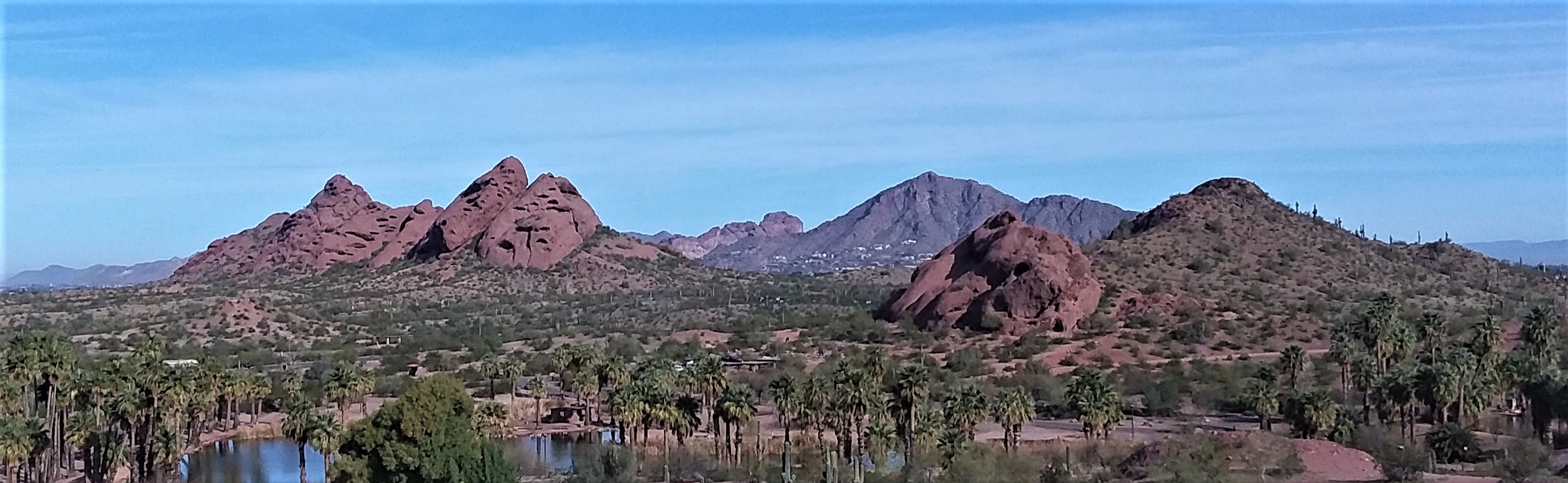
Tag: Papago Park

What I Feel

In addition to writing four memoirs, I’ve been blogging for nearly four years. A few of you have joined me for every twist and turn. I feel humbled by your interest and loyalty.

In my first post (May 4, 2018), I shared ten tips for writing a meaningful memoir. I believed then (as I do today), that each of us has at least one story to tell. If you are an aspiring writer, who is searching for a little inspiration, you may find these tips helpful.

#4 on the list is especially important if you are looking to engage readers, because feelings–fear, disappointment, grief, joy, excitement, anticipation, etc.–are universal:

Write what you feel. Go beyond reporting what you know. The details are important, but not as much as how you were affected by the occurrences that appear in your story. Tell your reader how you feel. Describe your experience—how the positive, negative and unusual happenings in your story touched your life.

Often when I sit down to write a new blogpost–and my fingertips touch the keyboard of my laptop–I’m uncertain what I want to write. But from the beginning of this odyssey, I’ve vowed to follow my own advice to tell and show you what I feel about personal and global issues.

That has included the emotions connected to creating an authentic life as a gay man and father of two sons; recovering from a heart attack; building a new life in the Sonoran Desert with my husband; aging in a predominately youth-focused society; surviving a global pandemic; and simply observing the healing properties of animals and nature.

Even in our uncertain American society–still hamstrung politically and dealing with the ravaging effects of COVID-19–I feel fortunate to have a safe home, good health, enough food to eat, and a community of family and friends nearby.

However, I also feel a strange mix of anger, anxiety, and sadness. I attribute that to the frightening stories and images of what’s happening in Ukraine.

I won’t pretend to understand the politics of it but can imagine the tremendous pain that is occurring as Russian troops invade and thousands of innocent Ukrainian civilians are threatened.

The deceptions and power-hungry antics of certain world leaders–rooted in lies and insatiable egos–are unacceptable to me. So is the growing level of American ignorance and intolerance for the truth of what history and provocative literature can teach us.

Yet we have too many “adults” in communities clamoring for the removal of books, which might help teach our children to become critical thinkers. On that note, what I feel today is the excruciating pain of what our world has become.

Rest assured, I will continue to write and voice my concerns, but I feel it’s best if I set aside my laptop for the moment. Here in the Valley of the Sun, I’m going to lace up my sneakers on a gorgeous Friday afternoon and take a hike to Papago Park.

I’m certain the sun is shining there, and the saguaro cacti are standing tall.

Lingering Light

Inviting but ominous as an empty bench, November casts its lingering light over Phoenix. It fades from somewhere to nowhere, between the gauzy clouds, beyond the distant mountains.

In Autumn

After living through four summers, autumns, winters, and springs in Scottsdale, Arizona, I’ve decided autumn is my favorite time of year here.

Most 100-degree temperatures are vanishing from our ten-day forecast. The monsoons have packed their bags and left town with the dusty drama and wet havoc that only unexpected and unwelcome guests incite. And large flocks of snow birds have yet to fly in.

Mornings are a notch or two cooler–in the 70s–than they were in late summer. Perfect for sipping coffee outside under the eaves.

Did you know we’re frost-free? You won’t find icy substances on our pumpkins or windshields. Ever.

You won’t witness a foliage kaleidoscope here either. Or crunch through piles of leaves. Or rake. Stay away if that’s your thing.

I didn’t intend for this to be a Scottsdale Chamber of Commerce ad (though it sounds like a back-handed, bizarre one). But if you like plenty of pool days, pleasant dry mornings for hikes, warm-to-hot September and October highs, shorts, flipflops, spiky saguaros, and startling sunsets long after Labor Day is a distant memory, come to the Valley of the Sun.

Do it in autumn.

I captured this autumn sunset on September 25, 2020 at Papago Park in Phoenix, Arizona, a mile from my Scottsdale home.

Sonoran Sunday Magazine

Are you missing your favorite monkey? Are you searching for a bridge to a higher plain? Do you need to be reminded that you are beautiful? You’ll find them all here along the Crosscut Canal between Scottsdale and Tempe.

The Christmas Star

Jupiter and Saturn owned the winter solstice sky tonight over Phoenix. About 6:30 p.m., Tom and I were fortunate to capture the duo shining side-by-side, forming the Christmas Star between two saguaros in Papago Park.

As we prepare to say goodbye to the pain and heartache of 2020, there is no better way for me to wish you and your family a healthy and happy Christmas and a new year of hope, peace and bright possibilities.

Escaping the Labyrinth

It’s my sister’s birthday. Soon she will open the card and presents we sent her. I will call her later today to wish her well. To tell her I love her.

Like every relationship, ours has had its ebbs and flows. But Diane and I are the only ones left from our family of origin. The only ones who remember the best sounds of our St. Louis childhood–Dad slurping his breakfast beverages through the overflowing Coffee Hound cup we gave him or Mom sifting red and green sprinkles on sugar cookies shaped liked reindeer, candy canes, stars and Santas.

After our mother died in 2013, Diane and I each retreated into our individual darkness. We had worked together closely to care for her during her final years and months, but after Mom was gone I wasn’t sure we would escape the labyrinth of pain and grief or come out the other side whole. It wasn’t that I doubted our love, but we both had to find our personal paths to heal from the devastating loss.

For me that meant writing about it and sharing my observations in From Fertile Ground. Diane wasn’t keen on the idea. She preferred privacy. This difference between us–and the resulting grief-induced friction–was unexpected for me, but with time I realized I needed to respect my sister’s point of view. To this day, she rarely reads what I write.

In June of 2017, right before Tom and I left Illinois and moved to Arizona, Diane drove from her suburban Chicago home to visit with us on our backyard deck in Mount Prospect. I decided to give her the concrete birdbath that had been Mom’s, hoping it would remind her of the shared love we had for our nature-loving mother.

A few weeks later–on the way west–I landed in a St. Louis hospital after a heart attack. I called my sister to tell her what had happened. To hear her voice. To hear her love. That conversation was the turning point toward greater understanding.

In early September, Tom and I received a card from the American Heart Association in the mail. To acknowledge Tom’s and my sixth wedding anniversary, it told us Diane and Steve (my brother-in-law) had made a donation to the organization.

After I opened the card and wiped the tears from my eyes, I realized Diane and I had escaped the labyrinth of grief. Our relationship had emerged on the other side of the shadows. There was light on the horizon.

The Golden Hour

GoldenHour_June2020

Between 2004 and 2009, Helen stood patiently on her third-floor condo balcony and waited for the fleeting color to appear near the end of each day.

Her inanimate accomplice was one of those disposal Kodak cameras from Walgreens. It soothed her shutterbug sensibility.

Nature photography was the perfect hobby for a woman in her eighties, who loved art and the clockwork of the calendar and the seasons.

Earlier in her life, she worked too hard to find the time to anticipate and ponder the legacy of sparkling sunsets.

But, as the remaining rays in my mother’s life flickered on the northeastern Illinois horizon, she found comfort in the hues that came and went.

Like a National Geographic photographer on assignment, she felt it was her duty to capture the most vivid color of each passing day.

***

Whenever Tom and I walk west after dinner toward the Papago Park buttes, I feel Helen’s anticipation … how she might have felt if she’d seen the Sonoran sunsets of our sixties.

During the last few years of her life she asked, “Do you think you and Tom will retire in Arizona?”

It gave her comfort to know we might fall in love with the western sky.

After the heavy lifting of our responsibilities was through, she could imagine our stunning sunsets … the colors, lights and textures.

She could dream of the golden hour after she was gone.


The Columns and Buttes

MU_ColumnsRing_May1979

Our best memories–the ones cast in precious metals and inscribed with our names in cursive–far outweigh the cubic zirconium rings and balled up aluminum foil we choose to discard. But even the brightest ballast-laden snippets blur at the edges as they flash through our mind’s eye. They provide the weight we press against, cling to, or push away from.

My fourteen-karat gold college ring symbolizes the continuity of my University of Missouri years in Columbia. Resting in a dish with assorted jewelry in my bureau drawer, it features the school’s six iconic time-tested columns. All that remains of the university’s Academic Hall, which burned in a fire in the fresh snow of January 1892.

Out of the ashes, President Richard H. Jesse had the vision and fortitude to guide the school and transform it into a research-based institution. During his seventeen-year administration, the modern university Jesse envisioned was born. It grew and produced positive ripples around the ever-enduring stone columns … as well as generations who met near, lounged under or studied beneath them.

MU students have built lives and careers there. Succeeded and failed in times of war and peace. In the 1970’s, dozens of us tossed our Frisbees around the stone pillars … galloping across the Francis Quadrangle grass, running amok in the “Show Me” state until the next keg of beer or slice of Shakespeare’s pizza captured our attention. In my case, I walked across an outdoor stage to accept my Bachelor of Journalism degree in May 1979.

At their essence, the columns represent more than a social backdrop for play and frivolity. They are larger-than-life markers of time and civilization, before automobiles, airplanes, computers or digital technology. Poetic and historic reminders of their permanence and significance under fire versus our relative impermanence and insignificance.

I no longer wear the ring, but I’ve kept it nonetheless. When I pick it up and examine the luster and sparkle of the tiger’s eye, I marvel at what I accomplished, recall what I survived, and “retreat to the chambers that I left behind”, a lyrical line from folk rocker Dan Fogelberg’s song Heart Hotels and his 1979 album Phoenix.

In the late 1970’s, as I turned up the volume on my stereo and escaped into Fogelberg’s melancholy music behind my long hair, I didn’t imagine I’d go west one day and create a whole new life near the base of another rock formation … the Papapo Park buttes; a natural one … but that’s what can happen over the course of a lifetime.

More than forty years later, I’ve discovered a longer view, which comes only with lengthening late-afternoon shadows and survival. Whenever I imagine my life on an eighty-year, bell-shaped curve (we should all feel lucky to live that long … Dan Fogelberg died in 2007 at age fifty-six), I see the columns as the launching pad after the first twenty years.

The geological formation of the Papago Park buttes, just steps from my Arizona condo and millions of years ago at the bottom of a vast ocean, are likely the landing pad on the down slope of life for my last twenty.

Global pandemic or not, none of us knows when the end point will arrive. What the circumstances will be. We might as well enjoy the flights of fancy–keep throwing and catching our Frisbee in our sixties as Tom and I do–and take comfort in the anchors of life. The symbols of strength around us. The columns and buttes that keep us grateful and grounded in good times and bad.


From a Distance

SheepDistance_042320

We can still see each other if we squint. You teetering on the mountain top looking west. Me gazing east from the other side of the valley. Absorbing a few morning rays of sun before the heat rolls in. Shielding ourselves from the most harmful elements that lurk out of our control.

Coexisting from a distance is what we do now. Not knowing what will come next. Wondering when we may be close again.  If only we could fly away together. Begin a new life as unencumbered mockingbirds or desert wrens. No longer afraid. Nesting in the saguaros. Dancing in the sky.

Far and Away

FarAndAway_2020

When I look around me, it feels as if I’ve popped the lid off my space craft, poked my head outside, and discovered that I’ve landed on the face of the moon. How is it possible that this warm and dry space, these buttes and saguaros, this vast sky and terrain exist just steps from my modest home?

This is … far and away … a better life than the one I imagined. Especially when I recall a doctor in St. Louis telling me he’d discovered a blockage on the left side of my heart in 2017 on the way west. I couldn’t have predicted that personal scare. Or the global fright of this pandemic that has suddenly increased the value of toilet paper, hand sanitizer, protective masks, social distance and personal space.

What’s my point? Rarely does life turn out the way we expect it will. Sometimes it’s better. Sometimes it’s worse. Sometimes it’s just different. Like five years ago this week. Kirk, my younger son, was on the other side of the world volunteering for the Peace Corps on the Vanuatu Islands. I was worried about his safety and well being, because a natural phenomenon was swirling and creating havoc. This is what I wrote on April 9, 2015:

Kirk is on a plane heading back to the U.S. from his Peace Corps assignment in Vanuatu. It’s been a wild ride for him — and even more so for the citizens of Vanuatu — since Cyclone Pam made a direct hit on the islands in mid March.

Perhaps there is a blessing in all of this. Kirk was able to go back to the island of Tanna, where he had been living and teaching children for the past 15 months. Sadly, much of the island was decimated and seven of the villagers lost their lives. However, he reconnected with his host family, whom all survived, and shared an Easter service with them before saying goodbye.

I can’t begin to express how proud I am of Kirk for the positive differences he has made in the lives of people on the other side of the world. This Peace Corps experience will live with him forever and though I will never meet his host family I am certain they were touched by his generous spirit, warmth and kindness.

Fortunately, since returning to the United States, Kirk’s built a good life. He received his Master of Education degree in 2019. Last fall, he landed a job in the Chicago area as a school counselor. In late March, the day before he began to shelter in place like thousands of other Chicagoans, he moved into a new apartment. He’s even kept in touch with some of his Peace Corps friends, who’ve scattered across the country since 2015.

Like all of us, Kirk is now living through another round of upheaval. The good news is I can connect with him online, over the phone, and via text. Last weekend, he took Tom and me on a virtual tour of his new space. Like five years ago, I am relieved to know he is okay physically and doing his best to adapt to this precarious situation. But, I still worry about his well being and that of his older brother Nick, who lives near us in Arizona with his family.

Tom and I see Nick more frequently. Before the world went on lockdown, we were able to squeeze in a few impromptu episodes of basketball at a safe distance at an outdoor court in Tempe. But now Nick might as well be living on the moon. We don’t expect to be with each other for a while. We’re all sheltering in place. Clamoring for the close-range contact. Hankering for the hugs, handshakes and high fives. Remembering the movie nights and mostaccioli. When will we be able to share those again?

With all that we’re missing and the Easter holiday coming this weekend, I felt the need to be together in some fashion with my immediate family … Kirk in Chicago … Nick, Aida, Mia and Tony in Tempe … Tom and me in Scottsdale.

So, on Sunday night, we’re having a virtual, non-traditional gathering. I call it Pie Time, but we’ll be sharing our favorite desserts … fruit pies and carrot cakes … from our respective homes. Thanks to Zoom, we’ll be able to see each other’s faces online. Hear our laughs. See our smiles on the screen.

It won’t be a perfect Easter, but we’re alive and well. We’ll be together in 2020. Like every other family, celebrating or not, we’ll be doing what we can to get by. Far and away. Hoping and praying for good health without knowing what tomorrow will bring.