Tag: Valley of the Sun

Our New View

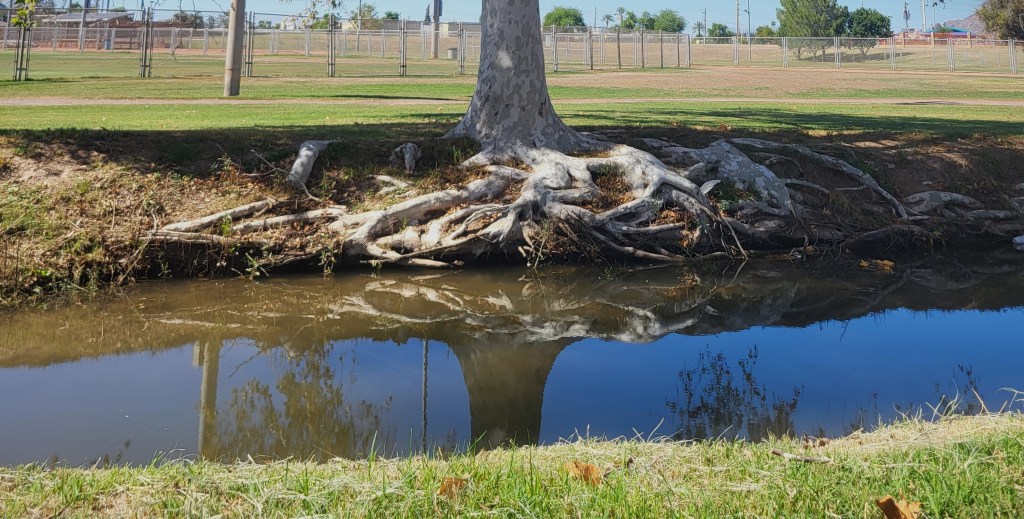
Trees connect us to the earth and sky. They adorn our natural spaces with character, continuity, and shade. Though they never speak, trees–if we listen–whisper wisdom in the wind.

***

Tom and I have missed the presence of a tree in front of our Scottsdale home for nearly six months.

In May, carpenter bees sawed our fifty-year-old fig tree, selected and planted by Tom’s grandfather in the early 1970s.

Sadly, it split in two and tumbled down in the darkness. Only a stump remained for nearly six months.

During the long, hot summer of 2023, I missed the solitude and protection of a tree outside our north-facing window.

Each time I walked past our fig tree’s stump, it reminded me of other recent losses: our friend Dave last December; Frances (my mother’s sister) in July; then another friend Chad … suddenly in September.

Strange as it sounds, the space where our fig tree once stood felt like an open wound or incomplete canvas. But that changed in September when Tom and I shopped for a new tree.

I felt the exuberance of nature’s possibilities as we walked through Moon Valley Nursery in Phoenix–sizing up the options: Hong Kong Orchid (flowers in the spring); Chinese Elm (strong shade tree); Ficus (evergreen and can be trimmed to stay small); and Red Push Pistache (drought-resilient with a pop of color in the late fall).

Jonnie was our escort and sales rep. She helped us compare and contrast the leading candidates. By the end of September, the choice was clear for Tom and me.

We picked the new tree of our dreams, a hearty Red Push Pistache. It is best known for the vivid red color it produces in late November.

In that sense, it will remind us of the Burning Bush we planted in the front yard of our home in Mount Prospect, Illinois in the summer of 2013.

It turned blood red every October (and still provides a splash of color though we left in 2017), after the Blue Spruce that preceded it died in the spring of 2013 … a few months after my mother left this earth.

***

On November 1, a crew from Moon Valley Nursery arrived to remove our fig tree stump. As they dug up the remaining gnarly and decaying roots and hollowed out the hole, Tom and I could feel relief pour in.

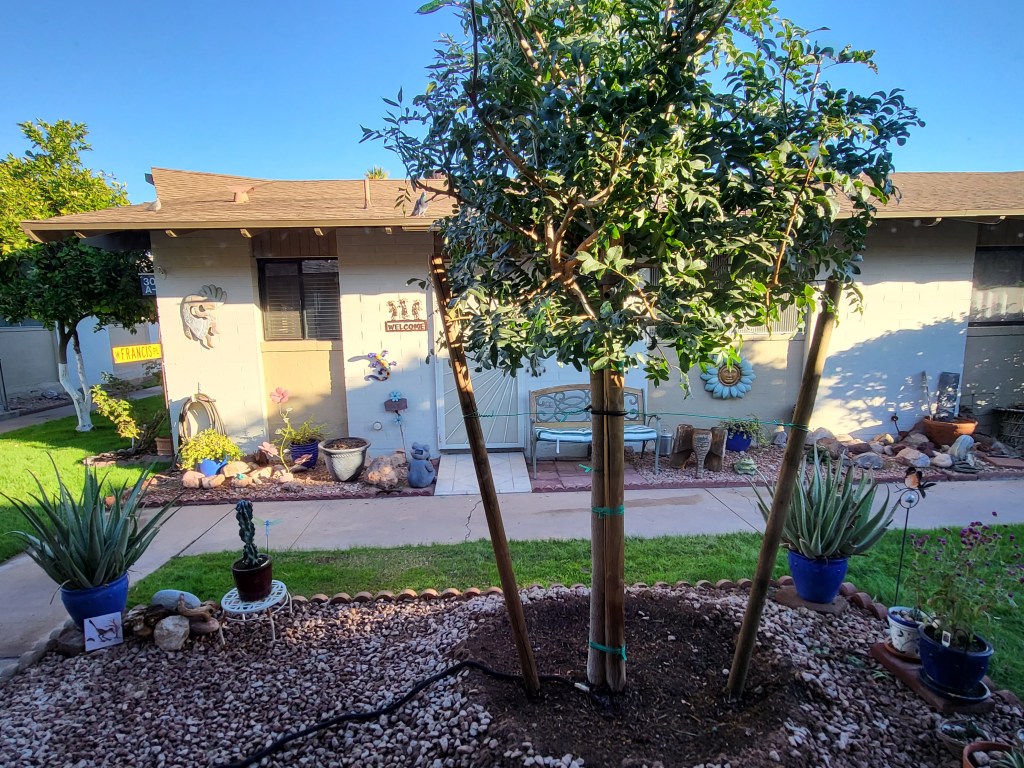
The following afternoon, our new, mature, Red Push Pistache tree arrived on the back of a long, flatbed truck. A team of five men from Moon Valley maneuvered it through the gate and down the sidewalk. Moments later, the crew enlarged the hole to accommodate our new tree’s three-foot ball of roots.

By five o’clock they had anchored our durable-and-drought-resistant shade tree in the ground in front of our condo. Soon after, they left to deposit another tree for another customer.

I imagine, in a few weeks–as Tom and I prepare to sit down at our kitchen table and give thanks on a Thursday–our new tree will lavish us with a blaze of red leaves.

But even before the redness appears, it feels as though some semblance of balance, normality, and renewal has returned to reveal our new view in south Scottsdale outside our north-facing window.
A Ticket to the World Series: Part Two

Here in Arizona, the Diamondbacks’ dream of winning the World Series in 2023 faded more quickly than a fleeting November sunset. But life goes on in the Valley of the Sun. Congratulations to the Texas Rangers for winning the World Series for the first time in their fifty-two-year history.

In my previous blogpost, Dad and I failed to secure bleacher tickets to the 1968 World Series. However, we did discover a parking ticket flapping on our windshield when we returned to our car. Now, as promised, on to part two of my story, also an excerpt from Tales of a Rollercoaster Operator.

***

Fourteen years later, the 1982 Cardinals returned to the World Series to face the Milwaukee Brewers.

I was living in the Chicago area and working as a copywriter at Sears Tower. My boss Dave–Sears national retail advertising department head–called me into his office late one afternoon. That had never happened before.

He told me he knew I was a die-hard St. Louis Cardinals fan working alongside dozens of Cubs and White Sox fans, who had long since lost interest in the pennant race.

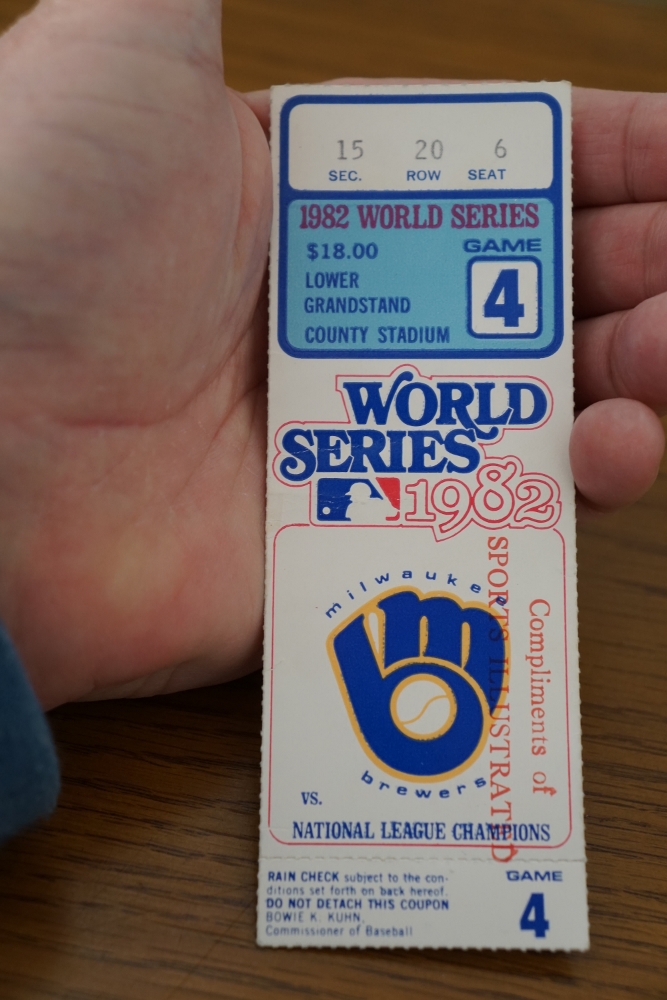
Because of his position and advertising influence, the powers that be at Sports Illustrated had given Dave one complimentary ticket to game four in Milwaukee, which he couldn’t use.

When Dave handed me the ticket, my jaw dropped to the floor and out poured a stammering stream of thank yous. He told me to enjoy myself, but to keep my mouth shut.

I’m sorry Dave. I managed to keep this secret for thirty-four years (note: I wrote this in 2016). Somehow, I feel the statute of limitations on this must have expired. I hope you don’t mind that I’m breaking my vow of silence after all this time.

The following Saturday morning I headed north to Milwaukee and made my way into County Stadium. Of course, I wish Dad could have joined me. He was back at home in St. Louis and ready to watch the game on TV, while I–wearing my Cardinals cap–was seated among a sea of Brewers fans in another beer town four hundred miles north of St. Louis.

The Cardinals lost 7-5 that afternoon. They were the victims of a dramatic seventh-inning surge by Harvey’s Wall Bangers. (Harvey Kuenn was the manager of the Brewers.)

During the rally, I was doused with suds by Brewers fans sitting in the grandstands above me. They were tired of hearing me chirp about the Cardinals. Even so, I finally saw my team play a World Series game in person and a few days later got my revenge.

Led by manager Whitey Herzog, the ’82 Cardinals–Willie McGee, Ozzie Smith, Lonnie Smith, Keith Hernandez, Tom Herr, Bob Forsch, Joaquin Andujar, Bruce Sutter, and the like–won it all in the seventh and deciding game.

Win or lose, after a fourteen-year wait I could finally say I stood in the stands and watched my team play in the World Series on a crisp afternoon in Milwaukee.

Moments before the first pitch, I placed my hand on my heart and sang the national anthem with about fifty thousand Brewers fans I didn’t know … and one weary World War II veteran back at home in St. Louis.

I knew Dad would be standing in his living room, belting out the Star-Spangled Banner in front of his TV. Knowing that made it all the sweeter.

***

After sharing this story from my World Series vault with you, I can now say the 2023 baseball season is over officially. Sports allegiances are like the roots of family trees … they run deep. So, you can be sure I’ll be rooting for the St. Louis Cardinals to rebound in 2024 and add a new chapter to their rich history.

If that isn’t in the cards, maybe the young, talented Arizona Diamondbacks can produce another magical run next year to capture the crown.

Then and (Nearly) Now

I know some of you are like me. You have positive, vivid memories–as a child and adult–of visiting your local library and leaving with a few titles that piqued your interest.

My earliest library memories lead me back to suburban St. Louis, where my mother drove my sister and me to the Tesson Ferry Library on summer Saturday mornings in the 1960s. It was her attempt to sustain our thirst for learning away from the classroom.

More recently, now that I am in my 60s and living in Arizona, Tom and I stop by our local library in Scottsdale to discover books. Sometimes they are contemporary novels, sometimes they are classics.

For instance, I had never read any of the writings by Willa Cather, so I picked up her book, The Song of the Lark. It probably won’t surprise you to learn that I’m enjoying reading her mostly autobiographical tale about a character’s quest for artistic excellence in the desert southwest.

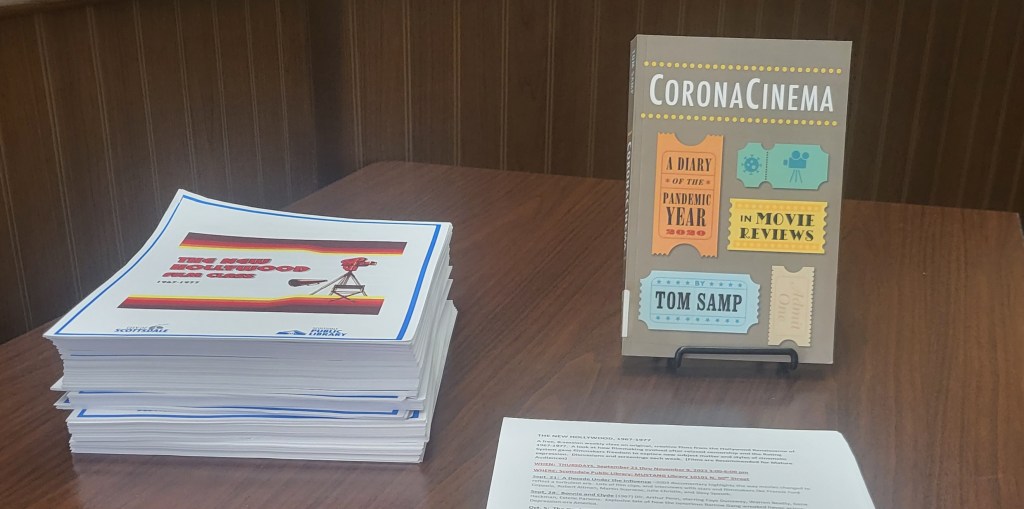
Meanwhile, back to this blogpost … I’ve found that local libraries (in Mount Prospect, Illinois, where I lived for many years and now here in Arizona) offer important opportunities for me as a writer–agreeing to place my memoirs and poetry on their shelves and (when the time is right, and pandemics aren’t running rampant) share my stories with those who may connect to their themes of love, loss, transformation, truth, and triumph.

For instance, on this day four years ago, I hawked my books at the Mesa Public Library’s Local Author Fair at Dobson Ranch here in the Valley of the Sun. It was the perfect opportunity to talk with readers, sign a few books, and compare notes with other writers.

Just a few months after that experience, a little thing called Covid-19 emerged and paralyzed the world. Of course, face-to-face opportunities to do anything became impossible for all of us. Even though I continue to write, I’ve felt my literary presence shrink during the past four years.

Since 2019, I’ve exhibited my books on a few occasions, but the opportunities have become less frequent. For instance, the Scottsdale Public Library decided to discontinue their annual author event permanently. However, there is a silver lining for me to report.

On Saturday, December 2 (noon to 4 p.m.), I’ll be selling and signing my latest two books (completed between 2019 and 2023) at the Mesa Public Library again … this time at the Red Mountain Library location, 635 N. Power Road, Mesa, Arizona 85205 … for their 2023 installment of the Local Author Fair.

Arizona authors across all genres–memoirs, mysteries, science fiction, thrillers, westerns, children’s books–will be there.

If you live in Arizona–or plan to visit the greater Phoenix area in early December to escape the cold in other parts of the country–I hope to see you there, too!

Whenever That May Be

I’ve found my comfy chair on the edge of town. No reservation required.

It’s my way station when I need a quiet break from the weary world.

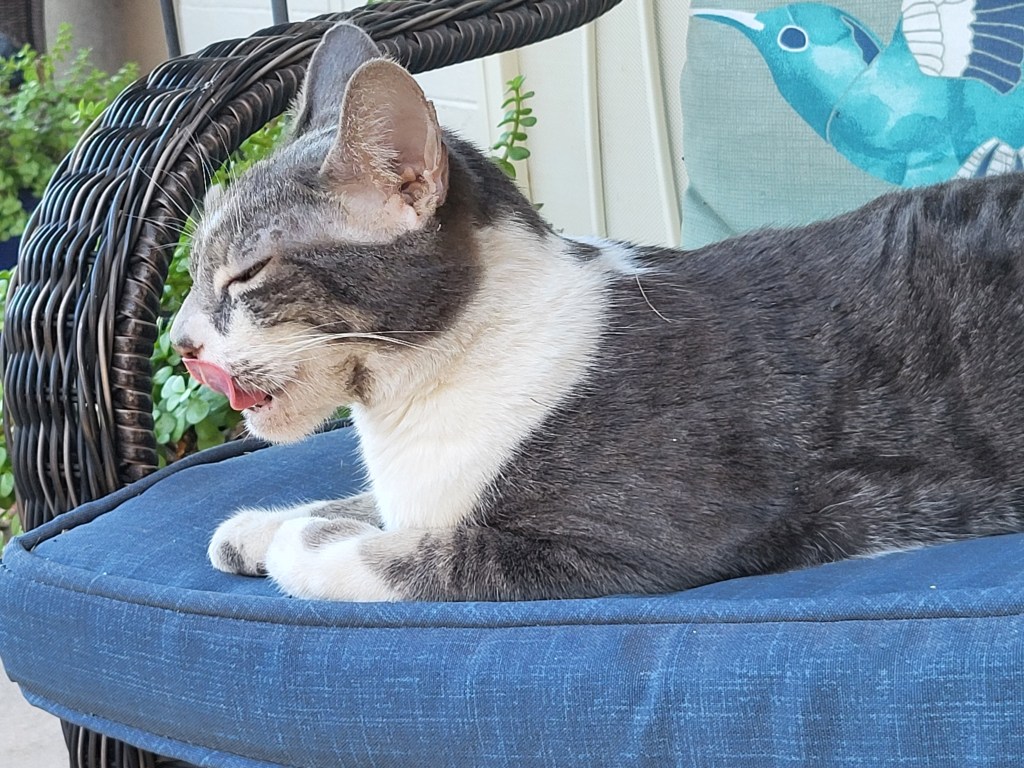
Last week, one of them sat nearby while I napped. I didn’t mind.

In fact, it eased my mind to be closer than before. He thought so too.

I’ve trained them to leave morsels–salmon or tuna–outside their door.

Lately, I’ve ventured inside to enjoy a snack and sniff around their place.

I don’t stay long. I’m out the door until next time … whenever that may be.

***

If you enjoy my poetry and photography, purchase a copy of A Path I Might Have Missed on Amazon.

My Way Out

In this world of perpetual social upheaval, being who I am-openly gay–isn’t always easy. But I persist.

I decided more than twenty-five years ago that coming out was the only healthy way to live.

With the assistance of two amazing therapists (thank you, Barry and Valerie!) and the love of a small circle of friends and family, I discovered that authenticity was my way out of denial, depression, and anxiety.

Over the years, I’ve written frequently on this topic in my books and here in my blog. Today, on National Coming Out Day in the United States, I’m here to remind you once again that I am a proud gay man.

This one aspect of my identity–the fact that I am attracted to the same sex and married happily to another man–certainly defines the way I see the world. It gives me compassion and empathy for others who are different … no matter their skin color, religious beliefs, economic status, or capabilities.

All my life, I have been protective of those who are disenfranchised and less fortunate. I came from a modest background and have survived personal and family hardships.

As a teenager and young man, I didn’t understand or love myself, but now that I do I feel it is my obligation to remain visible. To pave the way for queer teens and adults who may not yet feel comfortable enough to come out.

In 2023, I think most Americans are supportive of their gay friends, family members, and neighbors. Of course, there is a vocal minority that would prefer we don’t exist. I have no control over their beliefs.

No doubt, a handful of haters will be demonstrating at the end of the Phoenix Pride Parade route on October 22, when I sing and march with my friends in the Phoenix Gay Men’s Chorus.

But they will be overshadowed by the thousands of LGBTQ supporters–gay and straight–who will line the parade route with their parents and children, cheer, and wave their rainbow flags.

We are a country that was founded on the notion of “liberty and justice for all.” At times, we have failed miserably at fulfilling our mission as a democratic society.

But I’m not ready to give up. I still have hope–as a sixty-six-year-old gay man, husband, father, brother, writer, singer, friend, neighbor, voter, and citizen of the United States–that we will find our way out of the political divisiveness that exists.

I’m not sure how we’ll get there, but today–and everyday–all of us who are different must continue to come out, be ourselves, love each other, and remind the world that LGBTQ citizens are valuable, kind, contributing, and responsible Americans. We will not be denied.

Seven Slices

The quietest slices keep us whole and hopeful. If we let the snippets slip past without noticing, we are missing the moments, the essence, the connecting tissue, the story of life itself.

If you enjoy my poetry and photography, purchase a copy of A Path I Might Have Missed on Amazon.

No Walk in the Park

On a regular basis, all of us encounter unexpected small and large obstacles.

One day, they may be as fixable as a “low tire pressure” warning light that illuminates on the dashboard.

The next, something far more unimaginable, unexplainable and unrepairable. Like learning of the apparent suicide of a forty-three-year-old friend, who seemed to embody the definition of vitality.

It was simple to stop at Discount Tire to ask an attendant to increase the air pressure in our tires. (The cooler desert temperatures must have deflated them.)

It will take much longer–time, space, and reflection–for Tom and me to process Chad’s demise.

I’ve often thought that resiliency is one of the most important human characteristics to cultivate.

It is our ability to cope, process, manage, and emote our way through or around life’s setbacks that defines our longevity. This latest loss confirms my belief.

These observations surfaced this morning during a walk in the park in my community. At Chaparral Park in Scottsdale, Arizona to be precise.

My husband and I had just finished our yoga class. Afterwards, he wanted to lift a few weights in the gym.

I opted for stretching my legs on my own under a few puffy clouds that dotted Arizona’s wide-open October sky.

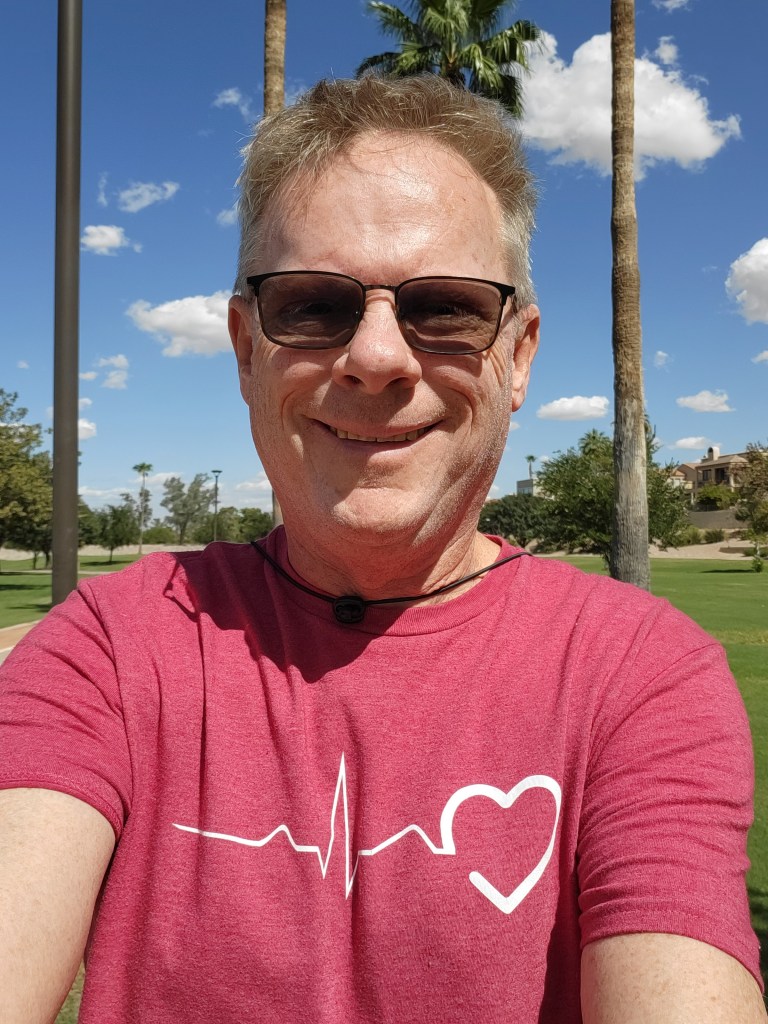
Near the midpoint of my walk a fit couple jogged up as I waited for the light to turn green at Chaparral and Hayden roads. One of them admired my shirt.

“You must be in the medical profession,” he gestured toward the beating heart I wore proudly.

“No, I’m a heart attack survivor,” I explained. “I helped raise money for the American Heart Association.”

They smiled and wished me well. Then, they dashed off when the WALK sign turned white.

It was a simple exchange, a reminder of a trauma I experienced and wrote about which now feels way off in the rearview mirror.

But those few sentences with two sympathetic strangers infused me with a renewed appreciation for my personal resiliency.

No doubt, it’s a quality I observed in my mother, a saver and survivor. She always described herself as a child of the Depression.

It’s also a trait I began to mine in my thirties after my divorce. A strength I’ve fine-tuned on countless treadmills since suffering a mild heart attack six-plus years ago on my sixtieth birthday.

I have no regrets regarding my friendship with Chad, but I wish he would have called Tom or me before he made his worst and most irreversible decision.

I would have told him that while life is no walk in the park, it is always worth the fight. To find a skilled therapist. To dig deep on the darkest days. To survive the pain. To accept our losses.

To embrace each and every day we are granted. To reach out for love and hope. To live to see tomorrow.

The Possibilities of Pruning

In October 2019, I puttered in my garden as I often do.

I had already begun to assemble tongue-in-cheek and serious stories about life in the Grand Canyon State. But I needed a creative hook to link the essays and my desert fantasies to the wide-open experience of living in Arizona.

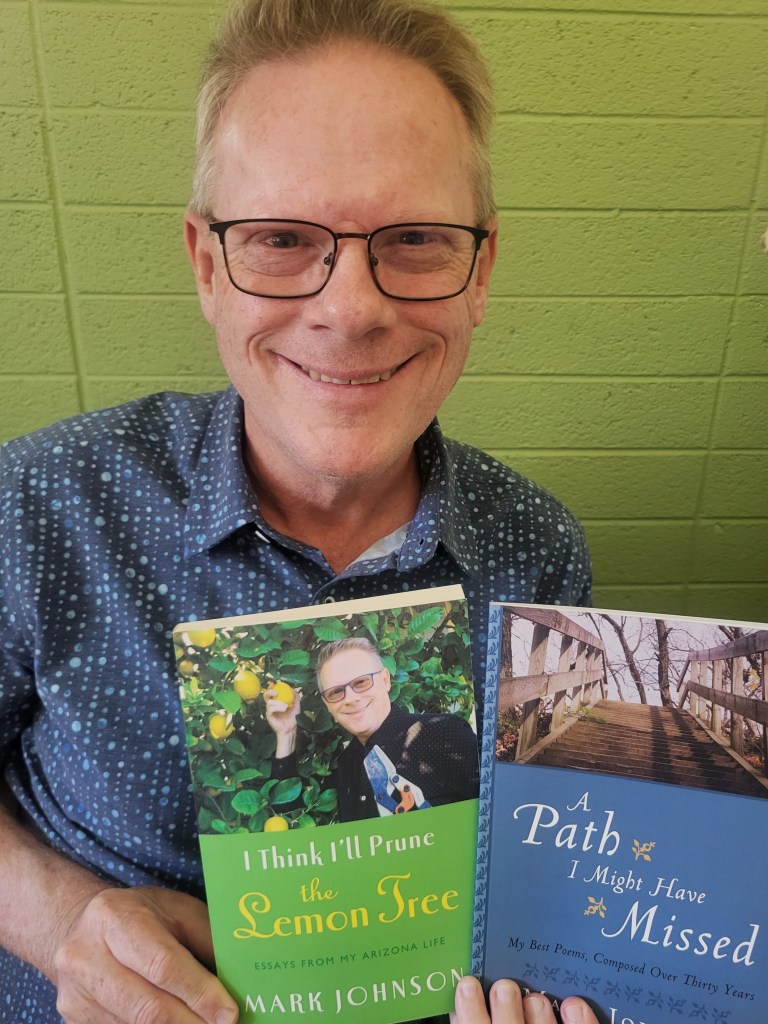
Strangely, sagging citrus tree branches provided the stimulus for my book title. While they impeded our sidewalk, identifying the obstacle cleared a path in my brain. Tom stood by as seven words flew from my mouth and tumbled into the arid Arizona air: “I Think I’ll Prune the Lemon Tree.”

***

Nearly four years have passed. In early 2021, I completed and published my book. Folks near and far have told me how much they’ve enjoyed reading it.

Of course, I hope more will discover it and find meaning in the essays, including those I wrote about living in a global community we never imagined–a place I call Coronaville.

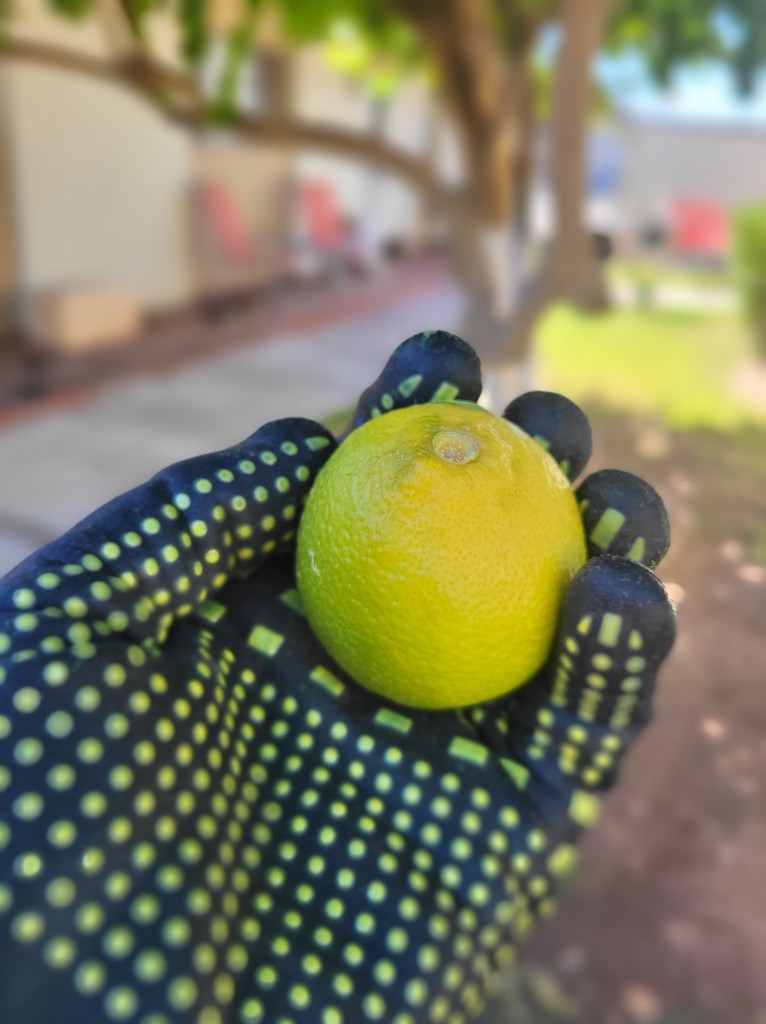
This afternoon I found myself in the same space outside my front door, examining the same tree, realizing it needed another haircut. I grabbed the loppers, pulled on my gardening gloves, and pruned only the most problematic branches that hung low.

Sadly, there were a few lemon casualties that fell to the earth looking more like green limes than the fully matured lemons they might have become in December.

Still, I think I did a good thing for Tom and me … and our neighbors and delivery people, who pass daily on the sidewalk of our mid-twentieth-century condo community and go about their lives under the radar.

And the lemon tree? It’s now shapelier than before and has inspired me to write yet another story about the possibilities at play in nature.

In the Valley of Fiery Light

Nearly half drained, September–in the valley of fiery light where tiny lizards scurry–cues the hiss of early morning sprinklers.

They spray precious droplets that pool, surround, and saturate parched succulents, palms, and citrus trees.

The latter wonder if the fruits of their labors will prove less luscious when snowbirds return to snatch and gather golden orbs from sagging January branches.

***

To read more of my poetry, purchase A Path I Might Have Missed on Amazon.

One Thread at a Time

Whenever the opportunity presents itself, I enjoy talking about the discipline of writing. Honestly, it doesn’t happen that often. But when it does, it’s generally in the course of an ordinary day.

For instance, last Friday–on the way out the door of the gym I frequent–I stopped to talk with the manager. He asked me about my latest writing project for the Phoenix Gay Men’s Chorus.

“It’s fun,” I told him. But then I went on to explain that creating a full-blown musical libretto is also draining. Such is the case for anything that pushes us beyond our comfort zones.

What does writing a libretto feel like? Well, I’ve never been a clothing designer or tailor. But it’s as if I’m sorting through a world of potential fabrics … selecting the right one … weaving it into a fictionalized story with smart dialogue and an emotional arc … and stitching it to music (which the chorus’ artistic director has selected).

Back near the entrance to the gym, another person joined the conversation. It morphed quickly into a discussion about the motivations and pitfalls of writing. She–a technical writer, who has dreamed about writing a childrens’ book–asked me about my creative commitment and impulses.

That’s when I felt my energy swell as I became creative mentor and cheerleader on the fly. I told her writing is like any discipline–exercise, yoga, boxing, for instance.

I told her I write something nearly every day. That–strangely–after my mother died ten years ago, a new door opened. I decided to take a leap. To write stories that were important to me, not some corporation.

Along the way–I told her–I discovered my true calling as an independent writer. It’s something I’m passionate about, though sometimes the creative process can be lonely.

I told her you have to make it a priority. You have to make the time for it. I told her that the childrens’ book she wanted to write was inside her, waiting to be written.

As I left the gym and walked to my car in the heat of the desert sun, I felt happy … content in the knowledge that I had encouraged one other person to step beyond their creative comfort zone.

***

In this world of raging fires, heat waves, social upheaval, and constant noise produced by snake oil salesmen, I believe the best thing we can do is to put down our phones and turn off our TVs more often.

To take back our lives. To talk with one another face to face–or at least voice to voice. To offer encouragement when opportunities present themselves. To write and read more books and poetry. To make time and room for practices and people who make our hearts sing.

If we do, maybe we can begin to restitch the underlying fabric of our society … one thread at a time.