Author: Mark Johnson

Born in St. Louis, I graduated from the University of Missouri School of Journalism in 1979. In 1980, I moved to the Chicago area, where I began a successful, thirty-four-year career as a communication professional. In 2014, I retired from corporate life and began a new chapter as an author. I now live in Scottsdale, Arizona. I published my first book—From Fertile Ground—in 2016. It’s a three-generation writer’s mosaic that examines our desire to make sense of our heritage, find our own path, and leave our mark on the world. My second book—Tales of a Rollercoaster Operator—is a collection of twenty-six funny and poignant essays about my favorite twists and turns growing up in Missouri in the 1960s and 1970s. My third memoir, An Unobstructed View (released in May 2018), chronicles an ironic year of surprise and transformation when my life takes a detour on the way from Illinois to Arizona. Coming in 2021, my fourth book--I Think I'll Prune the Lemon Tree--is an anthology of thirty-nine serendipitous, provocative, and humorous essays set against the warm and rugged landscape of Arizona's Sonoran Desert.

Thanksgiving 1993: The Mourning After

WaltersGravestone_07052017 (2)

It was eight o’clock on November 26, 1993, the morning after Thanksgiving, when I answered my phone in suburban Chicago. Mom’s voice cracked. Six words spilled out of her mouth, traveled through the phone line and hung in the air. “Mark, your Dad died this morning.”

My father had passed away peacefully in the middle of the night at his home south of St. Louis. Instantly, I no longer felt thankful. The mourning unfolded. Numbness inhabited my body.

Gradually, the facts began to sink in. My parents Helen and Walter Johnson had enjoyed the holiday with his two sisters in north St. Louis County. They had gathered at my cousin’s home for a big meal in Missouri that night. After Dad consumed a second slice of Thanksgiving pie, Mom and he kissed his sisters goodbye, drove home and prepared for bed. Shortly after midnight, Dad leaned back on his pillow and uttered, “Helen, I think I’m going to die now.” And he did. Unceremoniously.

Mom told me the paramedics came immediately after she dialed 911. They tried to revive Dad. But his second heart attack, thirty-one years after the first, claimed him that Friday morning. His life ended one week shy of his eightieth birthday.

Later that week, I stood near the banks of the Mississippi River with my mother, sister and two young sons. We watched as two stone-faced soldiers folded the flag on top of his casket into a triangle. Dad, a World War II veteran, was laid to rest at Jefferson Barracks National Cemetery. He was buried by a large tree on a hill overlooking a chapel.

Twenty-five years have passed. Row after row of simple white marble stones surround my father there, marking the remains of hundreds of other veterans. I imagine each of them were as proud as Dad was of his service to his country.

I’ve probably visited Dad’s gravesite twenty times since 1993. I go there to pay my respects to my father’s well-intentioned and turbulent life, to hear the clear tones of the clarion ring from the chapel on the quarter hour, to retrace my steps between the rolling rows of stones, to gaze at the deer that saunter by, to kneel beside Dad’s grave and that of my mother’s. She joined him, the other veterans and the deer there in 2013.

I’ll never forget how my father struggled with his bipolar disorder … how he searched endlessly for relief. But with the passage of time, the pain I witnessed has sifted away. Now I’m thankful to remember the entire picture of him: his corny jokes, crooked smile and chatterbox style; his love of family, the St. Louis Cardinals and a cold bottle of beer; his enthusiasm for Big Band music, sappy old movies and overflowing cups of coffee; his unbridled sincerity and patriotism; his quest to write his poetry in the 1960s.

I’m absolutely certain Dad would have been proud of his two grandsons and the men they have become. I’m not as sure he would have understood or accepted me as a gay man. But, because I know he loved me, he would have tried. He would have marveled at how I maneuvered through life as a single dad, juggled a demanding consulting career, sang on a stage with other gay men, wrote and published three books, married and moved across the country with my husband, and forged ahead in our Arizona home after suffering a heart attack of my own on my sixtieth birthday.

In 2018, when I see the American flag flap in the breeze, watch the Cardinals play ball or board the treadmill to keep my heart strong, I think of Dad. I have greater compassion for my father’s frailties and his plight to recover from his own heart trauma in 1962.

I wish I could have one more conversation with Walter Johnson to tell him these things and hug him once again, but this will have to suffice.

You’ve been gone so long, Dad, but I still love and remember you. Happy Thanksgiving.
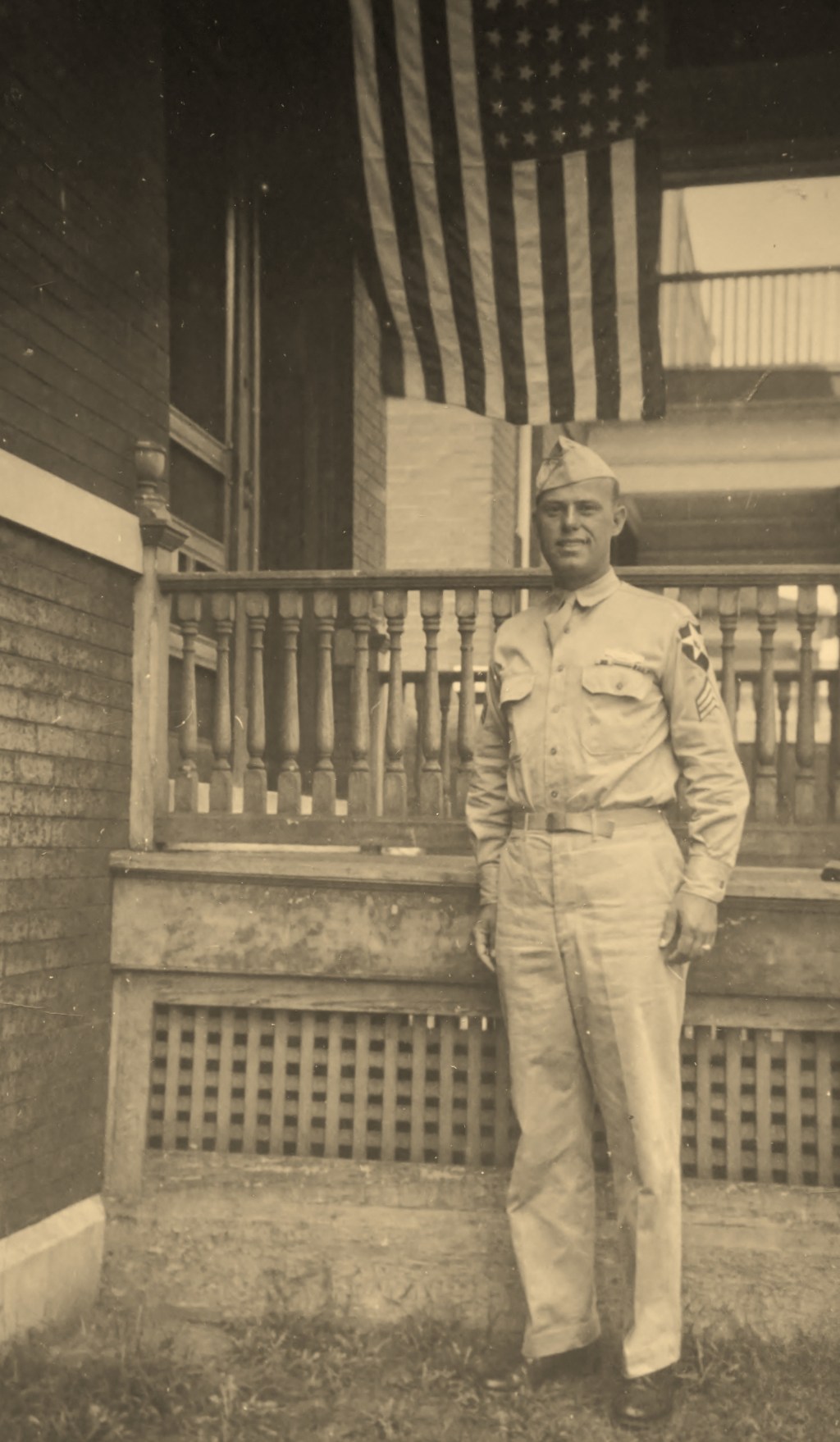


A Salute to Walter and All Veterans

WalterInUniform_1942 001

My father, Walter Albert Johnson, was an Army sergeant in the 23rd Infantry Regiment and veteran of World War II. Dad was proud of his service to his country. He fought in the Battle of the Bulge, the last great conflict of the European phase of the war.

When the war in Europe ended and Walter returned home on board the U.S.S. Monticello in July 1945, he was scheduled for a thirty-day leave prior to reassignment in the Pacific Theater of the military operation. But on August 6, 1945, the U.S. dropped the first atomic bomb on Japan. World War II ended  shortly thereafter. Walter’s fighting days were over. He received his honorable discharge from the Army on October 11, 1945.

Walter didn’t talk much about his experience as a soldier. But I know he endured foxhole fright and frozen feet alongside hundreds of other soldiers who faced a similar plight. Years later, he suffered horrible nightmares. Even so, in the early 1960s when he huddled with my sister and me along parade routes that wound down St. Louis streets,  I remember how Dad jumped to attention to salute the American flag as it passed. I admired his sense of patriotism. It was one of his finest qualities.

Though Walter has been gone nearly twenty-five years, I think of him often. Snippets of him and his lasting impressions on my life appear in all three of my books. In honor of Veterans Day and the sacrifices made by all military veterans living and deceased, the purchase price of the Kindle version of my latest book, An Unobstructed View, will be reduced to ninety-nine cents on Amazon from November 9 through 15.


The Blue Blazer

October 2018 006

There isn’t much left of my wardrobe from five years ago. In those days, I was a corporate guy working in Chicago. I rotated two or three suits, sport coats, and countless long-sleeve dress shirts and pants for casual dress days. They are all history. I gave the clothing to local charities in Illinois and Arizona, because none of it fit me anymore. I mean that literally (I’ve lost forty pounds in those years), but also psychologically.

In late 2013 at age fifty-six, my body and mind were telling me corporate life didn’t suit me any longer. I needed to find a creative oasis before it was too late. I thought writing might be in my future, but I wasn’t sure. My husband and I planned our corporate exit strategy and left it all behind in early 2014. We began to seriously discuss creating a quieter life in a warmer climate.

As I shed weight and stress, I felt like a sculptor chiseling away the excess matter. I uncovered the writer inside of me. Ironically, with less of me in the picture, I discovered I had more to say about my family, my heritage, my sexuality and my home—and how these foundational components of my identity have shaped my experience and journey.

I’m proud of this transformation, the three books I’ve written and published, and the life Tom and I are molding in the Arizona desert—especially after we survived my heart attack during our move on the way west. But occasionally I need an intersection that melds the man I was with the man I’ve become.

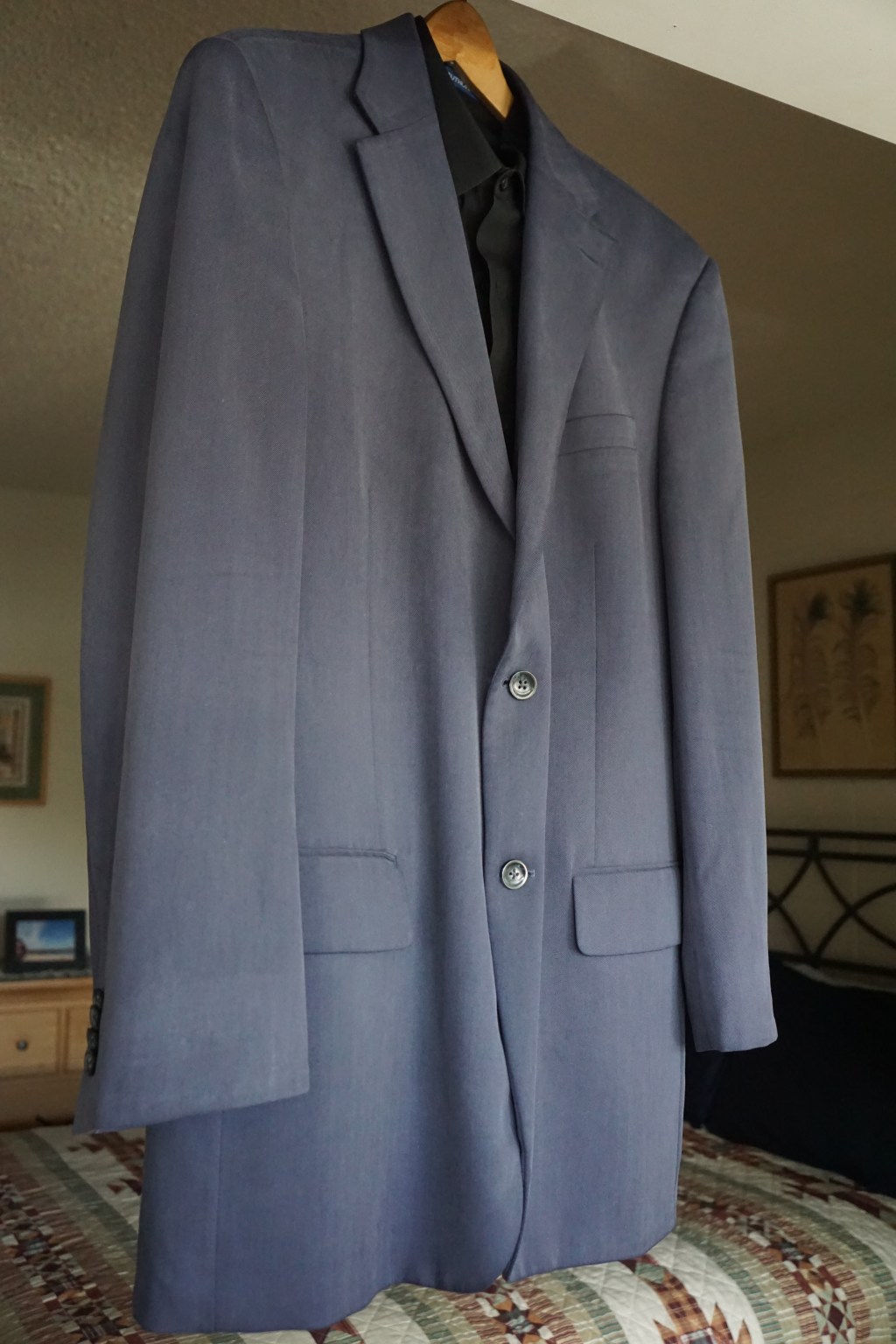
That’s where this silk, 44-long, blue Oscar de la Renta blazer enters the story. I bought it at least ten years ago at a Chicago store. Whenever I wore it for work or play, I brought my best self. So, while all of my other suits and jackets from my Midwest life are gone, this was my favorite. I kept it for special occasions in my Arizona life.

Recently, I found a tailor near my new home. She tapered the waist and shortened the sleeves to suit my lighter build. Now my past and my present have come together.

I’m a lucky man indeed.

Somersaulting for Martha

TORO_Photo2 (958x1000)

Maybe you’re craving a Halloween story and an escape to simpler times. If so, you’ll enjoy these excerpts from Tales of a Rollercoaster Operator, my book of twenty-six stories about growing up in Missouri in the 1960s and 1970s.

“I had to perform tricks for my Halloween treats. At least, Martha told me I did. No doubt she was our sweetest neighbor from my early childhood years. With her southern drawl and folksy hospitality, Martha oozed a syrupy affection. When she stepped onto her front porch, wearing a floral-print blouse and matching pedal pushers, brightly-painted rosy toenails and bodacious beaded sandals, Martha proudly displayed a basket full of her homemade goodie bags–rounded popcorn balls lovingly laced with peanuts and caramel. They were a frightfully appropriate ensemble to her good-and-plenty personality …

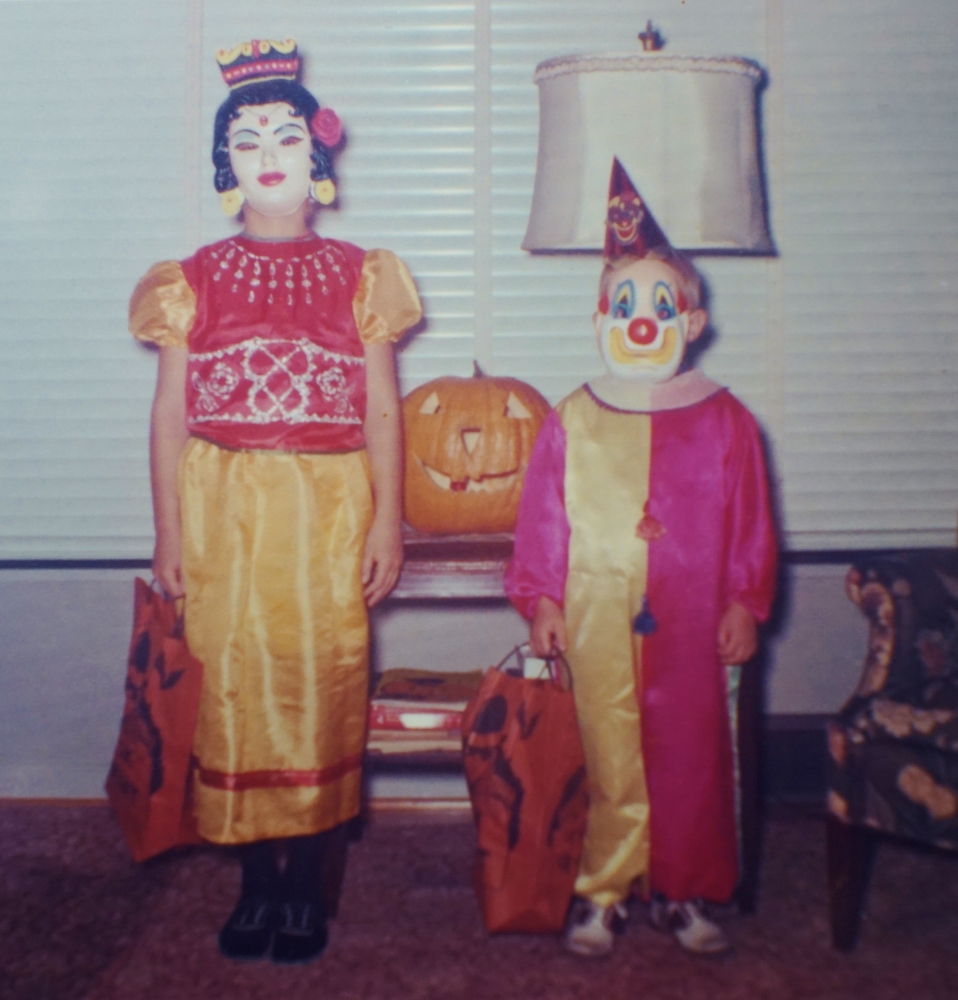
My sister was a gypsy and I was a clown. At least we were dressed that way in our store-bought costumes. When we arrived at Martha’s door, she cooed and gave us each a warm hug, a kiss on the cheek, and a delectable goodie-bag. But Martha insisted on one more favor from me in exchange for her hallowed treats … Specifically, Martha requested I execute a few somersaults in my clown costume and take a tumble across her floor.

Somehow my sister got off the hook without any gypsy magic. But of course–being a four-year-old people pleaser in training, fake circus clown and aspiring extrovert to boot–I was up for Martha’s challenge. Without hesitating, I peeled off my clown mask, hunkered down in a tight squat, tucked in my chin, and rolled across Martha’s sculpted living room carpet. In turn, she let our a piercing southern squeal and clapped her hands with her faux-bejeweled bracelets jangling a tune as accompaniment …

Fortunately, none of the additional treats I accumulated that night required an encore performance of my acrobatic acumen. I was done with all that cavorting for candy. In the end, no harm was done in October 1961. I got my hard-earned sweets, Martha got her somersaults, and I was fully inoculated for the next Halloween night on the town. It made me as happy as a clown should be.”


Safe Haven for Learning

20181009_143759

I was a thirsty first grader in October 1963. On autumn Saturdays, my mother took my sister and me to the local library in south suburban St. Louis. I remember walking into the Tesson Ferry Library, surrounded by seemingly endless shelves of stories. Inevitably, we’d spend no more than thirty minutes to an hour there. But each time we left with a soothing feeling and a few books tucked under our arms for closer examination at home. Thanks to my mother and a subsequent stream of committed teachers, the message I received was that the search for knowledge could be a cozy, gratifying experience.

At six years old, I never dreamed I would write my own books. Or that one day they would appear on the shelves of the St. Louis County Public Library, where I grew up, and the Scottsdale Public Library (shown year) where I live fifty-five years later. But that’s what happened.

Each time I pass through the doors of the library here in Arizona, that same rush of anticipation returns. I’m back in my quiet space. A safe haven for learning.


Remnants of Rosa and Violets

AfricanViolets_100218 001

Life is full of surprises. A few weeks ago, who could have predicted that remnants of Hurricane Rosa would shroud Camelback Mountain, flood Arizona roads and spill through the Sonoran Desert? But today–after a long, hot summer–that happened on a blissfully cool and rainy October day in the desert southwest.

And there was another, less welcome surprise as Rosa splashed against our panes of glass. I said goodbye to a piece of my past: our pink African violet.

I know what you’re thinking. “Well, that’s too bad, Mark. But it was just a plant.” Normally, I would agree. But this beautiful plant had an extraordinary journey. It was one of two cuttings from my mother’s African violets. In 2004, she carried them with her from St. Louis to her new home in northern Illinois and nurtured them over the next nine years on window sills in Winfield and Wheaton.

After Mom died in January 2013, my sister split the African violets so that each of us could enjoy living remnants of our mother’s life. Tom and I found two new containers and stationed then in our Mount Prospect, Illinois, living room. They grew and flourished there, brightening our world with splashes of pink and purple for the next four years.

When we sold our Illinois home last summer and began our trek toward Scottsdale, Arizona, the pink African violet and its purple sibling traveled with us in our Hyundai Sonata. In and out of hotel rooms. Across seventeen hundred miles. Tom drove the full distance. He kept one eye on me, sitting beside him on the passenger side recovering from the biggest surprise of our lives: my heart attack in St. Louis on our sixtieth birthday. In the rearview mirror, he watched the African violets nestled safely in the backseat in our laundry basket.

When we arrived in Arizona, the plants, Tom and I were all a little haggard. We needed time to recuperate from our trauma. With rest and warm sun, we regained our strength in our new home and so did the purple African violet. But the pink one never quite recovered. It began to fade this summer. It lost its leaves a few at a time and eventually withered and died.

Today, as Rosa ushered in autumn in Arizona, I scraped out the remnants of our pink African violet and transplanted a portion of the purple plant into its place. Of course, my hope is the strong one will spawn another survivor and a second wave of purple will spill into our desert home. Time will tell. But I will always have the memory of my loving husband leading us west and the care we took to carry the legacy of our African violets with us across the miles.


The Journey to Find Your Voice

MarkPMMC__060918

It’s every writer’s dream to capture and nurture a distinctive style, a literary thumbprint, a compelling voice. Marketing and communication experts would call this a brand. But I prefer the term voice. It speaks to my own personal journey and the decades of exploration, trial and error, and accumulated life experiences required before I was finally ready to unearth and share my memoirs. This is an abbreviated version of the story of my journey to find my voice.

***

Though it may sound strange, two divergent occurrences were the catalyst for my late-in-life artistic resurgence: choral singing with a community of other gay men (which I discovered in 2010); and a significant personal loss (which sent me spiraling in 2013).

Up until 2010, I had devoted most of my creative energies to my sometimes-rewarding-but-often-draining communication career. But, suddenly at age fifty-two, that wasn’t enough. I needed to extend my creative reach to coincide with my authentic life as a gay man.

I remember scanning the Windy City Gay Chorus (WCGC) website in March of 2010 and learning that the group was accepting auditions for new singers. I sent an email to the chorus president. He responded promptly. Before I knew it, I was singing second tenor with WCGC and rehearsing every Wednesday night on the north side of Chicago. This new activity became an oasis of fellowship away from the demands of my everyday life. Without realizing the magnitude of this change at the time, I had jumpstarted a freer, more open existence that would become my creative catalyst (while I continued my role as a communication consultant).

Three years later, in January 2013, my mother died. We had been close. Her death left me searching for answers. To help me cope, a few good friends encouraged me to scale back my consulting hours to four days a week. My boss was open to the idea, so I began a new schedule that summer. Fridays were entirely mine in addition to my Wednesday night chorus rehearsals. The time and space proved to be exactly what I needed. I began to journal regularly and took a nature photography course. I discovered a more integrated creative life.

By the end of 2013, I knew I wanted to leave behind my communication career entirely. I had been planning and saving aggressively. I gave my resignation and soon began a new chapter: an author’s life. On January 30, 2014, the same day I hugged my colleagues goodbye, I wrote this kernel of personal truth in my journal. It became the genesis for my first book, From Fertile Ground:

“Now, at age fifty-six, my weary body and grief-fogged brain are telling me it’s time to create some space to heal, to find my voice, to set out on a new path, and to seek higher ground.”

Nearly five years have passed since I began this writing journey. During that time I’ve written three books, married, left the Midwest, survived a heart attack, moved to Arizona with my husband, and have been singing with the Phoenix Metropolitan Men’s Chorus (PMMC) for the past year. (This slightly out-of-focus but joyful backstage photo is from our June 2018 concert dress rehearsal.)

Last Saturday night PMMC hosted a “This Is Me” fundraiser and talent showcase in Phoenix. I was proud to stand on stage with a whole new group of gay men. We shared our voices with a roomful of friends, strangers, family members and allies.

By the end of the evening, a woman I hadn’t previously known bid $55 at the silent auction for signed copies of all three of my books. The money will benefit my new chorus and help extend our mission of uniting, inspiring, educating, and entertaining as a voice of the LGBTQA community.

***

My story may or may not be a blueprint for personal transformation. But if you find yourself at a crossroads, perhaps it will inspire you to explore new options, to discover your passion and power, to find your voice.


Two Septembers to Remember


FFG_Photo 20

In September 2015, I returned to Huntersville, North Carolina. After my mother died, I was on a mission and a personal journey. I needed to set foot on this land, seventeen miles north of Charlotte. It was once the road to my maternal grandparents’ farm. I needed to go there to make sense of my southern roots, finish my first book, From Fertile Ground, and–in a sense–bring Mom back with me to the state she left behind in 1945. I will always be grateful for the experience.

How quickly conditions can change. Three years ago, I wrote about the parched land I saw and spoke with family members about the horrible drought in the area. Now, as Hurricane Florence barrels toward the eastern seaboard, forecasters are predicting a vastly different fate for North Carolina. Warnings have been issued for a destructive storm surge late Thursday or Friday along the South Carolina and North Carolina coasts, followed by days of heavy rain inland for western North Carolina. Towns like Huntersville.

Whatever transpires, I’m holding my breath. I hope all residents in harm’s way evacuate the region safely and get the FEMA assistance they need quickly if the storm delivers its expected punch and devastation.

Seventy Years and Two Ordinary Lives

W&H 1st anniv

Though both of my parents are deceased — Walter Johnson in 1993 and Helen Johnson in 2013 — I think of one or both of them on most days. Today they are especially on my mind, because Walter and Helen were married in St. Louis on September 4, 1948. Seventy years ago.

Like most couples, my mom and dad lived ordinary lives and endured moments that were far from idyllic. But all lives, even unspectacular ones spent far beneath the radar, are meaningful and worth remembering.

As newlyweds, Walter and Helen lived in Texas, where Dad made a living as a dry goods salesman with the Ely-Walker Company. Mom took a secretarial job at the Fifth Army Headquarters in San Antonio. To be closer to Dad’s family, in the fall of 1951 they returned to St. Louis, where they rented a flat on the south side of town. Within the next six years, my sister and I were born. In 1959, Walter and Helen bought a three-bedroom brick home in south suburban St. Louis to accommodate our growing family.

Three years later, on September 13, 1962, Dad suffered a heart attack. I saw the arc of my parents’ lives and our family’s sense of well-being change forever that day. Fortunately, Dad survived the ordeal and Mom’s resourcefulness kicked into high gear. She found a government job and went back to work to sustain us. From that point forward, Walter and Helen led lives with vastly different trajectories. Walter’s health, earning power and confidence declined; Helen’s resiliency, frustration and success soared. In spite of their constant conflicts, they managed to stay together.

In September 1988, my sister and I hosted a small gathering in the basement of the church my parents attended to celebrate their fortieth wedding anniversary. I remember thinking that their relationship seemed sweeter and quieter that day than it had for a long time. I believe that continued for the next five years until Dad died of a second heart attack on November 26, 1993.

Despite the personal difficulties and challenges my parents faced, they were good citizens and kind human beings. As I age, I see physical reminders of Walter and Helen looking back at me in the mirror. My father’s vulnerability and crooked smile. My mother’s fight and fading blue eyes. Occasionally, I observe a personality trait or gesture in my adult sons that reminds me of something Helen would have said or Walter would have done. It’s evidence that my parents live on in their grandsons. Those moments make me smile.

All three of my memoirs include stories about both of my parents and their impact on my life. This week — as a tribute to Walter and Helen and their frailties and triumphs — I’m discounting the price of the Kindle version of my first book, From Fertile Ground, on Amazon. Much of this memoir is about the grief that consumed me after Mom died in 2013 and my journey to make sense of the past, once both Helen and Walter were gone. It’s a universal story of love, loss and finding your way.

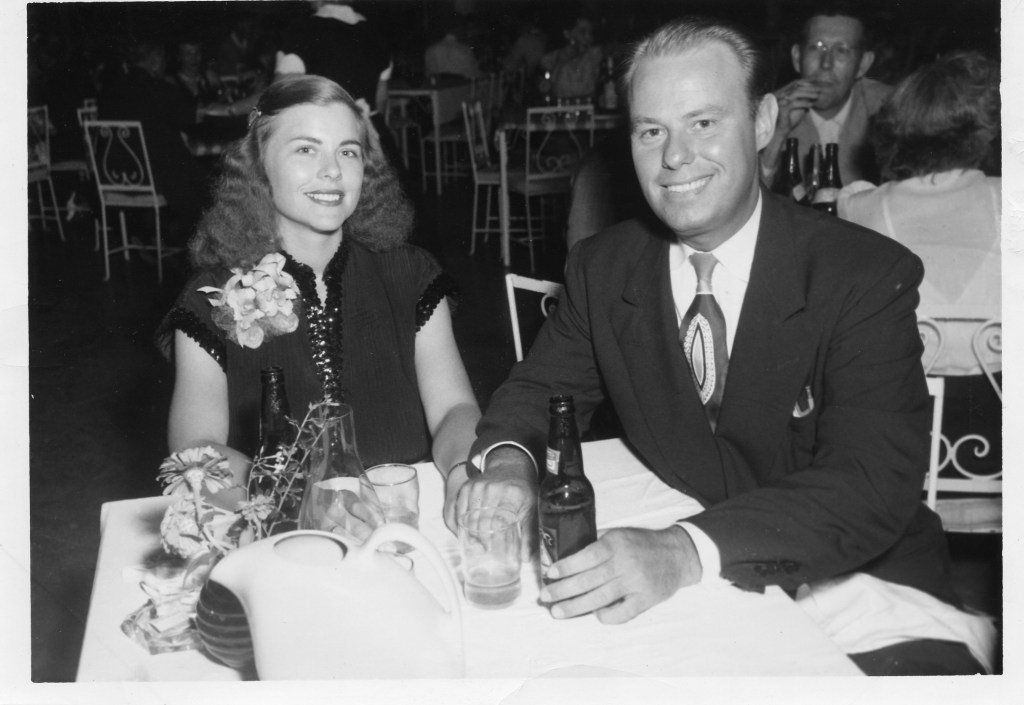
This photo — taken in 1949 at Club Seven Oaks somewhere off the highway between San Antonio and Austin, Texas — is now my favorite image of my parents together. I keep a framed copy on my desk for comfort and inspiration. Ironically, when I wrote and published From Fertile Ground in early 2016, I didn’t include this photo. At that time, I wasn’t quite as ready to embrace this apparently contented version of Helen and Walter seated side by side, holding hands on my mother’s twenty-sixth birthday eight years before I was born.

But the passage of time has brought me new insights. It and the experience of surviving my own health scare have given me greater understanding and compassion for my parents: two ordinary people I loved, two ordinary people I will never forget.


Magical Ireland

ireland_aug-2017-294-e1535498121223.jpg

A year ago—seven weeks after I survived a mild heart attack in St. Louis—my husband and I found ourselves on a vastly different journey and terrain in Ireland.

As I write this sentence, I’m grateful and astonished that we didn’t cancel our plans. We traveled, as intended, to the land my mother’s family emigrated from. To the lush seascapes and heather-covered hills she never visited, but longed to. When Mom died in 2013, I resolved that Ireland was a place I had to see for myself. Proceeding with my plans became even more paramount after my own brush with fate. In the face of my own fragility, I desperately needed to follow through on my Irish adventure.

Brian, our capable and clever CIE Tours guide, was just the man for the job. He entertained us with countless stories and songs of Irish lore as we circled the Emerald Isle clockwise on a coach with forty new friends from Europe, Australia and North America.

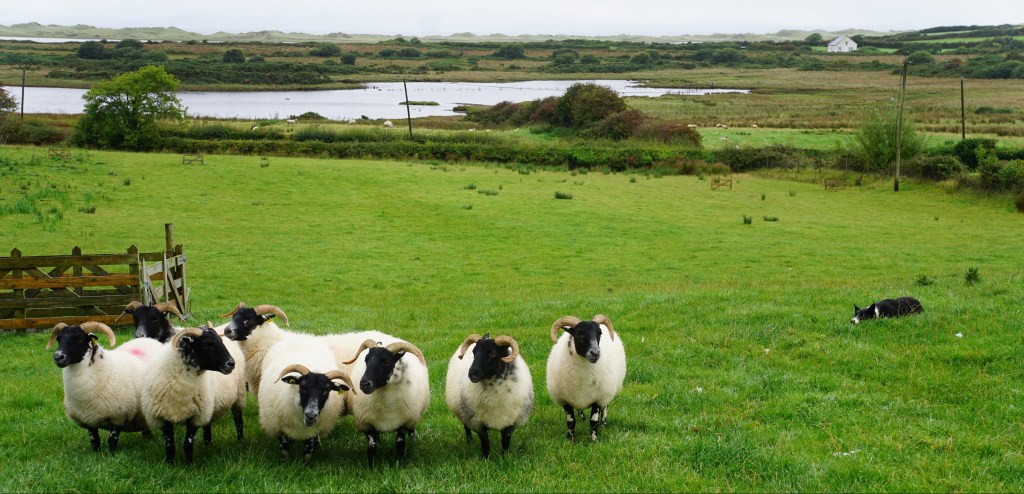
Our nine-day excursion was magical: a sojourn to the sixth century and the solitude of monastic life at Glendalough; hypnotic views through a dreamy morning fog at Lough Leane near Killarney; a fascinating immersion into Viking history in Waterford; a glimpse of a natural wonder at the Giant’s Causeway in Northern Ireland, where piles of hexagonal-shaped, volcano-induced rocks of basalt—supposed stepping stones for legendary giants to walk across the Atlantic Ocean to Scotland—beckoned us; a sheep herding demonstration on the west coast of Ireland near Sligo, where Jack, this trusty border collie prepared to pounce from the thick grass to display his powers of persuasion on his master’s working farm; and a double-decker bus ride and romp through Dublin. That’s where we paused at the Dublin Writer’s Museum and I realized there was at least one more story I simply had to write when I returned home. Something that made sense of our cross-country move from Illinois to Arizona that went awry.

Of course, our Irish adventure included several pints of Guinness and at least one particularly personal and poignant moment. It occurred on one of our last nights in Ireland. We were dining at the Glyde Inn, a family-owned tavern north of Dublin overlooking the Irish Sea.

After I polished off my plate of Irish stew, I spotted an unassuming, elderly woman with thick gray hair combed to the side. She was seated with a few other local townspeople across from us on the other side of the room. She clapped her hands as the fiddler played a jig.

That frail, yet spunky, Irish lady reminded me of my mother.

That’s when I felt the magic of Ireland.

That’s when I realized my Irish adventure was complete.