Category: Books

Are the Grapefruits Ripe Enough to Pick?

No writer wants to be known as a one-trick pony. Yes, to this point I’ve written mostly creative nonfiction, but each of my four books includes flashes of poetry. And, in my latest book of essays–home grown on the metaphor of pruning a lemon tree in my desert community–I also dabble in fiction.

In other words, I have no problem branching out into the great beyond of fruit trees. Grapefruits, for instance.

Here in our Polynesian Paradise condo community we live among lemon, tangelo, orange, fig, and lime trees … even a lone pomegranate. But we are surrounded by a bumper crop of pink and white grapefruits that will be ready to pick in late December. They are a far cry from the maple, elm, magnolia, oak, and gingko trees of my Midwestern past, which will be bare soon.

I’m not a fan of grapefruits. They’re too tart for my palette. Plus, if I ate them they would counteract the positive effects of the statin medication I take to keep my cholesterol count in the normal range.

However, Nick–my older son who lives near us–craves these tangy softball-size citruses. (I remember my dad loving grapefruits too. In fact, Nick resembles him. It’s funny how certain likes, physical qualities, and personality traits skip a generation.)

This afternoon I texted Nick this photo with a grapefruit update: “You’ll be happy to know the grapefruits are shaping up. They’ll be ripe in a month or so.”

“Oh nice” was Nick’s laconic response.

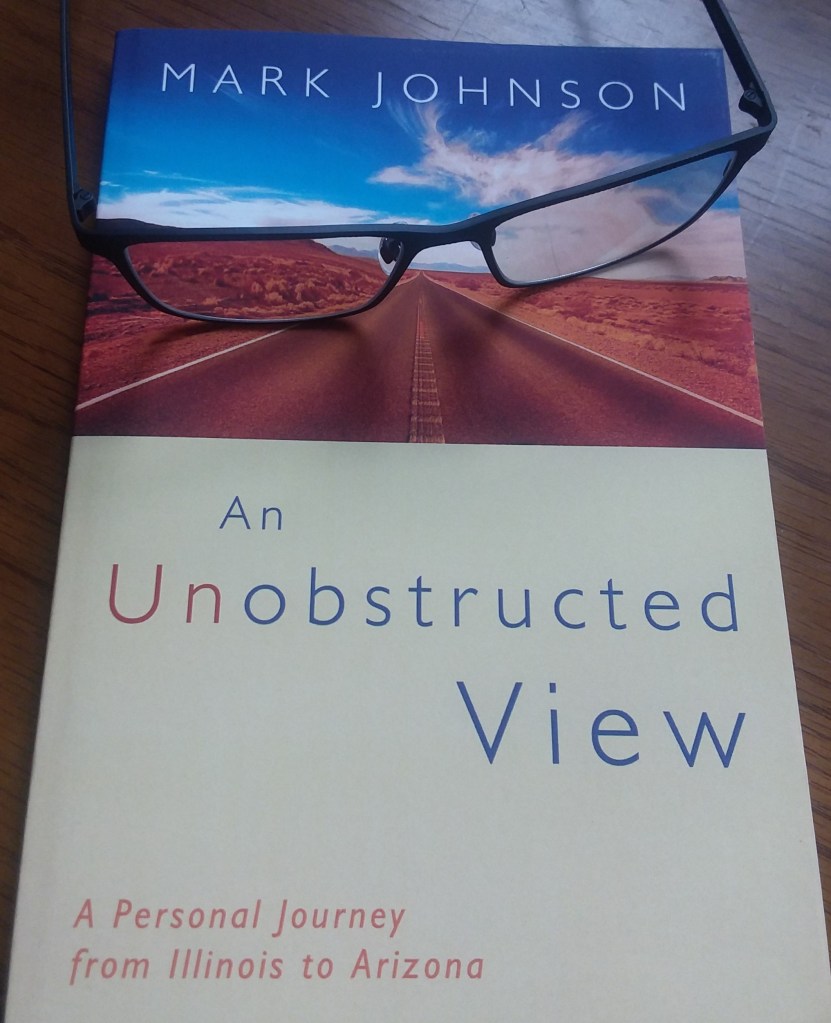
As the citrus-plucking season draws nearer in Arizona, here’s a snippet from I Think I’ll Prune the Lemon Tree, my book of whimsical and serious essays available in Kindle and paperback on Amazon.

***

Nick is especially enamored with the citrus trees—most notably, the plethora of grapefruits that dominate our condo complex grounds. In December and January each year, Nick the Citrus King contacts me frequently concerning the status of the ripening citrus crops. His texts or phone conversations begin something like this:

“Hey there. Are the grapefruits ripe enough to pick?” There is no preliminary happy talk such as “How are you feeling, Dad?” before the citrus cross-examination.

Aware of Nick’s citrus sensibilities and no-frills communication style, in January 2020—as a belated Christmas present—Tom and I surprised him with his own fiberglass fruit picker. We gave him one with a durable steel trap and extendable arm, which would extend his reach to grab the largest orbs clinging to the highest branches in a galaxy far beyond low-hanging fruits.

Upon receiving his gift, Nick’s smile grew three sizes. With the flexible picker in one hand and a few empty bags in the other, he and I set out to corral a selection of the sweetest and juiciest citrus delicacies we could find in the common areas of our complex.

Twenty minutes later, we returned to the condo with a mix of white and pink grapefruits, tangelos, lemons, and oranges. Harry & David would have been proud to grow, pick, and ship them to Vitamin-C-starved customers in cold-and-gray winter climates. 

Without a crystal ball or a notion of where to find a citrus psychic, I have no way of knowing where Nick’s quest for fresh grapefruit will lead. But I am gratified to see him plucking fruits from the sky and flourishing in his Arizona life despite the heat.


Pride

Today I will march (and sing) in the Phoenix Pride parade with other members of the Phoenix Gay Men’s Chorus. As an open and relatively healthy sixty-four-year-old man–married to another open and relatively healthy sixty-four-year-old man–I have a lot to be proud of, a lot to be thankful for.

I remember the unactualized, closeted version of me in my thirties, the sense of isolation I felt after my divorce in 1992, the challenges of single parenthood as I sat alone in the bleachers (in a sea of suburban straight couples) watching my sons play ball, the pain and anxiety that ruled my life as I moved from job to job and tried to find my way.

Fortunately, by the mid-90s, I found friends and colleagues who supported me. They cheered when I came out and began to speak my truth.

In hindsight, knowing what it felt like to be ridiculed for who I am sharpened my empathy. It gave me strength and insight that–more than two decades later–I parlayed into my writing. In all four of my books, especially my latest, I Think I’ll Prune the Lemon Tree, I tell the story of my personal and gay evolution.

Telling my truth has proven to be cathartic and healing. I am the happiest when I give voice to my experiences and opinions, whether they relate to my sexual orientation or not.

In 2021, I rarely find myself confronted with blatant homophobia. But there are occasional “teachable” moments when I encounter someone who is ignorant or unaware that gay people seek the same love, understanding, and sense of belonging that straight people receive unconditionally.

I don’t have a problem getting up on my soapbox to defend that right, though I also don’t crave controversy. I prefer simply living honestly and openly, and letting those around me observe how I lead my life … versus the pitfalls of social media exchanges.

The key is visibility. The more of us who are out–and proud–in our daily lives, the more individuals in all circles will realize we have the same hopes and dreams: a loving spouse and family, a safe and secure home, gainful employment, personal freedom, a sense of community and belonging.

As I march in the Phoenix Pride parade today, I’m sure I will see all sorts of people in the crowd: Black, Hispanic, Asian, White, Native American. Many of them will be lesbian or transgendered or gay like me. Others will be straight allies cheering us on. There is power and creativity in our diversity.

Yes, we’ve come a long way in American society since I struggled along in the 1990s. But hatefulness has seen a resurgence. There are still instances of gay teens being kicked out of their homes or individuals losing their jobs, simply for being who they are.

What can we do as a society? Teach our children to love each other and embrace our differences. Because kindness is a choice; sexual orientation is not.

***

Pride postscript. It’s Saturday evening in Arizona. Though the parade is over, I will always remember the sense of freedom and inspiration I felt today. Shouting “Happy Pride” to exuberant strangers three deep along the parade route … all of us survivors of a frightening pandemic. Skipping down Third Street and singing Born This Way with my gay friends.

Rejoicing at the large number of young children in the crowd with gay and straight couples twirling rainbow flags. Waving to my smiling husband wearing his floppy hat. Celebrating the day with a rainbow umbrella that colored my world and protected my fair skin from the blazing sun.

Antidote for Grief

Grief is an insidious and universal human condition. When you love someone–and they leave or die–you need something to fill the space they’ve left behind. Grief enters to fill the void.

If you are in the midst of grieving (as I was in 2013 and 2014 after my mother passed away), it may feel as if you are wandering through a deep fog. Or you might wonder if you are chained to the floor in the middle of an empty room with water pouring in over all four walls and seeping through the floor boards.

That’s how grief can manifest itself, but for each of us the path is different. The loss lightens over the years. Still, we carry it wherever we go. It becomes an extension of us, ingrained in our identities.

In 2014 and 2015, I saved myself from drowning in grief by writing about it. My mother and grandfather helped immensely. They left behind a trail of their thoughts and experiences on paper … in the form of a mountain of letters from Helen (my resilient mother) and diaries from S.R. (my farming grandfather).

After my mother’s demise, reading her handwritten and wisdom-filled memories and her dad’s more stark observations prompted me to tell all three of our stories in one book. From Fertile Ground became my salvation. Yes, in 2015 it consumed me, but it also gave me renewed creative purpose and focus after I left my corporate job.

When I finished and published the book in 2016, I felt it was a story that would alleviate pain for grief-stricken souls. Five years later, I still feel that way. It helps me to revisit my book and my grief from time to time. Readers have taken the time to write reviews like this one online.

“From Fertile Ground” is more than just a terrific read. Johnson is generous in taking the reader into his world, his journey, his family, his emotions. In so doing, the reader obtains a soothing sense of identification of the human condition, particularly how we work through grief and loss. Johnson’s mother’s and grandfather’s letters are interspersed throughout the narrative (and connected) which adds to the reassuring sense of a collective history.

We live in a complicated world. Many of us are suffering through the side effects of loss and searching for answers. It gives me joy knowing that my book is a creative balm for many, possibly even an antidote for grief.

Through October 14, download From Fertile Ground for just 99 cents. https://www.amazon.com/gp/product/B01DCUQR4C/ref=dbs_a_def_rwt_bibl_vppi_i3. (The price of my book is reduced in the United Kingdom during that same period.) If you prefer a paperback, it’s available in that form too.

At any rate, as the days grow shorter in the Northern Hemisphere, I hope this personal and universal three-generation story inspires you and brightens your world … no matter who you’ve loved and lost, no matter where you live.

From Fertile Ground is a three-generation memoir and writer’s mosaic of love and loss. Published in 2016, it examines the implications of grief and our quest to make sense of our past so that we can find our path and move ahead.

Midwest Bound

Tom and I are flying to St. Louis tomorrow. On Saturday, I will attend an outdoor reunion of Six Flags Over Mid-America’s circa-1970s employees. About 200 of us will gather to mark the 50th anniversary of the amusement park in the rolling hills of Eureka, Missouri thirty miles southwest of the Gateway Arch that towers over the Mississippi River.

Now called Six Flags St. Louis, the theme park is where I landed my first job in 1974. It’s where I learned to “drive” the River King Mine Train, the park’s first rollercoaster. It’s also where I began to navigate life’s ups and downs. Who knew the experience for three summers would become a metaphor and catalyst for a book I would write more than forty years later?

This will be my first trip to St. Louis since July 2017. I’m overdue to write a new and rejuvenating chapter in my original hometown … one that doesn’t include heart trauma and a personal detour that spawned uncertainty on my sixtieth birthday.

I’m excited and a little anxious about this journey, given the relentlessness of our global pandemic. But Tom and I have been fully vaccinated and will mask up for this adventure.

No doubt, the trip will reignite a flame of familiar faces and memories. I expect there will also be a few surprises and a mix of bittersweet feelings and observations seen through blended bifocals and sixty-four-year-old eyes. We’ll see.

After the Missouri reunion–plus a visit to my parents’ graves at Jefferson Barracks National Cemetery, a few hours reconnecting with my cousin Phyllis in St. Charles, and coffee with a St. Louis friend I haven’t seen for more than twenty-five years–Tom and I will drive to Chicago to see my son Kirk and our sisters Sharon and Diane.

We haven’t visited the Windy City … a place I called home from 1980 to 2017 … or spent time with our siblings in the suburbs there since June of 2019. Of course, the pandemic is the culprit that accounts for that gap.

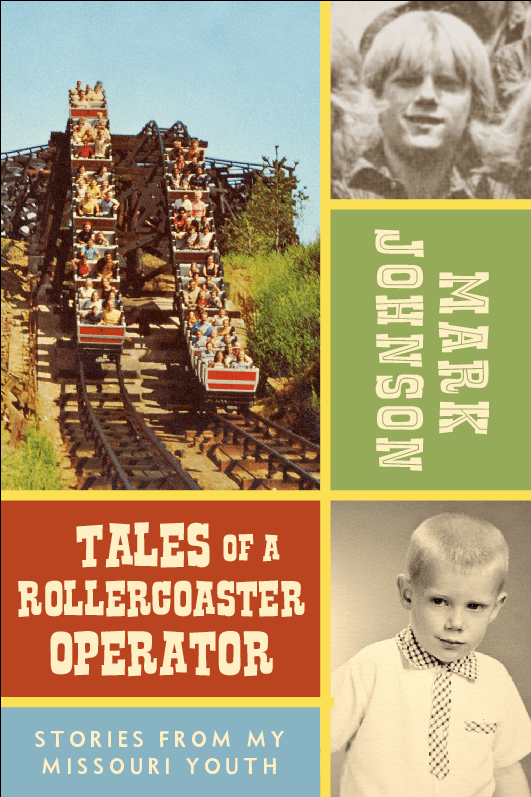
I wrote the poem that follows five years ago. In 2017, it first appeared in Tales of a Rollercoaster Operator, my book of reflective, light-hearted, growing-up-in-Missouri stories.

Perhaps these words will resonate with you–wherever you were born, wherever you call home. The poem certainly has special meaning for me as I return to visit my homes in Missouri and Illinois that account for most of the first sixty years of my life, before Tom and I created this warmer, lighter, and simpler life in Arizona’s Sonoran Desert.

***

Coming Home

I saw you there day after day. We were together leaving the station. We made our way around the track. But now I don’t see you anymore. Where have you gone familiar ones? Could it be you left the track and vanished? Am I alone looking down from my perch? Are the markers and signs all that remain? What became of the rises and falls? Have you left me in charge to man the controls? Am I enough to carry this forward? Why have you brought me back here? Oh, that’s right. I remember now. I was on a journey. I was coming home.

I wore this badge for three summers (1974-1976) as a rollercoaster operator at Six Flags Over Mid-America in Eureka, Missouri.

Breakthrough

“I’m as mad as hell, and I’m not going to take this anymore.”

It’s a classic line of conviction and desperation delivered by Peter Finch (portraying Howard Beale, a longtime evening newscaster who is losing his patience and bearings on live TV) in Network, the prophetic 1976 satirical/dramatic film.

If you’ve never seen this iconic movie, written by Paddy Chayefsky and directed by Sidney Lumet, it’s a must-see, spot-on harbinger of the reality-show madness and world of TV lies and sideshow illusions that flood our world and saturate our sensibilities today.

Even better, if you’re a cinephile, you must buy a copy of Tom Samp’s book, CoronaCinema: A Diary of the Pandemic Year in Movie Reviews. In it, he reviews Network and 50 other films through the lens of this never-ending global health crisis. The book is filled with interesting film observations and social insights. (Full disclosure. Tom Samp is my husband.) https://www.amazon.com/CoronaCinema-Diary-Pandemic-Movie-Reviews-ebook/dp/B09DLC8KY2

Now, back to the Howard Beale show. Though I’m not losing my bearings, I am “mad as hell” about the politicized state of American society in the storm of a god-forsaken health crisis. (I’m sure many of you are too.)

This occurred to me–once again–over the weekend as I stewed and reclined in the living room, watching news coverage of another few thousand COVID-19 cases in Arizona and the rising tide of the Delta variant due to the fact that only 48% percent of our residents are fully vaccinated. Apparently, the other 52% are too busy drinking the political Kool-Aid to have the gumption to protect themselves and their loved ones.

Need more context for my anger? On Saturday, a few days after returning from a lovely 25th anniversary Flagstaff getaway with Tom and visit to the south rim of the Grand Canyon (the view never gets old), I found myself fighting some sort of upper respiratory thing–sinus congestion, headache, mild fever.

As far as vaccinations go, I am an early adopter. I have been fully vaccinated against COVID-19 since April Fools’ Day and that’s no joke. Yet my anxiety raced and my temper began to simmer. I wondered if I was one of those breakthrough cases the media keeps talking about.

In these instances, the virus infects people who took the proper precautions. People who got vaccinated as soon as they could to protect themselves and those around them. People who are true patriots because–day-in-day-out–they have empathy for those around them, know the difference between freedoms and responsibilities, obey traffic lights, buckle their seat belts, pay their taxes, and abide by the tenets of a civilized society.

Cruelly and tragically, in breakthrough cases the virus vaults over and through the protective coating of the vaccine. This is happening in a small percentage of occasions and is likely due to the fact that too many Americans are simply too ignorant, obstinate, or uninformed to follow the science, to get vaccinated, to wear masks indoors and in large/close gatherings, to stop the spread of the virus by reducing the number of hosts it can jump to and transform on, to put aside their political differences and save lives.

By Sunday, I had had it. After resting most of the morning, I drove to an urgent care facility in Scottsdale to get tested for COVID-19. I needed answers and peace of mind. Whatever the outcome, I needed to regain some sense of control.

The process at the Next Care center went smoothly. An efficient technician took my vital signs and swabbed my left nostril. A pleasant and professional physician’s assistant examined me. She told me I did the right thing by getting tested. She confirmed that, though it is rare, breakthrough cases are occurring.

She listened to my lungs and reported they were clear, but my sinuses were definitely enflamed. She told me to keep drinking lots of fluids and to get plenty of Vitamin C. She would call with the test results in a few days. Though I didn’t have all the answers at that point, I was beginning to feel better physically and emotionally.

I won’t keep you in suspense any longer. By Monday, my mild fever was gone. The fluids–lots of hot herbal tea and water–were helping. My contact at Next Care called Tuesday morning to say my COVID-19 test was negative. Instantly, relief raced from my smartphone into my ear drum. Through my thankful brain. Through my congested head. Through my sound heart that survived a mild attack four years ago. Through my clear lungs.

It’s now Tuesday evening. Though I’m still “mad as hell” at the state of our country’s social discourse, the good news is I am healthy. I’m on the mend. I’m free of this round of traumatic COVID-19 possibilities. My energy is back. I will overcome this chapter of sinus congestion.

***

If there is a breakthrough to be derived from my story, it is this. If you aren’t yet vaccinated, get it done. Do the right thing. Protect yourself and those around you. Limit the chances that this horrible virus will end your life and upend the lives of those you love. Of those who love you.

By getting fully vaccinated, I stacked the cards in my favor. Sure, I am one of the lucky ones, but–good or bad–each of us has the ability to shape our fortunes.

Think of getting vaccinated as the best and most meaningful gift you can give those who love you. They’ll be “mad as hell” if you don’t.
Double Rainbow in the Desert

Well, not really. But it feels that way for two independent writers living under one roof, who spent most of 2020 writing just to stay sane in the swirl of a global pandemic.

Yesterday Changing Hands Bookstore in Phoenix (an independent, artistic haven in the Valley of the Sun) contacted Tom (my film aficionado husband) and me individually with news that each of our books, published in 2021, has been accepted for consignment and placed on their shelves.

Today we drove there to capture the moment on camera. Tom’s book, CoronaCinema: A Diary of the Pandemic Year in Movie Reviews, is displayed in the film section. You can find mine, I Think I’ll Prune the Lemon Tree, on the LGBTQ shelf.

Of course, I know that most of you who follow me here don’t live in Arizona. But this is a psychological victory and important creative validation when it happens in your home community. Now there is a local book-buying option in the Valley of the Sun, if the size and scope of a global online retailer isn’t your thing.

Happy summer reading!

Desert Friendships and Roses

If you are a betting man or woman, fours are wild today. Four double-red desert rose buds are primed to burst on our back patio; this sixty-four-year-old writer (who has written four books) swam twenty-four laps at Chaparral Pool this morning; and July 12 is the fourth anniversary of Tom and me arriving (finally) at our Arizona home after a hospital stay in St. Louis.

Dad would have loved the synchronicity–the magical, random alignment–of these fours. He was a numerology freak. Like me, he also was a dreamer, poet, sentimentalist, Cardinal-baseball lover, and heart-attack survivor.

My father never met Tom. A week shy of his eightieth birthday, he died before my husband and I began dating nearly twenty-five years ago. I don’t think Dad would have understood our relationship, but he would have continued to love me anyway.

I also believe he would have loved Tom’s smile, enthusiasm, and youthful spirit … and marveled at my resolve to create an authentic life with a soulmate, while raising Nick and Kirk and living long enough to see my two young sons evolve into intelligent, critical-thinking, thirty-something men.

Most of all, Dad would have admired–possibly envied–the free-flowing, simple, yet meaningful life Tom and I have built in our sixties in the warmth (okay, intense heat) of the Sonoran Desert. After surviving my heart attack blip four years ago, we have our health and plenty of time to exercise, write, read, reflect, and nurture friendships.

Tom and I no longer have to worry about the demands of holding down regular/traditional jobs or living up to narrow standards prescribed by somebody else. I realize what a privilege that is, even though there was a time in my previously closeted and discriminated life when I felt I would never find a path through the labyrinth.

Yesterday, four of us gay friends who met in Arizona in 2017 and formed an impromptu book discussion group in 2018 … Brian, Mike, Tom and me (plus Andy, a longer-term friend living in Chicago who joined the conversation via Facetime) … gathered, talked and laughed in the friendly, freshly painted confines of our Scottsdale den/guest room. We were there to exchange ideas and mixed reviews of The Days of Anna Madrigal, first published by Armistead Maupin in 2014. It was our first book group discussion since sometime in 2019, months before the pandemic began to ravage the world.

As I reflect on the three hours we spent together Sunday … critiquing various aspects of Maupin’s novel that I think missed the mark, recounting our original fascination with Maupin’s Tales of the City characters on Barbary Lane and the resulting PBS phenomenon in the 1990s, catching up on our own personal lives, telling summer stories of travel, and sharing brunch after surviving the dread of 2020 … I am especially thankful for friends such as Brian and Mike, who entered our lives in Arizona. Our Grand Canyon State friends have enriched our world after the St. Louis storm.

No matter how hot it gets in the Phoenix area this summer (110, 111, 112 degrees, and so on) … or whether the monsoons finally materialize and spill promised moisture into the Valley of the Sun this week as forecasters say they will … the lead of this personal story is the beauty of our desert roses, our mutual investment with new neighbors and friends between 2017 and 2021. During that time, we have come to love a whole new batch of people (and they have loved us) in our first four years in Arizona. It is a dream come true beyond the friends and family we continue to love in Illinois and Missouri.

From various avenues–literary, yoga, choral, gymnastic, canine, and cinematic–new Arizona friends and acquaintances have helped us heal, renewed our spirits, made us laugh, and stretched our creative sensibilities to new heights. I certainly didn’t see the breadth of this late-in-life resurgence coming from my precarious station in a hospital bed in St. Louis on July 6, 2017.

Dad would have loved these literary bonus years after the rises and falls of our midwestern life … these days of desert friendships and roses for Tom and me. Like the rousing song from Bye Bye Birdie, which played on the transistor radio next to Dad’s hospital bed as he recovered from his own St. Louis heart attack in September 1962, I’ve still got A Lot of Livin’ to Do.

Will You Still Need Me? Will You Still Read Me?

The title of this post is a shameless ripoff of the old Beatles song, When I’m Sixty-Four. But my bastardization of the lyrics is appropriate. Today I turn sixty-four and I’m a writer who wants you to read my books. When you do, you will feed my desire to stay relevant.

Ask Tom. He’ll tell you. At this stage of life, I’m generally contented and thankful for good health, a comfortable home, and a loving husband. It is remarkable that we share the same birthday … same year too.

In 1957, our mothers never imagined their newborn sons–delivered three hundred miles and thirteen hours apart–would meet one day and marry. It certainly feels like a miracle to me.

Back to my writing. Whenever I wear my literary hat–which is frequently–I find myself questioning why my book sales have dried up like a sun-drenched Arizona river bed.

Of course, I promote my books online and do a little advertising here and there. I also market my stories on a personal basis, but when you’re an independent writer it’s easy for your books to get lost in the stacks of Amazon’s metaphorical bookshelf.

This concern I have is not quite an obsession, though it borders on it. I put a lot of thought and creativity into my writing. I want to share it with a wider circle of readers.

Perhaps my advancing age and occasional forgetfulness–did I tell you I turned sixty-four on July 6?–is what drives me to keep writing, to keep sharing my impressions and reflections of the world, to keep checking progress (or lack there of) on book sales, to keep wondering if readers will still read me.

The good news is I feel spry most days. (Of course, I wouldn’t consider using the word spry unless I were at least six decades old.) Anyway, I still have a lot to say and plenty of energy. So, on my sixty-fourth birthday, I’m going to tell you why you should buy and read my latest book, I Think I’ll Prune the Lemon Tree.

As a kid in the 1960s and early 1970s, I observed how hard my mother worked to provide for our family and to prepare meals that we all liked … even after working long days in an office.

Frequently, Mom bought Sealtest Neopolitan ice cream and wedged it into the freezer portion of our avocado-colored refrigerator next to the Swanson’s TV dinners.

Why Neapolitan? Because she and Dad liked strawberry ice cream, while my sister and I preferred chocolate and vanilla. If you aren’t familiar with Neapolitan (I rarely see it in the supermarket these days), it included all three flavors in a carton stacked side-by-side. So, theoretically, Neopolitan offered something for everyone in our family in one container.

This ice cream recollection captures precisely the creative thrust I wanted to achieve as I wrote my Arizona-based essays. I must have been channeling my mother’s shopping sensibilities.

I wanted my book to include something for everyone … humor and sincerity, social relevance and frivolity, truth and fantasy … and to comment on the relevance of every personal and geographical chapter in my life: Missouri, North Carolina, Illinois, and Arizona.

Now that summer is upon us and the heat has arrived, I strongly encourage you to consume your favorite flavor of ice cream to cool off and to buy a paperback or Kindle version of my Neopolitan book.

In the thirty-nine essays that appear in the book, you will enjoy lapping up several flavors. For instance, there are stories about: citrus and lizards; a hummingbird and a boxer; time travel; an eavesdropping barrel cactus; a return to Tucson through the looking glass of an authentic gay life; reflections on an extended visit to that dreaded place we all lived–Coronaville; the musings of an incredible shrinking man; a wayward Viennese waiter/writer struggling to tell his heart-wrenching story; a mid-century St. Louis custodian who bonded with a famous scrub woman; alliterative observations of flickers and fedoras; the golden hours of living in the Sonoran Desert; and much more.

When you read my book (and I hope you’ll review it too), you’ll be feeding your own creativity and doing this sixty-four-year-old writer a big favor. Yes, even after writing this long-winded essay, I still need to feel needed.

Now, back to the musical portion of my post and the final verse of a pop song that feels especially personal today.

***

Send me a postcard, drop me a line
Stating point of view
Indicate precisely what you mean to say
Yours sincerely, wasting away

Give me your answer, fill in a form
Mine for evermore
Will you still need me, will you still feed me
When I’m sixty-four
*

*The Beatles released When I’m Sixty-Four (lyrics by John Lennon and Paul McCartney) on their 1967 album Sgt. Pepper’s Lonely Hearts Club Band.

Coronaville

The COVID-19 traumas that spun endlessly in 2020 and early 2021 have spawned a mountain of stories bursting with pain and uncertainty. But rays of clarity and creativity have begun to emerge as we try to make sense of the pandemic that will forever shape those of us who survived it.

I devoted part of my latest book to Coronaville–that crazy town we still live in–because I think it’s important to remember the fear and examine it, rather than sweeping it under the rug. What a shame it would be if we didn’t learn from the madness this plague has perpetrated. Here is a sampling of what I wrote one year ago this week:

***

Monday, June 15, 2020 began with congestion in my chest, mild nausea, and an occasional headache. I did not have a temperature, sore throat, or experience a loss of sense of smell or taste that may accompany the dreaded virus.

Nonetheless, I was worried enough to call my doctor, who prescribed a chest x-ray at a nearby diagnostic center that afternoon and a COVID-19 test the next morning at an HonorHealth urgent care facility.

Fortunately, my chest x-ray came back normal. There was no sign of pneumonia or any abnormalities. More than likely, I was dealing with a sinus condition or allergy to an air-borne culprit than the dreaded COVID-19. But still I waited. I was afraid the other shoe might drop.

On Tuesday, I imagined the desert dust from an adjacent construction site–fumes from our recent bedroom painting project or particles I had ingested from the smoke of a wildfire that raged in the hills sixty miles northeast of us–could be the problem. But I worried about the worst as Tom and I drove to Mesa for the swab test at 11 a.m.

***

To read the rest of the story (and all thirty-nine essays set against the warm and rugged landscape of Arizona’s Sonoran Desert) click on the link below and purchase a copy of my book in paperback or Kindle.