Tag: Missouri

The Arc and The Arch: Part Two

Spotty storm clouds gathered in the distance on the morning of Saturday, September 20. Tom and I drove northwest twenty miles, across the Missouri River.

Our destination was Breeze Park in Weldon Spring, Missouri. My cousin Phyllis–a retired teacher–is convalescing there, hoping to regain her strength after a series of health complications.

Phyllis’ mother Violet and my father Walter were twins born in St. Louis. It was 1913. More than fifty years later, the Gateway Arch would rise and transform the St. Louis riverfront. Teetering warehouses once stood on cobblestone streets there, in this fur-trading town founded just west of the Mississippi River in 1764.

In the arc of life, Phyllis and I (both Baby Boomers) also arrived–she in 1947, I in 1957–before the historic completion of the Arch, our nation’s tallest monument, on October 28, 1965.

But today I reflect on our personal connection. Like me, Phyllis and her husband Tom also raised two sons born in the 1980s. Austin and Bryant are now in their early forties and late thirties respectively. A touch younger than my son Nick; a shade older than my son Kirk.

Now in their late seventies, Tom and Phyllis are meeting the healthcare challenges of life head on. Negotiating the unpleasantness of aging and inherent losses (their lovable golden retriever Truman passed recently). They are doing their best to push ahead. To stay hopeful. Or as my mother–a child of the Depression–would have said “trying to keep a stiff upper lip.”

Given these developments, I wanted to spend time with them while we were in the St. Louis area. Especially because–beyond my sister Diane who now lives in northern Illinois–they are the closest remaining strands of family from my Missouri years: 1957 to 1980 … my Tales of a Rollercoaster Operator years.

On Saturday, when my husband and I arrived just past 9:30, we wound our way down halls, past friendly staff and other visitors, to Phyllis’ room. She was delighted to see us. So was her Tom. He arrived a few minutes later with a big smile and box of gooey pastries for us to share.

The next two hours were a heart-warming oasis of conversation and listening between the four of us. We spent our time commiserating over the latest news, but–more importantly–strengthening our family bond during a challenging period for them personally.

Phyllis is hoping to return to their home soon in nearby St. Charles. As anyone would, she is missing the familiarity and comfort of her life. Longing for peace away from medical equipment and disruptive procedures. Her kind, caregiving husband is also searching for peace.

Before Tom and I left, we hugged and took photos together outside on a beautiful, flower-laden patio at Breeze Park. I kissed Phyllis on the cheek. A few tears materialized for both of us, not knowing what tomorrow will bring.

At the least, we shared those upbeat Saturday moments, built upon our 1960s memories of our once-vital, long-gone boisterous St. Louis relatives gathering around us every Christmas, Easter, and Independence Day.

To our credit, in our later years, long after our sons became adults, we have formed reciprocal connections. Most notably, Phyllis, Tom and their family joined Tom and me for an Italian dinner in St. Louis in route to our new home in Arizona in July 2017.

Now they share stories and photos via text of their four growing grandchildren, and I write stories about my St. Louis origins, which she has encouraged, helped inspire, read, and followed diligently.

All of this, through a period of uncertainty, sustains us in our sixty-and-seventy-something years across the miles.

***

Just after noon Saturday, Tom and I returned to Creve Coeur. We landed in the driveway of our friends John and Sharon.

We were about to share the rest of the weekend with them and their loyal eight-year-old-shepherd-beagle-mix Nickel at their stylish, mid-century home … hike with John through a dense forested area overlooking Creve Coeur Lake, then get caught in the rain in historic downtown St. Charles … drive into St. Louis for a Cardinals/Brewers game at Busch Stadium Saturday night … and still later, on Sunday evening, attend our Class of 1975 Affton High School reunion together at Grant’s Farm.

The clouds cleared Saturday evening and ushered in cooler temperatures. Seated together with close friends at Busch Stadium, three levels up directly behind home plate, it didn’t seem to matter that my beloved Cardinals lost 3-2.

Yes, it was the latest evidence in a disappointing sub-par year. But on the horizon, beyond the stadium’s outfield walls, the twilight of a blue sky and puffy clouds perfectly framed the Gateway Arch at the center.

Architect Eero Saarinen’s monument to a dream is still standing, rising above the cobblestones and the fray, as it approaches its sixtieth birthday.

Recycle the Fruitcake

My mother loved fruitcake. I think making and eating it reminded her of her Carolina roots.

As a teenager and young adult, I remember seeing her and many of my older relatives consume fruitcake.

The thought of munching that dark, rich, moist, nutty, fruity, and rummy consistency repulsed me.

Anyway, she liked having fruitcake around during the holidays. I didn’t.

In the early 1980s, when Jean (my ex) and I lived in the Chicago suburbs, Mom hadn’t caught on to my fruitcake aversion.

Every December, she ordered a rather expensive variety of fruitcake, made by the Trappist monks of the Assumption Abbey, and had it delivered to us.

(Assumption Abbey is a monastery tucked in the foothills of the Missouri Ozarks.)

Jean and I didn’t have the heart to tell Mom to stop sending us fruitcakes. So, every year, we received another tin of it, which sat unopened on the bottom shelf of our refrigerator.

We never found a way to recycle or share it with others, because no one else we knew liked fruitcake either.

Inevitably, year after year–sometime in May, June, or July long after the last presents were unwrapped–Jean or I extricated the fruitcake from the back of our fridge and dumped it in the garbage.

***

If you follow my blog, you know I sing second tenor with a gay chorus–to be precise, the Phoenix Gay Men’s Chorus (PHXGMC)–and have written several librettos for PHXGMC.

For the uninitiated, we are a joyous, talented, and rambunctious LGBTQ-plus organization, comprised of more than one hundred singers and musicians (who also wear multiple hats as artistic consultants, dancers, actors, writers, marketers, costume designers, stagehands, sound technicians, and lighting crew).

At times, the switching of hats from one day, week, or number to the next is a dizzying process. But when you volunteer for an arts’ organization you believe in, it comes with the territory.

As I write this, we are entering the heavy lifting phase of Lights, Camera, Elves!, our holiday show coming December 21 and 22 to the Herberger Theatre in Phoenix.

Anyway, as I swam laps on Tuesday and considered what to write this week, thoughts of my mother’s love of fruitcake and a coincidental plotline in our concert popped into my head.

You see, like my mother, Rudy–a character in our concert–adores fruitcake. He can’t get enough of it, and that obsession leads him into trouble and a terrible trap. 

In fact, Act One ends with a hysterical, rousing number–Recycle the Fruitcake.

In the mix, I should back up and tell you that Scott, our choreographer, has asked me to play a bit role in the fruitcake number.

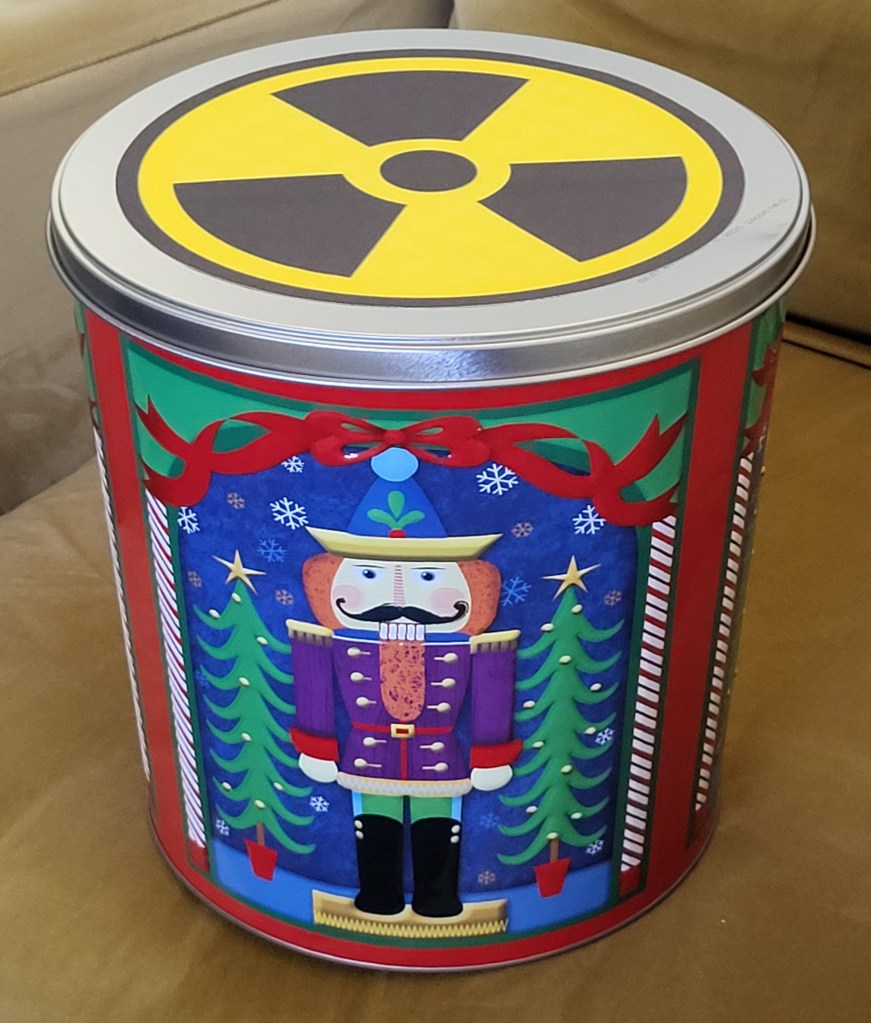
For about 15 seconds, I’ll be crossing the stage wearing an orange hazmat suit, while carrying a toxic fruitcake in this holiday tin. Meanwhile, the chorus will be singing this lyrical line:

“A fruitcake can be wide, a fruitcake can be thin, a fruitcake can be toxic, so they keep it in a tin. So, when you get a fruitcake, never let it touch your skin, ’cause you never really know where fruitcakes might have been.”

Brandon and Mike (two other chorus members) and I had loads of fun co-creating the libretto for Lights,  Camera, Elves! … and we are coaching the cast as they prepare for our performances.

The show is a story of redemption, featuring Santa’s love for holiday movies, a misfit security guard named Rudy, and three recalled-and-mischievous elves (Spike, Ginger, and Eddie) … all told against the backdrop of gorgeous and fun holiday music.

We’re excited, because we are expecting full houses for all three of our holiday shows.

Though my mother has been gone for nearly twelve years and was never able to see me perform in any of the fifteen holiday concerts I’ve appeared in since 2010, I know she would have loved the spirit and beautiful music in this show … along with my creative impulse to recycle my fruitcake memories. 

One Hundred Years, One Hundred Words

It’s a daunting task, trying to capture a full life–in this case, my mother’s–in one hundred words (and a dozen pictures). But, today, on the one hundredth anniversary of her birth, this is how I choose to remember Helen Matilda Ferrell Johnson, beyond our story that sprang From Fertile Ground.

***

Born July 26, 1923; High Point, North Carolina.

Child of the Depression.

Dutiful daughter. Responsible older sister.

Fine furniture lover.

1945. St. Louis, Missouri, bound.

Patient wife. Long fuse. Quick temper.

Attentive mother. Hard worker.

Loyal friend. Compassionate trailblazer.

Unintended, unidentified feminist.

Reliable next-door neighbor.

Proud mother. Devoted grandmother.

Smart saver and investor.

Advocate for the disabled and needy.

Southern storyteller. Avid letter writer.

Rock and shell hunter.

Animal advocate. Grateful green thumb.

Observant camera bug. Crafty potter.

Contented retiree. Resilient fighter.

Northern Illinois octogenarian.

Wise realist. Chair rocker.

Fading sunset lover.

Gone January 26, 2013; Wheaton, Illinois.

Full moon.

Aging Hands

I take a blood thinner; therefore, I bruise easily.

So, for instance, if I’m putting away dishes in our cupboard after dinner and bump the top of my hand on the corner of the cabinet, I am sure to leave that mundane household experience with a souvenir–an immediate red patch that will last a few days in the afflicted area.

I haven’t always been ultra-self-conscious about the condition of my extremities. It’s only lately–in my sixties with thinner skin on my thinner body–that I’ve become aware of my aging hands and, of course, my mortality. They go hand in hand.

Since I’m a writer and rely on my fingers, wrists, and hands to write these sentences on my laptop, I’m fortunate not to have arthritis in my joints–in my hands.

My sister Diane seems to be the one in our family who has inherited that painful component of our mother’s DNA. Particularly in her hips, knees, and feet.

Diane is sixty-eight-years old. She doesn’t read what I write. We live seventeen hundred miles apart. She in Illinois. Me in Arizona.

Even so, I love my sister. I always have and will. Tom and I visited her and Steve (Diane’s husband) for an afternoon last October while we were in the Chicago area. In this age of Covid, we recounted all the things we are thankful for.

Diane will always be my only sibling, my only big sister. We talk and text occasionally. I worry about Diane’s physical wellness and longevity. We’re the only two remaining in our family of origin, since Mom passed away ten years ago.

Diane also is the only other person who remembers the nuances of our St. Louis childhood, our homelife (good, bad, and indifferent), our difficult plight as a family after Dad’s heart attack in 1962, our mother’s resolve in her fifties and fragility in her eighties, our mother’s aging hands.

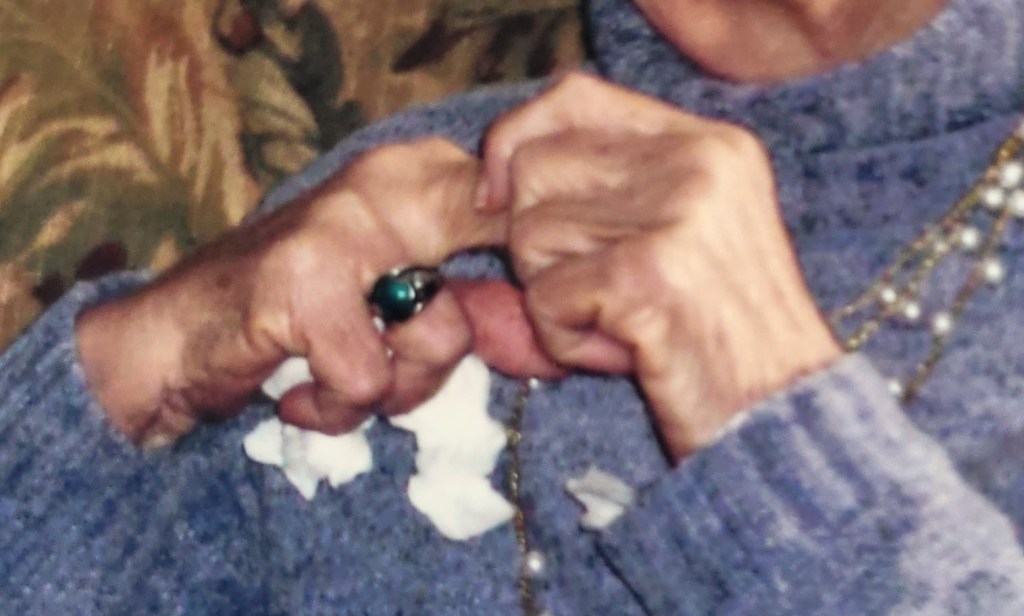
I came across this photo of Mom’s folded hands from Christmas Eve 2008. That night, we gathered at Diane’s home in Illinois to celebrate the holiday and open gifts. Mom would live to share another four Christmases with us.

It’s a cropped image and not the clearest, but when I saw it, I was reminded of Mom’s age spots and blemishes that grew with the passage of time on her fair, loose, thin skin. The rough patches on her hard-working hands go back in time to her rural southern roots in High Point, North Carolina, and fifty years in St. Louis, Missouri, which I chronicle in From Fertile Ground.

In her final nine years living in northern Illinois, our mother had this habit of clutching a tissue in her palms. She often hid an auxiliary one in the arm of her blouse or sweater. If you look closely, you can see it peeking out of the sleeve of her heather-flecked turtleneck.

These are the little personal idiosyncrasies that only a sibling would remember. They don’t matter in the grander scheme of things, but they do when it’s your mother and you still love and miss her after ten years of living without her. And you realize that your own mortality creeps ever closer with every blogpost.

Sure, I stay active–mentally and physically–and will continue to mount the treadmill several times each week to keep my heart strong.

But there is no denying the evolving appearance of my spotted, aging hands. They are looking more like my mother’s every day.

Will You Still Need Me? Will You Still Read Me?

The title of this post is a shameless ripoff of the old Beatles song, When I’m Sixty-Four. But my bastardization of the lyrics is appropriate. Today I turn sixty-four and I’m a writer who wants you to read my books. When you do, you will feed my desire to stay relevant.

Ask Tom. He’ll tell you. At this stage of life, I’m generally contented and thankful for good health, a comfortable home, and a loving husband. It is remarkable that we share the same birthday … same year too.

In 1957, our mothers never imagined their newborn sons–delivered three hundred miles and thirteen hours apart–would meet one day and marry. It certainly feels like a miracle to me.

Back to my writing. Whenever I wear my literary hat–which is frequently–I find myself questioning why my book sales have dried up like a sun-drenched Arizona river bed.

Of course, I promote my books online and do a little advertising here and there. I also market my stories on a personal basis, but when you’re an independent writer it’s easy for your books to get lost in the stacks of Amazon’s metaphorical bookshelf.

This concern I have is not quite an obsession, though it borders on it. I put a lot of thought and creativity into my writing. I want to share it with a wider circle of readers.

Perhaps my advancing age and occasional forgetfulness–did I tell you I turned sixty-four on July 6?–is what drives me to keep writing, to keep sharing my impressions and reflections of the world, to keep checking progress (or lack there of) on book sales, to keep wondering if readers will still read me.

The good news is I feel spry most days. (Of course, I wouldn’t consider using the word spry unless I were at least six decades old.) Anyway, I still have a lot to say and plenty of energy. So, on my sixty-fourth birthday, I’m going to tell you why you should buy and read my latest book, I Think I’ll Prune the Lemon Tree.

As a kid in the 1960s and early 1970s, I observed how hard my mother worked to provide for our family and to prepare meals that we all liked … even after working long days in an office.

Frequently, Mom bought Sealtest Neopolitan ice cream and wedged it into the freezer portion of our avocado-colored refrigerator next to the Swanson’s TV dinners.

Why Neapolitan? Because she and Dad liked strawberry ice cream, while my sister and I preferred chocolate and vanilla. If you aren’t familiar with Neapolitan (I rarely see it in the supermarket these days), it included all three flavors in a carton stacked side-by-side. So, theoretically, Neopolitan offered something for everyone in our family in one container.

This ice cream recollection captures precisely the creative thrust I wanted to achieve as I wrote my Arizona-based essays. I must have been channeling my mother’s shopping sensibilities.

I wanted my book to include something for everyone … humor and sincerity, social relevance and frivolity, truth and fantasy … and to comment on the relevance of every personal and geographical chapter in my life: Missouri, North Carolina, Illinois, and Arizona.

Now that summer is upon us and the heat has arrived, I strongly encourage you to consume your favorite flavor of ice cream to cool off and to buy a paperback or Kindle version of my Neopolitan book.

In the thirty-nine essays that appear in the book, you will enjoy lapping up several flavors. For instance, there are stories about: citrus and lizards; a hummingbird and a boxer; time travel; an eavesdropping barrel cactus; a return to Tucson through the looking glass of an authentic gay life; reflections on an extended visit to that dreaded place we all lived–Coronaville; the musings of an incredible shrinking man; a wayward Viennese waiter/writer struggling to tell his heart-wrenching story; a mid-century St. Louis custodian who bonded with a famous scrub woman; alliterative observations of flickers and fedoras; the golden hours of living in the Sonoran Desert; and much more.

When you read my book (and I hope you’ll review it too), you’ll be feeding your own creativity and doing this sixty-four-year-old writer a big favor. Yes, even after writing this long-winded essay, I still need to feel needed.

Now, back to the musical portion of my post and the final verse of a pop song that feels especially personal today.

***

Send me a postcard, drop me a line
Stating point of view
Indicate precisely what you mean to say
Yours sincerely, wasting away

Give me your answer, fill in a form
Mine for evermore
Will you still need me, will you still feed me
When I’m sixty-four
*

*The Beatles released When I’m Sixty-Four (lyrics by John Lennon and Paul McCartney) on their 1967 album Sgt. Pepper’s Lonely Hearts Club Band.

To Chase Another Thrill

I wasn’t in the crowd on June 5, 1971–fifty years ago today–when Six Flags Over Mid-America first opened its gates in the rolling countryside of Eureka, Missouri.

But I remember the feeling of unbridled anticipation when I read about it in the St. Louis Post-Dispatch and saw the coverage of the grand opening on local TV stations. I wondered, what would this new amusement park feel like, smell like, taste like?

Sometime in late June or early July came my inaugural visit. As I skipped through the turnstiles of the gleaming attraction with friends, I remember the exuberance I felt. It was like running out the doors on the last day of school and discovering a carefree, sparkling universe on the outskirts of St. Louis … all rolled into one.

We raced from ride to ride and show to show, devoured fried chicken and strawberry popsicles, cooled off in the splash of the Log Flume, and tossed our arms in the air when the River King Mine Train (the park’s first rollercoaster) left the station. How we screeched when the bottom of our stomachs dropped on the final plunge.

In the summer of ’71, I had no clue or premonition that I would actually learn how to drive that same rollercoaster three years later as a fresh-scrubbed seasonal Six Flags employee … or that the experience would become a metaphor and inspiration for a light-hearted book I would write in 2016 about the ups and downs of my Missouri life in the 1960s and 70s. But life is full of surprises. Both of those things happened.

On this fiftieth anniversary, I still recall the fun of those more innocent days as a guest and the thrill of landing my first job at Six Flags Over Mid-America in 1974 … not to mention the twists and turns that would follow for the next three summers as a rollercoaster operator.

As a tribute to the history of Six Flags (and all the fun and energetic cohorts who worked beside me in the mid 70s), I want to share To Chase Another Thrill. It’s a poem I wrote in June 2016, which captures the feeling of manning the rollercoaster controls. It first appeared in Tales of a Rollercoaster Operator in 2017.

***

I am the purveyor of ups and downs, for an hour or so each day,

Standing high above the crowd, ready to guide your way.

I study the nearby dashboard, flustered faces in a row,

Itching for a two-minute joy ride, with others persuaded to go.

I see the bars locked tightly, the crew is stepping back,

Leaving the station to squeals on wheels, it’s time to ride the track.

I know just what will happen, the train will climb three lifts,

Rounding bends and taking falls, rising from the dips.

I hear the train returning, it’s climbing up the hill,

Applying brakes and coming home, to chase another thrill.

The Columns and Buttes

MU_ColumnsRing_May1979

Our best memories–the ones cast in precious metals and inscribed with our names in cursive–far outweigh the cubic zirconium rings and balled up aluminum foil we choose to discard. But even the brightest ballast-laden snippets blur at the edges as they flash through our mind’s eye. They provide the weight we press against, cling to, or push away from.

My fourteen-karat gold college ring symbolizes the continuity of my University of Missouri years in Columbia. Resting in a dish with assorted jewelry in my bureau drawer, it features the school’s six iconic time-tested columns. All that remains of the university’s Academic Hall, which burned in a fire in the fresh snow of January 1892.

Out of the ashes, President Richard H. Jesse had the vision and fortitude to guide the school and transform it into a research-based institution. During his seventeen-year administration, the modern university Jesse envisioned was born. It grew and produced positive ripples around the ever-enduring stone columns … as well as generations who met near, lounged under or studied beneath them.

MU students have built lives and careers there. Succeeded and failed in times of war and peace. In the 1970’s, dozens of us tossed our Frisbees around the stone pillars … galloping across the Francis Quadrangle grass, running amok in the “Show Me” state until the next keg of beer or slice of Shakespeare’s pizza captured our attention. In my case, I walked across an outdoor stage to accept my Bachelor of Journalism degree in May 1979.

At their essence, the columns represent more than a social backdrop for play and frivolity. They are larger-than-life markers of time and civilization, before automobiles, airplanes, computers or digital technology. Poetic and historic reminders of their permanence and significance under fire versus our relative impermanence and insignificance.

I no longer wear the ring, but I’ve kept it nonetheless. When I pick it up and examine the luster and sparkle of the tiger’s eye, I marvel at what I accomplished, recall what I survived, and “retreat to the chambers that I left behind”, a lyrical line from folk rocker Dan Fogelberg’s song Heart Hotels and his 1979 album Phoenix.

In the late 1970’s, as I turned up the volume on my stereo and escaped into Fogelberg’s melancholy music behind my long hair, I didn’t imagine I’d go west one day and create a whole new life near the base of another rock formation … the Papapo Park buttes; a natural one … but that’s what can happen over the course of a lifetime.

More than forty years later, I’ve discovered a longer view, which comes only with lengthening late-afternoon shadows and survival. Whenever I imagine my life on an eighty-year, bell-shaped curve (we should all feel lucky to live that long … Dan Fogelberg died in 2007 at age fifty-six), I see the columns as the launching pad after the first twenty years.

The geological formation of the Papago Park buttes, just steps from my Arizona condo and millions of years ago at the bottom of a vast ocean, are likely the landing pad on the down slope of life for my last twenty.

Global pandemic or not, none of us knows when the end point will arrive. What the circumstances will be. We might as well enjoy the flights of fancy–keep throwing and catching our Frisbee in our sixties as Tom and I do–and take comfort in the anchors of life. The symbols of strength around us. The columns and buttes that keep us grateful and grounded in good times and bad.


FREE to Read as You Shelter in Place

MarkJohnsonBooks_Jan2019 013 (1000x645)

Perhaps you’re feeling isolated and afraid. Like me, you’re worried about the implications of this global pandemic. In need of a creative escape from the closing walls. Concerned for loved ones and friends, who live in places that are feeling the brunt of this crisis.

You’re tired and queasy from the daily Tilt-A-Whirl of news bulletins. Searching for truth. Dealing with loss. Texting with daughters and sons, mothers and fathers, sisters and brothers to see how they’re coping. Craving a retreat into the comfort of family connections and the healing properties of nature.

I’m here to help relieve the pain with this reading stimulus offer. From Saturday, March 21, through Wednesday, March 25, Kindle copies of all three of my books are FREE on Amazon.

From Fertile Ground

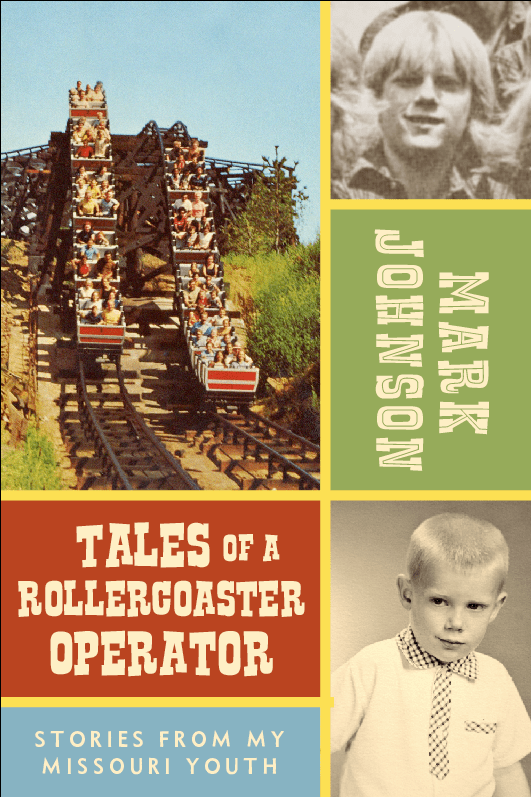
Tales of a Rollercoaster Operator

An Unobstructed View

All you need to do is click on the links, go to Amazon, download the books and curl up in a cozy corner of your home.

Once you finish each book, please take a few minutes to post your reviews on Amazon and/or Goodreads … especially if you feel my stories have helped to rejuvenate your spirit or soothe your soul.

One more thing. I’m thinking of you. Stay well and happy reading!


When Life Gives You Lemons

DSC08839 (3)

Generations have insisted there is something wrong with lemons: When life gives you lemons, make lemonade. In other words, stop your whining and make the best of a bad situation.

I remember my demonstrative dad, a long-time salesman, declaring this in the 1960s. Perhaps he picked up this phrase from Missouri-born author and salesmanship lecturer Dale Carnegie’s 1948 book How to Stop Worrying and Start Living.

Although, according to Wikipedia, writer Elbert Hubbard originally coined the phrase in 1915 for an obituary he wrote to honor Marshall Pinckney Wilder, an actor who overcame physical disabilities to lead a fruitful life.

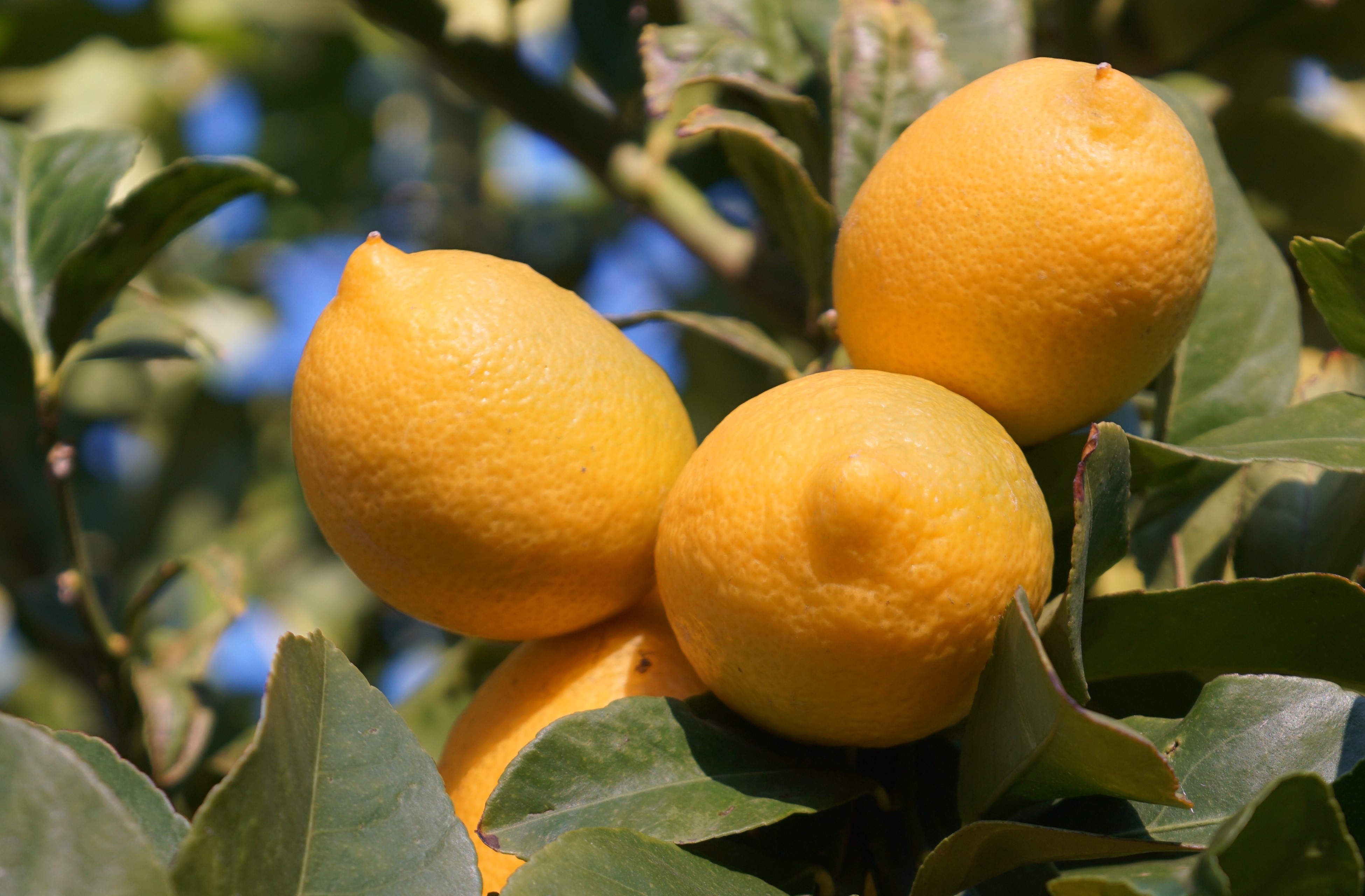
Anyway, I know lemons are sour, but what’s so horrible about having a luscious lemon tree outside your front door? Nothing as far as this Midwestern boy can tell. It’s laden with ripe-and-ready fruits every January, cascading a clean citrus scent (think Lemon Pledge furniture polish), whenever I walk past it.

Last Saturday, I snagged eight lemons from our condo complex tree, reached to the top shelf in our kitchen cabinet for our juicer, found a lemonade recipe on line and made fresh lemonade. (By the way, in my previous lives … in Missouri, Illinois or even on my grandfather’s North Carolina From Fertile Ground farm … the climate would have never permitted this.)

Of course, I added more than a gallon of water and a cup and a half of sugar to the lemon juice to neutralize the sour fruit flavor. I poured it all into our retro Kool-Aid-style glass pitcher and found space in our refrigerator to let the liquid contents cool.

Then on Sunday, Tom and I, along with Nick and Aida (my older son and his girlfriend), each enjoyed a tall glass of cold lemonade to celebrate the fruits of our fortunate Valley of the Sun existence.

I love luscious lemons. When life gives you them (on neighborhood trees in January or otherwise), make lemonade.


Our Descent into 2020

Ladies and gentlemen, thank you for flying with me in 2019. We’ve begun our descent into 2020. Please turn off all electronic devices, stow your tray, and return your seat to its upright position. Be sure your seat belt is fastened tightly across your lap, because we may encounter turbulence in the new year.

In case of emergency, oxygen masks will drop down and lighting will illuminate the floor to guide you to the nearest exit. Remember, your seat cushion may be used as a flotation device in the event of a water landing.

As your faithful blogging pilot, I don’t have a clue what the next year or new decade will bring. But as a seasoned sixtyish storytelling survivor, in 2020 I will continue to write about the meaningful, magical and mundane moments. I imagine I will board my dusty desert time machine occasionally if you care to join me. Why? Because this is my blog and that’s what I do.

Before we land (safely, I hope) and deplane in 2020, I have a belated holiday gift waiting for you on Amazon. Until December 31, download a FREE Kindle copy of Tales of a Rollercoaster Operator.  It’s my book of twenty-six, up-and-down stories from my Missouri childhood. (If you decide to accept my gift and read it, please consider posting your review on Amazon or Goodreads.)

The final story, A New Year Resolution, fills me with hope and the warm possibilities of life. It’s a tribute to the citizenship of my mother and father, who did the right thing on a frosty St. Louis morning on January 1, 1962. I witnessed it through four-year-old eyes. Almost sixty years later, perhaps it’s also a good reminder that each of us has the power to help another human being in need.

Once again, thank you for visiting markjohnsonstories.com throughout the year. I know you have a choice of website destinations. I greatly appreciate all of my loyal followers, who have chosen to travel with me on life’s journey.