Tag: Inspiration

A View from the Bleachers

As a suburban white kid of the sixties, growing up in the segregated St. Louis area, I had no black classmates, teachers, acquaintances or neighbors. Until I went to college (and more so as I built adult relationships with black colleagues and friends), my only first-hand experiences with black people occurred while riding a city bus, tuning into the latest episode of Room 222, swimming in a public pool or watching Bob Gibson and Lou Brock play ball from the bleachers of Busch Memorial Stadium.

I’ll admit it, as I wrote that previous sentence, it felt very odd and constricting … even shameful. But this was the world I came from. Occasionally, at family gatherings, one of my uncles would take a puff from his nasty cigar and proceed to talk about “blacks moving into the neighborhood.”

As a boy, that kind of hateful rhetoric and the smoke hovering in my parents’ living room brought tears to my eyes. As an adult, it still makes me sick to my stomach. Unfortunately, at the time none of the other adults spoke up. I felt like I wanted to run out of the room, but I didn’t.  I knew what he said was wrong. It was racism. It was painful.

Moving a few years ahead, maybe on some level I also thought “if people are saying bad things about black people just because they have a different skin color, what will they say about me if I tell them I’m gay?”

At times, it was a claustrophobic life of placating those who were the most vocal. Denying your true feelings. Walking on egg shells to keep the peace. Sadly, it was only a more distant chapter of simmering anxiety and poor race relations than the one we know well today.

On a personal level, I was able to learn and grow from it by honoring my own internal compass, broadening my experiences, meeting new and different people, traveling to new places, keeping an open mind … even for a time co-facilitating diversity training as a consultant and challenging managers and employees to draw from the strength of their differences rather than rejecting them.

Fortunately, both of my parents were decent people. They instilled in me a value of simple living. Caring for the disadvantaged. Saving for a rainy day. As a result, on some level, I’ve always identified more with the “have-nots” than the “haves”. It pains me to see people flaunt their advantage … their white privilege, their economic status, their lofty and meaningless titles.

Despite my limited experience with diverse people in the 60’s and 70’s, I was always comfortable sitting in the bleachers with Dad and the masses–mostly poorer black and white blue-collar workers–rooting for our hometown St. Louis Cardinals. Besides, it was all Dad could afford.

I recall one night. The Los Angeles Dodgers were in town. It was a close game. I don’t remember the score or the outcome, but the bleachers were full and Dad and I were in the middle of a buzzing crowd. Between pitches, I asked him why some of the black patrons, ordinarily faithful to the Cardinals, were cheering for the Dodgers.

“It’s because of Jackie Robinson,” he said. “Back when the Dodgers played in Brooklyn, he was the first black ballplayer in the Major Leagues. Ever since then, some black people are loyal to the Dodgers. They opened the door for others to follow.”

Now in 2020, with the recent murder of George Floyd and the ensuing nationwide protests and general mayhem and destruction, I’ve been thinking of this Jackie Robinson moment with Dad. How little I knew of the plight of black people back then. How much more I know now about loving other people no matter their skin color, speaking up for your rights, voicing your views, and demanding justice.

I’m not condoning the opportunistic looting in cities around the country, some of which we’ve seen here in Scottsdale, Arizona. But, in honor of George Floyd’s life and of many other black men and women who have died needlessly before him, we must find a way to heal as a nation.

We must acknowledge that racism in our society exists just as it has for a long time. We must listen to the “have nots” of our world. We must read more and follow the teachings of history and science.

We must elect leaders, nationally and locally, who will advocate for the rights of all Americans … no matter their skin color, cultural heritage, sexual orientation or religious beliefs.

Our future as a nation depends upon it.

Come What May

DesertRose_053020

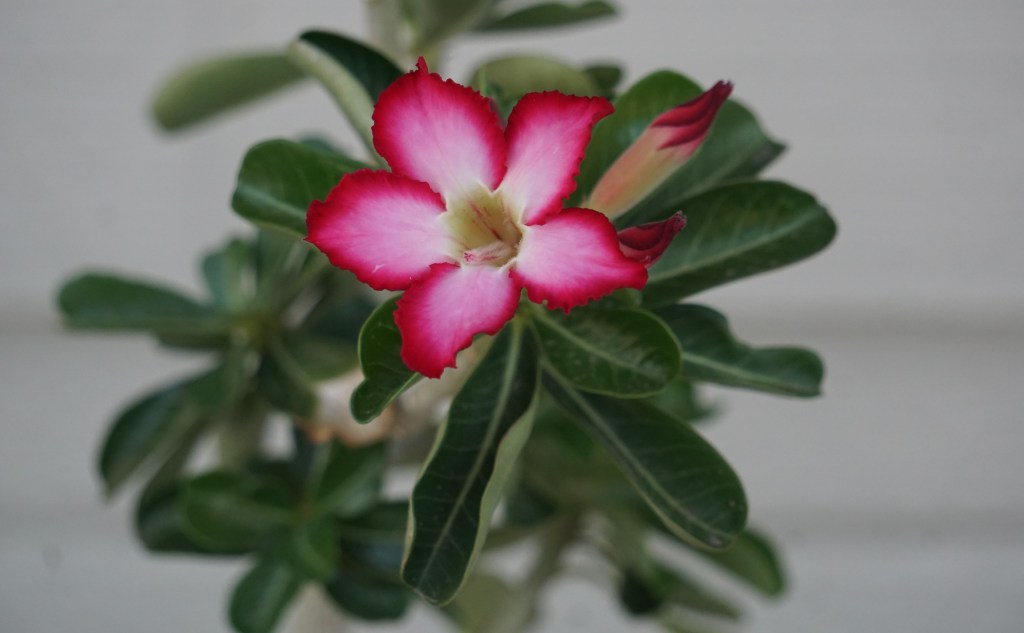
I can’t reconcile the beauty of the desert rose outside my backdoor with the ugliness of a black man’s murder in Minneapolis. Except I know the rose is a natural creation that thrives on heat and sun, while the killing is the latest manifestation of man-made hate and ignorance.

I can’t justify one-hundred-thousand deaths perpetuated by a virulent virus in less than six months in a complicated country. Except I know the virus is a natural creation with a cycle of its own, while the escalating numbers are evidence of lies and disarray in an ill-equipped nation.

I can’t imagine another month or two or three or more of disorientation and destruction. Except I know the mockingbird will forever sing atop a palm in the peak of the day, while an uncertain world continues to turn come what may.

Gymbolic Bliss

There was no celebration. No ribbon cutting. No marching band. No drum roll. No crescendo. No crashing cymbals as the glass doors parted magically and Tom and I swiped our membership tags under the watchful electronic eye at the entrance to Club SAR.

Yet, in the scheme of restoring sanity, at 11:45 a.m. on the Tuesday after Memorial Day I felt the symbolic hug of a good friend when I turned the corner and spotted a few familiar faces and free weights.

Smiling like a miscast Lone Ranger through the discomfort of his black bandana and makeshift mask, manager Jonathan greeted us from ten-plus feet away.

“Best day ever,” he proclaimed as we scanned the newly configured space.

It was a tongue-in-cheek phrase he had uttered previously throughout 2019 and early in 2020 every time we walked through the door. Every time we exchanged pleasantries before climbing aboard our favorite life-affirming machines in our past lives.

But on this day in late May it really did feel like the best day ever for two sixty-two-year-old men, who had cobbled together an at-home gym in mid-March (a basketball and ten-and-fifteen-pound hand weights to keep hearts and joints strong in the face of an impending pandemic).

The best day ever to take a giant step away from our predominantly stay-at-home lives. The best day ever to enter a newly configured world of plexi-glass partitions, spaced-out treadmills, scattered stationary bikes and strategically-located sanitizing stations.

It didn’t take long for muscle memory to take hold in a room sprinkled with souls intent upon forestalling the gym reaper. Forty-five minutes later … past trusty treadmill steps, a small stream of light weights, and elliptical exclamation point … we said our goodbyes, drained our water bottles to quench our thirst, and stepped toward our Sonata.

Certainly one thing is true. On this Tuesday–re-opening day at our community gym–a  smattering of Scottsdale survivors recaptured a strand of their pre-COVID-19 lives … ever grateful for a few moments of gymbolic bliss.


Earthing

Here in Scottsdale, Arizona, I’ve been fortunate to practice gentle yoga outdoors with five dear friends for the past eight Fridays. This poem is dedicated to our shared experience and sincere hope for citizens around the world, who breathe the same air and search for the same peace.

***

We close our eyes. The sensory memory takes us there. Six souls spread apart for one hour on eight consecutive Fridays. Inhale … exhale.

We practice gentle yoga together under a shade-producing pine. Far away from viruses, ventilators and varnished walls. Inhale … exhale.

We press against imperfections. Blades of grass pump tranquility through lungs and limbs. We absorb the Earth’s energy and stability. Inhale … exhale.

We find our edge for the next tree pose. A westward breeze whispers past needles and branches. A desert wren answers in affirmation. Inhale … exhale.

We conjure six souls beyond arid Arizona. Earthing elsewhere. China or India or Italy perhaps. Dodging a virulent virus. Inhale … exhale.

We search for the same peace. We press against the same ground. We cling to the same planet. We breathe the same air.


Salutations from the Slow Lane

I’ve never been an early adopter. I’m more of a late bloomer (better than never blooming at all). A more apt description might be slow mover. If I were a dog, I’d be categorized as a Great Pyrenees (affectionate, gentle, sensitive, occasionally strong willed).

Each morning, I emerge slowly from my side of the bed. Usually around 6:30. Compare that with Tom’s Jack Russell Terrier “I’m-ready-to-go” demeanor (intelligent, energetic, social, occasionally strong willed), and you won’t be surprised to learn he’s usually up and around for at least thirty minutes before I begin to stir.

Moving more slowly doesn’t meant I don’t go places … today I walked 13,959 steps … it just means it takes me longer to get where I’m going than my husband. The inner workings of his clock wind tighter. My circuitry sweeps wider. I find it interesting that Tom is three inches shorter and thirty pounds lighter, yet his strides are substantially longer. How can that be?

These are the sorts of inane observations two sixty-two-year-old men can have as they lumber/saunter down sun-bleached Arizona paths (a slower pace all its own as compared with most of the world).

But these trivialities only spring into our conversation after we’ve dispensed with the more typical aggravating current event topics: the lack of COVID-19 testing in Arizona; the lack of positive stories in the media about people who’ve survived the virus; the lack of leadership in the White House.

If you’re over fifty (sixty, for sure), I imagine you’ll nod knowingly when I tell you a secret: my slowness is only getting slower with age. The blood pressure medication I take doesn’t help my lack of alacrity. Although two tiny pills–one with breakfast and a second with dinner–certainly protect my heart and keep my cardiologist happy.

Still, life in the slow lane isn’t that bad. It’s better than no lane at all (which might have happened if I hadn’t had the wherewithal to tell Tom to pull into the ER entrance at Barnes-Jewish Hospital nearly three years ago in St. Louis as doom and breathlessness washed over me).

I suppose moving more slowly is the right speed, too … the right sensibility … for this COVID-19 world, this alternative Alice-in-Wonderland universe we all seem to have fallen into. It’s better to deliberate about our next steps in society than to run back out of the rabbit hole carelessly and into the streets impulsively.

I’m not slow in every way. I’m actually itching wildly to get back to the gym sometime this summer. Starved for more socializing with my Phoenix-area friends again. Ready to reestablish those connections and circles in whatever ways I can. (Sorry, Zoom doesn’t do that for me.)

I’m also resigned to the fact that my love for choral singing … someday again standing side-by-side on stage with my mates in the Phoenix Gay Men’s Chorus rather than having makeshift rehearsals online … will require a much slower reentry process.

It will be a longer wait–something sad this slow poke will have to endure as I stare wistfully back through the looking glass–until this blissful escape in my artistic life resurfaces and I can once again raise my voice without a care in this unforeseen world.


A Star Is Born

DesertRose_051620 (2)

Undeterred by a determined virus, Angelica … a Phoenix-area, back-patio, red-picotee adenium …  welcomed her first born into a disenchanted world on an otherwise ordinary May Saturday afternoon.

Unofficially, Angelica’s initial offspring promises a bastion of much-anticipated, star-shaped desert rose blooms streaking toward the slender palms and spiky saguaros that stretch across the Sonoran sky.

Scottsdale sources say Angelica’s proud papas aren’t passing out cigars, but believe this may be a prelude to a symphony of floral fireworks, a harbinger of brighter days, and certainly a dazzling distraction in a year of social distancing and sad surprises.

The Columns and Buttes

MU_ColumnsRing_May1979

Our best memories–the ones cast in precious metals and inscribed with our names in cursive–far outweigh the cubic zirconium rings and balled up aluminum foil we choose to discard. But even the brightest ballast-laden snippets blur at the edges as they flash through our mind’s eye. They provide the weight we press against, cling to, or push away from.

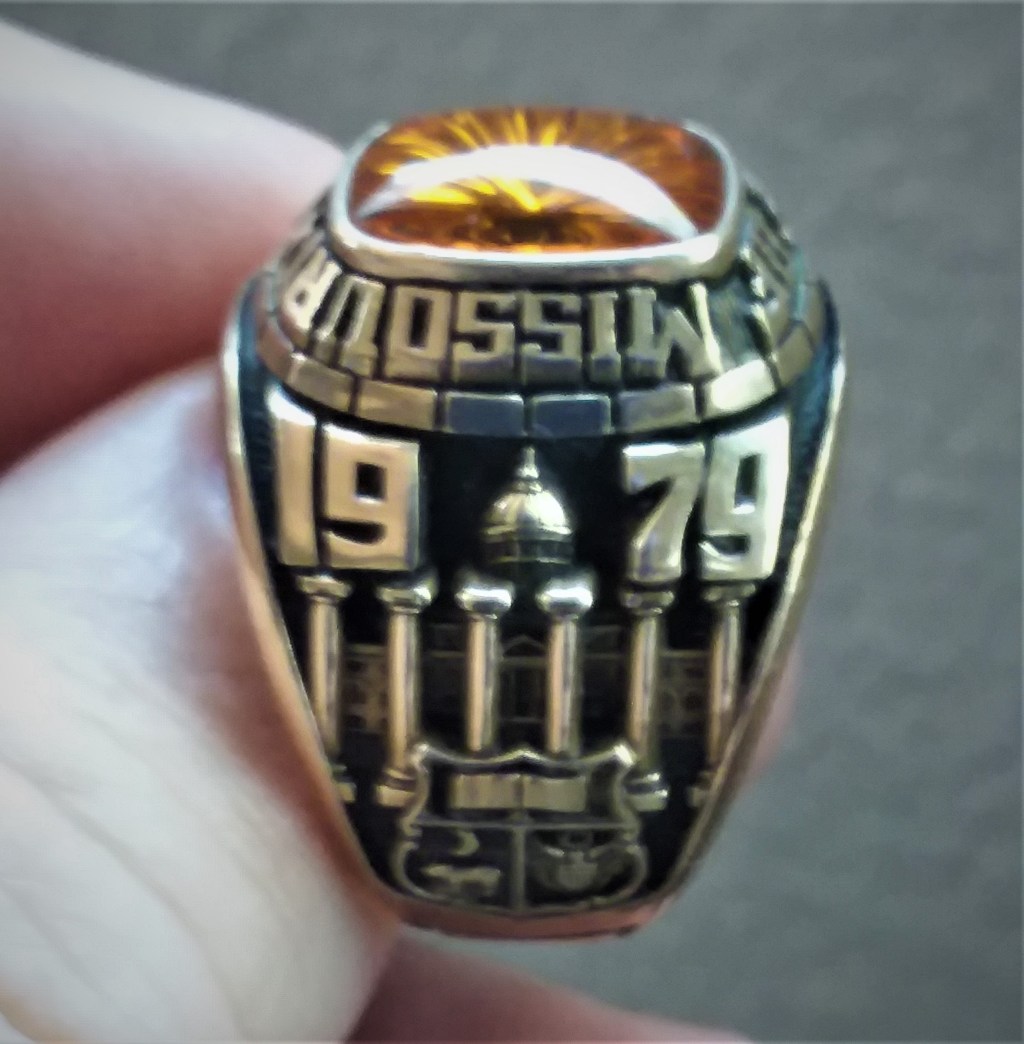
My fourteen-karat gold college ring symbolizes the continuity of my University of Missouri years in Columbia. Resting in a dish with assorted jewelry in my bureau drawer, it features the school’s six iconic time-tested columns. All that remains of the university’s Academic Hall, which burned in a fire in the fresh snow of January 1892.

Out of the ashes, President Richard H. Jesse had the vision and fortitude to guide the school and transform it into a research-based institution. During his seventeen-year administration, the modern university Jesse envisioned was born. It grew and produced positive ripples around the ever-enduring stone columns … as well as generations who met near, lounged under or studied beneath them.

MU students have built lives and careers there. Succeeded and failed in times of war and peace. In the 1970’s, dozens of us tossed our Frisbees around the stone pillars … galloping across the Francis Quadrangle grass, running amok in the “Show Me” state until the next keg of beer or slice of Shakespeare’s pizza captured our attention. In my case, I walked across an outdoor stage to accept my Bachelor of Journalism degree in May 1979.

At their essence, the columns represent more than a social backdrop for play and frivolity. They are larger-than-life markers of time and civilization, before automobiles, airplanes, computers or digital technology. Poetic and historic reminders of their permanence and significance under fire versus our relative impermanence and insignificance.

I no longer wear the ring, but I’ve kept it nonetheless. When I pick it up and examine the luster and sparkle of the tiger’s eye, I marvel at what I accomplished, recall what I survived, and “retreat to the chambers that I left behind”, a lyrical line from folk rocker Dan Fogelberg’s song Heart Hotels and his 1979 album Phoenix.

In the late 1970’s, as I turned up the volume on my stereo and escaped into Fogelberg’s melancholy music behind my long hair, I didn’t imagine I’d go west one day and create a whole new life near the base of another rock formation … the Papapo Park buttes; a natural one … but that’s what can happen over the course of a lifetime.

More than forty years later, I’ve discovered a longer view, which comes only with lengthening late-afternoon shadows and survival. Whenever I imagine my life on an eighty-year, bell-shaped curve (we should all feel lucky to live that long … Dan Fogelberg died in 2007 at age fifty-six), I see the columns as the launching pad after the first twenty years.

The geological formation of the Papago Park buttes, just steps from my Arizona condo and millions of years ago at the bottom of a vast ocean, are likely the landing pad on the down slope of life for my last twenty.

Global pandemic or not, none of us knows when the end point will arrive. What the circumstances will be. We might as well enjoy the flights of fancy–keep throwing and catching our Frisbee in our sixties as Tom and I do–and take comfort in the anchors of life. The symbols of strength around us. The columns and buttes that keep us grateful and grounded in good times and bad.


May’s Bouquet

DSC08926 (2)

May crept in under the cover of disease and darkness. By late morning, after an hour of restorative outdoor yoga under the shade of an Arizona pine, she sped past spring and delivered summer beauty and floral comfort: our first desert rose bloom of the season.

Cue Midwestern years, purple-iris moments with mother, pink peonies that drooped over the driveway after it rained, and this poem. I penned it four years ago when I still called Illinois my home.

***

May’s Bouquet

Arriving welcome, clean and fresh, reflecting skies grow amorous.

Crisp at dawn, bursting through, captured by a mother’s view.

Blooming lilacs, sweet repose, ducklings lined up in a row.

Bounding blooms, fast and pure, veiled in peonies pink allure.

Reaching high, bred for speed, stretching out to take the lead.

Calm til dusk, an even pace, ushered in the rain’s disgrace.

Gliding up, curling flow, blowing wishes afterglow.

Tempers flare, to dash away, majestic days of May’s bouquet.


From a Distance

SheepDistance_042320

We can still see each other if we squint. You teetering on the mountain top looking west. Me gazing east from the other side of the valley. Absorbing a few morning rays of sun before the heat rolls in. Shielding ourselves from the most harmful elements that lurk out of our control.

Coexisting from a distance is what we do now. Not knowing what will come next. Wondering when we may be close again.  If only we could fly away together. Begin a new life as unencumbered mockingbirds or desert wrens. No longer afraid. Nesting in the saguaros. Dancing in the sky.

Chaparral High

Chaparral Park_April2020 (2)

For as long as I can remember, I’ve been enchanted by the seductive sound of certain nouns and adjectives:  amethyst, magenta, grandiose, vivacious, lavender, conundrum, veranda, gardenia, daffodil, chaparral.

I can’t explain it, but feeling the rhythm of these three-syllable descriptors and seeding them in a story lightens my spirit. It must be the same high–a chaparral high (not High Chaparral, the exotic, dusty and remote TV western of my youth)–that a  mathematician realizes the moment he or she solves an equation.

Imagine my glee, having the word chaparral appear as the name for a road, pool and nearby park. Home of tanned and true Arizonans. Firm and flabby. Shirtless and sumptuous. Lithe and leathery.  Geese and goslings.

During this prolonged pandemic pandemonium, Tom and I have ventured to Chaparral Park to get our steps in on numerous occasions. We like the warm neighborhood atmosphere–singles and couples working out at safe distances framed by both palatial palms and small-leaved evergreen shrubs you might actually see if we lived on a chaparral.

Psychologically, strolling there also reminds us of our diligent days working out just down the street. Mounting the treadmill and elliptical at the local gym, Club SAR, which we typically would frequent if we and it weren’t shuttered by COVID-19.

Based on visible signs, adorable ducks and geese also feel fortunate to live in the warmth and kindness of our community. It’s written on cardboard for the world to see that someone certainly cares about our critters.

“For the baby geese … Please do not remove.”

Yes, the young ones that began to appear recently, just east of Hayden Road and the shadows of Camelback Mountain, need a ramp to get there steps in. To achieve their chaparral high.