Tag: Scottsdale

January’s Gift

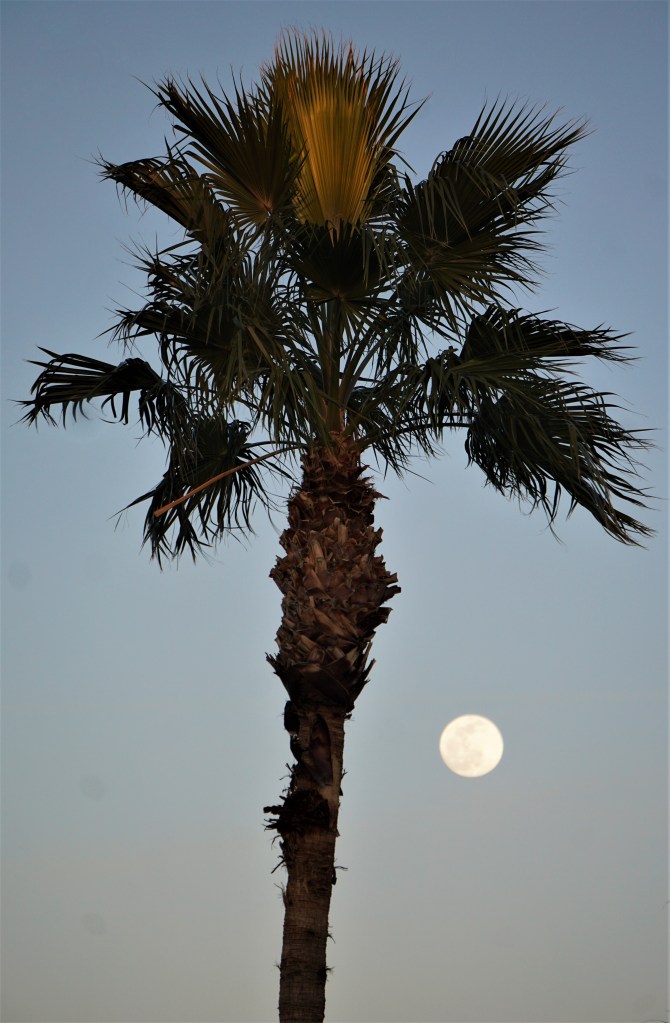
Tonight there was more than a January chill in the air in the Valley of the Sun. As we returned home from our walk along the Crosscut Canal, we looked skyward. I scampered home to grab my telephoto lens.

Even as we stumble through the dark of a global pandemic, there is more to investigate and admire than what’s trending on Netflix. There is January’s gift. There is the beauty of nature.

A New Day in History

As a memoir writer, I usually look for clues from the past to enlighten the present. Or signs from nature, such as the cottonwood trees, which I gravitate toward on my walks on the edge of the Desert Botanical Garden. Even in mid-winter here in Arizona, they cling to their brown autumn leaves as they touch another blue Sonoran sky.

No matter what happened yesterday or the day before — or which leaves hold on, fall, or decompose in the desert sun — January 20, 2021 is a day unto itself. It is a twenty-four-hour period filled with residual pain and new possibilities.

Despite the intense security required in Washington, D.C. to stage the inauguration of our forty-sixth president, the deed is done. Joe Biden is now our president; Kamala Harris our vice president. She is the first woman — the first woman of color — to hold this high office. That is something grand to celebrate.

Yes, the years, months and days leading up to this have been marred by a failed presidency, political upheaval, social distress, a January 6 insurrection, and the awful reckoning of more than four hundred thousand lives lost in the United States in one year to this pandemic.

But the light flickering in the sky above the cottonwood trees on this day feels different to me. The atmosphere on the steps of the U.S. Capitol is also new. There is unity in the messages, diversity in the images, and poetry in the air.

Finally, at least for one day, we have something to be proud of again as a nation. It is a new day in history.

From Crab Apples to Lemon Trees

In June 1962, a month before my fifth birthday, I stood alone outside the west wall of my brick childhood home. I wore my high-top Keds and cargo shorts with crazy pockets. The wind raced past my crew cut.

Our three-bedroom ranch in south suburban St. Louis appeared identical to two dozen others in the neighborhood, except ours featured a flowering pink crab apple tree with stair-step limbs I loved to climb.

In the shade of the branches, a clear thought jumped to the forefront of my brain. “I am different. I have important things to say.” The idea lingered and swirled through my consciousness.

As I look back at that vivid memory—one of my earliest—I must have recognized I was unlike most of the other boys. At that young age, I must have known I was gay. I must have begun to identify a need to share my thoughts and tell my stories one day.

Since that moment, I have lived at least four lives—shaped by local geography—and written four books. I have played in the red earth of North Carolina, navigated the rolling hills of Missouri, survived the flatlands of Illinois, and discovered the peaks and valleys of Arizona.

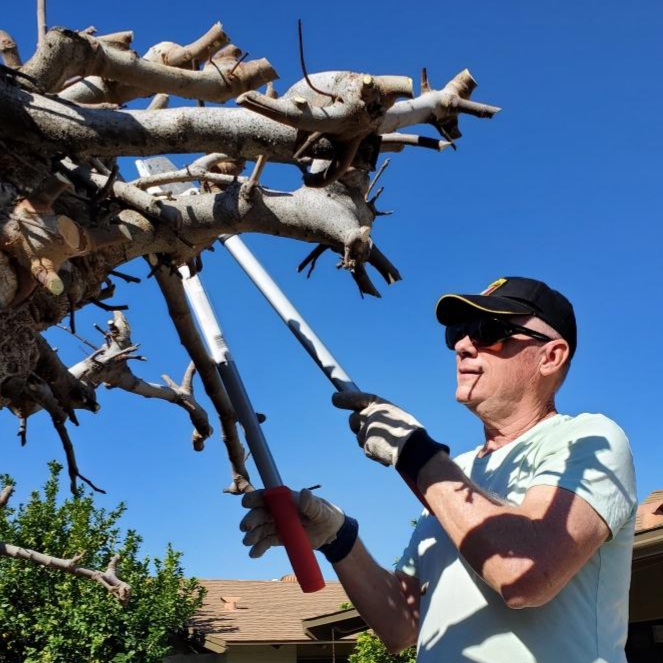
I never imagined I would live and write in my sixties in the rugged landscape of the Sonoran Desert, but the trail of life has led me here to the threshold of publishing my fourth book, I Think I’ll Prune the Lemon Tree. It will appear on Amazon (in paperback and Kindle versions) in late January or early February. Of course, once it is available for purchase, I will let you know.

In the first three years of my Arizona residency—2017 through 2020—the Grand Canyon State has enriched and shaped my life with natural beauty, profound uncertainty, and joyful humor. My goal was to reflect all three in this book, and develop a larger narrative about a gay man and his husband fulfilling their dreams, reflecting on their experiences, hoping to survive a global pandemic, and aging in a bold landscape.

If you are drawn to the themes I explore here on my blog and in my books—nature, family, community, heritage, human rights, humor, love, loss, health, truth, diversity, and creativity—I think you will enjoy reading my latest book.

Of course, nearly six decades have passed since I stood by that flowering pink crab apple tree I loved as a child. It has been replaced by the citrus trees that surround Tom and me in our sixties in our Scottsdale condo community. But the value of memory and storytelling is that I can remember the most important trees, past and present. I can choose to honor each of them.

Little did I know that one day a luscious lemon tree, thirty feet outside my front door, would inspire me to write and share the broader stories of my Arizona life.

The Shadows of 2020

In spite of the promise of a new presidency here in the U.S., we live in the shadows of the pandemic. Even so, Tom and I choose to hang wreaths on our front and back doors to brighten our space and give thanks for all we have as Christmas approaches.

Like many of you, we do our best to help people in need. Sometimes our assistance comes in the form of a small end-of-year check to a worthy charity or a card for a neighbor who’s lost her father. But what do you do when the pain of an unexpected moment shakes you to the core?

Recently, we were driving to our community gym for our typical, masked hour-long workout. On the way there, we noticed a familiar figure on the side of the road. It was a young man walking toward us. He was pulling his suitcase on rollers behind him.

After we passed, we realized it was Nathaniel (not his real name) trudging south down Hayden Road in Scottsdale. He is a friend. Someone who has hiked with us, shot baskets with us at the gym, and (before the pandemic) visited with us at our home.

Nathaniel–a smart, sensitive, handsome guy–has endured several tough years. He’s fighting a drug addiction and has been in and out of treatment for it.

About six months ago, he fell off our radar. He no longer has a phone, so we lost touch with him. Now, unexpectedly, he reentered our lives, lugging the weight of his existence and his world in a two-by-three-foot container.

Immediately, Tom slowed down. We turned on a side street. We found our way back, pulled up next to Nathaniel, got out of the car, and approached. Nathaniel was worn and disoriented, but happy to see us. Over the following fifteen minutes, he told us he had been in jail for several days after an altercation with his family. He wouldn’t or didn’t describe the details. Whatever happened, the year is ending with him roaming the streets.

Tom and I offered to give him a lift to a friend’s home (where he said he was walking). But, after repeatedly asking if we could drive him there, Nathaniel insisted he needed to get there on his own. Eventually, Tom handed him several disposable masks for his protection and a slip of paper with our contact information, so he could reach us when and if he is ready. I gave him twenty dollars for food. He thanked us both and continued on his way.

After we drove off, the sadness and horror we felt materialized. I began to cry for Nathaniel. I imagined the sketchy existence ahead for him, wandering with a fierce addiction, flying solo without the security of a family, home or path to a reasonable future.

How devastated Nathaniel’s mother and father must be, watching their son’s life unravel. What if one of my sons were in the same predicament? What would I do to help him recover? I think the answer is everything, but I don’t walk in the shoes of his parents. I don’t know the history of Nathaniel’s trauma that has led him to a life on the edge.

After this episode and the constant uncertainty we all carry into the new year, it is impossible for me to put a pretty red bow on 2020. Yet the wreaths Tom and I bought remind me how fortunate I am to have a modest, comfortable home in a warm climate. There are so many like Nathaniel who don’t. They are hurting, lost, hungry and homeless.

None of us know what the new year will bring, but I try to maintain a half-glass-full perspective. I hope–under the guidance of Joe Biden and Kamala Harris and a kinder, gentler and more humane administration–we can turn the corner as a nation in 2021. Because only when and if we address the growing needs of the Nathaniel’s of our world, our disenfranchised and discouraged citizens, will we begin to escape the darkness and emerge from the shadows of 2020.

December Revisited

Sonoran Desert December days dazzle. Gone are dreary skies, icy gusts, swirling flurries, clanging Salvation Army bells, and busy Windy City sidewalk years wearing topcoats and backpacks. Still earlier, shedding St. Louis jackets and stocking caps. Hanging them on cloak room hooks before school started. Dreaming of holiday cupcakes and Santa’s flight trajectory.

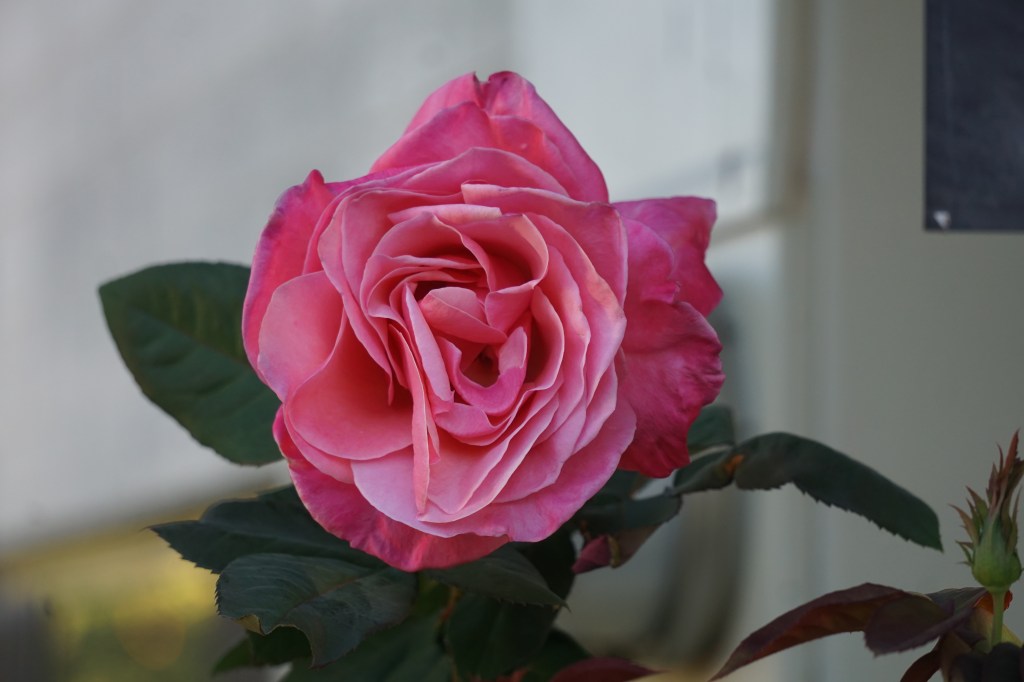
Arizona’s anonymous set designer has replaced them. Sparkling sun burns off the chill of the morning. A neighbor’s pink rose blooms and brightens the walk. A flock of chirpy lovebirds dash away on cue like pent-up kids scampering out the door for recess. Playful palms shimmer and brush the sand from the sky. Granting the splendor of December revisited.

Rain

On the first morning of autumn, September’s long-forgotten-and-seldom-seen sister dropped in from beyond the buttes.

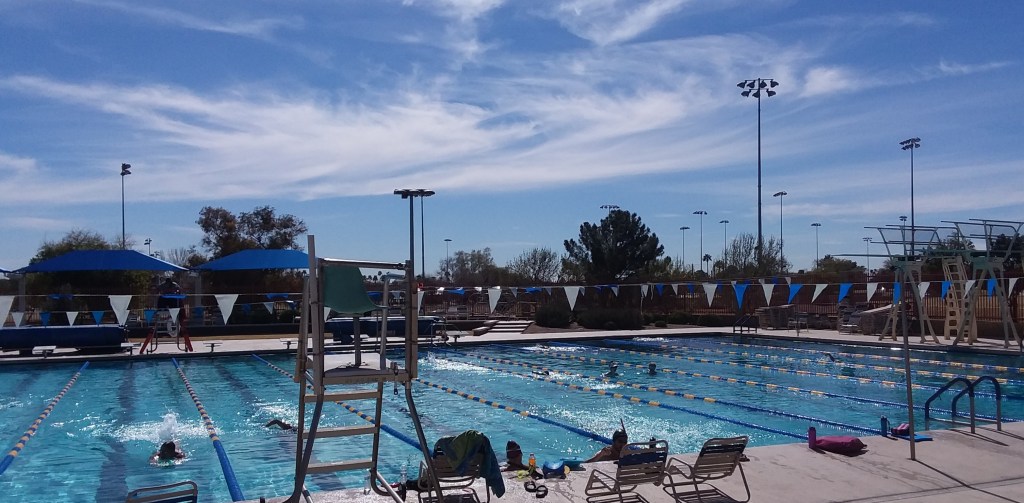
Unreliable rain interrupted an eight o’clock swim. She had ghosted us all summer. Promised her return. Teased us with phantom forecasts.

She stayed for ten minutes. Long enough to soothe freckled shoulders, heal parched souls, and cast a creosote cocktail over the palms.

Her intoxicating personality was the change we needed to silence the sameness. To swim and dance again under the clouds of our desert dreams.

September Morn

SeptemberMorn_090120 (2)

I was ready to turn my back on August. Forty widths of the pool under a dramatic partly cloudy sky helped me kiss the hottest month ever in the Valley of the Sun goodbye.

September began swimmingly.

In the 1960s on the first of September, Dad would shout “September morn” gleefully when my sister Diane and I walked into our suburban St. Louis kitchen for breakfast. It was a greeting his grandmother bestowed on him as a child. He loved it so much he embraced the tradition. Years later Mom adopted the practice when she woke us from our teenage slumber.

Dad thought September was the most beautiful month of the year. I believed him. The mornings and nights were cooler. The afternoon shadows longer. The hues and possibilities deeper.

If you followed September’s signs, they led you to the land of beginnings. Back-to-school shopping with Mom. A fresh supply of spiral notebooks, unopened boxes of crayons, striped shirts, blue jeans, and high-top Keds from Sears. A new teacher with new ideas in a new classroom. A mix of familiar and new-in-town classmates.

As a kid, I always envied Diane. She had a late September birthday. In my crew-cut brain, I fused it with the happy memory of a rhyme we chanted together: “September wears a party dress of lavender and gold.”

Even at sixty-three, seeing the first light in the Sonoran Desert on this September morn made me giddy. As Tom and I glided through the water,  back and forth across the pool, it helped me to realize that newness is never far away on the horizon.

Sometimes we just have to search a little longer to find September’s first light peeking through the clouds.

Almost as If

ValleyHo2_081720

Personal experience tells me that the pressure and immediacy of a frightful, life-changing moment–for instance, a mild heart attack accompanied by breathlessness and radiating left shoulder pain while traveling cross country–can make it virtually impossible to imagine a longer view, a brighter sky, an optimistic outcome.

But with the passage of three years and one month (living inside a 2017-to-2020 cradle of colluding Russian-nesting-doll years, arguably the most tumultuous and troublesome period in American history since the Civil War), I find myself crossing a metaphorical threshold into a more promising personal dimension without an obstruction in the foreground.

This realization flooded my sixty-three-year old brain and body on August 18, 2020 as I scribbled sentences on the lined pages of my emerald-colored spiral notebook. The inspiration for my ramblings was prompted by a visit with Dr. B, my cardiologist, the day before.

***

August 17 began swimmingly. Forty laps alongside Tom in our condo pool, followed closely by a thirty-minute session (yoga for writers with Adriene on YouTube) in front of our flat-screen TV. The motion and stretching were successful in quieting my mind before an 11:10 a.m. appointment with Dr. B.

At 10:30, I stepped out on my own in my flip flops into one-hundred-degree heat. Opened the driver’s side to our indigo Sonata, started the engine, and tapped the windshield wipers to remove a thin layer of grit from a dust storm the night before.

It was a short and simple journey into Old Town Scottsdale, but one I’d stewed over since a August 5 echocardiogram orchestrated by Laney on the other side of the Valley of the Sun. It was her job to test the condition and pumping capability of my heart. Glub glub … glub glub … glub glub.

Some of the sting surrounding this follow-up appointment had already subsided on August 10 or 11, because a nurse in my doctor’s office emailed saying they had uncovered “no emergent concerns” from the procedure. Dr. B would discuss my course of care moving forward at a August 17 consultation.

Still, like any once-burned patient with a history of heart disease or inquisitive journalist digging for the full scoop, I wondered if there were more variables they weren’t ready to share with me. More I needed to fret over. The phrase “course of care” left too much room–too many what ifs–for my unbridled imagination and anxiety.

Like many other moments in life, the hardest part was waiting.

***

Once I arrived at the three-story office building, I parked facing east, slid our silver sunshade across the windshield, climbed three flights of stairs in an outdoor atrium rather than trusting a slow elevator, checked in at the front desk of Cardiovascular Consultants, Ltd,, and waited to be summoned.

“120/80 … couldn’t be more normal,” Dr. B’s nurse checked and confided my blood pressure, once I was situated in a straight-backed chair. As she left me alone in the room, I thought of Tom and all we had endured and accomplished in the previous thirty-seven months together.

Selling our home in Illinois. Saying goodbye to family, friends and neighbors. Moving ourselves and our essential possessions seventeen hundred miles west. Scurrying into the emergency room of Barnes-Jewish Hospital in St. Louis on our sixtieth birthday. Resuming our journey four days later with the help of a capable medical team in the city where I was born.

Buying new furniture for the living room of our Arizona condo. Traveling to Ireland and feeling the air rush through my hair on an open-air Dublin bus. Helping Nick recover from a serious knee injury on a basketball court. Cultivating new friendships in Arizona.

Finding new creative outlets and avenues to sing, write and screen our favorite movies. Climbing to the top of a church in Munich, Germany to behold Bavaria without a worry. Gazing out the window of a Vienna cafe and soaking up the baroque splendor inside The Ring.

Bonding with cardiologists, dermatologists and gastroenterologists. Standing between my thirty-something sons at the Local Author Book Sale at the Scottsdale Public Library right before COVID-19 shuttered the world. Surviving the chaos and fear of a global pandemic and a misguided presidency. Doing our best to stay connected to family and friends. Escaping to the mountains of Flagstaff to breathe the pine-scented air.

All of it, and the memory of my mother and father (both long gone, but never far away) flashed through my mind’s eye in a five-minute window as I stared at the blue and green tiles in an innocuous space waiting for Dr. B.

After he knocked and entered, he delivered the news I had waited for. More than I  hoped for actually. Certainly, more than I imagined. He glanced at the July 2017 images from St. Louis and compared them with those of August 2020 in Scottsdale. He told me the Arizona echocardiogram showed my heart is functioning normally.

Though both of us wore masks, I’m sure he could see the amazement and joy in my eyes when he said, “It’s almost as if you never had a heart attack … I don’t need to see you until another year passes, unless something comes up.”

***

As I left Dr. B’s office, relief flooded my body. I texted the news to Tom and told him I was on my way home. We would celebrate with a mini-staycation at the Hotel Valley Ho in Scottsdale, a vintage mid-century, sun-drenched resort flecked in tangerine and aqua. As good fortune would have it, August 17 was the day we met in 1996.

For two days and nights, we were desert rats living the high life. It was almost as if none of the trauma of three years before had happened. But we knew it had. Now we could put it further behind us in the distance of the palms in the Grand Canyon State.

All of us hope for a longer view, a lengthier life with greater possibilities. But it’s out of our control. The best we can do is love more. Hate less. Eat right. Exercise regularly. Listen to the advice of our doctors. Be grateful for today. Endure the heat of a desert day. Embrace the twilight of our fading hours. Deliberate over dazzling sunsets.

Enjoy the luscious fruits of our lives as they appear without ever really knowing what tomorrow will bring.


Between the Leaves

Lovebird_080620

I wait and watch for a streak of color. Darting from orange trees to palms, teasing me with a burst of playful chatter an octave higher than the rest.

In early mornings and late afternoons their love is on patrol. Campaigning for an end-of-summer fling before racing past the pool, back to school, purely from a distance.

Their tweets are the only ones I care to hear or ponder. For they live unencumbered, flying above the fray, pausing briefly to whisper true stories between the leaves.

Hold Your Breath … Breathe

Tom and I arrived at the Cardiovascular Consultants office in Glendale at 10:30 a.m. on August 5. About fifteen minutes ahead of my scheduled echocardiogram.

Though my vital signs during my regular checkup two days before looked good (110/70 blood pressure, normal EKG) I’ve been feeling a little fatigued. That’s likely a byproduct of my medication and the world we’re living in, but Dr. B. prescribed the procedure just to make sure my heart is pumping as it should.

As I entered through the glass doors, Tom hugged me. Only patients with masks were allowed inside the office space. His plan was to find a safe coffee spot nearby and wait until I called him.

I checked in at the front desk and answered all the expected questions. The attendant scanned my forehead. No temperature. No COVID-19 symptoms of any kind. When she asked, I told her I hadn’t traveled outside the country lately (though I wish I had) or gone on a cruise.

Laney, the technician, called me in promptly. She asked me to remove my shirt and lay on my left side on the exam table with my arm folded under my head. She pasted nodes to eight or ten places on my chest, smeared gel across my upper torso and began to apply a wand to various spots.

Hold your breath … breathe.  She scanned one area. I heard my heart pound and echo through a machine. Glub glub … glub glub. Over the next twenty minutes we repeated this rumba at least twenty times–Laney scanning and prompting like a teacher, my heart responding like an obedient student reporting for class and waving his hand (“I’m here. I’m here!”) on the first day of school. The device danced across my chest.

Then, after a few moments of shifting on the table to find a comfortable position reclining on my back, Laney’s magic wand scanned a few new places. Down to my upper rib cage and up to my throat with my head extended back.

Through it all, there was no physical pain. By 11:15, I had dressed, called Tom to pick me up and checked out. I’ll see Dr. B. again on August 17. He’ll have the results.

Of course, I feel anxious. Who wouldn’t? Especially because this experience brought me back three years to a hospital gurney in St. Louis and a similar echocardiogram procedure with Jacob, a different technician. Fear and apprehension ensued. But, I need to remind myself, my heart was experiencing trauma in July 2017. It isn’t today.

Now, thirty-seven months later and twenty-five pounds lighter, I’m a leaner, healthier guy with An Unobstructed View and a quieter life. Even so, I wait and wonder. I’ve been having strange dreams like many of you.

Two recent ones had me back in the corporate world working without a clue of what to do. Or shuffling around the condo searching for my misplaced blended bifocals, normally reasonable perspective and vision of clarity.

Such is the trauma of COVID-19 in a country with a president who doesn’t want to take responsibility for any of it. Still I’m fortunate when compared with most of the world. I swim. I walk. I write to stay whole. I don’t have to worry about the demands of a traditional job. I stretch out on my yoga mat and unwind. I keep breathing. I listen to the regular rhythm of my beating heart. Tom and I are there everyday to love and reassure each other.

Climbing out of bed at 6 am. on August 6, somehow I felt more rested. Out the door by 7, walking in Vista del Camino Park in 84-degree temperatures, the air felt cooler and lighter than the previous two torrid months. Miraculously, there was a break in the oppressive heat overnight. Could this be a harbinger of hope in an otherwise grey world?

Strolling with Tom, it felt like a September school day morning in the early 60s back in suburban St. Louis. When I carried a lunch box to the bus on some days or thirty cents in the pocket of my jeans to buy a hot meal in the cafeteria. The days were longer. Life was simpler. Or at least my childhood memory tells me so.

But in reality, we had the Cuban Missile Crisis and our duck-and-cover drills in our classrooms in case of a nuclear attack. Then, later, JFK’s assassination. Then, Martin’s and Bobby’s. Those worries, the unrest in the streets, and the anxieties in the recesses of our consciousness kept us occupied after completing our spelling and math workbooks.

Now we have the unrelenting pain of a global pandemic. Our COVID-19 children and grandchildren will always remember social distancing, hand sanitizing, that displaced feeling of not knowing when/if/how school would resume, and the masks they wore in 2020.

No generation gets by unscathed. We scrape by through difficult times and do the best we can. We relax and reflect through more tranquil years. When we’re strong, we go on  without ever feeling ill or vulnerable. We work long hours and make everyday sacrifices for those we love. We say goodbye to parents who lived full lives and friends who died too young.

Then life shifts for no apparent reason. We find ourselves visiting doctors, bonding with cardiologists behind masks, waiting for the heat and oppression to lift. We find ourselves hoping for fewer casualties, more job opportunities and financial aid for the disenfranchised, a lower infection rate, normal echocardiogram results, a trustworthy president, and a reliable vaccine that nearly everyone will agree is the right thing to do.

We find ourselves taking each day as it comes, waiting impatiently for the good news we deserve.